In My Hands Today…

Koh-I-Noor: The History of the World’s Most Infamous Diamond – William Dalrymple and Anita Anand

On 29 March 1849, the ten-year-old Maharajah of the Punjab was ushered into the magnificent Mirrored Hall at the centre of the great Fort in Lahore. There, in a public ceremony, the frightened but dignified child handed over to the British East India Company in a formal Act of Submission to Queen Victoria not only swathes of the richest land in India, but also arguably the single most valuable object in the subcontinent: the celebrated Koh-i Noor diamond. The Mountain of Light.

The history of the Koh-i-Noor that was then commissioned by the British may have been one woven together from gossip of Delhi Bazaars, but it was to be become the accepted version. Only now is it finally challenged, freeing the diamond from the fog of mythology which has clung to it for so long. The resulting history is one of greed, murder, torture, colonialism and appropriation through an impressive slice of south and central Asian history. It ends with the jewel in its current controversial setting: in the crown of Queen Elizabeth the Queen Mother.

Travel Bucket List: India – Arunachal Pradesh Part 1

Also known as the Land of the Dawn-lit Mountains in Sanskrit, Arunachal Pradesh in northeast India was formed from the erstwhile North-East Frontier Agency (NEFA) region and became a state on 20 February 1987. It borders the states of Assam and Nagaland to the south and shares international borders with Bhutan in the west, Myanmar in the east, and a disputed border with China in the north at the McMahon Line. Arunachal Pradesh is the largest of the Seven Sister States of Northeast India by area and shares a 1,129 km border with China’s Tibet Autonomous Region. Itanagar is the state’s capital and its largest city. The area around the border is heavily fortified. Under the Foreigners (Protected Areas) Order of 1958, Inner Line Permits (ILPs) are required to enter Arunachal Pradesh through any of its check posts on the state’s border with Assam.

An ethnically diverse state, the Monpa people are predominant in the west, the Tani people in the centre, the Mishmi and Tai people in the east, and the Naga people in the southeast of the state. About 26 major tribes and 100 sub-tribes live in the state with the main tribes being the Adi, the Nyshi, the Singpho, the Galo, the Tagin, and the Apatani.

A major part of the state is claimed by the People’s Republic of China as part of the region of South Tibet. During the 1962 Sino-Indian War, most of Arunachal Pradesh was captured and temporarily controlled by the Chinese People’s Liberation Army.

In the ancient and medieval periods, Northwestern parts of this area came under the control of the Monpa kingdom of Monyul, which flourished between 500 BC and 600 CE. The Monpa and Sherdukpen keep historical records of the existence of local chiefdoms in the northwest as well and the remaining parts of the state, especially the foothills and the plains, were under the control of the Chutia kings of Assam. Recent excavations of ruins of Hindu temples indicate they were built during the Chutia reign. The 400-year-old Tawang Monastery in the extreme north-west of the state provides historical evidence of the Buddhist tribal people with the sixth Dalai Lama, Tsangyang Gyatso born in Tawang.

In 1912–13, the North-East Frontier Tracts were established by the British colonial rule with agreement from the indigenous peoples and the area was divided into three sections, which eventually came to be called the Ballipara Frontier Tract, the Lakhimpur Frontier Tract and the Sadiya Frontier Tract. Around 1913–1914, representatives of the de facto independent state of Tibet and Great Britain met in India to define the borders of Outer Tibet, concerning China. The British administrator Sir Henry McMahon drew the 890 km McMahon Line as the border between British India and Tibet, placing Tawang and other areas within British India. The representatives devised the Simla Accord including the McMahon Line, but the Chinese representatives did not concur. The Chinese position was that Tibet was not independent of China and could not sign treaties, so the Accord was invalid, like the Anglo-Chinese Convention of 1906 and the Anglo-Russian Convention of 1907. British records show that the condition for the Tibetan government to accept the new border was that China must accept the Simla Convention. As Britain was not able to get acceptance from China, Tibetans considered the MacMahon line invalid.

During the time that China did not exercise power in Tibet, the line had no serious challenges, but in 1935, it was discovered that the McMahon Line was not drawn on official maps. The Survey of India published a map showing the McMahon Line as the official boundary in 1937 and in 1938, two decades after the Simla Conference, the British finally published the Simla Accord as a bilateral accord and the Survey of India published a detailed map showing the McMahon Line as a border of India. In 1944, Britain established administrations in the area, from Dirang Dzong in the west to Walong in the east. After India’s independence in 1947 and the establishment of the People’s Republic of China in 1949, the new Chinese government still considered the McMahon Line invalid.  In November 1950, the PRC was poised to take over Tibet by force, and India supported Tibet.

What is now Arunachal Pradesh was established as the North-East Frontier Agency (NEFA) in 1954 and Sino-Indian relations were cordial until 1960. The resurgence of the border disagreement was a factor leading to the Sino-Indian War in 1962, during which China captured most of Arunachal Pradesh. However, China soon declared victory, withdrew back to the McMahon Line and returned Indian prisoners of war in 1963. The war resulted in the termination of barter trade with Tibet.

The North-East Frontier Agency was renamed Arunachal Pradesh on 20 January 1972, and it became a union territory. The state of Arunachal Pradesh came into being on 20 February 1987. In 2003, the Dalai Lama said that Arunachal was part of Tibet and in January 2007, he said that both Britain and Tibet had recognised the McMahon Line in 1914. In 2008, underscored that Arunachal Pradesh was a part of India under the agreement signed by Tibetan and British representatives. In recent years, China has occasionally asserted its claims on Tawang with India rebutting these claims and informing the Chinese government that Tawang is an integral part of India.

The state is primarily a hilly tract area nestled in the foothills of the Himalayas with almost 95% of the land under forest cover. Arunachal Pradesh has among the highest diversity of mammals and birds in India with around 750 species of birds and more than 200 species of mammals in the state. Arunachal’s forests account for one-third of the habitat area within the Himalayan biodiversity hot-spot. There are two tiger reserves in the state: a reserve in Namdapha National Park and Pakke Tiger Reserve.

The state is mentioned in the literature of the Kalika Purana and the Mahabharata. It is supposed to be the Prabhu Mountains of the Puranas and it was here that the sage Parashuram washed away his sins, sage Vyasa meditated, King Bhishmaka founded his kingdom and Lord Krishna married his consort Rukmini. The widely scattered archaeological remains at different places in Arunachal bear testimony to its rich cultural heritage. The climate varies from hot and humid to heavy rainfall in the Shivalik range. It becomes progressively cold as one moves northwards to higher altitudes.

Itanagar

Arunachal Pradesh’s capital and largest city, Itanagar is the seat of the state’s seat of government, as well as the seat of the Guwahati High Court’s permanent bench at Naharlagun. The city is inhabited by several tribes like the Nyishi, the Adi, the Apatani, the Tagin, the Galo and the Nyishis who are the original inhabitants.

One of the most historical sites in Arunachal Pradesh, Itanagar is named after Ita Fort which means a fort made of bricks where Ita is Ahom for bricks. Built around the 14th or 15th centuries, the fort has an irregular shape, built with bricks identified by scholars as built during the rule of the Chutiya Kingdom. The fort has three different entrances at three different sides, the western, eastern, and southern sides. The eastern gate has large blocks of sandstone at the foundation, on top of which bricks are placed which are similar to the walls of the Tamreswari temple and Rukmini Nagar. The Ita Fort is thought to be one of the early forts which the Chutia King Ratnadhwajpal built all around his kingdom from Biswanath to Disang. The bricks used in the fort hint at later repairs around the 14th and 15th centuries with the ruins of a hill fort on the banks of the Buroi River bearing the same builder’s marks as the ones found in the ruins of the Tamreswari Temple near Sadiya, which might indicate that the Chutia fortifications were spread till Biswanath. The location of the Ita Fort well to the east of Buroi shows that the Ita Fort was also one of the Chutia hill forts. Archaeological finds from the site are displayed at the Jawaharlal Nehru Museum.

The Indira Gandhi Park is a local recreational garden with a lot of scenic areas and greenery all around. The Polo Park is a botanical park at the top of the ridge and is a must-visit for tourists. There is a small zoo in the vicinity as well which is worth a look. The park overlooks Itanagar and is well known for its excellent views.

The Itanagar Wild Life Sanctuary is a major tourist attraction. The sanctuary is an expansive reserve with a delightful display of trees, foliage and wildlife. Unique species such as macaque, red pandas, capped langur, slow loris, porcupines and many more can be seen here. It is also a bird watcher’s paradise and there are safaris in the reserve. Tourists can be lucky to spot the red panda and porcupines.

Gekar Sinyi or Ganga Lake is a beautiful natural lake which means confined lake in the Nyishi dialect. It is surrounded by a landmass of hard rock and primaeval vegetation, orchids masses on tall trees and tree ferns contribute to its popularity as a picnic spot and recreation hub. The pristine clear water and the shadows of the Himalayas highlight the beauty of the lake. Boating facilities and a swimming pool are also available at the lake.

The Gompa Buddhist Temple is one of the major tourist spots in Itanagar and the temple’s USP is its striking yellow roof which identifies the temple from afar. The roof is contrasted by the green carpets that surround the shrine.

The Jawaharlal Nehru Museum is known for showcasing the rich tribal culture of the state. Established in the 1980s, it showcases aspects of tribal life including clothing, headdress, weapons, handicraft, musical instruments, jewellery and other artefacts of daily use and culture, in addition to archaeological finds. The ground floor of the museum houses an extensive ethnographic collection, including traditional art, musical instruments, religious objects, and handicrafts, like wood carving and cane products, while the first floor has archaeological objects found at the Ita Fort, Noksparbat and Malinithan in the West Siang district. Apart from its collection, the museum runs a workshop for traditional cane products at its Handicrafts Centre and also sells tribal handicrafts.

Lying at a distance of approximately 20 km from Itanagar, the quaint hill station of Rupa is a must-visit. Untouched, Rupa lies on the banks of the Tenga and is filled with verdant greenery, bright blue skies and crisp mountain air. The best way to explore Rupa is to take a morning or evening drive when the sun is slightly dancing over the horizon and paints the valley in kaleidoscopic of colours that glisten through the thick forest cover. Rupa is best known for its charming grasslands and gently rolling mountains that make it a perfect weekend getaway. The Rupa Monastery is a monastery in the Gelugpa school of Tibetan Buddhism while Shertukpen is a tribal village where one can experience the culture and lifestyle of locals. The Guru Rinpoche Cave is also situated nearby which can be explored. The first mention of Rupa is found somewhere around the 7th century with King Tsongtsen Gambo of Tibet.  The Chillipam Gomba or the Sang-Ngag Choekar Dargyeling Monastery overlooks a panoramic view of the surrounding valley. Built in the typical Chinese-Tibetan style, the monastery is a delicately designed edifice that is covered in colourful mosaics and paintings narrating stories of the Gods. The eight auspicious signs of Tibetan Buddhism also embellish the Gompa.

Bhalukpong

A small town on the southern reaches of the Himalayas, Bhalukpung lies about 174 km west of Itanagar and is the location of the inner line check post. Bhalukpung was governed by local tribal Aka rulers, with occasional political dominance from Bhutan and Assam. The Ahom rulers of Assam did not interfere with the local tribals, except for retaliatory raids into the tribal territory. In 1873, the British declared the area around Bhalukpung off-limits.

Fish angling and river rafting are the principal tourist activities in Bhalukpung and tourist attractions include the Pakhui Game Sanctuary and the Tipi Orchidarium, which hosts over 2600 cultivated orchids from 80 different species. The Kameng River running in the forest surrounding the town makes it even more attractive. Bhalukpung is inhabited by members of the Aka Tribes whose annual festival Nyethidow is celebrated in January.

The 100 sq km Sessa Orchid Sanctuary is full of lush greenery and colourful orchids with various varieties of orchids growing in the sanctuary. Also known as the Tipi Orchidarium, the reserve has over 2600 cultivated orchids from 80 different species. The sanctuary conjoins the Eaglenest Wildlife Sanctuary to the southwest and is a part of the Kameng Protected Area Complex (KPAC), an Elephant Reserve and the largest contiguous closed-canopy forest tract in the state, which includes the Sessa, the Eaglenest, the Pakke, the Nameri, and the Sonai Rupai sanctuaries and associated reserved forest blocks. The complex covers 3500 sq km in area and ranges from 100 m to 3,300 m in altitude.  There are trekking routes for visitors to enjoy the natural habitats of orchids with deep gorges and valleys, high peaks and rugged terrain that is rewarding for both nature lovers and adventure tourists. A nursery includes representative specimens of various orchid species of the sanctuary and a demonstration farm of the Cymbidium hybrids for cut-flower production. Most of Sessa has traditionally been claimed by the Bugun tribe as part of their territory. The Sessa and Eaglenest ridges rise to 3,250 m and 2,700 m respectively and are the first major barriers to the monsoon as it moves north from the plains of Assam. The Sessa sanctuary is drained by the Tippi Naala which joins the Kameng river at Tippi village.

The Critical Ecosystem Partnership Fund (CEPF), a consortium of major international and regional organizations, has identified the Eastern Himalayan region around Arunachal Pradesh including Nepal, Bhutan and all of North-East India as a critical global biodiversity-rich area deserving of conservation focus. They identified the North-Bank Landscape, that is the north bank of the Brahmaputra, extending up the Eaglenest and Sessa slopes and the Tawang region as worthy of particular focus. Sessa is within the Conservation International Himalaya Biodiversity Hotspot area and the BirdLife International has designated the Sessa and Eaglenest Sanctuaries as an Important Bird Area, with the Blyth’s tragopan identified as a vulnerable species of the area.

The royal Pakhui Wildlife Sanctuary is home to the Royal Bengal Tiger and other varieties of flora and fauna with at least 40 mammal species and 300 bird species making the sanctuary their home. Also known as the Pakke Tiger Reserve, the sanctuary is a Project Tiger reserve and is about 862 sq km in size. This Tiger Reserve in the undulating and hilly foothills of the Eastern Himalayas has won the India Biodiversity Award 2016 for its Hornbill Nest Adoption Programme. It is bounded by the Bhareli or Kameng Rivers in the west and north, and by the Pakke River in the east and is surrounded by contiguous forests on most sides. To the east lies the Papum Reserve Forest towards the south and southeast, the sanctuary adjoins reserve forests and Assam’s Nameri National Park. To the west, it is bounded by Doimara Reserve Forest and the Eaglenest Wildlife Sanctuary; and to the north by the Shergaon Forest Division.  

Initially constituted as Pakhui Reserve Forest in 1966 and declared a game reserve in 1977, it was renamed the Pakhui Wildlife Sanctuary and became Pakhui Tiger Reserve in 2002. The reserve’s elevations range from 100 to 2,000 m with rugged terrain with mountainous ranges in the north and narrow plains and sloping hill valleys in the south. Three large cats – the Bengal tiger, Indian leopard and clouded leopard share space with two canids – the wild dog and Asiatic jackal. Among bird species, the globally endangered white-winged wood duck, the unique ibisbill, and the rare Oriental bay owl can be found here. Of the over 1500 butterfly species found in India, it is estimated that Pakke Tiger Reserve could be home to at least 500 species as well as about 36 reptile species and 30 amphibian species. The Assam roofed turtle, a highly endangered species, is commonly sighted. The people living around the park belong to the Nyishi community who have joined hands with civil society and the forest department to protect hornbill nests.

2022 Week 28 Update

Today’s quote comes to us from the Roman emperor from 161 to 180 and a Stoic philosopher, Marcus Aurelius Roman emperor. He was the last of the rulers known as the Five Good Emperors, and the last emperor of the Pax Romana, an age of relative peace and stability for the Roman Empire lasting from 27 BC to 180 AD. Aurelius tells something so basic, yet so profound. He tells us that our life’s happiness depends on the quality of our thoughts. So when we think happy thoughts, the quality of our life automatically increases because we become positive internally and this shows up in our thoughts, deeds and actions.

The cold I had a couple of weeks back is still lingering and I am unable to rid of the cough that is remaining because of slight chest congestion. And this is making me cough as if I have something very serious, especially at times. Not every day, but enough times to make it concerning. I am going to give it a couple of days more, and then go and see a doctor if it persists.

BB & GG are as usual busy with school and work and their lives are going on as usual. GG wanted to extend her internship and though her manager wanted to, apparently the company has too many interns now so GG gets a nice long holiday before she starts her final semester at school. BB’s school did not have enough internships to go around, so he will be doing a final year project in school itself.

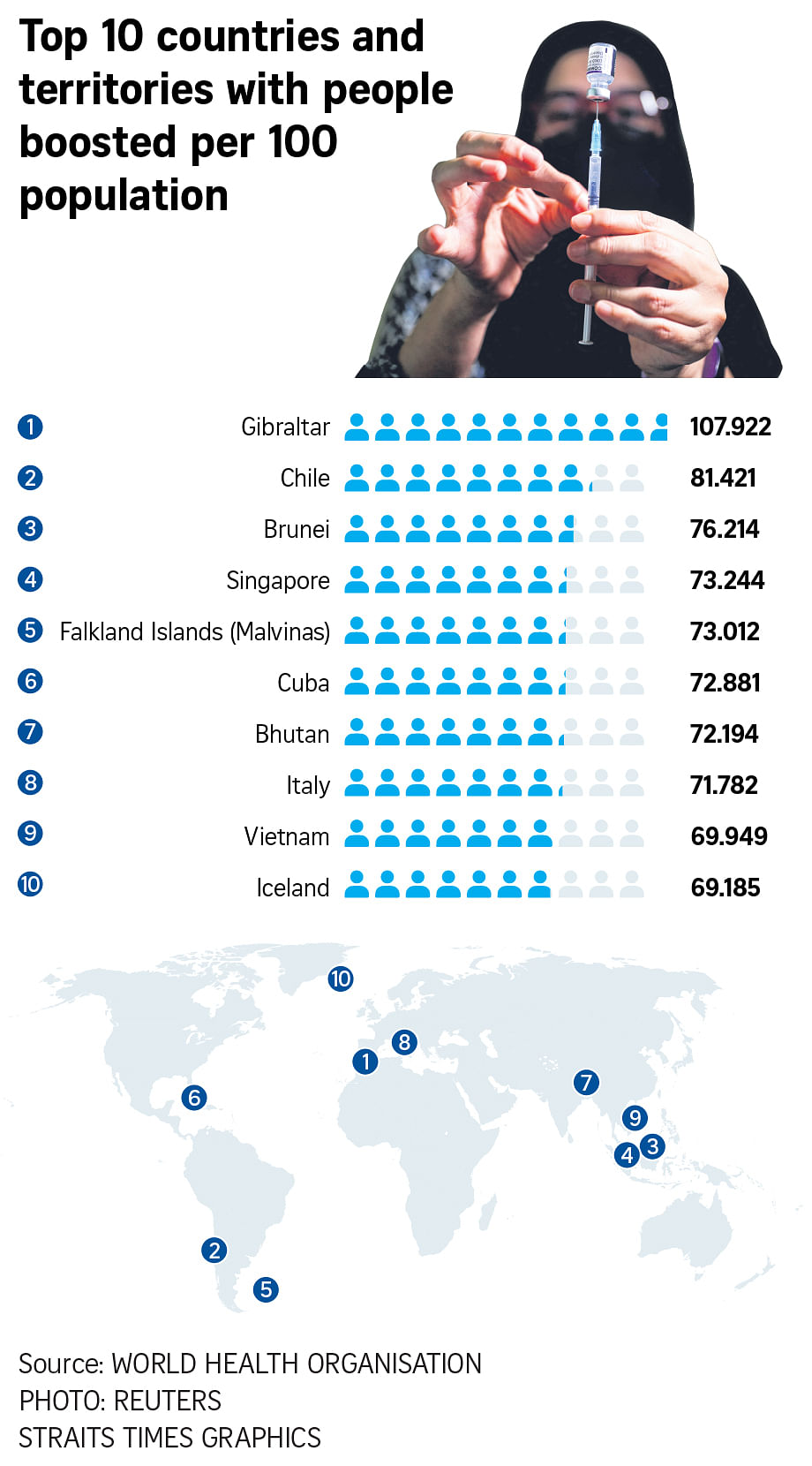
Covid cases have been increasing in Singapore and though it is worrying, I guess we’ve become immune to it now. Life goes on and life is slowly getting back to a new normal. I guess in a few years, this will be our normal and those of us who lived through the past two or three years will refer to life as pre and post covid. Will this be the defining moment of our generation? This remains to be seen as those of us in our thirties and more have seen many such moments and it seems to be seen which will be considered as the moment of our lifetimes.

Continue staying safe and get the boosters if you are eligible to because they work.

In My Hands Today…

My Homage to All – Kanan Devi, translated by Indranee Ghosh

One of the most powerful women in the movies was thousands of miles from Hollywood.

Kanan Devi, one of the early singing stars, came into the film world in the silent era and, unlike many others, survived the transition to talkies. The product of a troubled childhood, her life took a dramatic turn when she was offered a film role and, encouraged by her uncle, took it.

In this lively and candid account of her experiences, originally published in 1973, Kanan Devi recalls the early days of cinema in Bengal, comparing conditions of film acting in the early 1930s with what she experienced two or three decades later when she herself was a producer and director, with her own film company, Shrimati Pictures.

Her fascinating and unusual story offers not only a different perspective on the growth of the film industry in Bengal but also a first-hand account of the position of women in the early decades of the last century.

The Future of Work in a post-COVID World

When COVID hit in early 2020, the world was in shock, especially with the lockdowns and cities shut down. Workplaces became empty and many city centres which were dominated by towering skyscrapers filled with office spaces became ghost towns. COVID has dramatically changed the way we live and work and affected virtually every element of life.

COVID has been the most significant, and perhaps the most traumatic, experience of our lives. It will have a huge impact on us as individuals, as a society and as a workforce. And even when this crisis ends, things will never be back to normal. We will live in a completely different world and that will be the new normal.

The abrupt closure of many offices and workplaces ushered in a new era of remote work for millions and has shown a significant shift in the way a large segment of the workforce operates in the future. Most of those who say their work responsibilities can mainly be done from home say that, before the pandemic, they rarely or never teleworked. Very few could work from home all or most of the time, but today more than half of such people are doing their job from home all or most of the time. And more than half say, given a choice, they would want to keep working from home even after the pandemic.

While not seamless, the transition to working from home has been relatively easy for many with most of them saying it has been easy to instal the technology and get hold of the equipment to do the job. Most also say it’s been easy for them to meet deadlines and complete projects on time, get their work done without interruptions and feel motivated to do their work.

Many of us, especially those of us who are technologically challenged, had to adjust to new technologies and learn new ways of interacting with colleagues and friends. Zoom and other video conferencing apps became part of our lexicon and we learnt to find those corners at home which would not reveal the mess behind.

The idea of working at home in itself is not a new concept with many, especially those in the IT sector working from home is an old concept. I read somewhere that working from home or telecommuting has grown by as much as 173% since 2005 due to improvements in technology, innovation and communication. As a result, more than half of employees have a job where at least some of what they do can be done from home.  A 2019 Owl Labs report found that as many as 80% of employees wanted to work from home at least some of the time, before the crisis. Flexibility is one of the top-ranked work benefits amongst the millennial workforce and pre-crisis, more than a third of employees would go so far as to change jobs if they had the chance to work from home, whilst over a third would take a pay cut of up to 5% to work at home some of the time. Today, these figures will most likely have gone up.

Remote work and virtual meetings are likely to continue, albeit less intensely than at the pandemic’s peak. Many companies have transitioned to hybrid work culture and many organisations have decided to reduce their office space. As a result of this demand for restaurants and retail in downtown areas and areas with a concentration of office spaces as well as for public transportation may decline as a result. And while working on this post, I decided to check on job sites and saw that now there are many full-time remote opportunities in sectors that traditionally did not offer it like IT. This means that in countries with smaller cities and rural areas, when people can work anywhere, reverse migration can and is taking place. I have heard of people moving out of the big Indian cities like Mumbai and Bengaluru and going back to their hometowns so they can be with family and yet earn the income they were already earning. I remember reading an article about professionals renting large apartments in places like the seaside and the hills and with access to high-speed internet, they were able to have a much better lifestyle and standard of living.

Remote work has also put a dent in business travel as its extensive use of videoconferencing during the pandemic has ushered in a new acceptance of virtual meetings and other aspects of work. While leisure travel and tourism are rebounding, and are likely to rebound after the crisis, McKinsey’s travel practice estimates that about 20% of business travel, the most lucrative segment for airlines, may not return. This would have significant knock-on effects on employment in commercial aerospace, airports, hospitality, and food service. E-commerce and other virtual transactions are booming.

Many consumers discovered the convenience of e-commerce and other online activities during the pandemic. In 2020, the share of e-commerce grew at two to five times the rate before COVID-19. Roughly three-quarters of people using digital channels for the first time during the pandemic say they will continue using them when things return to normal, according to McKinsey Consumer Pulse surveys conducted around the world. Other kinds of virtual transactions such as telemedicine, online banking, and streaming entertainment have also taken off including online doctor consultations. This shift to digital transactions has propelled growth in delivery, transportation, and warehouse jobs. In China, e-commerce, delivery, and social media jobs grew by more than 5.1 million during the first half of 2020.

Many companies deployed automation and AI to reduce workplace density and cope with surges in demand. Research finds the work arenas with high levels of human interaction are likely to see the greatest acceleration in the adoption of automation and AI. Hiring has also changed. Today, the default way of interviewing potential candidates is by video call when only a few months ago the default was face-to-face interviewing.

So what does this mean moving forward? It means that for employees, the chance to balance work and home will be important. Now that the world has shown that regular remote and flexible work can be productive without disrupting or undermining established ways of working, it will be the new normal going forward. A lot of people, especially introverts who do not need to showcase their gregariousness and be extroverts, can showcase their productivity and prove their mettle. There are already reports of the positive impact that more frequent, structured and focused communication is resulting in increased collaboration, teamwork and support. Now that more people have had a taste of it and proven their productivity, it will be hard for companies to take it away from their talent. A Gallup survey revealed that 54% of U.S. workers would leave their current job for one that allowed them to work remotely. And while professionals were celebrating their 30-second commute, it became clear to companies that the huge line item on their spreadsheets for real estate may not be the best way to spend their money. Having people work from home, even if it’s not everyone all the time, is proving to be profitable.

Flexibility will be the new mantra—where people will be given more freedom to choose to work from home. Some people missed the commute and cherished their in-person connections, so the new normal will be increased flexibility. Conference rooms, meeting spaces and video studios will take up a lot of office space with the workplace becoming a far more social environment, not a lock myself in the office scenario. It will be designed to foster and promote interaction and community engagement, taking advantage of the times talent is collocated in one place.

Many professionals found working from home a challenge not because of isolation, but because they didn’t have the ideal space or a dedicated home office. They didn’t have a Zoom-ready spot for video meetings. A study reports that the majority of survey respondents cited a lack of proper technology for remote work that hindered their success and productivity. One of the biggest challenges people experienced while working fom home was internet performance. According to a survery by WhistleOut, a company that provides information about mobile phone and internet services, 35% of adults who transitioned to working from home said that weak Internet has prevented them from doing their work at some point during the coronavirus crisis and 43% said they have had to use their phone as a hotspot during the crisis. Internet in homes will improve, and home offices and even home video studios will become a priority. As new homes are built or existing ones are remodelled, a home office will be the top priority for

Post COVID-19, e-learning will become a bigger part of ongoing learning. In-person learning won’t go away, but it’ll be reserved for certain functions and certain populations within the company. Face-to-face learning will likely be just a small element of a learning curriculum. Ramping up their e-learning platforms, companies moved quickly to ensure that their people were still building important skills and developing professionally.

Video is at the heart of many of the changes above. The developers behind Zoom, WebEx, Hangouts, Skype and other video communications tools made the grand work-from-home experiment possible. The video became fully integrated into the work experience in an astonishing variety of ways. As supervisors and staffers have gotten used to seeing each other in their natural habitats, the line that separates work life and personal life has faded. Ironically, technology has made this transition possible, but it has also led to a decidedly low-tech reality: this new corporate world has made us value our organic, non-robotic humanity more than ever before.

The shift to remote work led to the complete collapse of the work-home boundary, especially for parents juggling child care and homeschooling with job demands. Poorly timed or endless Zoom meetings interfered with people’s ability to get work done and sometimes harmed relationships with colleagues. At the same time, people, especially those with comfortable home offices and few parental responsibilities, found benefits in working remotely. Being on their own gave them greater control with fewer distractions. The absence of commuting gave people more time and energy while saving them money. People who had been working in unpleasant or hostile workplaces were now free from disrespectful encounters.

The Coronavirus pandemic has seen a sharp rise in mental health issues. While this is in no way a positive outcome, it has resulted in businesses focusing more closely on employee’s mental wellbeing. Companies are doing more than ever to protect and promote positive mental wellbeing among teams; a trend that will continue even as the world returns to normal. People burn out because their employers have not successfully managed chronic job stressors.

The pandemic has taught many people that the job does not have to be the way it was. This realisation may be one reason that many are not going back to their old jobs. The workplace must change. So as we transition to a new normal of working, it is with the hope that many of these positive work outcomes such as a greater focus on mental health and wellbeing, more freedom and flexibility for employees and outstanding innovations will keep workforces happy and healthy while businesses will remain creative, responsive and successful.