Unfollow: A Journey from Hatred to Hope – Megan Phelps-Roper
It was an upbringing in many ways normal. A loving home, shared with squabbling siblings, overseen by devoted parents. Yet in other ways it was the precise opposite: a revolving door of TV camera crews and documentary makers, a world of extreme discipline, of siblings vanishing in the night.
Megan Phelps-Roper was raised in the Westboro Baptist Church – the fire-and-brimstone religious sect at once aggressively homophobic and anti-Semitic, rejoiceful for AIDS and natural disasters, and notorious for its picketing the funerals of American soldiers. From her first public protest, aged five, to her instrumental role in spreading the church’s invective via social media, her formative years brought their difficulties. But being reviled was not one of them. She was preaching God’s truth. She was, in her words, ‘all in’.
In November 2012, at the age of twenty-six, she left the church, her family, and her life behind. Unfollow is a story about the rarest thing of all: a person changing their mind. It is a fascinating insight into a closed world of extreme belief, a biography of a complex family, and a hope-inspiring memoir of a young woman finding the courage to find compassion for others, as well as herself.
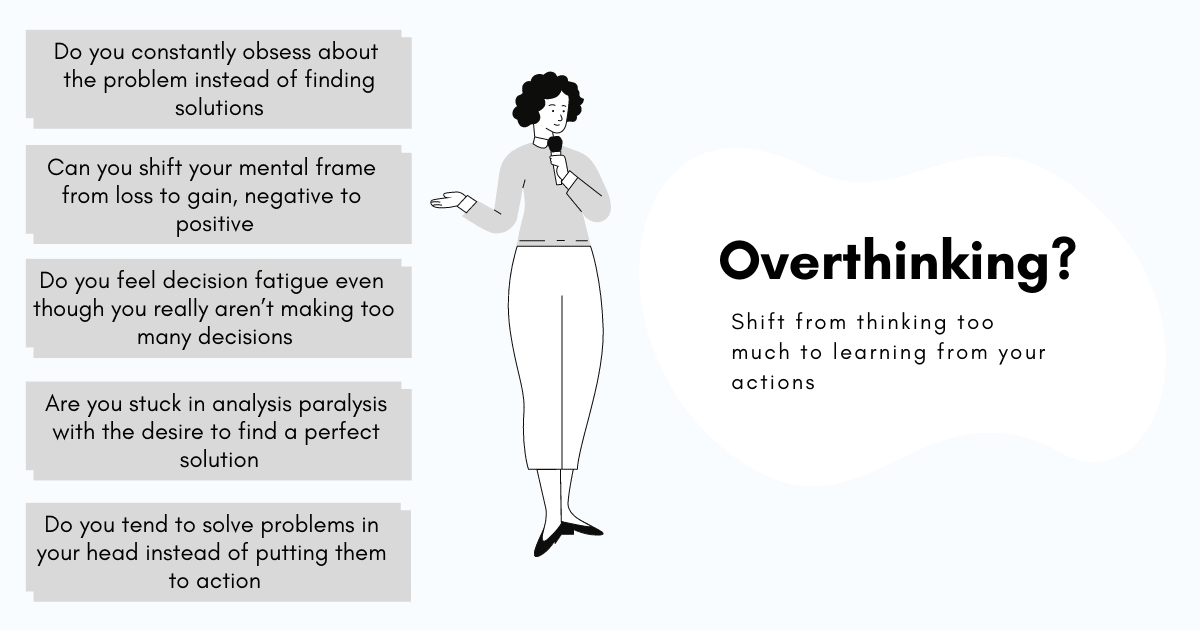
We have been there – we are faced with a decision, it can be a major or a minor one, and start weighing the pros and cons of the choices available. And we think so much, turn every possibility in our heads and weigh on every tiny aspect and the what-ifs so much that we can’t make up our minds. This freezing with inaction is called Overthinking by experts. While it’s human nature to think things through when making a decision or evaluating a situation, it becomes overthinking when you can’t get it out of your head. It happens to all of us at some point in our lives – we all experience events that cause us to worry or stress.
Some people can’t seem to turn their concerns off. They worry about the future, making catastrophic predictions about unlikely events that haven’t happened yet. They also ruminate about the past, beating themselves up about the should haves and could haves. They fret over what others might think of them or let negative self-talk build up in their minds. If I have to summarise overthinking in a couple of sentences, it is that overthinking is when you dwell or worry about the same thought repeatedly and those who overthink can be paralysed by their worries and may struggle to make decisions or take action. Overthinking can be caused by and can contribute to depression, anxiety, and other mental health disorders.
Also referred to as rumination, overthinking is when one repetitively dwells on the same thought or situation over and over to the point it gets in the way of their life. Overthinking usually falls into two categories: ruminating about the past or worrying about the future. Those who struggle with overthinking may feel stuck and unable to do much because it’s hard to get the thoughts out of their heads and concentrate on anything else. According to experts, about 73% of 25 to 35-year-olds chronically overthink, along with about 52% of people aged 45 to 55.
Overthinking is unproductive but not the same as being stressed or worried about a specific circumstance. Having a lot of thoughts about a stressful situation in the short term can prompt one to make a move. When one is nervous or stressed, that can sometimes switch on the adrenaline rush and help with the task. Experts believe that even though people of all ages, genders, or personality types might struggle with rumination, those who are motivated by achievement can be more prone to overthinking.
Although not recognised as a mental disorder, overthinking is often associated with other mental health conditions, including depression, anxiety disorders, obsessive-compulsive disorders and post-traumatic stress disorders. One study found a two-way relationship between overthinking and other mental health issues where high levels of stress, anxiety, and depression can contribute to overthinking and overthinking, in turn, may be associated with increased stress, anxiety, and depression.
Overthinking a tough decision can also cause problems. Replaying all the options in your head can lead to “paralysis by analysis” – you’re afraid to take the wrong action, so you take no action at all. But even making the wrong decision is better than making no decision. But overthinking is not always bad. Sometimes, overthinking can appear to be a benefit. Running through different scenarios in your head is a good way to make hard decisions, and visualising goals is essential to achieving them. But those are strategies that are employed to reach a specific goal. Overthinking is different, it isn’t rational, and it isn’t part of a larger strategy and in fact, it can interfere with problem-solving abilities.
Overthinking may also cause excessive activity in your brain that can be harmful with one Harvard study finding that this excessive brain activity depletes an essential protein, and that may shorten the human lifespan. There can also be major psychological consequences. Another study found that rumination, a form of overthinking, can lead to anxiety, binge drinking or eating, depression and self-harm.
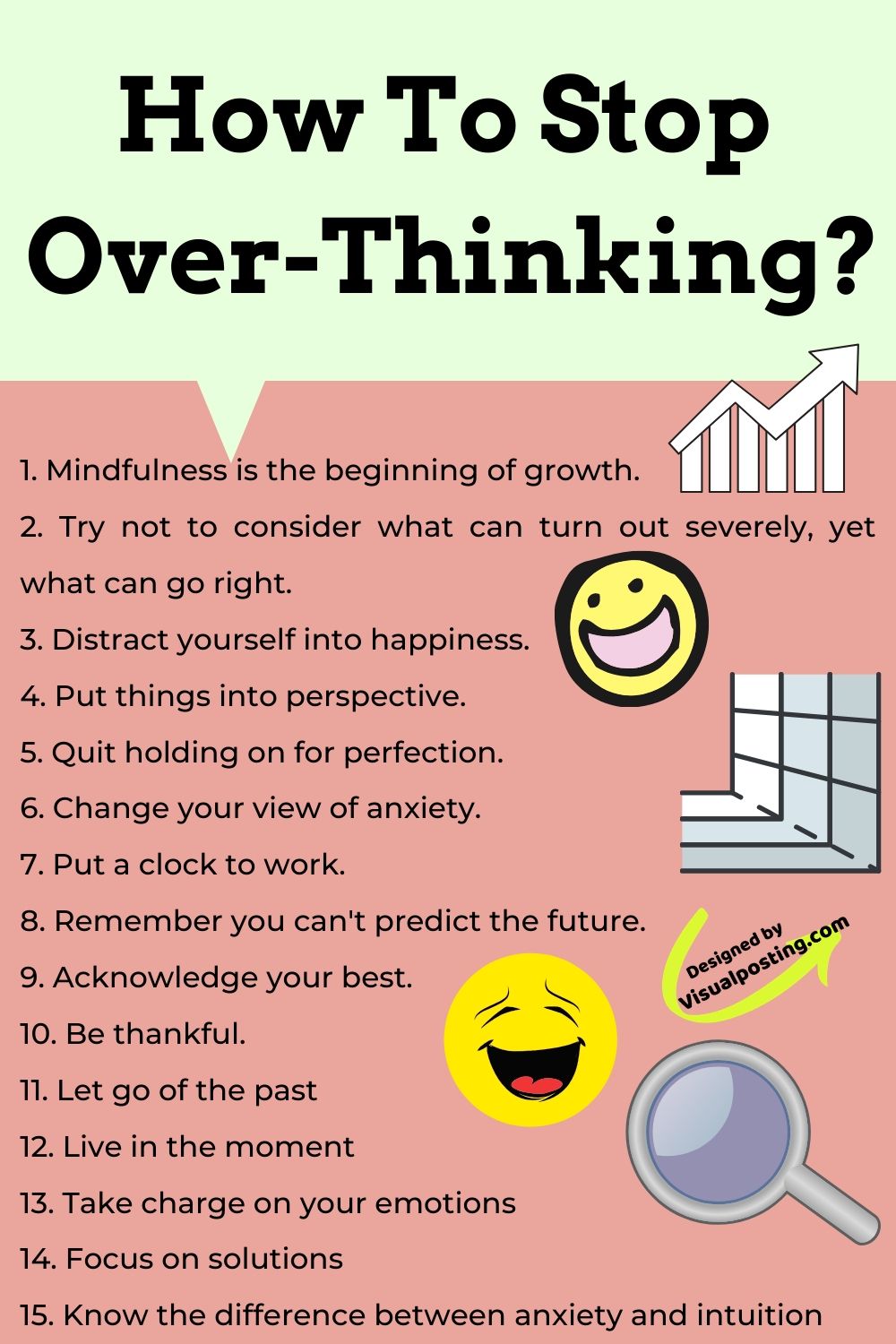
Learning how to not overthink is good for both your body and your mind. Below are some strategies that can help an overthinker stop overthinking.
Keep track of triggers and patterns: A little mindfulness and attention can go a long way toward getting a grip on overthinking. Keep a journal and write down specific moments that cause you to overthink or worry. Soon, you’ll begin to notice patterns and recognise overthinking triggers before they happen which will help in developing a coping strategy for situations that will lead to overthinking.
Challenge your thoughts: The mind does not have to believe everything you think. An effective way to squash overthinking is to challenge worries and ruminations and view them objectively. Calling out overthinking thoughts that are not useful makes them easier to manage.
Get help from family and friends: Asking trusted family and friends for perspectives when you overthink or worry excessively helps to a great extent.
Move your body: Research demonstrates exercise may improve depression, anxiety, and other mental health disorders and also help with chronic overthinking. Even a 5-minute walk can send an influx of good chemicals and hormones, like endorphins, to our brain. Physical movements might also help shift the nervous system out of fight-flight-freeze mode and may help calm any trauma-related rumination.
Seek professional help: If overthinking seems to be taking over your life, it might be good to see a mental health professional. If left unchecked, the stress associated with overthinking may lead to physical health symptoms such as headaches, fatigue, digestive issues like nausea or diarrhoea and difficulty in sleeping.
Retrain the brain: When the brain is at rest, the areas that light up are the problem-solving areas and areas associated with self-referential thinking. So, when left to its own devices, the brain will overthink, and this means, you have to train your brain to do otherwise — particularly if you’re overthinking at certain times, like before bed. It’s possible to reprogram that habit with other mind-clearing activities instead.
Meditate: Attention training is a meditation technique that can benefit people with anxiety and depression and the easiest way to practice it is to focus on something completely mundane and routine, like washing dishes or folding laundry. When one directs the attention to the task in a way that may even feel hyper-focused and zero in on observing themselves and any sensations that arise, that laser focus can help quiet other intrusive thoughts in the head.
Do a brain dump: Journaling is a helpful way to get thoughts out of the head so they’re not overwhelming. Another way that helps is creating to-do lists which can be as detailed as one likes and if on the phone, can be with someone always. This is especially useful when you are awake at night thinking about things. Once you do a brain dump, rest is easier.
Live in the moment: When you live in the now and stop negative emotions and stop overthinking before it spirals out of control and reset it, it can control overthinking. Breathe and focus on the moment and initially, it will take conscious awareness, but gradually it will help to retrain the brain and soon it will come naturally.
Focus on solutions: Identify problems, but give power and energy to solutions. Once you identify the causes of stress and anxiety, take charge and learn to remove or reduce the stressors from your life. It’s not easy and will take time, but if you are consistent, you will gradually get there.
We’re at the fag end of yet another month and is it me or is this year speeding past? Things have been fairly quiet, so there’s nothing much to report this week.
School holidays have begun in Singapore and after more than two years we see people travelling, especially those who have not seen their families in all this time. The streets seem less crowded and the air still. BB has exams starting later this week and then will go on a mid-semester break while GG only looks on because she doesn’t have leave during her internship.
BB has also been running with his friends for the past few weeks as they start to train for their national service. We’re very happy with this new development as he is usually not an outdoors person and to willingly go out and run is something that is out of his usual comfort zone.
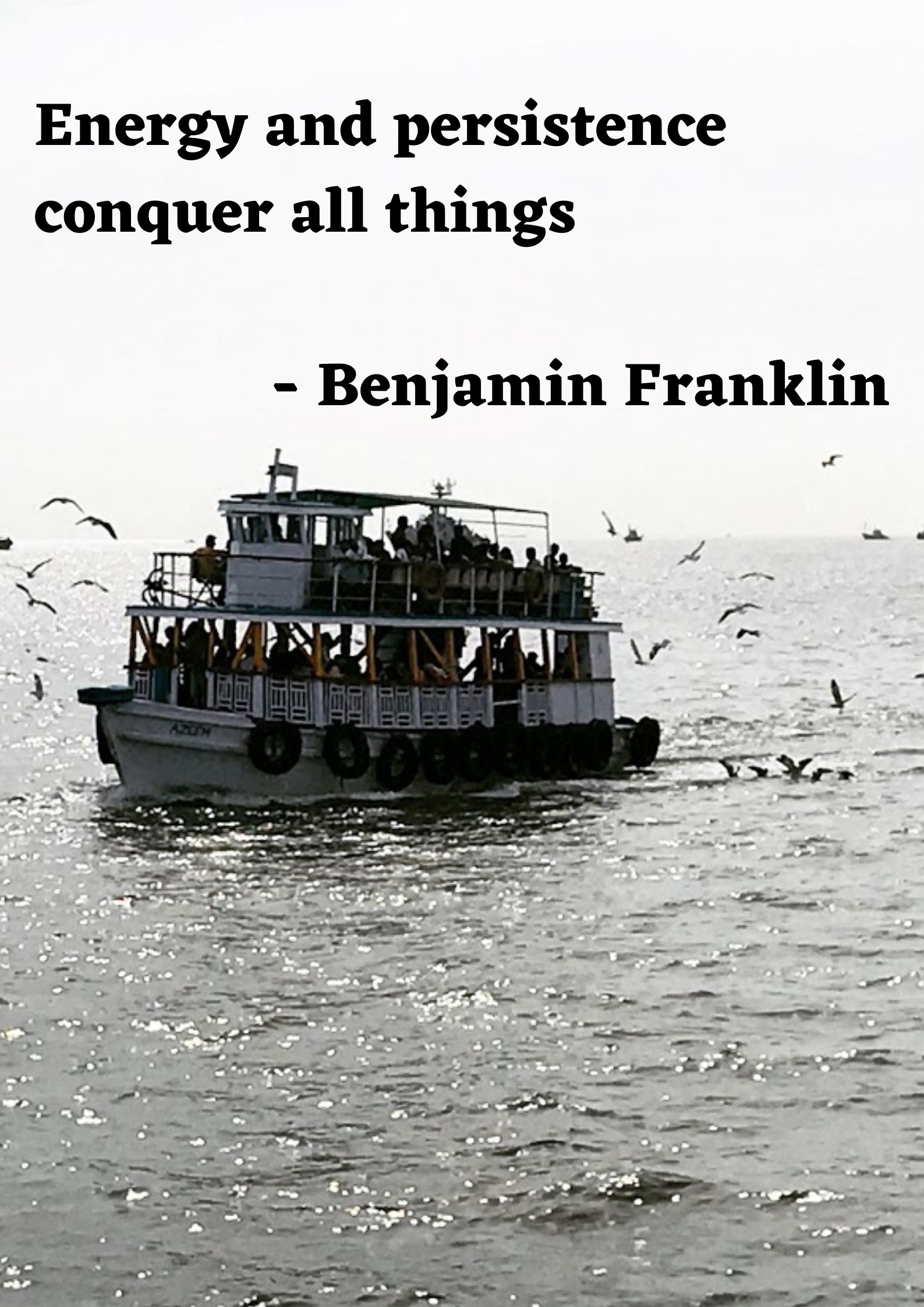
Today’s quote about how our energy and persistence will allow us to conquer everything we set our heart on is said to have been attributed to one of the founding fathers of the United States of America, Benjamin Frankin, a polymath who was a writer, scientist, inventor, statesman, diplomat, printer, publisher, and political philosopher.
That’s all from me this week. Stay safe and take care…
On September 1, 1939, the Nazis invaded Poland. Three years later, in the small town of Żółkiew, life for Jewish 15-year-old Clara Kramer was never to be the same again. While those around her were either slaughtered or transported, Clara and her family hid perilously in a hand-dug cellar. Living above and protecting them were the Becks.
Mr. Beck was a womaniser, a drunkard and a self-professed anti-Semite, yet he risked his life throughout the war to keep his charges safe. Nevertheless, life with Mr. Beck was far from predictable. From the house catching fire, to Beck’s affair with Clara’s cousin, to the nightly SS drinking sessions in the room just above, Clara’s War transports you into the dark, cramped bunker, and sits you next to the families as they hold their breath time and again.
Sixty years later, Clara Kramer has created a memoir that is lyrical, dramatic and heartbreakingly compelling. Despite the worst of circumstances, this is a story full of hope and survival, courage and love.
Tomorrow is World Menstrual Hygiene Day. Initiated by the German non-profit WASH United in 2014, the day is a global day of action with more than 830 partner organisations working together to create awareness and action toward a world without period poverty and stigma. The date of 28 May represents the menstrual cycle which has an average duration of 28 days, with an average of five days of bleeding.
For some, menstruation may be an inconvenience they don’t give much thought to. But for millions of others, this most natural of reproductive cycle functions can equate to abuse because the onset of menstruation may lead to child marriage and sexual violence as well as violations of bodily autonomy; stigma which includes banishment to menstruation huts; missed opportunities where many girls skip school because of pain, discomfort and/or the lack of personal hygiene products; and loss of dignity due to the lack of supplies in humanitarian and refugee settings where even the basics like soap and water are in short supply or unavailable. Poor menstrual hygiene caused by a lack of education on the issue, persisting taboos and stigma, limited access to hygienic menstrual products and poor sanitation infrastructure undermines the educational opportunities, health and overall social status of women and girls around the world. As a result, millions of women and girls are kept from reaching their full potential.
World Menstrual Hygiene Day promotes good menstrual health and hygiene for all women and girls. More specifically, the day breaks the silence, raises awareness and changes negative social norms around menstrual health and hygiene and engages decision-makers to increase the political priority and catalyse action for menstrual health and hygiene at global, national and local levels.
Recently, countries have made sanitary supplies free or tax-free to help fight period poverty. New Zealand, France and Namibia are the latest countries to announce such initiatives after Scotland became the first country to provide period products free to anyone who needed them last year.
The theme of this year’s Menstrual Hygiene Day is Action and Investment in Menstrual Hygiene and Health. The Menstruation Bracelet is a global symbol for menstruation which stands for the commitment to create a world, by 2030, where no woman or girl is kept from realising her full potential because she menstruates. A world where menstruation is just a normal fact of life.
Today, millions of women and girls around the world are stigmatised, excluded and discriminated against simply because they menstruate. In 2022, it’s no longer acceptable that a natural bodily function prevents women and girls from getting an education, earning an income and fully and equally participating in everyday life. On this day, we should break the taboos and end the stigma surrounding menstruation and raise awareness about the challenges regarding access to menstrual products, education about menstruation and period-friendly sanitation facilities.







 Memories and Such