International Day of the Girl Child

Girls play multiple roles in the household, society and the economy. They go to school, help with housework, work in factories, make friends, care for elder and younger family members and prepare themselves to take on the responsibilities of adulthood. While today, in many countries, the right to basic education is ingrained in their constitutions, there are many countries where girls are denied this right and even when girls are encouraged to continue their education, they face major challenges that make it difficult for them to attend regularly, sometimes receiving an unequal share of the household tasks due to customary practices in many regions of the world. Though life for the girl child is steadily improving, many are still subjected to horrific practices, such as female genital mutilation, son preference – often resulting in female infanticide – as well as child marriage, sexual exploitation and abuse. Girls are also more likely to experience discrimination in food allocation and healthcare, and are often outpaced and outranked by boys in all spheres of life. It is under this backdrop that upholding the rights of a girl child is not just important, it is absolutely essential.

Today is the International Day of the Girl Child which is also known as the Day of Girls and the International Day of the Girl and was first observed in 2012. The day supports more opportunity for girls and increases awareness of gender inequality faced by girls worldwide based upon their gender including areas such as access to education, nutrition, legal rights, medical care, and protection from discrimination, violence against women and forced child marriage. The day increases awareness of issues faced by girls around the world which do not include or consider girls and and their issues become invisible. The Day of Girls helps raise awareness not only of the issues that girls face, but also of what is likely to happen when those problems are solved.
Around 33,000 girls are married off every day around the world, focing their bodies and mind to changes in ways they are just not ready for. An estimated 340,000 girls and young women are infected with the HIV virus every year and currently more than 3 million girls and young women are living with the virus all over the world. Around 44% of the girls between 15 to 19 years of age think it’s okay for a husband to beat his wife. Girls between five to 14 spend more than 28 hours doing labor, which is twice the time spent by boys and do more unpaid child labour and not astonishingly 96% of human trafficked individuals for sexual exploitation are girls and women.

The theme for the 2021 edition of the International Day of the Girl Child is Digital generation. Our generation. In 2021, the Generation Equality Forum launched five-year commitments for bolder solutions to gender inequality – just as the world entered the second year of the COVID-19 pandemic. While the pandemic has accelerated digital platforms for learning, earning and connecting, some 2.2 billion people below the age of 25 still do not have internet access at home. Girls are more likely to be cut off. The gender gap for global internet users grew from 11 per cent in 2013 to 17 per cent in 2019. In the world’s least developed countries, it hovers around 43 per cent. But the gender digital divide is about more than connectivity. Girls are also less likely than boys to use and own devices, and gain access to tech-related skills and jobs. Only by addressing the inequity and exclusion that span geographies and generations can we usher in a digital revolution for all, with all.

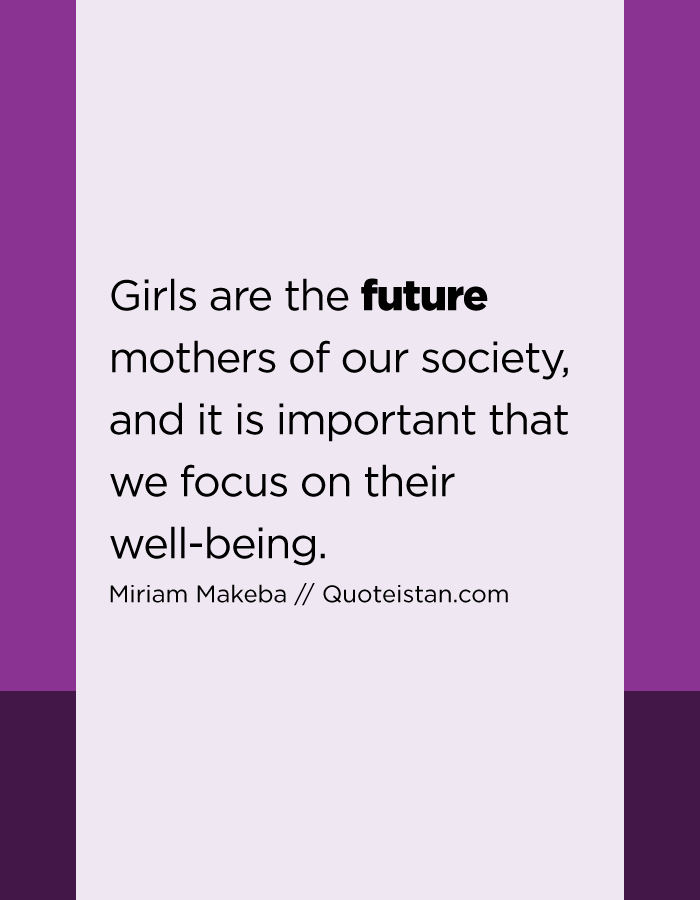
So why is this day important? It is important because it empowers girls and works to eliminate deep-rooted gender-based issues that have have been passed on for generations and have made gender-based discrimination and oppression threateningly common in every household, particularly in developing countries. An empowered girl grows up to be an empowered woman. The adolescence is a critical point in every person’s life and determines the trajectory of girls’ lives, which is why caring for girls in their youth benefits all. If they are empowered at a vulnerable age, they can mature into liberated, wise women of the future and when this happens, as a society, we all win. Investing in girls is the smart thing to do because when women and girls earn an income, they are likely to reinvest 90% of their income into their families. So empower girls around you, so they can grow up to be empowered women who will be an asset to society.

2021 Week 40 Update

Today’s positive quote is from the famous activist, Martin Luther King Jr and tells us about not to lose hope. Hope is the one thing that keeps us doing doing what we do each and every time, all the time. A life without hope is a life that is completely barren. So even if we do accept disappointments, we cannot, never lose hope.

So why talk about hope today? Cases in Singapore are rising at a steady rate and we are looking at about 3,500 plus cases on a daily basis now with cases poised to hit the 5,000 mark very soon. But the good news is that most of the affected are either asymptotic or with very mild symptoms.  I’ve stopped thinking about and even obsessively checking the daily numbers because now I know we have to live with this. Singapore is also starting and is in talks with multiple countries for quarantine free travel and this means that people can start to travel again. I am now waiting when India will come on this list and hope that day is not too far away. I also read that India is opening up to tourists and visitors and people can start travelling to India from as early as mid-October.

As I mentioned last week, GG was hospitalised for about 12 hours and has now been diagnosed with hypothyroidism. She has to take a tablet for the rest of her life and she is coping with it well. She wakes up at 4 am, takes the medicine and goes back to sleep. This is because she can’t eat or drink anything for an hour and has to avoid diary products and anything that has calcium in it for four hours. So having the medicine at 4 am allows her to eat breakfast around 8 am.

My parents have finally made a decision to move to a retirement community outside Mumbai. They are currently there now looking at possible homes to rent or buy and this is making me sad on many levels. On one hand, I am happy that my parents will be in a place where they will access to healthcare and not really be alone as we have extended family in that place. This is especially true since my father has been diagnosed with a degerative disease about five years back and over this period, he has slowly, but definitely gotten worse. So this move is for their better. I am quite sad that I will be unable to visit Mumbai again. I do hope I can make one last trip, but in the current situation, it looks unlikely. I may make a trip when my sister visits India and stay with her for a bit just to get my Bombay fix, but that will be all I can do now.

That’s all from my side this week. Stay safe and take care everyone!

In My Hands Today…

Paris to the Moon – Adam Gopnik

Paris. The name alone conjures images of chestnut-lined boulevards, sidewalk cafés, breathtaking façades around every corner–in short, an exquisite romanticism that has captured the American imagination for as long as there have been Americans.

In 1995, Adam Gopnik, his wife, and their infant son left the familiar comforts and hassles of New York City for the urbane glamour of the City of Light. Gopnik is a longtime New Yorker writer, and the magazine has sent its writers to Paris for decades–but his was above all a personal pilgrimage to the place that had for so long been the undisputed capital of everything cultural and beautiful. It was also the opportunity to raise a child who would know what it was to romp in the Luxembourg Gardens, to enjoy a croque monsieur in a Left Bank café–a child (and perhaps a father, too) who would have a grasp of that Parisian sense of style we Americans find so elusive.

So, in the grand tradition of the American abroad, Gopnik walked the paths of the Tuileries, enjoyed philosophical discussions at his local bistro, wrote as violet twilight fell on the arrondissements. Of course, as readers of Gopnik’s beloved and award-winning “Paris Journals” in The New Yorker know, there was also the matter of raising a child and carrying on with day-to-day, not-so-fabled life. Evenings with French intellectuals preceded middle-of-the-night baby feedings; afternoons were filled with trips to the Musée d’Orsay and pinball games; weekday leftovers were eaten while three-star chefs debated a “culinary crisis.”

As Gopnik describes in this funny and tender book, the dual processes of navigating a foreign city and becoming a parent are not completely dissimilar journeys–both hold new routines, new languages, a new set of rules by which everyday life is lived. With singular wit and insight, Gopnik weaves the magical with the mundane in a wholly delightful, often hilarious look at what it was to be an American family man in Paris at the end of the twentieth century. “We went to Paris for a sentimental reeducation – I did anyway – even though the sentiments we were instructed in were not the ones we were expecting to learn, which I believe is why they call it an education.”

World Mental Health Day

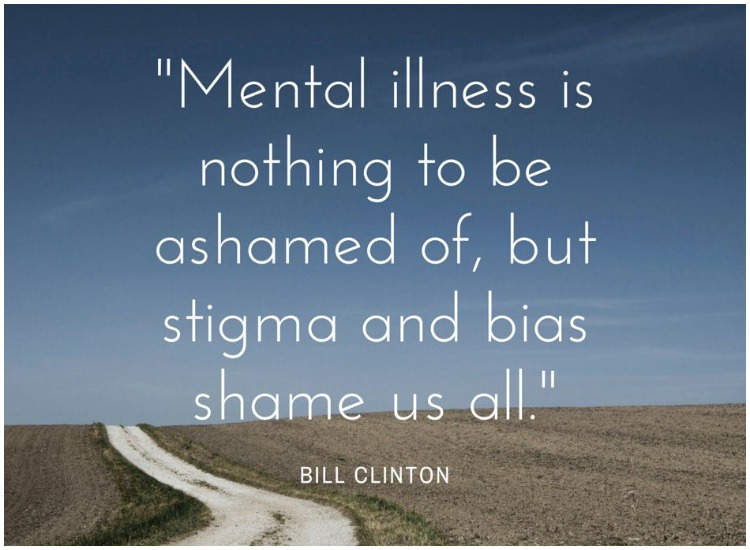
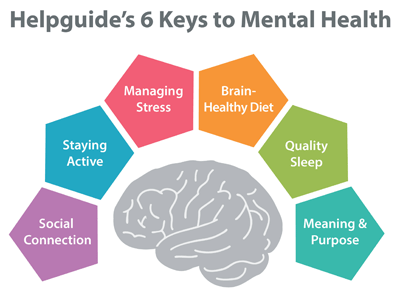
Sunday is World Mental Health Day. In the last two years or so, we all have finally woken up to the importance of mental health and its importance in our lives. Mental health includes our emotional, psychological, and social well-being. It affects how we think, feel, and act and also helps determine how we handle stress, relate to others, and make healthy choices. Mental health is important at every stage of life, from childhood and adolescence through adulthood.

Mental and physical health are equally important components of overall health.  For example, depression increases the risk for many types of physical health problems, particularly long-lasting conditions like diabetes, heart disease, and stroke. Similarly, the presence of chronic conditions can increase the risk for mental illness. It’s important to remember that a person’s mental health can change over time, depending on many factors.  When the demands placed on a person exceed their resources and coping abilities, their mental health could be impacted.

There is no single cause for mental illness with many factors contributing to the risk for mental illness, including early adverse life experiences, like trauma or a history of abuse, experiences related to other ongoing or chronic medical conditions, biological factors or chemical imbalances in the brain, use of alcohol or drugs or having feelings of loneliness or isolation.

The World Mental Health Day celebrated on 10 October is an international day for global mental health education, awareness and advocacy against this social stigma. It was first celebrated in 1992 at the initiative of the World Federation for Mental Health, a global mental health organisation with members and contacts in more than 150 countries. On this day, each October, many awareness programmes bring attention to mental illness and its major effects on peoples’ lives worldwide with some countries having an awareness week as part of the awareness programme.

Up until 1994, the day had no specific theme other than general promoting mental health advocacy and educating the public. In 1994 World Mental Health Day was celebrated with a theme for the first time: “Improving the Quality of Mental Health Services throughout the World”. On World Mental Health Day 2018, the then UK Prime Minister Theresa May appointed UK’s first suicide prevention minister as the government hosted the first-ever global mental health summit.

The theme for the 2021 edition of the World Mental Health Day is “Mental Health in an Unequal World”. This theme was chosen because the world is increasingly polarised, with the very wealthy becoming wealthier, and the number of people living in poverty still far too high. 2020 highlighted inequalities due to race and ethnicity, sexual orientation and gender identity, and the lack of respect for human rights in many countries, including for people living with mental health conditions. Such inequalities have an impact on people’s mental health.

The theme will highlight that access to mental health services remains unequal, with between 75% to 95% of people with mental disorders in low and middle-income countries unable to access mental health services at all, and access in high-income countries is not much better. Lack of investment in mental health disproportionate to the overall health budget contributes to the mental health treatment gap.  Many people with a mental illness do not receive the treatment that they are entitled to and deserve and together with their families and carers continue to experience stigma and discrimination. The gap between the ‘haves’ and the ‘have nots’ grows ever wider and there is continuing unmet need in the care of people with a mental health problem.

Research evidence shows that there is a deficiency in the quality of care provided to people with mental health problems. It can take up to 15 years before medical, social and psychological treatments for mental illness that have been shown to work in good quality research studies are delivered to the patients that need them in everyday practice. The stigma and discrimination experienced by people who experience mental ill-health not only affects that persons physical and mental health, it also affects their educational opportunities, current and future earning and job prospects, and also affects their families and loved ones.  This inequality needs to be addressed so that people with mental health issues are fully integrated into all aspects of life. Research has shown that those with physical illness also often experience psychological distress and mental health difficulties. As an example, one can take visual impairment. Over 2.2 billion people have visual impairment worldwide, and the majority also experience anxiety and/ or depression and this is worsened for visually impaired people who experience adverse social and economic circumstances.

The COVID 19 pandemic has further highlighted the effects of inequality on health outcomes and no nation, however rich, has been fully prepared for this.  The pandemic has and will continue to affect people, of all ages, in many ways: through infection and illness, sometimes resulting in death bringing bereavement to surviving family members; through the economic impact, with job losses and continued job insecurity; and with the physical distancing that can lead to social isolation.

So if you or someone you know have issues relating to mental health, please reach out to an expert. If that is not possible, at least talk to someone sympathetic to you and your condition. If there are hotlines or numbers where you can speak with someone, anonymously, please do so and if possible, reach out to a medical expert, even if it is your general physician or family doctor who can point you in the right direction in terms of treatment and counselling. I have always advocated meditation, so try and incorporate some meditation into your daily routine, even if it is as little as five to ten minutes a day, it helps!

In My Hands Today…

Tracks: A Woman’s Solo Trek Across 1700 Miles of Australian Outback – Robyn Davidson

Robyn Davidson’s opens the memoir of her perilous journey across 1,700 miles of hostile Australian desert to the sea with only four camels and a dog for company with the following words: “I experienced that sinking feeling you get when you know you have conned yourself into doing something difficult and there’s no going back.”

Enduring sweltering heat, fending off poisonous snakes and lecherous men, chasing her camels when they get skittish and nursing them when they are injured, Davidson emerges as an extraordinarily courageous heroine driven by a love of Australia’s landscape, an empathy for its indigenous people, and a willingness to cast away the trappings of her former identity. Tracks is the compelling, candid story of her odyssey of discovery and transformation.