2021 Week 31 Update

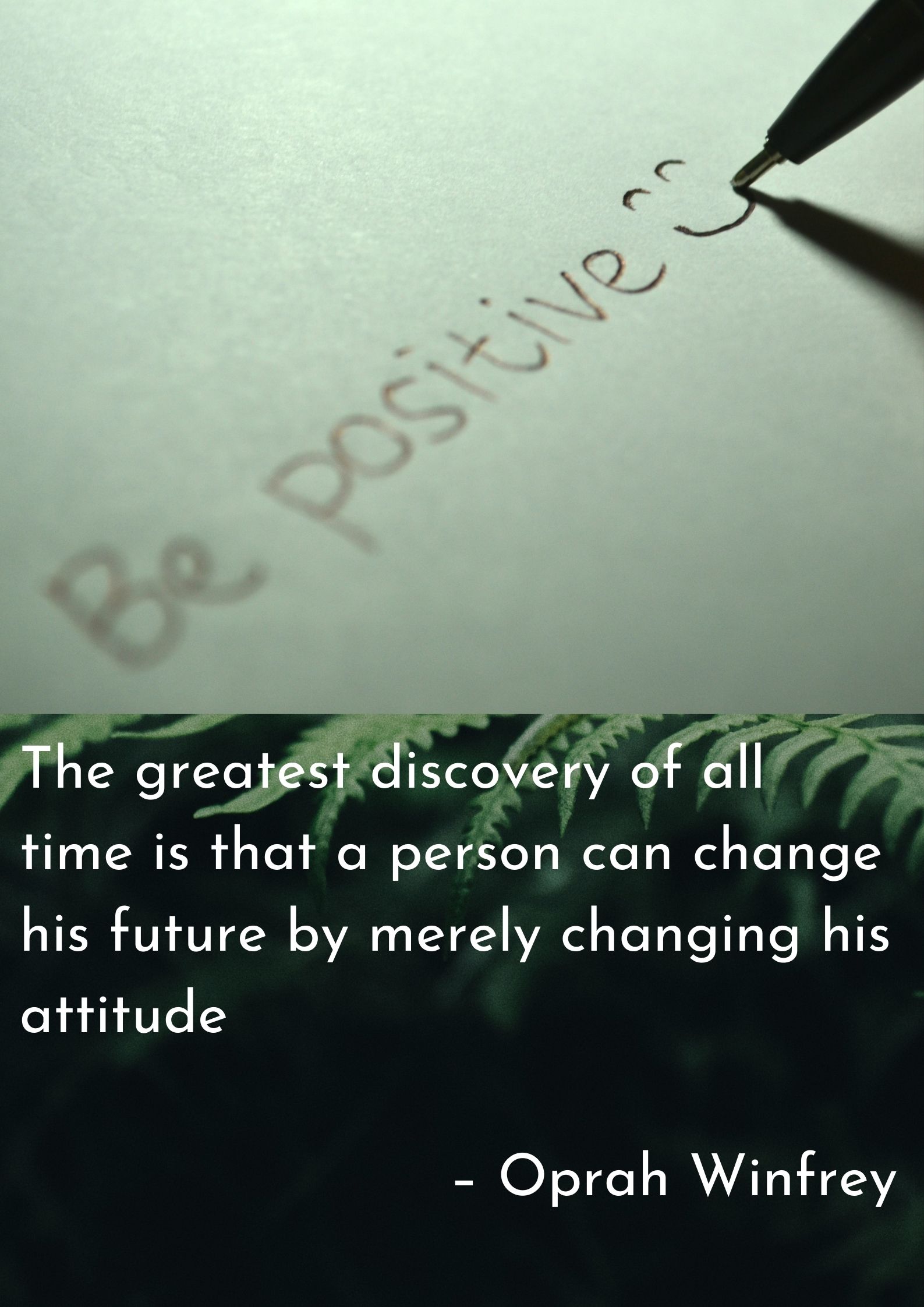
Today’s positivity quote is from the Queen of All Media, Oprah Winfrey which is all about having a positive attitude and how this will translate their lives. A good attitude is the key to ensuring your outlook in life is a forward facing one and this in turn will help an individual achieve the successes in life they want, be it personal, professional or even within the community.

The Tokyo Olympics are now ongoing and India has had a dream run there. Both hockey teams, Men and Women did very well, with the Men’s team getting the bronze and the Women’s team losing to Great Britain narrowly in the play-offs for the bronze. I was so looking forward to a gold from India and to see the tricolour rise up as the national anthem plays. I experienced this five years back at the Rio Olympics. It was a Saturday morning and I was at my doctor to get medicines. While waiting to pay the money, the TV started showing Joseph Schooling’s 100 meter butterfly event and the entire doctor’s office waited in bated breath to see if Schooling will make it to the podium. And when he came first, we all erupted in joy and cheer. I quickly paid the money and rushed home because I wanted to see the medal ceremony and when the Singapore flag was raised and the Majulah Singapura tune was played, I got goosebumps! And just I was typing this, we heard that India’s Neeraj Chopra took the gold for the men’s Javelin throw. And when S called me for the medal ceremony, I had that same rush of pride when I heard the strains of the Indian National anthem, Jana Gana Mana played.

In Singapore, 78% of the population have received at least 1 dose while 65% of the population have completed the full regimen. In Singapore, many vaccination centres have now a walk-in policy so anyone who is not yet vaccinated can just walk in and have it done. We are also preparing to get on with life with COVID as the country opens up its economy and moves towards treating the virus as endemic. Restrictions are slowly being eased, especially for those who are fully vaccinated and the hope is that by the end of the year, life will become a bit more normal, albeit a life having to live with the virus. A lot of other countries are also pushing for their citizens to become fully vaccinated with some like Pakistan using the carrot and stick approach where those who are not vaccinated and especially working for the government having salaries withheld and others having phone sim cards blocked and even not being allowed to leave the country. This may be a good approach, especially for those countries which have a lot of resistance to vaccination.

Singapore has been consistently reporting high double digit and low triple digits for the past few weeks, though we can see a declining trend. But and not in a good way, we have had a few deaths this week taking our death toll to 40. Almost every single person who passed away was unvaccinated and elderly, so to those who are on the fence, or have elderly and vulnerable at home who have vaccine hesitancy, just look at the numbers not only in your own country, but also elsewhere.

That’s all for this week. Some news was good while the others were not so good, but we’re all in here for the long haul and the sooner we have the upper hand on this virus, we faster we can move on and get our lives, which has been paused for almost two years now. Take care and talk soon!

In My Hands Today…

From Third World to First: The Singapore Story: 1965-2000 – Lee Kuan Yew

Few gave tiny Singapore much chance of survival when it was granted independence in 1965. How is it, then, that today the former British colonial trading post is a thriving Asian metropolis with not only the world’s number one airline, best airport, and busiest port of trade, but also the world’s fourth–highest per capita real income?

The story of that transformation is told here by Singapore’s charismatic, controversial founding father, Lee Kuan Yew. Rising from a legacy of divisive colonialism, the devastation of the Second World War, and general poverty and disorder following the withdrawal of foreign forces, Singapore now is hailed as a city of the future. This miraculous history is dramatically recounted by the man who not only lived through it all but who fearlessly forged ahead and brought about most of these changes.

Delving deep into his own meticulous notes, as well as previously unpublished government papers and official records, Lee details the extraordinary efforts it took for an island city–state in Southeast Asia to survive at that time.

Lee explains how he and his cabinet colleagues finished off the communist threat to the fledgling state’s security and began the arduous process of nation building: forging basic infrastructural roads through a land that still consisted primarily of swamps, creating an army from a hitherto racially and ideologically divided population, stamping out the last vestiges of colonial–era corruption, providing mass public housing, and establishing a national airline and airport.

In this illuminating account, Lee writes frankly about his trenchant approach to political opponents and his often unorthodox views on human rights, democracy, and inherited intelligence, aiming always “to be correct, not politically correct.” Nothing in Singapore escaped his watchful eye: whether choosing shrubs for the greening of the country, restoring the romance of the historic Raffles Hotel, or openly, unabashedly persuading young men to marry women as well educated as themselves. Today’s safe, tidy Singapore bears Lee’s unmistakable stamp, for which he is unapologetic: “If this is a nanny state, I am proud to have fostered one.”

Though Lee’s domestic canvas in Singapore was small, his vigor and talent assured him a larger place in world affairs. With inimitable style, he brings history to life with cogent analyses of some of the greatest strategic issues of recent times and reveals how, over the years, he navigated the shifting tides of relations among America, China, and Taiwan, acting as confidant, sounding board, and messenger for them. He also includes candid, sometimes acerbic pen portraits of his political peers, including the indomitable Margaret Thatcher and Ronald Reagan, the poetry–spouting Jiang Zemin, and ideologues George Bush and Deng Xiaoping.

Lee also lifts the veil on his family life and writes tenderly of his wife and stalwart partner, Kwa Geok Choo, and of their pride in their three children –– particularly the eldest son, Hsien Loong, who is now Singapore’s deputy prime minister.

For more than three decades, Lee Kuan Yew has been praised and vilified in equal measure, and he has established himself as a force impossible to ignore in Asian and international politics. From Third World to First offers readers a compelling glimpse into this visionary’s heart, soul, and mind.

Living Authentically: The Courage to Be Yourself

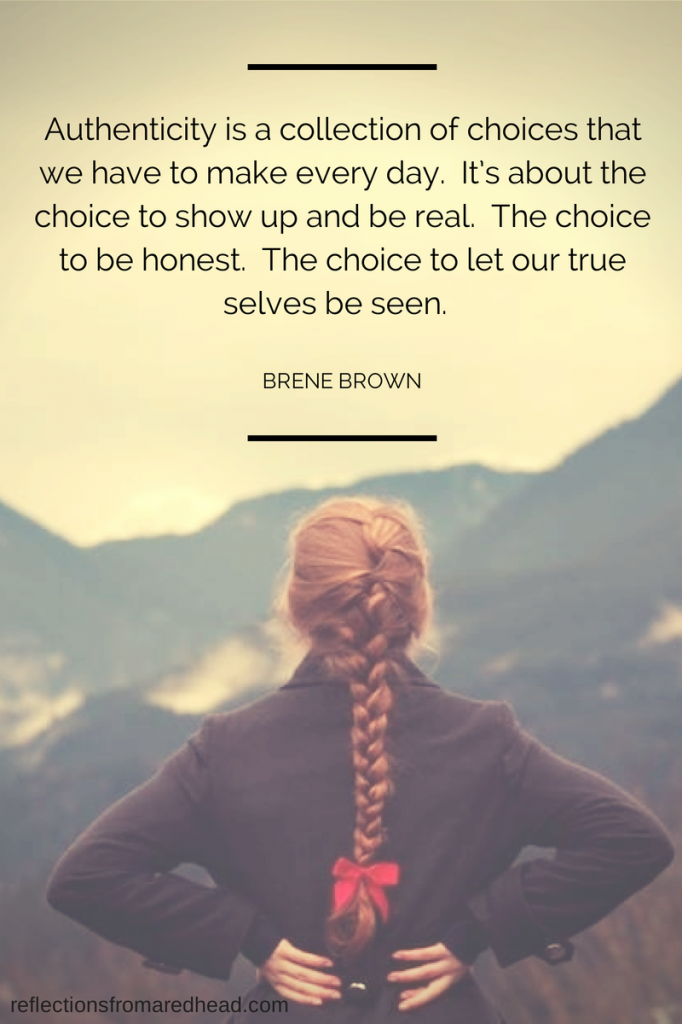
We’ve heard this phase ‘living an authentic life’ quite often now and I was intrigued about what this meant. So I decided to do a bit of research and found out that living authentically essentially means being true to one’s true self and know themselves inside out. Authenticity simply means embracing who you really are, at your very core, and acting in accordance to your own values and beliefs. Being authentic means coming from a real place within, when actions and words are congruent with beliefs and values. An authentic life involves following one’s passion and being intimately connected to our natural abilities, strengths, and talents. Authenticity may come at a cost, yet it typically leads to a richer, more complete life

Living authentically is not stagnant, it is constantly shifting and taking on new forms. We need to be continually learning about ourselves, challenging old beliefs, letting go of baggage we hold, learn to face and overcome fears and doubts. We need to reach deep inside ourselves and find out what makes us tick, what makes us happy, what makes our spirits soar and our heart just grow large, so we can find that part of ourself that is alive, free and unburdened and once we find that, have the courage to live that life. Authentic living requires us to embrace the reality of our freedom and be responsible for how we choose to live.

I personally believe that being authentic and living an authentic life comes about more as one grows older and hopefully wiser, one learns more about their own true self and starts to become more authentic. When one is younger, you tend to become influenced by your parents, family, peers, friends and what you see and read, both online and offline and to a very large extent, this influences your thinking, ideas and even hopes and aspirations with regard to life.

A way to reach our authentic self is to let go from the past and be grounded into the present because it is only then we can be open, curious and accepting of ourselves and others. Also how we perceive our authenticity is a crucial aspect of who we are. Not only does it significantly influence the pleasure we derive from our experiences, but it also affects our judgment and behavior across all aspects of our life. Authenticity and living a complete and fulfilling life are processes rather than outcomes. Living authentically involves moving in a direction that is most authentic to us as individuals.

Modern technology which is so intrusive and intimately connected to all aspects of contemporary existence, can also impact authentic living. As wearable technology continues to revolutionise the health, wellness, and sports sectors, providing previously unknowable biometric information to the general population, they offer, sometimes doubtful promises to enhance users’ lives.

In the long term, putting on an inauthentic front is tiring and ultimately damaging to our mental and physical wellbeing. So how do we go about learning to live an authentic life?

  • We need to become more aware of what is happening within ourselves, both physically and mentally. A stiff neck may be linked to what is going on in the mind, feelings, thoughts, and difficult decisions.
  • Give up the act of living according to what others expect you to act and do. Living a compartmentalised life and presenting a different version of yourself to different people is extremely draining. Live in line with your values and set clear standards for yourself from which you will not deviate from. Then when you stop pleasing everyone, you can achieve true authenticity.
  • We need to start listening to the inner voice rather than losing it in the noise of others’. Learn to listen to your hopes, dreams, and fears and when I say listen, I mean to really listen to what they are and how you will be able to achieve it.
  • Learn to be comfortable with being vulnerable because there is no authenticity where there is no truth, and there is no truth where there is no vulnerability. Honesty and openness are the oxygen for authenticity to thrive and there is no genuineness without a candid dose of reality first.
  • Know yourself inside out, what you are good at, what you are prepared to do, and what you are not. Face up to the truths of who you are. Honesty is not always pleasant, but it has the potential to free you. Be yourself; be honest and transparent in your dealings. People like and are drawn to those they perceive as sincere and genuine and distrust those who are not.
  • In the same vien, own yourself and your truths. Don’t let others push you into their way of thinking, but also don’t stick to views when you are proved wrong or they no longer work for you. Take responsibility for your choices.
  • Focus on the experiences and connections and not on possessions. Relations, especially meaningful relationships add a value to life that the fleeting and ephemeral value of belongings can’t touch. Ultimately, it all boils down to meaning, possessions only have meaning because of the value ascribed to them. When the tastes or standards change, as they are prone to, the meaning associated with the objects shifts. Long story short, there are very few tangible things that add any real value to life, but investing in people pays significant dividends over time.  Life is about experiences and memories, laughter and love, happiness and healing. But none of those things have any meaning without other people. Our legacy will be the lives we touch and the love we leave behind, everything else all fades away with the sands of time. Building a more authentic life means focusing on what matters.
  • Humility and authenticity go hand in hand. As babies, we don’t brag about our achievements, it’s only as we grow up and our egos start to develop, that we start using our achievements to brag about how important we are. To live a more authentic life, approach everything through the lens of humility and curiosity. Become an explorer, feeling your way through the twists and turns of the jungle that is your journey. It all starts with your willingness to take a step back and cultivate modesty.
  • If you want to live a more authentic life, you’ll have to ditch all that made you comfortable living an inauthentic life to begin with. And that means shifting your priorities. Instead of operating based on the expectations of others, learn to trust your own intuition instead. Charting your own course and blazing your own trail can indeed be scary. But at least you’ll know it serves you best because you trust your own instincts. And that’s what genuineness is all about.
  • Act, don’t react, you can’t live an authentic life if you’re constantly riding on the coattails of what other people are doing.  Instead of following along, take the lead. Instead of living according to everyone else’s expectations, embrace your intuition.
  • Embrace your imperfections. One of the reasons people tend to struggle with authenticity is because they strive for perfection. But perfection is elusive because the bar always gets raised. People tend to drive themselves crazy trying to tweak every little thing about their lives. Accept the messiness and complexity of your reality, that’s what makes for an authentic life.

To check if you are living an authentic life ask yourself the following questions:

  • Do you feel free to make your own choices?
  • Can you express your own views and opinions?
  • Are you able to yourself on a day-to-day basis?

If the answer is No to any of the questions, then reflect on them and also think about this – is this because you are not being true to who you really are?

Also, for those who are parents or will become parents, love your children unconditionally, this means the love is not conditional and does not depend on how the child lives up to a parent’s expectations. Doing this will eventually lead to voices in the head which are constantly critisising and pulling the child down, even when they grow up to become adults.

To live an authentic life, be open to new opportunities and experiences, seek new challenges, and transform the anxiety that forces you to hide into enthusiasm. Engagement can be one of the most positive paths to authenticity. To be real, one must follow their passions while remaining tied intimately to who they are, reflecting their strengths and virtues.

The formula to living authentically is this: Know yourself + Own yourself + Be yourself = The Authentic Life

In My Hands Today…

Singapore: A Biography – Mark R. Frost and Yu-Mei Balasingamchow

The cityscape of modern Singapore is in a constant flux, all in the name of development and progress. A sense of the physical past is consequently imited.

This new work, based on research done in collaboration with curators of the National Museum, seeks to invigorate links to Singapore’s past by weaving a cohesive narrative out of fragments of eyewitness accounts, correspondences and descriptions.

Taking readers through the earliest Ming dynasty Chinese accounts of the island, the founding of modern Singapore, its growth as an emporium and port city, the Japanese occupation, and finally self-determination and independence, this book lets the experiences of historical individuals speak to a modern audience, allowing them to reconnect with and find meaning in the past.

Music Appreciation: The most potent instrument of education

When I was young, most people I knew had a subscription to a local music sabha. A sabha is supposed to be a congregration or an assembly in ancient India and in the south, a music sabha is a conregration for music lovers, especially during the music season. Close to our home and very close to my grand mother’s home was the music sabha we went to. My grand parents were members and when they moved out of Bombay (when it was still Bombay and had not yet been renamed to Mumbai), my parents took over the membership.

I remember a representative from the sabha would come home once every few months and pass us the membership card along with the sabha schedule for the next few months. This was way before social media and mobile phones, so everything was done manually. This sabha was one of the most prestigiuous sabhas in Bombay at that time. It was established a few years after India’s independence with the aim of promoting the fine arts and provide a platform to showcase various artists in the various areas of the fine arts, especially music, dance and drama.

My parents and grand parents from both sides used to look forward to this programme and we would also be taken to the sabha for a dose of culture and music appreciation. Sometimes when a friend was also going there, we would not mind going, but most times we would rebel. When they could not get us to accompany them, my mum would leave us at my grandmother’s house which was just 2-3 minutes away from the sabha and go and enjoy the concert. We would enjoy the next few hours in the company of friends and when the concert ended, they would come to my grand mother’s house, have dinner and go home. Most of the concerts used to involve classical Carnatic music and dancen and when a distinguished artist was scheduled to perform, people would beg and borrow extra passes so family and friends could also listen and see the artist at play. 

When a distinguished artist was performing, we would all troop down to the sabha and any requests to stay at home would not be entertained as this would be a rare opportunity to hear and see such a distinguished performer. Relatives who stayed in other parts of the city would also make their way and I remember an aunt, my mother’s sister who was herself a singer and had learnt Carnatic music when she was younger would come down, especially if the concert was on a Saturday and stay at her mum’s place so she could attend it. I remember either attending or my parents attending performances by M.S Subbulakshmi among other celebrated artists.

When I just finished school, the sabha was unfortunately destroyed in a devastating fire and for a very long time all performances were stopped while it was being rebuilt. By then, we had all grown up and after a few more years of being members, my parents also gave up their membership and the sabha is now just a distant memory or a place for nostalgia when we pass by it.

Though I didn’t really recognise it then, this forced attendance has help me appreciate music. Though I did learn Carnatic music and my sister learnt Bharatanatyam, as did pretty much every tambram girl I knew, we did not take it up far and gave it up when school got too much for us. But those lessons and the concerts and dance performances we attended gave us a appreciation of what good music was all about. We learnt how to carry a tune and recognise when someone is out of tune. Even today, when I hear music which is even slightly out of tune, even though I may not recognise the raga being played, I know it is not correct and I wince, mostly unconsciously.

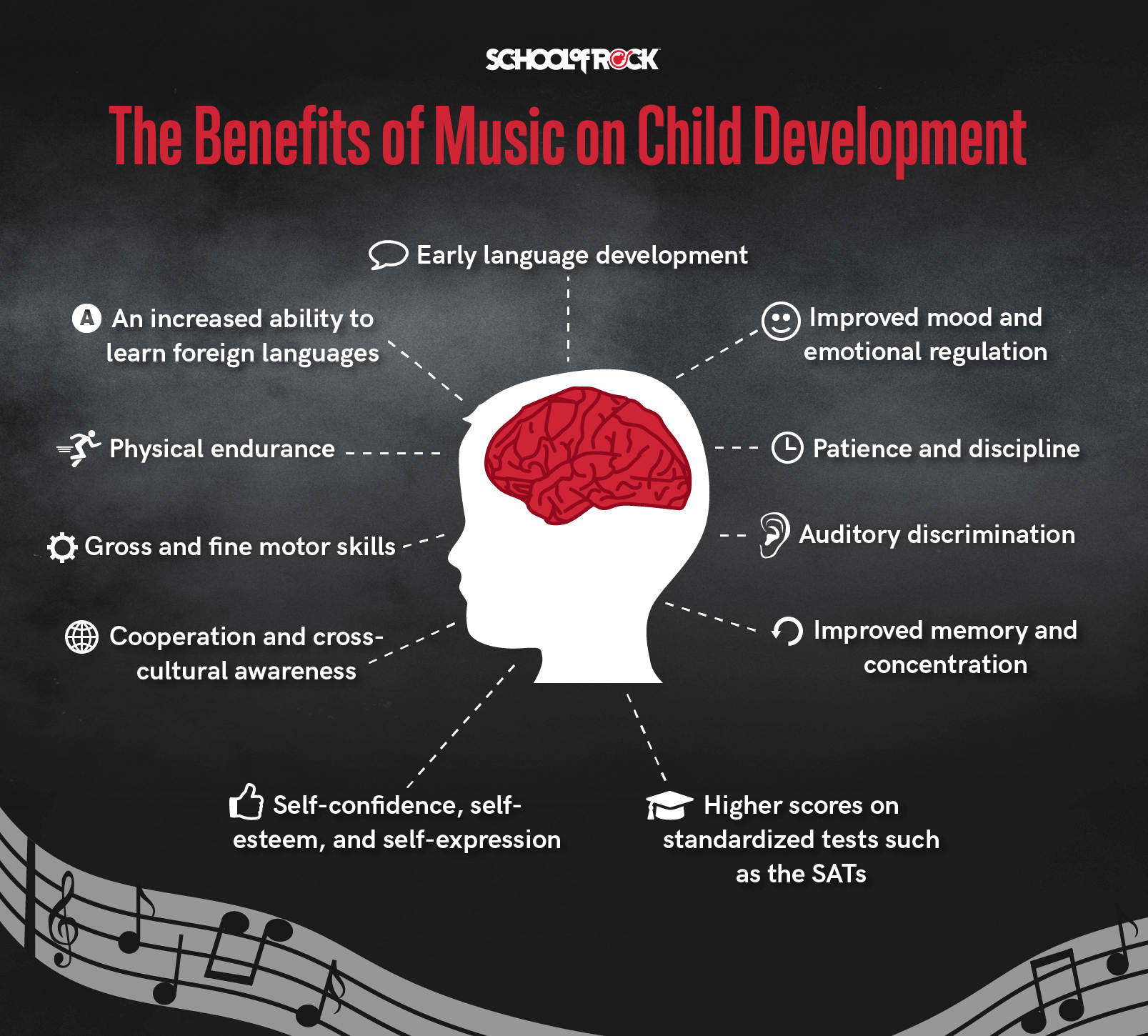
Today, research has confirmed what our parents and grandparents instinctively knew. That when you learn and listen and appreciate good music, it is extremely beneficial, especially to young children. Music is a megavitamin for the brain, the ultimate mood enhancer for emotional balance, a golden key for unlocking creativity, the secret code behind health and longevity, and the connective fiber between human beings of all races, nationalities and generations.

Musical training helps develop language and reasoning as it develops the areas of the brain related to language and reasoning. Children who are exposed to music early are more emotionally developed with empathy towards other cultures and also tend to have a higher self esteem and are better at coping with anxiety. Math and pattern recognition skills are developed with a music education and someone who has learnt music can better detect meaningful, information-bearing elements in sounds. Music also builds the imagination and intellectual curiosity and help foster a positive attitude toward learning and curiosity. An artistic education develops the whole brain and develops a child’s imagination. It is universally known that music helps fight stress and can be incredibly relaxing and also develop spatial intelligence in children.

When I look back in hindsight, I am so thankful to my parents for forcing this on me, even when I could not see it then. At that time, all it meant that going to classical concerts and dance performances meant that my Saturday evenings were being wasted, and I could use that time to play with friends. But today, as I do the same to my children, I realise how much this has benefitted me. GG & BB started learning Carnatic vocal music at about the age of seven. BB dropped it when he was about 12, when puberty hit and his voice started to break, but GG has still continued to learn. When I told her she could drop it if she wanted to, she told me it was very relaxing and wanted to continue. I do believe that these forced lessons have made them appreciate good music, even if their current music taste is not classical. GG also learnt western ballet for almost a decade, but gave it up when school got too much to balance. Today GG continues to sing, both classical and other music while BB, who actually has a good voice and a head for tune, sings very casually, though he will not really admit it.