Mumbai Memories: Calling Her by Name

Tamil kinship terminology is among the most nuanced in the world, distinguishing not only between maternal and paternal relatives but also between older and younger siblings, in-laws, and even parallel and cross cousins. Within this system, “manni” specifically denotes the wife of an elder brother. Other names are Anna, who is the older brother; chitappa, your father’s younger brother or your mother’s younger sister’s husband; and chitti, the wife of your father’s younger brother or your mother’s younger sister. Athai is your father’s sister, and Athimber is her husband. “Athimber” could also refer to the husband of your older sister. The use of these terms is not arbitrary but is deeply embedded in the social fabric, reinforcing respect, hierarchy, and the roles expected of each family member.

The “manni” traditionally occupies a unique position. She is often seen as a secondary maternal figure to her husband’s younger siblings, especially in large joint families. The respect accorded to her is both a reflection of her status as the wife of the eldest son and a recognition of her role in maintaining familial harmony and upholding traditions.

In the patriarchal structure of Tamil Brahmin families, the use of kinship terms such as “manni” is a way of codifying respect and maintaining the social order. The elder brother’s wife is, by her position, to be respected, and the term “manni” is both an acknowledgement of her seniority and a subtle reinforcement of the family hierarchy. This practice also reflects gendered expectations. While the elder brother commands respect as “Anna,” his wife, as “Manni,” is expected to embody dignity, authority, and nurturing, often mediating between the younger siblings and the older generation.

Tamil Brahmin families, especially the Iyers and Iyengars, have historically been fastidious about ritual purity and the correct observance of customs. The use of proper kinship terms was, and in some cases still is, considered part of this ritual correctness. Addressing the elder brother’s wife by her name, rather than as “manni,” could be seen as a breach of decorum, potentially undermining the carefully maintained social order.

However, the latter part of the 20th century saw significant social and economic changes. Urbanisation, the rise of nuclear families, and increased exposure to cosmopolitan values began to erode the rigid hierarchies of the past. As families became smaller and more egalitarian, the need to maintain strict forms of address diminished. Younger generations, influenced by modern education and global culture, began to prioritise individual identity and personal relationships over traditional roles.

My mother’s paternal family is large, and as I have mentioned previously, they lived in a joint family for years before each brother moved out. Even though they moved out, the old joint family home was still the family headquarters, and connections between cousins were very tight. Also, as most tambram families were in the sixties and seventies in Mumbai, they were still conservative and held on tightly to their rituals and culture, especially with the second generation, who were, for the most part, born and lived in the bustling metropolis that Bombay was becoming.

In this context, and this is something I only realised recently, was the fact that none of the cousins called their brother’s wives “Manni.” Instead, they used her given name. Growing up, I thought this was normal and never gave it a second thought. But when I thought about this recently, I thought this was something so liberal and progressive. None of the older generation objected to this, and I am guessing none of the new brides, especially the first one, insisted on being called “manni!” And this percolated to how I perceived relationship nomenclature.

When I got married, S’s younger sister called me “Manni” and still calls me that, even after all these years, even though I told her to call me by my given name. Some of S’s cousins started by calling me manni and then shifted to my given name, while some others call me akka, which means older sister. I am ok with either “manni,” my name, or akka, as I believe at the end of the day, it’s the respect that’s more important, rather than what you are called.

Addressing sisters-in-law by name, rather than as “manni,” can be seen as a subtle but powerful assertion of equality. It signals a move away from rigid hierarchies and towards relationships based on mutual respect and personal connection.

Tamil Brahmin identity has undergone a profound transformation over the past century. Once defined by strict adherence to ritual, vegetarianism, and caste-based hierarchies, the community has become increasingly cosmopolitan, embracing modernity and global values. The decline of practices such as addressing the elder brother’s wife as “manni” is part of this broader shift. Women in Tamil Brahmin families have played a crucial role in this transformation. As they gained access to education and employment, their roles within the family and society changed dramatically. The authority of the “manni” was no longer derived solely from her position as the elder brother’s wife but from her own achievements and personality.

Ultimately, the choice of how to address a sister-in-law is a personal one, shaped by family dynamics, individual preferences, and broader social trends. What matters most is the quality of the relationship, not the form of address.

2025 Week 48 Update

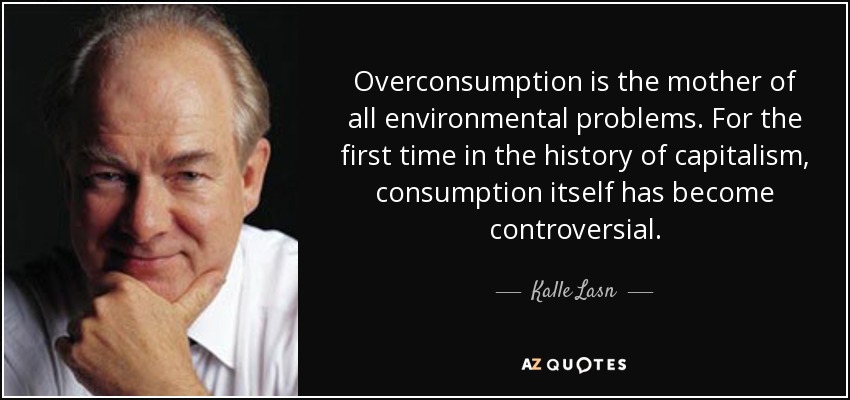
Known for writing and speaking on spirituality, personal growth, and principles rooted in Eastern philosophies, this quote by Sham Hinduja explains karma in a simple, grounded way. Karma isn’t about cosmic punishment or reward; it’s about understanding that every action has a consequence. What you put into the world eventually circles back to you, not necessarily in a dramatic or mystical sense, but in a very practical one.

When you act with kindness, integrity, or generosity, you shape an environment that tends to return those qualities to you over time. Likewise, negative actions, whether rooted in anger, fear, or selfishness, set off reactions that create difficulty down the road. Karma encourages self-awareness. It reminds you that your choices carry weight and that your thoughts, words, and behaviour quietly build the future you’ll one day walk into.

It’s also a call to responsibility. Instead of blaming luck or fate, the law of karma shifts the focus inward: what am I contributing? What patterns am I creating? How might my actions today ripple into tomorrow? This perspective gives you more control over your life, because it shows that every moment is an opportunity to sow something better.

This week was a very hectic week for me, so it flew past! The children were busy with their lives, so altogether, though we didn’t do much, it felt like the week started and ended almost immediately! As the children get older and busier with their lives, I feel that I know less about their lives than when they were younger. Earlier this week, Facebook reminded me about their kindergarten graduation with photos, and they looked so young and so full of enthusiasm for their new lives in primary school. Sigh! How time flies!!

Today’s motivation is about fresh starts. It’s never too late to make a fresh start. Each day brings new opportunities. Take a moment to stop, breathe, and set an intention to start fresh every day. Don’t let yesterday’s disappointments ruin today. Create space for more joy. Today, you have a chance to try again and to look at things in a different way. When you live fully in the present, you feel more empowered to embrace opportunities to do something you never expected. Focus on the good things you can do in the present moment.

That’s all I have for you this week. Stay positive, keep smiling, and remember that it’s never too late to make a fresh start!

In My Hands Today…

Salt, Fat, Acid, Heat: Mastering the Elements of Good Cooking – Samin Nosrat, illustrated by Wendy MacNaughton

A visionary new master class in cooking that distills decades of professional experience into just four simple elements, from the woman declared “America’s next great cooking teacher” by Alice Waters.

In the tradition of The Joy of Cooking and How to Cook Everything comes Salt, Fat, Acid, Heat, an ambitious new approach to cooking by a major new culinary voice. Chef and writer Samin Nosrat has taught everyone from professional chefs to middle school kids to author Michael Pollan to cook using her revolutionary, yet simple, philosophy. Master the use of just four elements—Salt, which enhances flavor; Fat, which delivers flavor and generates texture; Acid, which balances flavor; and Heat, which ultimately determines the texture of food—and anything you cook will be delicious. By explaining the hows and whys of good cooking, Salt, Fat, Acid, Heat will teach and inspire a new generation of cooks how to confidently make better decisions in the kitchen and cook delicious meals with any ingredients, anywhere, at any time.

Echoing Samin’s own journey from culinary novice to award-winning chef, Salt, Fat Acid, Heat immediately bridges the gap between home and professional kitchens. With charming narrative, illustrated walkthroughs, and a lighthearted approach to kitchen science, Samin demystifies the four elements of good cooking for everyone. Refer to the canon of 100 essential recipes—and dozens of variations—to put the lessons into practice and make bright, balanced vinaigrettes, perfectly caramelized roast vegetables, tender braised meats, and light, flaky pastry doughs.

Featuring 150 illustrations and infographics that reveal an atlas to the world of flavor by renowned illustrator Wendy MacNaughton, Salt, Fat, Acid, Heat will be your compass in the kitchen. Destined to be a classic, it just might be the last cookbook you’ll ever need.

Sacred Stones, Spaces, and Stories: Ashtavinayaka Part 5

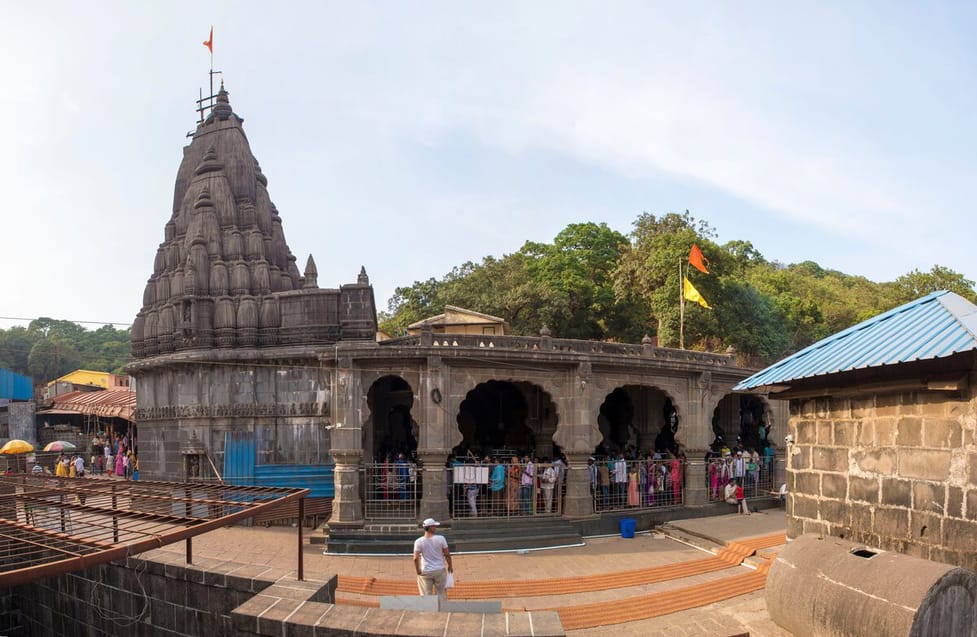
Nestled in Raigad district, in the tranquil town of Mahad, stands the Varadavinayak Temple, one of the eight Ashtavinayak shrines dedicated to Lord Ganesha. Unlike the grandiosity of some other pilgrimage sites, Varadavinayak’s charm lies in its simplicity, serenity, and the promise of fulfilled wishes. The name, Varadavinayak, or “the Bestower of Boons,” draws thousands of devotees each year who seek blessings, prosperity, and the removal of life’s obstacles.

Mahad is a small, peaceful town located close to Khopoli and Karjat, easily accessible from Mumbai and Pune. The temple is surrounded by lush greenery, with a sacred pond to the west and a banyan tree within the complex, adding to the tranquil atmosphere. The setting is intentionally simple, reflecting the ethos of humility and devotion that underpins the Ashtavinayak pilgrimage.

The mythological roots of Varadavinayak are woven with drama, penance, and divine intervention. According to legend, King Bhima of Koudinyapur and his queen, longing for a child, were blessed by Sage Vishwamitra with the Ekashar Gajana Mantra. Their prayers bore fruit in the form of a son, Prince Rukmaganda, who grew into a handsome and virtuous young man.

During a hunting trip, Rukmaganda stopped at the ashram of sage Vachaknavi. The sage’s wife, Mukunda, was enamoured by the prince and propositioned him. Rukmaganda, steadfast in his morals, refused and left. Mukunda, lovesick, was deceived by Indra, the king of gods, who took Rukmaganda’s form and united with her. She bore a son, Gritsamada. When Gritsamada learned the truth of his birth, he was furious. He cursed his mother, Mukunda, to become the thorny bhor, a berry plant. In turn, Mukunda cursed her son, declaring that he would bear a demon child. At that moment, a divine voice revealed that Gritsamada was the son of Indra, but the curses remained irreversible.

Ashamed and seeking redemption, Gritsamada retreated to the Pushpak forest, the present-day site of Mahad, to perform intense penance to Lord Ganesha. He chanted the sacred mantra “GaNanaN Tva” and worshipped with unwavering devotion. Pleased, Ganesha appeared before him, granting several boons: Gritsamada would have a powerful son, Tripurasura, later defeated by Lord Shiva, and the forest itself would be blessed. Anyone who worshipped Ganesha here would have their wishes fulfilled. Gritsamada requested Ganesha to remain in the forest, and thus the deity manifested as Varadavinayak, the giver of boons, enshrined in Mahad.

The current temple structure dates back to 1725 AD, when Subhedar Ramji Mahadev Biwalkar, a Peshwa general, restored and rebuilt the shrine. The original idol of Varadavinayak was discovered in a nearby lake by Dhondu Paudkar in 1690 AD and later installed in the temple.

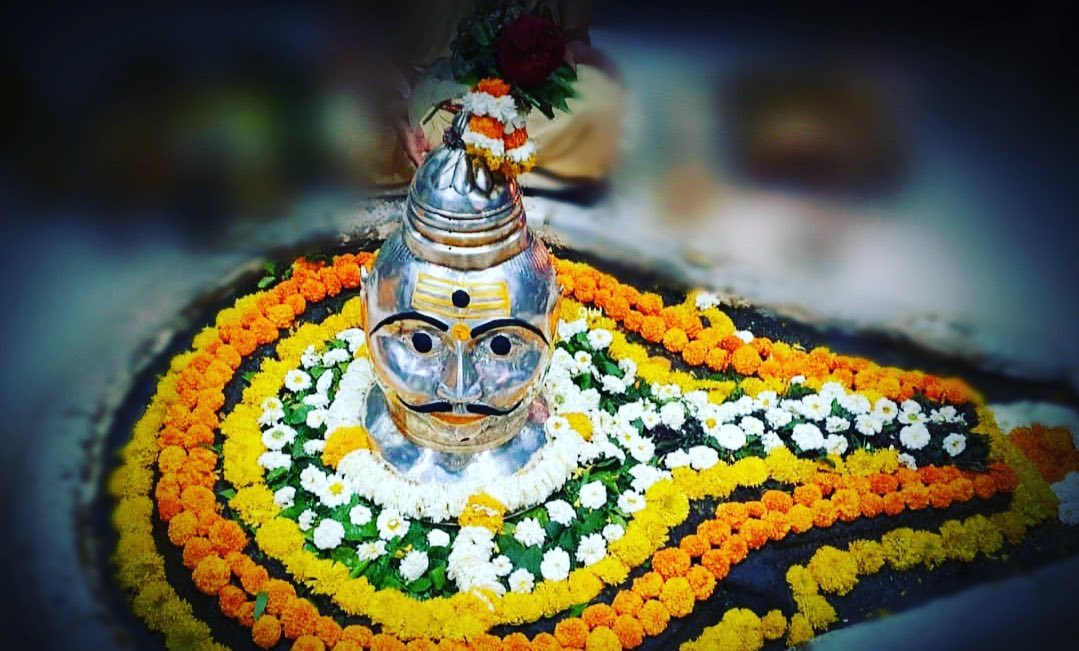
The temple is constructed from black stone, with a modest hall of some 8×8 feet and a 25-foot-high dome crowned with a golden pinnacle. The dome is adorned with cobra motifs, symbolising divine protection and energy. The sanctum houses the swayambhu, or self-manifested idol, of Lord Ganesha, facing east with a left-turned trunk. The idol is flanked by stone images of Riddhi and Siddhi, the goddesses of prosperity and spiritual power. The temple complex includes a Shiva Linga, a Mushika, Ganesha’s mouse vehicle, Navagraha, the nine planetary deities, and a Gomukh, a sacred water spout to the north. Unlike most temples, devotees at Varadavinayak are allowed to enter the sanctum and perform rituals directly on the idol, fostering an intimate connection between worshipper and deity. The temple’s oil lamp, the Nandadeep, has reportedly burned continuously since 1892, symbolising eternal devotion and divine presence. Within the temple grounds, a sacred banyan tree is tied with coconut offerings by devotees seeking the fulfilment of wishes.

Devotees seek blessings by entering the sanctum and offering prayers directly to the idol, a rare privilege among Ashtavinayak temples. The abhishek ritual involves pouring milk, water, and flowers over the deity while chanting prayers. This ritual is believed to remove obstacles and bring prosperity. Special permission from temple authorities is required to perform abhishek. The temple holds daily aartis in the morning and evening. The evening aarti, in particular, is a vibrant and spiritually charged event, drawing crowds of worshippers. Devotees offer modaks, sweet dumplings, Lord Ganesha’s favourite treat, as a symbol of gratitude and devotion.

Devotees tie coconuts around the banyan tree in the temple courtyard, praying for the fulfilment of specific wishes. This ritual is especially popular among those seeking children or success in personal endeavours. On Maghi Chaturthi, it is believed that consuming the coconut prasad can bless a devotee with a child, making this festival particularly significant for childless couples.

The temple’s major festivals are celebrated during the waxing moon period, the Shuddh Paksha, of Bhadrapad in August–September and Magh in January–February, from the first day to Panchami, the fifth day. Festivities include Pranpratistha, the consecration of the idol, marking the spiritual renewal of the temple. Abhisheks and special pujas are elaborate rituals and collective prayers, with thousands of devotees participating in the holy bathing, or abhishek, and worship of the deity. The temple is filled with devotional music, chanting, and the aroma of incense, creating an atmosphere of intense spiritual energy. During these festivals, the temple and its surroundings come alive with processions, communal feasting, and the sharing of prasad, reinforcing the temple’s role as a centre of community and faith.

The Varadavinayak idol is considered swayambhu, or self-manifested, and was discovered in a lake, lending it a weathered and ancient appearance. The presence of two idols, the original outside and a replacement inside, has sparked debate, but both are revered by devotees. Varadavinayak is the only Ashtavinayak temple where devotees can personally touch and perform rituals on the idol. This unique tradition fosters a deep sense of connection and accessibility, making the act of worship more personal and immediate. The Nandadeep, said to have burned continuously for over a century, represents the unbroken chain of devotion and the ever-present blessings of Lord Ganesha.

The ritual of tying coconuts to the banyan tree is a living testament to the temple’s reputation as a wish-fulfilling shrine. The tree is seen as a witness to countless prayers and dreams, many of which devotees claim have been answered.

Varadavinayak is traditionally the fourth or seventh stop in the Ashtavinayak pilgrimage circuit, depending on the route taken. Its proximity to Mumbai makes it one of the most accessible temples, drawing urban devotees seeking a spiritual respite and the fulfillment of desires. The temple is not just a place of worship, but a hub of community life. Festivals and daily rituals bring together people from all walks of life, fostering a spirit of unity and shared purpose. The distribution of prasad, communal meals, and collective prayers are integral to the temple’s vibrant spiritual culture.

In My Hands Today…

Ghosted: An American Story – Nancy French

A riveting look inside a life of poverty, success, and the inner circles of political influence–from the foothills of Appalachia all the way to the White House.

New York Times bestselling ghostwriter Nancy French is coming out of the shadows to tell her own incredible story. Nancy’s family hails from the foothills of the Appalachians, where life was dominated by coal mining, violence, abuse, and poverty.

Longing for an adventure, she married a stranger, moved to New York, and dropped out of college. In spite of her lack of education, she found success as a ghostwriter for conservative political leaders. However, when she was unwilling to endorse an unsuitable president, her allies turned on her and she found herself spiritually adrift, politically confused, and occupationally unemployable.

Republicans mocked her, white nationalists targeted her, and her church community alienated her. But in spite of death threats, sexual humiliation, and political ostracization, she learned the importance of finding her own voice–and that the people she thought were her enemies could be her closest friends.

A poignant and engrossing memoir filled with humor and personal insights, Ghosted is a deeply American story of change, loss, and ultimately love.