Regret is a complex and multifaceted emotion that plays a significant role in the decision-making process and one’s overall well-being. It involves the cognitive and emotional recognition that something desirable did not occur, often due to our actions or inactions. While regret can be challenging to grapple with, understanding its psychology and learning strategies to make better decisions can help us lead more fulfilling lives with fewer regrets.
Regret is an inevitable part of the human experience, particularly in modern times when we are faced with many choices. This emotion can range from mild and fleeting to intense and long-lasting, potentially haunting individuals for years or even a lifetime.
Regret is often characterised by several key components. Self-reproach is a sense of responsibility for the negative outcome, while sadness is about the emotional distress over what could have been. Ruminations are persistent thoughts about the decision and its consequences, and a desire for change is a wish to undo or alter the past decision. Regret can be triggered by both actions taken and opportunities missed. Interestingly, research suggests that regrets related to inaction—the roads not taken—tend to be more persistent and harder to overcome than those stemming from actions.
While regret is a natural and sometimes beneficial emotion, excessive or chronic regret can have significant negative impacts. Regret has been linked to anxiety, depression, and sleep problems. It can increase stress levels and negatively affect hormones and immune systems. Regret, which is also the fear of future regret, can lead to decision paralysis or overly cautious choices. However, when managed effectively, regret can also serve as a catalyst for personal growth and improved decision-making.
To better understand regret and how to manage it, it’s crucial to explore the psychological mechanisms at play.
Several cognitive biases can influence our experience of regret. Negativity bias is the tendency to focus more on negative experiences than positive ones. In black-and-white thinking, one views situations as entirely good or bad, with no middle ground. Catastrophising is assuming the worst possible outcome in a given situation. These biases can amplify feelings of regret and make it more difficult to move past negative experiences.
Regret is closely tied to counterfactual thinking – the process of imagining alternative outcomes to past events. While this type of thinking can sometimes lead to rumination and increased distress, it also plays a crucial role in learning from our experiences and improving future decision-making.
Not everyone experiences regret in the same way. Factors that can influence an individual’s propensity for regret include perfectionism, where those with perfectionistic tendencies may be more prone to regret. Maximisers who seek optimal outcomes tend to experience more regret than satisficers who are content with good enough results. The more opportunities one perceives, the greater the potential for regret.
While it’s impossible to completely eliminate regret from our lives, there are several strategies we can employ to make better decisions and minimise future regrets.
Embrace Self-Compassion: Practicing self-compassion is crucial in managing regret and making better decisions. This involves acknowledging that everyone makes mistakes and experiences regret, treating yourself with kindness and understanding, and using past experiences as learning opportunities rather than sources of self-criticism.
Develop Emotional Intelligence: Improving your emotional intelligence can help you better understand and manage your feelings of regret. Practice identifying and naming your emotions accurately, learn to accept and sit with uncomfortable emotions rather than avoiding them, and use emotional awareness to inform your decision-making process.
Utilise Counterfactual Thinking Constructively: Instead of getting stuck in unproductive rumination, use counterfactual thinking to your advantage. Analyse past decisions objectively to identify areas for improvement, focus on controllable factors that you can change in the future, and use insights gained from this process to inform future decisions.
Implement a Structured Decision-Making Process: Adopting a systematic approach to decision-making can help reduce the likelihood of future regrets. Clearly define the decision to be made, gather relevant information and consider multiple perspectives, identify and evaluate potential alternatives, make a choice based on your values and priorities, implement your decision and monitor the results, and reflect on the outcome and learn from the experience.
Practice Mindfulness: Incorporating mindfulness into your decision-making process can help you make more thoughtful choices. Stay present in the moment and avoid getting caught up in past regrets or future anxieties, pay attention to your thoughts and feelings without judgment, and use mindfulness techniques to reduce stress and enhance clarity when facing important decisions.
Cultivate a Growth Mindset: Adopting a growth mindset can help you view regret as an opportunity for learning and personal development. Embrace challenges as chances to grow and improve, see failures and mistakes as valuable learning experiences, and focus on the process of improvement rather than fixating on outcomes.
Consider Long-Term Consequences: When making decisions, try to look beyond immediate gratification and consider the long-term implications. Visualise how you might feel about your choice in the future, consider how the decision aligns with your core values and life goals, and use techniques like the “10-10-10” rule: How will you feel about this decision in 10 minutes, 10 months, and 10 years?
Seek Multiple Perspectives: Gathering input from others can help you make more well-rounded decisions. Consult with trusted friends, family members, or mentors, seek out diverse viewpoints to challenge your assumptions, and be open to constructive feedback and alternative perspectives.
Learn to Forgive Yourself: Developing the ability to forgive yourself for past mistakes is crucial in managing regret. Acknowledge that you did the best you could with the information and resources available at the time, practice self-forgiveness exercises, such as writing a letter of forgiveness to yourself, and use the REACH model: Recall the hurt, Empathise, Altruistically offer forgiveness, Commit publicly, and Hold onto forgiveness.
Embrace Uncertainty and Imperfection: Accepting that life is inherently uncertain and that perfect decisions are rarely possible can help reduce regret. Recognise that some level of risk is inevitable in decision-making, focus on making good enough decisions rather than striving for perfection, and embrace the idea that mistakes and regrets are part of the human experience and can lead to personal growth.
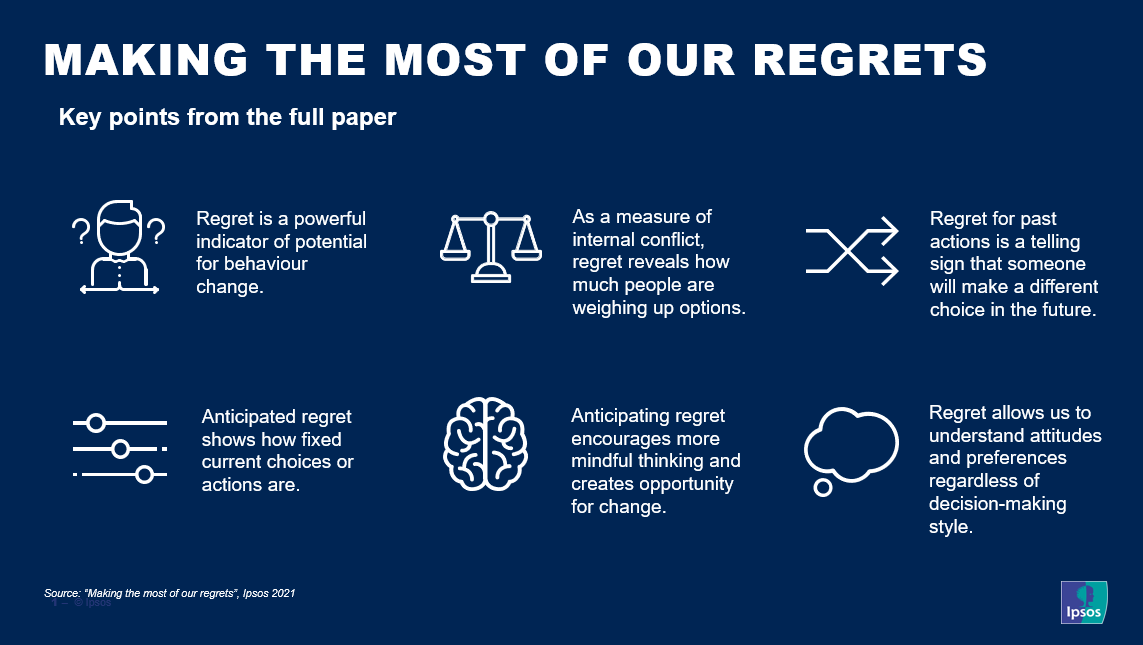
While regret is often viewed negatively, research suggests that people value regret more than many other negative emotions. This seemingly paradoxical finding highlights the potential benefits of regret when managed effectively. Regret can serve as a powerful motivator for personal development and behaviour change. The experience of regret can inform future choices, helping us avoid similar mistakes. Reflecting on regrets can provide valuable insights into our values and priorities. The counterfactual thinking associated with regret can improve our ability to identify and address issues. Sharing regrets can foster empathy and strengthen relationships.
To make the most of regret’s potential benefits, reflect on the lessons learned from past regrets, identify patterns in your regrets to uncover areas for personal growth, use regret as motivation to take positive action in the present, and share your experiences with others to gain new perspectives and foster connection.
Regret is a complex emotion that plays a significant role in our lives and decision-making processes. While it can be challenging to experience, understanding the psychology of regret and implementing strategies to make better decisions can help us lead more fulfilling lives with fewer regrets. By embracing self-compassion, developing emotional intelligence, utilising counterfactual thinking constructively, and implementing structured decision-making processes, we can learn to navigate life’s choices more effectively. By cultivating a growth mindset, considering long-term consequences, seeking multiple perspectives, and learning to forgive ourselves, we can transform regret from a source of distress into a catalyst for personal growth and improved decision-making.
The goal is not to eliminate regret entirely—as it is a natural and sometimes beneficial part of the human experience—but to develop a healthier relationship with this emotion. By doing so, we can make decisions that align more closely with our values and aspirations, leading to a life of fewer regrets and greater satisfaction. Perfection is not attainable, and some level of regret is inevitable. But, by maintaining a balanced perspective, we can learn to make peace with our regrets and use them as stepping stones toward a more fulfilling future.








 Memories and Such