Why Everyone Is Tired, Even When Life Is Easier

There is a strange contradiction at the heart of modern life. In so many practical ways, life is easier than it has ever been. We have washing machines, food delivery, ride-hailing apps, digital banking, online shopping, Google Maps, YouTube tutorials, WhatsApp, household appliances, remote work, medical technology, easier travel, and more information than any generation before us could have imagined. And yet everyone is tired.

Not just physically tired, though there is plenty of that, too. This is a different kind of tiredness. Mental tiredness. Emotional tiredness. Social tiredness. Decision fatigue. Digital exhaustion. Financial stress. The kind of tiredness where nothing is exactly wrong, but everything feels like too much. The kind of tiredness that does not always go away after one night of sleep, because it does not come only from the body. It comes from the mind being permanently switched on.

We are tired even when life is easier because convenience has not given us rest. It has given us more things to manage. This is not to romanticise the past. I have no desire to return to a world without washing machines, online banking, reliable transport apps, or medical advances. Some things are genuinely easier now. Compared with my childhood, and certainly compared with my parents’ generation, everyday life has become convenient in countless ways. We can order groceries from our phones, transfer money in seconds, find directions anywhere, learn how to fix almost anything online, and speak to family across countries without waiting for expensive trunk calls or letters. These are not small things. They matter.

But ease is not the same as rest. Comfort is not the same as peace. Convenience is not the same as lightness. In fact, many conveniences have removed one kind of labour while adding another. Food delivery means we do not have to cook, but now we must scroll through two hundred options, compare prices, check delivery fees, wonder if it is too expensive, and feel mildly guilty for not making something at home. WhatsApp makes communication instant, but now everyone can reach us instantly. Online shopping saves time, but it also creates endless comparisons. Digital banking saves a trip to the bank but adds passwords, OTPs, app updates, portals, and the quiet fear of scams. Google Maps helps us navigate, but perhaps also makes us less patient when the journey is not optimised.

The work has changed shape. It has moved from our hands into our heads. Maybe this is why so many of us feel tired in a way that is hard to explain. We are not always doing more physically, but we are thinking more constantly. Remembering more, comparing more, deciding more, tracking more, responding more, planning more, and worrying more.

I feel this myself. Some days I am more tired than others, but the tiredness is there. I am tired of trying to be a productive member of society. Tired from job searching, tired from managing health, tired from overthinking, tired from always being the planner, tired from long-distance caregiving, tired from ageing, and tired from holding too many tabs open in my head.

The sentence that describes it best is this: I am not tired because I do too much, but because I am always thinking about what still needs to be done. That is the modern condition, isn’t it? The unfinished list follows us everywhere. Even when we sit down, the list sits beside us. Even when we sleep, it waits. Even when we rest, part of us is scanning the horizon for what we have forgotten.

When I am tired, I become irritable and cranky. Sometimes I dissociate from things and simply want to be left alone. I lose interest even in things I love, including writing. I watch mindless content, not because it truly rests me, but because real rest feels too difficult. This too is a modern pattern. We choose fake rest because it asks less of us. Scrolling, watching videos, online browsing, half-reading, half-listening, half-existing. It distracts us, but it does not restore us. Real rest is harder. Real rest requires us to stop performing usefulness, even to ourselves.

Our parents’ generation was tired too, though perhaps in different ways. Their lives were physically harder. Fewer appliances, less convenience, more social obligations, fewer choices, and more rigid roles. Women, especially were expected to ignore tiredness. They carried on. They cooked, cleaned, cared, hosted, remembered, and swallowed exhaustion because saying “I am tired” was not always allowed. Tiredness could be dismissed as weakness. Weakness could be called laziness.

Children, too were not usually allowed to be tired. We were told to study, help, behave, and stop complaining. “Don’t waste time” was a common enough message. “Do something useful” was another. The idea that rest could be necessary rather than indulgent did not always exist in the language we grew up with.

But while the older generations had fewer conveniences, they may also have had less mental clutter in certain ways. There was no social media feed carrying the world into their minds every morning. No constant news alerts. No endless comparison with everyone’s holidays, homes, children, careers, bodies, meals, and achievements. No apps telling them to track every step, calorie, rupee, dollar, hour, and habit. Their lives were not easy. But perhaps their attention was less fragmented.

Today, information overload is part of our tiredness. We know too much, all the time. News, wars, elections, scams, climate anxiety, health advice, job market changes, school admissions, university pathways, investment options, AI developments, parenting opinions, diet debates, productivity hacks, skincare routines, travel warnings, and the latest thing we are apparently supposed to worry about.

Knowing more can be empowering. It can help us make better decisions. But it can also be exhausting. I often feel that the human brain was not designed to carry the whole world before breakfast. And yet many of us begin the day by reaching for the phone and doing exactly that.

The phone is both a tool and a tormentor. It helps us communicate, read, plan, bank, order, check health data, navigate, work, and stay connected. I would not want to give it up. But it also makes us reachable, distracted, anxious, comparative, and unable to fully switch off. Most of us reach for it first thing in the morning and keep it near us until we sleep. It sits beside us like a demanding little rectangle of obligation and temptation.

Work has also changed. Modern work expects too much emotional and mental availability. Emails, WhatsApp messages, Teams chats, “quick calls,” urgent requests, meetings, follow-ups, performance reviews, networking, personal branding, upskilling, and the unspoken expectation that one should be responsive at all times. Work follows people home now. It travels in pockets and handbags. It lights up on screens at dinner. It enters weekends disguised as something that will “only take five minutes.”

For those of us managing multiple streams, this becomes even more tiring. Work, freelancing, job searching, writing, family, health, and organisational responsibilities do not sit neatly in separate boxes. They overlap. A job application is mentally different from paid work, but it is tiring in its own way. The tailoring of resumes, the cover letters, the online forms, the silence, the ghosting, and the sense of wondering whether there is any point in applying anymore. It is not only effort. It is emotional exposure repeated again and again.
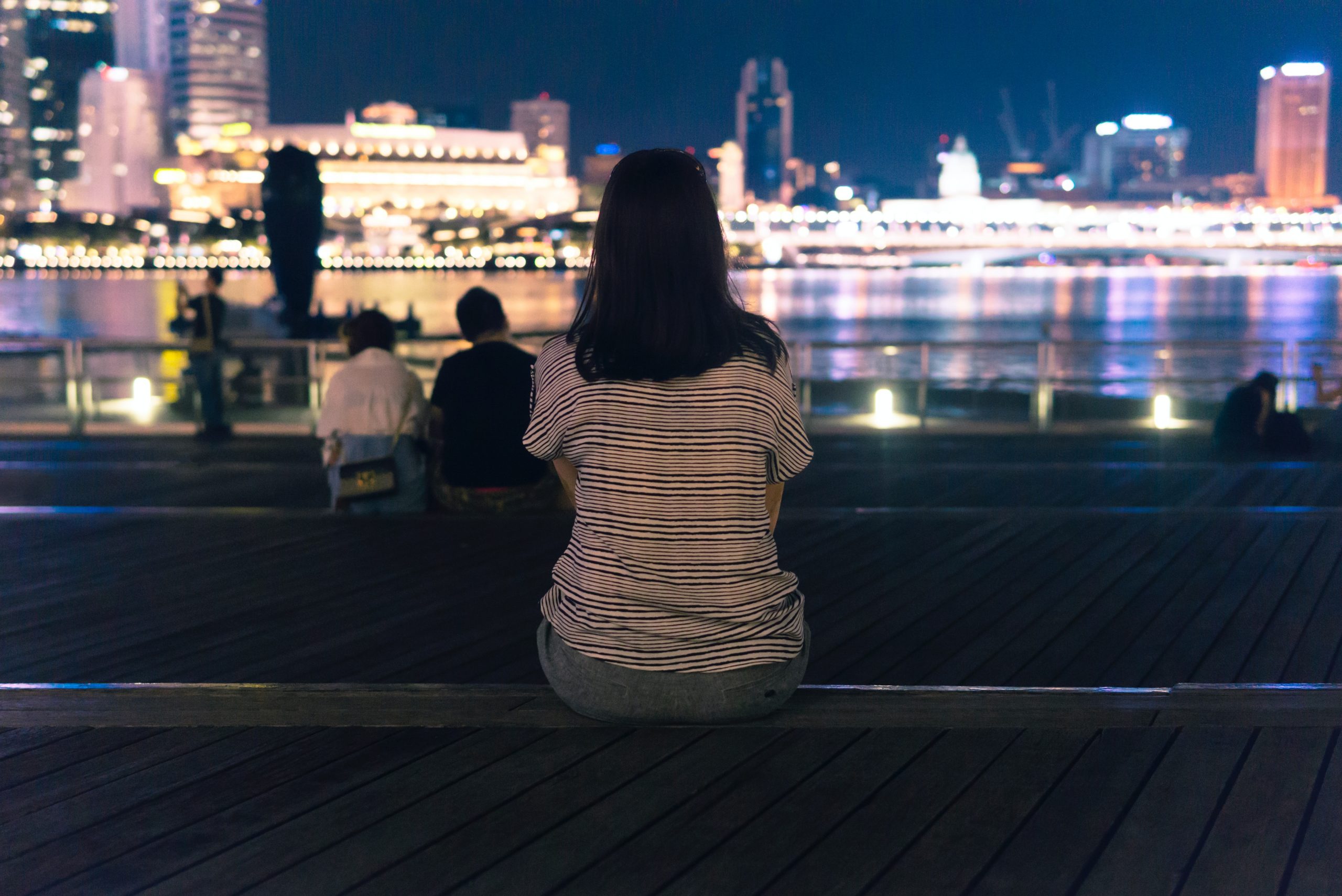
Then there is the achievement treadmill. Singapore makes this especially visible. It is efficient, safe, connected, and convenient, and I am grateful for many of those things. But it is also tiring. The cost of living, work expectations, school pressure, comparison, crowds, commuting, and the constant sense that everyone is progressing, upgrading, investing, studying, planning, and optimising can make life feel practically easier but mentally heavier. Everything works, but everyone is running.

India, in contrast, is tiring in different ways. The India I grew up in may have been physically harder but emotionally more spacious in some ways. But it was also noisy, bureaucratic, socially demanding, and full of gendered expectations and family interference. When I visit India now, I initially feel rested, perhaps because of memory and familiarity. But then the noise, pollution, chaos, and sheer effort of moving through daily life begin to exhaust me. Bangalore, especially, can be an exercise in patience. Travelling across the city is not a commute so much as a character-building programme nobody signed up for. So no, the answer is not that one place is restful and another is not. Modern tiredness has many geographies.

A large part of this tiredness is emotional labour, and here gender cannot be ignored. Women are often more tired than they admit because they are not only doing tasks but also managing emotional labour. They are remembering, anticipating, planning, noticing, soothing, managing moods, maintaining relationships, and keeping family life moving. Appliances may have made housework easier, but they did not remove the responsibility of noticing what has to be done.

Someone still has to know that the groceries are running low, the appointment needs booking, the child needs a form signed, the parent needs checking on, the helper needs instructions, the birthday needs remembering, the meal needs planning, the message needs replying to, the festival needs preparing for, and the family rhythm needs holding together. In many families, that person is still a woman.

I know this in my own life. I am the planner in the family and perhaps also the natural doer, so many things fall to me. Some of this is personality. Some of it is habit. Some of it is patriarchy, wearing comfortable home clothes and pretending it’s common sense.

Parenting adds another layer. Parenting today is mentally tiring in ways previous generations may or may not have experienced to the same degree. There is more information now, and with information comes anxiety. School choices, tuition, enrichment, screen time, food, safety, identity, mental health, university admissions, careers, social media, friendships, independence. Every decision feels loaded.

Parenting BB and GG was more mentally tiring than I expected, especially because they are twins. When children are young, tiredness is physical: feeding, bathing, school runs, homework, logistics. When they grow older, the tiredness changes. It becomes emotional. You worry about choices, studies, jobs, relationships, independence, and the future. You are less physically needed but not necessarily less mentally involved. The work moves inward.

Ageing changes tiredness too. Things I could do even five years ago feel harder now. Energy is no longer something I can assume will appear on command. I try to rest more willingly, but I also push myself at times. Midlife brings its own strange combination of urgency and fatigue. There is still so much one wants to do, but the body is no longer willing to be treated like an unpaid intern.

Health adds another background hum. Managing diabetes, using a CGM, thinking about food, readings, walking, sleep, stress, medical appointments, and how the body is responding. None of these may seem dramatic on their own, but together they create a constant layer of awareness. It is another form of invisible daily management. The body becomes one more thing to monitor, interpret, and negotiate with.

And then, as if all this were not enough, we live in an age of relentless self-improvement. We are told to eat better, sleep better, move more, earn more, invest smarter, build a brand, write more, declutter, meditate, journal, network, learn AI, regulate our emotions, have a side hustle, age well, dress well, parent well, rest well, and become the best version of ourselves. It is exhausting just listing it. The pressure to improve turns life into a permanent project. We are never simply people living our lives. We are always under renovation.

Even rest becomes something to do correctly. This is where comparison enters. I try not to compare myself with others, but sometimes it creeps in. Someone else seems to have the career sorted, the children sorted, the house sorted, the health sorted, the holidays sorted, the face glowing, the meals plated, and the life beautifully arranged. Of course, we know social media is curated. We know this intellectually. But emotionally, the comparison still slips through. We look at our ordinary, unfinished, slightly messy lives and wonder why everyone else seems to be managing better.

Perhaps they are not. Perhaps they are tired too. Maybe everyone is tired because nothing ever feels finished anymore. In the past, many tasks had clearer endings. Wash the clothes, cook the meal, clean the house, and finish the errand. Today, so much of life is endless. Email never ends, messages never end, news never ends, content never ends, job applications never end, self-improvement never ends, health tracking never ends, financial planning never ends, and social obligations never end. There is always more. The endlessness is tiring.

What people need less of, I think, is pressure, comparison, pretending, and the expectation of constant availability. Less noise. Less optimisation. Less of the idea that every moment must be useful and every person must be improving. What people need more of is sleep. Real sleep, not revenge bedtime scrolling until the brain gives up. More meaningful work, because meaningless work exhausts the spirit in a way even physical labour does not. More kindness, because a tired world becomes harsher when kindness disappears. And perhaps more boredom, too. Boredom gives the mind room to wander. It creates space where not everything is input, output, or performance.

For me, the rest that actually helps is simple. Sleep first, then reading and writing. Being alone in silence, meditating, praying, and talking to the divine. These things restore rather than merely distract. They return me to myself. The problem is that we often treat tiredness as a personal failure. If we are tired, we assume we are not organised enough, disciplined enough, resilient enough, grateful enough, or productive enough. But perhaps tiredness is also information. It tells us that the load is too heavy, even if parts of the load are invisible. It tells us that convenience has not solved the deeper problem. It tells us that human beings were not meant to be reachable, measurable, comparable, and improvable every waking minute.

Life is easier now, but it is also harder because everyone is stressed, worried, and overall tired. The tools have improved. The pressure has multiplied. The physical load may have reduced, but the mental load has expanded to fill the space convenience created.

So what do we do? I do not think the answer is to reject modern life. I like my washing machine; I like online banking, being able to order groceries, messaging my family, checking a map, reading on my phone, and monitoring my health. The answer is not to pretend the past was better. It was not, at least not for everyone.

But perhaps we need to stop confusing efficiency with ease. We need to stop assuming that because something is convenient, it is restful. We need boundaries around phones, work, comparison, and self-improvement. We need to see women’s invisible labour before we can share it. We need workplaces that do not treat constant availability as commitment. We need families where planning is not silently assigned to one person. We need to stop treating tiredness as weakness.

Most of all, we need permission to be ordinary human beings. Not always optimised. Not always productive. Not always reachable. Not always improving. Not always strong. Not always cheerful. Not always holding everything together. Maybe what we need is not another app, hack, system, or productivity method. Maybe what we need is the courage to admit that being human was never meant to be this constantly managed.

So perhaps the next time tiredness arrives, instead of asking, “What is wrong with me?”, we can ask a better question. What am I carrying? And perhaps, even more importantly, what can I finally put down?

Are We Becoming Too Busy to Be Kind?

Some questions sound simple until we sit with them. Are we becoming too busy to be kind? At first glance, the answer seems obvious. Yes, of course we are. Look around. Everyone is rushing. Everyone is tired. Everyone has deadlines, bills, errands, worries, children, ageing parents, work messages, health issues, school matters, and a phone that never really lets them rest.

But the question is not only whether we are busy. Most of us are. The real question is what that busyness is doing to us.

Is it making us less patient? Less thoughtful? Less willing to pause? Less likely to notice someone else’s discomfort? Less able to help unless it is convenient, scheduled, and does not interfere with our own carefully planned lives?

There was a time when, if something happened in public, the instinct might have been to run towards the person who needed help. Today, too often, the instinct seems to be to take out a phone. A fall, an argument, an accident, an uncomfortable scene, all of it becomes content before it becomes concern. There is something deeply unsettling about that. The urge to record has begun to compete with the urge to assist. In some cases, it has replaced it.

Of course, not everyone behaves this way. People still help. Strangers still step forward. Quiet goodness still exists all around us. But there is also a growing hesitation. Why get involved? What if I get blamed? What if this becomes complicated? What if someone records me? What if it is not my problem?

And so we look away.

Perhaps people have not become less kind. Perhaps they have become more tired, more afraid, and more overwhelmed. Kindness may still exist, but it is buried under stress, deadlines, financial worries, caregiving responsibilities, commuting fatigue, and the mental load of modern life. The heart may still be soft, but the day is hard. And when the day is hard for too long, softness begins to feel like a luxury.

To me, kindness is not about grand gestures. It is not about public charity, dramatic declarations, or social media posts about how compassionate one is. Kindness is far simpler and far more difficult. It is being a decent human being. It is helping when one can. It is being thoughtful. It is treating everyone around us with the same basic dignity, regardless of their social or financial status.

That last part matters.

Because very often, the measure of our kindness is not how we treat those above us, or those we want to impress. It is how we treat those who have no power over us. Service staff. Cleaners. Domestic helpers. Delivery riders. Security guards. Receptionists. Cashiers. The person clearing our tray. The person answering our call. The person who cannot talk back because their job depends on remaining polite.

It is easy to be charming to someone important. It takes character to be respectful to someone who is tired, underpaid, and invisible to most people.

And yet, this is where unkindness often shows itself. A sharp tone. A dismissive gesture. No eye contact. No thank you. An assumption that because someone is serving us, they are somehow beneath us. It is as if social or economic hierarchy gives people permission to forget basic decency.

It does not. Kindness is not kindness if it is selective. If we reserve courtesy only for those we consider our equals, then what we are practising is not kindness. It is social calculation.

I first moved to Singapore many years ago, and some of my earliest memories of public life here are complicated ones. I remember older Chinese passengers not sitting next to me on the bus or train, even when there was space. I remember people tapping the seat after I vacated it, as though removing my traces. These were small moments. Nobody shouted. Nobody said anything directly. But small unkindnesses can stay with us precisely because they are small. They make us question whether we imagined them. They leave a faint bruise.

At work too, unkindness often arrives in quiet forms. A message ignored, a reply delayed without explanation, someone pretending not to see your contribution, or a person in authority using silence as a weapon. No single incident may seem large enough to complain about, but together they create an atmosphere. Busy workplaces can become unkind workplaces, not always because people are cruel, but because pressure makes everyone transactional.

Kindness at work is not about being sweet all the time. It is about clear communication. It is about not dumping urgent work unnecessarily. It is about giving credit. Respecting people’s time. Saying thank you. Not weaponising hierarchy. Assuming good intent until proven otherwise. These are not soft things. They are the foundation of a healthy workplace.

But we do not always value them. Today’s culture praises productivity, ambition, speed, confidence, hustle, excellence, leadership, success, and resilience. These are not bad qualities. But where does kindness sit among them? Is it praised? Rewarded? Promoted? Or is it seen as soft, weak, inefficient, naive, not strategic enough?

Too often, kind people are taken advantage of. They are expected to absorb more, forgive more, stretch more, and understand more. Their kindness becomes part of the system’s convenience. This is why kindness also needs boundaries. Being kind does not mean becoming a doormat. It does not mean tolerating disrespect. It does not mean saying yes when every part of you is exhausted. True kindness includes honesty. It includes respect for oneself too.

That may be the hardest form of kindness for many of us.

We speak often about being kind to others, but what about being kind to ourselves? Many of us are far harsher inwardly than we would ever be to another person. I know I am guilty of this. When things do not go my way, I can very quickly slip into self-blame. I think of all the things I did wrong, all the ways I could have done better, all the moments where I was not perfect enough. It is exhausting, this private courtroom we carry within us.

And perhaps that is part of the problem. People who are constantly unkind to themselves may have very little softness left for others. If our inner voice is always impatient, critical, and unforgiving, it becomes harder to speak gently outwardly. The tone leaks. The pressure spills.

Still, this cannot become an excuse. “I am stressed” may explain unkindness, but it does not erase its effect.

We all know this because we have all done it. I try to be conscious about how I treat people, but I am sure there have been times when I have been inadvertently unkind. And if I am honest, I am probably most unkind to those closest to me: S, then my children, then my helper. I have also been unkind to my parents and my sister. I apologise when I realise it, and I try to walk back. But the truth remains. We are often least guarded with the people who love us most.

Perhaps because we know they will forgive us. Perhaps because we assume they will understand. Perhaps because home is where the mask comes off, and unfortunately, sometimes the manners come off with it.

This is a painful thing to admit, but an important one. Any essay on kindness that only points outward becomes too easy. The rude stranger, the impatient commuter, the harsh boss, the ungrateful customer, they are all convenient examples. But the real test of kindness is not only how I behave when I am rested, admired, and in public. It is how I behave when I am tired, disappointed, anxious, and at home.

Motherhood has taught me this in unexpected ways. I became more patient as a mother, so much so that my father once noticed it with surprise. I suppose having twins does that to you. When there are two babies, two sets of needs, two cries, two schedules, two small humans depending on you at once, something in you either hardens or expands. For me, it expanded my patience.

I have often been more patient with BB and GG than with many others in my life. And now that my parents are older, I find myself more patient with them too. Age reverses many roles quietly. The people who once waited for us now need us to wait for them.

Kindness is harder when one is tired. There is no point pretending otherwise. But I also believe that if someone is intrinsically kind, that quality remains, even under pressure. It may wobble. It may fray at the edges. But it does not disappear. Real kindness is not a mood. It is a muscle. It is also, perhaps, like a bank account. The more we deposit into it, the more it grows. A small act here, a patient response there, a thoughtful pause, a decision not to snap, a decision to help, all of it adds up.

What would happen if everyone around us became just ten percent kinder? Not saintly. Not self-sacrificing. Just ten percent more patient. Ten percent more thoughtful. Ten percent less likely to assume the worst. Ten percent more willing to say, “Take your time.” Would we not live in a better society?

Singapore is an interesting place to think about this question because it is such an efficient society. Things work, trains arrive, queues move and systems are clear. Time is respected. There is much to admire in this. But efficiency can sometimes look like coldness, even when it is not intended that way. When everyone is moving fast, softness can seem like delay. Pausing can feel like obstruction. The person who needs extra time becomes an inconvenience.

Singaporeans are often kind in practical ways. There are people who give up seats on buses and trains, neighbours who help without fuss, colleagues who cover for one another quietly, strangers who step in when needed. But perhaps, as a society, there can be impatience in emotional spaces. A discomfort with messiness. A preference for order over tenderness. A tendency to move quickly past anything that slows the system down.

India, at least the India I grew up in, offered a different model. Not necessarily better in every way, but different. Growing up, it was common to go into a neighbour’s house to drink water or wait if one’s parents were not home. My parents could travel and leave my sister and me alone, secure in the knowledge that neighbours would help, feed us, and be there in an emergency. I remember a neighbour picking me up from the station when my parents could not.

That kind of neighbourliness was ordinary then. Not heroic. Not worthy of an announcement. Just what people did.

I do not know if that India exists in the same way today. Cities have changed. Lives have changed. Trust has changed. People are busier, more guarded, more private, perhaps with reason. The old neighbourhood could be kind, but it could also be intrusive. Warmth came with unsolicited advice. Help came with commentary. Everyone knew your business, sometimes before you did. Still, there was a human net. Imperfect, nosy, sometimes annoying, but real.

Today, in many cities across the world, that net has thinned. We may live closer together physically, but further apart emotionally. We know the delivery rider’s location on an app, but not our neighbour’s name. We can track parcels, flights, investments, and calories, but still fail to notice when someone near us is struggling.

Online life has complicated this further. Social media has made people more visible, but not necessarily more compassionate. It has made it easier to perform concern and harder to practise it quietly. Outrage is instant. Judgment is instant. Cancelling is instant. Mockery is instant. People assume the worst with remarkable speed. Anonymity gives courage to cruelty. And the desire to go viral can turn someone else’s pain into opportunity.

Perhaps social media has not made people unkind. Perhaps it has simply made visible what people always thought privately. But visibility changes behaviour. When every act can become content, kindness itself can become performative. The public declaration begins to matter more than the private action.

This is why I respect small private kindness most. The kindness no one sees. The colleague who covers for someone without announcing it. The neighbour who helps without keeping score. The stranger who gives up a seat. The person who replies gently when they could have been sharp. The one who treats the cleaner and the CEO with the same courtesy. The friend who remembers a detail. The family member who notices tiredness before it becomes collapse.

Everyday decency matters more to me than grand gestures. Consistency matters more than spectacle. Action matters more than words, though words too can heal when they are sincere.

Who taught me kindness? Many people. My family. My neighbours. Books. The world I grew up in, where values like Athithi Devo Bhava, the guest is God, were part of the cultural fabric. At its best, this idea is rooted in generosity and hospitality. It teaches us to make space for another person. To feed, welcome, and care. Of course, like all traditions, it can also become performative or burdensome, especially for the women expected to do all the feeding and welcoming. But at its heart lies something beautiful: the idea that another person’s comfort matters.

Maybe that is what kindness really is. The belief that another person’s experience matters.

It does not always require a lot of time. Sometimes kindness happens in a second. Holding the lift. Letting someone go ahead. Saying thank you. Not honking. Smiling at someone who looks nervous. Replying to a message with care. Giving someone the benefit of the doubt.

But deeper kindness does require attention. And attention is what busyness steals first.

When we are too busy, we stop noticing. We stop noticing the helper who looks tired. The parent who is repeating a story because they want connection, not because they have forgotten they told us before. The child who is quieter than usual. The spouse who has done ten invisible things before breakfast. The colleague who is overwhelmed. The cashier who has dealt with rude customers all day. The cleaner whose work makes our comfort possible.

The opposite of kindness is not always cruelty. Sometimes it is simply not noticing.

And this is where busyness becomes dangerous. Not because having a full life is wrong. Most of us cannot opt out of responsibility. We have to work, care, plan, earn, cook, commute, manage, and keep going. But if we are so busy that we no longer have time to be decent, then something has gone wrong. If our schedules leave no room for patience, our ambition no room for gentleness, our efficiency no room for humanity, then we have built lives that may function well but feel emotionally poor.

The world does not need more performative kindness. It needs more ordinary kindness. The unglamorous kind. The kind that does not photograph well. The kind that does not need applause. The kind that shows up in tone, timing, patience, respect, and restraint.

It means helping when we can. Not recording when someone needs assistance. Not turning away simply because “it is not our problem.” Not using “I’m busy” as a blanket excuse to avoid care, courtesy, or responsibility. Yes, genuine overwhelm is real. There are seasons when people are stretched beyond capacity. But the line between genuine overwhelm and careless self-importance is thin, and we cross it more easily than we admit.

Maybe the question is not only whether we are too busy to be kind.

Maybe the question is whether we are willing to become less busy in the ways that matter. Less busy judging. Less busy proving ourselves. Less busy performing goodness. Less busy chasing productivity at the cost of tenderness. Less busy assuming that our urgency is more important than someone else’s dignity.

A kinder life does not require grand transformation. It may begin with a pause. A breath before replying. A thank you. An apology. A decision to help. A decision not to humiliate. A decision to treat the person serving us as a person, not a function. A decision to be gentler with those at home, because love should not have to survive our worst tone simply because it can.

Kindness matters because it makes the world a better place. That sounds almost too simple, but simple truths often are. A kinder world is not built only by policies, institutions, or public campaigns, though those matter too. It is built in kitchens, trains, offices, hospital corridors, school gates, WhatsApp messages, hawker centres, lifts, and living rooms.

It is built when we notice.

Perhaps we are not becoming too busy to be kind. Not yet. But we are busy enough that kindness now requires more intention than before. It has to be chosen. Practised. Protected. Passed on.

And maybe that is where we begin. Not by trying to become saints. That would be unbearable for everyone involved. But by becoming ten percent kinder. Ten percent slower to judge. Ten percent quicker to help. Ten percent more aware of the people around us.

It may not change the whole world at once.

But it will change the world immediately around us. And that is not a small thing.

The Small Rituals That Hold a Life Together

There are things in life so small that they barely announce themselves. The morning coffee was made in the same mug. The walk is taken at roughly the same time each day. The book opened before sleep, even if only for a few pages, before the eyes began to close. The evening habit of putting things back in their place. The quick glance at the sky from the kitchen window. The quiet insistence on bathing before bed after a long day outside.

None of these would usually qualify as major events. They do not look impressive from the outside. They do not lend themselves to dramatic storytelling. Yet remove enough of them, and something in life begins to loosen.

We tend to think that what shapes a life are the large things. Marriage, illness, loss, children, money, ambition, migration, career turns. And of course, those matter. It would be absurd to pretend otherwise. But most of life is not lived at the level of milestones. Most of it is lived in repetition. The turn of the key, the rinsing of the cup, the folding of the clothes, the checking of the door, the pause before the first sip.

If the milestones are the chapters, then these smaller acts are the punctuation. They shape pace. They create rhythm. They stop life from becoming one long unbroken paragraph.

This is why small rituals matter more than we often admit. Not because they are glamorous, and certainly not because they are some hidden route to becoming more efficient or successful. In fact, modern culture has a way of distorting even the simplest acts by turning them into systems. Every cup of coffee becomes a productivity hack. Every walk becomes a step count, cardio goal, or something to document. Even rest is now explained as recovery.

In that atmosphere, the ordinary ritual becomes easy to misunderstand.

But many of the rituals that hold a life together do so for a simpler reason. They make life feel inhabited. They return us to ourselves.

That may sound gentle, but there is a harder truth beneath it. Human beings need structure more than we like to admit. We enjoy telling ourselves stories about freedom, spontaneity, and keeping our options open. We praise variety and novelty. Yet most people, if they are honest, do not thrive in formlessness. They drift in it. They become frayed in it.

A life with no rhythm begins to feel curiously unreal, as if one were living slightly outside oneself.

The right rituals do not trap us. They give shape to the day so that we can move through it with less internal noise.

This is not about efficiency. In many cases, it is the opposite. Small rituals slow us down just enough to prevent us from becoming careless with our own lives. They remind us that a day is not only something to be got through. It is something to be lived inside.

A woman who waters her plants each morning is not simply tending to leaves. She is rejoining the world before the day begins. A man who irons his clothes the night before is not just preparing for work. He is telling himself, quietly, that tomorrow deserves to be met properly. Someone who cuts fruit after dinner for the family is not arranging food. They are creating a familiar landing place at the edge of the day.

This is perhaps why small rituals feel like a form of self-respect. Not the loud version that demands to be seen, but something steadier. To make your coffee properly, instead of rushing through it. To go for your walk even when the day has been crowded. To read before sleeping instead of handing your last conscious minutes to a screen.

These are small decisions. But they carry a certain message: my life is not disposable. My day is not a blur to be endured.

In Singapore, these rituals often hide in plain sight. The kopi was ordered without fuss at the same stall. The evening walk beneath HDB blocks before heading upstairs. Shoes placed outside the door, as if public life must end before private life begins. The auntie who buys flowers not for an occasion but because the flat looks incomplete without them.

Mumbai carries its own versions with a different rhythm. The cutting chai at the corner stall. The train commute was marked not only by stations but also by familiar gestures. The lamp lit at dusk while traffic pressed on outside. The small errand becomes a few minutes of conversation before returning home.

In both cities, routine is not just convenience. It is often the smallest available form of order against noise, speed, and constant movement.

Some rituals are chosen. Others are inherited. Often, they begin as irritation. A child rolls their eyes at the way a parent insists on doing things. Years pass. And one day, without ceremony, they begin doing some version of it themselves.

We inherit not just recipes or beliefs, but sequences. Ways of entering the day. Ways of ending it. Ways of preparing for guests, for festivals, for grief, and for ordinary weekdays. Much of this inheritance lives in the body long before it becomes language.

Still, we should resist making rituals sound holier than they are.

Not every repeated act is wise, and not every routine is nourishing. A woman who cannot begin her day without ten exact steps may no longer be supported by ritual but ruled by it. A family that prides itself on eating together every night may be preserving connection, or it may be preserving a pattern where one person carries the invisible weight of making it happen.

The surface can look identical. The meaning underneath may not be.

Some rituals calm us. Others harden into rigidity. Some create breathing room. Others become ways of avoiding what is wrong.

It is one thing to take a daily walk because it clears the mind. It is another thing to build such a fragile internal order around it that any interruption feels like collapse. It is one thing to light a lamp at dusk because the act centres the day. It is another thing to begin fearing the consequences of missing it.

Rituals are not automatically meaningful simply because they are repeated. They have to be examined by the life around them.

The same is true of the modern language around routines. Not everything that looks disciplined is healthy. One person’s morning structure may be an act of self-respect. Another’s may be an attempt to control a life that feels unmanageable in deeper ways.

Sometimes what a person needs is not a better routine, but a different job. Or rest. Or medical care. Or an honest conversation they have been avoiding.

Rituals can support a life. They cannot repair what we refuse to face.

And yet, even with all these complications, something remains true.

Human beings seem to need repeated acts that gather the self.

We are not built only for output. Nor are we designed to live indefinitely in disruption, novelty, and fractured attention without consequence. The current age has made rituals both more necessary and more fragile. It takes very little now to lose the texture of a morning. One glance at a phone can scatter the mind before the day has even begun. One endless evening online can flatten the transition into rest.

In such a world, a small ritual becomes a quiet line of defence.

To read before bed is to say the day will not end in noise. To take a daily walk is to insist that the body is not merely functional. To make coffee slowly is to resist the idea that speed is always a virtue. To clear the kitchen before sleeping is to give the next morning a small kindness.

These things do not transform a life dramatically. But they keep us in a relationship with it.

A life is rarely held together by insight alone. It is held together by practice. By recurring acts that seem almost too minor to matter until the season comes when we cannot manage them.

Illness, grief, overwork, caregiving, heartbreak, relocation. These things reveal how much ordinary functioning depends on the smallest scaffolding. The cup of tea is not made. The walk not taken. The book was left unopened. The meal was eaten without pause.

These absences tell their own story.

And sometimes, after such a season, returning to a small ritual can feel unexpectedly significant. Not because the act has changed, but because we have.

To make your coffee again. To take the same walk under the same trees. To hear the familiar sounds of evening, whether from a Singapore block or a Mumbai street, and feel that something in life has regained its shape.

That is no small thing.

Perhaps that is the quiet work of small rituals. They do not rescue us from being human. They do not solve the larger difficulties of living. What they do is more modest, and for that reason, more dependable.

They place small markers in the day that say the following: Begin here, pause here, and return here.

When life is going well, we barely notice them. When life begins to fray, we discover how much they were holding on to.

So perhaps the point is not to romanticise rituals, nor to dismiss them as habits for people afraid of disorder. The point is to notice which ones make a life more attentive, more decent, more inhabitable.

The cup of coffee. The walk. The lamp at dusk. The book before bed. The familiar commute. The fruit was cut after dinner.

A life does not always fall apart dramatically. Sometimes it comes undone by becoming too hurried, too shapeless, or too thin.

And sometimes it is held together again in the same way.

Not all at once, but cup by cup, walk by walk, evening by evening.