In My Hands Today…

Wiring the Winning Organization: Liberating Our Collective Greatness through Slowification, Simplification, and Amplification – Gene Kim, Steven J. Spear

In this powerful new book, bestselling and award-winning authors Gene Kim and Dr. Steve Spear present a surprisingly simple theory to explain outstanding organizational performance… and show you how to replicate it in your own enterprise.

Each drawing on three decades of research and working with high-performing organizations across almost every industry and phase of value creation, Kim and Spear have come to a surprising winning comes from how leaders deliberately design their management systems around people’s ingenuity and how individuals’ creativity is integrated into a collaborative effort. This liberates the capabilities of the people within the organization, enabling them to continually push the frontiers of performance. These leaders have wired their organizations to win.

This is opposed to leaders who set their focus first on maximizing efficiency and optimizing for functional specialties, relying on planning, scheduling, and expediting, and yet never realizing those goals. Instead, they create high coordination costs and increase the cognitive burden, all of which constrain and sometimes even extinguish people’s ability to contribute. This is how leaders wire an organization for dismal outcomes. These results shouldn’t be surprising.

After all, on an otherwise level playing field, the only source of sustained competitive advantage is how well people’s intellectual capabilities can be engaged. Kim and Spear explain how organizations can move from the danger zone to the winning zone by employing three key slowification, which makes it easier to solve problems; simplification, which makes problems easier to solve; and amplification, which ensures problems are seen and solved.

Using over twenty case studies that span a wide variety of sectors, Kim and Spear present a new theory of performance and management that shows how the decisive factor in high-performing enterprises is organizational wiring that enables innovation, excellence, and greatness to flourish. Wiring the Winning Organization teaches leaders how to move from the danger zone to the winning zone to achieve greater agility, higher quality, faster time to market, greater resilience, and higher employee engagement and profitability.

Festivals of India: Losoong

Also known as Namsoong, Losoong is one of Sikkim’s most significant and vibrant celebrations. This joyous festival marks the beginning of the Sikkimese New Year and commemorates the end of the harvest season. Beyond its agricultural significance, Losoong has evolved into a grand cultural showcase, highlighting the unique traditions and heritage of Sikkim. 

The roots of Losoong can be traced back to the agrarian lifestyle that has long been the backbone of Sikkimese society. Initially, the festival was primarily celebrated by the Bhutia community, one of the major ethnic groups in Sikkim. However, over time, Losoong has transcended its original cultural boundaries and is now embraced by various communities in the region.

The festival’s expansion reflects the cultural diversity and integration that characterizes Sikkim. Today, Losoong is celebrated not only by the Bhutias but also by the Lepchas and other smaller tribes across Sikkim, Darjeeling, and even parts of Nepal. This widespread adoption of the festival speaks to its universal themes of gratitude, renewal, and community celebration.

The evolution of Losoong from a community-specific celebration to a widely observed festival also mirrors the historical changes in Sikkim. As the region saw increased interaction and cultural exchange between different communities, festivals like Losoong became platforms for shared celebration and cultural expression.

Losoong’s timing is intricately linked to the Tibetan Lunar Calendar, typically falling on the 18th day of the 10th lunar month. In the Gregorian calendar, this usually corresponds to a date in December. The festival’s alignment with the lunar calendar underscores its connection to natural cycles and agricultural rhythms, which have long guided the lives of Sikkimese people.

The celebration of Losoong is not confined to a single day but extends over four days. This extended duration allows for a rich tapestry of events, rituals, and festivities to unfold. The multi-day celebration also reflects the importance of the festival in Sikkimese culture, providing ample time for both religious observances and communal festivities.

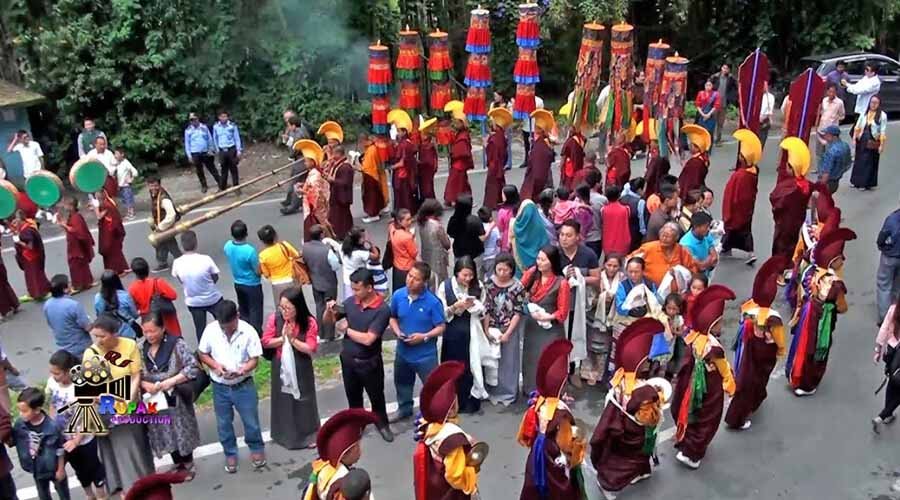
During these four days, the entire region of Sikkim comes alive with a festive atmosphere. Streets are adorned with colourful flags and decorations, creating a striking contrast against the backdrop of snow-capped mountains. Monasteries and monks prepare for elaborate celebrations, while local communities organize various events and competitions.

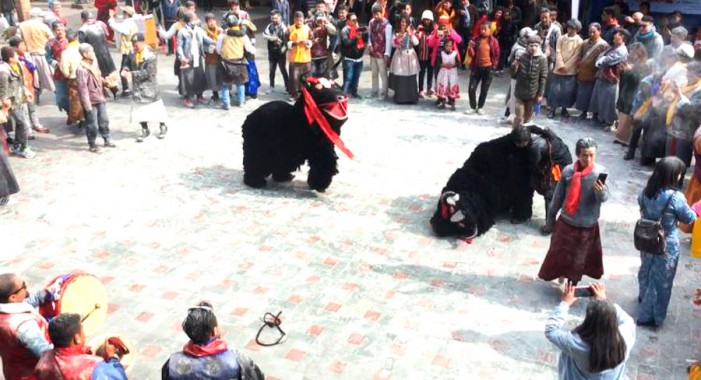
The festival serves as a platform for showcasing traditional folk dances, religious rituals, and ceremonies that have been passed down through generations. At the heart of the cultural celebrations are the ancient monasteries of Sikkim, particularly the renowned Rumtek Monastery and Tsuklakhang Palace. These sacred spaces become focal points for cultural events, hosting a variety of performances that bring together the spiritual and artistic elements of Sikkimese culture.

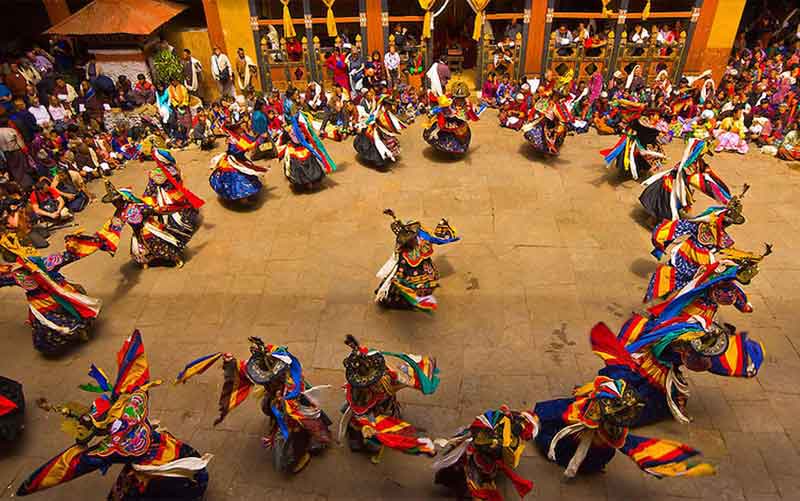
One of the most captivating aspects of Losoong is the performance of traditional dances. These dances are not merely entertainment but serve as living repositories of Sikkimese history, mythology, and cultural values. Each movement and gesture in these dances carries deep symbolic meaning, often narrating stories of historical events, spiritual beliefs, or moral teachings.

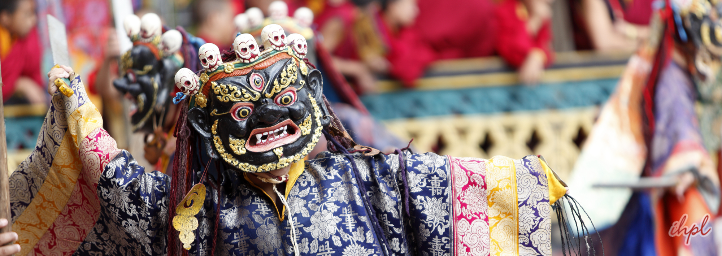
Among the various dance performances, the Black Hat dance holds a special place in the Losoong celebrations. This dance is a powerful reminder to the locals of the eternal victory of good over evil. Through its intricate choreography and symbolic costumes, the Black Hat dance encapsulates key elements of Sikkimese spiritual beliefs and historical narratives.

The festival also provides a platform for local artisans, musicians, and performers to showcase their talents. This not only helps in preserving traditional art forms but also allows for their evolution and adaptation in contemporary contexts. The coming together of various artistic expressions during Losoong creates a rich, multifaceted cultural experience that reflects the diversity and creativity of Sikkimese society.

The rituals and ceremonies of Losoong are deeply rooted in Sikkimese spiritual traditions, many of which share close ties with Tibetan Buddhist practices. This connection is evident in the similarities between Losoong and Losar, the Tibetan New Year celebration. The proximity of Sikkim to Tibet has led to a natural assimilation of many Tibetan rituals and customs into Sikkimese culture.

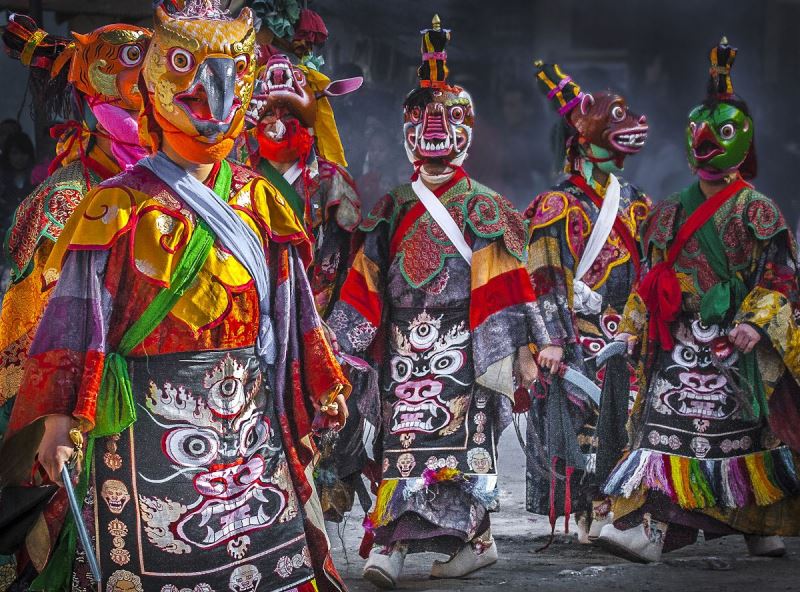
One of the most significant and visually striking rituals of Losoong is the performance of Cham dances by Buddhist monks. These sacred dances are not merely performances but are considered a form of meditation in motion and a means of spiritual teaching. The dancers, adorned in elaborate costumes and masks, perform precise movements that symbolize various aspects of Buddhist philosophy and mythology.

The Cham dances are characterised by their vibrant colours, intricate masks, and the rhythmic accompaniment of traditional music. Each dance tells a specific story or represents a particular deity or concept from Buddhist teachings. The masks worn by the dancers are particularly significant, often depicting various deities, demons, or animals, each with its symbolic meaning.

Another important ritual is the offering of Chi-Fut to the deities. Chi-Fut is a type of locally brewed alcohol that holds special significance in Sikkimese culture. The offering of Chi-Fut is believed to please the deities and seek their blessings for the coming year. This ritual underscores the blend of spiritual practices and local traditions that characterize Losoong celebrations.

A key symbolic ritual during Losoong is the burning of an effigy representing a demon king. This act symbolizes the destruction of evil forces and the purification of the community as it enters the new year. The ritual burning is often accompanied by prayers and chants, creating a powerful atmosphere of spiritual renewal.

Archery contests are another integral part of Losoong celebrations. These competitions not only showcase the traditional skills valued in Sikkimese culture but also serve as a form of community bonding and friendly competition. The archery contests often draw large crowds and are accompanied by cheering, music, and a festive atmosphere.

Throughout the festival, monasteries play a crucial role in conducting various religious ceremonies. Monks engage in extended prayer sessions and perform rituals aimed at blessing the community and warding off misfortunes for the coming year. These religious observances provide a spiritual foundation to the festivities, reminding participants of the deeper meanings behind the celebrations.

Losoong holds profound religious significance, deeply rooted in the spiritual beliefs and practices of Sikkim. The festival is not merely a cultural celebration but a time of spiritual renewal and rededication for the Sikkimese people. Central to the religious aspect of Losoong is the belief in the power of ritual and prayer to cleanse negative energies and invite positive forces for the new year. The various ceremonies conducted during the festival are believed to eliminate bad luck and misfortunes. Monks play a crucial role in this spiritual cleansing, conducting rigorous rituals and ceremonies to seek blessings from gods and goddesses for the upcoming year.

The religious aspects of Losoong also reflect the syncretic nature of Sikkimese spirituality, which blends elements of Buddhism, Hinduism, and indigenous beliefs. This spiritual diversity is evident in the various rituals and practices observed during the festival, each contributing to a rich tapestry of religious expression.

The spiritual significance of Losoong extends beyond the formal rituals. It is seen as a time for personal reflection and renewal, where individuals can reflect on the past year and set intentions for the new one. This personal spiritual dimension adds depth to the communal celebrations, making Losoong a holistic experience that addresses both individual and collective spiritual needs.

No celebration in Sikkim is complete without indulging in the local cuisine, and Losoong is no exception. The festival provides a perfect opportunity to showcase the rich culinary heritage of Sikkim, with a wide array of traditional dishes prepared and shared during the celebrations. Some of the traditional dishes consumed during Losoong include Aalum, a traditional Sikkimese dish made from boiled potatoes mixed with spices and herbs, Babar which is a type of bread made from fermented rice batter, often served as a staple during festive meals, Furaula, a sweet dish made from rice flour, often shaped into various forms and deep-fried, and Gundruk, a fermented leafy green vegetable, considered a delicacy in Sikkimese cuisine.

In addition to these traditional dishes, Losoong also sees the preparation of special festive foods. Families often prepare elaborate meals to share with relatives and friends, fostering a sense of community and hospitality. The communal sharing of food during Losoong is seen as a way of strengthening social bonds and expressing gratitude for the abundance of the harvest.

Beverages also play an important role in Losoong celebrations. Traditional drinks like Chang, a millet-based alcoholic beverage, are often consumed during the festivities. These drinks are not just refreshments but are often imbued with cultural and sometimes spiritual significance.

Losoong’s impact extends far beyond its religious and cultural significance, playing a crucial role in the social fabric of Sikkimese society. The festival serves multiple important functions in the community. Losoong brings together people from various backgrounds, strengthening social ties within the community. The shared experiences of celebration, ritual, and feasting create a sense of unity and belonging among participants. Through its rituals, dances, and customs, Losoong plays a vital role in preserving and transmitting Sikkimese cultural heritage. It provides a platform for younger generations to learn about and engage with traditional practices.

The festival attracts tourists and visitors, providing an economic boost to local businesses. Artisans, performers, and food vendors often find increased opportunities during the festival period. As a festival celebrated by various ethnic groups, Losoong fosters inter-community understanding and harmony. It serves as a reminder of the shared cultural heritage that unites different communities in Sikkim. For the Sikkimese people, Losoong is an important marker of cultural identity. It allows them to celebrate their unique heritage and affirm their place in the diverse cultural landscape of India. The festival serves as an important marker in the agricultural and social calendar of Sikkim, helping to structure the year’s activities and providing a sense of cyclical renewal.

While Losoong itself is not associated with a specific mythological story, it is deeply connected to the broader mythological and spiritual beliefs of Sikkim. These beliefs, which blend Buddhist, Hindu, and indigenous elements, provide a rich backdrop to the festival celebrations. One of the key mythological elements reflected in Losoong is the concept of cosmic renewal. Many of the rituals and practices during the festival symbolize the cyclical nature of time and the eternal struggle between good and evil. The burning of the effigy of the demon king, for instance, represents the triumph of positive forces over negative ones, a theme common in many mythological narratives.

The Black Hat dance, performed during Losoong, is steeped in legend. According to some accounts, this dance commemorates the assassination of King Langdarma, a 9th-century Tibetan king who was opposed to Buddhism. The dance is said to reenact how a Buddhist monk, disguised as a Cham dancer, assassinated the king to protect the dharma.

Another mythological element present in Losoong celebrations is the worship of local deities and nature spirits. Sikkim’s indigenous beliefs include a pantheon of local gods and spirits associated with mountains, rivers, and forests. During Losoong, offerings and prayers are often made to these entities, reflecting the deep connection between the Sikkimese people and their natural environment. The concept of karma and its cyclical nature is also reflected in many Losoong rituals. The idea that actions in one year can influence the fortunes of the next is a driving force behind many of the purification and blessing ceremonies conducted during the festival.

While not directly related to Losoong, the legend of Guru Padmasambhava, who is said to have introduced Buddhism to Sikkim, forms an important part of the spiritual backdrop against which the festival is celebrated. Many of the monasteries that play a central role in Losoong celebrations trace their spiritual lineage back to Guru Padmasambhava. These myths and legends, while not always explicitly narrated during Losoong, form the spiritual and cultural foundation upon which the festival is built. They provide depth and meaning to the various rituals and practices, connecting the present-day celebrations to a rich tapestry of historical and spiritual narratives.

While Losoong continues to be a vibrant and significant festival in Sikkim, it faces several challenges in the modern era. As more young people move to cities for education and employment, there’s a risk of losing connection with traditional practices. The influence of global popular culture can sometimes overshadow traditional cultural expressions. There’s a delicate balance between promoting the festival for tourism and maintaining its authentic cultural significance. The increased footfall during the festival period can put pressure on local ecosystems, especially in ecologically sensitive areas. As farming methods modernize and change, there’s a risk of losing the deep connection between the festival and traditional agricultural cycles. 

In response to these challenges, various preservation efforts are underway. Efforts are being made to document the rituals, songs, and dances associated with Losoong to ensure their preservation for future generations. Schools and cultural organizations in Sikkim are working to educate younger generations about the significance of Losoong and other traditional festivals. The Sikkim government has recognized the importance of preserving cultural heritage and provides support for traditional festivals like Losoong. Local communities are taking active roles in organizing and promoting Losoong celebrations, ensuring that the festival remains relevant and meaningful. Efforts are being made to promote responsible tourism during Losoong, balancing economic benefits with cultural and environmental preservation. While maintaining core traditions, there’s also an effort to adapt certain aspects of the festival to make them more relevant and engaging for younger generations.

In the 21st century, Losoong has evolved to meet the changing needs and contexts of Sikkimese society while still maintaining its core cultural significance. The festival now serves multiple roles. Losoong has become a showcase of Sikkimese culture for visitors from other parts of India and abroad, helping to promote cultural tourism in the state. In an era of rapid social change, Losoong provides an important anchor for community identity and cohesion. The festival’s agricultural roots are being leveraged to promote awareness about sustainable farming practices and environmental conservation. As a festival celebrated by people of different faiths, Losoong serves as a model for interfaith harmony and cultural integration. The festival period provides economic opportunities for local artisans, performers, and small businesses. For the younger generation of Sikkimese, Losoong serves as an immersive educational experience in their cultural heritage.

Losoong, the Sikkimese New Year festival, is a vibrant testament to the rich cultural heritage of Sikkim. From its origins as an agricultural celebration to its current status as a major cultural event, Losoong has evolved while maintaining its core essence of community,

2024 Week 50 Update

Hello from Mumbai!! Surprised? While I reach Bangalore earlier in the week, GG & I made a lightning trip to Mumbai to do some work, meet up with friends and eat good food. The trip has been amazing so far and as I return back to Bangalore today, I leave with a full heart and a hope I can return back to my city of birth, my Mumbai!

Today’s quote is from American singer-songwriter, author, and visual artist, Bob Dylan whose quote highlights the paradoxical nature of life. Though stability often suggests permanence or predictability, change is the one constant that remains. Dylan’s words encourage us to view change not as an unsettling force, but as the foundational element of existence itself. By embracing the inevitability of change, we allow ourselves to adapt, evolve, and find grounding in the very essence of transformation. The quote also suggests that fighting against change or yearning for a permanent state is a source of struggle. When we cling to what feels stable, we often resist life’s natural rhythms, which inevitably brings discomfort and stress. By contrast, accepting change as an unshakable part of life grants us peace and agility. Dylan’s perspective reminds us to approach life with a mindset that values adaptability over rigid attachment, allowing us to be more present and less burdened by fear of the unknown. In essence, Dylan’s message reminds us that the real strength lies not in trying to find permanent answers but in cultivating our adaptability, our openness, and our appreciation for each moment. Stability, paradoxically, is found in learning to flow with change.

This week was a super hectic one, what with flying to Bangalore and then Mumbai. So other than catching up with friends and enjoying my time in what I still consider my hometown, I didn’t do much.

I’ll share more about the trip later as well as some photos, but for now, let me bid you adieu! Keep smiling and stay positive.

In My Hands Today…

Co-Intelligence: Living and Working with AI – Ethan Mollick

Consumer AI has arrived. And with it, inescapable upheaval as we grapple with what it means for our jobs, lives and the future of humanity.

Cutting through the noise of AI evangelists and AI doom-mongers, Wharton professor Ethan Mollick has become one of the most prominent and provocative explainers of AI, focusing on the practical aspects of how these new tools for thought can transform our world. In Co-Intelligence, he urges us to engage with AI as co-worker, co-teacher and coach. Wide ranging, hugely thought-provoking and optimistic, Co-Intelligence reveals the promise and power of this new era.

Short Story: The Friendship

In the sun-kissed state of Goa, where the waves kissed the golden sands and the air was filled with the scent of salt and spice, lived an 80-year-old retiree named Thomas. A widower for the past five years, Thomas had settled into a quiet routine in his modest home, a small villa adorned with memories of his late wife, Maria. Their children had moved away, pursuing careers and families of their own, leaving Thomas to navigate the twilight of his life alone.

Every morning, Thomas would sit on his porch, sipping his tea while watching the world go by. The vibrant colours of the flowers in his garden brought him some solace, but the silence of the house often echoed with loneliness. He missed the laughter and warmth that Maria had brought into his life, and though he tried to fill the void with hobbies, nothing seemed to replace her presence.

One day, as he was tending to his garden, Thomas noticed a new family moving into the house next door. Curiosity piqued; he watched as a young girl, no more than ten, helped her parents unpack boxes. She had a bright smile and an infectious energy that reminded him of his grandchildren.

“Hello!” she called out, waving enthusiastically. “I’m Jennifer! What’s your name?”

Thomas hesitated for a moment, surprised by her openness. “I’m Thomas,” he replied, a smile creeping onto his face. 

“Nice to meet you, Thomas!” Jennifer beamed. “Do you have any pets?”

“No, just my plants,” he said, gesturing to the flowers around him.

“Plants are cool! I love flowers!” she exclaimed, bounding over to inspect the blooms. 

As the days passed, Thomas found himself looking forward to Jennifer’s visits. She would come over after school, eager to learn about gardening and share stories about her day. Her laughter filled the air, and for the first time in years, Thomas felt a spark of joy.

Jennifer’s family settled in quickly, and her parents, Pauline and Ryan, often invited Thomas over for tea. The three of them would sit on the porch, sharing stories of their lives, while Jennifer played in the garden, her laughter echoing through the air.

One afternoon, as Thomas and Pauline chatted, Jennifer came running up to them, her face flushed with excitement. “Guess what! We’re going to have a school play, and I want to be the princess!”

“That sounds wonderful, Jennifer!” Thomas said, his eyes twinkling. “What’s the play about?”

“It’s about a brave princess who saves her kingdom!” she replied, her enthusiasm infectious. “I’m going to practice my lines every day!”

Thomas couldn’t help but smile. “You’ll be the best princess they’ve ever seen!”

As the weeks turned into months, Thomas and Jennifer’s bond deepened. She became a regular fixture in his life, and he found himself looking forward to her visits. In turn, he shared stories of his life with her—tales of his youth, his love for Maria, and the adventures they had shared.

One day, as they were planting new flowers together, Jennifer looked up at Thomas and asked, “Do you miss your wife?”

Thomas paused, the question catching him off guard. “Every day, Jennifer,” he admitted, his voice softening. “But I also cherish the memories we made together.”

Jennifer nodded, her eyes thoughtful. “I wish I could have met her. She sounds amazing.”

“She was,” Thomas replied, a smile breaking through his sadness. “She had a way of making everything brighter.”

As the monsoon season approached, dark clouds loomed over Goa, and the winds began to howl. One evening, as Thomas sat on his porch, he noticed the sky darkening ominously. He felt a sense of unease, knowing that storms could be fierce in the region.

“Thomas!” Jennifer called out, running towards him. “Is it going to rain?”

“Yes, it looks like a big storm is coming,” he replied, glancing at the sky. “You should head inside.”

But Jennifer shook her head, her determination evident. “I want to help you with your garden! We can cover the plants!”

Together, they hurried to gather tarps and ropes to protect the flowers. As the wind picked up and the first raindrops began to fall, they worked side by side, laughter mingling with the sound of the storm.

Suddenly, a loud crack echoed through the air, followed by a flash of lightning. Thomas instinctively grabbed Jennifer’s hand, pulling her close. “It’s okay, just stay close to me,” he reassured her.

As the storm raged on, they took shelter on the porch, watching the rain pour down. Thomas felt a sense of calm wash over him, realising how much he had come to care for this young girl. In that moment, he understood that their friendship had become a source of strength for both of them.

After the storm passed, the sun emerged, casting a golden glow over the garden. Thomas and Jennifer stepped outside, marveling at the beauty that followed the chaos. The flowers glistened with raindrops, and the air was fresh and fragrant.

“Thank you for helping me today, Jennifer,” Thomas said, his heart full. “You’re braver than you know.”

Jennifer smiled, her cheeks flushed with pride. “I just wanted to make sure your flowers were safe!”

As they walked through the garden, Thomas turned to her. “You know, you remind me a lot of my wife. She had a spirit like yours—full of life and courage.”

Jennifer’s eyes widened. “Really? What was she like?”

Thomas took a deep breath, recalling the memories that had shaped his life. “She was kind, always finding ways to help others. She loved nature and would spend hours tending to our garden, just like we did today.”

Jennifer listened intently, her heart swelling with empathy. “I wish I could have known her. She sounds wonderful.”

“She was,” Thomas said, his voice softening. “But you know, Jennifer, life goes on. I’ve learned that it’s important to cherish the memories while also embracing new friendships.”

Jennifer smiled, understanding the weight of his words. “I’m glad we’re friends, Thomas.”

As the months passed, Thomas and Jennifer’s friendship blossomed. They spent countless afternoons in the garden, sharing stories, laughter, and dreams. Jennifer often spoke about her aspirations of becoming a doctor, inspired by her desire to help others.

“Thomas, I want to make a difference in the world,” she declared one day, her eyes shining with determination. “I want to help people heal.”

“You will, Jennifer,” Thomas encouraged. “With your heart and spirit, I have no doubt you’ll achieve great things.”

One evening, as they sat on the porch watching the sunset, Thomas turned to Jennifer. “You know, you’ve brought so much joy into my life. I was feeling lost after losing my wife, but you’ve helped me find hope again.”

Jennifer beamed, her heart swelling with happiness. “I’m glad, Thomas. You’ve taught me so much too. You’re like a grandfather to me.”

Their bond deepened as they shared dreams of the future. Thomas found himself feeling alive again, inspired by Jennifer’s youthful spirit and resilience.

One day, Thomas received a phone call from his daughter, who lived in another city. “Dad, I’m coming to visit next week! I can’t wait to see you!”

Thomas felt a mix of excitement and anxiety. He hadn’t seen his children in years, and he worried about how they would react to the changes in his life. Would they understand the bond he had formed with Jennifer?

When his daughter arrived, she was surprised to find Jennifer at the house. “Dad, who is this?” she asked, her eyebrows raised.

“This is Jennifer, my neighbor and friend,” Thomas replied, his voice steady. “She’s been a wonderful companion to me.”

As they spent time together, Thomas’s daughter began to see the positive impact Jennifer had on her father’s life. They shared stories and laughter, and soon, the initial tension faded.

“I’m glad you have someone like Jennifer in your life, Dad,” she said, her voice warm. “It seems like she brings you joy.”

“She does,” Thomas agreed, feeling a sense of relief. “She’s helped me find hope again.”

As the festive season approached, Thomas and Jennifer decided to organise a small Christmas celebration in the neighbourhood. They wanted to spread joy and bring the community together. 

Together, they decorated the garden with lights, transforming it into a vibrant space filled with warmth and laughter. Thomas felt a sense of purpose as he worked alongside Jennifer, sharing ideas and planning the festivities.

On Christmas Eve, the garden came alive with colors and sounds. Neighbours gathered to celebrate, and the air was filled with the aroma of delicious sweets and savory snacks. Thomas watched as Jennifer interacted with everyone, her infectious energy bringing smiles to their faces.

As the night progressed, Thomas took a moment to reflect on how far he had come. He had found a new family in the community and a deep friendship with Jennifer that had reignited his spirit. 

As the celebrations continued, Thomas and Jennifer stood together, watching the fireworks light up the night sky. “This is beautiful,” Jennifer said, her eyes sparkling with wonder.

“It is,” Thomas replied, his heart full. “Just like life, it’s a mix of light and darkness. But it’s the moments of joy that make it all worthwhile.”

Jennifer nodded, understanding the depth of his words. “You’ve taught me so much about resilience, Thomas. I hope I can be as strong as you when I face challenges.”

“You already are strong, Jennifer,” Thomas said, placing a reassuring hand on her shoulder. “Life will throw obstacles your way, but remember that you have the power to overcome them.”

As the last firework burst in the sky, Thomas felt a sense of peace wash over him. He had found hope in the most unexpected places, and he was grateful for the journey that had brought him to this moment.

Months turned into years, and Thomas and Jennifer’s friendship continued to flourish. Jennifer excelled in her studies, and Thomas became a mentor to her, guiding her through challenges and celebrating her successes.

One day, as they sat in the garden, Jennifer shared her plans for the future. “I’ve decided to apply to medical school,” she announced, her eyes shining with determination.

“That’s wonderful, Jennifer! I’m so proud of you,” Thomas replied, his heart swelling with pride. “I couldn’t have done it without your support,” she said, her voice sincere. “You’ve always believed in me.”

As the seasons changed, Thomas realised that he had become a part of Jennifer’s journey, just as she had become a part of his. They had both learned the importance of resilience, hope, and the power of connection.

Years later, as Thomas sat in his garden, he reflected on the journey he had taken. Jennifer had grown into a remarkable young woman, pursuing her dreams of becoming a doctor, and their friendship had remained strong. He remained an important part of the community, with many children making him an honorary grandpa. 

“Grandpa, tell us a story!” one of the children exclaimed, breaking Thomas from his reverie. Alright, gather around,” he said, a smile spreading across his face. “Let me tell you about the power of hope and resilience.”

As he shared stories of his life, Thomas felt a deep sense of fulfillment. He had learned that love and connection could heal even the deepest wounds and that every moment of joy was a gift to be cherished.