2024 Week 03 Update

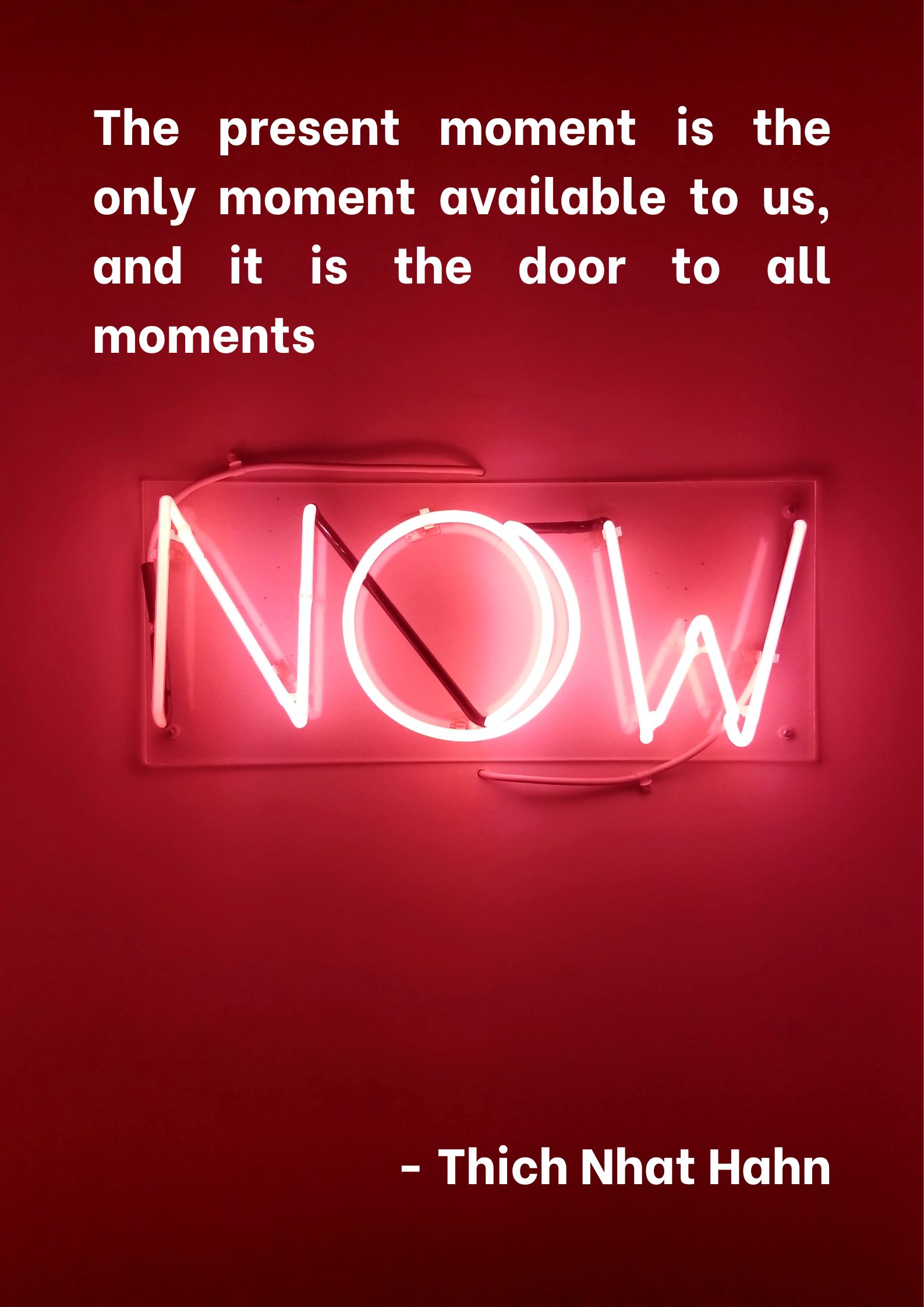
Vietnamese monk, peace activist, and author Thich Nhat Hanh is known for his teachings on mindfulness, meditation, and engaged Buddhism, which emphasize applying Buddhist principles to social and environmental issues. Thich’s quote underscores the significance of mindfulness and living in the present. The quote highlights the idea that the present moment is the only time that truly exists for us and emphasises the importance of being fully present and engaged in the “now.” By calling the present moment “the door to all moments,” Thich suggests that our experiences of the past and the future are interconnected with and accessed through our awareness of the present. The choices and actions we take in the present shape our past and influence our future. The quote suggests that by cultivating mindfulness and being present, we gain access to a deeper understanding of ourselves and the unfolding of our lives. The quote also reinforces the idea that each moment is fleeting and that, by fully embracing and appreciating the present, we acknowledge the transient nature of time. The quote encourages individuals to recognise the richness of the present moment, to be fully engaged in their experiences, and to understand that the way they navigate the present influences the past and shapes the future. It speaks to the profound wisdom found in being present and mindful in our daily lives.

We’re in the third week of 2024 and I hope this year has been going well for everyone. Our lives have not changed since last week, and things are at the status quo. The weather has been wonderful here in Singapore, with rain almost happening daily and the temperature dipping. I love this weather and hope it continues for a bit longer.

Stay positive and keep smiling!

In My Hands Today…

Class: A Memoir of Motherhood, Hunger, and Higher Education – Stephanie Land

When Stephanie Land set out to write her memoir Maid, she never could have imagined what was to come. Handpicked by President Barack Obama as one of the best books of 2019, it was called “an eye-opening journey into the lives of the working poor” (People). Later it was adapted into the hit Netflix series Maid, which was viewed by 67 million households and was Netflix’s fourth most-watched show in 2021, garnering three Primetime Emmy Award nominations. Stephanie’s escape out of poverty and abuse in search of a better life inspired millions.

Maid was a story about a housecleaner, but it was also a story about a woman with a dream. In Class, Land takes us with her as she finishes college and pursues her writing career. Facing barriers at every turn including a byzantine loan system, not having enough money for food, navigating the judgments of professors and fellow students who didn’t understand the demands of attending college while under the poverty line—Land finds a way to survive once again, finally graduating in her mid-thirties.

Class paints an intimate and heartbreaking portrait of motherhood as it converges and often conflicts with personal desire and professional ambition. Who has the right to create art? Who has the right to go to college? And what kind of work is valued in our culture? In clear, candid, and moving prose, Class grapples with these questions, offering a searing indictment of America’s educational system and an inspiring testimony of a mother’s triumph against all odds.

Travel Bucket List: Malaysia Part 29 – Terengganu Part 1

Located in eastern Peninsular Malaysia, Terengganu is bordered in the northwest by Kelantan, in the southwest by Pahang, and in the east by the South China Sea. Several outlying islands, including the Perhentians, Kapas and Redang, are also part of the state. The state is also known by its Arabic honorific, Darul Iman or Abode of Faith. Terengganu is geographically divided into sparsely populated and mountainous inland known as the Terengganu Highlands and largely flat coastal plains, in which most of the state’s people are concentrated. The state is known for having the longest coastline in west Malaysia and many of the most popular islands in Malaysia are located in the state of Terengganu.

The coastal city of Kuala Terengganu, which stands at the mouth of the broad Terengganu River, is both the state and royal capital as well as the largest city in Terengganu. Other major cities and towns include Jerteh, Kuala Dungun, Chukai, Kuala Berang, Marang, and Permaisuri. Terengganu is Malaysia’s 7th-largest state by area and 10th-largest in population. Terengganu, along with Kelantan, Perlis and the Federal Territory of Putrajaya, is one of the most homogeneous states and territories in the country, of which 95% of the population are ethnic Malay-Muslims with their distinct language, dialect, culture, history, and tradition.

In Malay, kuala can mean river mouth, estuary, or confluence. Thus, Kuala Terengganu is roughly translated as the confluence or estuary of Terengganu, referring to the broad expanse of the Terengganu River estuary, which empties into the South China Sea. There are several theories regarding the name Terengganu. One theory attributes the name’s origin to terang ganu, Malay for bright rainbow. Another story, considered to be the most popular version, is said to have been originally narrated by the ninth Sultan of Terengganu, Baginda Omar. It tells of a party of hunters from Pahang roving and hunting in what is now southern Terengganu. One of the hunters spotted a big animal fang lying on the ground. A fellow party member asked to which animal the fang belonged. The hunter, not knowing which animal, simply answered taring anu, Malay for fang of something. The party later returned to Pahang with a rich hoard of game, fur, and sandalwood, which impressed their neighbours. They asked the hunters where they sourced their riches, to which they replied, from the land of Taring Anu, which later evolved into Terengganu. Terengganu was called Trangkanu by the Siamese when it was under their influence. Terengganuans usually pronounce Terengganu as Tranung or Ganu, with the G often being emphasized.

The traditional Chinese name for Terengganu has been Dīngjiānú, which is a direct transcription of the Malay name. However, in recent years, the Chinese community in Terengganu has raised objections to the name, citing that the characters used loosely translate to giving birth to a child who will become a slave. They successfully petitioned the regulatory commission for the Chinese language in Malaysia to change the Chinese name for the state to Dēngjiālóu, which can be loosely translated to aspiring or stepping up to a higher level, in September 2004. The new name was in unofficial use by the state’s Chinese community for at least 30 years before its official adoption.

Human activities may have already existed in Terengganu as early as 16,000 years ago, during the Paleolithic age, as evidenced by the discovery of a skeleton in Gua Bewah, Hulu Terengganu, in 2009. The skeleton, which is called Bewah Man, has been analysed as 5,000 years older than skeletons found in Perak, making it the oldest known modern human skeleton in the country.

Terengganu’s location by the South China Sea ensured that it had been on trade routes since ancient times. Based on Ptolemy’s 2nd-century map called Golden Chersonese, the areas of what would be known as Terengganu today were historically called Perimula and Kole Polis. The earliest written reports on the area that mentioned the name Terengganu were by Chinese merchants and seafarers in the early 6th century A.D. During the early Hindu-Buddhist period, Terengganu was known as Tan-Tan, which is based on what is now Kuala Telemong. It was a small ancient polity that came under the influence of Langkasuka, a powerful kingdom based either in Kedah or Patani in the 1st century AD. In the 7th century, the dynasty of Langkasuka that once ruled over Terengganu was replaced by a new kingdom called Srivijaya, under whom Terengganu traded extensively with other kingdoms in the Malay Peninsula, Borneo and Sumatra, Champa, the Khmer Empire, the Majapahit Empire and especially the Chinese.

The present Sultanate of Terengganu was established in 1708. The first Sultan of Terengganu, Sultan Zainal Abidin I, established his court near Kuala Berang, then moved his court a few more times until he settled near Bukit Keledang, Kuala Terengganu. During the early 18th century, Kuala Terengganu was still a small town. It was described as having about one thousand houses that were scattered around the town. The Chinese were already present in Kuala Terengganu at that time. Half of the population were Chinese, and they were engaged in agriculture and trading. After the death of Sultan Daud in 1831, a brief civil war erupted between two claimants to the throne, namely Tengku Mansur and Tengku Omar. Tengku Omar was based at Bukit Puteri, while Tengku Mansur was based at Balik Bukit. Tengku Omar was defeated by Tengku Mansur, and he fled from Terengganu. Tengku Mansur became the next Sultan as Sultan Mansur II. His son, Sultan Muhammad, succeeded him as the next Sultan after his death in 1837. However, in 1839, Tengku Omar returned to Terengganu with his entourage to reclaim the throne. He defeated Sultan Muhammad and forced Sultan Muhammad to flee. Tengku Omar reoccupied his fort at Bukit Puteri and was throned as the next Sultan, Sultan Omar.

Terengganu was the first Malay state to receive Islam, as attested to by the Terengganu Inscription Stone with Arabic inscriptions found in Kuala Berang. The inscribed date, which is incomplete due to damage, can be read as various dates from 702 to 789 AH (1303 to 1387 CE). Terengganu became a vassal state of Malacca but retained considerable autonomy with the emergence of the Johor Sultanate.

Terengganu emerged as an independent sultanate in 1724. The first sultan was Tun Zainal Abidin, the younger brother of a former sultan of Johor, and Johor strongly influenced Terengganu politics through the 18th century. In the 19th century, Terengganu became a vassal state of the Thai Rattanakosin Kingdom and sent tribute every year called bunga mas. Terengganu prospered and was largely left alone by the authorities in Bangkok, unlike in neighbouring Patani and Kelantan. The period also witnessed the existence of a Terengganuan vassal, Besut Darul Iman.

The terms of the Anglo-Siamese Treaty of 1909 saw power over Terengganu transferred from Siam to Great Britain. A British advisor was appointed to the sultan in 1919, and Terengganu became one of the Unfederated Malay States. The move was highly unpopular locally, and in 1928, the British used military force to suppress a popular uprising.

During World War II, Japan occupied Terengganu and transferred sovereignty over the state back to Siam, which had been renamed Thailand in 1939, along with Kelantan, Kedah, and Perlis. After the defeat of Japan, British control over these Malay states was reestablished. Terengganu became a member of the Federation of Malaya in 1948, then a state of a sovereign Malaya in 1957, which became Malaysia in 1963. Following decades of rule by the Barisan Nasional coalition, the Pan-Malaysian Islamic Party (PAS) came to power in 1999, making Terengganu the second state in Malaysia to be ruled by the Islamist party, the first being neighbouring Kelantan.

Terengganu used to be Malaysia’s poorest state until oil and gas were discovered off its coastline in the 1980s, and the state’s main industry now is petroleum and gas. Tourism and fishing are also major industries and agriculture also remains important. Terengganu was traditionally famous for boatbuilding, with highly decorated, carved wooden boats called bangau to be found in the harbour of every village and town. The state did not receive many Indian or Chinese migrants, and therefore Malay cultural influences predominate. Traditional pursuits such as kite-flying contests, top-spinning contests, and traditional arts and crafts such as batik and songket are still very much alive.

Terengganu, along with Kelantan, is known as the cradle of the Malay civilization in Peninsular Malaysia. There are various traditional dances in the state, such as the Ulek Mayang, Rodat, Saba, Balai, and Nur Sakti; some even predate the arrival of Islam in the region. Terengganu is also one of few states to adopt the gamelan as part of their traditional theatre, after Riau and Pahang; the Terengganu gamelan has developed a distinct identity from the Sundanese and Javanese gamelan. The gamelan was originally brought to Pahang and later to Terengganu and was played only during royal occasions. Today, the gamelan is part of the state’s cultural heritage.

In My Hands Today…

Dashavatar : Stories of Lord Vishnu – Piyusha Vir

Did you know that each avatar of Vishnu arrived with a specific purpose?

Time and again, Vishnu has manifested in different forms to fulfil his role as a ‘protector’ of the world. Among the long list of 24 avatars, 10 have captured our imagination for centuries together—Matsya, Kurma, Varaha, Narasimha, Vamana, Parshuram, Rama, Krishna, Buddha, and Kalki.

But how exactly did these avatars impact society? And how do they link to the Charles Darwin theory of evolution?

While each avatar has its own set of legends that extoll their characteristics and deeds, the stories behind them are just as interesting and informative.

Presented from a contemporary and unbiased perspective, these stories of the 10 avatars of Vishnu are an attempt to make mythology more believable and relevant to the world that we live in today.

Dry Promotions: A Nuanced Balancing Act

In the last few weeks, we have been hearing about this phenomenon on various platforms. In the intricate ballet of the corporate world, few manoeuvres spark as much debate as dry promotion. Unlike traditional promotions that come hand-in-hand with a salary increase, dry promotions denote an elevation in job title, responsibilities, or status without a corresponding financial reward.

Dry promotions present a seemingly paradoxical situation: recognition without reward. While some dismiss it as a disingenuous tactic, others argue its potential as a valuable stepping stone or strategic tool. So, is the dry promotion a demotivating dead end or a gateway to greater opportunities? The answer, as with most things in life, lies in the intricate dance of understanding its complexities and navigating its challenges effectively.

So why is dry promotion being discussed so much these days? Several factors contribute to this phenomenon. In competitive economic landscapes, budget constraints can limit salary increases. Companies may prioritise hiring top talent or investing in other areas, temporarily putting salary hikes on hold. Dry promotions can be strategic tools for talent development. They offer opportunities for individuals to take on new responsibilities, acquire skills, and demonstrate leadership potential, paving the way for future financial rewards. Dry promotions can act as stepping stones within the organisational hierarchy. By assigning increased responsibilities without immediate salary bumps, companies can groom promising individuals for senior positions while ensuring existing salaries remain competitive. Some dry promotions arise from temporary situations like restructuring or mergers. Companies may delay financial adjustments until the dust settles, offering recognition and new roles in the meantime.

While the concept of a promotion without a raise might raise eyebrows, it’s important to approach it with nuance. There are both potential benefits and drawbacks to consider. Dry promotions offer valuable opportunities for learning and growth. Taking on new challenges expands skillsets, enhances leadership qualities, and builds an impressive resume. Stepping into a bigger role increases visibility within the organisation, leading to greater recognition and potentially paving the way for future promotions with financial rewards. Employers may opt for dry promotions as a strategic move to contain costs while recognising and rewarding employees for their contributions. In times of budget constraints, offering non-monetary advancements allows organizations to acknowledge exceptional performance without immediately impacting the bottom line.

For individuals seeking specific career changes or advancement within a particular department, a dry promotion can serve as a strategic foot in the door, positioning them for future opportunities within that area. In some cases, the recognition and increased responsibility associated with a dry promotion can boost morale and employee engagement, especially when paired with clear communication and future advancement plans. Dry promotions can serve as a tool for professional development, providing employees with opportunities to enhance their skills, broaden their experience, and prepare for higher-level roles. This approach aligns with the philosophy that career progression is not solely defined by financial gains but also by the acquisition of diverse skills and experiences. The elevation in job titles and responsibilities can enhance their marketability and open doors to future career opportunities, even if the immediate financial gains are not realized.

However, if poorly handled, dry promotions can create feelings of resentment and demotivation. Employees may view it as a broken promise or a lack of appreciation, leading to decreased productivity and increased turnover. Offering dry promotions without a corresponding salary increase may pose a risk to employee retention. Talented individuals, especially those with sought-after skills, may be enticed by external opportunities that offer both professional growth and financial rewards. Depending on individual financial situations, the lack of a salary increase can create significant financial strain. This can be particularly detrimental for lower-income employees, potentially leading to decreased job satisfaction and increased stress. Companies must manage expectations effectively. Offering a dry promotion without a clear roadmap for future financial rewards can fuel frustration and resentment if those expectations aren’t met. The market value of an employee’s skills and experience may not be adequately reflected in their compensation package, potentially hindering their ability to negotiate competitive salaries in the job market. This consideration is particularly relevant when employees explore external career opportunities. This can be a costly loss for companies that have invested in their development.

The success of a dry promotion hinges on effective communication, strategic implementation, and transparency. Here are some key factors for navigating this nuanced concept:

  • Clear Communication: Companies must be transparent about the reasons behind the dry promotion, outlining the rationale, potential benefits, and future salary adjustment plans. Employers should emphasise the value placed on professional growth and the organisation’s commitment to long-term employee development. Open communication fosters trust and prevents misunderstandings.
  • Focus on Development: Dry promotions should be presented as opportunities for learning and growth, not just additional workload. Companies should provide support and resources for skill development and career advancement.
  • Setting Expectations: A clear timeline for future salary adjustments or promotion possibilities is crucial to managing expectations and maintaining employee morale. Ambiguity breeds frustration, so be forthright in your communication.
  • Individual Considerations: Not all employees react to dry promotions the same way. Companies should be sensitive to individual situations and financial constraints, potentially offering alternative forms of compensation or support in the interim. Understanding the diverse needs of the workforce is essential.
  • Performance Metrics: Linking dry promotions to clear performance metrics helps in objectively assessing employee contributions. By establishing transparent criteria, employers can ensure that promotions are merit-based and aligned with organizational goals.
  • Career Path Planning: Organisations should actively engage in career path planning with employees, providing a roadmap for future progression. This involves outlining the steps required for transitioning from a dry promotion to a role with increased financial compensation.
  • Monitoring and Feedback: The impact of dry promotions should be monitored and feedback should be actively sought. This allows companies to identify potential concerns and adjust their approach for future instances.

A dry promotion is not inherently good or bad; it’s a nuanced tool that requires careful consideration and thoughtful implementation. While this practice can be a strategic tool for employers to acknowledge and reward excellence, it also necessitates a thoughtful and transparent approach.

Companies must understand the motivations behind them, employ transparent communication, prioritize employee development, and manage expectations effectively. For employees, understanding the potential benefits and navigating the challenges while advocating for their needs is crucial. By fostering open communication, aligning promotions with performance metrics, and maintaining a comprehensive approach to compensation and benefits, both employers and employees can navigate the intricacies of dry promotions effectively. Ultimately, the success of dry promotions hinges on the ability of organisations to create a work environment that values both the professional and financial dimensions of employee growth. As the business landscape continues to evolve, the judicious use of dry promotions may well become a strategic lever for organisations seeking to balance fiscal responsibility with the imperatives of talent retention and development.