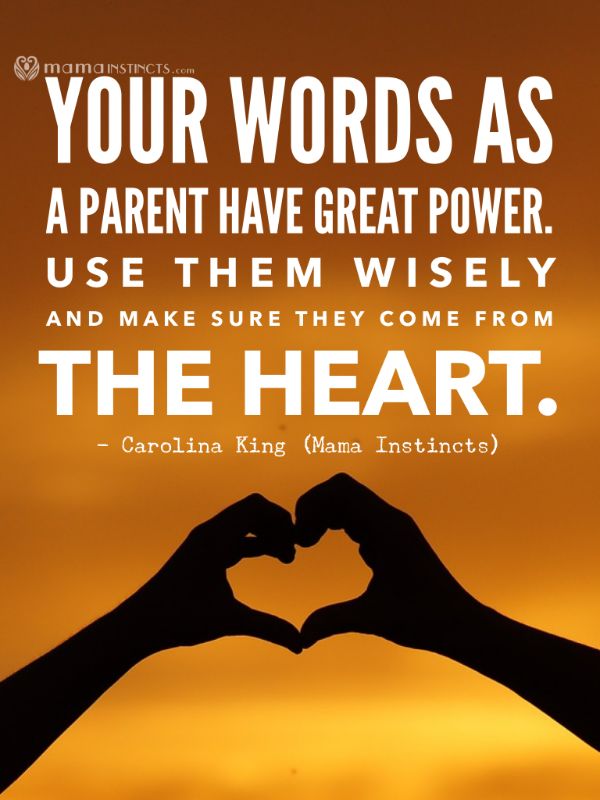
In My Hands Today…

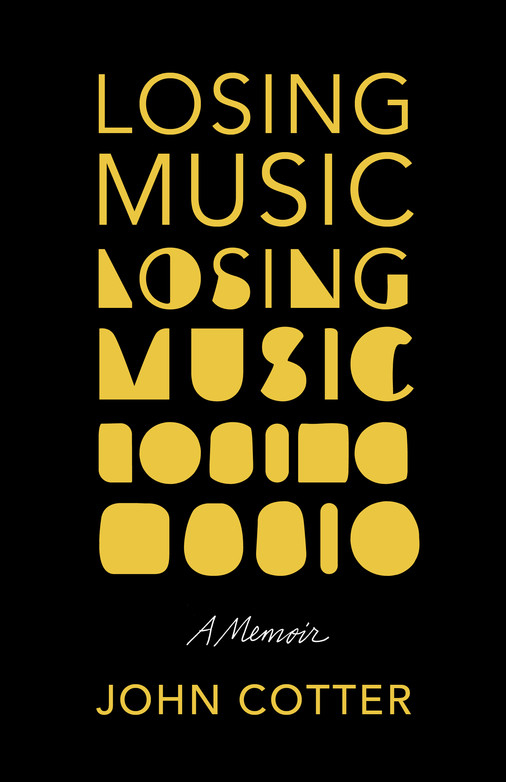
Losing Music: A Memoir – John Cotter

John Cotter was thirty years old when he first began to notice a ringing in his ears. Soon the ringing became a roar inside his head. Next came partial deafness, then dizziness and vertigo that rendered him unable to walk, work, sleep, or even communicate. At a stage of life when he expected to be emerging fully into adulthood, teaching and writing books, he found himself “crippled and dependent,” and in search of care.

When he is first told that his debilitating condition is likely Ménière’s Disease, but that there is “no reliable test, no reliable treatment, and no consensus on its cause,” Cotter quits teaching, stops writing, and commences upon a series of visits to doctors and treatment centers. What begins as an expedition across the country navigating and battling the limits of the American healthcare system, quickly becomes something else entirely: a journey through hopelessness and adaptation to disability. Along the way, hearing aids become inseparable from his sense of self, as does a growing understanding that the possibilities in his life are narrowing rather than expanding. And with this understanding of his own travails comes reflection on age-old questions around fate, coincidence, and making meaning of inexplicable misfortune.

A devastating memoir that sheds urgent, bracingly honest light on both the taboos surrounding disability and the limits of medical science, Losing Music is refreshingly vulnerable and singularly illuminating—a story that will make readers see their own lives anew.

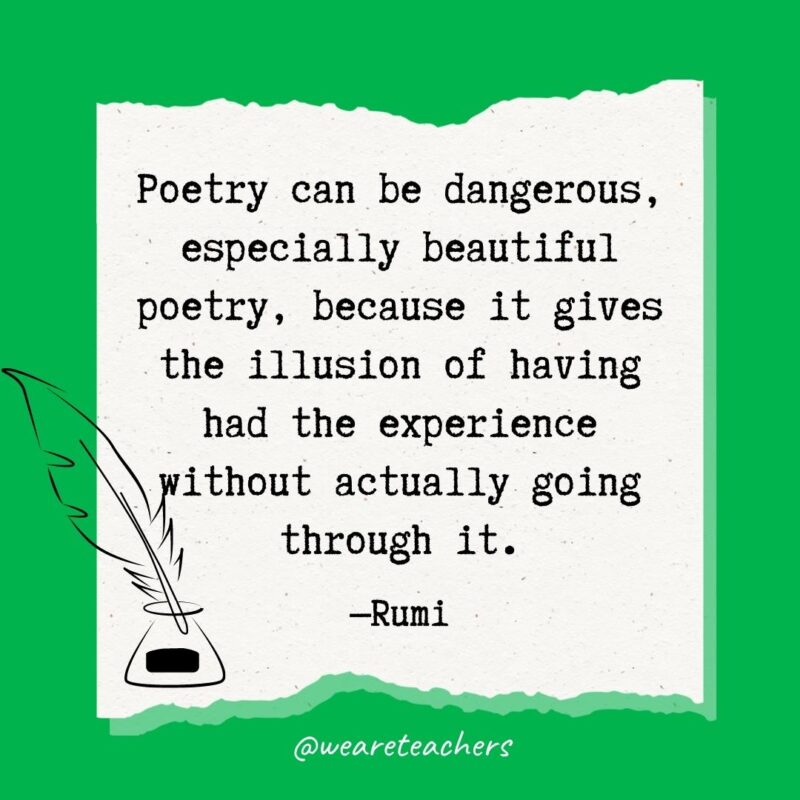
Poetry: Expressing Emotions through the Beauty of Words

Growing up, while I loved to read and would find something to read everywhere and anywhere, I didn’t like poetry. I found them boring and unrelatable. Then, about 3-4 years back, while writing a blog post, instead of an essay, I found myself writing a poem. And from that day, I was hooked. I started reading poetry and understanding it and found the beauty in this writing form.

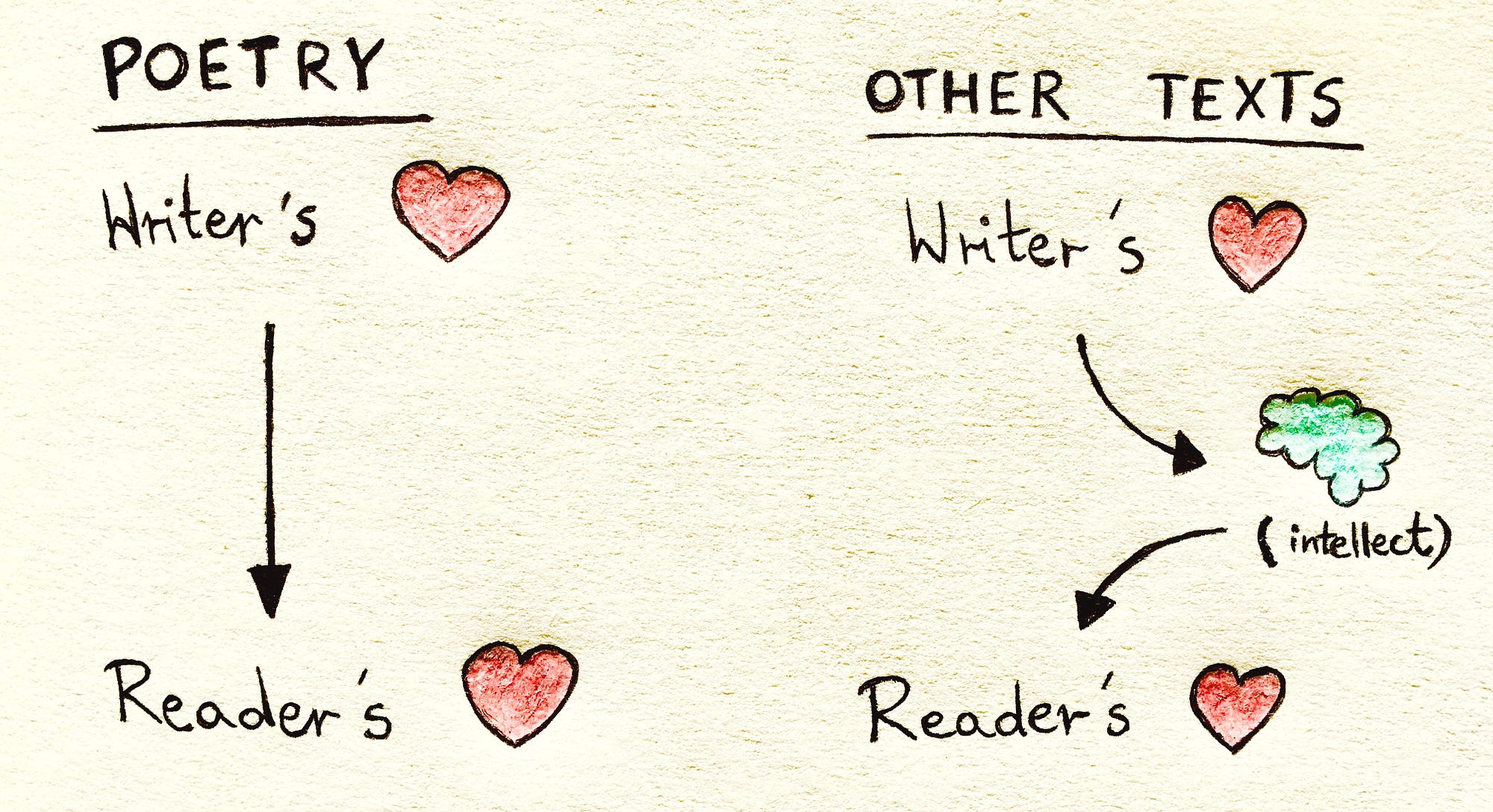
A timeless art of spinning words, poetry has captivated hearts and minds for centuries. It possesses a unique ability to express emotions that often elude ordinary language. The beauty of poetry lies in its capacity to unravel the deepest human sentiments and convey them in ways that prose cannot. Poetry transcends the boundaries of logic and embraces the realm of imagination, allowing one to explore the intricacies of the human experience. The poetic realm is beautiful weaving intricate tapestries of imagery, rhythm, and meaning.

Human emotions are vast and varied, often defying precise definitions. In such cases, poetry becomes a vessel through which the depths of these emotions can be explored and expressed. It has the power to encapsulate the most complex of feelings, such as love, grief, and longing, and present them in a manner that resonates deeply with both the poet and the reader. Through carefully chosen metaphors, vivid imagery, and rhythmic patterns, poetry unveils the intangible, painting emotions in vibrant hues that speak to the heart. It offers solace to those who struggle to articulate their innermost thoughts and provides a sanctuary where emotions can find sanctuary.

Unlike conventional language, which operates within the boundaries of literal meaning, poetry stretches those boundaries, allowing for ambiguity and multiplicity of interpretation. It enables one to tap into the richness of emotions and transcend the limitations of everyday communication. Poetry provides a refuge for the unspoken, the whispers of the soul that cannot be captured by mere words. It offers a sanctuary where paradoxes and contradictions can coexist, where the unsayable can find expression, and where the profound can be glimpsed through the veil of artistry. In this way, poetry acts as a bridge between the tangible and the intangible, the known and the unknowable.

Poetry also showcases the sheer beauty of words, highlighting their rhythmic cadence, melodic qualities, and evocative power. Poets meticulously select words to create a symphony of sounds and sensations, infusing their verses with a musical quality that resonates deep within us. The harmony of a well-crafted poem brings language to life, transforming mere words into instruments of enchantment. Through rhyme, meter, and the delicate interplay of syllables, poetry can transport one to ethereal realms, where words shimmer like stars in the night sky.

Poetry embellishes the essence of words with vivid imagery, painting pictures in the minds of the reader. It employs sensory details to evoke emotions and transport the reader to different times and places. A skilled poet can transform the mundane into the extraordinary, turning everyday objects and experiences into profound metaphors. With a stroke of a pen, a simple rose becomes a symbol of love and beauty, and a rainstorm becomes a metaphor for emotional turmoil. Poetry invites one to see the world through the poet’s eyes, where every word is meticulously chosen to create a vivid tapestry of emotions, colours, and sensations.

Poetry embraces the power of brevity, distilling complex ideas into concise and impactful phrases. A single line or a carefully crafted metaphor can hold within it a world of meaning, encouraging the reader to pause, reflect, and uncover hidden truths. It encourages the reader to embrace the economy of language, stripping away unnecessary words and leaving behind the essence of the message. In this way, poetry showcases the power of words, emphasising that it is not the quantity but the quality of expression that truly matters

An extraordinary art form, poetry enables the reader to express emotions that elude conventional language. It provides a sanctuary for the inexpressible, a canvas upon which the reader can paint the colours of their souls. Through carefully chosen words, poetic devices, and vivid imagery, it captivates the senses and reveals the depth and complexity of the human experience. The beauty of poetry lies in its ability to transcend the ordinary, to evoke emotions that cannot be contained within the confines of prose. It beckons one to explore the vast tapestry of human emotions and invites them to see the world through the eyes of a poet.

So take some time today to immerse yourself in the enchanting world of poetry, where words dance on the page and emotions find their voice.

In My Hands Today…

Enchantment: Awakening Wonder in an Anxious Age – Katherine May

Many of us feel trapped in a grind of constant change: rolling news cycles, the chatter of social media, our families split along partisan lines. We feel fearful and tired, on edge in our bodies, not quite knowing what has us perpetually depleted. For Katherine May, this low hum of fatigue and anxiety made her wonder what she was missing. Could there be a different way to relate to the world, one that would allow her to feel more rested and at ease, even as seismic changes unfold on the planet? Might there be a way for all of us to move through life with curiosity and tenderness, sensitized to the subtle magic all around?

In Enchantment, May invites the reader to come with her on a journey to reawaken our innate sense of wonder and awe. With humor, candor, and warmth, she shares stories of her own struggles with work, family, and the aftereffects of pandemic, particularly feelings of overwhelm as the world rushes to reopen. Craving a different way to live, May begins to explore the restorative properties of the natural world, moving through the elements of earth, water, fire, and air and identifying the quiet traces of magic that can be found only when we look for them. Through deliberate attention and ritual, she unearths the potency and nourishment that come from quiet reconnection with our immediate environment. Blending lyricism and storytelling, sensitivity and empathy, Enchantment invites each of us to open the door to human experience in all its sensual complexity, and to find the beauty waiting for us there.

The Power of Positive Parenting: Nurturing Your Child’s Emotional Intelligence

Nearly 90% of all adults will become parents at some point in their lives. And while most strive to be great parents, they may also find themselves confused and frustrated by the seemingly endless challenges of parenthood. Irrespective of where one is in their parenting journey, the journey is challenging and not with its twists and turns.

Positive parenting is the continual relationship between a parent(s) and a child or children that includes caring, teaching, leading, communicating, and providing for the needs of a child consistently and unconditionally. Parents strive to raise happy, confident, and well-adjusted children who want them to thrive in all aspects of life, including their emotional well-being. Emotional intelligence is a vital skill that enables individuals to understand and manage their own emotions and empathise with others. It plays a significant role in building healthy relationships, making responsible decisions, and navigating life’s challenges.

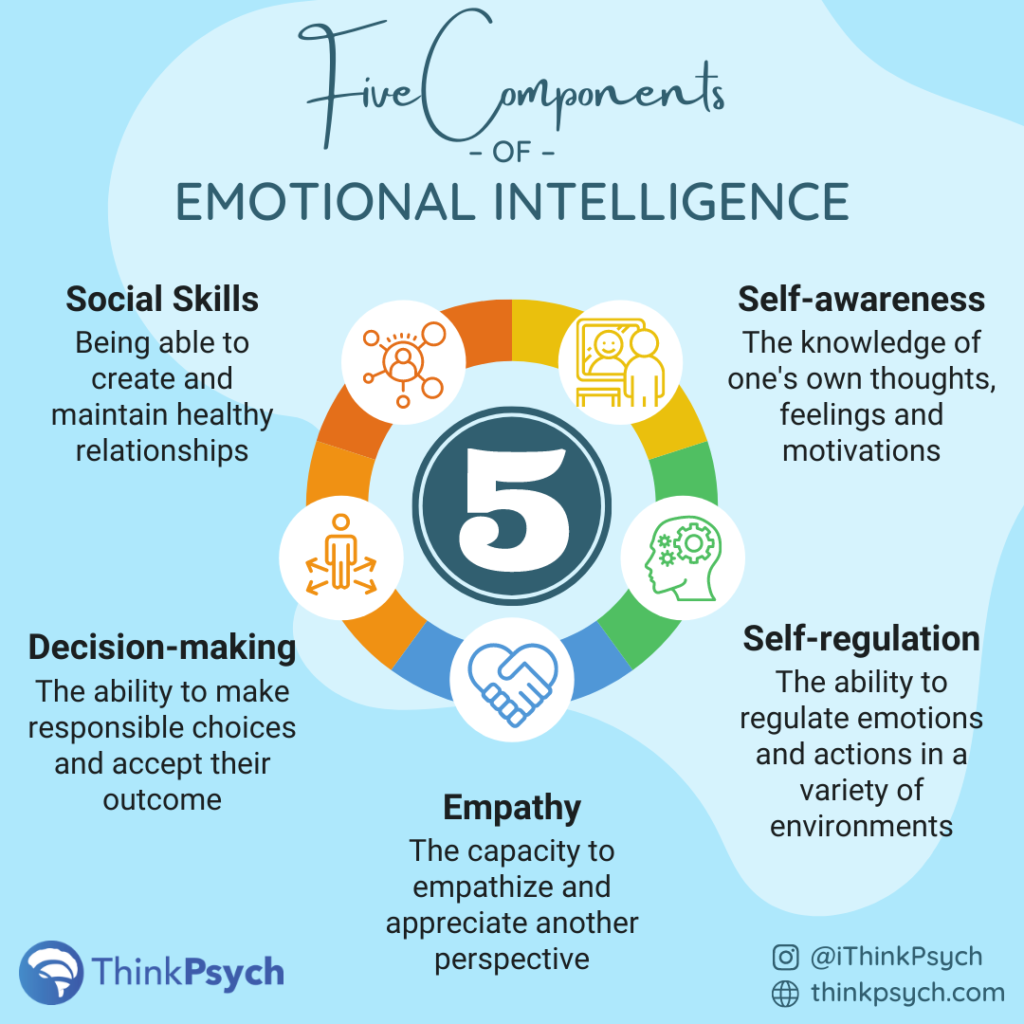
Emotional intelligence encompasses various skills and abilities that contribute to effective emotional management. These skills include self-awareness, self-regulation, empathy, motivation, and social skills. By cultivating emotional intelligence in children, they are equipped with the tools to navigate their emotions and relationships successfully.

Positive parenting is an approach that emphasises respect, empathy, and open communication. It focuses on nurturing a strong parent-child relationship, which serves as the foundation for emotional intelligence development.

Positive parenting creates a loving and supportive environment: Children thrive when they feel loved and supported. Parents should express their affection and appreciation regularly by offering praise for their children’s efforts and achievements and providing comfort and reassurance during difficult times. This sense of security helps children develop a strong foundation for emotional well-being.

Positive parenting advocates active listening: A parent should actively listen to their child’s thoughts, feelings, and concerns. This can be done by maintaining eye contact, nodding, and summarising their words. When children feel heard and understood, they develop trust and learn how to express their emotions effectively.

Positive parenting fosters open communication: Parents should encourage open and honest communication with their children. They should create a safe space where the children are comfortable with sharing their thoughts and feelings without fear of judgment or criticism. Parents should respond with empathy and understanding, validating their emotions and perspectives.

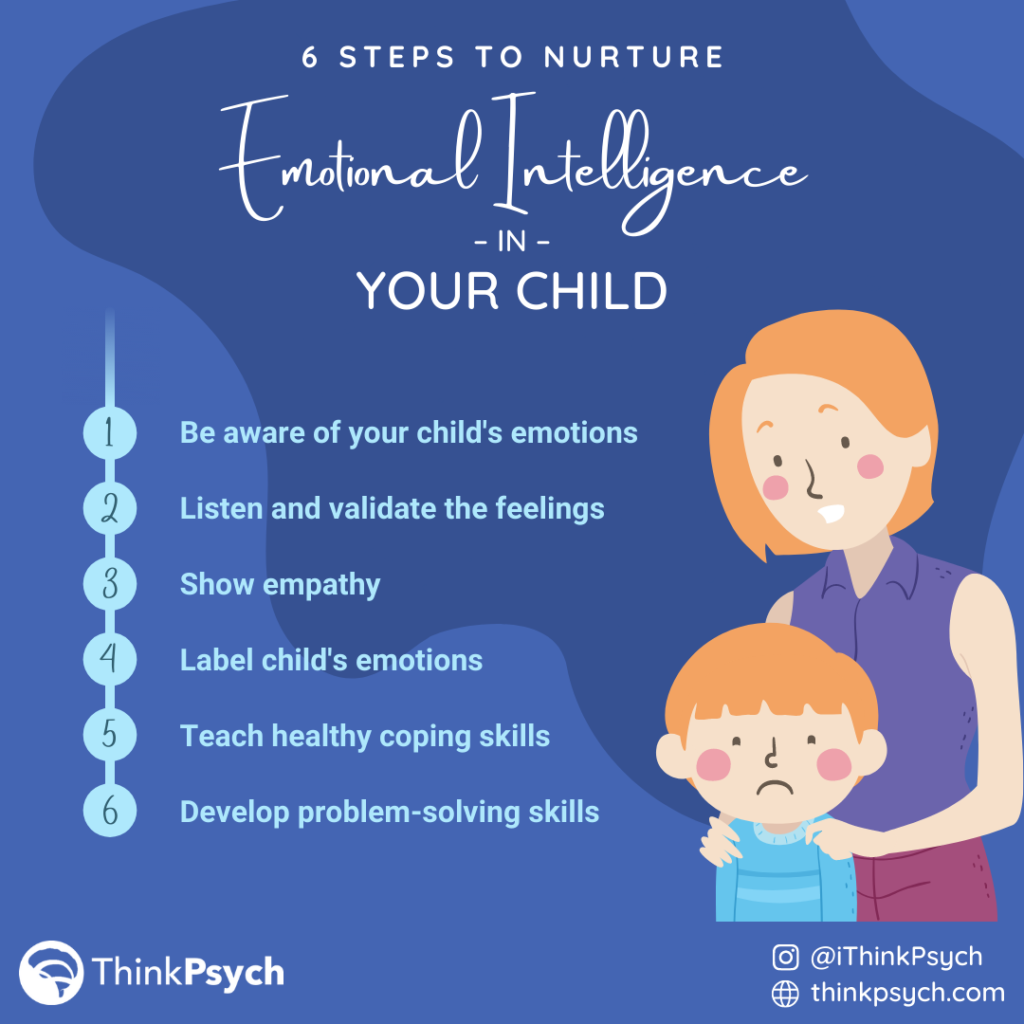
Positive parenting teaches emotional literacy: Help your child develop a vocabulary for their emotions. Label and discuss different emotions, both positive and negative, so they can better understand and communicate their feelings. This awareness lays the groundwork for emotional regulation.

So how can parents use positive parenting to nurture emotional intelligence in their children?

Emotion Coaching: Emotion coaching involves recognising and validating the child’s emotions while guiding them in managing those emotions constructively. When the child experiences a strong emotion, acknowledge and empathise with their feelings. Help them identify the emotion and explore coping strategies to regulate it effectively.

Encourage Problem-Solving: Parents should teach their child problem-solving skills by involving them in decision-making processes. Encourage them to brainstorm solutions and evaluate the pros and cons of each option. This empowers them to think critically, make responsible choices, and develop resilience.

Model Healthy Emotional Expression: Children learn by observing their parents. Parents should model healthy emotional expression by constructively managing their emotions. They should demonstrate effective coping strategies such as deep breathing, taking breaks, or seeking support when they encounter challenging situations and seeing this, their child will learn to emulate these strategies.

Teach Empathy and Perspective-Taking: Parents can help their child to develop empathy by encouraging them to understand and consider the feelings of others. They should engage in discussions about how different actions and words can impact someone’s emotions as well as encourage them to put themselves in others’ shoes and see things from different perspectives.

Foster Emotional Regulation: Emotional regulation is a vital aspect of emotional intelligence. Parents should teach their children various techniques for managing their emotions, such as deep breathing exercises, counting to ten, or engaging in physical activities. They should encourage them to find healthy outlets for their emotions, such as journaling, drawing, or engaging in hobbies.

Encourage Social Skills Development: Social skills play a significant role in emotional intelligence. Parents should encourage their children to engage in activities that foster social interactions, such as team sports, clubs, or community service. They should provide opportunities for them to practice skills like active listening, cooperation, and conflict resolution.

Set Realistic Expectations: Emotional intelligence development is a gradual process. Parents should be patient with their children and set realistic expectations based on their age and individual capabilities. Celebrating small milestones along the way and providing constructive feedback to support their growth will help their children.

Nurturing a child’s emotional intelligence is an investment that will benefit them throughout their lives. By practising positive parenting techniques, one can create a nurturing environment that fosters emotional well-being and resilience. Emotional intelligence is a skill that can be developed and strengthened over time.

Parents, remember to embrace the journey, be present for your child, and watch them flourish as they navigate life with confidence, empathy, and emotional intelligence.

2023 Week 30

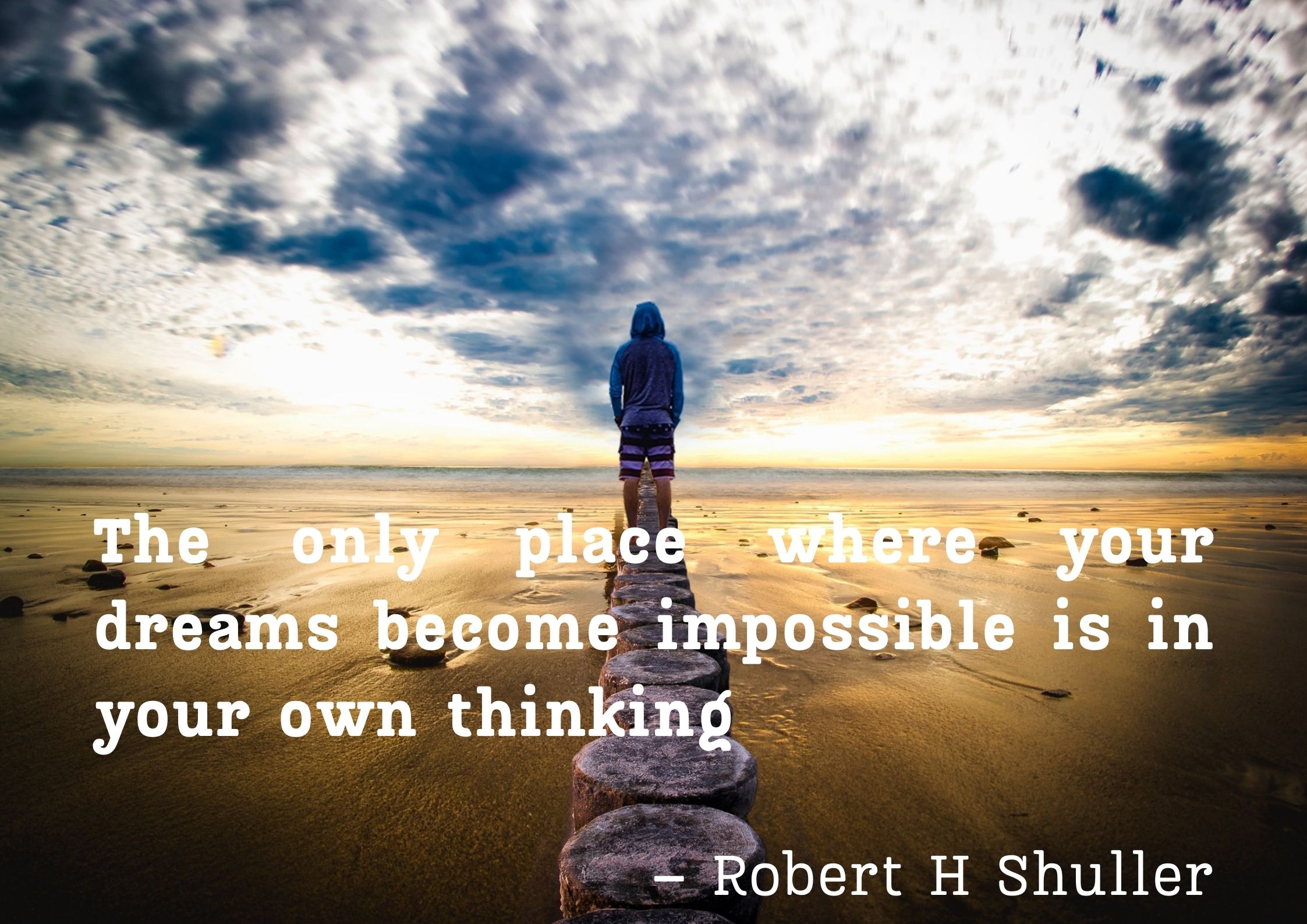
Today’s quote is by American Christian televangelist, pastor, motivational speaker, and author, Robert H. Schuller. One of Schuller’s most famous quotes, this one conveys an important message about the power of one’s mindset and beliefs in shaping their reality. It suggests that thoughts and attitudes play a significant role in determining whether one can achieve one’s dreams or not. Constantly dwelling on negative thoughts creates a mental environment that hinders from taking necessary actions and pursuing dreams with confidence and determination. On the other hand, an optimistic mindset, which believes in oneself and one’s potential is more likely to overcome challenges, work harder, and persist in the face of obstacles. Such a mindset can lead to personal growth, learning, and ultimately, turning dreams into reality. Individuals need to recognise the power of their thoughts and beliefs and remind them that the primary battleground for achieving their dreams is within their minds. By conquering limiting thoughts and adopting a positive outlook, one can unlock the potential to achieve what might have initially seemed impossible.

This week was an extension of last week and nothing notable happened that I can share. GG is looking forward to ending her internship on a high note next week and then taking a break before university starts in mid-August. I may be able to share some good news very soon, just waiting for some last bits of pieces to fall into place.

It’s been very hot these days with the temperatures hovering around 30-33 degrees Celsius. I am tempted to use the air conditioning daily but try to restrain myself with great difficulty. But c’est la vie and we have to roll with the punches it throws at us.

Take care and stay positive everyone!