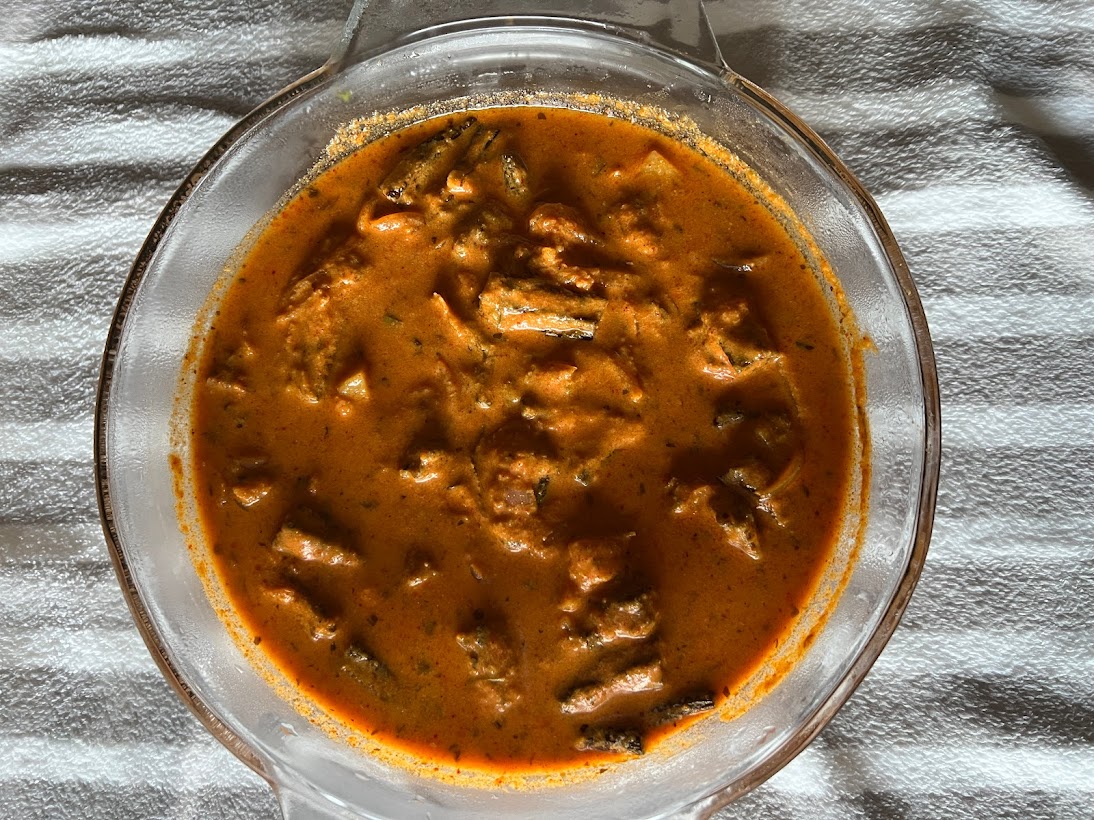
Recipes: Bhindi Do Pyaza/Bhindi Masala

I have been sitting on this recipe since December of last year for no reason. GG, BB and I made this recipe for S’ birthday last year.

Bhindi, Ladies’ Finger or Okra, is a tricky vegetable to make and like. Most people don’t like it because of the sliminess of its seeds that ooze out while cooking. Also known as ladies finger in some countries (including India), Okra is a flowering plant in the mallow family with edible green seed pods. The geographical origin of okra is disputed, with theories of its origin spread across West Africa, South and Southeast Asia. It is cultivated in tropical, subtropical, and warm temperate regions around the world and is used in many cuisines.

This recipe is a blend of Bhindi Masala, and Bhindi Do Pyaza. The recipe is richer than the usual recipes I cook and takes longer to make. But it is super delicious and will be a hit at any gathering if you are making it for family and friends. So on to the recipe…

Bhindi Masala/Bhindi Do Pyaza

Ingredients:

  • 500 gms bhindi or okra, washed and dried
  • 2 medium-sized onions, thinly sliced
  • 2 medium-sized onions, roughly chopped
  • 2 tomatoes, chopped
  • 7-8 garlic cloves, peeled
  • inch piece of ginger, peeled
  • 1 tsp cumin seeds
  • ¼ tsp turmeric powder
  • 1-2 tsp red chilli powder
  • 1 tsp coriander powder
  • 1 tsp cumin powder
  • ½ tsp garam masala
  • ½ tsp dry mango powder or amchur powder
  • 1 tbsp kasuri methi or dried fenugreek leaves
  • Salt to taste
  • ½ cup beaten yoghurt
  • 3 tbsp oil + oil to fry the okra
  • Finely chopped coriander leaves to garnish

Method:

  • Trim the ends of the okra and cut them into 2-inch pieces. Keep aside.
  • In a pan or kadhai, heat 2 tbsp oil and let the oil warm up.
  • Add the cumin seeds and let them splutter.
  • Add the ginger and garlic and saute for a few seconds. Then add the chopped onions and let the onions become translucent and a nice golden brown.
  • Now add the chopped tomatoes and a pinch of salt and let the tomatoes cook well and become mushy.
  • Remove from the pan and let it cool. Once cool, blend it to a smooth paste.
  • While waiting for the onion-tomato mixture to cool down, heat oil in another pan or kadai over medium heat. Add in the cut okra and deep or shallow fry until the okra is cooked and crisp. Keep aside.
  • Heat the balance of 1 tbsp oil, and when it warms up, add in the sliced onions and sauté until they turn golden brown and caramelised.
  • Now add in the blended paste and cook. Add in the dry spices at this point, adding in the turmeric powder, red chilli powder, coriander powder and cumin powder, plus some salt. Mix well and cook for a couple of minutes until the spices are well combined.
  • Add the fried bhindi and mix gently, ensuring that the spices coat the okra evenly. Cook uncovered for 4-5 minutes, stirring occasionally.
  • Reduce the heat to low, add some water to bring it to the consistency you want, cover the pan, and simmer for about 5 minutes, stirring occasionally.
  • Add in the beaten yoghurt and stir continuously so the yoghurt does not separate.
  • Sprinkle garam masala and dry mango powder and crush the kasuri methi in the palms of your hands and sprinkle in the gravy. Mix well to combine all the flavours.
  • Garnish with freshly chopped coriander leaves and serve hot with roti, naan or rice. I served this with jeera rice.

You could also add cooking cream instead of beaten yoghurt to make the dish even richer and add more flavour to it.

In My Hands Today…

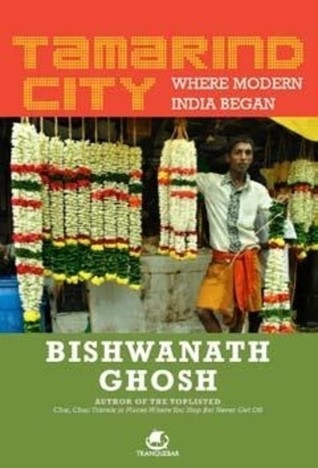
Tamarind City: Where Modern India Began – Bishwanath Ghosh

‘While in other big cities tradition stays mothballed in trunks, taken out only during festivals and weddings, tradition here is worn round the year.’

This is just one of the author’s many keen observations of Chennai. With mordant wit, this biography of a city spares neither half of its split-personality: from moody, magical Madras to bursting-at-the-seams, tech-savvy Chennai. And, a minute into the book, the reader knows they are inseparable-and Bishwanath Ghosh refuses to take sides.

And yet, he tells us, while Chennai is usually known as conservative and orthodox, almost every modern institution in India-from the army to the judiciary, from medicine to engineering-traces its roots to Madras’s Fort St George, which was built when Delhi had only just become the capital of the Mughal Empire, and Calcutta and Bombay weren’t even born. Today, the city once again figures prominently on the global map as ‘India’s Detroit’, a manufacturing giant, and a hub of medical tourism. There have been sweeping changes since pre-Independent India, but even as Chennai embraces change, its people hold its age-old customs and traditions close to their heart. ‘This is what makes Chennai unique,’ says Ghosh, ‘the marriage of tradition and technology’.

Bishwanath Ghosh wears a reporter’s cap and explores the city he has made his home, delving into its past, roaming its historic sites and neighbourhoods, and meeting a wide variety of people-from a top vocalist to a top sexologist, from a yoga teacher to a hip transsexual, from a yesteryear film star to his own eighty-five-year-old neighbour, from the ghosts of Clive, Wellesley, Hastings and Yale to those of Periyar and MGR, two people who redefined the political skyline of Tamil Nadu.

What emerges is an evocative portrait of this unique city, drawn without reservation-sometimes with humour, sometimes with irony-but always with love.

2023 Week 32 Update

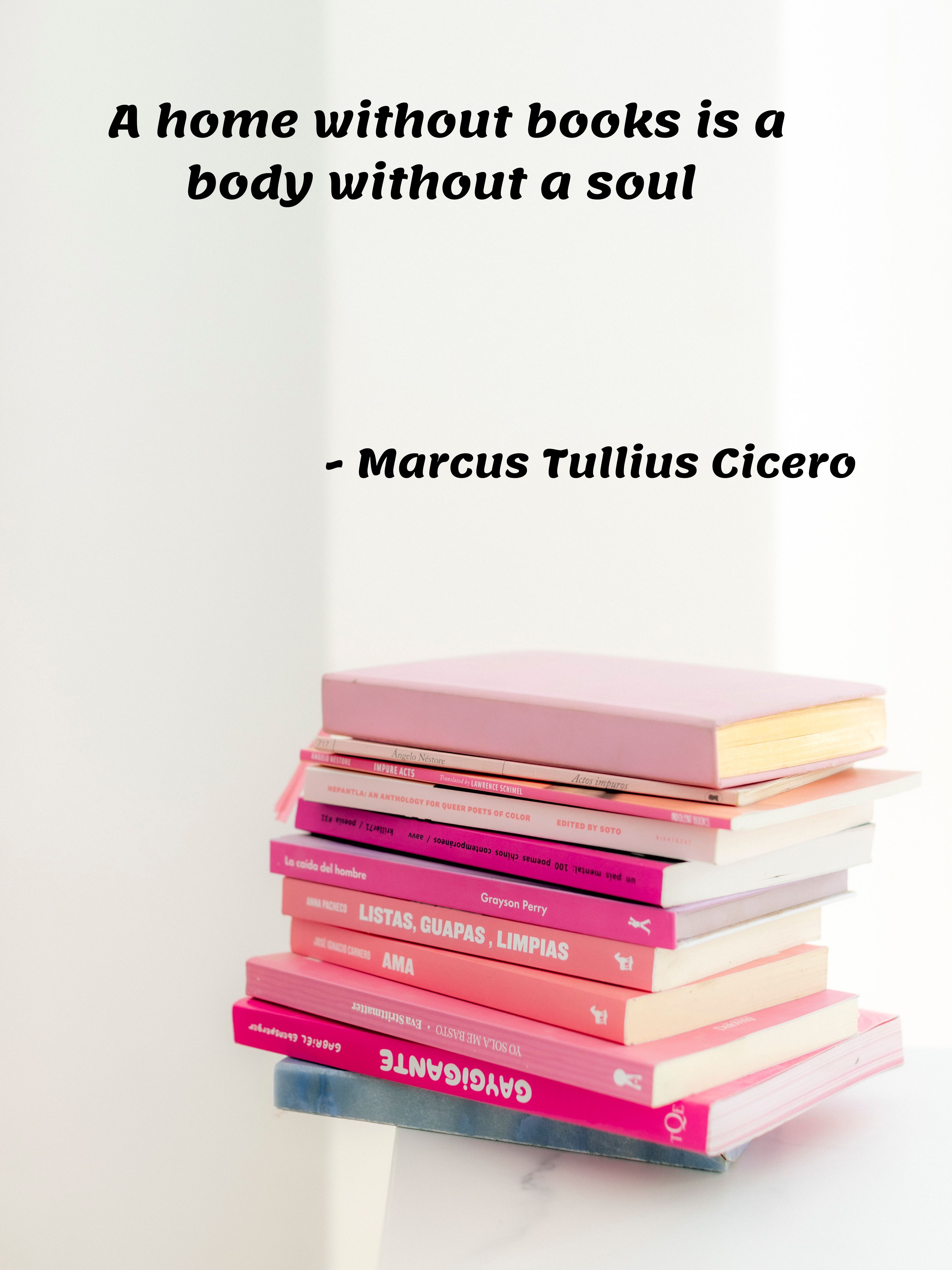
Today’s quote is attributed to the ancient Roman philosopher and statesman Marcus Tullius Cicero. It expresses the idea that books, literature, and learning are essential components of a fulfilling and meaningful life. In the same way that a body without a soul is considered lifeless and devoid of consciousness, a home without books is likened to a place that lacks intellectual and spiritual nourishment. Cicero’s quote underscores the value of education, knowledge, and intellectual exploration. It suggests that books not only provide information and entertainment but also contribute to personal growth, empathy, and a deeper understanding of the world. The presence of books in a home is thought to enrich the inhabitants’ lives and contribute to the development of their character and intellect.

GG starts school tomorrow, and I pray that she has a wonderful four years in university, learning what she needs to know to become a productive member of society. I also hope that the contacts she makes in school and the networks and knowledge she gains will stand her in good stead and help her achieve her life goals.

I also have some news: I started a new position this week, and I am loving it. It is meaningful work in a field that I am super interested in—empowering women and girls—and so I too hope that I can contribute and not only help women become a better version of themselves but also become a better me!

Singapore also announced the next Presidential election, which, if there is more than one qualified candidate, will take place on September 1 and will be a public holiday. So that’s a nice long weekend to look forward to. May the candidate who has Singapore’s best interests at heart win.

That’s all from me this week. Stay safe, stay healthy, and most importantly, stay positive!

In My Hands Today…

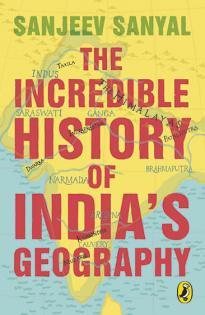
The Incredible History of India’s Geography – Sanjeev Sanyal

Maps and mountains, lions and tigers, rivers and oceans-all sorts of things you didn’t know about India’s geography

Could you be related to a blond Lithuanian? What if ostriches once roamed in India? Did you know that India is the only country that has both lions and tigers? Who found out how tall Mt Everest is?

If you’ve ever wanted to know the answers to questions like these, this is the book for you. In here you will discover various things you never expected, such as the fact that we still greet each other like the Harappans did or that people used to think India was full of one-eyed giants. And sneakily you’ll also know more about India’s history and geography by the end of it. Full of quirky pictures and crazy trivia, this book takes you on a fantastic journey through the incredible history of India’s geography.