Happily: A Personal History-With Fairy Tales – Sabrina Orah Mark
The literary tradition of the fairy tale has long endured as the vehicle by which we interrogate the laws of reality. These fantastical stories, populated with wolves, kings, and wicked witches, have throughout history served as a template for understanding culture, society, and that muddy terrain we call our collective human psyche. In Happily, Sabrina Orah Mark reimagines the modern fairy tale, turning it inside out and searching it for the wisdom to better understand our contemporary moment in what Mark so incisively calls “this strange American weather.”
Set against the backdrop of political upheaval, viral plague, social protest, and climate change, Mark locates the magic in the mundane and illuminates the surreality of life as we know it today. She grapples with a loss of innocence in “Sorry, Peter Pan, We’re Over You,” when her son decides he would rather dress up as Martin Luther King, Jr., than Peter Pan for Halloween. In “The Evil Stepmother,” Mark finds unlikely communion with wicked wives and examines the roots of their bad reputation. And in “Rapunzel, Draft One Thousand,” the hunt for a wigmaker in a time of unprecedented civil unrest forces Mark to finally confront her sister’s cancer diagnosis and the stories we tell ourselves to get by.
Kota Tinggi The largest district in Johor, Kota Tinggi is a town and capital of the Kota Tinggi District. Kuala Sedili or Tanjung Sedili, a small fishing town located 37 km northeast of Kota Tinggi town, is the second largest fishing port on the East coast of Peninsular Malaysia. It is one of the major towns of the state.
Kota Tinggi is known as a historical town because the Sultanate of Johor was established there. Many historical tombs are found here including the Sultan Mahmud Mangkat Di Julang Mausoleum, Makam Bendahara Tun Habib Abdul Majid and Makam Tauhid in Kampung Makam. Makam Laksamana Bentan is located in Kampung Kelantan. The town itself is called Daerah Pelancongan Bersejarah or The Historical Tourism District.
Kota Tinggi was hardest hit by the floods that devastated Johor and some parts of Pahang, Melaka, and Negeri Sembilan in 2006 and 2007. Nearly 100,000 people had to be evacuated to rescue centres. The first flood wave sunk almost the whole town of Kota Tinggi. The second wave exceeded even the height of the first wave and the town was underwater for nearly two weeks and isolated from other towns due to landslides and flooding.
The Kota Tinggi Waterfalls at Lombong, 16 km northwest of the town, is a local favourite. The waterfalls are 36 m high and are located at the base of the 634-meter-high Gunung Muntahak mountain. There are two falls, one found at the park’s entrance while the other is nestled further down the trail. The river water drains through a series of shallow pools used for swimming. The natural environment of some parts of the location has somewhat been spoiled by resort development with artificial landscaping.
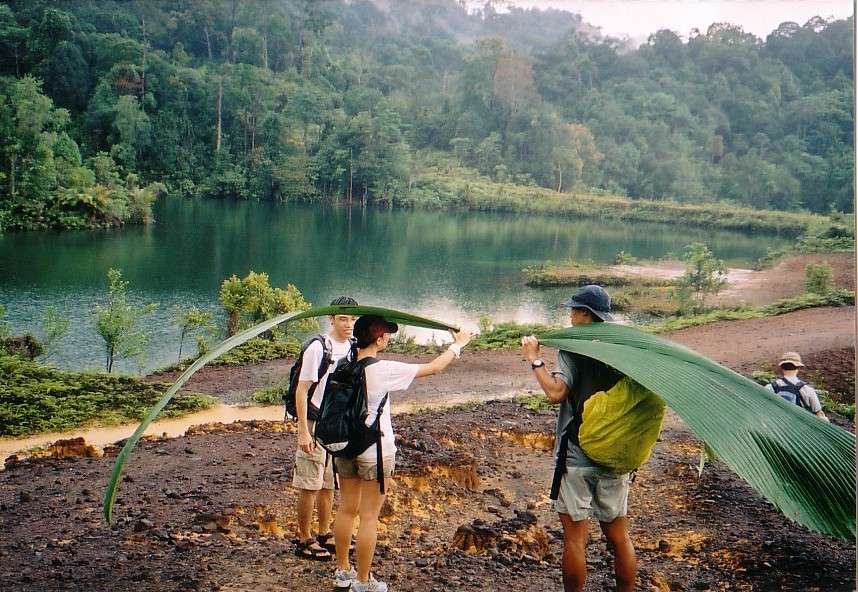
Nestled in Kota Tinggi, concealed by the famous Kota Tinggi Waterfall, lies the beautiful, untouched, and unexplored Gunung Muntahak hill. This hill is the source of the Kota Tinggi waterfall which rises to a height of about 634 metres. Although the peak does not offer a great view due to the presence of other smaller hills and lush green vegetation, the trail leading up to the summit is a true sight to behold.
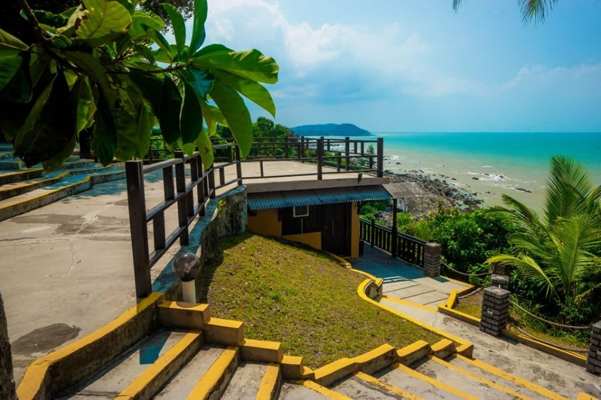
There are also many beaches along the coastal part of Kota Tinggi. The most popular beaches are Tanjung Balau, Desaru and Batu Layar which are 58 km, 55 km, and 62 km from Kota Tinggi town respectively. Teluk Sengat, located 25 km east of Kota Tinggi, is a village visited by tourists for its seafood.
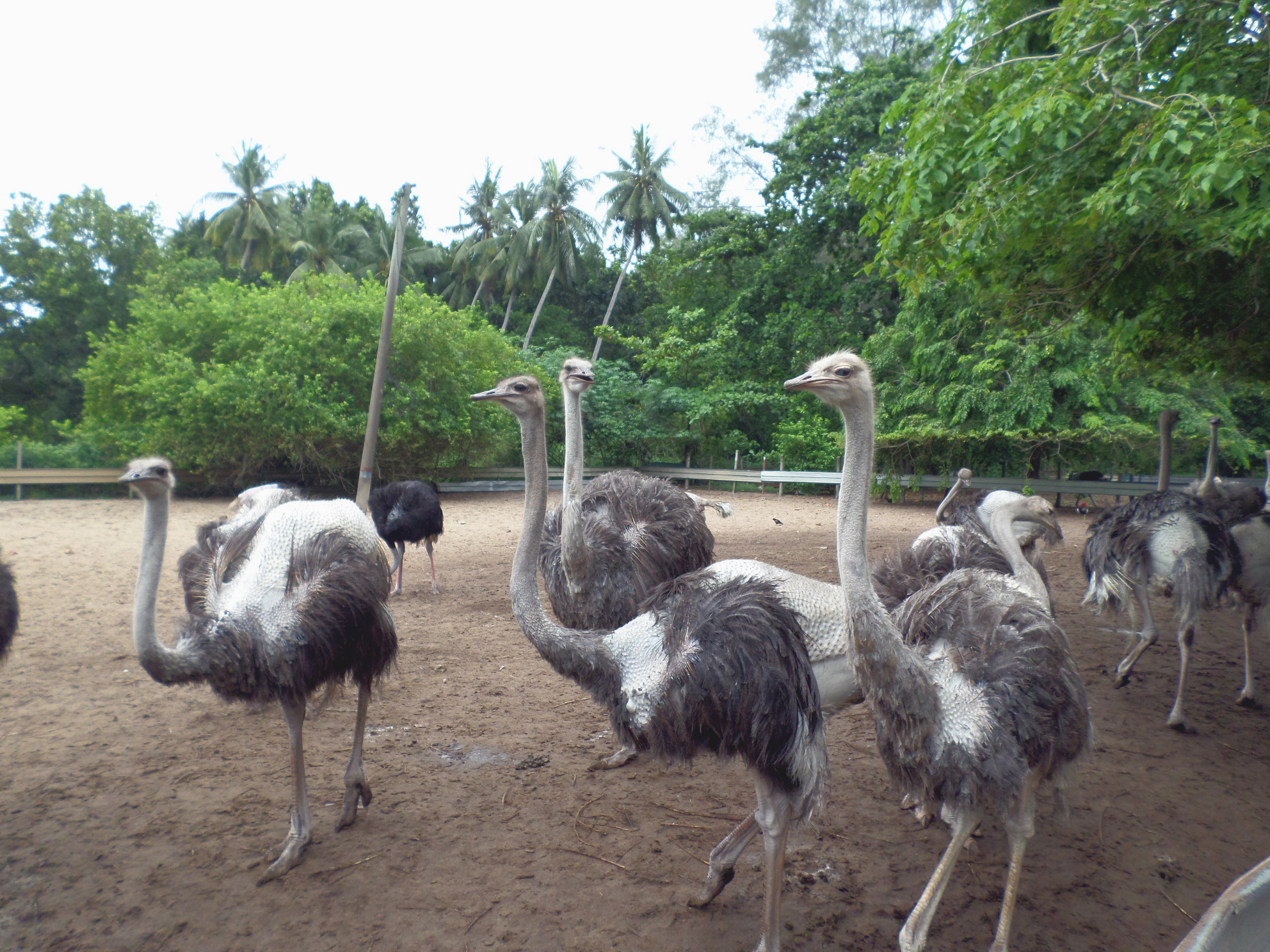
The Desaru Ostrich Farm is regarded as one of the largest ostrich farms in Malaysia and is home to about 200 ostriches. Some of the activities include feeding and riding the ostriches. A guided tour of the farm is also available. The highlight of the tour is when the guide demonstrates the opening of an ostrich egg. Mouth-watering food and a souvenir store can also be found inside the farm.
Situated in Teluk Sengat, the Teluk Sengat Crocodile Farm is regarded as the largest crocodile farm in Malaysia. Sprawling across an area of 10 acres, this farm houses approximately 1000 saltwater crocodiles. It is interesting to note that some of these magnificent crocodiles are about 155 years old.
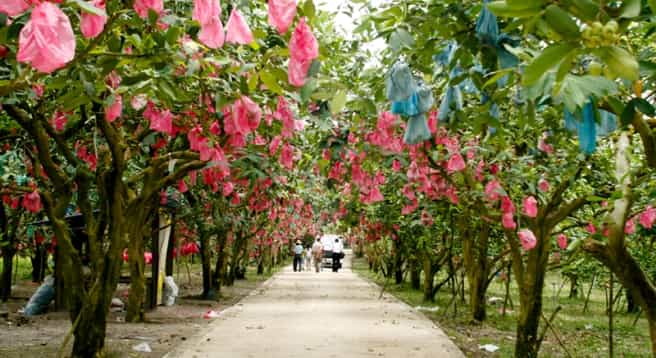
Desaru Fruit Farm is a marvellous agro-tourism site that houses over 100 species of plants, fruits and trees. It also houses a petting zoo, a go-kart track, a fish pond as well as a paintball activity area. Sprawling across an area of about 180 acres, this farm houses a unique variety of tropical seasonal and tropical non-seasonal fruits. The farm only uses natural organic techniques of plantation and also practices sustainability. Due to its sustainable plantation techniques and humongous variety of plant species the Desaru Fruit Farm has been honoured with several awards. Guided tours are also available here.
Firefly Valley Leisure Park is a fascinating destination located about 3 km from the intersection point of Kota Tinggi town and the Bypass. The tour includes a mystical journey down the river and a friendly visit to the mini-farm. Boat tours and cruises are available during the evening.
Muzium Nelayan Tanjung Balau is the only museum in Malaysia that is dedicated to fishermen. It houses artefacts and replicas of many fishing equipment like nets, boats and oars. The dioramas, posters and films give one the feeling of being in a traditional fisherman’s village. The museum contains a huge variety of stones, and rocks and it also houses a model of a Chinese vessel that sank in the 1830s. The museum is open from 9 am to 6 pm.
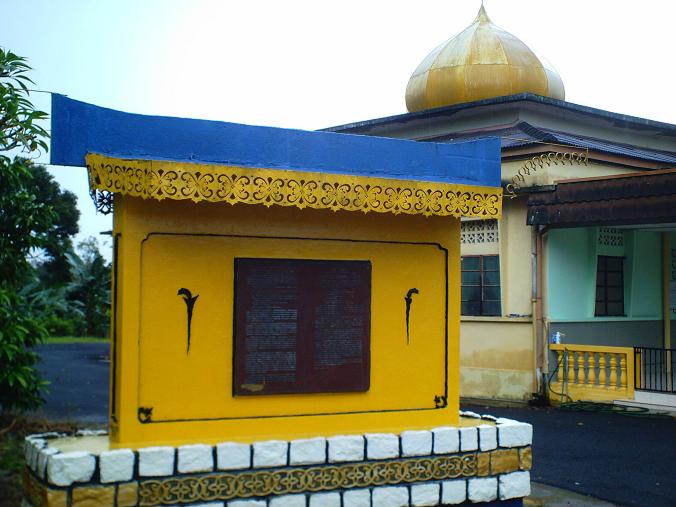
The Kota Johor Lama Museum gives an insight into the old Johor Fort and also provides information about the local history and culture of the Johor Lama. The museum houses several remains of the Johor Fort which was built by Sultan Alauddin Riayat Shah II. The commemorative stone inscription that is housed in the premises of the museum gives an insight into the history of the Johor Fort.
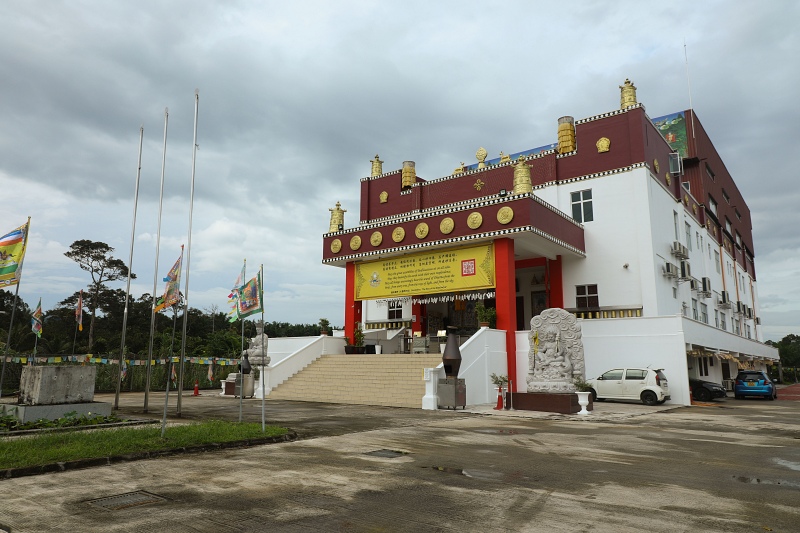
Situated in Kota Tinggi, Thekchen Choling Malaysia is a Chinese and Tibetan Buddhist temple of the Mahayana sect. The temple houses one of the largest statues of the Bodhisattva, Avalokitesvara constructed in Tibetan style. The statue rises to a height of about 36 feet and is the largest Thousand-Armed Chenrezig statue in Southeast Asia.
Mersing Mersing is a small coastal town located about 128 km northeast of Johor Bahru and is well-known for its ferry jetty ports that to several islands nearby. Most of the people pass through Mersing while going to Tioman Island.
Mersing town is particularly significant for several reasons. It is one of only two major towns situated in the eastern half of the state, the other being Kota Tinggi, and lies on the main trunk road that connects southern as well as eastern Johor with the east coast of Pahang including Pahang’s capital Kuantan. It is also part of the Federal Route, and it is the main departure point for ferries to the nearby offshore islands such as Pulau Rawa of Sultan Iskandar Marine Park and Tioman Island. Mersing port in the mouth of Mersing River is also the main port for ferries to Tioman Island and the more than 40 other islands in the Seribuat Archipelago.
The Malays of Mersing are unique compared to the rest of Johor in that many of them are of Terengganu ancestry, which is proven by the Keropok Lekor industries which is popular in the town and many still speak Terengganu Malay along with the Johor dialect of Malay. The Chinese community in Mersing mainly belongs to the Cantonese dialect group and speak Cantonese, however, many locals, especially business owners have no issue conversing in Mandarin. Seafood is the prime attraction of Mersing.
Situated on the coast of the South China Sea, the Air Papan Beach is one of the most beautiful and cleanest beaches in Mersing. The coastline of the beach is dotted with rice paddies and coconut trees. Since the water is quite clean, one can take a dip in the refreshing and cool water. The beach is also famous for the Pesta Air Papan festival which is celebrated on May 01.
Sri Subramaniam Temple is a beautiful temple that is located beside the Hock Soon Chinese temple. This ornate temple is dedicated to Lord Subramaniam, who is also referred to as Lord Murugan. The history of this temple dates back over a hundred years during which it was established by the Mersing Estate Management. The temple is adorned with beautiful pillars, altars and vibrant ceiling decorations. Some of the famous festivals and events that are hosted at Sri Subramaniam Temple include Thaipusam, Pangkuni Uthiram with Annathanam and Kandha Shashti. The temple is open between 6 and 10 am and then again between 4 and 9 pm.
Situated along Jalan Jemaluang, the Fushun or Hock Soon Temple is regarded as one of the most beautiful Chinese temples in Mersing. Dedicated to the Chinese God of Mercy, Tua Pek Kong, its history dates more than 100 years. This temple is majorly painted in red and is constructed in the Taoist style and is adorned with beautiful carvings. The temple is open from 8 am to 7 pm daily.
A must-visit spot in Mersing is the Masjid Jamek Bandar, a legendary mosque located at the top of the hill with a panoramic view of the area. Masjid Jamek Bandar is a stunning pre-African structured mosque that radiates a sense of calm and tranquillity. The Masjid provides a panoramic view of the town and the South China Sea. The construction of the blue and white mosque was completed in 1956. The mosque is well-lit up at night which makes it a true treat to the eye.
Located 32 km from Mersing, the Mersing Marine Park Centre is an information centre that provides a deep insight into the marine parks of Malaysia. This centre is located inside the Pulau Tinggi Marine Park. The main focus of the information centre is on the Johor Marine Park. One can also learn about the protection and conservation of natural ecology and habitats.
Located opposite the ferry terminal in Mersing, the Mersing Harbour Centre is the best place to book ferry tickets to Tioman and make other reservations. This harbour centre has replaced the old and traditional ticket counters which were rather unorganised. One can also book their stay at a resort or pay for the Marine Park ticket. The harbour centre also has a food and drinks section, souvenir stores and a Tourist Information Centre.
Gunung Arong is a recreational forest reserve that is situated in Endau. The forest reserve is nestled on a hill which rises up to a height of about 273 m. The peak offers a panoramic view of the scintillating South China Sea and Tanjung Resang. While Gunung Arong is a great place for trekkers, it can be easily climbed by children as well. One can also visit the nearby beach and Pulau Mawar Island.
Nestled in Mersing, Tanjung Resang Beach is a beautiful beach that stretches as far as the eye can see. While rough waves can be witnessed at sea, a strong wind can be sensed at the shore. The beach has a sombre shade of sand and it is dotted with dense outcrops. It is known for watersports like scuba diving, skimboarding, windsurfing, fishing, and kitesurfing. One might be able to catch a glimpse of dolphins at sea and can also visit the nearby reefs by taking a jetty from the Tanjung Resang Beach.
Batu Pahat Batu Pahat is located about 55 km south of Muar and 132 km north of Johor Bahru. The coast of the Straits of Melaka lies to the south. The town acquired the name Batu Pahat, which means chiselled stone, from the quarries near the estuary. There are multiple theories as to the origin of this name. In around 1456, the Siamese army, led by Admiral Awi Di Chu, camped in Batu Pahat before attacking Malacca. Legend has it that the invading Siamese troops were chiselling rocks at a rocky spot in the coastal village of Kampung Minyak Beku, to get fresh water during their retreat from the Melaka troops, led by Tun Perak, the famous Bendahara or Prime Minister of the Malacca Sultanate. Another possible explanation for the origin of the name is the fortress A Famosa built by the Portuguese after capturing Melaka, which was made from granite rocks taken from the mouth of Sungai Batu Pahat.
Renowned for its salted fish in the past, Batu Pahat was formerly known as Bandar Penggaram, which means the town of salt-makers. In 1893-1894, the present township was founded by Dato’ Bentara Luar, Mohamed Salleh bin Perang, acting on the orders of the Sultan of Johor, Sultan Abu Bakar. The main economic activities in the district are furniture manufacturing, food processing and agritourism.
Batu Pahat was the location of the headquarters for the Fiji Infantry Regiment, serving as part of the Commonwealth forces during the Malayan Emergency, from 1952 to 1956. The 1,600-strong-force saw considerable action during the campaign and contributed to the securing of the area during that period. On 16 October 1980, at approximately 9:30 am, 20 Muslim extremists led by Mohd. Nasir Ismail, stormed the Batu Pahat Police Station with machetes, slashing and injuring 23 police staff and civilians. 8 of the extremists were shot dead by the police. The motive of the attack was never fully determined.
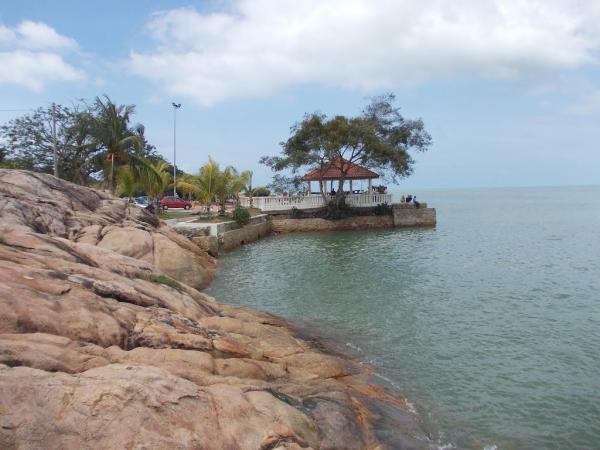
Today, the ancient well can still be found in Minyak Beku, though little was done to maintain this ancient landmark which gives name to the town. It is the perfect place to watch the tranquil red-orange sunset. Menyak Beku is also noticeable for its historically significant well which has several mysterious stories attached to it. For the town’s centennial celebration in the early 1990s, a quaint monument depicting a floating hand chiselling a rock was set up in the town square. It became the landmark of the town instantaneously. Currently, the newly refurbished town square is popular with locals on weekend nights and also provides as a venue for many public festive celebrations. Lover’s Bridge is a jetty that extends out to the sea. It is located in Segenting, overseeing the River Perak and is a popular sunset viewing spot. It is also well-known for breathtaking orange sunsets and is the ultimate spot for photography. People also visit Lover’s Bridge for star gazing as one can marvel at the clear sight of twinkling stars and have a soothing night.
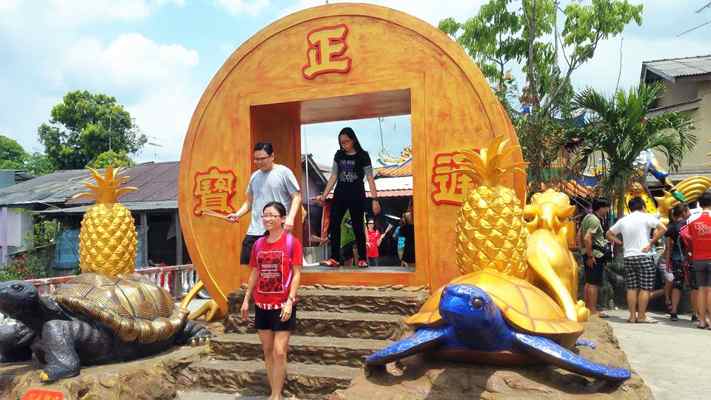
Chong Long Gong Temple is a Chinese Temple that is situated in the fishing village of Segenting, a small town in Minyak Beku. The main attraction is the deity of Fu De Zheng God or Tua Pek Kong. Other deities worshipped here are the Nezha, The Marshal of Central Altar, the Dragon Sea Emperor and the God of Fortune. It also claims to house the legendary fortune fish, the humongous six feet long Arapaima that claims to bring good fortune to those who can touch it or do fish stroking.
Pantai Minyak Beku also known as the frozen oil village is a beach situated in Batu Pahat. The beach offers a serene and peaceful ambience and is a beautiful picnic spot to enjoy a leisurely day with friends and family. There is a temple within a walking distance from the beach located in a cave. Swimming should be avoided at this beach. Referred to as Tarzan Valley by the locals or Hutan Lipur more popularly, the forest holds a huge range of exquisite flora and fauna along with some waterfalls. It is a popular hiking spot. It is advisable to travel here with a local guide so that it is easier to locate the area. The climb is high and to ease it, there is a seating arrangement. It takes about 20-30 minutes to reach the top.
Old Street is a commercial centre that is situated as a junction node between Jalan Kluang – Taman Sri Jaya – Jalan Parit Besar which is also considered to be the Golden Triangle. It has a very contemporary and strategic design with a skywalk for visitors. It has a plethora of shopping sites and cafes. The DIY playground in Batu Pahat is a small park made with recyclable materials. The playground was built by an old man featured on multiple media platforms for turning throwaway items and junk into an enjoyable experience. A weekend art market and festival during June – August is hosted here. Street Mural Art in Batu Pahat is an unconventional tourist attraction. This fresco activity was started by a group of young adults interested in making Batu Pahat a hub for art, culture and freestyle.
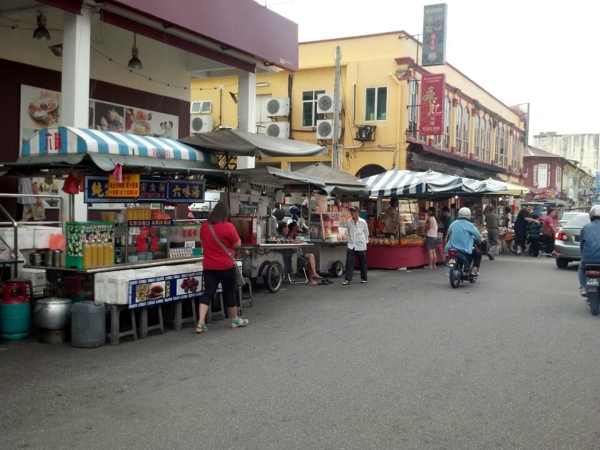
Muar Also known as Bandar Maharani, Muar was recently been declared the royal town of Johor and is the fourth largest city in Johor. This city oozes tradition and culture which are reflected in its heritage architecture. Known and explored for pre-war architecture, temples and some good restaurants and Chinese teahouses, Muar is an offbeat stop between Melaka and Johor Bahru.
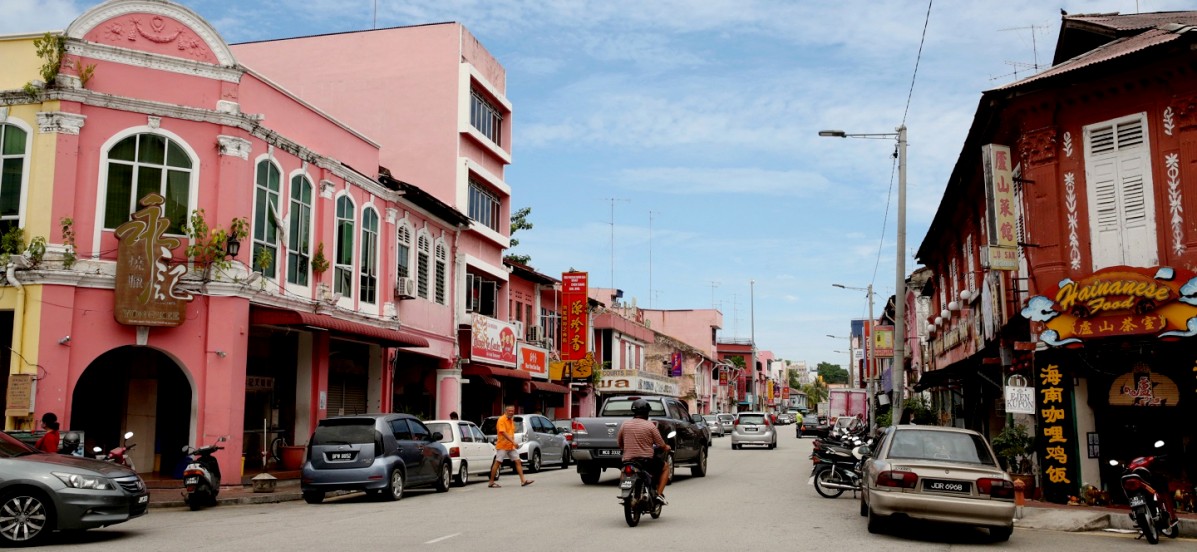
The historical pre-war well-preserved commercial building still dominates the town’s architecture. Muar’s roads are all painted a certain colour while most of the heritage buildings are inscribed with the year of their construction. The city’s primary action is centred around the Muar Riverside, lined with mosques, colonial houses, and parks. The Ching Giap See Temple is the largest Buddhist temple in the state. Historical attractions in Muar include the Bukit Kepong Police Station, Kubu Bentayan, and the Sultan Alauddin Riayat Shah I Mausoleum. Other attractions of this town include Tanjung Emas, a recreational park that has a river cruise for tourists, mural arts, the ferry pier, and the opera house. Muar is one of the cleanest cities in South East Asia, being awarded the Asean Clean Tourist City Standard Award in 2017.
Muar is also known for its Nyonya style otak otak or fish cakes and satay breakfasts along with Malay food such as mee bandung Muar, rojak, satay, and asam pedas. Javanese cuisine and desserts like pisang goreng, and mee siput Muar, a local snack eaten with sambal, is only available in Muar.
Muar is said to have had other names earlier and the name Muar is believed to have originated and derived from its geographical location at the mouth or estuary of the Muar River. Muar was formerly known as Teluk Dalam which means a deep bay due to its location at the estuary or the structure of the mouth of the Muar River which is wide open and deep. The name Muar is also said to be derived from an old Malay word, Muara which means a wide open estuary. There is also a hill not far from Muar near Parit Jawa in the south of the Padang area called Mor Hill or Bukit Mor which may be the origin of the name of Muar.
The modern town of Muar was officially conferred the name Bandar Maharani by Sultan Abu Bakar which translated as the Town of Empress the namesake of Maharani Fatimah who also graced the grand inauguration ceremony of the new town on 12 August 1887, to symbolically represent and recognise the prominence status of Muar as the second important and biggest town and district of the state of Johor after Johor Bahru the capital city in those days. Today, an auspicious amulet or azimat is said to be buried under the ground at Tangga Batu near the Hentian Maharani bus station. There are a few old historic legends which evolved around the area of Muar namely, Hikayat Malim Deman or the Epic of Malim Deman, Legenda Lembing Awang Pulang Ke Dayang or Awang’s Spear Return to Dayang Legend and Legenda Puteri Gunung Ledang or the Mount Ledang Princess’ Legend.
Muar is rich in history as mentioned in many historical records and archaeological works. It is believed that the history of Muar started much earlier than the Sultanate of Malacca. There are many accounts recorded about the early history of Muar. In 1361, it was claimed that Muar was a part of the Majapahit empire. Another account also stated that Parameswara, upon his exile from Temasik before proceeding to found Melaka, had established a settlement at Kota Buruk, Pagoh, Ulu Muar, Muar witnessing the beginning of the Malacca Sultanate empire. Historically, Muar was also where the deposed heir of the Malacca Sultanate escaped to in 1511 following the invasion of the Portuguese, launched from Goa. During the Portuguese’s Afonso de Albuquerque invasion and attack in 1511, Muar played a role in resisting the Portuguese occupation of Malacca; the Kubu Bentayan fort was built by the last Sultan of Malacca, Sultan Mahmud to repel seaborne invasions, before he was defeated and retreat further to Pagoh, this time witnessing the fall of the Malacca Sultanate empire. During the Portuguese occupation era, the Portuguese built a fortress named Fortaleza de Muar to defend the colony against the attack by the Dutch and Aceh instead at the same strategic site of Bentayan. The colonial British did just about the same thing at the Muar River site near Bentayan in defence against the advance of the Japanese Imperial Army in the Battle of Muar in World War II. Muar is also the home of the only tomb of the seventh Malacca Sultanate, Sultan Alauddin Riayat Shah I (1477–1488). During the time of the beginning of Bugis immigration from Sulawesi Indonesia and their influence in Johor Sultanate, the five Bugis pioneer prince-brothers sea-warriors or rather pirates from Sulawesi, are said to have come to reside in Liang Batu, Lenga, Muar before they and their descendants become the influential Temenggungs and even rulers later.
The prosperity and rapid development of Muar made it the only town in Malaysia ever to have had its local railway network in the early days. The Muar State Railway (MSR) operated from 1889 to 1925, linking Jalan Sulaiman in Bandar Maharani and Sungai Pulai for a distance of 22.5 km. A 1916 plan to extend the line to Batu Pahat was aborted and the service stopped in 1925 due to financial and geographical constraints and its reduced importance after the construction of Jalan Abdul Rahman linking the Muar town and Parit Jawa. It remains a memory and is only a part of the history of Muar now with just the MSR steam locomotive relic on display at Tanjung Emas Park.
The flat terrain of Muar’s geographical ground and areas has enabled the extensive use of bicycle and tricycle vehicles as the main major mode of transportation in Muar in the early days. This is believed to be the main factor and reason Muar was once the town with the most bicycles and the only town that requires a valid license issued by the town council to own and use a bicycle in the country.
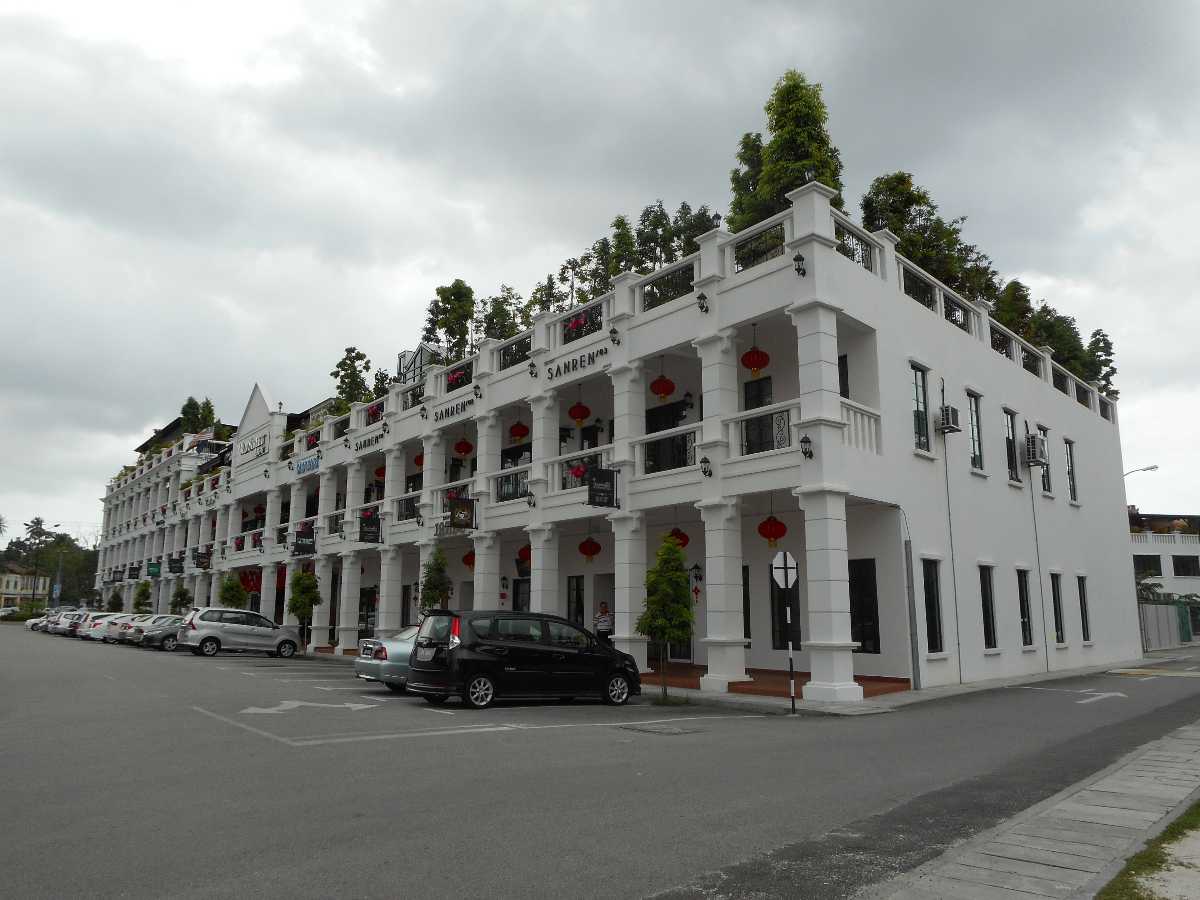
In the town centre, rows of well-preserved pre-war commercial buildings still dominate the town’s architecture. There are many old shophouses and Chinese guilds and association buildings with unique elements in their structure and architecture still preserved in the town. Because Muar is the royal city of Johor, there is an official palace with a helipad situated at the Muar river bank at Jalan Petrie near Tanjung Emas.
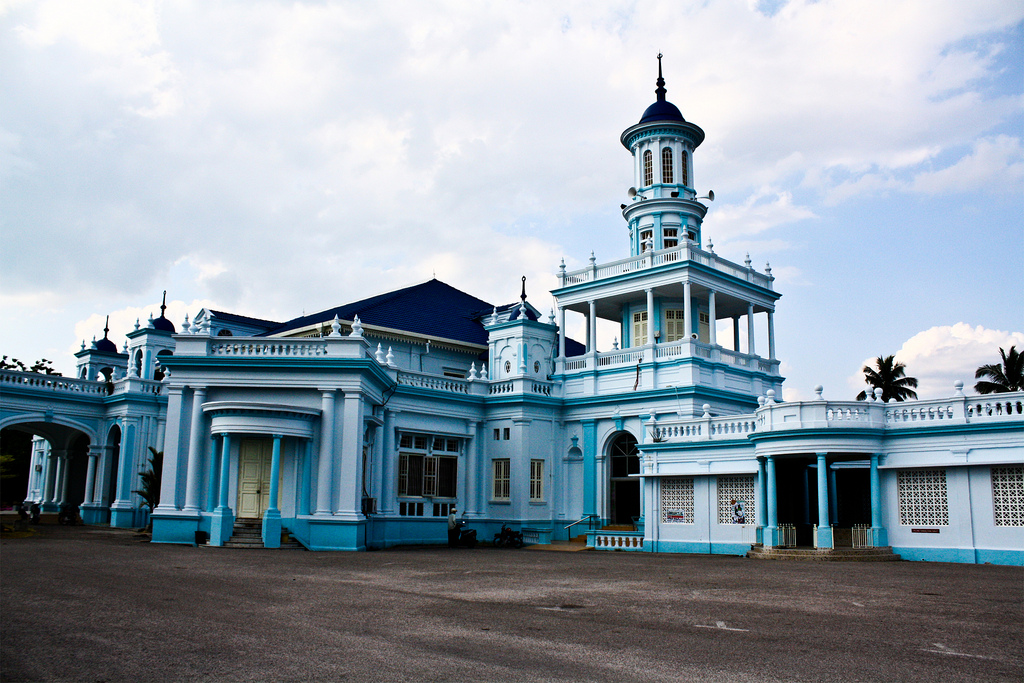
The beautifully designed Sultan Ibrahim Jamek Mosque is located close to the river Muar. The building has architectural influences from Western and South Asian regions. The Renaissance-style architecture at the bottom well contradicts the marvellous minaret on the roof that is of Turkish style. The inside of the mosque has a small fountain-like arrangement and the overall structure of the mosque is painted in white and sky blue, looking like a perfect fusion of European and Asian architecture.
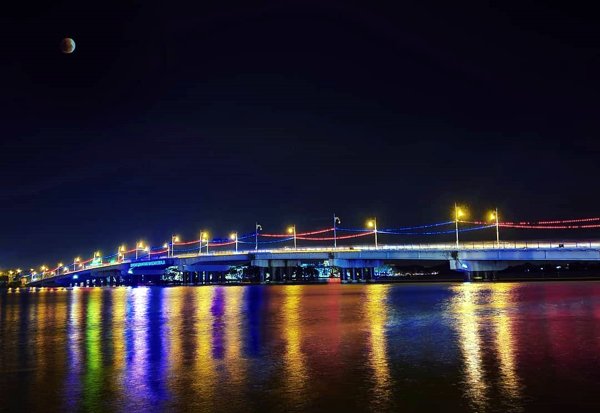
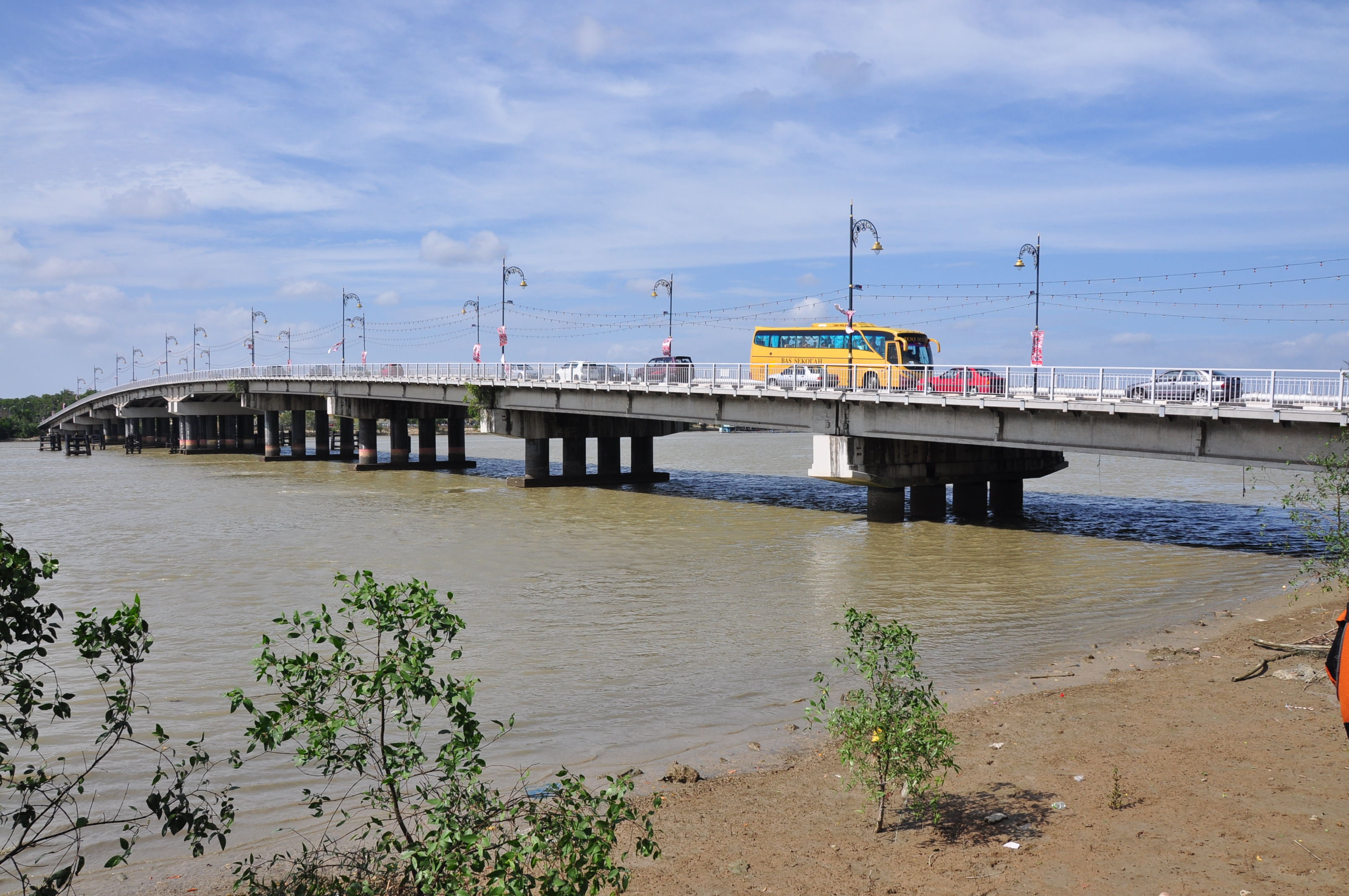
The Muar River is a beautiful water body famous for the Battle of Muar which was fought here in 1942 between the Japanese and British troops during World War II. The Muar River is bridged by the Sultan Ismail Bridge and the Muar Second Bridge. The Sultan Ismail Bridge is a well-designed bridge built across the Muar River to directly connect the town to Melaka and allow the free flow of traffic. Built in the 1960s before which the locals had to avail a ferry to get across the river, it has a stretch of approximately 400m and offers some stunning views of the flowing river and the Muar clock tower at the entrance. The tall three-storeyed clock tower in Muar is a spectacular colonial architectural landmark, just opposite the Sultan Ismail Bridge. The beautiful building is painted white and blue with its bottom storeys being rectangular and a cylindrical top with a clock attached to it. It has a spiral staircase in the centre of the building to get to the top but is inaccessible to visitors.
The Bukit Kepong Police Station has a history museum and is known for the brutal attack by communist terrorists on 23 February 1950 in the Bukit Kepong Incident during the Malayan Emergency period. Kubu Bentayan is the last fortress of the retreating last Malacca Sultanate’s Sultan Mahmud Shah before it fell during the attack of the Portuguese in the 15th century. Situated at the mouth of the Sungai Bentayan or the Bentayan Express Bus Station, formerly Pagoh Bus Stand, today. Another fortress built by the Portuguese later, Fortaleza de Muar was also believed to be situated in the same area. The tomb of Sultan Alauddin Riayat Shah I, seventh Sultan of Malacca Sultanate from 1477 to 1488 is located at Kampung Raja, Ulu Pagoh. Jorak, Bukit Pasir, Pagoh is where the founder of the Malacca Sultanate, Parameswara, stayed for more than 10 years upon his exile from Temasik or Singapore before proceeding to Malacca. It is said another historic fort Biawak Busuk, constructed by Parameswara, is also located nearby.
Maharani Mural Lane which is located on Jalan Sisi Street is a unique lane adorned with street art. While several murals can be found here, they do not depict any particular theme. Some of the murals depict the history and culture of Muar while some represent popular cartoon characters. The Tanjung Emas Park is a beautiful riverside park with a walking track and lush green lawns. There are several shaded areas where one can relax and rejuvenate. The park is open daily between 9:30 am and 11:30 pm. Situated at the Muar Bypass, the Don Hu Jurassic Garden houses over 50 life-size dinosaur sculptures. These sculptures represent several species of dinosaurs and also houses a souvenir store where one can purchase dinosaur toys. The park is open between 10 am and 5 pm.
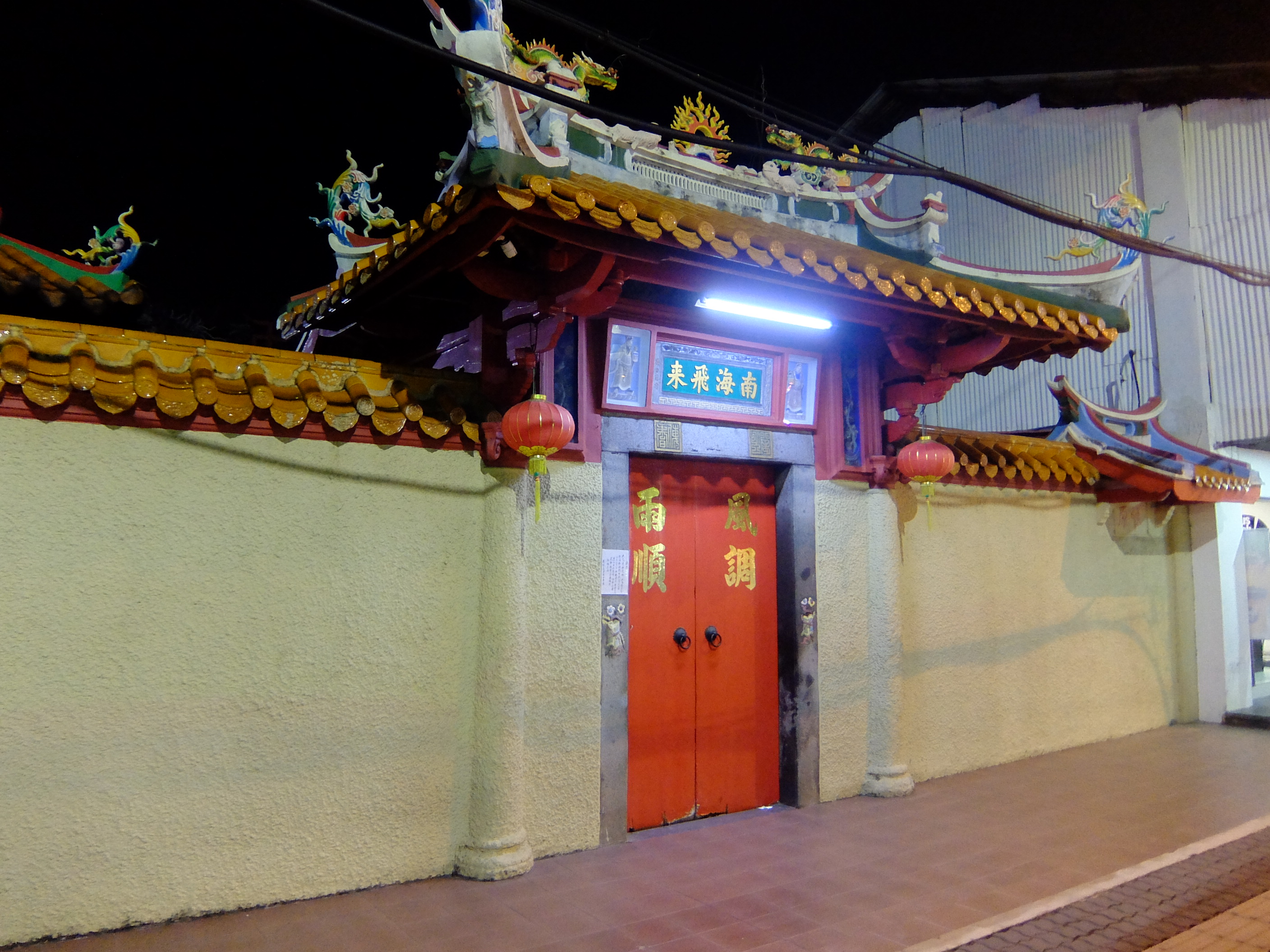
Situated on Jalan Maharani Road, the Muar Nan Hai Fei Lai Temple is a beautiful Chinese temple that is dedicated to Goddess Kuan Yin aka the Goddess of Mercy. While the temple houses a beautiful statue of the principal deity, Goddess Kuan Yin, it also houses a gorgeous courtyard, a prayer hall, and an intricately decorated roof.
The Gunung Ledang National Park is located on the outskirts of Muar and is known for Mount Ledang or Gunung Ledang. The highest peak in Johor at 1276 m, this mountain is moderately difficult to climb. Also regarded as a spiritual place, the mountain has several trails to start from but it is mandatory to recruit a guide from the park ranger’s office. This mountain is home to the splendid Puteri waterfalls that cascade to the bottom forming a pool making it a wonderful picnic and bathing spot.
This is the end of our visit to the state of Johor. Our next state will be the state of Melaka coming soon.
You Are a Global Citizen: A Guided Journal for the Culturally Curious – Damon Dominique
So you’re here. The world dealt you a random card, and you’re dealing with it.
Maybe right now is the first time you’re even realizing you got dealt a card. You did! You Are A Global Citizen ignites your inner curiosity and provokes self-discovery through thought-provoking questions about the cultures you have experienced–including your own–all while helping you become a more inquisitive, aware, observant, and engaged world citizen.
Whether you’ve never left home, are studying at university, are looking to live and move abroad, or are simply curious about your own identity within a global society, this book will help you understand how the outside world impacts what’s going on inside your mind, and vice versa.
In three sections covering your origins, your external environment and your internal environment, with space for reflection at the beginning and end, Damon Dominique, pioneer of the modern day social media travel scene and star of countless popular You Tube travel vlogs and documentaries, shares his insights and stories from a decade of globetrotting.
He guides you through questions such as, ‘Would you be happy if you knew you had to live in your hometown for the rest of your life?’, ‘What culture or country do you remember romanticizing about as a kid?’, and ‘How do you feel about a global language?’, with the ultimate goal of encouraging you to consider the fundamental questions about who you are, what culture is and what it means to live in a global society, beyond the borders of our minds and countries.
While we were in Bengaluru, we made a half day trip to the Bangalore Bannerghetta National Park and Zoo. I felt the park is worth visiting, especially if you have young children. I especially enjoyed the safari, which if you do nothing else at the park, you must do. Here are some photos from the safari. The highlight of our safari was seeing a tiger stroll down the road while we were parked. That was so beautiful. I did capture that as a short reel, but since I can’t post that here, you have to be content with a photo of the tiger.
Changing Homelands: Hindu Politics and the Partition of India – Neeti Nair
Changing Homelands offers a startling new perspective on what was and was not politically possible in late colonial India. In this highly readable account of the partition in the Punjab, Neeti Nair rejects the idea that essential differences between the Hindu and Muslim communities made political settlement impossible. Far from being an inevitable solution, the idea of partition was a very late, stunning surprise to the majority of Hindus in the region.
In tracing the political and social history of the Punjab from the early years of the twentieth century, Nair overturns the entrenched view that Muslims were responsible for the partition of India. Some powerful Punjabi Hindus also preferred partition and contributed to its adoption. Almost no one, however, foresaw the deaths and devastation that would follow in its wake.
Though much has been written on the politics of the Muslim and Sikh communities in the Punjab, Nair is the first historian to focus on the Hindu minority, both before and long after the divide of 1947. She engages with politics in post-Partition India by drawing from oral histories that reveal the complex relationship between memory and history–a relationship that continues to inform politics between India and Pakistan.