International Day of Sign Languages

Source

According to the World Federation of the Deaf, there are approximately 72 million deaf people worldwide. More than 80% of them live in developing countries and collectively use more than 300 different sign languages. Each country generally has its own native sign language, and some have more than one. Some sign languages have obtained some form of legal recognition. Wherever communities of deaf people exist, sign languages have developed as useful means of communication, and they form the core of local deaf cultures. Although signing is used primarily by the deaf and hard of hearing, it is also used by hearing individuals, such as those unable to physically speak, those who have trouble with spoken language due to a disability or condition, augmentative and alternative communication, or those with deaf family members, such as children of deaf adults.

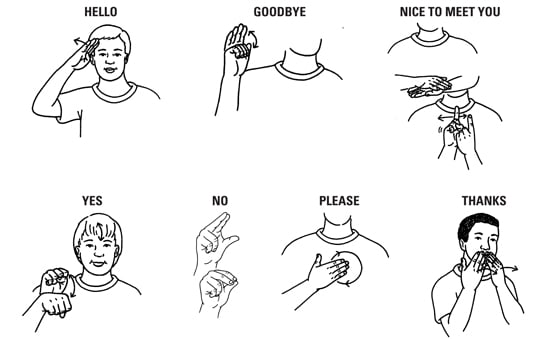
Sign languages, also known as signed languages are languages that use the visual-manual modality to convey meaning. Sign languages are expressed through manual articulations in combination with non-manual elements. Sign languages are full-fledged natural languages with their own grammar and lexicon. Sign languages are not universal and they are not mutually intelligible with each other, although there are also striking similarities among sign languages. There is also an international sign language, which is used by deaf people in international meetings and informally when travelling and socializing. It is considered a pidgin form of sign language that is not as complex as natural sign languages and has a limited lexicon.

Linguists consider both spoken and signed communication to be types of natural language, meaning that both emerged through an abstract, protracted aging process and evolved over time without meticulous planning. Sign language should not be confused with body language, a type of nonverbal communication. Linguists distinguish natural sign languages from other systems that are precursors to them or obtained from them, such as invented manual codes for spoken languages, home sign, baby sign, and signs learned by non-human primates.

The Convention on the Rights of Persons with Disabilities recognises and promotes the use of sign languages and makes clear that sign languages are equal in status to spoken languages and obligates states parties to facilitate the learning of sign language and promote the linguistic identity of the deaf community.

The proposal for the International Sign Day came from the World Federation of the Deaf or WFD, a federation of 135 national associations of deaf people, representing approximately 70 million deaf people’s human rights worldwide. So the International Day of Sign Languages or IDSL is celebrated annually across the world on 23 September every year along with International Week of the Deaf to raise awareness of the importance of sign language in the full realisation of the human rights of those who are deaf. September 23 was chosen because it was the day the World Federation of the Deaf was established in 1951 whose main goal is the preservation of sign languages and deaf culture as pre-requisites to the realisation of the human rights of deaf people.

The resolution establishing the day acknowledges that early access to sign language and services in sign language, including quality education available in sign language, is vital to the growth and development of the deaf individual and critical to the achievement of the internationally agreed development goals. It recognizes the importance of preserving sign languages as part of linguistic and cultural diversity. It also emphasizes the principle of “nothing about us without us” in terms of working with deaf communities.

The International Day of Sign Languages was first celebrated in 2018 as part of the International Week of the Deaf while the International Week of the Deaf was first celebrated in September 1958 and has since evolved into a global movement of deaf unity and concerted advocacy to raise awareness of the issues deaf people face in their everyday lives. The day plays an important role in preserving the rights of the deaf community and seeks to maintain the status of sign languages as playing an intrinsic role in the world’s linguistic and cultural diversity, emphasising the importance of good education in sign language, as it is vital to the growth and development of deaf individuals.
The Theme for the International Day of Sign Languages 2021 is We Sign for Human Rights. The other daily themes for the International Week of the Deaf People are Cherishing Deaf History on 20 September, Sustainable Deaf Leadership on 21 September, Sign languages for All Deaf Learners on 22 September, Intersectional Deaf Communities on 24 September, Deaf Culture and Arts on 25 September and Human Rights in Times of Crisis on 26 September.

I’ve been interested in learning the sign language and maybe this day will spur me to learn it. There are many sign languages across the world and I think the American Sign Language or ASL is probably the most commonly used in the world. Singapore uses the Singapore Sign Language or SgSL which was influenced by the Shanghainese Sign Language, American Sign Language, Signing Exact English and locally developed signs. India, on the other hand uses the Indian Sign Language or ISL, said to be influenced by the American Sign Language.

In My Hands Today…

Sick: A Memoir – Porochista Khakpour

In the tradition of Brain on Fire and Darkness Visible, an honest, beautifully rendered memoir of chronic illness, misdiagnosis, addiction, and the myth of full recovery that details author Porochista Khakpour’s struggles with late-stage Lyme disease.

For as long as writer Porochista Khakpour can remember, she has been sick. For most of that time, she didn’t know why. All of her trips to the ER and her daily anguish, pain, and lethargy only ever resulted in one question: How could any one person be this sick? Several drug addictions, three major hospitalizations, and over $100,000 later, she finally had a diagnosis: late-stage Lyme disease.

Sick is Khakpour’s arduous, emotional journey—as a woman, a writer, and a lifelong sufferer of undiagnosed health problems—through the chronic illness that perpetually left her a victim of anxiety, living a life stymied by an unknown condition.

Divided by settings, Khakpour guides the reader through her illness by way of the locations that changed her course—New York, LA, New Mexico, and Germany—as she meditates on both the physical and psychological impacts of uncertainty, and the eventual challenge of accepting the diagnosis she had searched for over the course of her adult life. With candor and grace, she examines her subsequent struggles with mental illness, her addiction to the benzodiazepines prescribed by her psychiatrists, and her ever-deteriorating physical health.

A story about survival, pain, and transformation, Sick is a candid, illuminating narrative of hope and uncertainty, boldly examining the deep impact of illness on one woman’s life.

Loving Kindness: Everyone counts and matters

In the last almost one and a half year of meditating, I kept hearing the phrase loving kindness over and over again. I have done the meditation many times, but have been very curious about this and it’s origins, so I decided to find out more.

So what is Loving Kindness? It comes from the word Maitri, a Sanskrit word which in Pali is equivakent to Metta and means benevolence, loving-kindness, friendliness, amity, good will and an active interest in others. The cultivation of benevolence is a popular form of Buddhist meditation and is a part of the four immeasurables in Brahmavihara or the divine abidings meditation. Some small sample studies on the potential of loving-kindness meditation approach on patients suggest potential benefits, however, peer reviews question the quality and sample size of these studies.

Today more than ever, we seem to be living in a world which is characterised by a us versus them mentality. Everywhere, xenophobia and racism seems to be at a peak and we seem to think those who are different than us, or those who disagree with us are not on the same page as us and so should be treated with disdain and be considered as the enemy. This in turn makes us dislike the others, wanting them to not have good lives and all the negative emotions that eventually will turn us into bitter human beings. And then because we dislike and are jelous of people so much, we spiral into lonliness, and this lonliness can happen even if you are surrounded by people. If you can’t engage people authentically, then you are lonely, there is no two ways about it.

That’s where the practice of Loving Kindness comes in where it about cultivating love as a strength, a muscle, a tool that challenges our tendency to see people, including ourselves as disconnected, statically and rigidly isolated from one another. Loving-kindness is about opening ourselves up to others with compassion and equanimity, which is a challenging exercise, requiring us to push back against assumptions, prejudices, and labels that most of us have internalised.  

According to a study from 2008, mutual trust can catch on and spread between racial groups just as quickly as suspicion can. So just as quickly as we are conditioned to hate someone, we can easily learn to trust someone we perceive as the other.

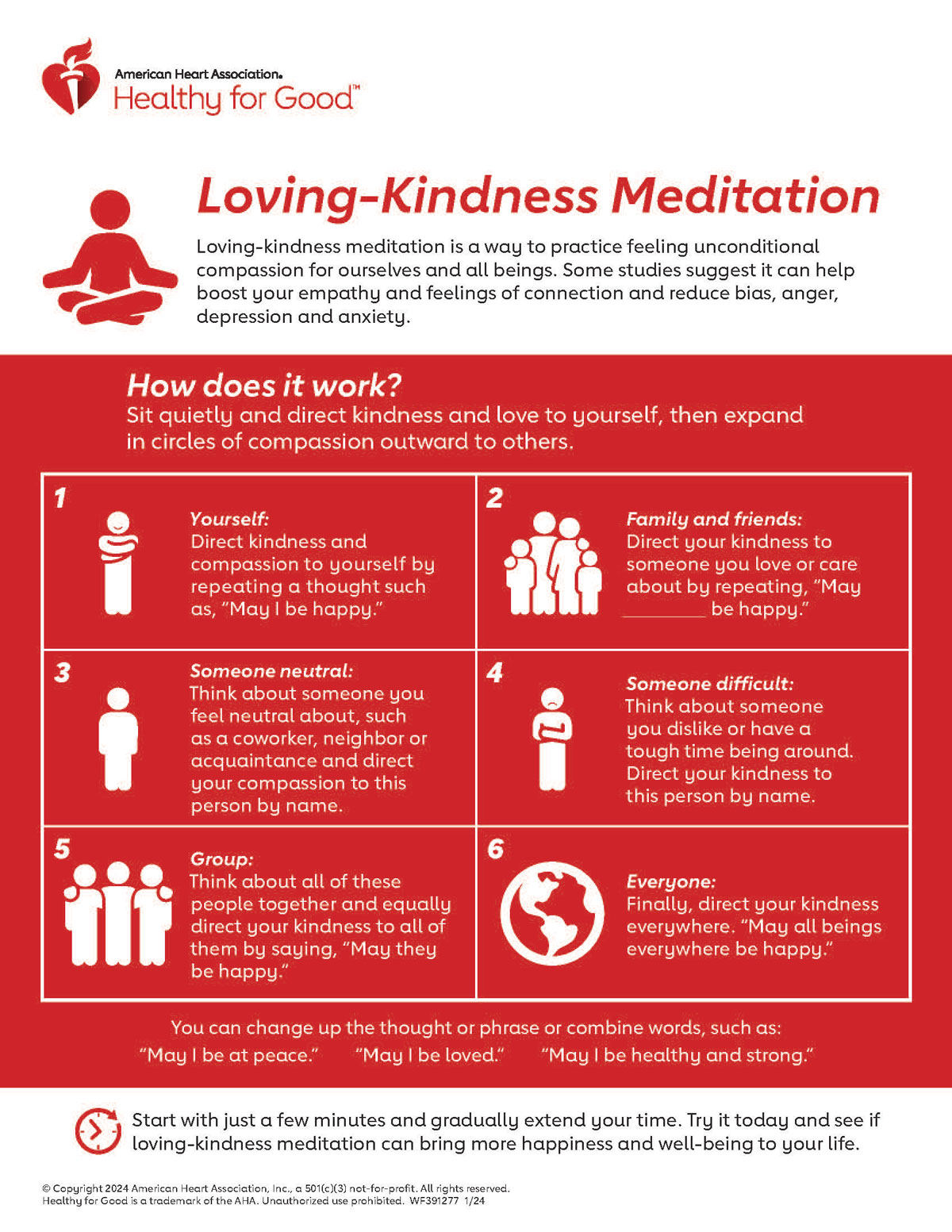
One does not need to practice Buddhism to practice Loving Kindness and the meditation technique is fairly simple. The meditation can be used to boost well-being and reduce stress with those who regularly practice it able to increase their capacity for forgiveness, connection to others, self-acceptance, and more. Intially the technique feels very weird, but as with everything else we do, as we practice it more, we will get better at sending and receiving love and kindness both to ourselves and to others.

During the loving kindness meditation, you focus benevolent and loving energy toward yourself and others. There are many well-documented benefits of traditional meditation, but as with other techniques, this form of meditation takes practice. It can be difficult and sometimes leads to resistance since the average person is not used to this level of giving and receiving love. Some published studies have noted that this meditation technique may be useful in the management of social anxiety, marital conflict, anger, and coping with the strains of long-term caregiving while other research has suggested that the loving kindness meditation can enhance the activation of brain areas that are involved in emotional processing and empathy to boost a sense of positivity and reduce negativity.

While there are different ways to practice Loving Kindness, here’s what works for me. Sit in a comfortable position at a time when you are likely not to be disturbed. This will take as long as you need, so even a few minutes will do. Sit comfortably, close your eyes, relax your muscles and take a few deep breaths. Imagine yourself experiencing complete physical and emotional wellness and inner peace. Imagine feeling perfect love for yourself, thanking yourself for all that you are, knowing that you are just right, just as you are. Focus on this feeling of inner peace, and imagine that you are breathing out tension and breathing in feelings of love. Repeat three or four positive, reassuring phrases to yourself. Phrases like “May I be happy”, “May I be safe”, “May I be healthy, peaceful, and strong” or “May I give and receive appreciation today”. You can also use phrases that speak to you personally and are unique to yourself.

Once you have repeated your chosen phrases, bask in feelings of warmth and self-compassion for a few moments. If your attention drifts, gently redirect it back to these feelings of loving kindness. Let these feelings envelop you. You can choose to either stay with this focus for the duration of your meditation or begin to shift your focus to loved ones in your life. Begin with someone who you are very close to, such as a spouse, a child, a parent, or a best friend. Feel your gratitude and love for them. Stay with that feeling. You may want to repeat the reassuring phrases. Once you’ve held these feelings toward that person, bring other important people from your life into your awareness, one by one, and envision them with perfect wellness and inner peace. Then branch out to other friends, family members, neighbors, and acquaintances. Extend feelings of loving kindness to people around the globe and focus on a feeling of connection and compassion. You may even want to include those with whom you are in conflict to help reach a place of forgiveness or greater peace.

When you feel that your meditation is complete, open your eyes. Remember that you can revisit the wonderful feelings you generated throughout the day. Internalize how loving kindness meditation feels, and return to those feelings by shifting your focus and taking a few deep breaths.

To get the most out of your Loving Kindness meditation, when you start, use yourself as the sole subject during meditation. As you get more comfortable with the imagery and loving phrases, you can begin to add the visualization of others into your practice. Adding others into the meditation boosts feelings of forgiveness and helps you to let go of rumination for an increased sense of inner peace. And as you develop a regular practice of meditation, you may want to set a timer with a gentle alarm if you’re concerned about spending too much time in focus.

Any meditation will help with feelings of anxiety and make you more zen, but the Loving Kindness meditation, over time will alleviate feelings of resentment, generate forgiveness to yourself and others and allow you to be able to deal with people, specially those you are in conflict with.

2021 Week 37 Update

Singapore is in the grip of a second wave, with cases poised to hit at least 1,000 per day. And this is from less than 10 a day less than a month back. And it seems that it will take another month or two for this to go through the community and for cases to subside. It was also reported that  in the last four weeks, more than 98% of local cases were asymptomatic or had mild symptoms. The ministry of health also said that as of last Thursday, 82% of the population has completed their full vaccination regimen, while 84% has received at least one dose as of Thursday. I guess we should be careful, mask up and use soap and hand sanitisers as much as possible and even more so when we have the elderly and the vulnerable living with us or near us.

Today’s positive quote, or rather again an affirmation comes to us courtesy of Michelle Obama. It’s again a very simple one. All we need to do is ask ourselves, Am I good enough? And give ourselves the answer in a very resounding voice, that Yes I am! As Dory told us all in Finding Nemo, in the face of adversity, to just keep swimming.

BB & GG turned 18 last week and though celebrations were very low key, they did meet friends and some came over to wish them. BB got a professional mic set with headphones from his school friends while GG’s friends got her clothes. GG also got her results the day after their birthday, but the results were as expected and she has more or less mainted her GPA. She is also very busy preparing for the first of the many professional exams she will have to take for her career and that has been pretty much all she has done in the holidays. BB’s results will come next week and we are all on tenterhooks for that. He has not done well in the first two semesters, so this one is a crucial one, especially if he wants to go to university after his National Service. More on that next week.

That’s all from me. Stay safe everyone!

In My Hands Today…

Agent Sonya: Moscow’s Most Daring Wartime Spy – Ben Macintyre

In 1942, in a quiet village in the leafy English Cotswolds, a thin, elegant woman lived in a small cottage with her three children and her husband, who worked as a machinist nearby. Ursula Burton was friendly but reserved, and spoke English with a slight foreign accent. By all accounts, she seemed to be living a simple, unassuming life. Her neighbors in the village knew little about her.

They didn’t know that she was a high-ranking Soviet intelligence officer. They didn’t know that her husband was also a spy, or that she was running powerful agents across Europe. Behind the facade of her picturesque life, Burton was a dedicated Communist, a Soviet colonel, and a veteran agent, gathering the scientific secrets that would enable the Soviet Union to build the bomb.

This true-life spy story is about the woman code-named “Sonya.” Over the course of her career, she was hunted by the Chinese, the Japanese, the Nazis, MI5, MI6, and the FBI—and she evaded them all. Her story reflects the great ideological clash of the twentieth century—between Communism, Fascism, and Western democracy—and casts new light on the spy battles and shifting allegiances of our own times.

With unparalleled access to Sonya’s diaries and correspondence and never-before-seen information on her clandestine activities, Ben Macintyre has written a history of a legendary secret agent, a woman who influenced the course of the Cold War and helped plunge the world into a decades-long standoff between nuclear superpowers.