Kurseong
Located at an altitude of 1,482.55 metres, Kurseong is about halfway between Darjeeling and Siliguiri. The origin of the name Kurseong is unclear, but stories suggest it comes from the Lepcha language word for small orchid, kurson-rip because of the little white orchids dotting the valleys, or perhaps the term for a stick made out of a local cane. The original inhabitants were the Lepcha people, who named their home Kurseong, because every spring it was alive and bright with the Kurson-Rip orchids. In the past, Kurseong was a part of the Kingdom of Sikkim, and in 1780 the Nepalese conquered and annexed Kurseong and its surrounding areas. After the Gurkha War of 1817 which the Nepalese lost, Jurseong was restored to Sikkim by the Treaty of Titalia.
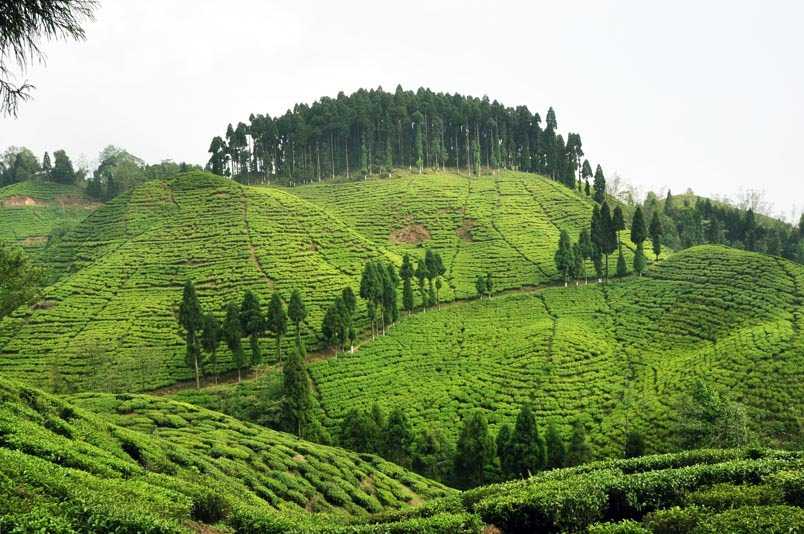
Kurseong is famous for its waterfalls, temples and Buddhist gompas apart from the excellent views. Just like the tea gardens of Darjeeling, the sprawling tea plants in their estates add a certain charm to Kurseong. The two big tea estates are Makaibari or Ambotia and the estates offer guided tours where visitors can meet the workers, get to know the history, art and the science behind tea processing. Patrons can also take part in tea-tasting sessions. A full conducted tour generally costs INR 500. Once a temporary residence of Netaji Subhas Chandra Bose, the Netaji Subash Chandra Bose Museum is located in Netaji’s older brother’s residence and has pictures, documents and articles related to Netaji during his house imprisonment by the British. Today, the museum also acts as an institute for Himalayan Language & Culture Studies and offers excellent views of the valley and is open between 9:30 am and 4:30 pm and has no entry fee. Maintained by the forest department of the state, the Forest Museum stores exhibits of animals skins, bones, hides and photographs of fauna which once thrived in the Dow Hill region. Located close to Deer Park, one can also find on display wooden artefacts. Those intrigued by nature will find themselves at home here. Visitors can also enjoy a stroll through the small park of the museum. The museum does not maintain regular visiting hours and does not have any entry fees. There are a total of three Darjeeling Himalayan Railway Museums, the other two being museums in Darjeeling and Sukna which house rare pictures, sketches, miniature structures of trains and also have regular toy train rides to nearby places which are very scenic. Located inside the Ambotia Tea Estate, the Ambotia Shiv Mandir is one of the holiest places of worship in Kurseong. There is a lovely orange orchard is located adjacent to the temple, and visitors can also enjoy excellent views from the temple premises. The Churches in Kurseong are from the British colonial times and are heritage buildings. St. Paul’s church, St. Andrew’s church and St. Mary’s Hill church are some of the must-visit churches in Kurseong.
Mirik
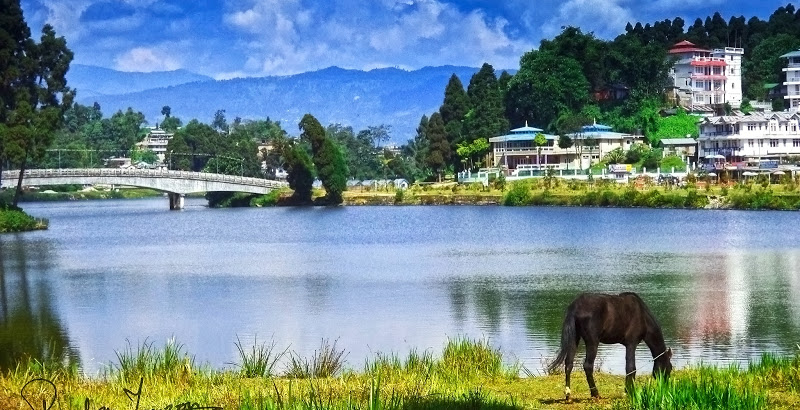
Located on the banks of a huge lake, the hill town of Mirik began life as Mirik Bazar, a commercial centre in the region where people from the surrounding villages and tea gardens came to trade and buy their necessities. The present lake area was a marshland with thick growth of sweet flag, locally called bojho with a playground stood in the present garden area where the British officers played polo.The name Mirik comes from the Lepcha words Mir-Yok meaning a place burnt by fire. The most prominent place in Mirik is the Sumendu Lake, which is beautiful, calm and yet invigorating. The lake also has an 80 foot bridge running over it for people who don’t wish to walk around it. Boating in the lake and a pony ride on the lakeside are are local and visitor favourites. The lake is strategically located so everything in the town is at a walking distance from the lake. The Mirik valley is full of tea bushes and almost throughout the year, you can see workers picking ripe leaves or watering the bushes. Mirik also has numerous beautiful orange plantations spread across the town. Bunkulung, the agricultural hub of Mirik cannot be accessed on foot. One will need to hire a vehicle which takes a few minutes to get to. Located on the edge of the valley, with hills looming in every direction, the place is full of farm lands, fisheries and lush forests. Rameetay Dhara is a beautiful viewpoint with stunning views of the Kanchenjunga as the backdrop and the valley at the bottom. The Devi Stan temple houses idols of Goddess Singla Devi, Lord Shiva, Hanuman and Goddess Kali and is just a few minutes walk from the Sumendu lake and another few minutes away from Bokar Monastery. The Bokar Monastery is the seat of the venerable Kyabje Bokar Rinpoche and belongs to the Kagyud order. It is one of the few in India that have retained its traditional beliefs and environment from the very beginning. Constructed in the Chinese architectural style with sprawling lawns, the monastery is a few minutes walk from the Mirik Lake.
Darjeeling
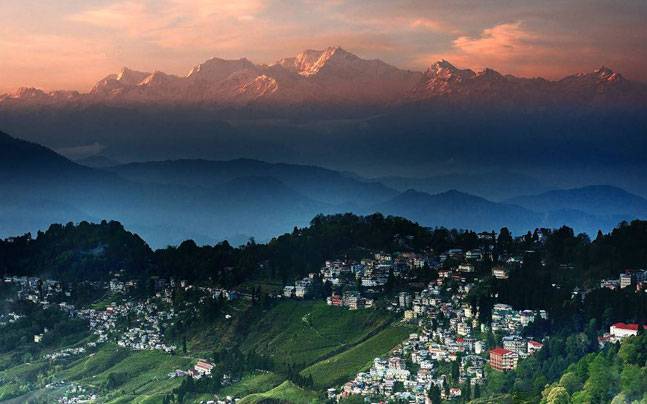
One of India’s most beautiful hillstations, Darjeeling is nestled amidst acres of lush green tea plantations and spread over a steep mountain ridge in the lesser Himalayas at the height of 2,050 meters above sea level. Known as the Queen of the Himalayas, there are over 86 tea estates here responsible for producing the worldwide famous Darjeeling tea. Darjeeling was the summer capital of India during the British colonial rule and the toy train established in 1881 is a UNESCO World Heritage site with the third highest peak in the world and the highest in India, the Kanchenjunga peak clearly visible from the town. The recorded history of the town starts from the early 19th century when the colonial administration under the British Raj set up a sanatorium and a military depot in the region. Subsequently, extensive tea plantations were established in the region and tea growers developed hybrids of black tea and created new fermentation techniques. The resultant distinctive Darjeeling tea is internationally recognised and ranks among the most popular black teas in the world. The varied culture of the town reflects its diverse demographic milieu comprising Lepcha, Khampa, Gorkha, Kirati, Newar, Sherpa, Bhutia, Bengali and other mainland Indian ethno-linguistic groups. The name Darjeeling comes from Tajenglung, a Yakthung Limbu terminology that means the stones that talk to each other and also from the Tibetan words Dorje, which is the thunderbolt sceptre of the Hindu deity Indra, and ling, which means a place or land.
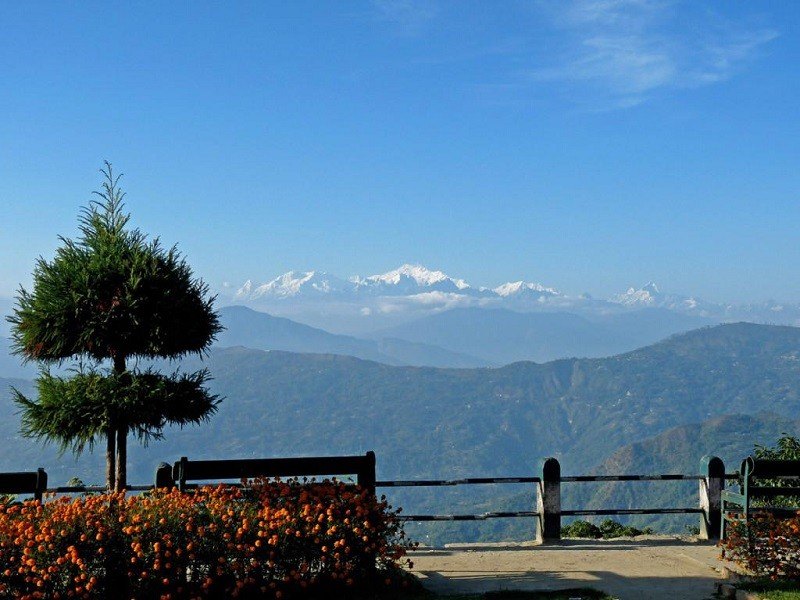
Lying at an altitude of 2590 meters, Tiger Hill is famous for its sunrise where one can see the peaks of Kanchenjunga. Tiger Hill is also the summit of Ghoom, which is the highest railway station in the Darjeeling Himalayan Railway, a UNESCO World Heritage Site. One must leave Darjeeling by 3:30 am to reach Tiger Hill by 4:15 am to reach in time for sunrise, though this is delayed a bit during winters. The roads get blocked by traffic during the peak season. To get up to the sunrise spot, it requires a short climb on foot from the parking spot. During sunrise and sunset, Kanchenjunga is lit up in a mesmerising display of colours and one can also see Mt Everest and several other mountain peaks belonging to the 8000+ m from this hilltop. Tea is synonymous with Darjeeling and with over 80 tea plantations, a visit to at least one tea garden is a must-visit.

The Happy Valley Tea Estate, the second oldest tea estate is the only garden that allows tourists to view the subtler nuances of producing and processing tea with their tea factory guided tour daily from 9:30 am to 4:30 pm during which one can observe how fresh tea leaves are withered, rolled, fermented, dried, sorted and finally graded to produce the different varieties of tea. A tea-tasting session is also held here, where first-timers are privy to experiencing the subtleties involved in distinguishing the various groups of tea and one can also buy the tea products from the shop in the estate. The factory tour is INR 100 per person and the tour is not conducted between November to February as tea plucking does not happen during the winters.
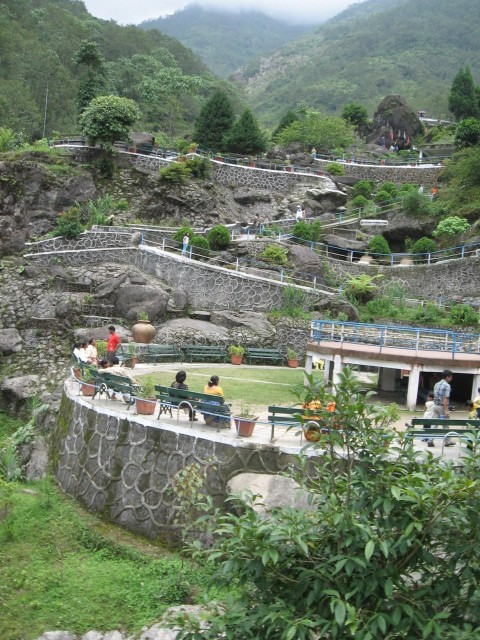
An exquisite spot terraced with natural fall known as the Chunnu Summer Fall, the Rock Garden is located 10 km from Darjeeling and is also known as the Barbotey Rock Garden. The garden is surrounded by beautiful hill stream along with the slope covered with flower gardens and sitting arrangements at various level. The way to the rock garden is filled with rocky hills and greenery shared by sharp hairpins and extremely steep roads. While at the rock garden, one musn’t miss the Ganga Maya Park which 3 km from the garden. There is a a small lake that offers a boating services to visitors and there are performances of Gorkha folk dancers. The rock garden is open from 10 am to 4 pm and entry fee for Indians have an entry fee of INR 10 while foreigners pay INR 50.
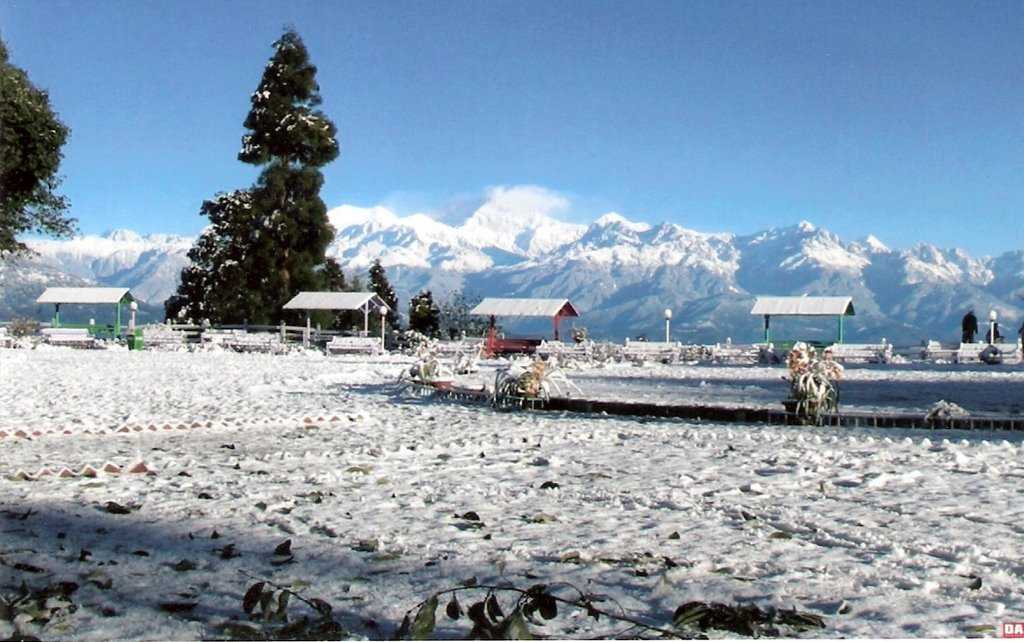
The Nightingale Park is a public park area with gorgeous views of the Kanchenjunga ranges. Previously known as The Shrubbery when it was a private courtyard of Sir Thomas Tartan’s Bungalow, during the British colonial rule. Flanked by a covered archway, the entrance leads one to pebbled walkways around the oval-shaped park. Since the Nightingale Park is at a slightly elevated terrain, one needs to climb a few steps to reach the entry. The park was closed for renovation for about four years and has reopened for the public since 2011. There is a giant statue of Lord Shiva and a musical fountain. The park is open all days of the week from 7 am to 8 pm and has an entry fee of INR 10 per person for adults.

The Observatory Hill is situated above Chowrasta square, just above the Mall Road offers a panoramic view of the mountains and various Hindu and Buddhist temples including the Kanchenjunga Temple, the Mahakal temple and the Tibetian Memorial Shrine. It takes around 15 minutes to walk to Observatory Hill from the Mall Road and in the narrow and steep uphill path, one has to go through a small cave. The walk is filled with colourful flag and small yet noticeable shrines. Built in 1765 by Lama Dorje Rinzing of the Bhutia Basti monastery, the oldest monastery in Darjeeling. The monastery was devastated by the Gorkha invasion in 1815 and was rebuilt in 1861 and again demolished by an earthquake in 1934 and currently owes its existence to the Raja of Sikkim. The ancient Mahakal temple located on the top of the hill, dedicated to Lord Shiva. There is also a small Siddhi Sai Baba temple located on the side of the road and right next to it, another temple dedicated to Lord Hanuman. The hill is open from 7 am to 7 pm.
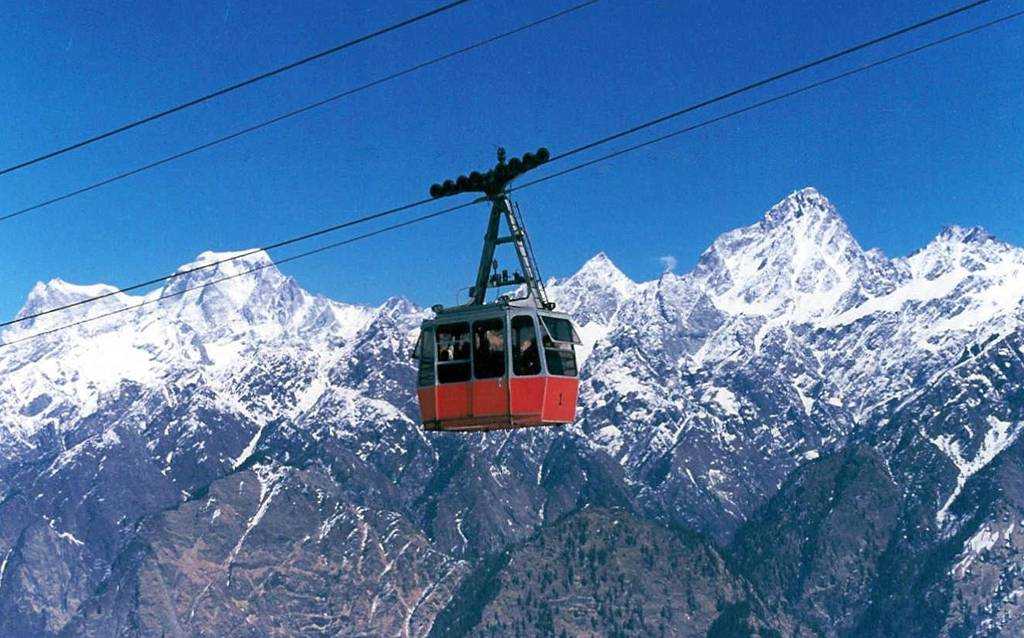
The Darjeeling Ropeway gives passengers superb views as they travel across the valley. Established in 1968, the Darjeeling Ropeway is India’s first cable car system, and serves as a tourist attraction. With 16 cable cars and each car accommodating 6 people, the cable car travels from the North Point in Singamari to the Singla Bazaar, situated by the banks of the Ramman river at an altitude of 7000 feet. The view of the numerous tea estates of Darjeeling, the cascading waterfalls, and the majestic Kanchenjunga makes this experience an essential to every visitor to Darjeeling. At the bottom end of the trip, the cable car halts for a while, where visitors may explore the lovely tea gardens, or relax at the small mountain cafe, before proceeding back to the Singamari base station. The Ropeway is closed on the 19th of every month for maintenance. During the winter and monsoon seasons, the ropeway is open between 10 am to 2 pm while during summer and autumn, it is open from 10 am to 4 pm. There is an entry fee of INR 200 per person for an adult and INR 100 for children between between the ages of 3 and 8.
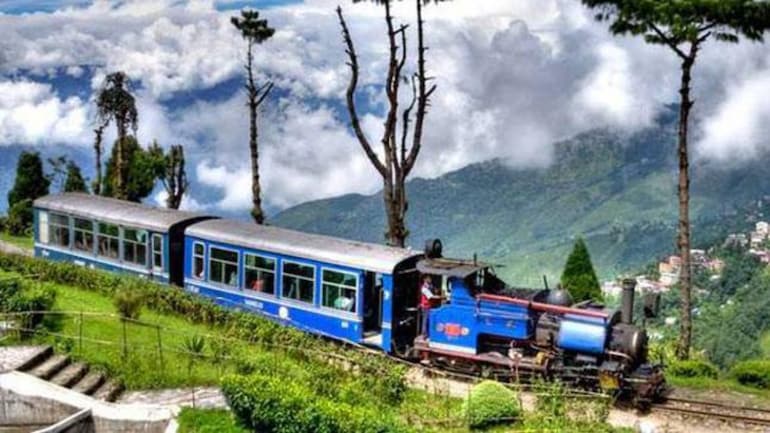
The Darjeeling Himalayan Railway also referred to as the DHR, and the Darjeeling Toy Train is a 2 feet narrow gauge train that runs between New Jalpaiguri and Darjeeling. Construction of this 88-kilometre long railway line took place between 1879 and 1881 and was declared as a UNESCO World Heritage Site in 1999. Later, two more lines were added and came to be known as the Mountain Railways of India. The trip between Darjeeling and Ghum and back is a two-hour round trip that covers a distance of 14 km. Located at the height of 2225.7 metres above the sea level, Ghum is the highest altitude station. The train stops for 10 minutes at the Batasia Loop, where it makes a loop around a beautiful and well-maintained garden from where one can get a bird’s eye view of Darjeeling, and the snow-capped Kanchenjunga peaks. The War Memorial in honour of the Gorkha soldiers is also located here, in the centre of the garden. The train also stops for 30 minutes for a visit to the Darjeeling Himalayan Railway museum which is located on the station premises and boasts of having the oldest toy train engine safely preserved here. A total of 18 rides takes place throughout the day, beginning at 7:40 am. The last ride commences at 4:20 pm. Visitors can choose a steam engine hauled train or one that has a diesel engine. The steam engine train offers an authentic and traditional experience but is costlier than the diesel engine train rides. Both the trains only have first class seats and the disel engine train has a fare of INR 800 for a round trip while the steam engine train has a fare of INR 1,300 for a round trip. All fares include the entry to the DHR museum. Children below five get in free. The Toy Train Jungle Safari operates between Siliguri Junction and Rangtong Station with the three-hour round trip taking one to Rangtong, a small village located at an altitude of 1,404 feet, 16 km away from Siliguri Junction. The ride takes passengers through the Mahananda Wildlife Sanctuary, located around Sukna and Rangtong station. The train leaves Siliguri Junction at 10:30 am and reaches Rangtong at 11:50 am where it halts for 20 minutes and arrives back at Siliguri Junction at 1:35 pm. A round trip in a first class coach costs INR 610 per person.
The Batasia Loop is a lush green toy train pathway that is meant to minimise the elevation of the Darjeeling Himalayan Railway. The unique design of this attraction allows the track to wrap around itself through a hilltop tunnel and one of the most enchanting aspects of the Batasia Loop is its natural beauty from where one can enjoy a panoramic view of the Darjeeling. The Eco Garden features organic farming and plantations with many rare and unheard of species like Rhododendrons, silver firs and Gingko Biloba. There is a war memorial located close to Batasia Loop to honour the sacrifice of Gorkha soldiers of Darjeeling, with a cenotaph and a statue of a Gorkha soldier.

Lamahatta is a scenic village 23km from Darjeeling. Lamhatta which means Monl’s Hermitage has an eco park, the Lamahatta Eco Park that was created in 2012. The eco-park has wooden & bamboo gazebos that overlook Lamahatta. The manicured garden, known as the Roadside Garden has flowers of various seasonal plants including white and yellow orchids.

The Yiga Choeling or old Ghoom Monastery is the oldest Tibetan Buddhist Monastery in Darjeeling. Established in 1850 by Lama Sherab Gyatso, this shrine is part of the Yellow Hat sect known as Gelupka who worship the Coming Buddha or the Maitreyi Buddha. Also known as the Sakhya monastery, there is a 15-foot high statue of the Maitreyi Buddha is seen in the central hall, made entirely of clay brought from Tibet. One can also find many rare Buddhist manuscripts. From the monastery, one can see the majestic Kanchenjunga. In front of the Maitreya Buddha statue hang two huge oil lamps which keep burning throughout the year. The walls of the monastery are elaborately painted with depictions and art of Tibetan Buddhism, with different images of bodhisattvas placed in a symmetrical manner. The hilltop above the monastery holds the Ma Kali temple, where devotees come to offer prayer every full moon day and on the fifteenth of every month of the Tibetan calendar. The monastery is open between 9 am and 6 pm daily and has no entry fee, but visitors need to pay INR 10 for a camera and INR 50 for a video camera.

Located on the slopes of Jalapahar hills, the Peace Pagoda or the Japanese Peace Pagoda is designed to establish unity, harmony and goodwill amongst people belonging to different sects of society. Famous for its tranquillity, it offers stunning views of snow-clad peaks including the Kanchenjunga peak. The Peace Pagoda was built by Nichidatsu Fujii, a Buddhist monk from Japan and designed by M. Ohka. The pagoda houses the four avatars of Buddha including Maitreya Buddha and is the tallest free standing structure in Darjeeling at a height of 28.5 meters. Two concrete lions stand on both sides of the staircase and the avatars of Buddha are carved in the walls and polished in gold colour which show the Buddha sitting, sleeping, standing and meditating. Beautiful artwork depicting the life of Buddha and his relics is etched on sandstones that look like wooden framework. There are mythological depictions like the Gift of Mango Grove by Amrapali at Vaishali and the Great departure of Siddhartha. The pagoda is open between 4 am and 7 pm and the prayer timings are between 4:30 to 6 am and then again from 4:30 to 6 pm daily and does not have any entry fees.
The Himalayan Mountaineering Institute is recognised as one of the best mountaineering institutes in the world and was established in 1954. The primary purpose of the institute was to encourage, enhance and support the interest of the people in the sport of mountaineering and to channel their energy into a productive and self-awarding sport. The magnificent view of the 8586-meter high peak of Kanchenjunga, the third highest peak in the world, from this institute is mesmerising. The institute is open between 9 am to 1 pm and then again between 2 to 5 pm. It’s closed on Tuesdays and during the off-season and has an entry fee of INR 40 and a camera fee of INR 10.
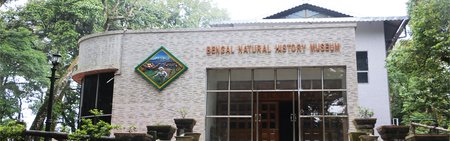
The Bengal Natural History Museum has has more than 4000 specimens and is located in the heart of Darjeeling at the Padmaja Naidu Himalayan Zoological Park. Originally started as a small building in the Botanical Garden meant to showcase the varieties of butterflies and birds of the hills, today, one can find preserved remains of the bird species, reptiles, insects, fishes, and mammals displayed in a replication of their natural habitats. An attractive display of the various minerals of the region is also present here. There are two sections at the museum, one at the ground level and the other in the basement. There is also a large collection of birds’ nests and eggs and a specialised taxidermy unit to oversee the curing, stuffing and preparation of the birds and animals to be displayed as exhibits. There is also a small library where one might find many interesting books, including the 125 volume series titled The fauna of British India. The museum is closed on Thursdays and national holidays and on other days, it is open between 10 am to 4 pm. One needs to purchase a combined ticket for the Bengal Natural History Museum, Darjeeling Zoo and Himalayan Mountaineering Institute for INR 60.
The Padmaja Naidu Zoological Park houses a wide variety of animals and is also known as the Darjeeling Zoo and includes an off-display breeding centre for snow leopards and red pandas. Set up in 1958 and named after the former governor of West Bengal, Padmaja Naidu, it is the largest high altitude zoo in India. The zoo serves as the central hub for Central Zoo Authority of India’s red panda program. There are Siberian Tigers, Yaks and the Himalayan Black Bears among other animals and also maintains Himalayan flora.
The zoo is open from 8:30 am to 4:30 pm during summers and from 8:30 am to 4 pm during winters. It is closed on Thursdays and has an entry fee of INR 20 for Indians and SAARC country residents and INR 50 for foreigners while a camera incurs a INR 10 charge.
Located at an altitude of more than 7000 feet above the sea in the Singalila range, the Singalila National Park is the highest national park in the state. Initially, a wildlife sanctuary, the national park encompasses beautiful, 78.60 sq km of virgin rhododendron forests, alpine valley and rare species of animals and orchids. It provides panoramic views of the Himalayas from Nepal to Sikkim and up to Bhutan. Singalila is home to the very rare and exotic Red panda and the Himalayan black bear. The national park is also part of a trekking route and derives its name from the Singalila spur, which runs through the park, descending from Mount Kanchenjunga in the north and running south to the northern fringe of the Gangetic Plains. Visitors need to get a permit from the forest department before entering the core area of the national park. The permit can be acquired either from the Forest Department office at Manebhanjan or at the entrance to the national park about 1km from Tumling. Within the park, it is necessary for visitors to be accompanied by trained and registered guides of the wildlife department. One of the most popular treks is along the Singalila Ridge to Sandakphu and Phalut which provides a grand vista of the Kangchenjunga and the Everest ranges and one can also see the seasonal wildflower blooms and birds. The jeep safari through the Singalila National Park and the surrounding forest is the best way to get around with the route ringed by stretches of greenery, with lofty pine trees and vibrant rhododendrons. The fare for the safari is around INR 3000 which can be through a Darjeeling based tour operator. The national park is closed from 16 June to 15 September and when open is open from 6 am to 7 pm. The entry fee is INR 100 for Indians, INR 200 for foreigners, INR 100 for a camera and INR 500 for a video camera. A small village around 19km from Darjeeling located at a height of 6,956 ft, Lepchajagat lies amidst dense forests of pines, oaks and rhododendrons and is now part of a reserved forest area.
Tinchuley
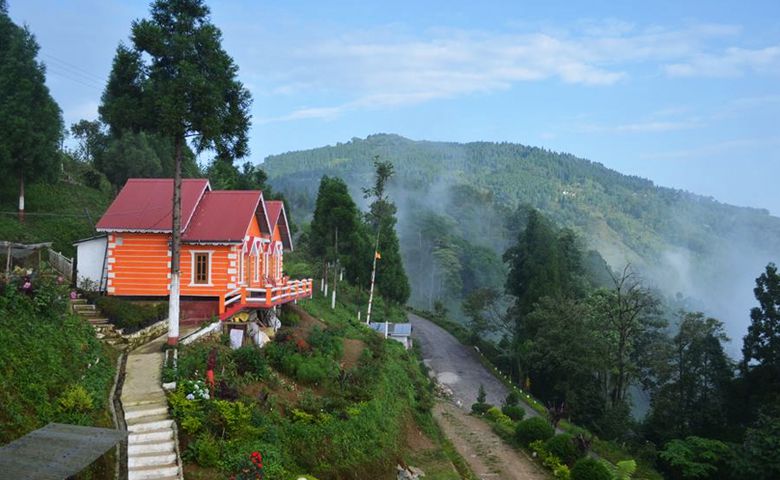
At a distance of about 32 km from Darjeeling, Tinchuley is an offbeat hamlet situated close to the West Bengal-Sikkim border at an altitude of 5550 ft. The name Tinchuley is derived from the words tin and chula, which translates as three ovens because the trio of hills resembling mud ovens. The rivers Teesta and Ranjeet also intersect quite close to it. While famous for its tea plantations and fresh fruit orchards, Tinchuley is quieter and more obscure place than Darjeeling. In Tinchuley, one can engage in rock climbing, trekking, sightseeing, all against a scenic green mountainscape that seems like something out of a film set. The Sunrise View Point is where one can catch the young and majestic peaks of Eastern Himalayas that comprise the Teesta Valley especially during sunrises and sunsets. Starting from Peshoke Road, a quick, half an hour stroll through gorgeous pine forests and ferns will land one in Gumbadara, another vantage point in Tinchuley. Here one can get to explore ancient Himalayan caves whose surrounding rocks offers some fun rock climbing. One can not only see the Teesta river flowing down in the valley below but also the bordering state of Sikkim. Tinchuley cultivates export-quality tea and there are six tea gardens in the village. Tinchuley’s economy is also dependent on the numerous orange orchards in the village including a factory that produces fresh marmalade, orange juices and pickles. Established centuries ago by a monk purportedly in the order of Nalanda, the Tinchuley Monastery is a centre of spirituality. As per legend associated with the monastery, a lama meditated here for 17 years. Every morning, cymbals in the monastery are loudly rung in order venerate the ancestors and appease their spirits. Downhill from Tinchuley, the village of Chotamangwa began become popular recently.

Dooars
The Dooars or Duars are the alluvial floodplains in eastern-northeastern India that lie south of the outer foothills of the Himalayas and north of the Brahmaputra River basin. This region is about 30 km wide and stretches over about 350 km from the Teesta river in West Bengal to the Dhansiri River in Assam. The region forms the gateway to Bhutan and is part of the Terai-Duar savanna and grasslands ecoregion. Dooars means doors in Assamese, Bengali, Maithili, Bhojpuri, and Magahi languages. There are 18 passages or gateways between the hills in Bhutan and the plains in India and the region is divided by the Sankosh river into eastern and western Dooars with the western Dooars also known as the Bengal Dooars, and the eastern Dooars also known as the Assam Dooars. The Dooars belonged to the Kamata Kingdom under the Koch dynasty; and taking advantage of the weakness of the Koch kingdom in subsequent times, Bhutan took possession of the Dooars. This region was controlled by the kingdom of Bhutan when the British annexed it in 1865 after the Bhutan War and the area was divided into two parts with the eastern part merged with Goalpara district in Assam and the western part turned into a new district named Western Dooars which was changed to Jalpaiguri district in 1869. After independence, the Dooars acceded into India and merged into India in 1949.The Dooars comprises of several towns and districts and is blessed with the mighty range of Eastern Himalayas as a backdrop, a band of thick forests, rich in species of flora and fauna, tea gardens, and water bodies.
Mahanada Wildlife Sanctuary located at the foothills of Himalayas in the Terai region, is spread across the lower catchment area of the Mahanada river. With a thick forest cover, it is home to rare species of animals like the one horn rhino, bison, elephants, tigers, leopards, sambar and cheetals. The Chapramari Wildlife Sanctuary at Lataguri is located about 20 km from the Gorumara National Park. With the Kanchanjungha and other Himalayan peaks as its backdrop, visitors can see a wide diversity of animals like elephants, gaur, leopards in their natural habitat here. This park is closed during the monsoon season between June and September, but during the other months, overnight accommodations are available in the Rest House. 81 km from Siliguiri, in the middle of a forest are two forest bunglows called Sumsing and Suntalekhola. With the hills in the backdrop and the constant splashing noises of the numerous streams as they flow, visitors can step out of the bungalow and listen to early morning chirping of birds and whispers of the forest for a relaxing holiday from the world. Latpanchore is a small village at the top of a hill top on the Mahanada Wildlife Sanctuary, surrounded by forest and rich in the Cinchona plantation. There is a British bungalow in the middle of this, which now serves as a forest bungalow. Trekkers trek from here up to Namthing Pokhri with the sunrise from the Aahal Pick an absolute delight to watch.
Kalimpong
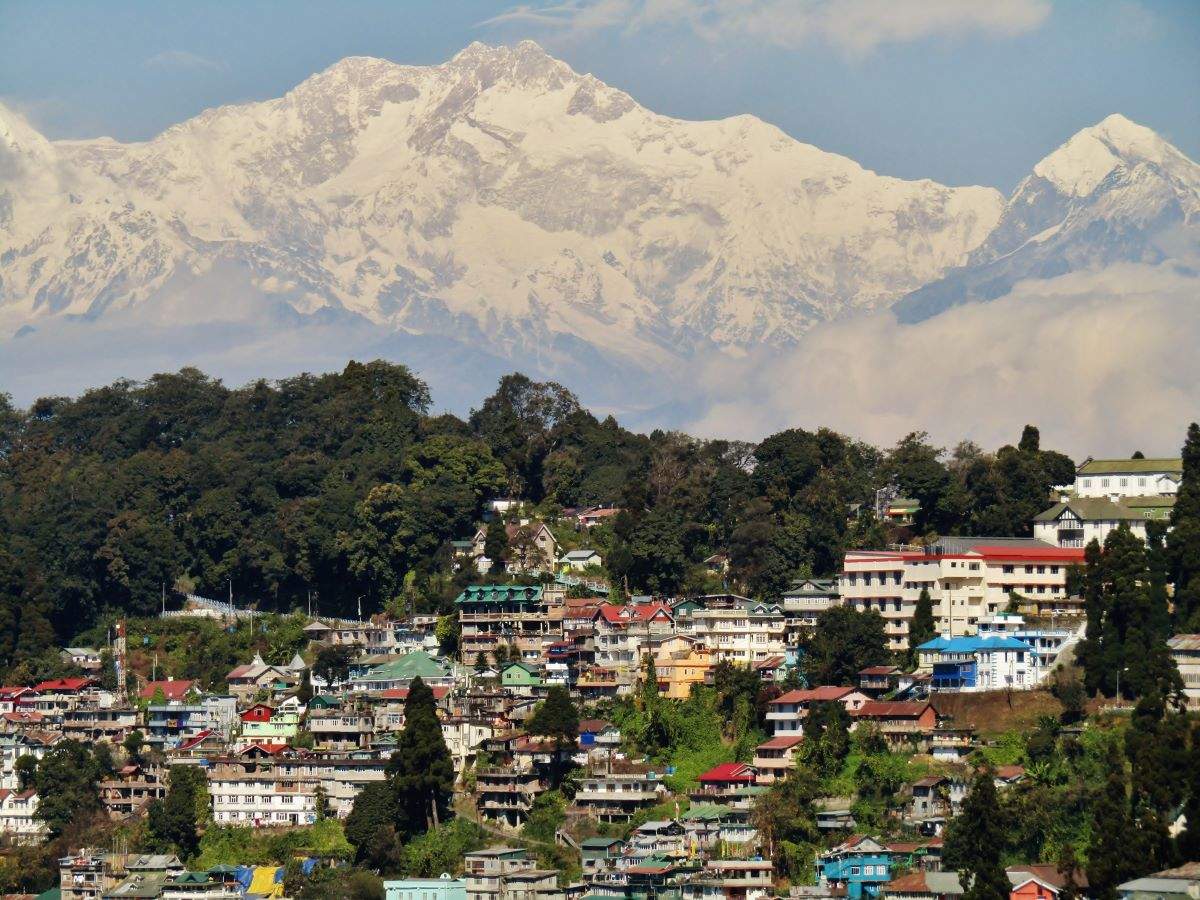
Previously a gateway in the trade between Tibet and India before China’s annexation of Tibet and the Sino-Indian War, Kalimpong is known for its educational institutions, many of which were established during the British colonial era. Kalimpong sits on a ridge on the Shivalik range overlooking the Teesta river and is renowned for its panoramic valley views, Buddhists monasteries and churches and Tibetan handicrafts. Dotted with ancient Buddhist monasteries, centuries old churches and exquisite revered temples Kalimpong marks the Bhutanese history till it was wrested by the British.
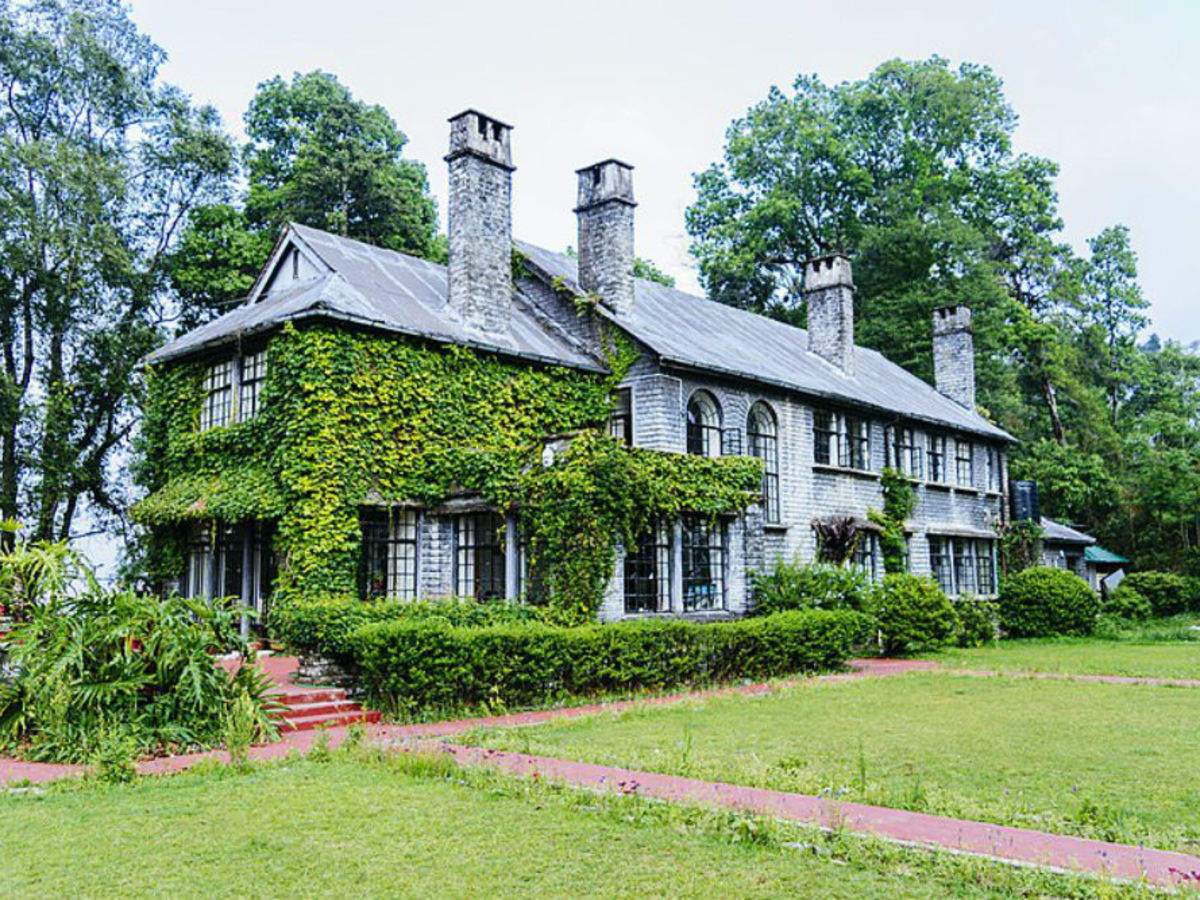
Morgan House, built in the 1930s is an archetypal example of colonial architecture. There are many legends about this house being haunted and today it is a tourist lodge and is near the New Jalpaiguri Railway Station. Located on the sixteenth-acre estate on top of Durpindara Mountain, it lies at a distance of 3 km from the town of Kalimpong and gives a clear view of the Kangchenjunga range. Kalimpong cantonment area surrounds the mansion and provides a view of the Relli, Kapher, Deolo as well as Labha valleys. Locals believe the house to be hanunted with legend saying this house was built by George Morgan in the 1930s, and he lived in the home until the death of Lady Morgan whose spiriti is still is believed to haunt the house with some people reported to hearing sounds of high heels clicking against the wooden passage of the house. Another British bungalow, Galingka offers spectacular views of the Kanchenjunga peak. Built by the British wool traders in the 18th century, Crockety is a bungalow famous for its architectural design and breathtaking surroundings. Nobel Laureate Rabindra Nath Tagore broadcasted his work Janmadin on his birthday on All India Radio from behind Crockety. Offering the panoramic view of Kalimpong, the snow-clad Himalayan ranges of west Sikkim, the Teesta river and its valleys, Durpin Dara Hill also has a golf course and the Zang Dhok Palri Monastery as well as a famous botanical garden. The Deolo Hills are located at an elevation of around 2000 m and provide panoramic views of Kalimpong. There are also proper view points which are located at the ridge edges for the best views of the sunsets and sunrises. As the land of the largest number of commercial flower nurseries, Kalimpong nurseries specialise in the cultivation of exotic beautiful flowers and export these flowers to different parts of the country. There are numerous nurseries across the town so one can enjoy time there, especially for those with a green thumb. The Pine View Nursery is famous for exotic cactus.
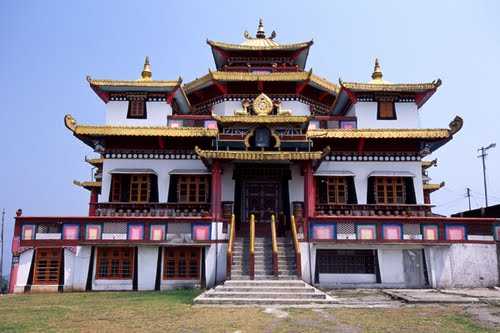
Consecrated by Dalai Lama in 1976, the Jang Dong Palriffo Brang Gompa is also known as Durpin Monastery and is built in the Buddhist architectural style with beautiful paintings on the walls and the sacred Kunguyar. The Thongsa Gompa is the oldest Bhutanese Monastery established in 1692 and also known as the Bhutanese Monastery. Founded in 1912, the Tharpa Choeling Monastery is situated at Tirpai Hills and is one of the oldest gompas here. The monastery is famous for housing several ancient scriptures and other literary works. Built by local craftsmen the St.Theresa Catholic Church resembles a Bhutanese Gompa and it is built in Tibetan architectural design. While the walls are enriched with paintings and inscriptions from the Bible the doors of the church have carvings which resemble tashi tagye or the 8 auspicious symbols of Himalayan Buddhism.
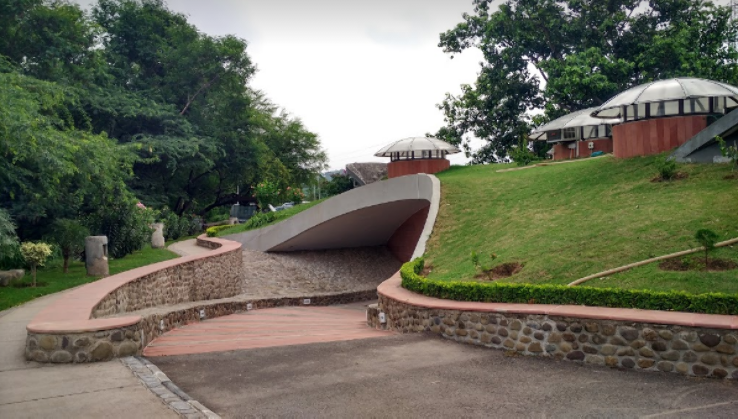
Linking humans to nature, the Nature Interpretation Centre was established and is managed by the forest department and conducts research on the impact of human activities on the environment. The museum contains information, pictures, photographs and books on ecology and environment. The Sericulture Research Institute is known for its research in sericulture and breeding of silkworms. It works closely with the farmers in developing self-help groups and in the cultivation and sale of different stages of silk production. As an initiative to preserve the Lepcha tribe’s culture, the Lepcha Museum has relics and objects of everyday use like articles of worship, musical instruments, handicrafts items, manuscripts etc. all used by the Lepcha people. This tribe can be seen Darjeeling, Kalimpong, Sikkim, Nepal and Bhutan.
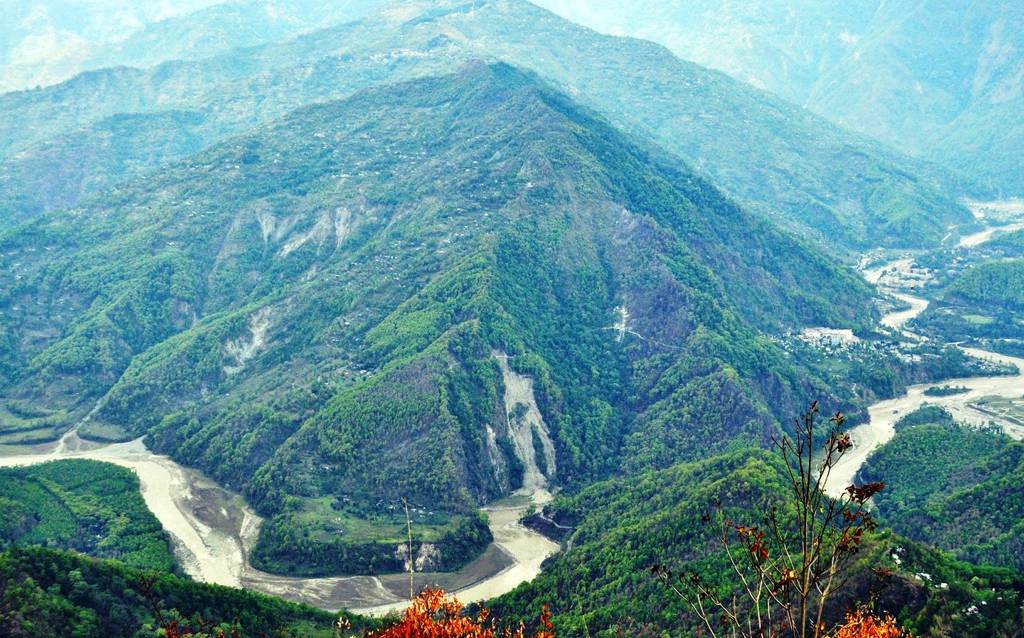
Ramdhura is a small village around 15km from Kalimpong. A scenic getaway, one can see the Kanchenjunga peaks, the Teesta River, pine foresrs and Cinconha plantations here. There is also a large variety of birds and butterflies in this village which is known for its tranquility and is ideal for short trekking or mountaineering trips. The name Ramdhura means Lord Rama’s village and is made up of Lord Rama’s name and Dhura which means a village.
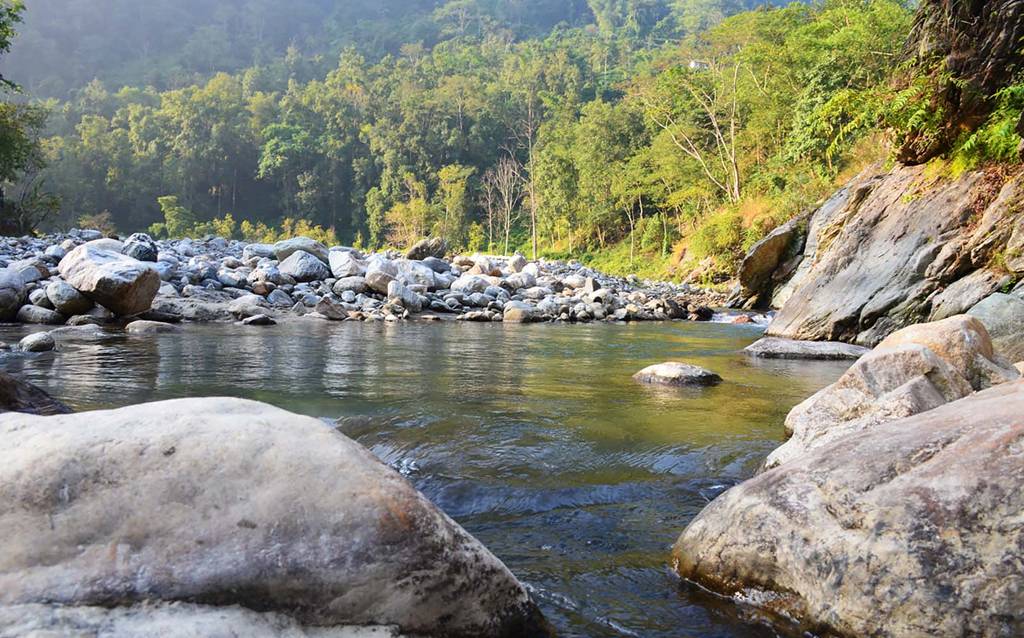
Rishikhola or Reshi Khola is a riverside camp site that lies between Kalimpong and the Sikkim border, about 36 km from Kalimpong. The river Reshi meanders through this picturesque spot where the Himalayan Bulbul and White Capped Water Redstart are often spotted and blooming rhododendrons can be spotted here during the summer months. Rishikhola is also a starting point for many treks.
More mountains and nature reserves coming your way in Part 5