In My Hands Today…

Ramayana Unravelled: Lesser Known Facets of Rishi Vālmiki’s Epic – Ami Ganatra

No epic has moved the consciousness of millions like the Ramayana. The appeal of the story of Rama is such that it has inspired the imagination of countless storytellers over the centuries, across the length and breadth of the subcontinent. From Jain poets to Bhavabhuti, from Kamban to Goswami Tulsidas, many have retold the Ramayana in their own language, infusing their own unique flavour.

Though the story of Rama is much loved and well-known, questions prevail. Ramayana Unravelled attempts to address some key concerns: How did his childhood and youth shape Rama? Why did Rama agree to go on vanvas – was it only to obey his father or was there more to it? How was the relationship of Rama and Seeta? Is the Ramayana inherently misogynist, considering the characterisation of Seeta, Shurpanakha, Kaikeyi and Tara? What led to the downfall of Ravan?

Ami Ganatra takes the reader through the events of the Ramayana, resolving conundrums and underlining the reasons the epic continues to be cherished to this day.
India

Festivals of India: Lai Haraoba

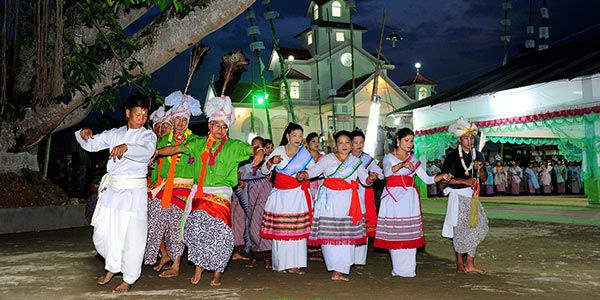
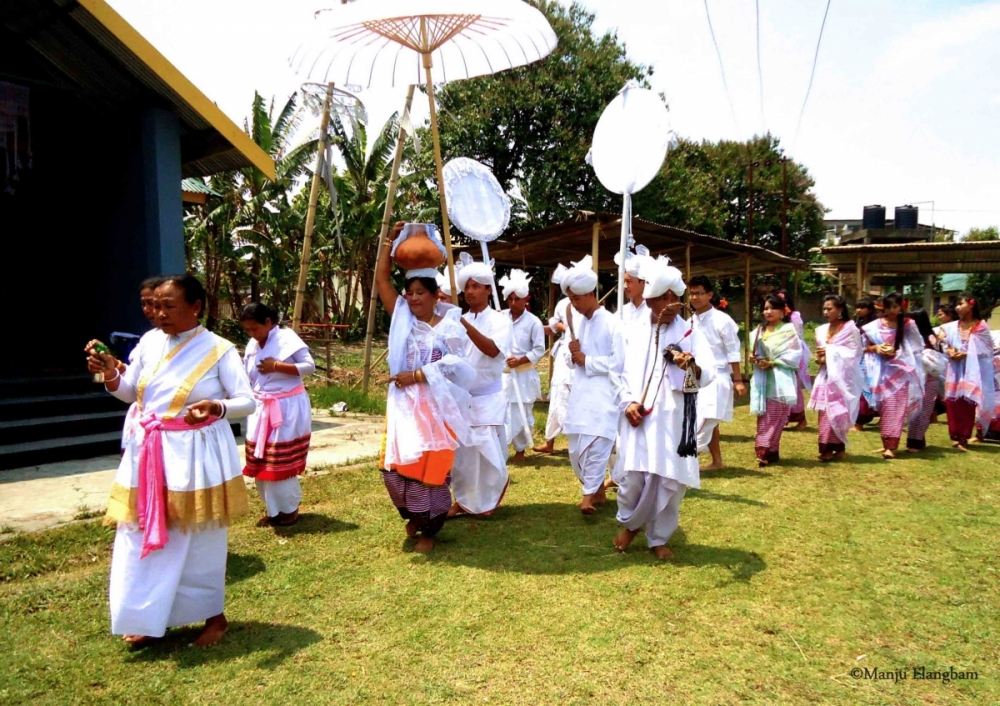
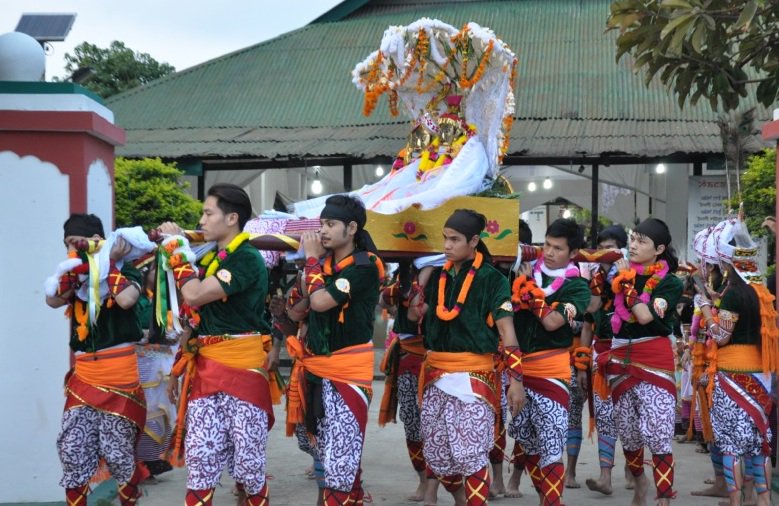
The Lai Haraoba Festival is one of the oldest and most important events in Manipur, India. Rooted in the beliefs of the Meitei people, this festival is deeply connected to their earliest stories about the world’s creation. Every part of the festival, from its dances and music to its careful rituals, is a living link to ancient times. But it’s also a festival that keeps changing with each generation.

Lai Haraoba means “Merry-making of the Gods” or “Pleasing the Deities.” The festival started long before Hindu traditions arrived in Manipur. It goes back to a time when the Meiteis followed their own religion, Sanamahism, and honored a vast group of native deities called Umang Lai, meaning “forest gods.”

Lai Haraoba isn’t just a celebration for the gods. It’s a reenactment of the Meitei creation story. Performers act out how the world was formed: land, water, plants, animals, and humanity all came to life according to Meitei myth. And it’s not just one single deity who’s honoured. There are about 364 Umang Lai, each with their own legends and special rituals in villages and neighborhoods across Manipur.

Central to Lai Haraoba is the creation myth. In these stories, godly figures such as Sanamahi, Nongpok Ningthou, and Panthoibi are credited with creating the universe and everything within it. According to legend, the gods once performed Lai Haraoba themselves on Kubru Hill so that their descendants, humans, would know how to honour and imitate them. The rite shows how close the relationship is between the people and their deities, as well as between the residents of Manipur’s hills and plains.

Much of the festival plays out the love story of Nongpok Ningthou and Panthoibi. This divine couple symbolises cosmic forces and the cycle of creation. Their courtship, love, and union are performed in ritual dance and song, showing how the world’s forces come together to create and sustain life.

There are four main types of Lai Haraoba, each with its own local traditions:

  • Kanglei Haraoba: Common in many parts of Manipur’s valley region.
  • Moirang Haraoba: Centred in Moirang.
  • Kakching Haraoba: Celebrated in Kakching.
  • Chakpa Haraoba: Held in villages like Andro, Phayeng, Sekmai, and others.

The main structure of the festival is similar everywhere, but the details, specific hymns, dances, and local customs can differ. This variety keeps the festival both rooted and flexible from one community to another.

The celebration of Lai Haraoba is carefully structured into three major parts: the beginning (Lai Eekouba), the middle (Haraoba), and the end (Lairoi). The order and number of days can vary, from just a few to more than three weeks.

Opening the Shrine or Lai Eekouba: The festival starts by opening the usually locked doors of the community shrine, an action considered highly sacred. The inside is cleaned and prepared, with special songs and ritual washing of sacred objects and clothes. Sometimes, preparations start days beforehand, such as fermenting rice for rice beer, a key ritual item.

A procession led by the maibi (priestess) and sometimes maiba (male priest) heads to a river or pond. They bring sacred objects, make offerings, and invite the deity’s presence through water and chanting. The maibi might enter a trance and deliver oracles from the gods. The night ends with the pena, a traditional fiddle, playing music intended to “rest” the deities.

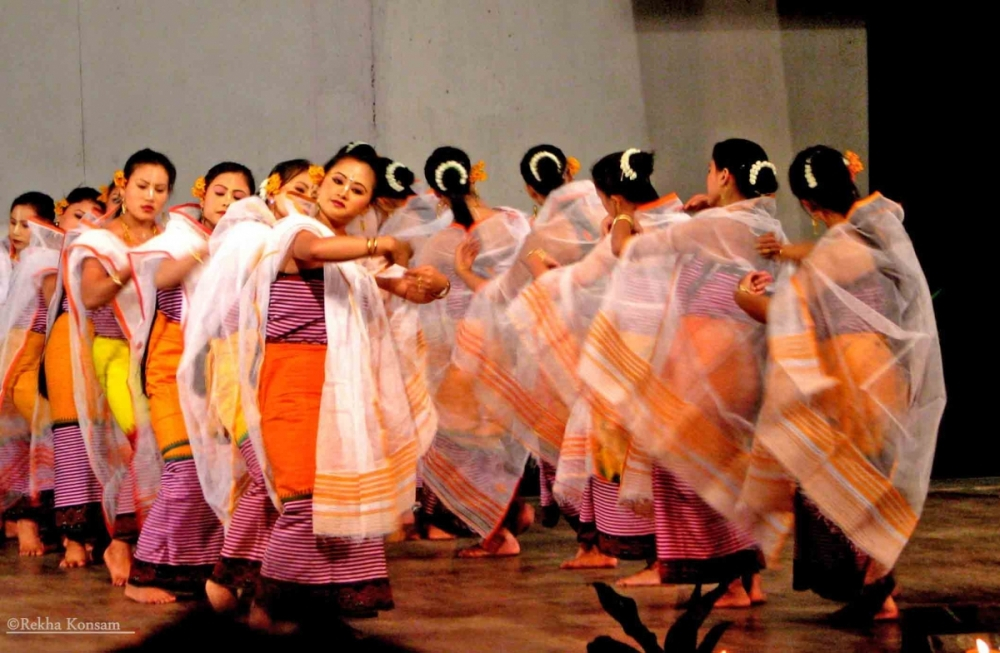
The Ritual Dance of Creation or Laibou: Dances and rituals performed during Lai Haraoba are called laibou, meaning “work done for the gods.” These are the heart of the festival, staged before the assembled village, often near the shrine or a sacred tree. Every aspect of human life and creation is re-enacted through dance, forming the human body, birth, farming, spinning, weaving, house-building, and other necessities. Each process, even the act of drawing the baby’s eyes or forming a fist, is acted out slowly and symbolically by the maibi.

Following the creation story, the ritual dances proceed through making a house, growing and weaving cotton, and preparing clothing. At one point, fishing is performed as a symbol of adulthood and desires. All the movements are slow, careful, and filled with ancient meaning.

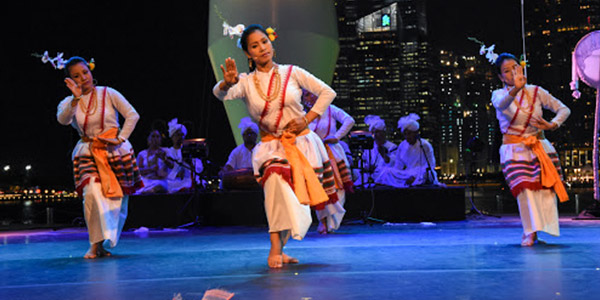
Music is a constant feature. The pena, a simple fiddle, is played every day, marking morning and evening rituals. There are collective songs such as the “hoi laoba” and “wakol laoba,” with all participants shouting or singing together. The maibi delivers oracles: messages said to come straight from the deities. These can include advice for the year, warnings, or encouragement.

Several ritual dances have become icons of Lai Haraoba. The most significant are

  • Laiching Jagoi: Performed by maibis to “invite” the gods.
  • Khamba-Thoibi Jagoi: Tells the story of legendary lovers Khamba and Thoibi, replacing the older Panthoibi Jagoi in some places.
  • Tang Jagoi: A dance with fire and holy knives to drive out evil spirits.
  • Panthoibi Jagoi: The original romantic duet dance that honors the divine love story.

Modern celebrations can also include other folk, martial, and sometimes even Bollywood-inspired dances, adapting to today’s audiences.

The spiritual work of the festival is led by the maibi (woman priest) and maiba (man priest). Maibis, in particular, occupy a unique place as living channels between world and spirit. They lead most of the key rituals, dances, and oracles, sometimes entering trance to “speak” for the gods.

Rice beer, fruits, flowers, and hand-woven cloths are common offerings. The presentation of these gifts is an important act, meant to please the deities and ensure blessings for the coming year. Each offering has its own order and significance and is usually placed on banana leaves or in traditional baskets.

The festival is not just a religious event but a key part of social life. Each family or clan takes responsibility for certain rituals or offerings, and the festival provides a place for all generations to participate, from children to elders. It’s a practical lesson in Meitei life: how to build, weave, farm, worship, and come together as a community.

The story of Nongpok Ningthou and Panthoibi is a favorite, often dramatised as a flirtatious, complex drama. Sometimes, this story is merged with other folk legends, like Khamba and Thoibi of Moirang. In some versions, Panthoibi is portrayed as a Tangkhul (hill tribe) girl, illustrating the ancient bond between the people of the hills and plains. This is just one example of how the festival weaves together history, myth, and lived experience.

Though deeply traditional, Lai Haraoba is not frozen in time. As society evolves, so do the celebrations. Some villages add new performances or blend in more accessible forms of music and dance. The use of modern lighting and sound is more common now. But the old forms still remain at the heart, especially in more remote or tradition-focused communities.

During the festival, certain taboos and customs are observed, like periods of fasting or avoiding “unclean” acts. Community feasts are common, where all take part regardless of social status. Men, women, and children all join in some aspect of the ritual or celebration. And while the festival is religious, it’s also a time for courtship, gossip, settling disputes, and reinforcing social norms.

Lai Haraoba usually happens in the spring and summer, following the local lunar calendar. It can be held at any one of the many neighborhood shrines dedicated to an Umang Lai, so multiple celebrations may happen across Manipur at once, or even, nowadays, in other parts of India and among the Manipuri diaspora.

Lai Haraoba is more than ritual; it’s Manipur’s living cultural memory. It teaches the origins of life, the skills for survival, and the values to live by. Some see it as a form of community education, where children learn through watching, imitating, and participating.

And yet, the festival doesn’t ignore reality. There is room for fun, for complaints, and even for critical jokes about the village’s leaders. It holds both the grave and the playful. For as long as the festival is kept, the past remains present, and Manipur’s stories continue to unfold.

In My Hands Today…

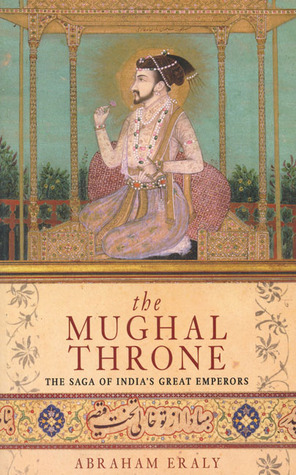
The Mughal Throne – Abraham Eraly

A history of the great Mughal rulers of India, one of the world’s greatest empires.

In December 1525 Babur, the great grandson of the Mongol conqueror Tamberlaine, crossed the Indus river into the Punjab with a modest army and some cannon. At the battle of Panipat five months later he routed the mammoth army of the Afghan ruler of Hindustan. Mughal rule in India had begun. It was to continue for over three centuries, shaping India for all time.

Full of dramatic episodes and colourful detail, THE MUGHAL EMPIRE tells the story of one of the world’s great empires.

Sacred Stones, Spaces, and Stories: Divya Desams Part 4

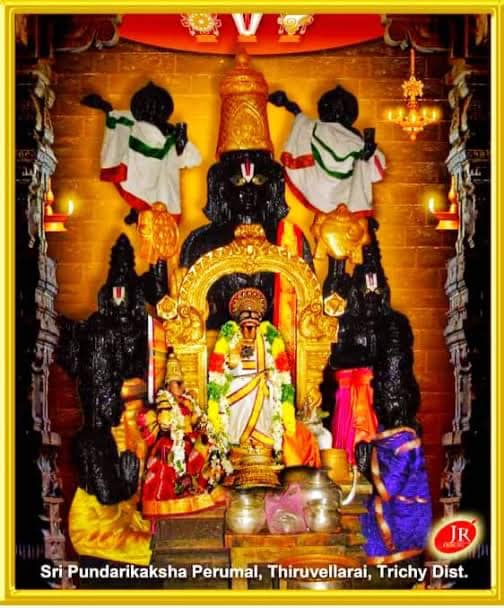
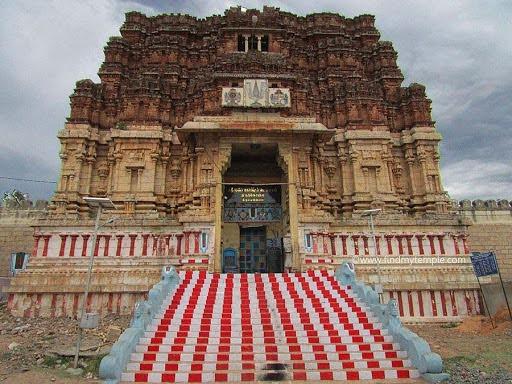
Pundarikakshan Perumal Koil, Thiruvellarai, Tamil Nadu
Located in Thiruvellarai, a village 15 km northwest of Tiruchirappalli in Tamil Nadu, the Pundarikakshan Perumal Temple is one of the 108 Divya Desams, sacred Vishnu sites praised by the Alvars. The name means “white rock,” from the pale granite hills around it. Here, the goddess gets first honours in worship, flipping the usual order. Some say it’s older than Srirangam, but archaeology points to 8th-century caves, not millions of years.​​

Legends start with King Sibi Chakravarthy of Ayodhya. Hunting demons, he camped here. A white boar dashed past and hid in an anthill. Sage Markandeya, doing penance nearby, told Sibi to pour milk into the hole. Vishnu emerged as Pundarikakshan, the lotus-eyed lord. The sage said build a temple, but bring 3700 Vaishnavites from the north to do it right. Sibi did. But one worker died en route. Short 3700, the king worried. Vishnu slipped in disguised as Pundarikakshan, the 3700th. That’s why the deity faces west, watching the road the migrants came from. Another tale has Lakshmi doing penance here. Vishnu appeared as Sengamala Kannan. She became Pankajavalli, the lotus lady. Shiva, as Neelivaneswarar, worshipped here to shed Brahma’s severed head sin.​​

Pallavas carved the rock-cut caves in the late 8th century, under Nandivarman II and Dantivarman. Inscriptions prove it. Cholas added later, like Parakesarivarman endowing Krishna’s shrine around 950 CE. The Pandyas, Hoysalas, Vijayanagara kings layered on halls and walls. A 1262 flood wrecked it; a merchant rebuilt it. Ramanuja spent time here, teaching. Uyyakondar, his disciple, was born nearby. Thirukurukai Piran Pillai too. That ties it to Sri Vaishnava roots. Unique spot: 100-pillar hall, rare in smaller Divya Desams. White rocks gave the name, but also shaped early digging, nature forced the builders’ hand.

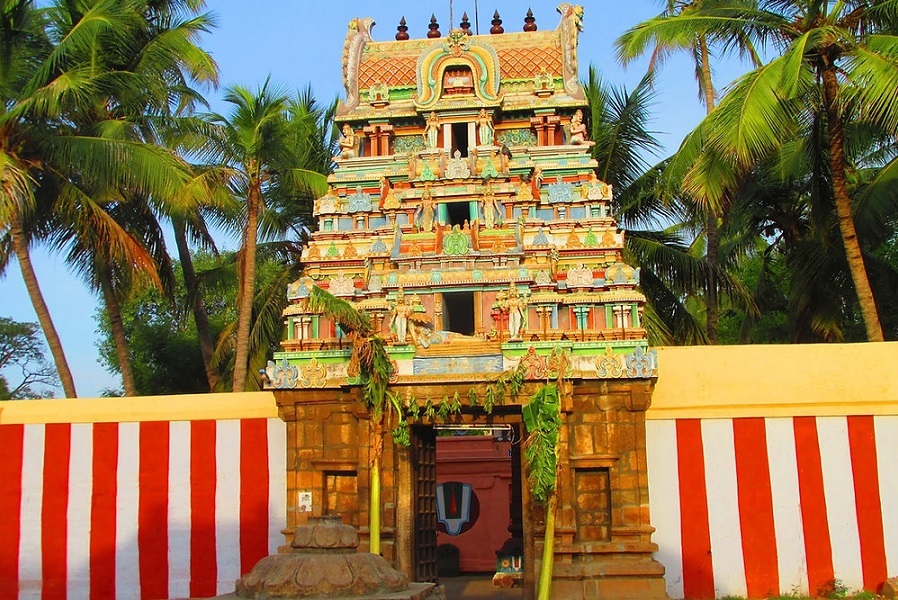
Dravidian style rules: granite walls, three-tier rajagopuram at the gate. Complex spreads over a low hill, with Pundarikaksha Theertham tank for rituals. Main sanctum holds west-facing Pundarikakshan, seated. Pankajavalli shrine separate but central. 100-pillar mandapam stands out with carvings of avatars, dancers, and lotuses. Rock-cut caves from Pallavas hold old inscriptions. Later gopurams mix Chola bulk with Nayak flair. No wild innovations, but tight layout on rocky ground shows smart adaptation. Pillars tell epics; walls mix gods and beasts.

The temple features six daily pujas: alangaram, naivedyam, and deepa aradanai. Nagaswaram and tavil play, with the priests chanting the Vedas. The goddess goes first: Pankajavalli gets decorated, fed, lit before her lord, a rare switch.

The Brahmotsavam in Panguni (Mar-Apr) takes place over 10 days, with Garuda Sevai and processions. Vaikunta Ekadasi opens the gates of paradise while Panguni Uthiram allows worshippers to witness the divine wedding. Chariot festival key, a community feast, is unique and centuries old. It is believed that a dip in the tank during the month of Karthigai in November enhances fertility.

From Trichy, buses or autos cover 15 km on flat roads past fields and the Kollidam river. The Alvars sang 11 paasurams here, baked into Nalayira Divya Prabandham. Ramanuja’s stay shaped commentaries while hymns fuelled songs, and dances at festivals.

The temple is managed by the Hindu Religious and Endowments Board and is affiliated with the Srirangam administration. The temple gopuram was recently restored using ancient methods with the help of IIT Madras, which they also documented. The festivals mostly draw a local crowd, with not many tourists here. Online bookings help, though demographics show more than 80% visitors are devotees and the rest are history fans.

Thiruvellarai anchors the Divya Desam net as a quiet elder. Myths test kings and gods; history stacks layers from cave to tower. The goddess-first worship questions male-led norms. The temple is small, but packed; it shows heritage thrives in villages, not just cities.

Vadivaḻagiya Nambi Perumal Koil, Anbil, Tamil Nadu
The Vadivazhaga Nambi Perumal Temple stands in Anbil village on the north bank of the Kollidam River, just 12 km from Tiruchirappalli in Tamil Nadu. Known also as Sundararaja Perumal Temple, it ranks among the 108 Divya Desams, sacred Vishnu abodes praised by the Alvars. Vishnu reclines here as the strikingly handsome Sundararajan, flanked by Sundaravalli Thayar. Thirumangai Alvar dedicated one hymn to it. Some claim idols date to Pandava times, but Chola inscriptions from the 8th century provide the firmest evidence.

Legends centre on Brahma’s pride in his creation. Arrogant about his beauty, he earned Vishnu’s curse to live as a mortal. Brahma performed penance at Anbil. Vishnu appeared in irresistible splendour, lifting the curse. Hence the name Sundararajan, the lord of beauty. The site earned “Anbil,” meaning “not agreed,” from a debate where even sage Valmiki disputed Vishnu’s finest form until the deity resolved it here.

Another tale features sage Manduka meditating underwater. Sage Durvasa cursed him into frog form for neglect. The frog worshipped Vishnu and regained human shape. The demon Kalanerai harassed rishis Bhrigu and Markandeya. Vishnu slew it as an arasa maram tree, then reclined on Adisesha. Shiva arrived seeking relief from his curse, the Brahma head stuck to his hand dropped after Vishnu offered rice.

These accounts overlap and contradict. Was Brahma cursed once or twice? Demons shift names. Myths prioritise themes over timelines: beauty humbles the creator, devotion redeems the cursed, and grace crosses sects as Shiva bows to Vishnu. If beauty dissolves pride, it challenges hierarchies in Vaishnava lore. Frog-to-sage underscores form yields to faith.

Medieval Cholas constructed the core structure in the late 8th century. Copper plates record their land grants and endowments. Vijayanagara kings and Madurai Nayaks expanded it later with halls and inscriptions detailing donations and festivals. Floods ravaged it in the 1260s, prompting local rebuilds. Unlike Srirangam’s raids, Anbil faced mainly river threats, yet survived through community effort. Thirumangai Alvar’s paasuram secured its Divya Desam status around the 8th century. Ties to Ramanuja’s Tenkalai tradition strengthened its Vaishnava role. Its unique location near the Grand Anicut, the Cholas’ irrigation feat, links temple life to agriculture. Rulers funded it as a power symbol; floods remind us that nature, not just kings, shapes survival.

Standard Dravidian granite buildings span 1.5 acres. A three-tier east-facing rajagopuram marks the entrance. In the sanctum, Sundararajan reclines on Adisesha with Sridevi, Bhoodevi, and Brahma at his feet. The Tharaka Vimanam roof echoes the gopuram shape, a subtle innovation. Subsidiary shrines honour the 12 Alvars, Narasimha, Venugopalar, Lakshmi Narasimha, and Hanuman. Carvings depict epics and lotuses on pillars and walls. The Pushkarini tank supports ritual baths.

Six daily pujas follow the Tenkalai style: alangaram for decoration, neivethanam for food offerings, and deepa aradanai for lamps. Nagaswaram pipes and tavil drums accompany Vedic chants. The temple Brahmotsavam spans 10 days in Chittirai (April-May) with processions. The Maasi Tirthavari (February-March) features river baths for the deity, while Vaikunta Ekadashi draws crowds.

One can reach Anbil by bus or auto from Trichy, tracing the Kollidam through fields. Village lanes lined with flower vendors lead to the temple gate. Remove shoes for darshan, often under 30 minutes during off-peak times.

Today, the TNHR&CE Board oversees operations with annadhanam feeding devotees daily. Flood defences continue, including raised walls and drainage fixes. The temple festivals pull locals mainly, with not many tourists drifting off the tourist circuit.

The Vadivazhaga Nambi Perumal Temple at Anbil holds its place in the Divya Desam circuit as a quiet riverside survivor. Its myths show gods humbled by beauty and devotion, while history reveals layers from Chola foundations to Nayak expansions, tested by relentless floods. The compact Dravidian design and village-scale rituals keep it grounded in daily life, far from grand temple-cities. This temple proves the circuit’s strength lies in such modest spots, weaving farm rhythms and river threats into India’s spiritual fabric. Visit to walk the Kollidam banks, ponder pride’s fall, and feel grace etched in reclining stone. In the end, Anbil reminds us that enduring faith thrives not in spectacle, but in steady flow.

Appakkudathaan Perumal Koil, Koviladi, Tamil Nadu
Located on the south bank of the Cauvery River, in Koviladi village, about 16 km from Tiruchirapalli in Tamil Nadu, the Appakkudathaan Perumal Temple is one of the 108 Divya Desams. Lord Vishnu is enshrined here as Appakkudathaan, forever holding a pot of sweet appam in his right hand. This site ranks among the five Pancharanga Kshetrams along the river, with legends claiming it predates even Srirangam upstream. But Chola inscriptions from the 9th century provide the earliest solid evidence, while floods have repeatedly challenged its survival.​

The main legend tells of King Uparisravasu, who accidentally killed a brahmin while hunting. The sin of brahmahatti dosha gripped him, worsened by Sage Durvasa’s curse that sapped his strength. To atone, the king fed thousands daily; accounts vary between 10,000 and 100,000. One day, Vishnu arrived disguised as a starving old man, devoured all the food, and requested a pot of appam. The king obliged. Vishnu revealed his form, lifted the curses, and stayed reclined with the pot as a reminder of grace through simple service.​

Sage Markandeya faced death at 16 from Yama. He prayed here, and Vishnu intervened, also humbling Indra’s arrogance. Another story positions Appala Ranganatha as pacing the steps toward Srirangam, earning the name Koviladi, the “first temple.” Periazhwar sang his final mangalasasanam here before ascending to Vaikunta. These tales overlap in details, like feast numbers or curse sources.

Cholas laid the foundations in the 9th-10th centuries. Aditya Chola’s inscriptions: numbers 283, 300, 301, 303 from 1901, detail donations for halls and Vedic scholars. Later Cholas, Pandyas, Vijayanagara rulers, and Nayaks expanded with prakarams and shrines. Unlike raided giants, Koviladi endured the Anglo-French wars nearby without noted damage, though the Cauvery floods demanded repeated rebuilds.​

Alvars, including Nammalvar, Periazhwar, and Thirumangai, immortalised it in paasurams. It served as a Vedic learning centre, drawing scholars. Periazhwar’s final praise marks it for moksha seekers. Downstream from Srirangam, it forms a river-linked chain, not an isolated outpost. History shows adaptation: rulers endowed, floods rebuilt, saints embedded it in faith networks.​

Granite Dravidian style hugs the riverbank. A three-tier Rajagopuram looms after 21 steps up. Inside, east-facing Appakkudathaan reclines on Adisesha in the sanctum, appam pot gripped tight, accompanied by Sridevi and Bhoodevi. Sowmya Nayaki claims a separate shrine. Prakarams encircle with sub-shrines for Alvars, Venugopala, and others. The vimana stays modest, echoing early Chola restraint.​ Pillars bear epic carvings, lotuses, and dancers. The Cauvery pushkarini enables ritual baths. No radical breaks from style, but systematic subsidies mirror Srirangam, 9th-10th century hallmarks. Compact form suits flood-prone ground, prioritising endurance over scale.​

Daily rhythm follows six pujas: alangaram dresses the deities, neivedyam offers food topped by appam, the only Divya Desam to do so daily, and deepa aradanai waves lamps amid nagaswaram, tavil, and Vedic chants. Brahmotsavam lights up Panguni with processions. Vaikunta Ekadashi opens paradise gates. Periazhwar Utsavam honours his departure. Locals stir appam pots, fund annadhanam, and line streets; threads of community weave the rites.​

Buses from Trichy cross the Cauvery through paddy fields, dropping at village paths lined with flower stalls. Climb to the gate, shed shoes, and find darshan swift on weekdays. Festival river dips cleanse body and spirit. Locals pour tea, recount Periazhwar’s ascent: “Pray here for a straight path to Vaikunta.” Flood scars linger in tales: “The Lord stemmed the waters once.” Quiet banks invite chants, reflection amid flowing river life.​

Nine Alvar paasurams echo in the Nalayira Divya Prabandham, recited in every puja. Periazhwar’s closing praise fuels songs and dances at festivals. Appam lore peppers village stories, Vedic past shapes farm rituals. Weddings and fairs orbit the temple, anchoring identity. Less spotlight than upstream kin, but it pulses through Koviladi’s daily beat, faith as staple, like its namesake sweet.​

Appakkudathaan claims its Divya Desam spot as Cauvery’s quiet link. Myths feed grace through appam pots; history stacks Chola stones atop flood-tested bases to Nayak crowns. Village intimacy endures where giants might falter. Pre-Srirangam boasts falter against inscriptions. Yet it binds the circuit, farms flooded, prayers offered, river flowing. Visit to savor appam prasadam, trace banks, balance legend with granite truth. Heritage endures not in towering claims, but pots of plain devotion.

Sacred Stones, Spaces, and Stories: Divya Desams Part 38

Thiruthangal Temple, Thiruthangal, Tamil Nadu
Thiruthangal, located near Sivakasi in Tamil Nadu, is one of those Divya Desams where the story is not about movement but about choosing to remain. The presiding deity here is Ninra Narayana Perumal, and the goddess is Sengamalavalli Thayar. The name itself reflects the central image. Ninra means “standing,” and this is the Lord who stands, not in passing, but with intention. The temple sits on a small hill, and that elevation adds a quiet sense of separation from the everyday world below. Yet the feeling is not of distance. It is of steadiness.

The mythology of Thiruthangal is connected with a gentle but telling story involving the goddess. According to tradition, Lakshmi and Bhudevi once sought to determine who held a more significant place beside Vishnu. What began as a comparison grew into a moment of tension, not out of anger, but out of the desire to be seen. Lakshmi chose this place to perform penance, seeking clarity and affirmation. Vishnu appeared before her here and resolved the tension, not through argument, but through presence. Because the goddess stayed here and the Lord stood with her, the place came to be known as Thiruthangal. The story does not end in conflict. It settles into understanding.

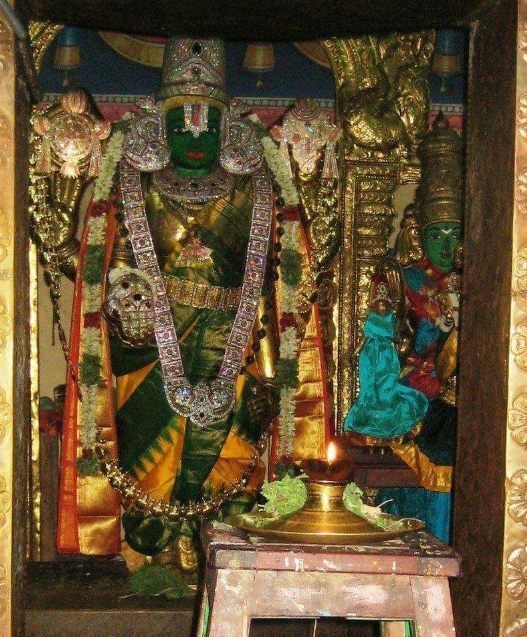
Inside the sanctum, this sense of resolution becomes visible. Ninra Narayana Perumal stands in a composed posture, holding the conch and discus, calm and unhurried. The standing form carries a certain clarity. It does not suggest movement or rest, but readiness that has already found its place. Sengamalavalli Thayar’s shrine adds warmth to the space, grounding the stillness of the Lord with compassion. Together, they create an atmosphere that feels balanced.

The temple’s location on a hill shapes the experience quietly. The climb is not long, but it is enough to slow the body and shift the mind. By the time you reach the top, the rhythm has changed. The surroundings open up, and the space feels less crowded, even when there are other visitors. The hill does not isolate the temple. It gives it a clearer presence.

Historically, Thiruthangal reflects the continuity of temple culture in southern Tamil Nadu, with roots that extend through the Pandya period and later contributions from local patrons. The structure has been maintained across centuries, not through large expansions, but through steady care. This continuity is visible in the layout and in the ongoing practice of worship. The temple has remained active, carrying its story forward without interruption.

Architecturally, the temple follows the Dravidian style, with a gopuram marking the entrance and prakarams guiding the movement inward. The scale is modest compared to some larger temples, but the proportions feel balanced. The sanctum remains the focal point, drawing attention to the standing form of the Lord. The surrounding structures support the experience without distraction. The hill itself becomes part of the architecture, shaping how the temple is approached and understood.

The daily rituals follow the Vaishnavite tradition, with regular pujas conducted throughout the day. Festivals such as Vaikunta Ekadasi and Brahmotsavam bring larger gatherings, but the temple does not lose its steady tone. The standing form of the deity continues to anchor the space, even during moments of activity.

For pilgrims, the experience of Thiruthangal often comes with a sense of quiet clarity. After visiting temples associated with action, movement, or transformation, arriving here introduces a different emphasis. The Lord does not act. He stands. That posture begins to carry meaning. It suggests that some things do not need to be changed or moved. They need to be held in place.

Culturally, the temple holds its place within the Divya Desam tradition through the hymns of the Alvars, who recognised its significance. Over time, it has come to represent themes of balance, resolution, and steadiness. Devotees come here not only with requests but with the need for clarity. The temple does not provide answers in obvious ways. It offers a space where things settle.

In modern times, Thiruthangal continues to function as an active place of worship, maintained through regular rituals and community care. It remains part of a living tradition, drawing pilgrims who seek both devotion and quiet reflection.

Thiruthangal ultimately represents the strength of staying. Ninra Narayana Perumal does not move through the world here. He stands within it. In the larger Divya Desam journey, this temple offers a simple but steady insight. Not every moment calls for action. Some call for presence.

Thirukkoodal Temple, Madurai, Tamil Nadu
Madurai is a city that rarely pauses. It moves through history, ritual, and everyday life all at once, and in the middle of that movement stands Thirukkoodal, the temple of Koodal Azhagar Perumal, with Madhuravalli Thayar as the goddess. The name Koodal itself suggests coming together, a meeting point, a place where things gather. That meaning fits the temple well. It sits within a city known for convergence, where people, traditions, and rhythms overlap, and yet inside the temple, the experience becomes more focused, more contained.

The mythology of Thirukkoodal is not built around a single dramatic episode. Instead, it is shaped by presence across different states. The most striking aspect of the temple is that the Lord is worshipped in three distinct forms within the same space. In the sanctum, Koodal Azhagar stands in a composed posture, holding the conch and discus. Above, in another tier, he is seen seated, and in yet another, he reclines. These are not separate temples. They are layers within one structure. The arrangement itself becomes the message. The divine is not limited to one state. It stands, sits, and rests, all within the same presence.

This idea carries a quiet significance. In many temples, one encounters a single form and builds meaning around it. Here, the experience is expanded. The Lord is not fixed. He moves across states without losing identity. For the devotee, this creates a different kind of engagement. You do not see the divine in one moment. You see it as continuity across different conditions.

Inside the temple, this layered presence shapes the experience. The standing form of Koodal Azhagar holds the immediate attention. It feels grounded and direct. The seated and reclining forms above introduce a shift, inviting the mind to move beyond what is seen first. Madhuravalli Thayar’s shrine adds warmth to the space, grounding the experience in grace. Together, they create an atmosphere that feels complete, not because it is large, but because it holds multiple states at once.

Historically, Thirukkoodal has been an important temple in Madurai, with roots that extend through the Pandya period and later contributions from other dynasties. The temple has stood through centuries of change in the city, maintaining its identity even as the surroundings evolved. It is not as widely known as the Meenakshi Amman Temple nearby, but it holds its own place within the sacred geography of Madurai.

Architecturally, the temple reflects the Dravidian style, with a gopuram marking the entrance and prakarams guiding movement inward. The most distinctive feature is the vertical arrangement of the three forms of the deity. This structure creates a sense of movement within the temple without requiring physical distance. The experience shifts as one looks upward, moving from one state to another.

The daily rituals follow the Vaishnavite tradition, with regular pujas conducted throughout the day. Festivals such as Vaikunta Ekadasi and Brahmotsavam bring larger gatherings, but the temple does not lose its inward focus. Even during these times, the layered presence of the deity remains the central experience.

For pilgrims, Thirukkoodal often feels like a pause within the larger movement of Madurai. After navigating the busy streets and the intensity of the city, stepping into the temple creates a shift. The mind begins to settle, not into stillness alone, but into a recognition of different states coexisting.

Culturally, the temple holds its place within the Divya Desam tradition through the hymns of the Alvars, who recognised its significance. Over time, it has come to represent a broader idea. Life itself does not remain in one state. It moves through action, rest and reflection. Thirukkoodal reflects that movement without separating it into different spaces.

In modern times, the temple continues to function as an active place of worship, drawing devotees from within the city and beyond. It remains part of a living tradition, even as it stands alongside larger and more prominent temples.

Thirukkoodal ultimately represents presence across change. Koodal Azhagar Perumal does not remain in one posture. He stands, sits, and rests, all within the same space. In the larger Divya Desam journey, this temple offers a simple but steady insight. The divine is not limited to one state, and neither are we.