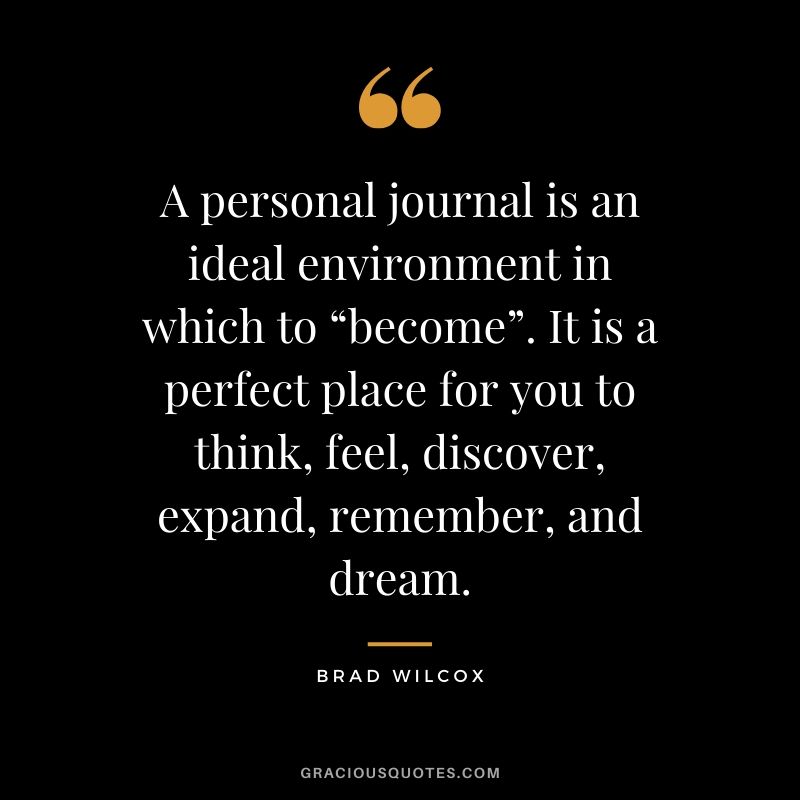
Journaling: Like Whispering to One’self and Listening at the Same Time

Once the domain of teenage girls with their locked diaries, today, journaling has become mainstream, especially when it becomes a part of self-care. Scientific studies have shown it to be essentially a panacea for modern life. There are the obvious benefits, like a boost in mindfulness, memory and communication skills. But studies have also found that writing in a journal can lead to better sleep, a stronger immune system, more self-confidence and a higher IQ. And there is some research from New Zealand which suggest that journaling may even help to heal wounds faster.

Labelling emotions and acknowledging traumatic events, both natural outcomes of journaling, have known to have a positive effect on people, and are often incorporated into traditional therapy. At the same time, writing is fundamentally an organisational system. Keeping a journal, according to experts, helps to organise an event in our mind, and make sense of trauma. When we do that, our working memory improves, since our brains are freed from the enormously taxing job of processing that experience, and we sleep better. This in turn improves our immune system and our moods and we go to work feeling refreshed, perform better and socialise more.

Journaling can help manage anxiety, reduce stress, cope with depression, control symptoms and improve the mood by helping prioritise problems, fears, and concerns and tracking any symptoms day-to-day so that one can recognise triggers and learn ways to better control them. Journaling also provides an opportunity for positive self-talk and identifying negative thoughts and behaviours.

So what should we journal about? I have been journaling for about four to five years now and I use my journals as my daily diary, a sort of a brain drain and a way to get rid of all the things that swirl in our brains and clutter, not allowing us to be productive. My journal is online, on the cloud as a Google Doc and I sort it by month and write daily (or at least try to write). I prefer using a cloud system because I can then sync it across my devices and laptop and it is always with me. A pen and paper diary is bulky and if I am writing things in it that I don’t want anyone else to see, then secreting it is an issue. Having it online means to a large extent, I can control who can view it. But this is personal, you can use whatever method you prefer. Somedays I come back to my journal multiple times a day to write, especially when something very interesting is happening, other days, it’s a quick couple of lines at the end of the day to just document that day.

Journaling has many other benefits other than what I have written above.

Journaling optimizes one’s creative potential by allowing you a space to put down your ideas. So that 3 am idea which never saw the light of the day because it was forgotten by the time we woke up now can be channelled in a journal to be used later. A journal is also a good place to review your goals and see what you need to do to get there. As you read and refine your goals daily, including your to-do list, they become a part of you in your conscious mind and you become more productive. They become a part of your daily reflections, in both your personal and professional life and when you look back, you can see what needs to be done and when. When we journal, we can see with crystal clear what should and should not be included in your life and not only will you have more clarity about your path in life, but it will improve your ability to make small and large decisions along the way. Journaling also helps clear the stress in your life by reducing the scatter in your life, increasing focus, increased stability, a deeper level of learning, order and action, releasing pent-up thoughts and emotions and detaching and letting go of the past.

Without a journal, intense emotional experiences can be crippling for hours, days, and even years. However, an honest and inspired journal session can be the best form of therapy, quickly returning you better and smarter than you were before. Journaling is also a way to express gratitude. Even if one starts a journal session in a bad mood, the insight writing brings has a subtle way of shifting the mind towards gratitude. When one starts writing what they are grateful for, new chambers of thoughts opens in the palace of your mind. Make sure to include gratitude in the journal and it will change your entire life orientation from scarcity to abundance with the world increasingly becoming your oyster.

As a parting thought, I would suggest that if you start journaling, don’t be too hard on yourself if you miss a day to journal. After all, it takes 21 days to make something a habit. Just write a couple of lines about your day and share it as if you are sharing your thoughts with a close friend.
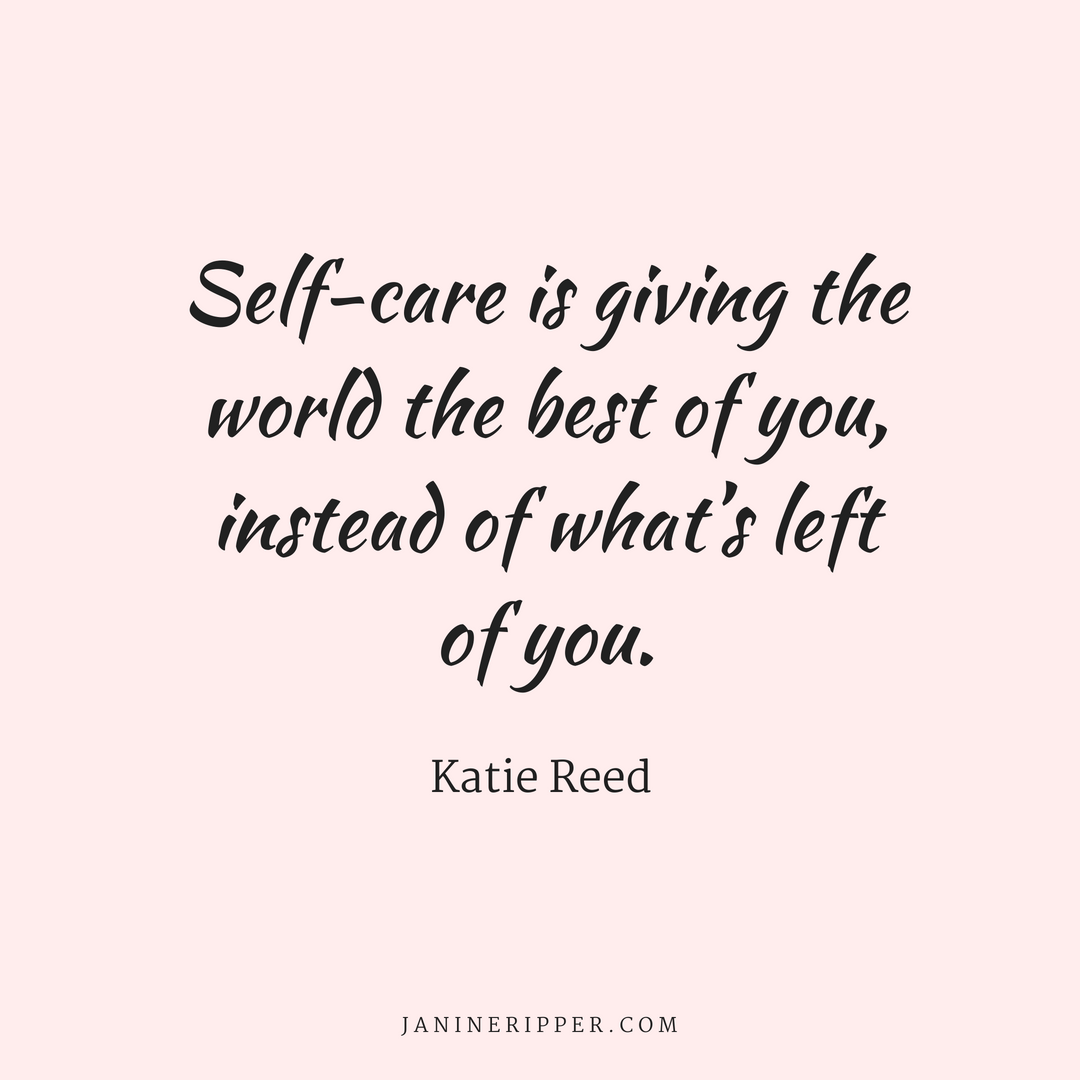
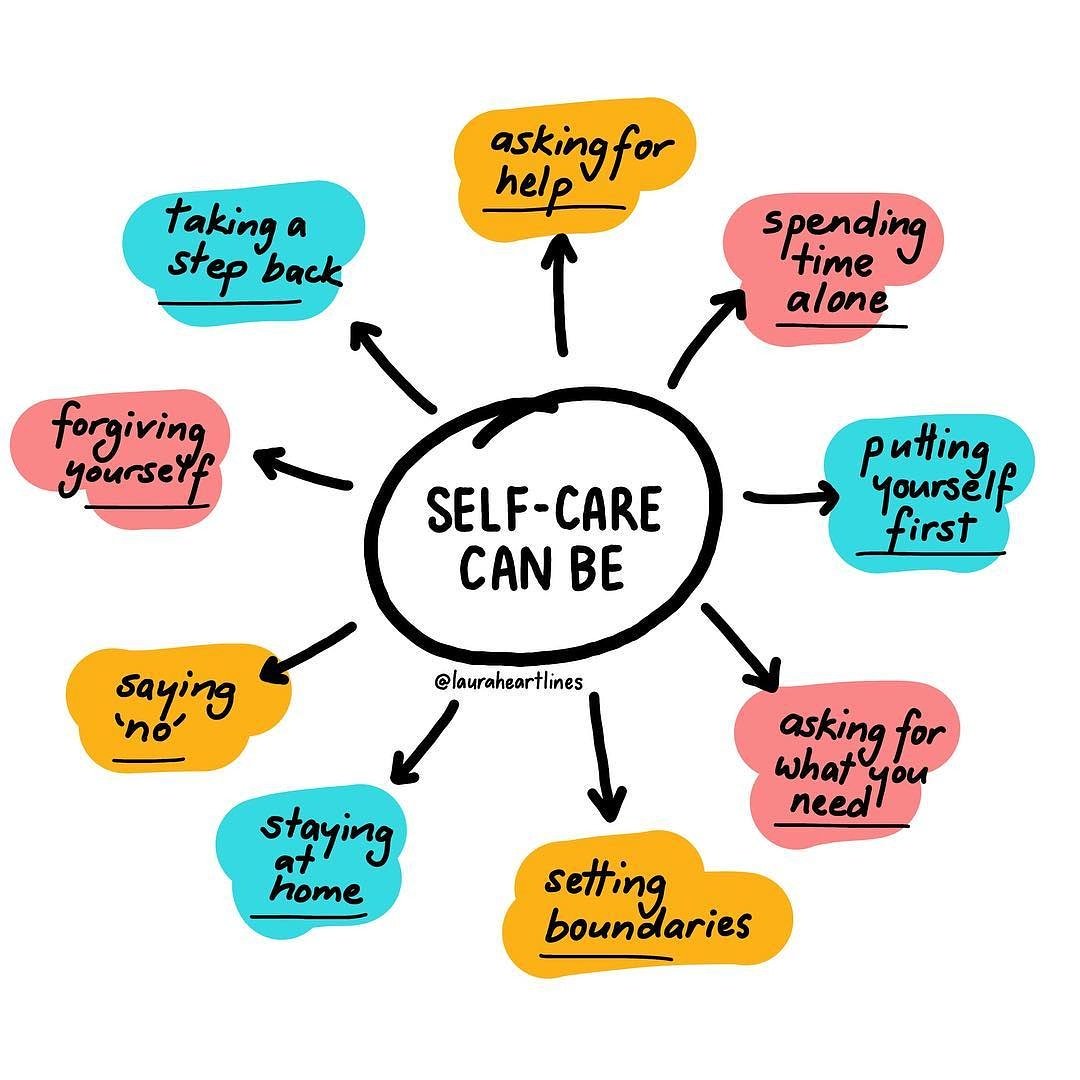
Self-care: Make an appointment with yourself

I recently attended a webinar where one of the speakers, a renowned doctor with fingers in many pies said that one of the best things we can do for ourselves is to take some time out every day and do something for ourselves. This is essentially what self-care is all about. Self-care includes anything you do deliberately to keep yourself healthy, be it physical, mental and spiritual. Although prioritising self-care may sound like common sense, especially if you’re considering longevity, it’s often the first thing to go when we find ourselves in challenging situations, whether because of bad health, a financial crisis, job loss, divorce or, today during the pandemic. This is why deliberately is one of the most important words in the definition and why it is important to keep it top of mind and not an after-thought, especially when we find ourselves in challenging times. One needs to be conscious of their well-being before one can achieve true self-care.

Today more than ever, we are hearing about self-care and according to Google Trends, the number of searches for “self-care” has more than doubled since 2015. Self-care is part of the answer to how we can all better cope with daily stressors, according to some experts because today people are feeling lonelier and less able to unwind and slow down, which makes them feel more anxious and overwhelmed by even the simplest tasks.

Self-care is an important part of living a healthy and happy lifestyle. Looking after ourselves both mentally and physically is crucial to taking control of our health. We lead increasingly busy lives and it can be easy to forget to put ourselves first, especially if we have multiple responsibilities and other people to care for. But looking after ourselves will make us feel better, and the better we feel, the better we will be in all areas of our lives – from work to relationships. Self-care doesn’t have to involve a huge time commitment and it doesn’t have to cost the earth. It could be as easy as taking a bath, relaxing with a good book, taking a walk outside or eating a favourite food. It’s about making a commitment to putting yourself first, even just for a while. Self-care is important to maintain a healthy relationship with one’s self as it produces positive feelings and boosts confidence and self-esteem. Also, self-care is necessary to remind the individual and others that their needs are important too.

Self-care has several benefits, most of which are interlinked and committing to a regular self-care routine will improve one’s overall wellbeing. Research suggests self-care promotes positive health outcomes, such as fostering resilience, living longer, and becoming better equipped to manage stress.

Self-care can improve physical health: A big part of self-care is committing to looking after one’s body and becoming more attuned with its needs. Whether it’s brushing your teeth, exercising more or getting enough sleep each night, part of any programme of self-care should focus on looking after one’s physical health.

Self-care can reduce stress and anxiety: Making time for relaxing activities, even something as simple as such as taking a warm bath, listening to music or practising yoga or meditation, is another common theme of self-care. Any activity that makes one feel more relaxed can help to reduce symptoms of stress and anxiety and to lift their mood.

Self-care can boost self-esteem: As well as helping to calm the nerves, taking time to relax and look after oneself can have a positive impact on the way one sees themselves, treating oneself with kindness can make them look upon themselves more kindly. Studies have found that people with higher self-esteem find it easier to deal with setbacks and are more likely to achieve goals of self-improvement.

Self-care protects mental health: Making changes to prioritise self-care can help to manage mental health issues and might even prevent them from getting worse. Of course, self-care is not a substitute for professional help, and one shouldn’t feel they have to tackle their problems alone. If mental health is suffering, please talk to someone. However, if someone is looking to improve their mental wellbeing, taking the time to care for themselves, both mentally and physically is important.

Self-care can lead to better relationships: It makes sense if you think about it: the happier and healthier an individual is, the more they can give to a relationship. This is especially important if the person is a parent or carer when it can be so easy to put someone else’s needs first, but they must look after their health too.

Self-care leads to a healthy work-life balance: Contrary to common belief, workaholism is not a virtue. Overwork and the accompanying stress and exhaustion can make one less productive, disorganised and emotionally depleted, leading to all sorts of health problems, from anxiety and depression to insomnia and heart diseases. Professional self-care habits like taking intermittent breaks, setting professional boundaries and avoiding overextending ensures that one stays sharp, motivated and healthy.

Self-care helps with stress management: While a little dose of stress is a healthy way to nudge us to meet the deadlines or finish that overdue task, constant stress and anxiety can hurt our mental and physical health. Smart self-care habits like eating healthy, connecting with a loved one or, practising meditation cuts down the toxic effects of stress by improving the mood and boosting the energy and confidence levels.

Self-care leads to better physical health: Self-care is not just about mental health, its also about caring for the physical self, by eating healthy, taking adequate sleep, caring about your hygiene and exercising regularly. Most of us are all less able to handle the stresses that come our way when we’re depleted by physical and emotional exhaustion. Or, put more positively, we are more resilient and more able to handle life’s stress when we are feeling our best both physically and emotionally. A massage, a hot bath, or another form of pampering revitalises us inside and out.

Self-care may boost physical health: While self-pampering doesn’t always lead to major improvements in overall health the way a healthy diet and exercise do, the relaxation one gets from it can trigger the relaxation response. This, in turn, can prevent chronic stress from damaging one’s health. So in a sense, self-care is good for you inside and out.

Self-care can improve emotional health: Taking time out to care for yourself can remind us and others that we and our needs are important, too. Having a well-cared-for body can make us feel good about ourselves and our life, and conveys to others that we value ourselves and this can contribute to long-term feelings of well-being.

Self-care makes one a better caregiver: People who neglect their own needs and forget to nurture themselves are at danger of deeper levels of unhappiness, low self-esteem, and feelings of resentment. And people who spend their time only taking care of others can be at risk of getting burned out, which makes it more difficult to care for others or themselves. Taking time to care for themselves regularly can make them better caretakers for others.

So start living and stop existing because life is a precious gift to waste when there is a choice to have a more meaningful existence. Life has many responsibilities and tends to throw curveballs when we least expect it, but it’s important to remember that taking care of ourselves is also our responsibility. Little things like reading a good book, sipping some great tea, enjoying a warm bath, playing some games, listening to the laugh of a child or playing with them are essential for our daily happiness. So, put away what is taking the time and take some time, even if it is just 30 minutes a day and spend some quality time with yourself.

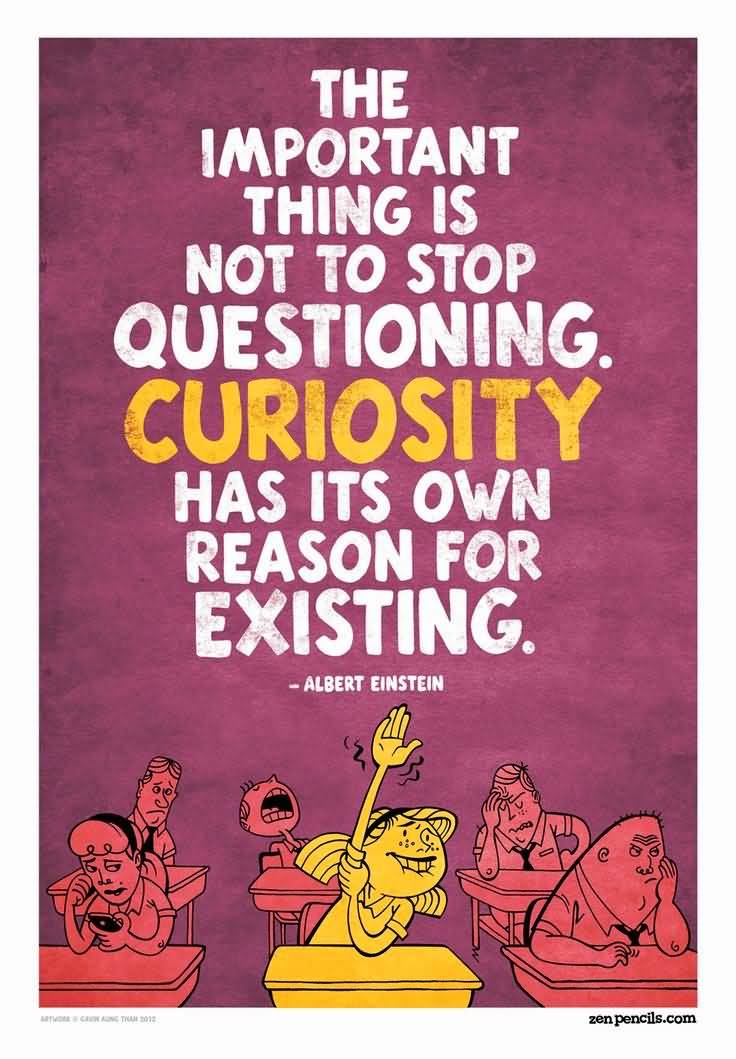
Curiosity: A laboratory to the inquiring mind

Merriam Webster defines curiosity as a desire to know, an inquisitive interest in others’ concerns, an interest leading to inquiry and intellectual curiosity.

Curiosity is the desire to learn, to understand new things, and to know how they work. As children, we are naturally curious, born with the impulse to seek new information and experiences. As we age and gain more experience, we become less reliant on curiosity for answers and more reliant on knowledge. Curiosity gives way to comfort and certainty. Curiosity can be seen manifesting itself in geniuses, because they are inherently always curious, leading to the discoveries attributed to them. Curiosity is not only important for those with high IQs, but successful people across all walks of life often display a good measure of curiosity. Curiosity is the expression of the urge to learn and acquire facts and knowledge. It widens the mind and opens it to different opinions, different lifestyles and different topics.

Curiosity can manifest in many ways, as the desire to read the gossip columns or watch reality shows on TV, or as the desire to know about people and their lives. It can also manifest as the desire to accumulate knowledge about science, geography or other topics, or as the urge to know how to fix things. Curious people ask questions, read and explore. They are active about seeking information or experience, and are willing to meet challenges and to broaden their horizons. They are not shy to ask questions and delve deeply into the topic that interests them.

Curiosity throughout adulthood requires approaching experiences with the open-mindedness and naivete of a child. Buddhists call this the Beginner’s Mind. Curiosity pushes people toward uncertainty and allows them to approach it with a positive attitude. Empathy, creativity, innovation, and the ability to learn quickly all spring from curiosity. Curiosity lacks an agenda or desire to drive a specific outcome, which means it can open you up to experiences you never thought were possible. This is how ground-breaking discoveries are made, markets are disrupted, and barriers are overcome.

While curiosity comes naturally to some, many adults must develop it, and just like any other skill or habit, it takes practice. According to experts, to live a curiosity-driven life, an individual must commit to being vigilant about looking for what’s piquing their curiosity and to follow what is interesting to a person, even if that interest is faint at first. Curiosity is not only linked to success because it leads to creativity and discoveries, it also helps to develop meaningful relationships that enrich personal and professional lives. When curiosity leads conversations, it opens up possibilities, letting people establish deeper, more meaningful relationships because the interactions then moves towards discovering others, rather than using them to fulfil an agenda.

But why is curiosity so important? Here are some reasons

Curiosity makes your mind active instead of passive. Curious people always ask questions and search for answers. Their minds are always active. Since the mind is like a muscle that becomes stronger through continual exercise, mental exercise caused by curiosity makes the mind stronger and stronger.

Curiosity makes the mind observant of new ideas. When an individual is curious about something, their mind expects and anticipates new ideas related to the subject. When the ideas come they will recognise them and without curiosity, the ideas may pass right in front of them and yet they miss them because their mind is not prepared to recognise them.

Curiosity opens up new worlds and possibilities. By being curious, an individual will be able to see new worlds and possibilities that are normally not visible, which are hidden behind the surface of normal life, and it takes a curious mind to look beneath the surface and discover them.

Curiosity brings excitement to life. The lives of curious people are far from boring and are neither dull nor routine with new things always on the horizon that attracts the curious person’s attention. Instead of being bored, curious people have an adventurous life. Curiosity is important for excelling in any job and doing it better because it allows an individual to ask questions, learn from others, and look for ways to do their job better. The minds of curious people are active, they want to know and to understand which puts them in a better position to learn a job and do it better and more creatively, unlike a person who lacks curiosity. When curious people fail, they analyse their failure, because they are keen on knowing the reasons, to do better the next time, increasing future successes.

So how do we build this muscle?

Keep an open mind: An open mind is essential to have a curious mind. Be open to learn, unlearn, and relearn. Some things you know and believe might be wrong, and one should be prepared to accept this possibility and change their minds.

Don’t take things at face value: If one just accepts the world as it is without trying to dig deeper, they will certainly lose the holy curiosity. Never take things at face value and try to dig deeper beneath the surface of what is around them.

Ask questions relentlessly: A sure way to dig deeper beneath the surface is asking questions. The five Ws and one H of Who, Why, When, What, Where and How are the best friends of curious people.

Don’t label something as boring: Whenever one labels something as boring, they close one more door of possibilities. Curious people are unlikely to call something boring. Instead, they always see it as a door to an exciting new world. Even if they don’t yet have time to explore it, they will leave the door open to be visited another time.

See learning as something fun: If one sees learning as a burden, there’s no way they will want to dig deeper into anything, and will just make the burden heavier. But if they think of learning as something fun, they will naturally want to dig deeper. So the lesson here is to look at life through the glasses of fun and excitement and enjoy the learning process.

Have diversity in your reading: Don’t spend too much time in just one world; take a look at other worlds, it will introduce an individual to the possibilities and excitement of the other worlds which may spark their interest to explore them further. One easy way to do this is by reading diverse genres and topics. The easiest way to do this is to pick a book or magazine on a new subject and let it feed the mind with the excitement of a new world.

Be Present: Don’t enter a conversation with the mind somewhere else or be focused on where you want the conversation to go. Be aware of thoughts drifting, and bring them back to the present, staying fully engaged with the person in front of you. Look at each interaction as an opportunity to learn something fascinating.

Give: Give others your full attention, give them an authenticity and give them time. When one shifts their focus from what they can get from a person to what they can give them, their relationship shifts from transactional to genuine.

Check Your Ego: A person’s ego can destroy curiosity because it fears insecurity. Curiosity requires embracing and exploring the unknown, which triggers insecurity. Don’t worry about how others will react to a person. Curiosity drives one to discover, not impress.

I will leave you to search more about this immensely interesting subject and allow you to flex your curiosity muscle with these TED Talks.

Memories: Growing up in an urban agraharam

I grew up in Mumbai, very close to what is the heart of the tambram community in the city, Matunga. Where we lived was a 15 minute walk to the heart of the community, to the market and the temples, to the flower shops and the vegetable vendors, some of whom though they came from the northern states of Bihar and Uttar Pradesh, but could banter with the mamas and manis in Tamil. Before COVID-19 stuck and life changed, my mother used to make the thrice weekly trip every week to Matunga to get her fix of all of the above.

The other day while I was thinking about this, I realised that I actually grew up in an urban agraharam. So what is an agraharam you may ask? An Agraharam or Agrahara was a grant of land and royal income from it, typically by a king or a noble family in India, for religious purposes, particularly to Brahmins to maintain temples in that land or a pilgrimage site and to sustain their families. Agraharams were also known as Chaturvedimangalams in ancient times as well as known as ghatoka, and boyas. Agraharams were built and maintained by dynasties such as the Cholas and Pallavas. The name originates from the fact that the agraharams have lines of houses on either side of the road and the temple to the village god at the centre, thus resembling a garland around the temple. According to the traditional Hindu practice of architecture and town-planning, an agraharam is held to be two rows of houses running north–south on either side of a road at one end of which would be a temple to Shiva and at the other end, a temple to Vishnu. An example is Vadiveeswaram in Tamil Nadu.

Where we grew up was a collection of about 50-60 two to three storey buildings set in a sort of square with roads intersecting them. We were framed by educational institutes on three sides and a main road on the fourth. While our small community comprised of people from different communities across the various states of India, if I look back, I can see the Tamil Brahmin community most predominant here, with most of them from Kerala or the Palakkad Iyers. Most buildings, with some exceptions which only had people from a certain community as residents, had a few tambram families in residence. Everyone was a mama or mami and not uncle or aunty and everyone knew everyone, or at the very least knew our parents and grandparents, many of whom they were either together at school, in the same class or from the same village in Tamil Nadu or Kerala.

In my own building, the bulk of our neighbours were from my own community and this is why I call my small slice of area an urban agraharam. Everyone was solidly middle class and if you probed enough, you found some connection with them, either through family or friends and once the connection was made, you were part of them. I know now that even living in a secular and multi-community city like Mumbai made us quite insular when it came to Tamil culture. The only Tamil culture I knew was the Tambram one and coming to Singapore, to a culture similar to my own was actually a culture shock to me.

But, growing up in a community made mostly of people who had the same values, the same traditions as us was just as charming. Festivals which are unique to my community was commonplace here and I never questioned why the rest didn’t celebrate it. For example, the annual Avani avittam festival which is the only festival for the men who on this day would change their sacred threads used to be held in a nearby school with a few priests from one of the temples in Matunga coming over to conduct the rituals. Since there were enough men who wore the sacred thread, it probably made sense for the organizers to hold a mini session in our area. Since the day was not a public holiday, they used to do the session fairly early so the men and boys could then go on to work and school. And in all the years my grandfather and then father went here instead of to our temple in Matunga, I never questioned why. It all seemed normal to me. We loved going to each other’s homes for festivals like Diwali, Navratri and Ganesh Chaturti in our pavadais and sing songs and gorge on the delicacies.

That was a lovely time growing up. Everyone looked out for each other and mamas and mamis didn’t heaitate to scold or tell on a child they knew if the said child did something wrong. We thought nothing of going into anyone’s house for a drink of water or to use the bathroom. We were also quite safe in our little enclave and most of us pretty much lived our whole lives there till we moved out.

Source

Life in our small community has changed now. Many buildings are being knocked down to make way for high rises, especially since this area is now a prime area, within what is considered the original Bombay and close, but not too close to the city. A lot of people from the community moved to suburbs like Chembur, Thane and Dombivili when the real estate prices here started picking up in the nineties. I think my grandparents and parents even explored the idea of moving to Chembur, but thankfully dropped the idea very soon. Life goes on, but in our area, the percentage of tambrams has reduced tremendously, so much so it can’t be called an agraharam anymore. I mourn for this loss, but c’est la vie and life must go on. The chakra of life never stops and I am sure in some of the suburbs I mentioned newer urban agraharams have been created.

World Water Day

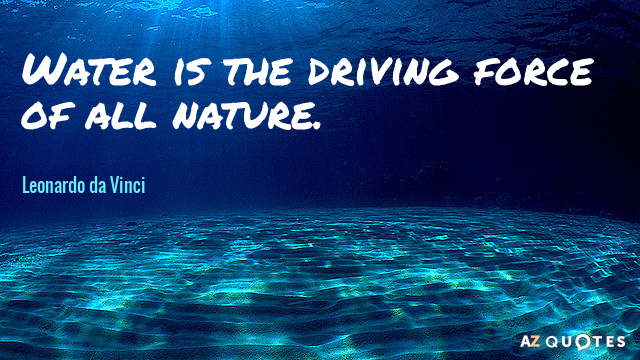
Leonardo Da Vinci once said, water is the driving force of nature which is so true. Without water, humanity would probably not exist and all our searching for new planets to inhabit all hinges on the possibility of finding water in the new planet.

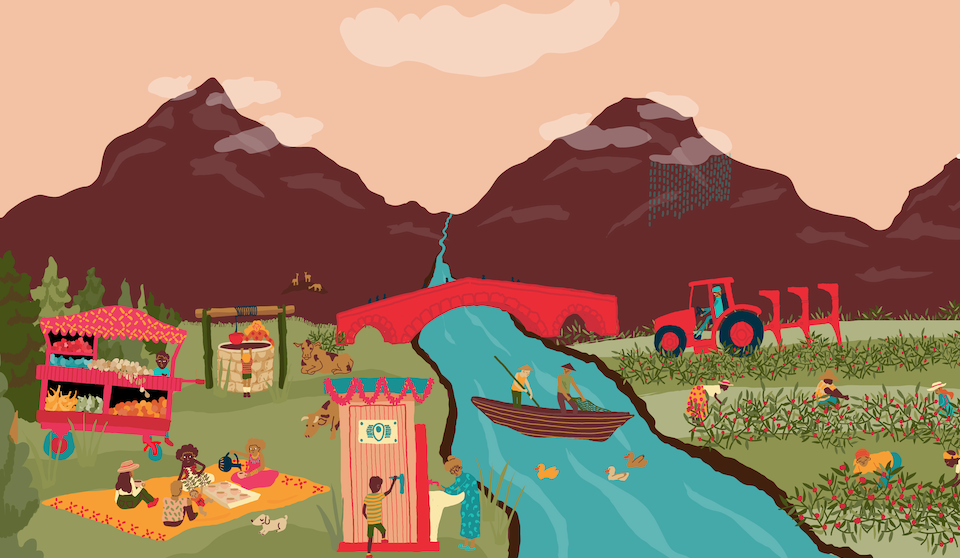
Water means different things to different people. Water important to our home and family life, our livelihood, our cultural practices, wellbeing and local environment. In households, schools and workplaces, water can mean health, hygiene, dignity and productivity. In cultural, religious and spiritual places, water can mean a connection with creation, community and oneself. In natural spaces, water can mean peace, harmony and preservation.

Today, water is under extreme threat from a growing population, increasing demands of agriculture and industry, and the worsening impacts of climate change. The World Water Day celebrates water and raises awareness of the 2.2 billion people living without access to safe water. It is a means of focusing attention on the importance of freshwater and advocating for the sustainable management of freshwater resources. The day is about taking action to tackle the global water crisis and achieving Sustainable Development Goal 6: water and sanitation for all by 2030. The first World Water Day was celebrated in 1993 and is an annual United Nations Observance focusing on the importance of freshwater, coordinated by UN-Water. This Day is an opportunity to learn more about water related issues, be inspired to tell others and take action to make a difference. Water is an essential building block of life. It is more than just essential to quench thirst or protect health; water is vital for creating jobs and supporting economic, social, and human development.

A new World Water Development Report is released each year on or near World Water Day, to provide decision-makers with tools to formulate and implement sustainable water policies. This report is coordinated by UNESCO’s World Water Development Programme (WWAP) on behalf of UN-Water. The annual theme for World Water Day is aligned with the focus of the report.

The theme of World Water Day 2021 is valuing water. Beyond the issues of pricing, this topic includes the environmental, social and cultural value people place on water. Economic development and a growing global population means agriculture and industry are getting thirstier and water-intensive energy generation is rising to meet demand. Climate change is making water more erratic and contributing to pollution. As societies balance the demands on water resources, many people’s interests are not being taken into account. How we value water determines how water is managed and shared. The value of water is about much more than its price – water has enormous and complex value for our households, culture, health, education, economics and the integrity of our natural environment. If we overlook any of these values, we risk mismanaging this finite, irreplaceable resource.

Under the theme of valuing water, there is a digital campaign this year about generating a global, public conversation on social media about how people value water for all its uses. The aim is to create a more comprehensive understanding of how water is valued by different people in different contexts so we can safeguard this precious resource for everyone. Taking place on social media, from now until the end of December, a digital campaign aims to generate conversations – to gather opinions and comments from people around the world about water and what it means to them. The aim is to understand how people value water – whether it is economically, socially, culturally or in other ways – how it plays a role in their lives.

The Sustainable Development Goal number 6 is to ensure water and sanitation for all. Without a comprehensive understanding of water’s true, multidimensional value, we will be unable to safeguard this critical resource for the benefit of everyone.

Source

There are five different perspectives on valuing water:

  1. Valuing water sources – natural water resources and ecosystems: All water is generated by ecosystems. And all the water we abstract for human use eventually returns to the environment, along with any contaminants we have added. The water cycle is our most important ‘ecosystem service’. Higher value must be given to protecting the environment to ensure a good quality water supply and build resilience to shocks such as flood and drought.
  2. Valuing water infrastructure – storage, treatment and supply: Water infrastructure stores and moves water to where it is most needed, and helps clean and return it to nature after human use. Where this infrastructure is inadequate, socio-economic development is undermined and ecosystems endangered. Typical valuations of water infrastructure tend to underestimate or not include costs, particularly social and environmental costs. It is difficult to recover all costs from tariffs (known as full cost recovery). In many countries, only part or all of the operational costs are recovered, and capital investments are covered by public funds.
  3. Valuing water services – drinking water, sanitation and health services: The role of water in households, schools, workplaces and health care facilities is critical. Furthermore, WASH (water, sanitation and hygiene) services also adds value in the form of greater health, particularly in the context of the COVID-19 pandemic. WASH services are often subsidized, even in highincome countries. However, untargeted subsidies can benefit people with existing water connections, rather than improving the situation for poor and underserved communities.
  4. Valuing water as an input to production and socio-economic activity – food and agriculture,
    energy and industry, business and employment:
    Agriculture places the biggest demand on global freshwater resources and is a major contributor to environmental degradation. Despite being fundamental to food security, water in food production is generally given a low value when assessed purely through the economic lens of value produced in relation to water used. Many of the wider benefits include improving nutrition, generating income, adapting to climate change and reducing migration which are often not reflected in the cost of water. For the energy, industry and business (EIB) sector, water-related threats such as water scarcity, flooding and climate change can push up costs and disrupt supply chains. Corporate mismanagement of water can damage ecosystems and harm reputations and affect sales. Traditionally, the EIB sector has valued water by the volume used, plus the costs of wastewater treatment and disposal. More organisations are adopting integrated water resource management (IWRM) planning approaches as they improve their sustainability.
  5. Valuing socio-cultural aspects of water – recreational, cultural and spiritual attributes: Water can connect us with notions of creation, religion and community. And water in natural spaces can help us feel at peace. Water is an intrinsic part of every culture but the values we attribute to these functions are difficult to quantify or articulate. Economics often considers water to be a resource for practical human usage and pays little or no attention to its socio-cultural, or environmental, value. There is a need to fully understand cultural values around water by involving a more diverse group of stakeholders in water resources management.
Source

We owe this to our children and grandchildren that we bestow upon them a world that is inhabitable, fertile and prosperous, all of which need water. There is a saying attributed to Ismail Serageldin, founding director of Bibliotheca Alexandria who forecasted in 1995 that wars of the 21st century will be fought over water. And when we see the geopolitics of our world, we see this becoming increasingly true. A water crisis is a global crisis. Without sustainable access to water, we will be unable to achieve quality education or the development of more prosperous, fairer societies.Without water, it is possible that humanity will eventually die off and we, as a generation can’t and should not allow this to happen. History has shown that majoe civilizations of the world, including the Indus Valley, the Yangtze, the Nile and the Tigris and Euphrates rivers are testament to this fact. So let’s conserve and save water so we leave a better world to the future generations.