I usually love Mondays, because it’s the start of the new week and a chance to do everything right. So this poem, written on Monday, no less, and posted on another Monday, shares that enthusiasm for a day that is not generally loved by everyone.
I woke up before the alarm goes off and jumped All ready for this week to start It’s a Monday morning and I am pumped I get a rush of adrenaline, there’s exhilaration in my heart
I love the start of a new week It’s the chance to rewrite your week on a clean slate The time to create a new to-do list and maybe become a tech geek This is the time to complete your tasks and clear your plate
And if Monday is the start of a new month and even better, a new year That’s something that doesn’t occur frequently, so when it does Make sure you are productive and start your week, month or year on a cheer And when the day’s tasks are done, you end it on a high note and a buzz
So all those who get the Monday blues Have a positive attitude and your Mondays will soon be pink Full of energy and vitality, you live the life you choose So maybe it’s time to revise attitudes, time for a rethink
So your Mondays are as good as your weekends And your week runs past with productivity and flies away With cheer that gives multiple dividends Smiling and cheerful, you then look forward to the new Monday just a sleep away
This was a normal week and nothing happened. GG is very busy with her internship and CCA at school. She also has started working on her statement of purpose for her university application. BB is also busy with school and this is his last semester in school, the next semester will be his internship.
It’s also the last long weekend for a while. May had a super long weekend at the beginning of the month and tomorrow is also a holiday on the occasion of Vesak Day, which happens to be today. Also known as Buddha Jayanti, Buddha Purnima and Buddha Day, Vesak Day is a holiday traditionally observed by Buddhists in South and Southeast Asia as well as Tibet and Mongolia. The festival commemorates the birth, enlightenment and death of Gautama Buddha in the Theravada, Tibetan Buddhism and Navayana traditions. The name Vesak is derived from the Pali term Vesakha or Sanskrit Vaisakha for the lunar month of Vaisakha, which is considered the month of Buddha’s birth. In Mahayana Buddhist traditions, the holiday is known by its Sanskrit name Vaisakha and derived variants of it. In the East Asian tradition, a celebration of the Buddha’s birthday typically occurs around the traditional timing of Vesak, while the Buddha’s awakening and passing away are celebrated as separate holidays that occur at other times in the calendar as Bodhi Day and Nibbana Day. In the South Asian tradition, where Vesak is celebrated on the full moon day of the Vaisakha month, the Vesak day marks the birth, enlightenment, and the ultimate passing away of the Buddha. To those celebrating the festival, here’s wishing you a very happy Vesak Day or Buddha Purnima and may the teachings of Lord Buddha spread the message of universal brotherhood and compassion for everyone and may the Lord enlighten everyone on the path of love, peace and truth.
Today’s quote is from the British novelist and author of the Chronicles of Narnia, C.S. Lewis who reminds us that we are never too old to dream of something new and different. So this is a lesson for us to not stop dreaming, even when we think we are too old for it. And this is an apt quote for me as a reminder.
And on that note, Happy Vesak Day and stay safe, stay happy and always be positive.
On November 15, 1959, in the small town of Holcomb, Kansas, four members of the Clutter family were savagely murdered by blasts from a shotgun held a few inches from their faces. There was no apparent motive for the crime, and there were almost no clues.
As Truman Capote reconstructs the murder and the investigation that led to the capture, trial, and execution of the killers, he generates both mesmerizing suspense and astonishing empathy. At the center of his study are the amoral young killers Perry Smith and Dick Hickcock, who, vividly drawn by Capote, are shown to be reprehensible yet entirely and frighteningly human. In Cold Blood is a seminal work of modern prose, a remarkable synthesis of journalistic skill and powerfully evocative narrative.
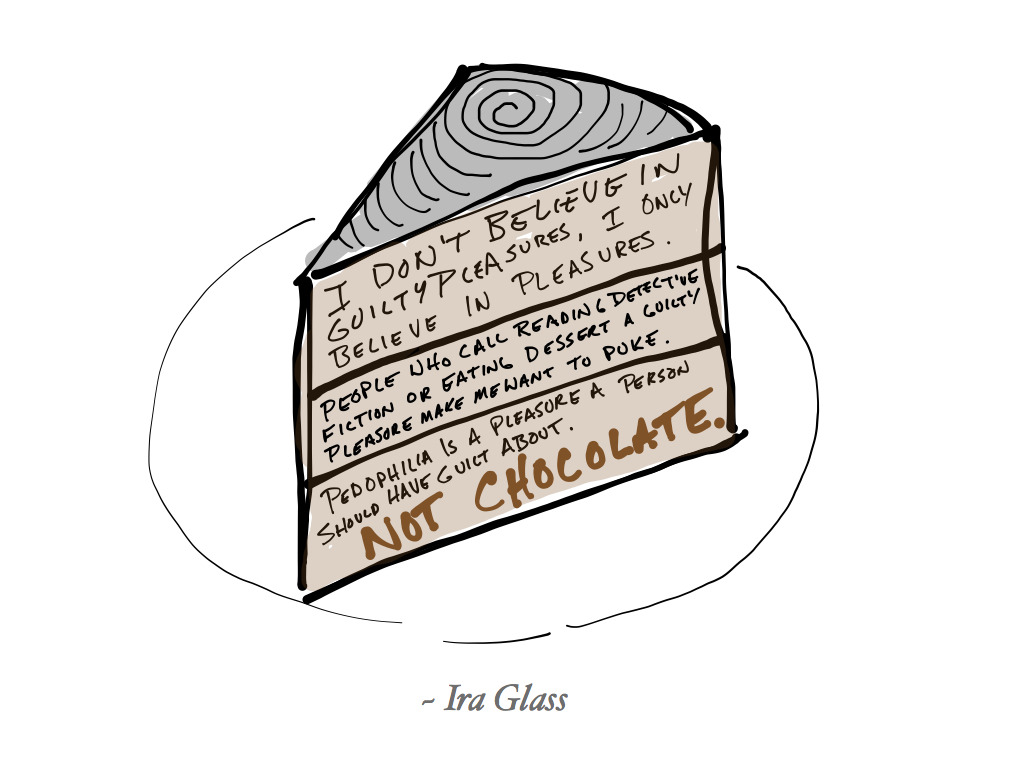
Raindrops on roses and whiskers on kittens is the first line of an evergreen song from the classic, The Sound of Music and my all-time favourite movie. For those who haven’t seen the film, this song takes place when the children are petrified by thunder and lightning and their governess, Maria, sings this song about her favourite things to lighten the mood. The other day, I was humming this song when I thought of this post, but instead of my favourite things, let’s talk about guilty pleasures.
So what is a guilty pleasure? A guilty pleasure is something that one enjoys despite understanding that it is not generally held in high regard, or is seen as unusual or weird. It can also be used to refer to one’s taste for foods that are considered to be advisable to avoid, especially for health reasons. Social norms define what one should be guilty of. One may feel bad when they don’t do house chores, because it is socially appropriate that they be responsible for their house. In social media, the social rule is to be online and participative as much as one can and so because of social norms, there is a feeling of guilt, and we avoid making any mistakes.
Some experts suggest that women and other marginalised groups be careful not to attach negative connotations to pleasure, particularly since they may be associating guilt with pleasure as an outcome of historically having been denied pleasure. Having emotional and intellectual release valves is important for productivity, and balanced living and can help relieve stress during difficult times. Guilty pleasures help provide some important mental breaks, so never feel guilty about them.
Engaging in guilty pleasure brings out our inner child. We engage in mischief and find it thrilling, testing the boundaries of how far we can go without being caught. We feel pleasure and a sense of relief when we allow ourselves to give in to our guilty pleasures. Guilty pleasure is simply the joy of doing something but at the same time feeling a little bad about doing it. This is society’s way of making people feel that their pleasures are not educational, informative, or purposeful.
It is a fact that leisure time should be spent wisely and productively so that the mind can be developed and we gain more knowledge. Our brain needs to rest, and indulging in pleasures that engage with a reward pathway are ways of easing brain stress. Guilty pleasures bring positive emotions, reduce stress, and improve mental health and well-being. Engaging in pleasurable activities is harmless and is considered healthy. One feels good and happy after sitting for at least an hour watching their favourite movie or TV show and the same feeling is got when one travels to a new place or goes to a concert of their favourite musician or artist.
Guilty pleasures don’t have to be grand and expensive. Simple everyday things can be guilty pleasures. Playing an interactive game on your phone before doing house chores can be very rewarding and motivating. You feel a sense of triumph when you allow yourself to have fun.
Enjoying some pleasurable time is good. But too much can cause problems. But if one postpones work by say binge-watching a show, that’s procrastination and that’s a big no-no. But if at the end of the day, you read a book or watch something that need not be educational or productive, that is a guilty pleasure. No one should abuse any guilty pleasure. It should be considered a gift because one can pause what they’re doing and enjoy a piece of chocolate or two before resuming work. It should be used as a tool to relax and reset the brain to function better.
Indulging in guilty pleasures is good only if it is short-term and if you can control your urges. Constantly allowing yourself to give in to these pleasurable urges, especially the negative ones, can be damaging and harmful in the long run. The keys are self-control and balance. Being able to control yourself is important if you don’t want to feel guilty about your pleasures. According to research, those who are self-conscious have greater self-control. This means that if you are very conscious about yourself, what you eat, watch, or do and think about their negative effects on you, you are more likely to guard yourself against over-indulging. Often, it is people who have poor control who feel the guiltiest. This is why you should master and control yourself. Guilty pleasures won’t make you feel so guilty because you are not enslaved by them. Allowing yourself some guilty pleasures can help you recover more quickly and have a healthier disposition.
It is time to drop the shame and indulge in your guilty pleasures. These pleasures are good for your well-being and mental health. You are only productive and inspired when you are happy. Have more self-compassion and be free to enjoy whatever you want as long as you are not hurting anybody. Tell yourself that you deserve this pleasure because you have earned it and don’t allow yourself to feel guilty about it.
The Angel of Grozny: Orphans of a Forgotten War – Åsne Seierstad, translated by Nadia Christensen
In the early hours of New Year’s 1994, Russian troops invaded the Republic of Chechnya, plunging the country into a prolonged and bloody conflict that continues to this day. A foreign correspondent in Moscow at the time, Åsne Seierstad traveled regularly to Chechnya to report on the war, describing its affects on those trying to live their daily lives amidst violence.In the following decade, Seierstad became an internationally renowned reporter and author, traveling to the Balkans, Afghanistan, Iraq, and other war-torn regions. But she never lost sight of this conflict that had initially inspired her career. Over the course of a decade, she watched as Russia ruthlessly suppressed an Islamic rebellion in two bloody wars and as Chechnya evolved into one of the flashpoints in a world now focused on the threat of international terrorism.
In 2006, Seierstad finally returned to Chechnya, traveling in secret and under the constant threat of danger. In a broken and devastated society she lived with orphans, the wounded, the lost. And she lived with the children of Grozny, those who will shape the country’s future. She asks the question: What happens to a child who grows up surrounded by war and accustomed to violence?





 Memories and Such