2022 Week 49 Update

The man who gave us the theory of relativity and one who needs no introduction, Albert Einstein exhorts us to strive not to be a success but to be of value. Everyone’s definition of success varies, but when one’s definition includes being of value, it gives us a sense of purpose and a direction of what we want in life. It sets us up for being that person who will inspire others and showcase what it means to be of value.

I have not walked much this year and so at the end of November, I am still in Uttar Pradesh, having just crossed one of the state’s biggest cities, Kanpur. I am still about a thousand kilometres from my home in Mumbai and slightly more than two thousand kilometres from Bengaluru where my parents now live.

GG’s midterms start tomorrow and she has been pretty stressed this week. This is her last semester and she wants to go out with the best grades possible. Because of her exams, she has not focused on her university applications. She will work on that during her Christmas break which will be as soon as her exams end.

BB is as usual busy with his Final Year Project and is in school every day. He seems to enjoy doing research in the lab and hopefully, after he completes his National Service obligations, he can work on this, either by going to university or working first before entering university.

Last week, I heard that Air India and Vistara are going to be merged, with Singapore Airlines which is one of the partners of Vistara, getting a 25% stake in the newly merged airline. Vistara is owned by the Tata group which also recently acquired India’s national airline, Air India. I have flown Air India only once, about twenty years back and after that trip, I decided I will pay more, but not fly Air India. I recently flew Vistara when I went to India earlier this year. I liked their onboard services, but their customer service leaves a lot to be desired. Hopefully, the new airline will emulate the best qualities of Singapore Airlines which is my favourite airline.

That’s all from me this week. Stay safe during the holidays.

In My Hands Today…

Ocean of Churn: How the Indian Ocean Shaped Human History – Sanjeev Sanyal

Much of human history has played itself out along the rim of the Indian Ocean. In a first-of-its-kind attempt, bestselling author Sanjeev Sanyal tells the history of this significant region, which stretches across East Africa, the Middle East and the Indian subcontinent to South East Asia and Australia. He narrates a fascinating tale about the earliest human migrations out of Africa and the great cities of Angkor and Vijayanagar; medieval Arab empires and Chinese ‘treasure fleets’; the rivalries of European colonial powers and a new dawn.

Sanjeev explores remote archaeological sites, ancient inscriptions, maritime trading networks and half-forgotten oral histories, to make exciting revelations. In his inimitable style, he draws upon existing and new evidence to challenge well-established claims about famous historical characters and the flow of history. Adventurers, merchants, explorers, monks, swashbuckling pirates, revolutionaries and warrior princesses populate this colourful and multifaceted narrative.

The Ocean of Churn takes the reader on an amazing journey through medieval geopolitics and eyewitness accounts of long-lost cities to the latest genetic discoveries about human origins, bringing alive a region that has defined civilization from the very beginning.

International Human Rights Day

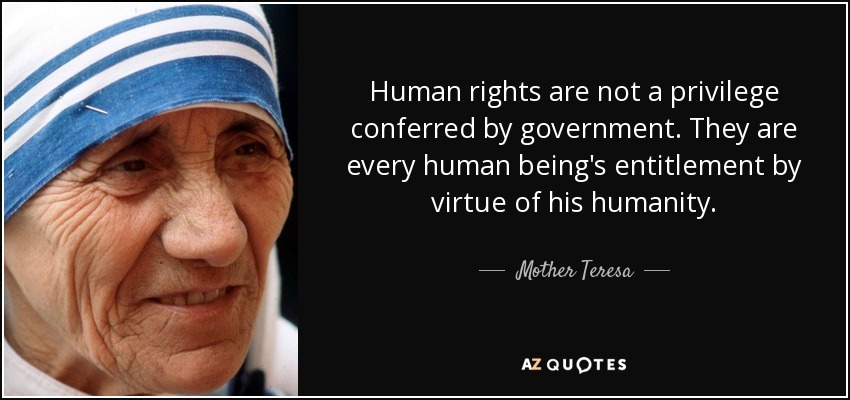
Human rights are basic rights that belong to all of us simply because we are human. They embody key values in our society and are an important means of protection for us all, especially those who may face abuse, neglect and isolation. Most importantly, these rights give us power and enable us to speak up and challenge the poor treatment from a public authority.

The Universal Declaration of Human Rights or UDHR is a milestone document in the history of human rights. Drafted by representatives with different legal and cultural backgrounds from all regions of the world, it set out, for the first time, the fundamental human rights to be universally protected. The power of the Universal Declaration is the power of ideas to change the world. It inspires us to continue working to ensure that all people can gain freedom, equality and dignity. The Declaration was adopted by the UN General Assembly in Paris on 10 December 1948 during its 183rd plenary meeting. The UDHR holds the world record as the most translated document except for the Bible.

The 75th anniversary of the Universal Declaration of Human Rights will be celebrated on 10 December 2023. During the 75th anniversary celebrations, the aim is to educate and increase global knowledge and awareness of the UDHR and its enduring relevance for our times and the future; promote attitude change by countering the increasing scepticism of, and rollbacks against human rights by establishing that human rights are never relative and must always be upheld as what unites all of humanity. It also empowers and mobilises by offering concrete knowledge and tools to help people better fight for their rights.

Human Rights Day is observed every year on 10 December and commemorates the day in 1948 the United Nations General Assembly adopted the Universal Declaration of Human Rights. The date was chosen to honour the United Nations General Assembly’s adoption and proclamation, on 10 December 1948, of the Universal Declaration of Human Rights or UDHR, the first global enunciation of human rights and one of the first major achievements of the new United Nations. The formal establishment of Human Rights Day occurred on 4 December 1950. It is also on this day that the five-yearly United Nations Prize in the Field of Human Rights and Nobel Peace Prizes are awarded. When adopted, the declaration was proclaimed as a common standard of achievement for all peoples and all nations, towards which individuals and societies should strive by progressive measures, national and international, to secure their universal and effective recognition and observance.

In the decades since the ratification of the UDHR, human rights have, in real terms, become more recognised and more guaranteed across the globe. The Universal Declaration of Human Rights sets out a broad range of fundamental rights and freedoms to which all of us are entitled. It guarantees the rights of every individual everywhere, without distinction based on nationality, place of residence, gender, national or ethnic origin, religion, language, or any other status.

Although the Declaration its broad range of political, civil, economic, social and cultural rights is not a binding document, it inspired more than 60 human rights instruments which together constitute an international standard of human rights. Today the general consent of all United Nations Member States on the basic Human Rights laid down in the Declaration makes it even stronger and emphasises the relevance of Human Rights in daily lives.

In South Africa, Human Rights Day is celebrated on 21 March, in remembrance of the Sharpeville massacre which took place on 21 March 1960. This massacre occurred as a result of protests against the Apartheid regime in South Africa. It is celebrated on 11 December in Kiribati.

Each year, Human Rights Day has a different theme. In 2021, the focus was on young people and how one is never too young to make a difference in the world. In 2022, Human Rights Day is focusing on how rights are the beginning of peace within societies, and a way to create a fairer society for future generations.

If you want to commemorate Human Rights Day, you can speak up for what you care about, volunteer or donate to an organisation or cause that you believe in, make sure you choose fair trade or ethically made products and gifts and listen to those who have stories to tell which you must share with others.

In My Hands Today…

Jasmine and Stars: Reading More Than Lolita in Tehran – Fatemeh Keshavarz

In a direct, frank, and intimate exploration of Iranian literature and society, scholar, teacher, and poet Fatemeh Keshavarz challenges popular perceptions of Iran as a society bereft of vitality and joy. Her fresh perspective on present-day Iran provides a rare insight into this rich culture alive with artistic expression but virtually unknown to most Americans.

Keshavarz introduces readers to two modern Iranian women writers whose strong and articulate voices belie the stereotypical perception of Iranian women as voiceless victims in a country of villains. She follows with a lively critique of the recent best-seller Reading Lolita in Tehran: A Memoir in Books, which epitomizes what Keshavarz calls the New Orientalist narrative, a view marred by stereotype and prejudice more often tied to current geopolitical conflicts than to an understanding of Iran.

Blending in firsthand glimpses of her own life–from childhood memories in 1960s Shiraz to her present life as a professor in America–Keshavarz paints a portrait of Iran depicting both cultural depth and intellectual complexity. With a scholar’s expertise and a poet’s hand, she helps amplify the powerful voices of contemporary Iranians and leads readers toward a deeper understanding of the country’s past and present.

In a direct, frank, and intimate exploration of Iranian literature and society, scholar, teacher, and poet Fatemeh Keshavarz challenges popular perceptions of Iran as a society bereft of vitality and joy. Her fresh perspective on present day Iran provides a rare insight into this rich culture alive with artistic expression but virtually unknown to most Americans. She warns against the rise of what she calls the New Orientalist narrative, which thrives on stereotype and prejudice and is often tied to current geopolitical conflict rather than an understanding of Iran. Keshavarz offers a lively critique of the best-seller Reading Lolita in Tehran, which she says epitomizes this New Orientalist attitude. Blending in firsthand glimpses of her own life, Keshavarz paints a portrait of Iran depicting both cultural depth and intellectual complexity.