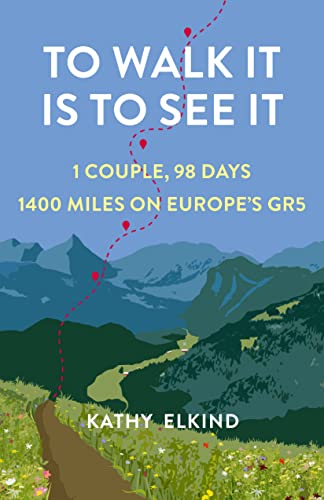
To Walk It Is to See It: 1 Couple, 98 Days, 1400 Miles on Europe’s GR5 – Kathy Elkind
In 2018, Kathy Elkind and her husband decided to take a grown-up “gap year” in Europe and walk the 1,400-mile Grande Randonnée Cinq (GR5) across The Netherlands, Belgium, Luxembourg, and France.
At fifty-seven, Kathy has chosen comfort over hardship: Unlike the Appalachian Trail and the Pacific Coast Trail, the GR5 winds from village to village instead of campsite to campsite. She and Jim get to indulge in warm beds and delicious regional food every night and croissants in the mornings.
The GR5 is not all comfort. Walking day after day for ninety-eight days bring sickness, accommodation struggles, language barriers, and storm-shrouded mountains in the Alps.
Meanwhile, Kathy finds herself reflecting on difficult topics—primarily, her struggles with dyslexia, overeating, and shame. But she also finds that the walking becomes a moving meditation and the beauty of the landscape heals; she begins to discover her own wise strength; and as the days unfold, she comes to the gratifying realization that a long marriage is like a long trail: there are ups and downs and it takes hard work to keep going, but the beauty along the way is staggering.
The aroma of brewing coffee provided a fleeting moment of solace as Alice moved through the kitchen. She found herself mechanically going through the motions, preparing breakfast for her family. The weight in her chest mirrored the heaviness in the atmosphere. Today marked the beginning of a significant chapter in Daniel’s life, and Alice couldn’t shake the mix of emotions coursing through her.
As the family gathered around the breakfast table, the usual lively chatter felt subdued. Daniel, normally brimming with energy, seemed quieter today. His younger sister, Chloe, glanced at him with wide, worried eyes. Simon, Alice’s husband, attempted to lighten the mood with small talk, but the unspoken tension hung in the air.
After the simple family breakfast, the car ride to the Pasir Ris Bus Interchange was marked by intermittent silence. Daniel stared out the window, his thoughts known only to him. Alice couldn’t help but steal glances at her son, marvelling at the young man he had become. Memories of his childhood flashed through her mind, and she couldn’t believe how quickly time had passed.
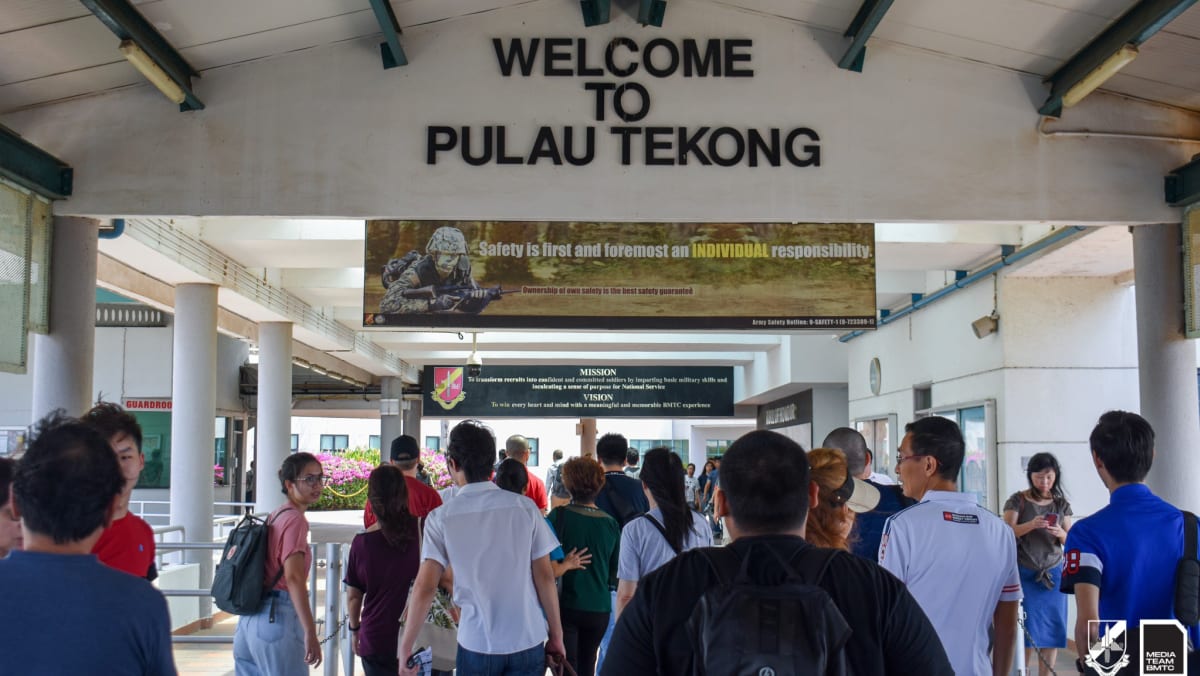
Upon reaching the bus interchange, the gravity of the moment became tangible. Alice’s heart felt as if it were in her throat as they navigated through the procedural steps of enlistment. Soon it was time to board the ferry to reach Pulau Tekong. After the oath-taking ceremony, the family had one last meal together and then it was time.
As they stood in the waiting area, families embracing their loved ones, Alice took a deep breath, willing herself to be strong for Daniel. She held back tears, knowing that this was a day he had been anticipating, a day that marked his entry into adulthood and service to his nation.
Finally, the time arrived for the recruits to bid farewell to their families. Alice hugged Daniel tightly, fighting back tears. “Make us proud, Daniel,” she whispered into his ear. His response was a determined nod, a silent promise that he took with him as he joined the ranks of his fellow recruits.
The initial two weeks passed like a blur for Alice. The silence at home was deafening, and the absence of Daniel’s laughter was a constant reminder of his newfound commitment. Phone calls and video calls between Daniel and his family brought comfort to both of them. He spoke about the challenges of Basic Military Training, BMT, the camaraderie with his platoon, and the physical demands that were pushing him to his limits.
Soon, it was time for Daniel’s Passing Out Parade or POP. Daniel had already told his family about the route march and where they would stop for breaks. Alice, Simon and Chloe made their way to where they would hope to see Daniel. While waiting with other parents and families, Alice could not help but share in their son’s journeys with the other mothers.
As Daniel’s platoon approached, Alice’s heart swelled with emotion. She spotted her son, his face adorned with a mix of exhaustion and pride. Their eyes met, and in that moment, Alice saw not just a soldier but a resilient young man who had embraced the challenges of National Service and emerged stronger.
The cheers of the families, the pride in their eyes, and the shared joy among the recruits created an atmosphere of celebration. The route march symbolized the completion of a significant milestone, a collective achievement that resonated beyond the parade ground.
As Daniel passed by, he gave his family a quick salute, a gesture that spoke volumes. Alice, Simon, and Chloe cheered loudly, their voices blending with the chorus of families expressing their pride. Tears welled in Alice’s eyes, but this time, they were tears of joy and triumph.
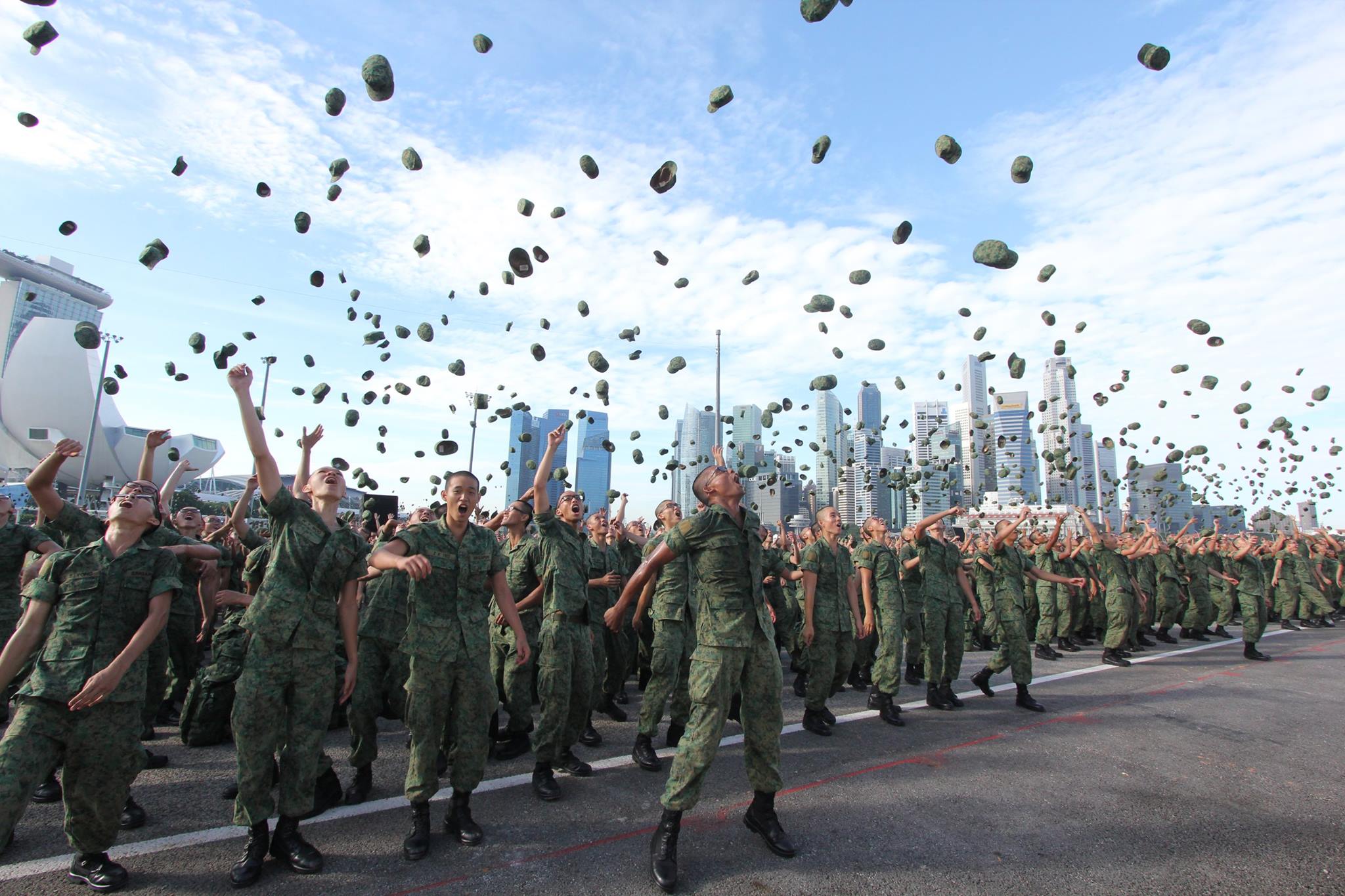
Alice, along with Simon and Chloe, attended the Basic Military Training Passing Out Parade at the Floating Platform with a mixture of anticipation and pride. The parade ground was a sea of crisp uniforms and polished boots. The rhythmic sound of marching feet echoed in the air, each step symbolizing the resilience and discipline instilled during the training.
As Daniel’s platoon marched onto the parade ground, Alice’s heart swelled with pride. She spotted him among the young soldiers, standing tall and confident. The transformation from the day he enlisted was evident in his bearing, a testament to the rigours of BMT.
The Passing Out Parade unfolded with precision and pride. The recruits showcased their newly acquired skills in a display of drills, marches, and physical exercises. Alice couldn’t help but marvel at the cohesion of Daniel’s platoon; their movements synchronized as if they were one collective force.
The Passing Out Parade route march marked the end of Daniel’s Basic Military Training, a journey that had begun with uncertainty and separation. As the platoons dispersed, families gathered around their loved ones, and Alice embraced Daniel with a newfound sense of appreciation. He was not just her son; he was now a soldier, a defender of their nation, and Alice couldn’t have been prouder.
Together, they walked away from the parade ground, the weight in Alice’s heart replaced with an overwhelming sense of pride and gratitude. The National Service experience had transformed Daniel, and as a family, they had weathered the challenges and celebrated the triumphs. The journey continued, but now, they walked it with the knowledge that Daniel had emerged from his Basic Military Training stronger, more disciplined, and ready for the adventures that lay ahead.
The Coming Wave: Technology, Power, and the Twenty-first Century’s Greatest Dilemma – Mustafa Suleyman and Primary Contributor Michael Bhaskar
We are approaching a critical threshold in the history of our species. Everything is about to change.
Soon you will live surrounded by AIs. They will organise your life, operate your business, and run core government services. You will live in a world of DNA printers and quantum computers, engineered pathogens and autonomous weapons, robot assistants and abundant energy.
None of us are prepared.
As co-founder of the pioneering AI company DeepMind, part of Google, Mustafa Suleyman has been at the centre of this revolution. The coming decade, he argues, will be defined by this wave of powerful, fast-proliferating new technologies.
In The Coming Wave , Suleyman shows how these forces will create immense prosperity but also threaten the nation-state, the foundation of global order. As our fragile governments sleepwalk into disaster, we face an existential unprecedented harms on one side, the threat of overbearing surveillance on the other.
Can we forge a narrow path between catastrophe and dystopia?
This groundbreaking book from the ultimate AI insider establishes “the containment problem”—the task of maintaining control over powerful technologies—as the essential challenge of our age.
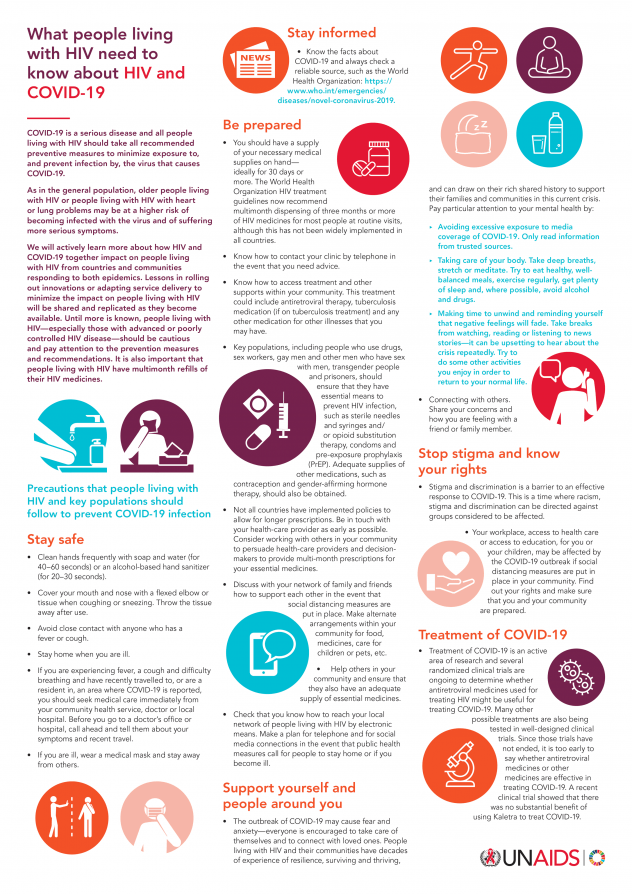
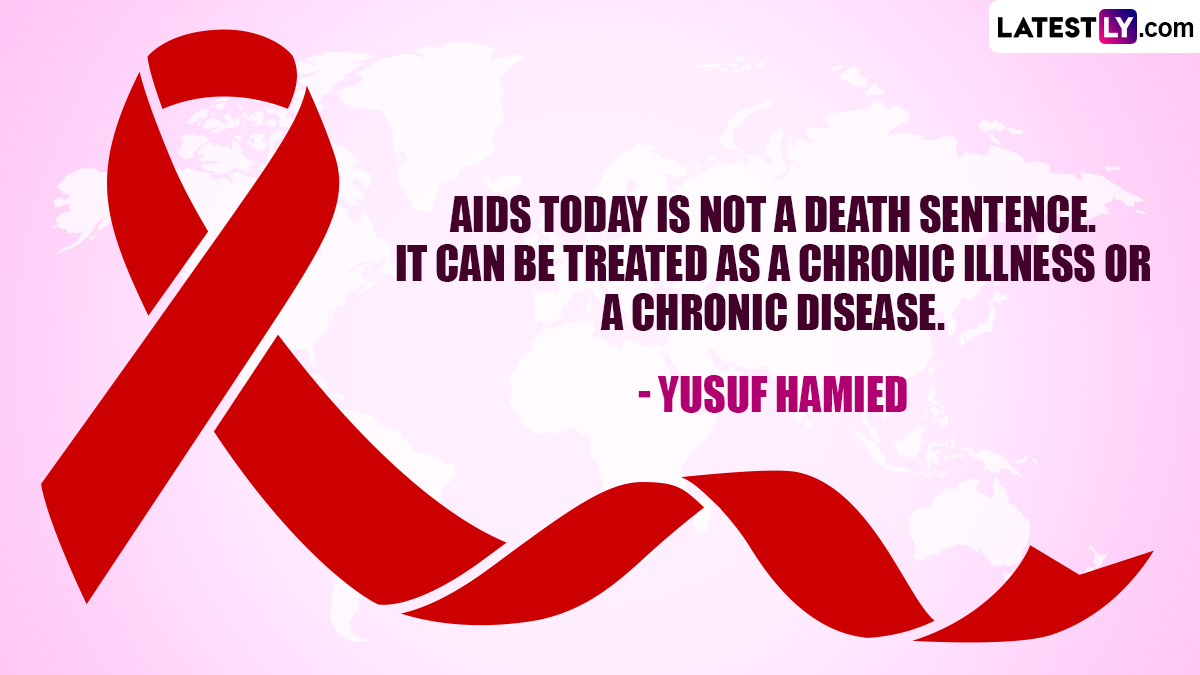
Observed on December 1st each year, World AIDS Day is a global call to action, an opportunity to remember those we’ve lost and a reminder of the ongoing fight against HIV/AIDS.
World AIDS Day was first conceived in August 1987 by James W. Bunn and Thomas Netter, two public information officers for the Global Programme on AIDS at the World Health Organization, or WHO, in Geneva, Switzerland. Their goal was to create a day dedicated to raising awareness about HIV/AIDS and honouring those affected by the virus. December 1st was chosen and the inaugural World AIDS Day was observed later that year.
HIV, or the Human Immunodeficiency Virus, and AIDS, or Acquired Immunodeficiency Syndrome, have had a profound impact on global health and society. HIV is a virus that attacks the immune system, weakening the body’s ability to fight off infections and diseases. It is primarily transmitted through unprotected sexual intercourse, the sharing of needles among intravenous drug users, and from mother to child during childbirth or breastfeeding. The virus can also be transmitted through blood transfusions and organ transplants if the blood or organs are not screened for HIV.
AIDS is the final stage of HIV infection, characterized by a severely compromised immune system. At this stage, the body becomes vulnerable to opportunistic infections and cancers that a healthy immune system would typically fend off. Without proper medical care and treatment, AIDS can be life-threatening.
Since the beginning of the HIV/AIDS pandemic, it has claimed the lives of millions of people worldwide. It has also had far-reaching social and economic consequences, particularly in sub-Saharan Africa, which remains the most affected region. HIV/AIDS has challenged healthcare systems, strained resources, and tested our collective ability to respond to a global health crisis.
The World AIDS Day theme for 2023 is “Ending the HIV/AIDS Pandemic: Equitable Access to Care and Prevention.” This theme encapsulates the urgent need to tackle the HIV/AIDS pandemic on multiple fronts. The theme underscores the shared commitment to bringing an end to the HIV/AIDS pandemic once and for all. It acknowledges the progress made over the years but emphasizes the work that remains to be done.
The term “equitable access” is central to the theme. It highlights the importance of ensuring that all individuals, regardless of their background, geographical location, or economic status, have equal access to essential HIV/AIDS care and prevention measures. The theme also recognises that tackling HIV/AIDS requires a dual approach. Care involves providing support, treatment, and medical services to those living with HIV/AIDS. Prevention focuses on education, awareness, and measures to stop the further spread of the virus.
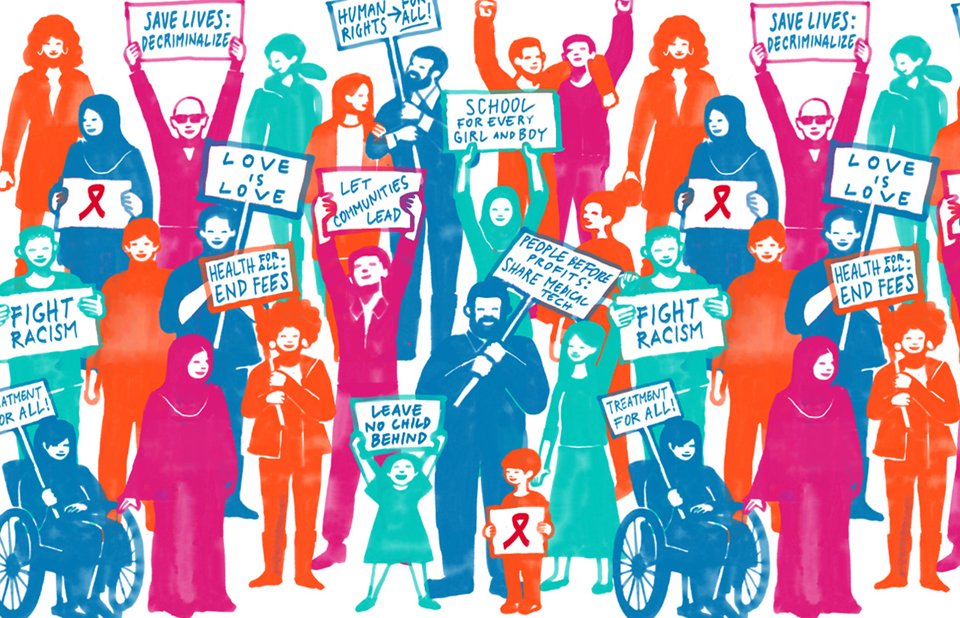
The theme aligns with the broader global health equity movement, emphasizing the need to bridge healthcare disparities and ensure that everyone has the same opportunities for a healthy life. It underscores the importance of eliminating stigma and discrimination associated with HIV/AIDS. Equitable access means creating an environment where individuals feel safe and supported to seek testing, treatment, and care. Addressing HIV/AIDS requires the active involvement of communities, governments, healthcare systems, and international organizations. The theme encourages collaboration and a shared responsibility in the fight against the virus. Equitable access extends to education and awareness programs that empower individuals with knowledge about HIV/AIDS prevention, transmission, and treatment. It’s a reminder that information is a powerful tool in the fight against the virus.
As we reflect on the theme of World AIDS Day 2023, it’s crucial to acknowledge that the battle against HIV/AIDS is far from over. But there is hope, and there are concrete steps we can take. We should support policies and initiatives that promote equitable access to HIV/AIDS care, treatment, and prevention measures and advocate for increased funding for research and healthcare infrastructure.
As we commemorate World AIDS Day 2023 and reflect on its theme, we are reminded that the fight against HIV/AIDS is a shared responsibility. It is a testament to our capacity to come together as a global community, transcending borders and differences in pursuit of a common goal – ending the HIV/AIDS pandemic and ensuring equitable access to care and prevention.
This World AIDS Day, let us honour the memory of those we have lost, support those living with HIV/AIDS, and recommit ourselves to the collective effort to create a world where no one is left behind in the fight against this devastating virus. In our unity and resolve, we find hope and the potential for a brighter, healthier future for all.
I am beyond exhausted, so today’s update will be a very short one. Yesterday’s event was a success, but the days leading up to it were hard work. But I am glad it’s done and dusted and life can go back to normal.
Today’s quote is attributed to the Buddha. This quote encapsulates key principles of mindfulness, the law of attraction, and the power of positive thinking. The quote underscores the influence of thoughts on one’s character and actions. It suggests that the nature of our thoughts plays a significant role in shaping who we are and what we eventually manifest in our lives. It also suggests a connection between emotions and the energy we attract. Positive emotions are thought to attract positive experiences, relationships, and opportunities, while negative emotions may draw in corresponding challenges. By envisioning a desired outcome or scenario, individuals are believed to contribute to the manifestation of those imaginings in their lives. The quote reflects the idea that our mental and emotional states play a crucial role in shaping our reality, aligning with principles found in various spiritual and self-help philosophies.
BB is also home this weekend and next week, he has block leave, which means he will be home for a block of time. I am excited about this so I can get to spend time with him. And it’s perfect because my big event is also over and I will have the time to spend with him.
That all this week, stay positive and keep smiling!



 Memories and Such