In the last few months, the excitement over the artificial intelligence software, ChatGPT has been unprecedented. So what is this software that has made everyone, irrespective of the work they do so excited?
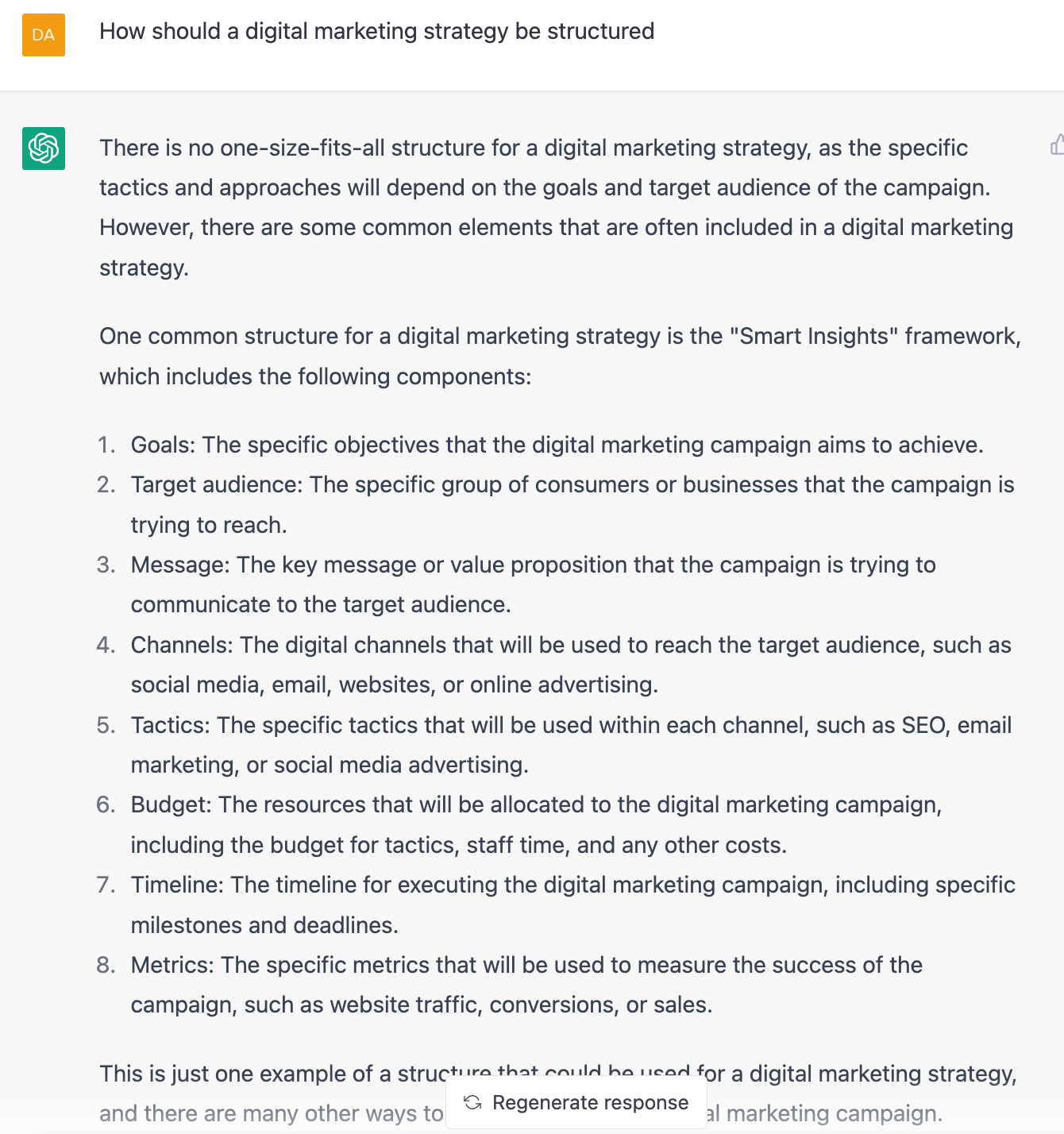
According to ChatGPT itself, ChatGPT or Generative Pre-trained Transformer, is a language model developed by OpenAI, trained on a diverse range of internet text to generate human-like responses to natural language inputs. It uses state-of-the-art deep learning techniques, specifically transformer architecture, to generate text that is coherent and contextually appropriate. ChatGPT can be used for various tasks such as question answering, text completion, and language translation, among others. However, it’s important to note that while ChatGPT generates plausible text, it is not perfect and may provide incorrect or biased responses at times.
It took Netflix 3.5 years to reach 1 million users, while Facebook took 10 months to get to the same number and Spotify took 5 months and Instagram reached 1 million users in 2.5 months. Beating all these numbers, it took ChatGPT only 5 days to reach 1 million registered users.
A chatbot, like one of those text-messaging software programs that organisations are increasingly foisting on us, makes the average chatbot look like what humans would have looked as a Netherlander. The output is apparently so good that people assessing its written output cannot tell it apart from a human being’s work.
The product of a research lab known as OpenAI, one of the leading AI research organisations, ChatGPT is a language model first released in 2019 and based on the transformer architecture, which has revolutionised natural language processing. ChatGPT has been trained on a large corpus of text data and can generate human-like responses to a wide range of prompts. It has been used in various applications, including chatbots, language translation, and content creation, and continues to advance the field of AI language processing. The generative AI field is poised for a breakthrough in 2023
ChatGPT and other AI language models will likely have several impacts on the future, including improved efficiency and accuracy in various industries such as customer service, healthcare, and finance; advancements in natural language processing and understanding; increased automation of tasks that previously required human intelligence, the development of new applications and technologies, and the ethical considerations and debates surrounding the use of AI, particularly in decision-making processes that impact people’s lives. AI language models like ChatGPT will continue to shape and transform the way we live, work and interact with technology.
In the next decade, AI is expected to significantly impact the way we live and work in several ways. Repetitive tasks will get automated, freeing up time for more creative and strategic work. There will be improved efficiency and accuracy in various industries, including healthcare, finance, and customer service. Advancements in fields such as robotics and autonomous systems will lead to increased productivity and new job opportunities. Personalised experiences and services, including personalised medicine and personalised education, will soon be available to anyone who needs it. It will also speed up the development of new technologies, such as smart cities and the Internet of Things or IoT, improving our daily lives and work. However, these changes will also bring about new ethical considerations and challenges, such as job displacement and privacy concerns. As AI continues to evolve, it will be important to balance the benefits with responsible and ethical considerations.
So what does this really mean for all of us? A lot of jobs will become obselete, especially as AI starts to become more and more nuanced and intelligent which will mimic a reasonably intelligent person.
In the second half of January, Microsoft announced a new multiyear, multibillion-dollar investment with OpenAI, the lab that created ChatGPT. Though the specific amount was not known, Microsoft is said to be investing as much as USD 10 billion in the research lab. The deal marks the third phase of the partnership between the two companies, following Microsoft’s previous investments in 2019 and 2021. Microsoft said the renewed partnership will accelerate breakthroughs in AI and help both companies commercialize advanced technologies in the future. It is said that ChatGPT will soon be incorporated into Microsoft’s web browser Bing and MS Office applications. The computation costs of the application are estimated to be around a mind-boggling USD 100,000 a day or about USD 3 million a month or USD 36 million a year. These costs are likely to fall, however, and they would be much easier to bear with thousands of paying customers.
The best way to use ChatGPT depends on the specific use case and the desired outcome. Some common ways to use ChatGPT include chatbots where ChatGPT can be integrated into chatbots to provide human-like responses to customer inquiries, in language generation where ChatGPT can generate human-like text, such as articles, stories, or poetry or even to answer questions with ChatGPT being used to answer questions based on its training data. ChatGPT can also be used for data analysis where it can assist with data analysis by automatically generating summaries or insights from large datasets. And finally ChatGPT can be used to translate text from one language to another.
To get the best out of this chat with ChatGPT, here are some tips from ChatGPT itself. By following these tips, you can improve the accuracy and quality of your interactions with ChatGPT and get the most out of this chat.
- Be clear and specific: Provide clear and specific prompts to help ChatGPT understand what you are asking.
- Use proper grammar and spelling: Use proper grammar and spelling to help ChatGPT understand and respond effectively.
- Be concise: Keep your prompts short and to the point to help ChatGPT generate concise and focused responses.
- Provide context: Provide enough context for ChatGPT to generate relevant and accurate responses.
- Be open-minded: Remember that ChatGPT is an AI language model, not a human, and its responses may not always align with your expectations.
At the end of the day, even if the general idea of AI feels like something out of a science fiction novel or movie, it cannot do everything that a human mind can do. Computers can do specific tasks exceptionally well, but no AI can write a story, play chess, fix a network outage, chat with customers, give suppliers a hard time and drink colleagues under the table after work, sometimes all at the same time.
To give some idea on what ChatGPT can do, I asked it this question and here’s what it told me.
Can you write a short paragraph on the impact of the Ukraine war by Russia on the world?
The Ukraine war, which began in 2014 when Russia annexed Crimea, has had significant impacts on the world. It has resulted in increased tensions between Russia and the international community, particularly with Western countries. The conflict has also led to economic sanctions against Russia, which have impacted its economy and global trade. The war has caused a humanitarian crisis, with thousands of people losing their lives and millions displaced. It has also destabilized the region and impacted regional security. The Ukraine war has also heightened concerns about the use of military force to resolve disputes and has reignited debates about the role of international law and the UN in resolving conflicts. Overall, the impact of the Ukraine war on the world has been significant and far-reaching, and its resolution remains a key challenge for international peace and security.
So have you started playing with ChatGPT? I would love to hear from you about your thoughts.