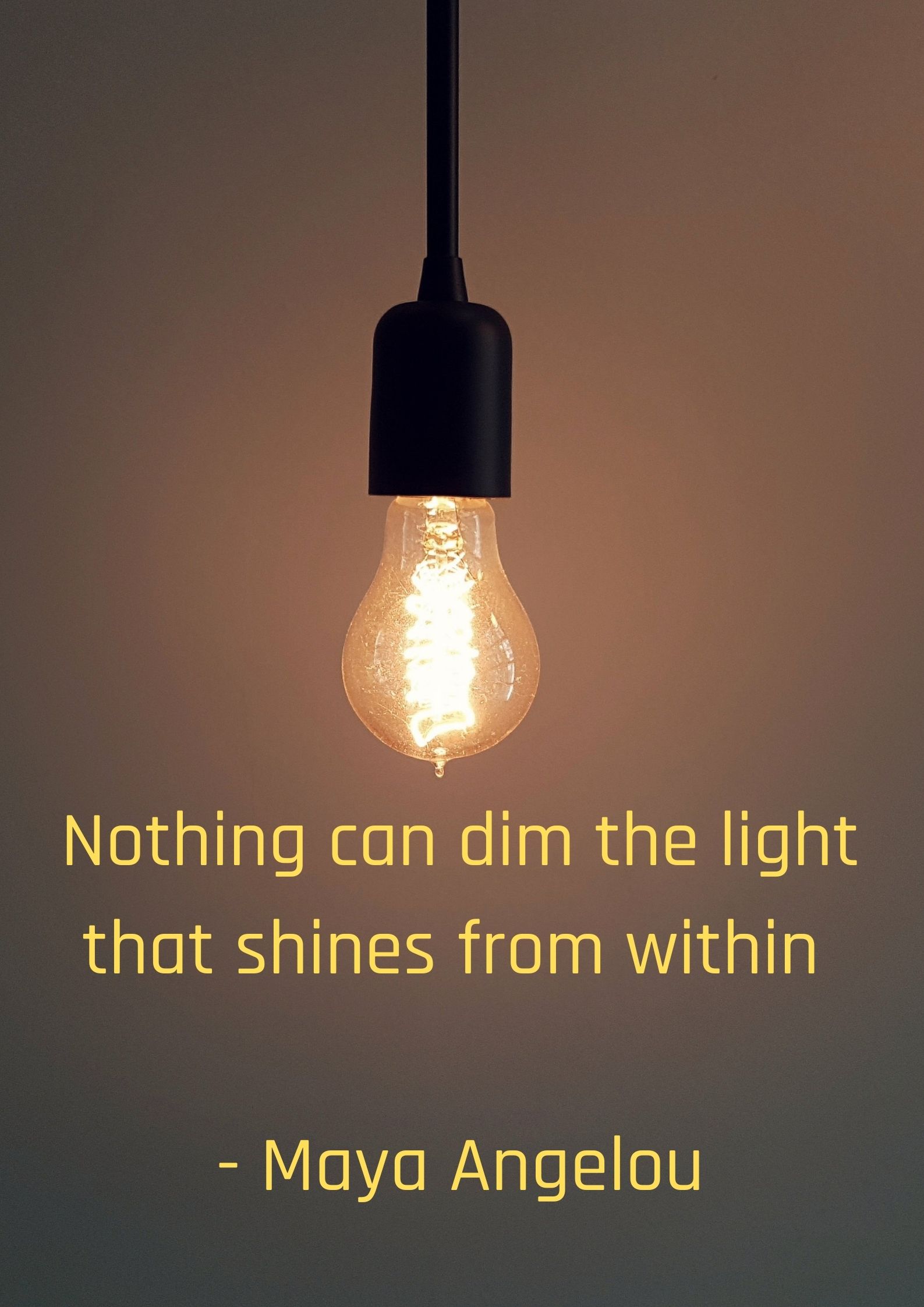
Today’s quote is a quote from the celebrated author and female icon, Maya Angelou. It is a simple one which tells us that nothing can ever dim that light that shines within us. So keep that light burning bright and don’t let it dim, so that shines and lightens the path in front of you and is a beacon for others.
Singapore’s woes don’t seem to be ending anytime soon. We are now firmly in the midst of the second wave with cases hitting more than 1500 per day, with the signs pointing to it reaching more than $2000 positive cases per day before we see any sign of decline. The numbers today are higher than the peak last year. And all of us are tired, but we must soldier on.
BB got his results this week and he did not do as well as we thought he would do. Everyone was upset, though I think the most shocked was BB himself, who probably thought he could coast along. This setback seems to have hit him quite hard. Since the day the results were declared, he has tried to make small changes to himself. It’s still early days now, but I am hoping to see a better man emerge from this adversity.
GG has been busy preparing for the first of her professional certification and with lessons in the morning and homework and studying going on in the afternoon, we barely get to see her outside of mealtimes. I am hoping she gets the grades she is aiming so all her efforts are for naught!
That’s all from me this week, but with how things are here, we are going to be home until and unless it is necessary to get out. Stay safe people!
This tells of the journey of a boy from a remote village, that went from riding a bullock cart to owning an airline.
It narrates in gritty detail Captain Gopinath’s incredible journey: quitting the Indian Army in the late 1970s with a princely gratuity of Rs. 6500, going back to his farm land inundated by the river, converting of piece of barren land to set up a farm for ecologically sustainable silkworm rearing, and winning a Rolex award for it.
From there he went on to launch an airline that would make $1.1 billion dollars in less than four years.
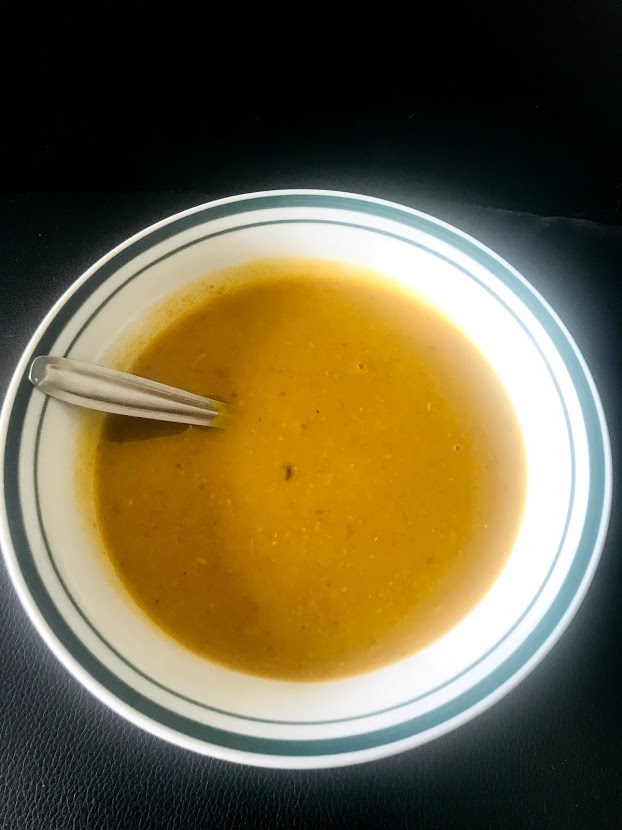
Back in the days when I was a teen and in my early twenties, I used to diet and soups was a huge part of that diet, especially for dinner. And the soup I am sharing today is inspired by those soups that my mother used to make for me. It is quite easy to make and is pretty much a one pot meal which is cooked in the pressure cooker.
The colour of the soup will be dependent on the vegetables used and mine turned a bit greenish because of the green vegetables I used.
Indian Style Vegetable Soup
Ingredients:
2 cups chopped vegetables (you can use any combination you like, this time I used potatoes, sweet potatoes, carrots, cauliflower, broccoli and frozen green peas)
2 medium sized onions, roughly chopped
1 bulb of garlic, peeled
1 inch piece of ginger, peeled
1 small bunch of coriander leaves, roughly chopped
2-3 dried red chillies
1 tsp cumin seeds
1 tsp fennel seeds
4-5 cloves
4-5 cardamom pods
1 inch piece of cinnamon
1 bay leaf
1 tsp coriander seeds
¼ tsp turmeric powder
Pepper powder to taste
Salt to taste
1 tsp oil
Method:
Chop the vegetables and keep aside
Roughly chop the onions and the garlic and ginger and keep aside
Heat oil in the pressure cooker and when the oil warms up, add the cumin seeds first and when the seeds start spluttering, add the fennel seeds and then the cloves, cardamom and cinnamon and give it a good stir.
Next add the garlic and ginger and stir it for a while till the garlic starts to brown.
Then add the turmeric powder, stir a bit and then add the vegetables and the coriander leaves. Stir a bit, add the bay leaf and add just enough water that the vegetables don’t stick to the bottom of the pressure cooker.
Let the pressure build up and cook for about 4-5 whistles. Switch off the flame, let the pressure ease and the vegetables cool.
If you are cooking on the stovetop, then cover and cook until the vegetables are completely cooked and starting to fall apart. Switch off the gas and let it cool.
When the vegetables are cooled enough, transfer to a blender and in batches blend it as fine or as chunky as you like.
When it’s blended to your liking, transfer it back to the pan, add enough water to bring it to the consistency you want and let it come to a nice rolling boil. Season with salt and pepper.
When it has been boiling for about 10 minutes in a low medium flame, switch off the flame and have hot with some croutons.
Notes:
The coriander leaves add a green colour to the soup and can be omitted if this is a vegetable you don’t like.
Tomatoes are also a wonderful addition to the soup. If adding tomatoes, make an x cross at the stem of the tomatoes and put it whole on top of the vegetables while cooking. Once the vegetables are cooked, remove the tomato with a slotted spoon and it can be easily peeled. Then blend it along with the other vegetables.
Upstream: The Quest to Solve Problems Before They Happen – Dan Heath
Most of us spend our days handling a deluge of pressing issues. We’re so accustomed to managing emergencies as they strike that we often don’t stop to think about how we could prevent crises before they happen. Why stop at treating the symptoms when you could develop a cure? How many daily headaches do we tolerate because we’ve forgotten to fix them?
Whether it’s time management, supply chain logistics, or healthcare decisions, all over the world, persistent problems cost time, money, and lives. Upstream explains how to target the source of the problem rather than just reacting to it as it happens and introduces you to the thinkers who are chipping away at everyday frustrations and deep-rooted issues. One travel company saved 25 million customer phone calls every year by adding a simple step to its booking system. An insurance business, determined to help YMCAs across the country lower their number of accidental drownings to zero, has saved an untold number of lives. The LAPD track down more accurate addresses for suspects by buying access to the delivery data from local pizza shops. The CDC realized they could anticipate flu outbreaks by tracking thermometer sales in local pharmacies.
Drawing on hundreds of interviews, as well as his own innovative behavior research, New York Times bestselling author Dan Heath delivers practical solutions for preventing problems rather than simply reacting to them—revolutionizing how we approach professional and personal goals in our daily lives.
According to the World Federation of the Deaf, there are approximately 72 million deaf people worldwide. More than 80% of them live in developing countries and collectively use more than 300 different sign languages. Each country generally has its own native sign language, and some have more than one. Some sign languages have obtained some form of legal recognition. Wherever communities of deaf people exist, sign languages have developed as useful means of communication, and they form the core of local deaf cultures. Although signing is used primarily by the deaf and hard of hearing, it is also used by hearing individuals, such as those unable to physically speak, those who have trouble with spoken language due to a disability or condition, augmentative and alternative communication, or those with deaf family members, such as children of deaf adults.
Sign languages, also known as signed languages are languages that use the visual-manual modality to convey meaning. Sign languages are expressed through manual articulations in combination with non-manual elements. Sign languages are full-fledged natural languages with their own grammar and lexicon. Sign languages are not universal and they are not mutually intelligible with each other, although there are also striking similarities among sign languages. There is also an international sign language, which is used by deaf people in international meetings and informally when travelling and socializing. It is considered a pidgin form of sign language that is not as complex as natural sign languages and has a limited lexicon.
Linguists consider both spoken and signed communication to be types of natural language, meaning that both emerged through an abstract, protracted aging process and evolved over time without meticulous planning. Sign language should not be confused with body language, a type of nonverbal communication. Linguists distinguish natural sign languages from other systems that are precursors to them or obtained from them, such as invented manual codes for spoken languages, home sign, baby sign, and signs learned by non-human primates.
The Convention on the Rights of Persons with Disabilities recognises and promotes the use of sign languages and makes clear that sign languages are equal in status to spoken languages and obligates states parties to facilitate the learning of sign language and promote the linguistic identity of the deaf community.
The proposal for the International Sign Day came from the World Federation of the Deaf or WFD, a federation of 135 national associations of deaf people, representing approximately 70 million deaf people’s human rights worldwide. So the International Day of Sign Languages or IDSL is celebrated annually across the world on 23 September every year along with International Week of the Deaf to raise awareness of the importance of sign language in the full realisation of the human rights of those who are deaf. September 23 was chosen because it was the day the World Federation of the Deaf was established in 1951 whose main goal is the preservation of sign languages and deaf culture as pre-requisites to the realisation of the human rights of deaf people.
The resolution establishing the day acknowledges that early access to sign language and services in sign language, including quality education available in sign language, is vital to the growth and development of the deaf individual and critical to the achievement of the internationally agreed development goals. It recognizes the importance of preserving sign languages as part of linguistic and cultural diversity. It also emphasizes the principle of “nothing about us without us” in terms of working with deaf communities.
The International Day of Sign Languages was first celebrated in 2018 as part of the International Week of the Deaf while the International Week of the Deaf was first celebrated in September 1958 and has since evolved into a global movement of deaf unity and concerted advocacy to raise awareness of the issues deaf people face in their everyday lives. The day plays an important role in preserving the rights of the deaf community and seeks to maintain the status of sign languages as playing an intrinsic role in the world’s linguistic and cultural diversity, emphasising the importance of good education in sign language, as it is vital to the growth and development of deaf individuals.
The Theme for the International Day of Sign Languages 2021 is We Sign for Human Rights. The other daily themes for the International Week of the Deaf People are Cherishing Deaf History on 20 September, Sustainable Deaf Leadership on 21 September, Sign languages for All Deaf Learners on 22 September, Intersectional Deaf Communities on 24 September, Deaf Culture and Arts on 25 September and Human Rights in Times of Crisis on 26 September.
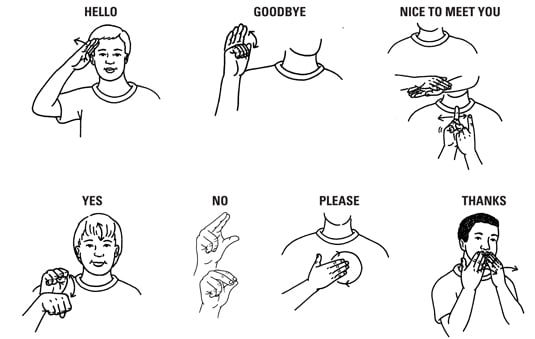
I’ve been interested in learning the sign language and maybe this day will spur me to learn it. There are many sign languages across the world and I think the American Sign Language or ASL is probably the most commonly used in the world. Singapore uses the Singapore Sign Language or SgSL which was influenced by the Shanghainese Sign Language, American Sign Language, Signing Exact English and locally developed signs. India, on the other hand uses the Indian Sign Language or ISL, said to be influenced by the American Sign Language.





 Memories and Such