
Leonardo Da Vinci once said, water is the driving force of nature which is so true. Without water, humanity would probably not exist and all our searching for new planets to inhabit all hinges on the possibility of finding water in the new planet.
Water means different things to different people. Water important to our home and family life, our livelihood, our cultural practices, wellbeing and local environment. In households, schools and workplaces, water can mean health, hygiene, dignity and productivity. In cultural, religious and spiritual places, water can mean a connection with creation, community and oneself. In natural spaces, water can mean peace, harmony and preservation.

Today, water is under extreme threat from a growing population, increasing demands of agriculture and industry, and the worsening impacts of climate change. The World Water Day celebrates water and raises awareness of the 2.2 billion people living without access to safe water. It is a means of focusing attention on the importance of freshwater and advocating for the sustainable management of freshwater resources. The day is about taking action to tackle the global water crisis and achieving Sustainable Development Goal 6: water and sanitation for all by 2030. The first World Water Day was celebrated in 1993 and is an annual United Nations Observance focusing on the importance of freshwater, coordinated by UN-Water. This Day is an opportunity to learn more about water related issues, be inspired to tell others and take action to make a difference. Water is an essential building block of life. It is more than just essential to quench thirst or protect health; water is vital for creating jobs and supporting economic, social, and human development.
A new World Water Development Report is released each year on or near World Water Day, to provide decision-makers with tools to formulate and implement sustainable water policies. This report is coordinated by UNESCO’s World Water Development Programme (WWAP) on behalf of UN-Water. The annual theme for World Water Day is aligned with the focus of the report.
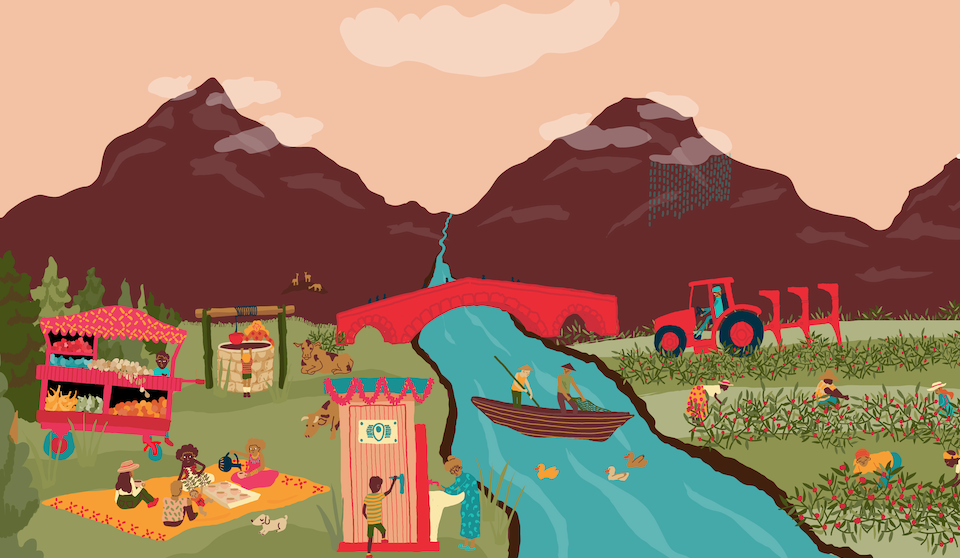
The theme of World Water Day 2021 is valuing water. Beyond the issues of pricing, this topic includes the environmental, social and cultural value people place on water. Economic development and a growing global population means agriculture and industry are getting thirstier and water-intensive energy generation is rising to meet demand. Climate change is making water more erratic and contributing to pollution. As societies balance the demands on water resources, many people’s interests are not being taken into account. How we value water determines how water is managed and shared. The value of water is about much more than its price – water has enormous and complex value for our households, culture, health, education, economics and the integrity of our natural environment. If we overlook any of these values, we risk mismanaging this finite, irreplaceable resource.
Under the theme of valuing water, there is a digital campaign this year about generating a global, public conversation on social media about how people value water for all its uses. The aim is to create a more comprehensive understanding of how water is valued by different people in different contexts so we can safeguard this precious resource for everyone. Taking place on social media, from now until the end of December, a digital campaign aims to generate conversations – to gather opinions and comments from people around the world about water and what it means to them. The aim is to understand how people value water – whether it is economically, socially, culturally or in other ways – how it plays a role in their lives.
The Sustainable Development Goal number 6 is to ensure water and sanitation for all. Without a comprehensive understanding of water’s true, multidimensional value, we will be unable to safeguard this critical resource for the benefit of everyone.

There are five different perspectives on valuing water:
- Valuing water sources – natural water resources and ecosystems: All water is generated by ecosystems. And all the water we abstract for human use eventually returns to the environment, along with any contaminants we have added. The water cycle is our most important ‘ecosystem service’. Higher value must be given to protecting the environment to ensure a good quality water supply and build resilience to shocks such as flood and drought.
- Valuing water infrastructure – storage, treatment and supply: Water infrastructure stores and moves water to where it is most needed, and helps clean and return it to nature after human use. Where this infrastructure is inadequate, socio-economic development is undermined and ecosystems endangered. Typical valuations of water infrastructure tend to underestimate or not include costs, particularly social and environmental costs. It is difficult to recover all costs from tariffs (known as full cost recovery). In many countries, only part or all of the operational costs are recovered, and capital investments are covered by public funds.
- Valuing water services – drinking water, sanitation and health services: The role of water in households, schools, workplaces and health care facilities is critical. Furthermore, WASH (water, sanitation and hygiene) services also adds value in the form of greater health, particularly in the context of the COVID-19 pandemic. WASH services are often subsidized, even in highincome countries. However, untargeted subsidies can benefit people with existing water connections, rather than improving the situation for poor and underserved communities.
- Valuing water as an input to production and socio-economic activity – food and agriculture,
energy and industry, business and employment: Agriculture places the biggest demand on global freshwater resources and is a major contributor to environmental degradation. Despite being fundamental to food security, water in food production is generally given a low value when assessed purely through the economic lens of value produced in relation to water used. Many of the wider benefits include improving nutrition, generating income, adapting to climate change and reducing migration which are often not reflected in the cost of water. For the energy, industry and business (EIB) sector, water-related threats such as water scarcity, flooding and climate change can push up costs and disrupt supply chains. Corporate mismanagement of water can damage ecosystems and harm reputations and affect sales. Traditionally, the EIB sector has valued water by the volume used, plus the costs of wastewater treatment and disposal. More organisations are adopting integrated water resource management (IWRM) planning approaches as they improve their sustainability. - Valuing socio-cultural aspects of water – recreational, cultural and spiritual attributes: Water can connect us with notions of creation, religion and community. And water in natural spaces can help us feel at peace. Water is an intrinsic part of every culture but the values we attribute to these functions are difficult to quantify or articulate. Economics often considers water to be a resource for practical human usage and pays little or no attention to its socio-cultural, or environmental, value. There is a need to fully understand cultural values around water by involving a more diverse group of stakeholders in water resources management.

We owe this to our children and grandchildren that we bestow upon them a world that is inhabitable, fertile and prosperous, all of which need water. There is a saying attributed to Ismail Serageldin, founding director of Bibliotheca Alexandria who forecasted in 1995 that wars of the 21st century will be fought over water. And when we see the geopolitics of our world, we see this becoming increasingly true. A water crisis is a global crisis. Without sustainable access to water, we will be unable to achieve quality education or the development of more prosperous, fairer societies.Without water, it is possible that humanity will eventually die off and we, as a generation can’t and should not allow this to happen. History has shown that majoe civilizations of the world, including the Indus Valley, the Yangtze, the Nile and the Tigris and Euphrates rivers are testament to this fact. So let’s conserve and save water so we leave a better world to the future generations.








 Memories and Such