This week was a pretty quiet week because the children are on their semesteral holiday and with the end of this semester, they finish their first year of their polytechnic education. Though BB went to school more, GG spent almost all of the her first year having online lessons. As I have been saying previously, hopefully, she will go back to school on a more fulltime basis in year 2.
The good news this week was that my parents finally got the first dose of the covid vaccine. In Mumbai, both private and government hospitals were allowed to administer the vaccine and I spent a good bit of time trying to find a hospital near our home for them, but they managed to walk into a nearby government hospital and because of my father’s Parkinson’s disease, they were also jumped ahead in the queue. Now after their second dose, they will be in a much better place and my sister and I heaved a huge sigh of relief when they got the vaccine.
Tomorrow is the International Women’s day and while there is a post waiting for you tomorrow about the day, I just want to point out that during this last year, women have had to shoulder a larger part of the disturbances which we all have been sujected to. And this is not just anecdotal. I have been speaking with family and friends and especially those who have young children who are home schooling, have had it hard when they also have a fulltime job to do. BB & GG are older now, but I have been told that those with younger children, that is those not yet in school, also have to contend children becoming very sticky and clingy which again will impact them during their work day and when they will go back to work.
And so we come to today’s positive quote is about happiness. If we think about it, it is a state of mind and we expend the same energy to be happy as to be miserable, so why not just be happy instead of being negative and miserable?
On that note, stay safe people and wishing all my women readers a happy women’s day!
Seven Signs of Life: Stories from an Intensive Care Doctor – Aoife Abbey
Grief. Anger. Joy. Fear. Distraction. Disgust. Hope. All emotions we expect to encounter over our lifetime.
But what if this was every day? And what if your ability to manage them was the difference between life and death?
For a doctor in Intensive Care this is part of the job. Fear in the eyes of a terminally ill patient who pleads with you to not let them die. Grief when you make a potentially fatal mistake. Disgust at caring for a convicted rapist. But there are also moments of joy, like the rare bright spots of lucidity for a dementia patient, or when the ward unexpectedly breaks into song.
Dr Aoife Abbey shows us what a doctor sees of humanity as it comes through the revolving door of the hospital and takes us beyond a purely medical perspective. Told through seven emotions, Seven Signs of Life is about what it means to be alive and how it feels to care for a living.
Bodh Gaya Located 126 km south of Patna, Bodh Gaya is a religious site and place of pilgrimage associated with the Mahabodhi Temple Complex and is famous as it is where Gautama Buddha is said to have attained enlightenment which in Pali means Bodhi under what became known as the Bodhi Tree. Since antiquity, Bodh Gaya has remained the object of pilgrimage and veneration both for Hindus and Buddhists. For Buddhists, Bodh Gaya is the most important of the main four pilgrimage sites related to the life of Gautama Buddha, the other three being Kushinagar, Lumbini, and Sarnath. In 2002, the Mahabodhi Temple became a UNESCO World Heritage Site.
Considered the holiest site in Buddhism, Bodh Gaya was known as Uruwela during the Buddha’s time and is situated by the bank of the Lilajan River with the first temple at the site built by King Ashoka. The disciples of Gautama Siddhartha began to visit the place during the full moon in the month of Vaisakh during April–May, as per the Hindu calendar. Over time, the place became known as Bodh Gaya, the day of enlightenment as Buddha Purnima, and the tree as the Bodhi Tree. The history of Bodh Gaya is documented by many inscriptions and pilgrimage accounts. Foremost among these are the accounts of the Chinese pilgrims Faxian in the 5th century and Xuanzang in the 7th century. The area was at the heart of a Buddhist civilization for centuries, until it was conquered by Turkic armies in the 13th century. The name, Bodh Gaya, did not come into use until the 18th century. Historically, it was known as Uruvela, Sambodhi meaning complete enlightenment in Ashoka’s Major Rock Edict No. 8, Vajrasana or the Diamond Throne of the Buddha and Mahabodhi or the Great Enlightenment. The main monastery of Bodh Gaya used to be called the Bodhimanda-vihara in Pali and today is known as the Mahabodhi Temple.
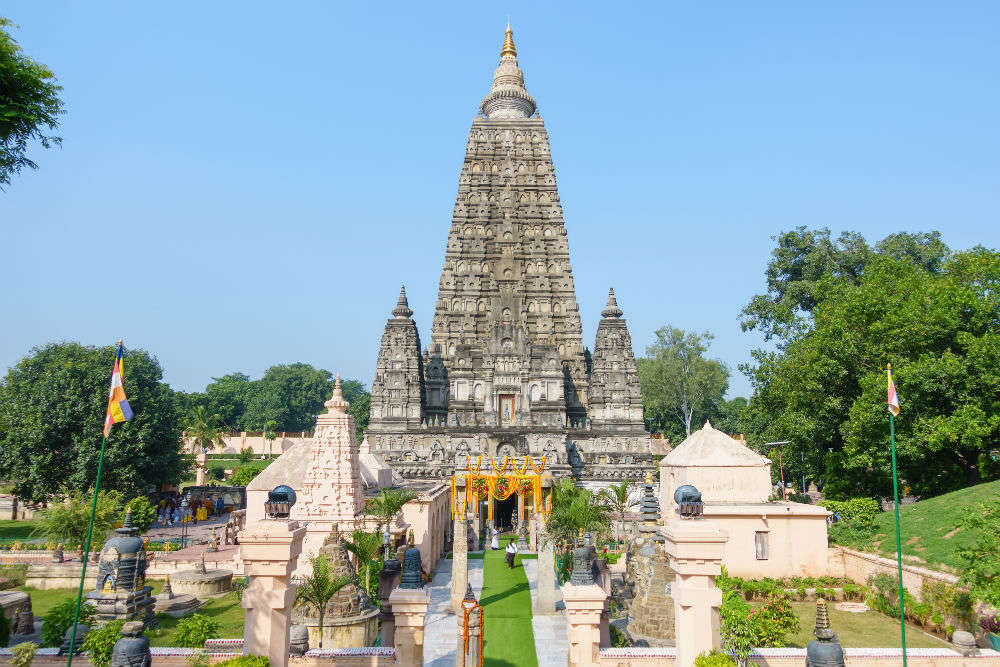
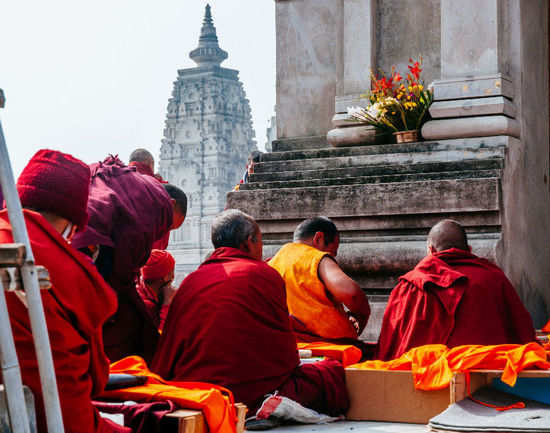
The Mahabodhi temple also called the Great Awakening Temple, is a UNESCO World Heritage Site that marks the location where the Lord Buddha is said to have attained enlightenment. The temple spreads over an area of 4.8 hectares and is 55 meters tall. The Bodhi Tree is situated to the left of the temple and is believed to be the direct descendant of the actual tree under which Lord Gautam Buddha meditated and attained enlightenment and laid down his philosophy for life. The original temple was built by Emperor Ashoka after he turned to Buddhism to seek peace and solitude from war and conquests around 260 BC. He built a small temple by the Bodhi tree and an inscription dating back to between the 1st and 2nd centuries reads that the temple built by Emperor Ashoka was replaced by a new one. A gold-painted statue of Buddha, built by the Pala kings of Bengal and made of black stone is placed in the sanctum shrine of the ancient temple. The Buddha is seen seated in the Bhumisparsa Mudra asana or the Earth touching posture. The Mahabodhi temple is surrounded by two distinct types of railings on all four sides, and they are about two meters high. The old railings made from sandstone dates back to 150 BC and has illustrations of Goddess Laxmi being bathed by elephants and of Lord Surya riding a chariot that is being drawn by four horses. The newer ones are made of unpolished granite and are believed to have been constructed in the Gupta period and have carvings of stupas or reliquary shrines, garudas or eagles and lotuses made out on them. In 2013, the upper portion of the temple was covered with gold, as a gift from the King of Thailand and the devotees of Lord Gautam Buddha. The original structure was made primarily of brick, covered with stucco, which has survived many years and is one of the oldest and most imposing structures made entirely out of brick standing from the Gupta period. The temple is open from 5 am to 12 noon and then again from 4 to 9 pm. There is no entry fee charged, except the ones charged for cameras and video equipment.
Devotees who wish to visit the Brahmayoni Temple must go through a gruelling climb of 424 high stone steps to reach the top of the hill, atop which lies this temple. Two caves namely Brahmayoni and Matreoni are also situated on the hill along with an ancient temple of Astabhujadevi. The Brahmayoni hill was the place where Buddha preached the fire-sermon to a thousand former fire worshipping ascetics and it is said that each ascetic became enlightened after hearing his teachings.
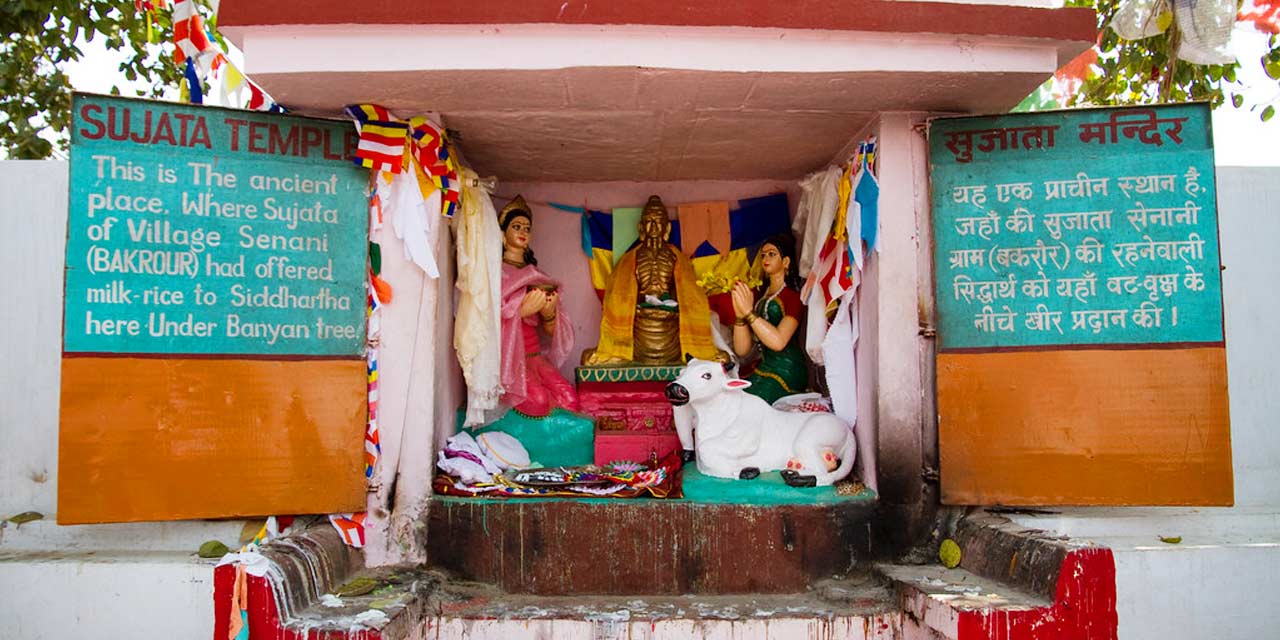
The Sujatha Temple is dedicated to a humble tribal woman named Sujatha who offered pudding to Gautam Buddha. It is said that the pudding was the first meal Gautam Buddha had consumed after years of starvation ever since he renounced the materialistic life including food to attain enlightenment. The temple is considered to be religiously important as the offering is believed to have saved Lord Buddhaês life.
The Daijokyo Buddhist Temple is a tranquil respite for those seeking one amidst beautiful surroundings. The most prominent feature of the temple is the 64 foot tall Great Buddha Statue made of sandstone and granite. It draws visitors in large numbers. The temple also houses a grand meditation hall where one can sit in solitude and soak the peaceful vibe of the surroundings.
Sujata Kuti is a stupa built in the honour of a tribal woman named Sujata who saved Gautam Buddhaês life by offering him rice pudding after he had starved himself for years in the process of attaining Nirvana and renouncing every luxury he had including food. Sujata Kuti, is thus, considered religiously important in the Buddhist Culture.
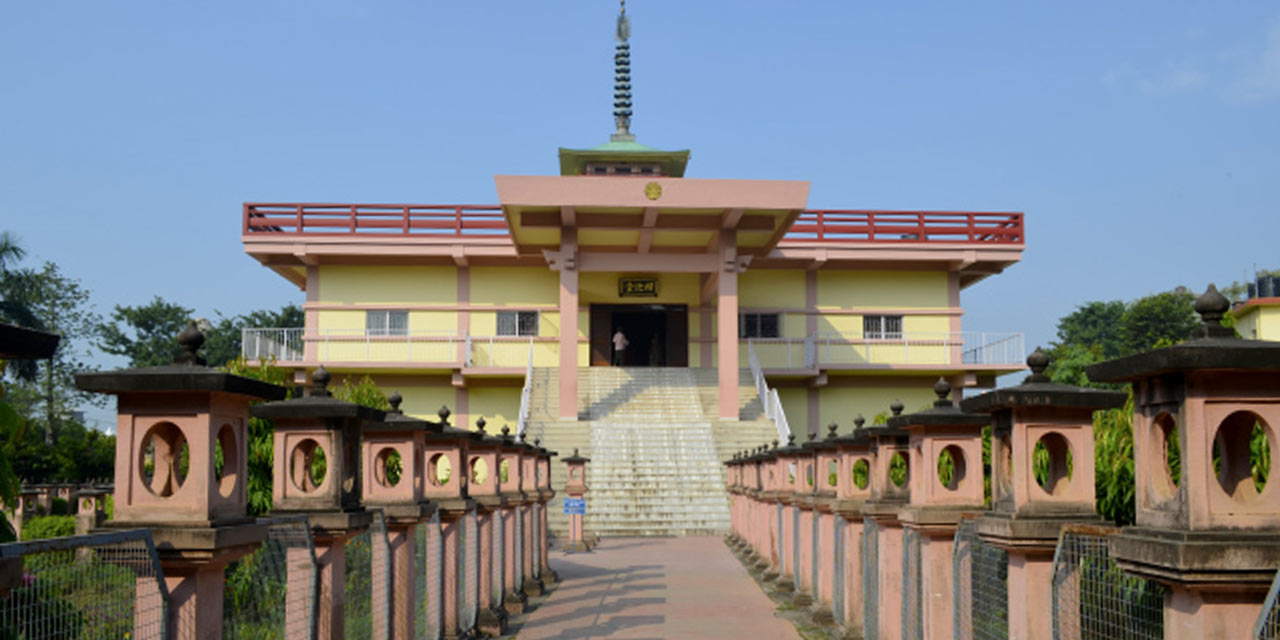
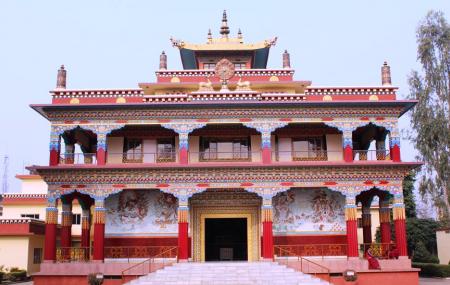
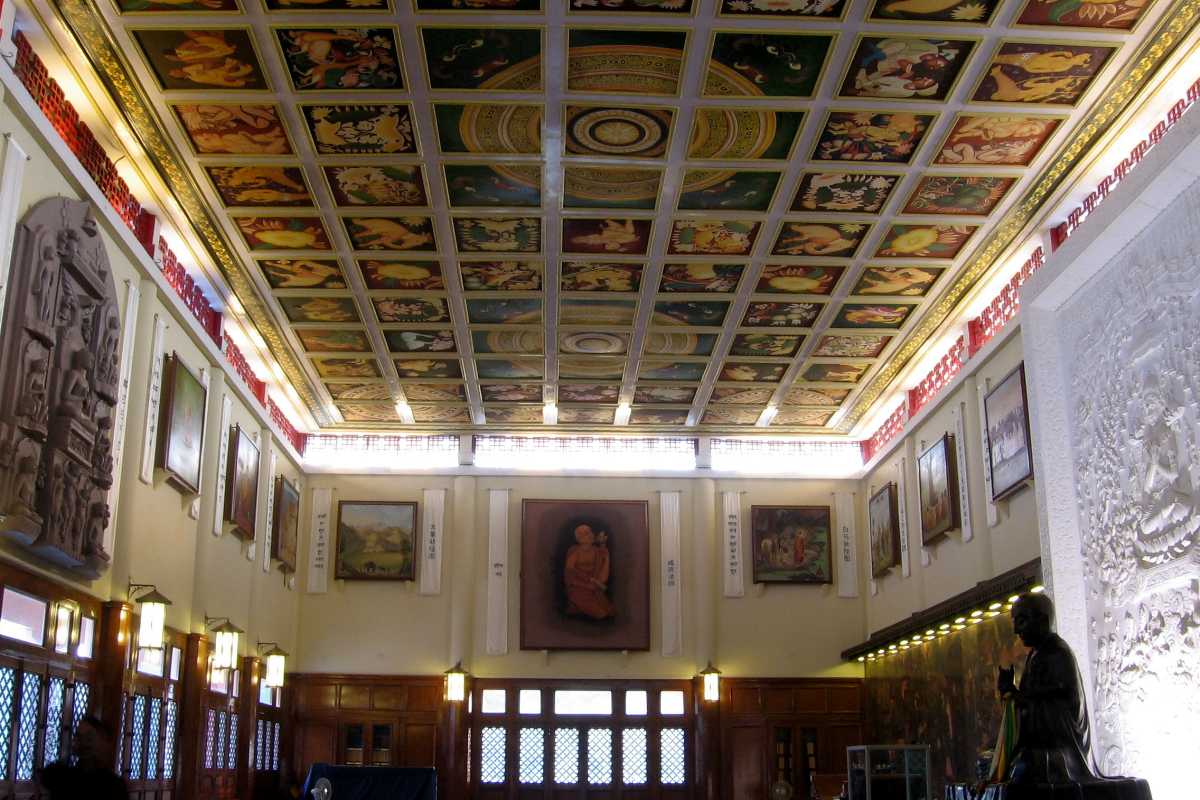
The Chinese Temple was constructed by Buddhist monks and displays beautiful Chinese artwork with a statue of Lord Buddha within the sanctum. An outstanding example of Buddhist culture and Japanese architecture, the Indosan Nippon Japanese Temple was built in 1972 with the help of the international Buddhist community. The structure of the temple is carved out of wood and it looks like a Japanese shrine. It also showcases a lot of Japanese paintings narrating events from the life of Gautam Buddha. The Vietnamese Temple is the most recently constructed shrine in the area and features a serene-looking statue of Buddha which exudes a calming aura and appears to be smiling.
The Animesh Lochan Chaitya Shrine is where Lord Buddha spent his second week of meditation after attaining Nirvana. It is believed that his meditation involved gazing at the Bodhi Tree continuously without blinking. The place, therefore, was named Animesh Lochan which means Open Eyes and is considered important as it teaches self-control and focus.
The Great Buddha Statue is the tallest in India and was instated by the XIV Dalai Lama in 1989. It is a meditating Buddha resting on a giant lotus, constructed using intricately carved sandstone and red granite.
Situated alongside the Bodhi Temple, Cankamana is a holy shrine featuring a carving of Lord Buddha’s feet into the black stone lotuses.
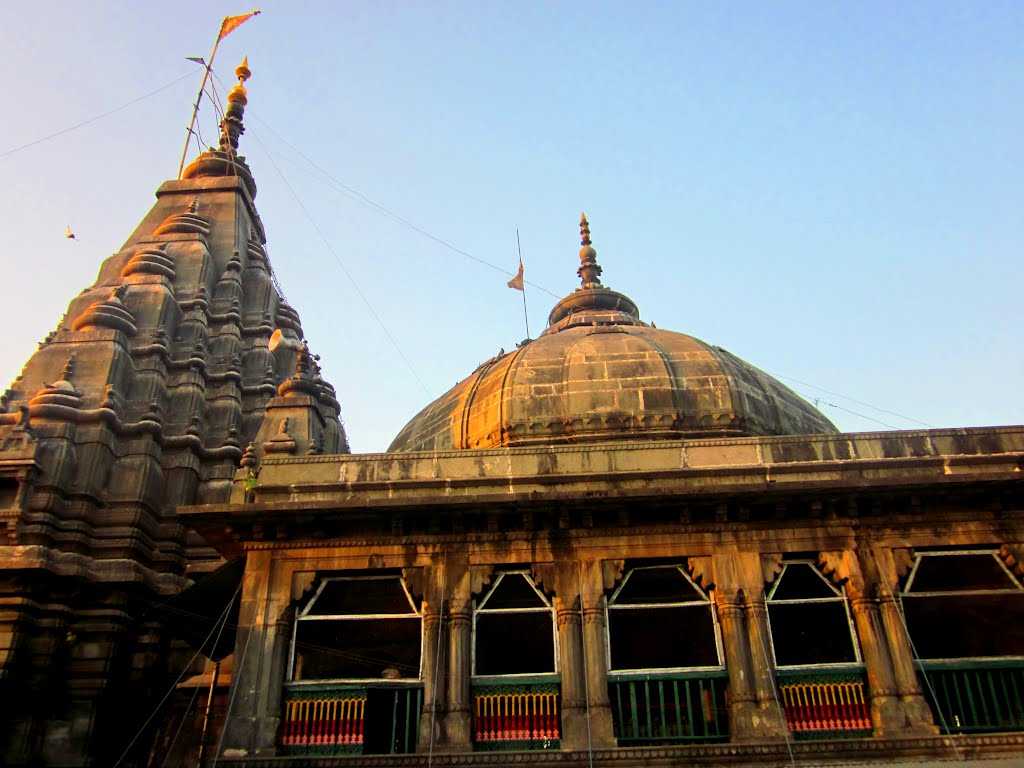
As its name suggests, the Vishnupad Temple was built as a dedication to Lord Vishnu and features a 40 cm long footprint of Lord Vishnu that is enclosed by a basin made of silver plates. This footprint marks the act of Lord Vishnu subduing Gayasur by placing his feet on Gayasur’s chest. Within the courtyard, there are other temples situated as well. One is dedicated to Lord Narasimha and another to Lord Shiva in the form of Phalgwisvara.
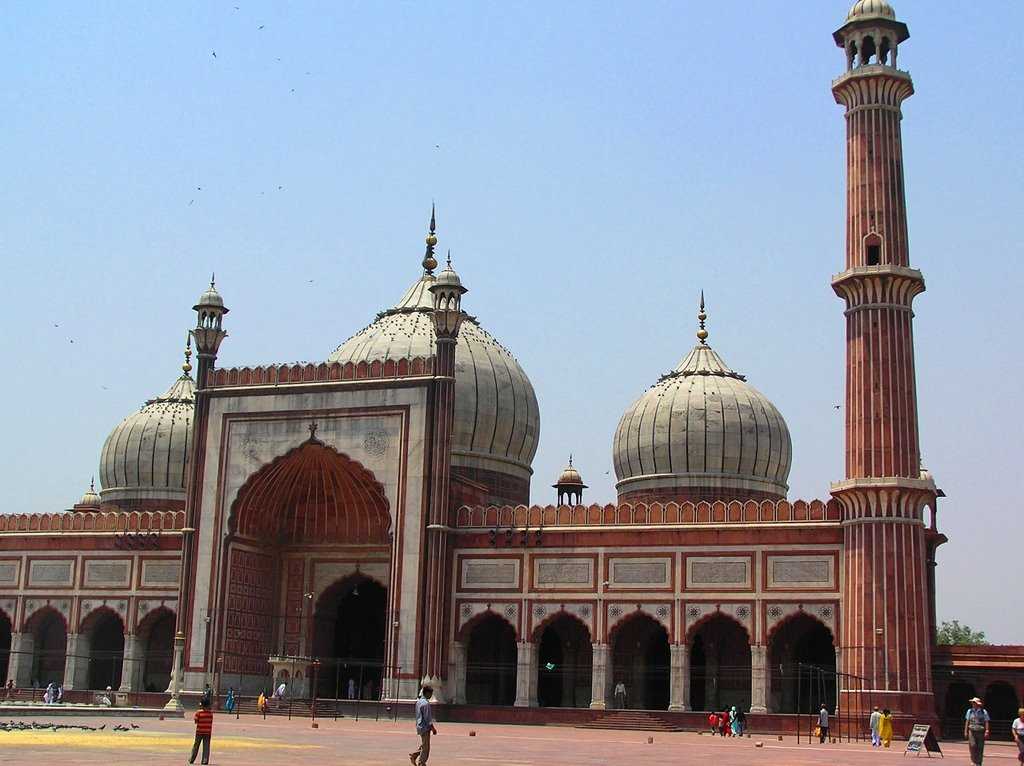
The Jama Masjid is the largest mosque in the state and dates back around 200 years. It was built by the royal family of Muzaffarpur and the shrine is well known for its festival of Shabina when prayers are offered on the 27th night of Ramadan.
The Bodhi Tree is perhaps the most prominent and respected of all sacred places in Buddhism because of the rich historical significance. It is under this tree that Prince Siddhartha Gautama, the spiritual teacher who later became to be known as the Buddha, attained enlightenment. A shrine known as Animisalocana Cetiya was erected on the spot where he had sat down and a small temple built near the Bodhi tree in the 7th century. The Bodhi tree is one of the four main Buddhist pilgrimage sites and the Anandabodhi tree in Sravasti and the Bodhi tree in Anuradhapura, are believed to have been propagated from this tree. The spot where the Buddha stood is marked by the Animeshlocha Stupa, or the Unblinking Stupa, and lies in the northeast of the temple complex. According to legend, the Buddha often walked between the Stupa and the Bodhi tree, and lotus flowers sprung up along this route. This path is now known as the Ratnachakarma or the Jewel Walk. The temple built by King Ashoka was replaced by the present Mahabodhi temple in the 2nd century, and later refurbished in AD 450, 1079 and 1157, and then finally fully restored by the Burmese Buddhists in 1882. An interesting feature is that prayer beads are formed using the seeds of the Bodhi tree which pilgrims consider sacred. Bodhi Day is celebrated here on 8 December annually. Buddhists and followers of Dharma visit this place without fail and greet each other by saying “Budu Saranai!” which translates to “may the peace of Buddha be yours” in English.
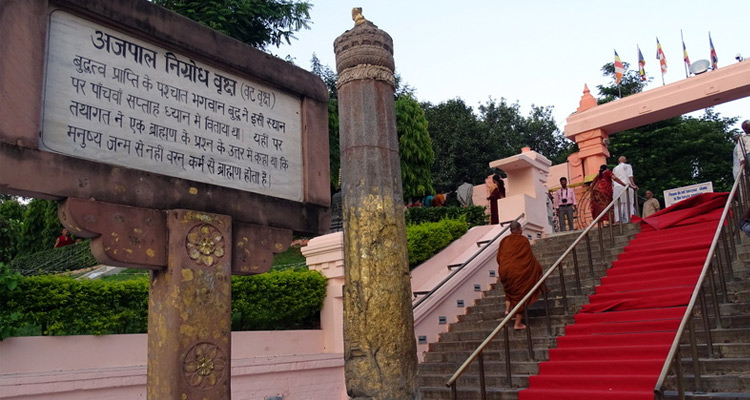
Once considered a heritage tree, Ajapala Nigrodha Tree, which no longer exists, is the sacred location where Gautam Buddha completed his fifth week of meditation after attaining enlightenment and held a discourse to address and answer the queries locals had about religion, humanity and equality. Now marked with a pillar, the place still is considered religiously important and is visited by believers.
The Root Institute for Wisdom Culture is a Buddhist Centre that educates and promotes wisdom culture through programmes and social service. It functions as per the Tibetan tradition and is often considered as a spiritual retreat that offers a tranquil atmosphere to study and practise the culture in its true form. The Burmese Vihara Monastery is a spiritual retreat for those who wish to take a break from their stressful lifestyle. Located amidst beautiful gardens, the tranquil monastery was built according to traditional Burmese architecture and houses a Buddha Meditation Hall, a library with a large collection of books on the teachings of Lord Buddha and a guest house. Well known for its curved roof covered with exquisite tiles of gold, the Thai Monastery houses a bronze statue of Buddha and another recently erected 25m high statue in the garden. The Royal Bhutan Monastery has been named as it was built by the King of Bhutan as a dedication to Lord Buddha. Clay carvings are seen on the interior walls of the monastery that depict different aspects of the Buddhist culture.
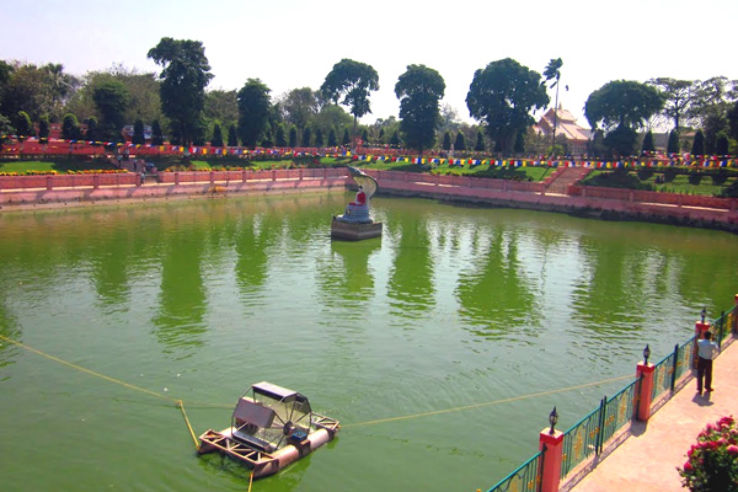
A popular site at Bodh Gaya, the Muchalinda Lake is located next to the main temple. It is associated with a mythological tale stating that Lord Buddha was protected from the storm by Snake King Muchalinda.
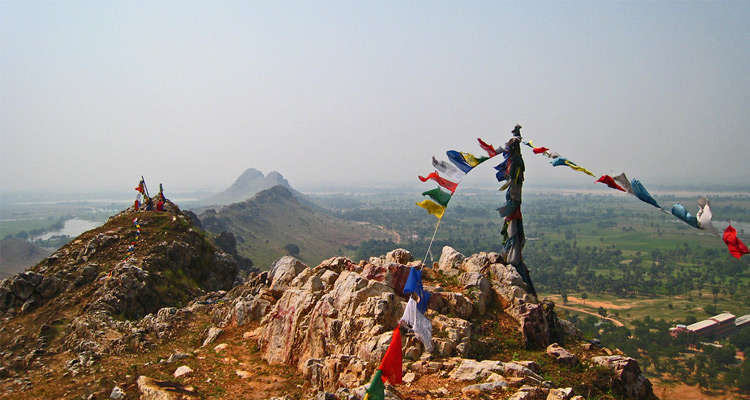
Dungeshwari Hills is where Lord Buddha spent a few years before travelling to Bodh Gaya in search of enlightenment. The hills are mostly known for the caves that Gautam Buddha used for shelter and meditation. The Stupas/ Buddhist shrines exist even today amidst the beautiful natural surroundings. The picturesque location of the Dungeshwari Hills is also a well-known trekking destination and draws enthusiasts in large numbers.
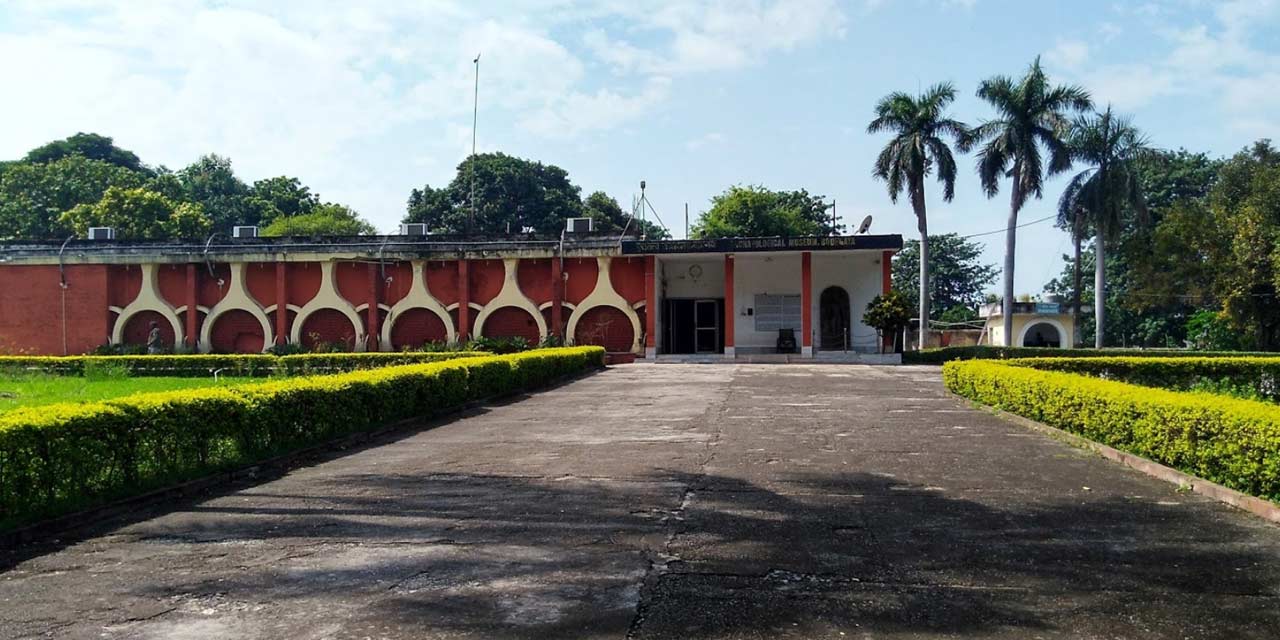
The Archaeological Society of India Museum was established to display ancient articles belonging to the Brahmanical and Buddhist belief, mostly related to the Pala period. Exhibits of splendid stone and bronze statues and sculptures, panels, rods, plaques, pillars, railings, etc are found in the galleries, courtyard and the veranda of the museum that is located inside the Mahabodhi Temple Complex.
The Bodhgaya Multimedia Museum was established to provide a glimpse into the historical life of Gautam Buddha in the most interesting way possible. The museum covers his journey right from his childhood till he attained Nirvana. It also includes content on his teachings and all of this is presented in the form of multimedia and 3D animation movies.
Vaishali A small district and town, Vaishali is equally revered by Hindus, Buddhists and Jains. It is the place where Lord Mahavir was born and is considered as the first republic of the world and the city where Buddha delivered his last sermon. Vaishali is believed to have been named after King Vishal, from the time of Mahabharata. Surrounded by groves of mango and banana and extensive rice field, the village is an important religious and historical attraction site and is flocked by tourists year in and year out.
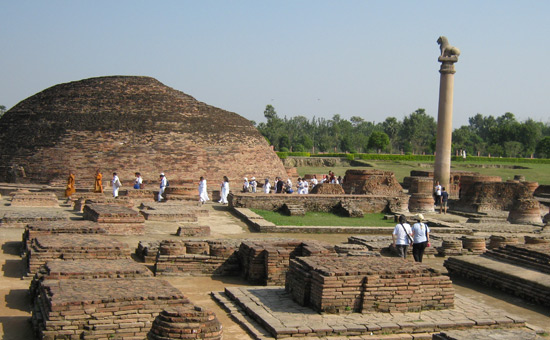
It was the capital city of the Vajjian Confederacy, considered one of the first examples of a republic around 6th century BC. Gautama Buddha preached his last sermon before his death in 483 BC, then in 383 BC, the Second Buddhist council was convened here by King Kalasoka, making it an important place in both Jain and Buddhist religions. It contains one of the best-preserved of the Pillars of Ashoka, topped by a single Asiatic lion. The city finds mention in the travel accounts of Chinese explorers, Faxian in the 4th century and Xuanzang in the 7th century, which were later used in 1861 by British archaeologist Alexander Cunningham to first identify Vaisali with the present village of Basarh in Vaishali District. Lord Ram’s footprints in Ramchaura temple is why Hindu pilgrims flock to Vaishali, which is also renowned as the land of Amrapali, the great Indian courtesan, who appears in many folktales, as well as in Buddhist literature who later became a disciple of Buddha.
Vaishali is well known for its close association with the Buddha. After leaving Kapilavastu for renunciation, he came to Vaishali first and had his spiritual training from Ramaputra Udraka and Alara Kalama or Alark Ram. After the Enlightenment, the Buddha frequently visited Vaishali and organised his Bhikshu Sangha on the pattern of Vaishalian democracy and established his Bhikshuni Sangha here. His last Varshavasa or rainy season resort was in Vaishali and he announced his approaching Mahaparinirvana or the final departure from the world just three months in advance. Before leaving for Kusinagara, where he died, he left his alms-bowl or Bhiksha-Patra here with the people of Vaishali. The Svetambaras state that the final Tirthankara, Lord Mahavira, was born and raised in Vaishali to King Siddhartha and Queen Trishala.
King Ashoka became a great follower of Buddhism after the massacre of Kalinga and erected his famous Ashokan pillar in Vaishali to memorialise the last sermon of Lord Buddha that took place here. There is a life-like figure of an Asiatic lion engraved, at the top of the pillar facing north, believed to be the direction of Lord Buddha’s last voyage as well as a brick stupa and a pond known as Ramkund next to the pole which makes for a sanctified spot for Buddhists. There is also a small tank here known as Ramkund.
A 125-ft tall peace pagoda which built by the Buddh Vihar society in collaboration with the Japanese government and the Japanese Nichiren Buddhist sect Nipponzan-Myōhōji, the Vishwa Shanti Stupa or World Peace Pagoda is a huge, white, beautiful stupa surrounded by greenery, serenity and a pond where visitors can spend time boating and breathing in the fresh air. A small part of the Buddha’s relics found in Vaishali has been enshrined in the foundation and the chhatra of the Stupa.
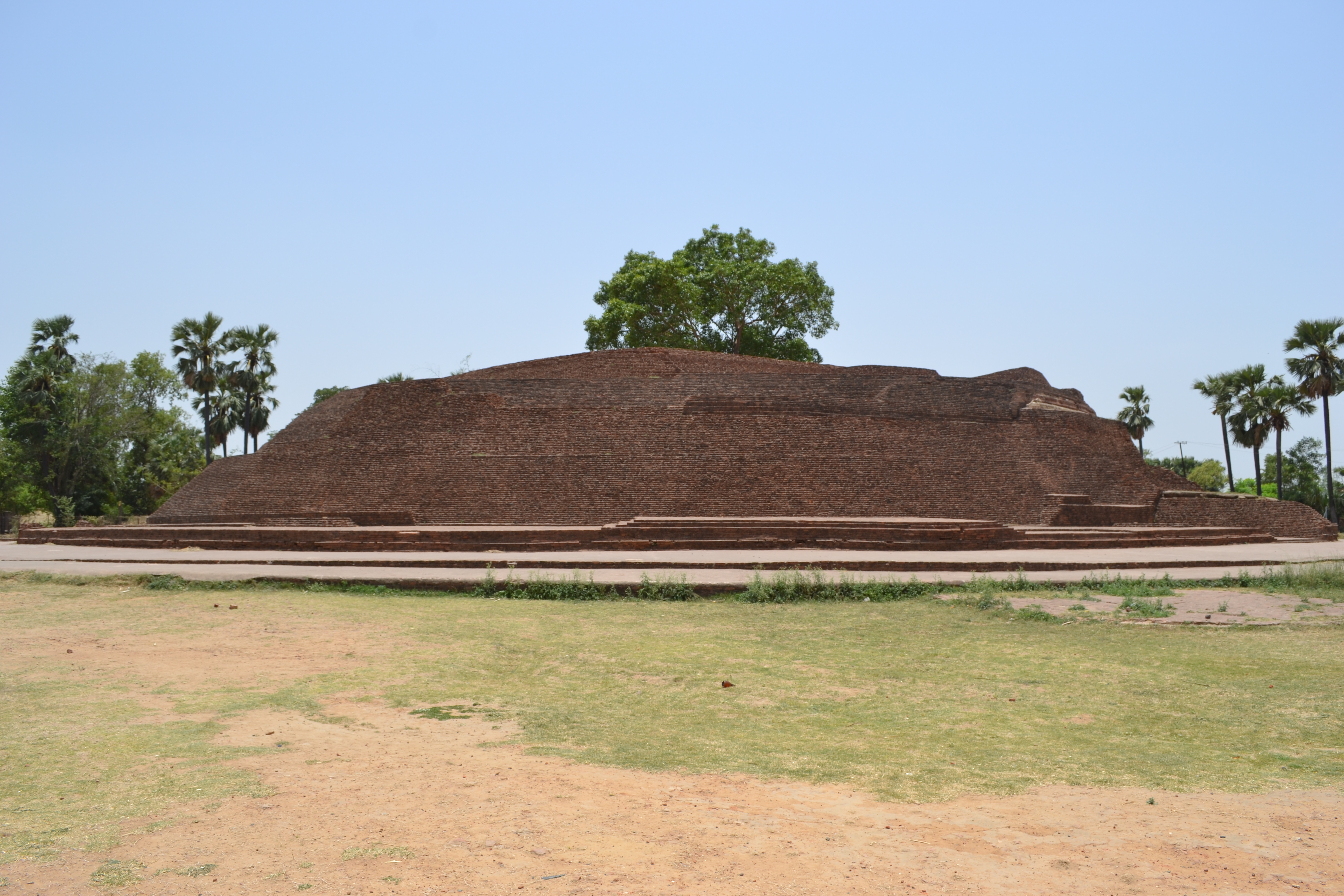
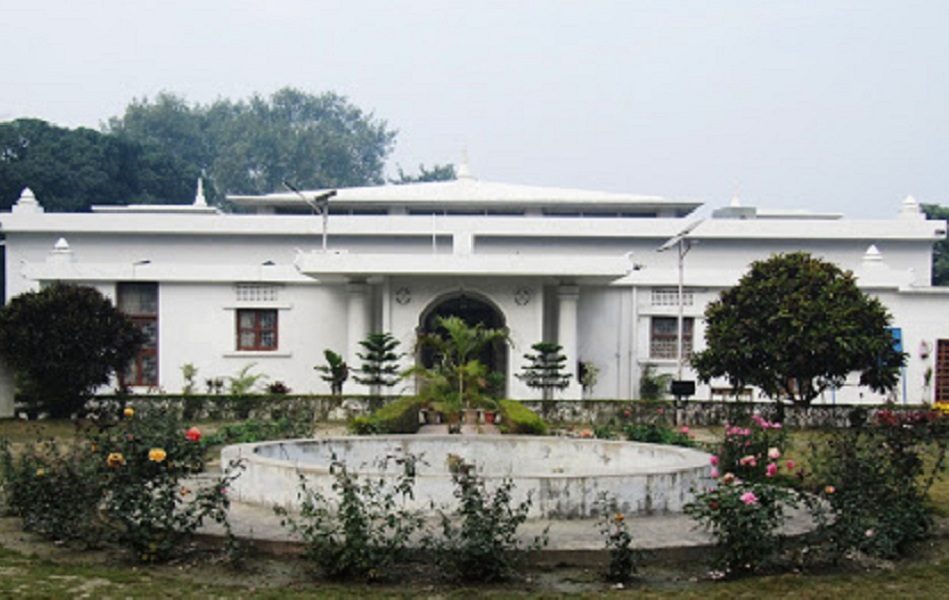
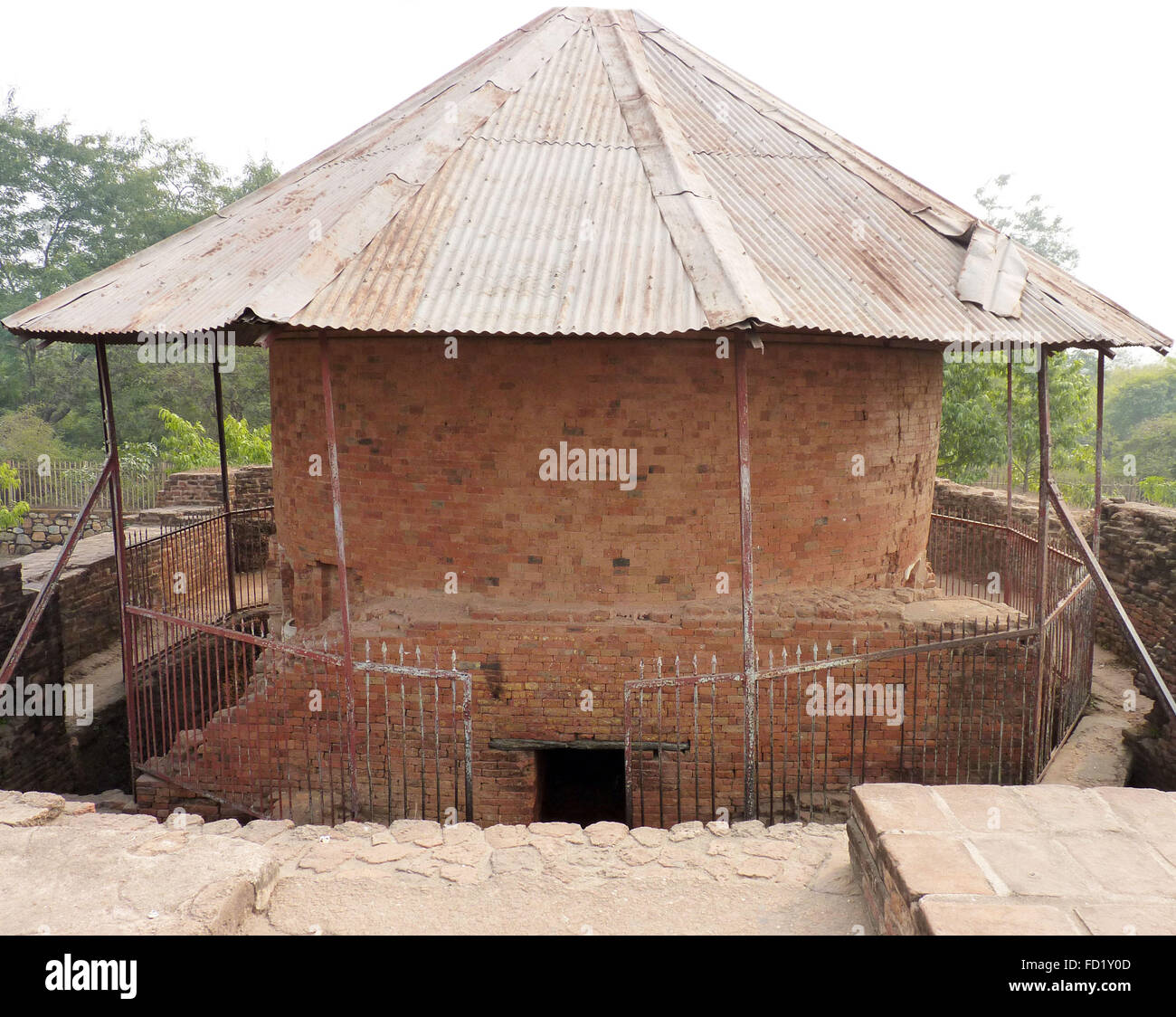
Just next to the Pagoda is the Abhishek Pushkarini or the coronation tank which is the tank from whose sacred waters anointed the elected representatives of Vaisali. Near the Coronation Tank is Stupa 1 or the Relic Stupa. Here the Licchavis reverentially encased one of the eight portions of the Master’s relics, which they received after the Mahaparinirvana. After his last discourse the Awakened One set out for Kushinagar, but the Licchavis kept following him. Buddha gave them his alms bowl but they still refused to return. The Master created an illusion of a river in spate which compelled them to go back. This site can be identified with Deora in modern Kesariya village, where Ashoka later built a stupa. Walking around the tank, visitors can find a museum on the north bank which houses the artefacts found during excavation, dividing them into four galleries, one of which has terracotta items of human figures, while another gallery has terracotta items of animal figures with wheels, cast coins etc. The third gallery exhibits antlers, bones and iron and copper commodities while the fourth gallery houses earthenwares.
The Kutagarasala Vihara is the monastery where Buddha most frequently stayed while visiting Vaishali and is located 3 km from the relic Stupa, and on its ground can be found the Ananda Stupa, with an Asokan pillar in very good condition, perhaps the only complete Asokan pillar left standing, and an ancient pond.
Housing some of the beautiful images of Hindu gods and goddesses situated on Bawan Pokhar’s northern end, the Bawan Pokhar temple is a piece of ancient artwork built during the rule of Pal dynasty. An old temple built in the Pala period stands on the northern bank of Bawan Pokhar and enshrines beautiful images of several Hindu gods
The Vaishali museum was established in 1971 by Archaeological Survey of India to preserve and display the antiquities found during exploration of sites with ancient Vaishali. The Vishal Fort is in ruins today and has a 1 km governing house of the Lichchavi tribe.
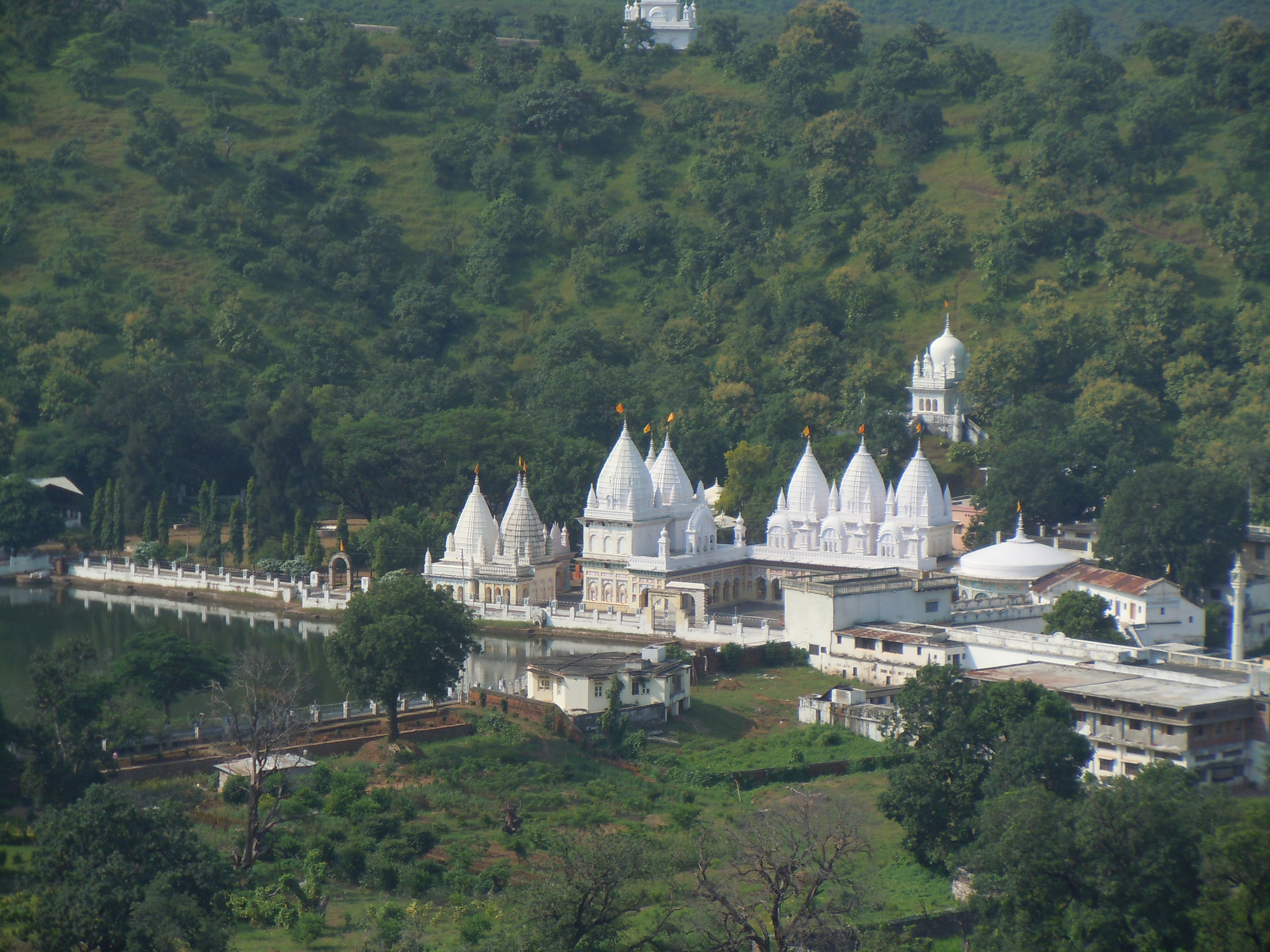
The Vaishali Mahotsava or the great Vaishali Celebration is held every year on Baisakh Purnima or the Full Moon Day of the 1st Hindu month which occurs during mid-April to celebrate the birth anniversary of the 24th Jain Tirthankar Mahavir who born here in the village of Kundalpur, 4 km from Vaishali.
In our next part, which is the last one, we will explore Muzzafarpur, Sitamarhi, Madhubani, Lauriya Nandangarh, Bhagalpur and the Valmiki National Park, Tiger Reserve and Wildlife Sanctuary.
How Money Became Dangerous: The Inside Story of Our Turbulent Relationship with Modern Finance – Christopher Varelas and Dan Stone
From a veteran of the trade, a provocative and entertaining voyage into the turbulent heart of modern money that sheds new light on the rise of our threatening and complicated financial system, how money became our adversary, and why finding a new course is crucial to a healthy society
In the not too distant past, money was simple. You might have had a bank account and a mortgage, perhaps some basic investments. Wall Street didn’t have a reputation for greed and recklessness. That all started to change in the eighties, as our financial systems became increasingly complex, moving beyond the understanding of the general public while impacting our lives in innumerable ways. The financial world began to feel like an enigma—a rogue force working against us, seemingly controlled by no one.
From an industry veteran who’s had firsthand involvement in the events that shaped modern money, How Money Became Dangerous journeys from the crime-ridden LA jewelry district to the cutthroat Salomon Brothers trading floor, from the high-stakes world of investment banking to the center of the technology boom, capturing the key deals, developments, and players that made the financial world what it is today. The book illuminates the dark, hidden forces of Wall Street and how it has dehumanized and left behind everyday Americans. A fresh and enlightening take on how we reached this point, How Money Became Dangerous also makes the case for why Wall Street needs to be saved, if only to save ourselves.
Rajgir Historically known as Girivraj, Rajgir is an ancient city which was the first capital of the kingdom of Magadha, which eventually evolved into the Mauryan Empire. The city finds mention in India’s greatest literary epic, the Mahabharata, through its king Jarasandha. Its date of origin is unknown, although ceramics dating to about 1000 BC have been found in the city. The 2,500-year-old Cyclopean Wall is located in the city. Rajgir was the birthplace of the 20th Jain Tirthankar Munisuvrata and is closely associated with the Arihant Mahavira and Gautama Buddha. Both Mahavira and Buddha taught their beliefs in Rajgir during the 5th and 6th centuries BC, and the Buddha was offered a forest monastery here by King Bimbisara and so Rajgir became one of the Buddha’s most important preaching locations. The ancient Nalanda university was located in the vicinity of Rajgir and it was also through Rajgir that the Mauryan Emperor Ashoka travelled to Bodh Gaya around 250 BC when placing the diamond throne or Vajrasana at the great temple where Buddha attained enlightenment.
The name Rajgir came from Rajagṛiha, meaning the house of the king or royal house, or the word Rajgir might have its origin in its plain literal meaning, royal mountain. It was the ancient capital city of the Magadha kings until the 5th century BC when Udayin who ruled between 460 and 440 BC, the son of Ajatshatru, moved the capital to Pataliputra. In those days, it was called Rajgriha, which translates as the home of royalty.
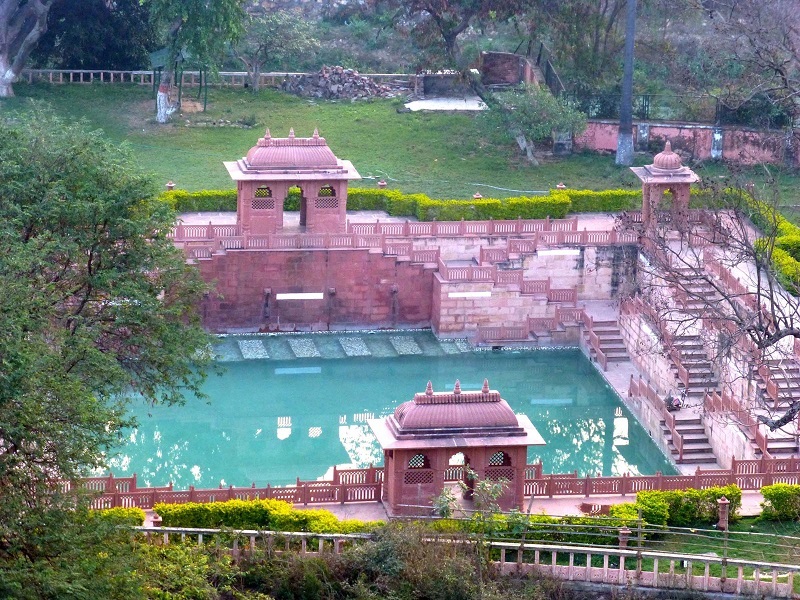
The city is in a valley surrounded by seven hills, namely Vaibhara, Ratna, Saila, Sona, Udaya, Chhatha, and Vipula. The Panchane river flows through the outskirts of the town and the town has also developed as a health and winter resort due to its warm water ponds. These baths are said to contain some medicinal properties that help in the cure of many skin diseases.
The Maniar Matth was once a monastery of a cult that worshipped snakes. This can be seen by the figures of different snakes that are found here. The structure is in the shape of a stupa and named after a small shrine that was found here on excavation. Buddha photos are seen on the outer walls.
The Lakshmi Narayan Mandir has been built over an ancient Buddhist monastery was once present at Tapodharma. There are a few hot springs found at the place and it is believed that these hot water springs have curative properties. The Brahmakund here is a popular spring and its temperature is generally around 45-degree celsius.
Also known as the Vishwa Shanti Stupa, the Japanese Stupa is a pillar situated atop the Gridhakuta hill at an altitude of 400 m and was built as a symbol of world peace by Japan. This marble pillar also showcases four golden statues of Buddha depicting different stages of his life – birth, enlightenment, preaching and death. This location can be accessed by an aerial ropeway.
The Stupa of Sariputra contains the bones of one of the two chief disciples of Gautam Buddha. Sariputra became a celebrated Arhat after he was able to attain salvation following Buddha’s footsteps. The stupa is pyramidal and is imposing in size, surrounded by pillared structures, typical to Buddhist structures. Seven layers of construction explain its colossal size, making it a sight to behold.
The Vulture peak, also known as Griddhakuta is an important pilgrimage site for Buddhists. It is one of the three places where Shakyamuni Buddha or the Gautama Buddha lived for many years and preached the Lotus, Heart and Prajnaparamita sutras. Located on a small hill, just outside of Rajgir, Griddhakuta is a popular sightseeing location perched at an altitude of 400 m. This peak is known as the Vulture’s Peak as it is shaped like a vulture and also provides frequent sightings of the bird as well as offering a brilliant 360-degree view of the entire surroundings.
Makhdum Kund is a shrine of Makhdum Shah, a Muslim Sufi saint popular among Muslim devotees for religious and spiritual purposes. It is a Muslim shrine and also a hot spring near the Vipula Hills. According to local legends Makhdum Shah spent twelve years in the jungles of Rajgir during the 13th century. The hottest spring has a temperature of over 450 degrees Celcius and there are separate areas for men and women to bathe, where the temperature is fitting.
The Ghora Katora Lake derives its name from its shape which is that of a horse and the name means horse bowl. The lake is an excellent picnic spot and is known for being one of the cleanest sight-seeing locations in Rajgir. A local favourite, the lake is located at the same place where it is believed that Jarasandha from Mahabharata had his stable.
Believed to be the place where Bimbisara was confined by his son King Ajatshatru, Bimbisara’s Jail offers a brilliant view of the Japanese Stupa situated on the same hill.
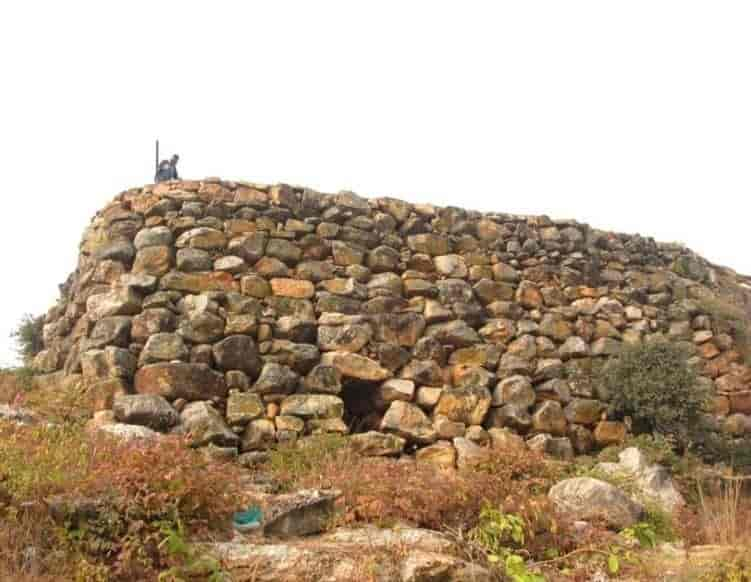
Dating back 2500 years, the Cyclopean Walls are 4 meters wide and encircle the city and are 40 km long. It was built by the Mauryans to fortify the city. Today most of it stands in ruins.
The Hiuen Tsang Memorial Hall was built in memory of the Chinese scholar where he was said to have resided for over 12 years during his time in the country. The memorial hall is home to writings of the scholar about his observations regarding medieval India, which forms the basis of much of the knowledge of that time.
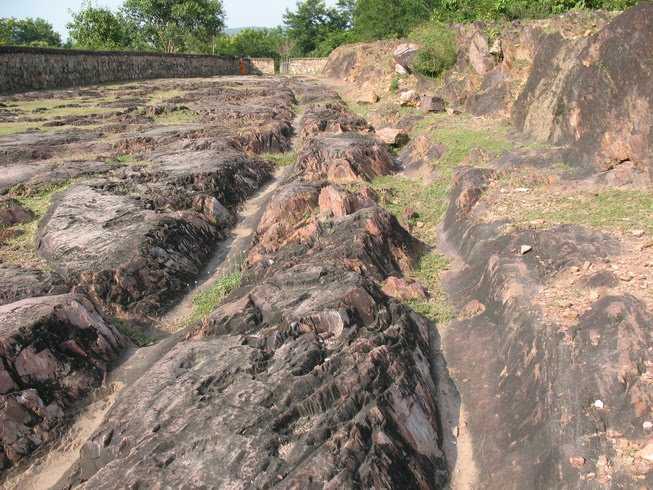
The Chariot Tracks are two thirty-feet long deep marks or parallel furrows cut into the rocks near the Jarasandha monuments and are believed to have been made by Lord Krishna’s chariot when he arrived in Rajgir. Other than the marks, around this area, there is an engraved script which is yet to be decrypted. The script was written at some time between the first and fifth centuries AD, probably in a language unknown today.
Two kilometres away from the jail of Bimbisar, the Sankhalipi Inscriptions are seen to be inscribed on the rocky terrain. Near the inscriptions are the Chariot Tracks. The inscriptions are of great cultural significance, as well as a tourist spot.
Ajatshatru was a king and the ruler of Magadha in the 6th century BC when he built this grand fort known today as Ajatshatru Fort. According to legend, Ajatshatru imprisoned his father Bimbisar in jail inside this fort after he ascended the throne; and Bimbisara, a staunch Buddhist, chose a spot from where he could see Lord Buddha give his sermons every morning. The once sturdy fort is now in ruins.
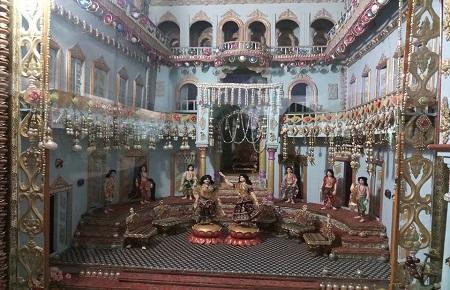
The Veerayatan Museum is a fascinating Jain museum showcasing the history of each of the 24 Jain Tirthankaras. It features ornate dollhouse-like 3-D panel depictions made from wood and metal. Visitors will see a lot of fantastic art on display here by the artist Acharya Shri who resides here and are a must-see.
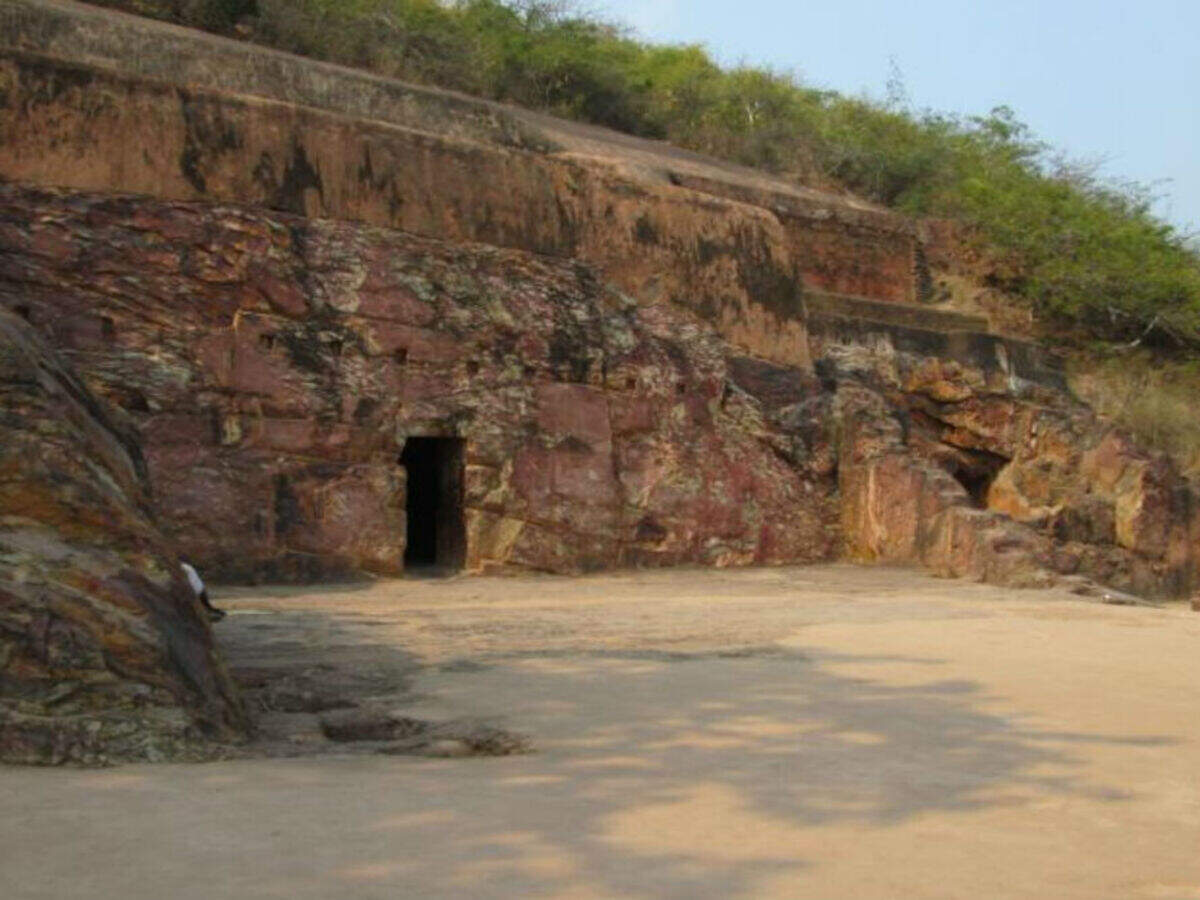
The Sonabhandar caves meaning treasure of gold are situated on the southern slopes of the Vaibhava Hills and feature black stone statues of the first four Jain Tirthankaras and Lord Buddha. The caves are two identical caverns cut out of monolithic rocks and it is believed that the treasury of King Bimbisara is still present here and the key to opening the doorway lies in the inscriptions on the walls. . There are seated and standing figures etched onto the walls of the rocks as well as inscriptions in the ancient text of Sanklipi, which say that the cave was used by Jain saint Muni Vairadevi and other ascetics as a refuge.
Located on the Vaibhava Hills, the Saptaparni Caves was the host to the first Buddhist council, attended by over 500 monks and was led by Maha Kashyapa.
Rajgir city is famous for the seven hot springs or Saptarshi, which come and mingle together into a big pool of warm water, named Brahmakund. This is a holy place for bathing of the Hindus, Buddhists and Jains alike. The water is said to contain medicinal properties and healing features and was visited by the likes of Gautam Buddha and Mahavira.
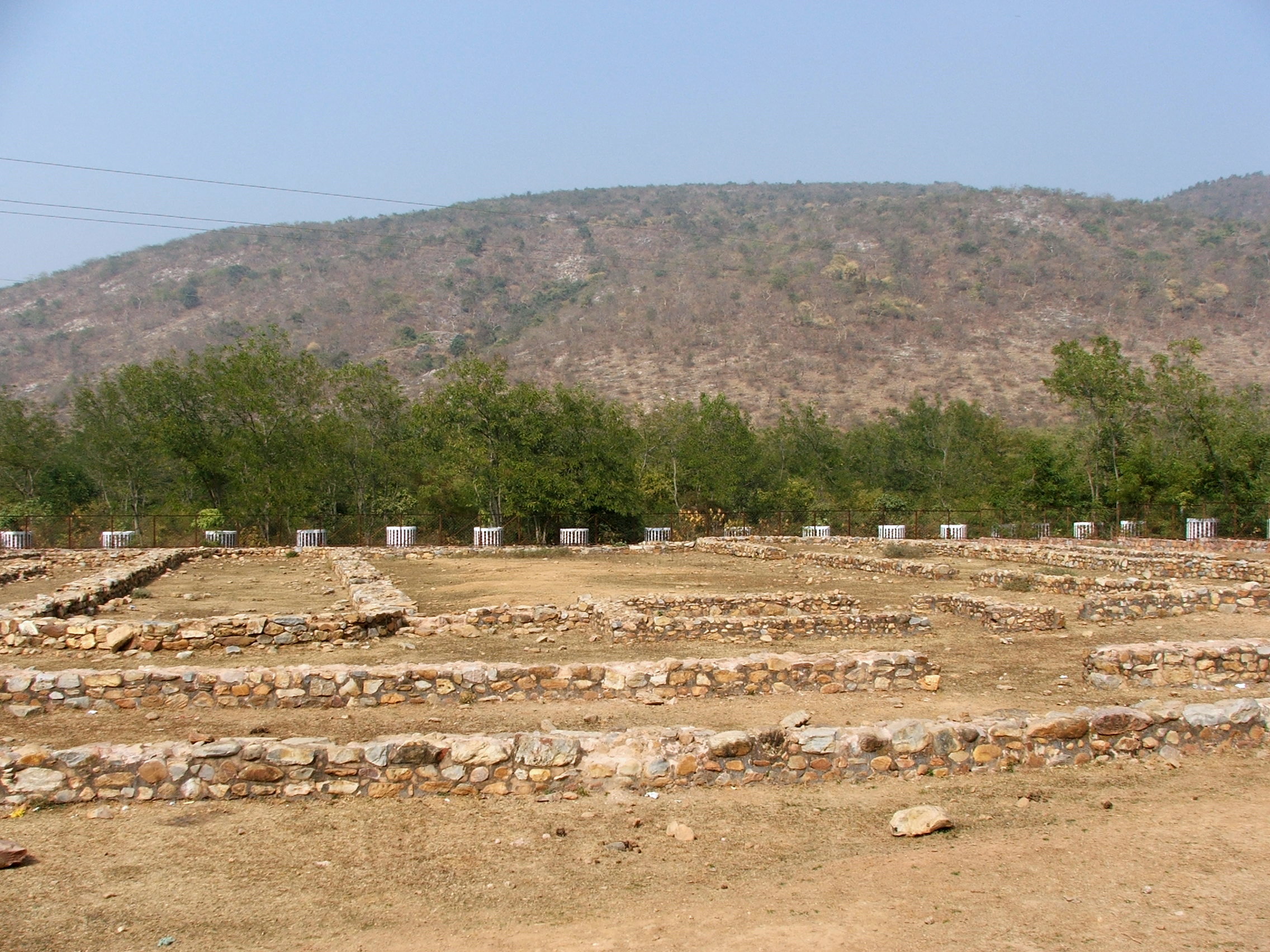
Jivaka’s Mango Garden is located in the Jivakameavan Gardens. Jivaka was the royal physician of Bimbisara and Ajatashatru and had his dispensary within this garden gifted to him by Bimbisara. Jivika used the plants here to make ayurvedic medicines and cure his patients and was famous for being the one who treated Lord Buddha’s wounds when Buddha came to him for treatment. The garden contains the ruins of an old monastery built by the doctor.
Jarasandha Ka Akhara, located near the Vaibhava Hill, was previously a wrestling arena and place for martial arts training for the armies which stood against Lord Krishna and the Yadava clan for King Jarasandha of Magadha. The great battle between Bheema and Jarasandha took place right here which lasted for a month, according to legend, and in the end, Bheema tore Jarasandha’s body into half to defeat and kill him. Now a deserted ruins with overgrown flora, it is a favourite spot for picnickers.
Jarasandha’s Baithak, located near Vaibhava Hill, is a rectangular stone at the foot which was used when Jarasandha of Mahabharata was the rule of Magadha. Locals believe that the place used to be an outpost of the military and had locations which were used as living quarters for the soldiers. The rock has two parallel cuts on it and it is famous, as the belief is that Lord Krishna made the cuts himself during the many battles between Jarasandha and Yadavas.
Yesthivana area used to be a retreat in the forest, but today is a nature park near the Tapovana and is said to be where Lord Gautam Buddha met the Magadha King, Bimbisar before the latter became a devotee. One of the major sights to see here is the 6 feet tall carved statue of Lord Gautam Buddha and the sapling of the Great Mahabodhi Tree under which Buddha attained enlightenment.
Said to be the oldest ropeway in India, the Rajgir ropeway line is the only ropeway in existence in the state of Bihar. The single person seater rope line leads you to the top of the scenic Ratnagiri Hill which houses the famous Vishwa Shanti Stupa, also known as the Peace Pagoda. The chairlift ropeway rises to a height of over 1000 feet from the ground level and is a thrilling ride to undertake. The area falls under the Pant Wildlife Sanctuary which provides unmatched views of the surrounding forest area. Other places of interest nearby include the Sugarakhata Caves which according to legends, was where the Buddha preached the Lotus Sutra and delivered sermons, the Gridhkut peak which was one of the several sites frequented by Buddha and his disciples for training, retreat and delivering of sermons and is frequently mentioned in ancient Buddhist texts. A small, quiet temple situated on the hilltop nearby has amazing views of the surroundings as well as the Ashoka Stupa. The Ropeway is open between 8 am to 5 pm and adults pay INR 60 while children pay INR 30 to go up.
Sasaram Known as the gateway of Vihar to visit Gaya, Rajgir and Nalanda in ancient times, Sasaram, also sometimes spelt as Sahasram, is a city that the Buddha passed through on the way to be enlightened under the Mahabodhi tree in Gaya.
Modern Sasaram city covers the largest sub-metropolitan area of Bihar and is famous for the many religious and historical spots to visit such as Shershah Suri’s tomb, Rohtasgarh fort, Indrapuri Dam, Shergarh fort, Sacred Tarachandi Shaktipith, Gupta Dham and the Tutla Bhawani temple and is surrounded by the scenic mountains of the Kaimur range as well as many as 200 waterfalls, the most famous ones being Manjharkund, Dhuvan Kund, Sitakund and the Tutla Bhavani waterfalls and rivers like the Sone. During the Vedic age, Sasaram was a part of the ancient Kashi kingdom and its name originated from the word Sahastrarama, meaning a thousand groves. Sasaram was once also named Shah Serai or the Place of King as it is the birthplace of the Afghan king Sher Shah Suri, who ruled over Delhi, much of northern India, what is now Pakistan, and eastern Afghanistan for five years, after defeating the Mughal Emperor Humayun.
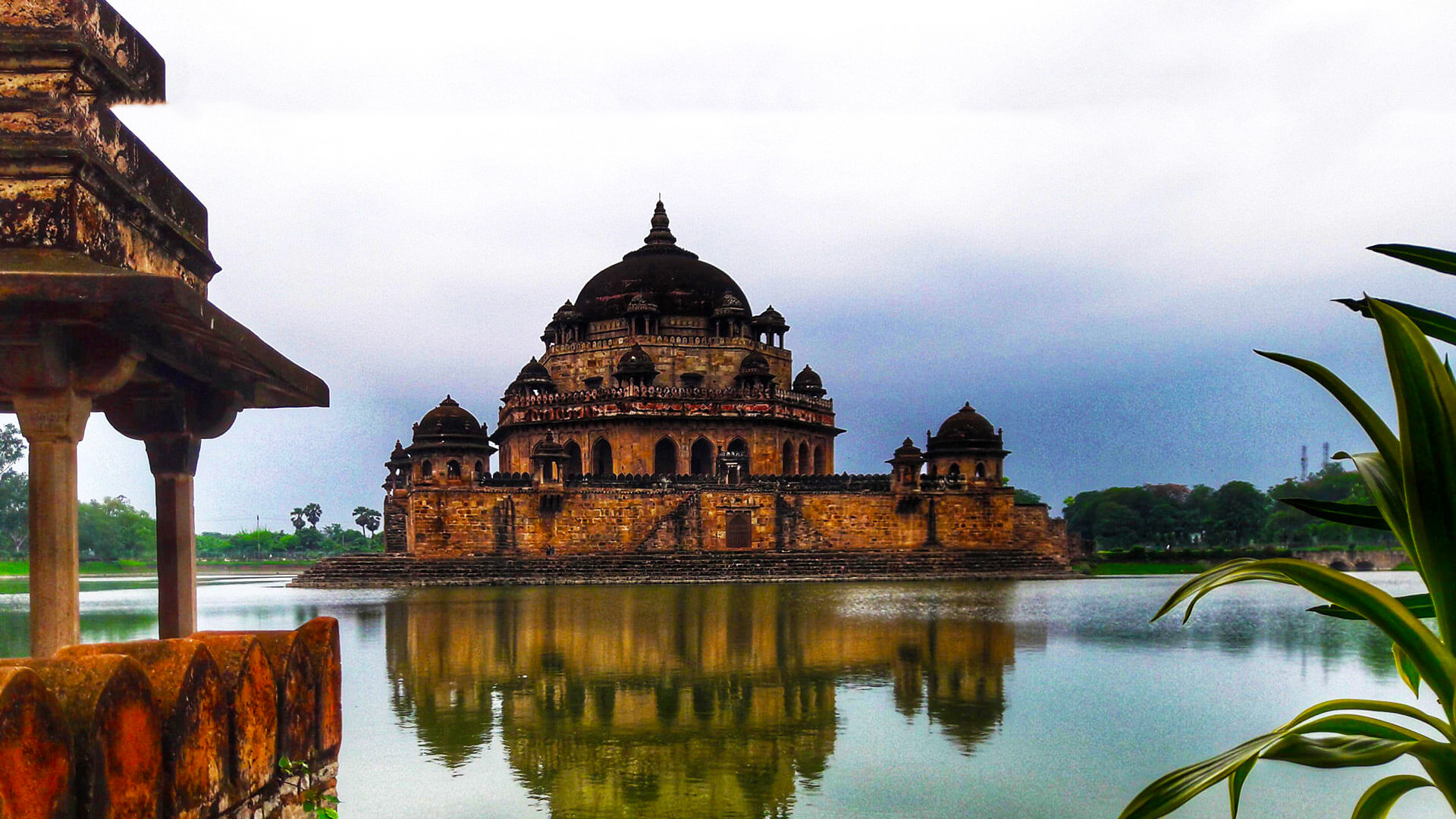
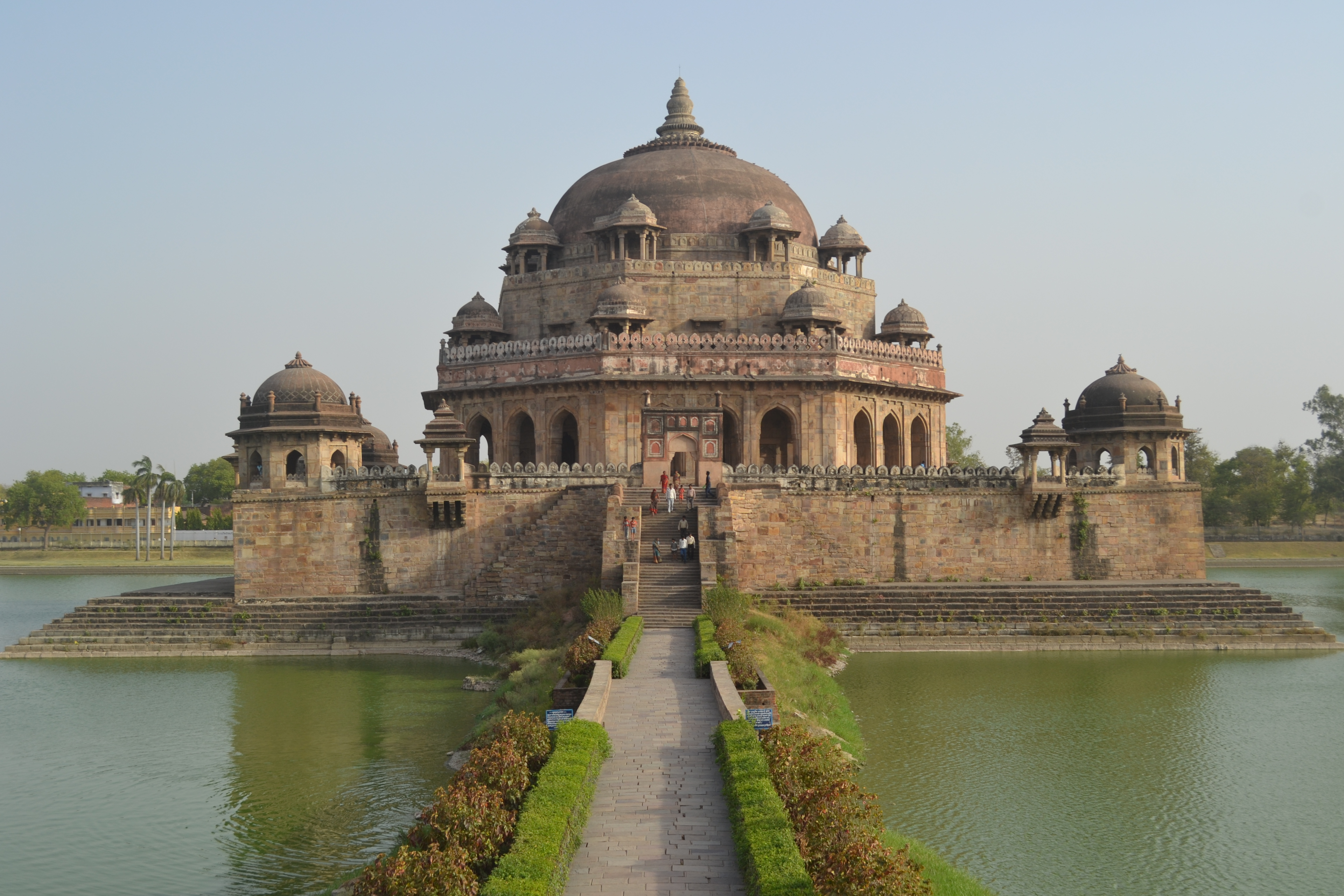
Sher Shah Suri’s 122 feet red sandstone tomb, built in the Indo-Afghan style stands in the middle of an artificial lake in Sasaram. It borrows heavily from the Lodhi style and was once covered in blue and yellow glazed tiles indicating an Iranian influence. The massive free-standing dome also has an aesthetic aspect of the Buddhist stupa style of the Mauryan period. Built between 1540 and 1545, the mausoleum is three storeys high (122 ft.) and stands proudly in the centre of an artificial square lake. For the same reason, it is also locally known as the Second Taj Mahal of India. The tomb of Sher Shah’s father Hasan Khan Suri is also at Sasaram and stands in the middle of a green field at Sherganj, which is known as Sukha Rauza. About a km to the north-west of Sher Shah’s tomb lies the incomplete and dilapidated tomb of his son and successor, Islam Shah Suri. Sasaram also has a Baulia, a pool used by the emperor’s consorts for bathing. The tomb is also a UNESCO World Heritage Site.
The fort of Sher Shah Suri at Rohtasgarh has a history dating back to the 7th century. It was built by Raja Harishchandra, known for his truthfulness in the name of his son Rohitashwa. It houses the Churasan temple, Ganesh temple, Diwan-e Khas, Diwan-e-Aam, and various other structures dating back to different centuries. The fort also served as the headquarters of Raja Man Singh during his reign as the governor of Bihar and Bengal under the regime of Akbar. The Rohtaas fort in Sasaram was also built by Sher Shah Suri, during the period when Humayun was exiled from India.
The temple of goddess Tarachandi, as well as an inscription of Pratap Dhawal on the rock close to the temple of Chandi Devi, lies about 7 km south of the city. The Dhuwan Kund, located about 4.5 km south of the Tarachandi temple and Gupta Dham are also tourist destinations. Sasaram is also also a famous centre of Shiva Aradhana where devotees assemble in large numbers to worship Lord Shiva. Sasaram is also famous for an inscription by Ashoka which is one of the thirteen Minor Rock Edicts, situated in a small cave of Kaimur hill, near Chandan Shaheed.
Kaimur The Mundeshwari Devi Temple on the Mundeshwari Hills in Kaimur is an ancient temple dedicated to worshipping the eternal duo of Lord Shiva and Shakti. It is considered as one of the oldest temples in India as well as the oldest functional Hindu temple in India with its origin put it around 625 CE and is built of stone, with the temple architecture following a rare octagonal plan. The main deities in the temple are Devi Mundeshwari and the four-faced Shiva linga. It also hosts murtis of Ganesha, Surya and Vishnu. It has been an official subject of archaeological study for some time now, with certain inscriptions dating to 635 CE.
After a study of the broken Mundeshwari inscription of Brahmi script and its two parts found in 1891 and 1903 archaeologists thought the temple to be older than the 4th century. However, the recovery of a royal seal of the great Sri Lankan emperor Maharaju Dutthagamani who ruled between 101 and 77 BC from the place in 2003, established that a group of royal pilgrims or monks from Sri Lanka visited the place during their journey to Sarnath from Bodh Gaya through the famous Dakshinapath highway sometime between 101 to 77 BC and lost the seal here. The existence of Naga or serpent on the four-faced shiva lingam, the Naga janeu or sacred thread on the Ganesha idols, not found anywhere in India, and also on broken pieces scattered around the hill indicated that it was constructed by rulers of the Naga dynasty who ruled between 110 BC to 315 AD who used the serpent as their royal insignia. After this, the date of the Mundeshwari inscription was unanimously decided as 108 AD.
The temple, built of stone, is on an octagonal plan which is rare and is the earliest specimen of the Nagara style of temple architecture in Bihar. There are doors or windows on four sides and small niches for the reception of statues in the remaining four walls. The temple shikhara or tower has been destroyed, however, a roof has been built, as part of renovation work. The interior walls have niches and bold mouldings which are carved with vase and foliage designs. At the entrance to the temple, the door jams are seen with carved images of Dvarapalas, Ganga, Yamuna and many other deities. The main deities in the sanctum sanctorum of the temple are of the Devi Mundeshwari and Chaturmukh or the four-faced Shiva linga with two stone vessels of an unusual design. Even though the Shiva linga is installed in the centre of the sanctum, the main presiding deity, Devi Mundeshwari is deified inside a niche, which is seen with ten hands holding symbols riding a buffalo, attributed to Mahishasuramardini. The temple also has murtis of other popular gods such as Ganesha, Surya and Vishnu. A substantial part of this stone structure has been damaged, and many stone fragments are seen strewn around the temple. However, under the jurisdiction of ASI, it has been the subject of archaeological study for quite some time.
The holy city of Bodh Gaya and the ancient city of Vaishali are are next destinations as we explore Bihar.





















 Memories and Such