I have always been a voriacious reader, I can’t really remember not having a book in my hand at any point in life. In fact, I was caught in school reading novels, which was not allowed, that’s how much I loved reading. Writing, then, was something I naturally gravitated to. My childhood dream was to become a librarian and a writer, simultaneoiusly! Unfortunately, reality got in the way and I actually studied something else and made a career in another field. But I was always writing.
I am an introvert and have always lived in a world that is unknown to others. I live in my imagination, wrote stories and screenplays in my head and when I was younger, I used to play dress-up and live the lives my favourite characters lived. I was part of the Famous Five and the Five Find-Outers and helped Nancy Drew and the Hardy Boys solve their cases. Closer to home, I was part of the mythological stories my grandmother used to tell us and believe me when I say this – when I was told stories, I could actually see it play out in my head. This is probably why till today, I don’t really like watching a movie when I have already read the book. The movie in my head is way, way better than what I see on screen.
I remember in the late seventies and ealy eighties of India, as a middle-class family, we didn’t really have access to many books and my school library was my favourite place. In my school, there were two libraries, one for the primary students and the other, bigger one, for older students and the adults. I very quickly outgrew my primary library and would rush to the bigger library every day after quickly gobbling down my lunch. Even now, when I write this down, I can remember, rushing from the bigger library to my class when the bell which signalled the end of lunch ran. The bigger library was in level two of another building which was separated from my primary building by our school gymnasium and so I used to run down one flight of stairs, run across the grounds and run up another flight of stairs to hope to make it to my classroom before the teacher came in. I have slipped and fell during the monsoons, resulting in mud stains on my uniform, which I had to explain twice – once in school and once at home! But I still continued reading and then writing. Even when I moved to the secondary section and became friends with the librarian, I quickly started reading books way above my reading level. I remember borrowing books like 1984 by George Orwell when I was like 12 or 13 and when we used to have our library period, I would get special permission to borrow from the adult section, which was usually locked because I had pretty much read everything else. Even after our library period ended in upper secondary, I continued to borrow books, and think I was the only girl in our level who did something like this.
In school, English composition was my favorite period and when we had our English language paper, the first thing I would do would look at the last question which used to be the composition. I would see the choices and decide what I will be writing about and only then go and work on the rest of the paper and by the time I came to the composition, I had an idea on how I will write the essay.
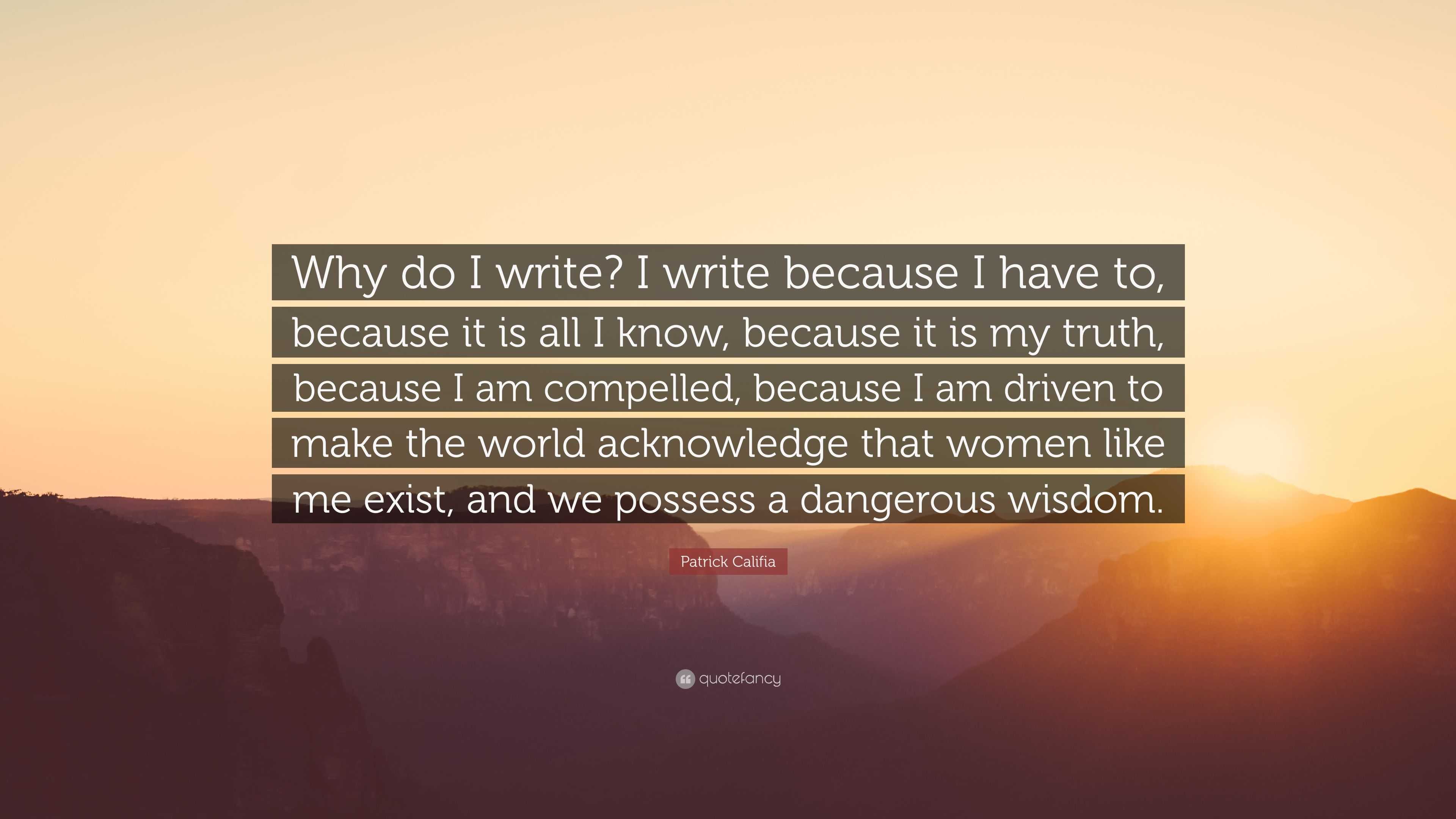
I write because now, if I don’t, it feels as if something is missing that day in my life. I started blogging more than 10 years back, because earlier this year, WordPress informed me that it was my tenth anniversary on the site. Before WP, I had a blog on Blogspot, on which I wrote for a couple of years, so I think I must be blogging for a good dozen years. After reading this, if you are tempted to look for my blog in Blogspot, don’t bother. It was with a different name, and I can’t even remember it myself.
I write because I have so much inside me that I have to share it to a wider audience. I don’t know if I have shared this previously, but since I blog anonymously, I don’t share anything about this blog beyond you people. Nobody beyond my children (and now my husband) know about this space of mine and any readers who decide to stay on do so, hopefully, because my writing brings some value to them. This is why, even though I don’t have a huge readership, I write daily and cherish each and every reader who decides that they like what they read.
Sometimes I think back and wish, I had probably become a writer professionally, maybe for a publication even. Would I have been happier? I really don’t know. I do have hopes of publishing something, someday. Maybe that is a goal I should work towards and see if I can reach in the next few years. But until then, I will work hard on my craft and continue to write and hone my writing to take it to the next level.
Until then thank you for reading my writing, sometimes which verges on rambles and may seem incoherent. And also because writing is fun!
The children start school tomorrow and while BB has in-person lessons this semester, GG has to contine with mostly home based learning. I think she goes back to school once a week for tutorials and otherwise school and CCA will be done remotely.
Singapore has been having single digit cases for a few weeks now and after a very long time, we heard that there are currently less than 100 active cases, with 30 in the hospital and none in the intensive care and about 59 in community isolation facilities. We had our 28th fatality last week and the total number of cases here now stands at close to 58,000.
The United States and India are on a race to probably see who can hit 10 million cases and first. But jokes aside this is seriously very scary. I have a large extended family in both countries and many of them fall into the vulnerable category and seeing this kind of statistics make me worried for them and their health.
My parents are seriously planning to move to a retirement home, but because the situation in India and specifically Mumbai is not getting any better, this plan has been postponed till sometime next year when things get better. Hopefully things get better and soon and they can make their move and get on with their lives. It’s been six months or so since they have left the house and though my mother does go down to buy fruits and vegetables, the most my dad goes is to the building terrace for a breath of fresh air. This is not really healthy and another source of worry for me and my sister.
I am really hoping one of the pharmacutical companies who are now doing clinical trials for a vaccine for Covid-19 become successful soon and a vaccine is released soon. I understand the elderly and the vulnerable will be given preference and so hopefully we will allow the elderly to go out and about with precautions.
Addie Baum is The Boston Girl, born in 1900 to immigrant parents who were unprepared for and suspicious of America and its effect on their three daughters.
Growing up in the North End, then a teeming multicultural neighborhood, Addie’s intelligence and curiosity take her to a world her parents can’t imagine – a world of short skirts, movies, celebrity culture and new opportunities for women. Addie wants to finish high school and dreams of going to college. She wants a career and to find true love.
Eighty-five-year-old Addie tells the story of her life to her twenty-two-year-old granddaughter, who has asked her “How did you get to be the woman you are today?” She begins in 1915, the year she found her voice and made friends who would help shape the course of her life. From the one-room tenement apartment she shared with her parents and two sisters, to the library group for girls she joins at a neighborhood settlement house, to her first, disastrous love affair, Addie recalls her adventures with compassion for the naïve girl she was and a wicked sense of humor.
Negativity bias, also known as the negativity effect, is the notion that, even when of equal intensity, things of a more negative nature such as unpleasant thoughts, emotions, or social interactions and harmful or traumatic events have a greater effect on one’s psychological state and processes than neutral or positive things. In other words, something very positive will generally have less of an impact on a person’s behavior and cognition than something equally emotional but negative. We even tend to focus on the negative even when the negative experiences are insignificant or inconsequential. This is why we remember more of the bad or negative things that happened in your life rather than the good or positive things.
Negative experiences tend to affect people more than positive ones. A 2010 article published by the University of California, Berkeley quotes psychologist Rick Hanson, “The mind is like Velcro for negative experiences and Teflon for positive ones.” According to Hanson, a negativity bias has been built into our brains based on millions of years of evolution when it comes to dealing with threats. Our ancestors lived in difficult environments. They had to gather food while avoiding deadly obstacles. Noticing, reacting to, and remembering predators and natural hazards (negative) became more important than finding food (positive). Those who avoided the negative situations passed on their genes.
The negative bias is our tendency not only to register negative stimuli more readily but also to dwell on these events. Also known as positive-negative asymmetry, this negativity bias means that we feel the sting of a rebuke more powerfully than we feel the joy of praise.
This psychological phenomenon explains why bad first impressions can be so difficult to overcome and why past traumas can have such long lingering effects. In almost any interaction, we are more likely to notice negative things and later remember them more vividly. As humans, we tend to remember traumatic experiences better than positive ones, recall insults better than praise, react more strongly to negative stimuli, think about negative things more frequently than positive ones and respond more strongly to negative events than to equally positive ones.
Psychologists Paul Rozin and Edward Royzman proposed four elements of the negativity bias in order to explain its manifestation: negative potency, steeper negative gradients, negativity dominance, and negative differentiation. Negative potency refers to the notion that, while possibly of equal magnitude or emotionality, negative and positive items/events/etc. are not equally salient. With respect to positive and negative gradients, it appears to be the case that negative events are thought to be perceived as increasingly more negative than positive events are increasingly positive the closer one gets to the affective event itself. In other words, there is a steeper negative gradient than positive gradient. Negativity dominance describes the tendency for the combination of positive and negative events to skew towards an overall more negative interpretation than would be suggested by the summation of the individual positive and negative components. Phrasing in more Gestalt-friendly terms, the whole is more negative than the sum of its parts. Negative differentiation is consistent with evidence suggesting that the conceptualization of negativity is more elaborate and complex than that of positivity.
One of the ways negativity bias is evident is that people are risk averse. People tend to guard against losses by giving greater significance to even small probabilities. The negative feelings from losing $50 are stronger than the positive feelings of finding $50. In fact, people will commonly work harder to avoid losing $50 than they will to gain $50. While humans may not need to be on constant high alert for survival like our ancestors, negative bias can still affect how we act, react, feel, and think. For example, an older research points out that when people make decisions, they put greater importance on the negative event aspects than on the positive. This can affect choices and willingness to take risks.
According to a 2014 article, negativity bias can also be found in political ideology. Conservatives tend to have stronger physiological responses and devote more psychological resources to negatives than liberals do. Also, in an election, voters are more likely to cast their vote for a candidate based on negative information about their opponent as opposed to their candidate’s personal merits.
Psychological research suggests that the negative bias influences motivation to complete a task. People have less motivation when an incentive is framed as a means to gain something than when the same incentive will help them avoid the loss of something. This can play a role in your motivation to pursue a goal. Rather than focusing on what you will gain if you keep working toward something, you’re more likely to dwell on what you might have to give up in order to achieve that goal.
Additionally, studies have shown that negative news is more likely to be perceived as truthful. Since negative information draws greater attention, it also may be seen as having greater validity. This might be why bad news seems to garner more attention.
Such differences in the negativity bias might explain why some people are more likely to value things such as tradition and security while others are more open to embracing ambiguity and change.
Even though it appears that negativity is a default setting, we can override it.
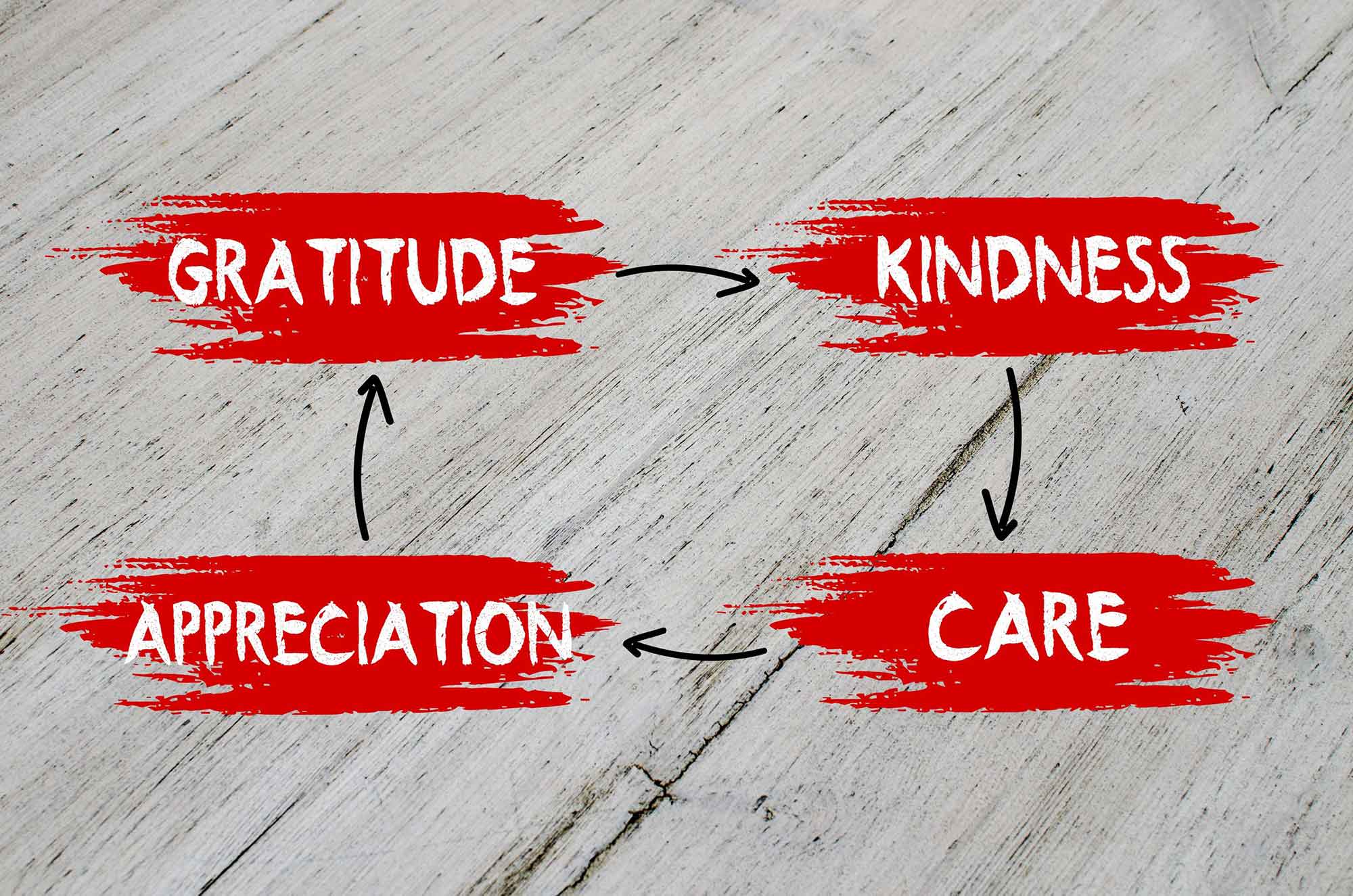
Overcoming our negativity bias is not easy to do. You can increase positivity by being mindful of what is and isn’t important in your life and focus on valuing and appreciating the positive aspects. It’s also recommended that you break the pattern of negative reactions and allow positive experiences to register deeply. You can focus on eliminating the negative rather than cultivating the positive. While both cultivating the positive and eliminating the negative are good, priority should be given to eliminating the negative. But what’s more important is to not do the bad things, but to ride it out and be positive and not fall into the trap of turning negative yourself.
When giving criticism, most of us make the mistake of starting with the good, followed by the bad and then wrap it up with some positive words. But most people would rather just get the bad news out of the way. And, once you give people the bad news, they respond so strongly to criticism that the brain basically forgets the first part and people walk out focusing on that criticism, with all the good stuff forgotten. It’s better to give the bad news early; then the good news can sink in after that. People have got to hear the criticism to know what the problem is, but then you can tell them what they’re good at and let them know how they can improve.
You can also overcome any negativity bias learning to just witness it and not react to it, expand your awareness by spending time with yourself in nature or cultivating a regular spiritual practice. You can also counteract your negativity bias soon as you notice the painful thought. Identify your painful thought and then interrupt the negative momentum with a new better-feeling thought or action and repeat positive affirmations to yourself. You should also avoid the negative stimuli around you which triggers your own negativity bias and appreciate even the smallest pleasures in your life and constantly notice and amplify all that is good there.
Start paying attention to the type of thoughts that run through your mind. After an event takes place, you might find yourself thinking things like “I shouldn’t have done that.” This negative self-talk shapes how you think about yourself and others. A better tactic is to stop those thoughts whenever they begin. Instead of fixating on past mistakes that cannot be changed, consider what you have learned and how you might apply that in the future. How you talk to yourself about events, experiences, and people plays a large role in shaping how you interpret events. When you find yourself interpreting something in a negative way, or only focusing on the bad aspect of the situation, look for ways to reframe the events in a more positive light. This doesn’t mean ignoring potential dangers or wearing rose-colored glasses—it simply means refocusing so that you give fair and equal weight to good events.
When you find yourself ruminating on things, look for an uplifting activity to pull yourself out of this negative mindset. For example, if you find yourself mentally reviewing some unpleasant event or outcome, consciously try to redirect your attention elsewhere and engage in an activity that brings you joy. You can go for a walk, listen to upbeat music, read a good book and savour positive moments in your life
Because it takes more for positive experiences to be remembered, it is important to give extra attention to good things that happen. Where negative things might be quickly transferred and stored in your long-term memory, you need to make more of an effort to get the same effect from happy moments. So when something great happens, take a moment to really focus on it. Replay the moment several times in your memory and focus on the wonderful feelings the memory evokes.
By checking up on yourself throughout the day, you can start to recognize any thoughts that are running through your mind – both helpful and unhelpful ones. You can also look at your own behaviors too, for a better understanding of what’s serving you and what isn’t. From here, you can start to tackle these head-on, challenging them and replacing them with more useful ones. Albert Ellis’ ABC technique is one useful framework you can apply here where once you become aware of your behaviours or its consequences (where B stands for behabiour and C for consciousness in the model, respectively), then you can work backward to think about what led to them which brings you to the A standing for Antecedents. What were you thinking before experiencing anger, resentment, or frustration? Was it negativity bias in action, perhaps? And how can you replace those thoughts with more positive ones?
Practice mindfulness, breathing and meditation where through guided meditations, reflection, and other mindfulness interventions, you can start to observe your feelings and thoughts more objectively. Even more promising evidence comes from a 2011 study by authors Kiken and Shook, who found an increase in positive judgments and higher levels of optimism when participants practiced mindful breathing. Compared to control groups, these participants performed better at tests where they were required to categorize positive stimuli, leading the researchers to suggest that mindfulness practice can have a significant positive impact on the bias.
Negativity biases have also been linked to numerous psychological disorders, such as depression and anxiety and so when you catch yourself taking a negative view of situations, it often helps to practice cognitive restructuring by reframing the event or experience.
In conclusion, it would appear that humans are hardwired with a negativity bias, or the tendency to put greater weight on negative experiences than on positive experiences. In general, there are ways to alter your negativity bias by focusing on the positive aspects of your life. So the next time you experience or create a positive moment, take a little longer than you usually would to enjoy it. Engage fully in the good sensations, happy thoughts, and pleasant emotions that you feel and make a note of what you enjoyed about it. When you go home, why not reflect on what just happened and turn the savoring skill into a habit?
This link from Positive Psychology has about 15 positive psychology Ted talks, so do look at them. And another Ted Talk which gives us a simple tip on how we can improve positive thinking
Paris, 1940. With the city occupied by the Nazis, three young seamstresses go about their normal lives as best they can. But all three are hiding secrets. War-scarred Mireille is fighting with the Resistance; Claire has been seduced by a German officer; and Vivienne’s involvement is something she can’t reveal to either of them.
Two generations later, Claire’s English granddaughter Harriet arrives in Paris, rootless and adrift, desperate to find a connection with her past. Living and working in the same building on the Rue Cardinale, she learns the truth about her grandmother – and herself – and unravels a family history that is darker and more painful than she ever imagined.
In wartime, the three seamstresses face impossible choices when their secret activities put them in grave danger. Brought together by loyalty, threatened by betrayal, can they survive history’s darkest era without being torn apart?


:max_bytes(150000):strip_icc()/negative-bias-45896182-74ad5d5a46ea4e15b205531a457926ff.png)




 Memories and Such