Staycations – Yay or Nay?

Staycations, which usually means staying in a hotel or resort which is either in your own town or city and does not involving travel. The traditional meaning does not even include overnight accommodation, but today’s definition does include an overnight stay. Most people replicate a traditional vacation, with a defined start and end date, just without getting on a plane or travelling far from their own town or city. The word is a a portmanteau of stay (meaning stay-at-home) and vacation.

Staycations achieved popularity in the US. during the financial crisis of 2007–2010 and in the UK in 2009 as a weak pound sterling made overseas holidays significantly more expensive. Staycations have been popular in Singapore for many years now and especially in the last decade or so. Today, the staycation holiday has become popular worldwide due to travel restrictions caused by the COVID-19 pandemic.

The earliest reference to the term staycation came from a 2003 article by Terry Massey in The Sun News. The word became widely used in the United States during May 2008 as the summer travel season began with petrol prices reaching record highs, leading many people to cut back on expenses including travel. Merriam-Webster cites the earliest use in the Cincinnati Enquirer on  July 18, 1944 and the term was added to the 2009 version of the Merriam–Webster’s Collegiate Dictionary.

So why do people take staycations? Most people take staycations for many reasons.

Staycations are easy. You avoid the hassle of actually going on a holiday by bypassing flights, tickets and the other inconvienances and get straight to enjoying your holiday. There’s also no hassle of packing and unpacking, sometimes multiple times, no jet lag and long drives and endless waiting at airports.

Staycations are also cheaper than a holiday. A hotel accommodation is not just the only cost in a holiday. You have to also factor in transportation costs, food and other living expenses in the destination make any holiday, especially for a family an expensive affair.

Staycations can be quite the experience. You can choose different accommodation, based on your budget and experience life differently, maybe even altering your mood and making you feel you are not in your own city.

Staycations benefit the economy. Staycations benefit local businesses who get customers from locals and boost local economy. Especially in times like this when many cities are in a lockdown and both domestic and international tourism is severely impacted, a staycation can mean a full house for the hotel and the difference between the hotel staying in business and closing down forever.

Staycations are good for the environment. Air travel’s environmental impact is significant. By avoiding travel, a staycation may reduce the carbon emissions associated with travel greatly.

Staycations start earlier and go for longer. Without the hassle of travel, your staycation starts the minute you drive into the hotel which may be less than an hour’s drive from home. Again, since you don’t need to travel back home, you can stay as long as you want, coming home just when you need to.

Staycations allow you to experience affordable luxury. When you travel traditionally, because of budgetary considerations, you may not be able to spend as much on accommodation as you like. But with a staycation, you can afford accommodation at a higher price point than what you would be able to afford at another place and enjoy luxury that otherwise you would not be able to afford.

But contrary to all that I wrote above, I feel a staycation is a waste of your money. Why?

A room in a good hotel in Singapore does not come cheap and is a minimum of $200 per room per night. With this amount, I can easily get a couple of tickets to a southeast Asian destination in say Malaysia, Thailand or even Cambodia.

Here’s what I think I would do with $200 which would be spent in one night in a mid-sized hotel in Singapore. I prefer to sleep in my own bed, so that’s accommodation taken care of. With the money, I don’t have to lift a finger in my own home for a day by ordering food and even a cleaner to come a couple of hours to clean my home. In addition, this money can pay for entertainment like a streaming subscription for year which I can enjoy for a long time. The money will also pay for the entrance fee to local attractions which I have not visited in many years like the Singapore Zoo, Night Safari and River Safari as well as the Art Science Museum, Singapore Flyer, Gardens By The Bay, Marina Bay Sands and Sentosa with the Universal Studios. I can do atleast a few of these attractions with the money I would spend staying one night in a hotel.

So this is why staycations are a Nay from me and I would probably not do a staycation, but rather spend money on experiences. What about you? Are staycations a Yay or a Nay? I would love to read your opinion.

In My Hands Today…

The Great Pretenders – Laura Kalpakian

This image has an empty alt attribute; its file name is 40985740.jpg

The daughter of Hollywood royalty, Roxanne Granville is used to getting what she wants–even if she has to break the rules. But after a falling-out with her grandfather, a powerful movie mogul, she has to face life on her own for the first time….

Roxanne forges a career unique for women in the 1950s, becoming an agent for hungry young screenwriters. She struggles to be taken seriously by the men who rule Hollywood and who often assume that sexual favors are just a part of doing business. When she sells a script by a blacklisted writer under the name of a willing front man, more exiled writers seek her help. Roxanne wades into a world murky with duplicity and deception, and she can’t afford any more risks.

Then she meets Terrence Dexter, a compelling African American journalist unlike anyone she’s ever known. Roxanne again breaks the rules, and is quickly swept up in a passionate relationship with very real dangers that could destroy everything she’s carefully built.

Roxanne Granville is a woman who bravely defies convention. She won’t let men make all the rules, and won’t let skin color determine whom she can love. The Great Pretenders is a riveting, emotional novel that resonates in today’s world, and reminds us that some things are worth fighting for.

International Day of the Girl Child

Also called the Day of Girls and the the International Day of the Girl, the International Day of the Girl Child was first declared by the United Nations on 11 October 2012 to increase awareness of the gender inequality faced by girls worldwide and support more opportunity for girls. The inequality faced by girls include areas such as access to education, nutrition, legal rights, medical care, and protection from discrimination, violence against women and forced child marriage. The celebration of the day also reflects the successful emergence of girls and young women as a distinct cohort in development policy, programming, campaigning and research.

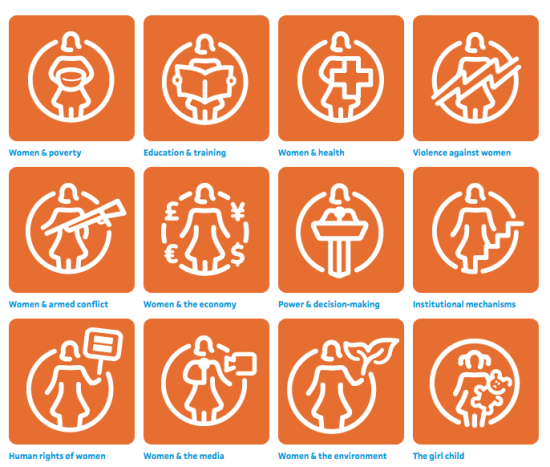
In 1995, before the girls of today were even born,the fourth World Conference on Women made history for the women’s rights agenda with the adoption of the Beijing Declaration and Platform for Action was adopted, the most visionary blueprint for the empowerment of women and girls. The Beijing Declaration and Platform for Action is the most progressive blueprint ever for advancing the rights of not only women but girls. Now, about half a century later, the Platform for Action remains a powerful foundation for assessing progress on gender equality. It calls for a world where every girl and woman can realize all her rights, such as to live free from violence, to attend and complete school, to choose when and whom she marries, and to earn equal pay for equal work. The Platform for Action specifically calls on the global community to eliminate all forms of discrimination against girls; eliminate negative cultural attitudes and practices against girls; promote and protect the rights of girls and increase awareness of their needs and potential; eliminate discrimination against girls in education, skills development and training; eliminate discrimination against girls in health and nutrition; eliminate the economic exploitation of child labour and protect young girls at work; eradicate violence against girls; promote girls’ awareness of and participation in social, economic and political life and strengthen the role of the family in improving the status of girls. 

The International Day of the Girl increases awareness of issues faced by girls around the world. Many of the global development plans do not include or consider girls, and their issues have become “invisible.” More than 62 million girls around the world had no access to education, as of 2014, according to USAID. Worldwide and collectively, girls ages 5 to 14 spend more than 160 million hours more on household chores than boys of the same age do. Globally, one in four girls are married before the age of 18. Each year, 12 million girls under 18 are married; 130 million girls worldwide are still out of school; and approximately 15 million adolescent girls aged 15-19 have experience forced sex. The International Day of the Girl Child helps to raise awareness not only of the issues that girls face, but also of what is likely to happen when these problems are solved. For example, educating girls helps reduce the rate of child marriage, disease and helps strengthen the economy by helping girls have access to higher paying jobs.

This day began as a project of Plan International, a non-governmental organisation that operates worldwide through their “Because I Am a Girl” campaign, which raised awareness on the importance of nurturing girls globally and in developing countries in particular. Awareness for the initiative grew internationally and soon the United Nations got involved in this campaign which finally became the International Day of the Girl Child with the inaugural day on October 11, 2012.

The resolution states that the Day of Girls recognises the empowerment of and investment in girls, which are critical for economic growth, the achievement of all Millennium Development Goals, including the eradication of poverty and extreme poverty, as well as the meaningful participation of girls in decisions that affect them, are key in breaking the cycle of discrimination and violence and in promoting and protecting the full and effective enjoyment of their human rights, and recognizing also that empowering girls requires their active participation in decision-making processes and the active support and engagement of their parents, legal guardians, families and care providers, as well as boys and men and the wider community.

Each year’s Day of Girls has a theme; the theme for this year’s celebrations is “My voice, our equal future” where girls, especially adolescent girls will focus their their demands to live free from gender-based violence, harmful practices, and HIV and AIDS; learn new skills towards the futures they choose and lead as a generation of activists accelerating social change

If you want to get involved in the International Day of the Girl Child, you can do so by sharing stories of inspiring adolescent girls or girl-led organisations who are developing innovative solutions or leading efforts towards positive social change, including gender equality, in their communities and nations. Let’s amplify their leadership, actions and impact to inspire others. You can also participate in a youth-led digital activation which will be launched on the 11th. This will be led by young people across the world who are developing a digital activism campaign, aiming to raise the diversity of girls’ voices and their vision for a reimagined future.

2020 Week 41 Update

Its another week and on Friday, the world saw a new surge in infections, mostly from a fresh surge in Europe with countries there reporting higher daily cases than the most infected countries. Globally, the total confirmed cases of Covid-19 have reached over 37 million with over 1 million deaths and about 28 million people who have recovered. The United States continues to lead the world with nearly 8 million cases and India is second with around 7 million cases and Brazil follows with about 5 million cases.

Singapore’s cases are not as high as it used to be and we are currently having single digit local or  community cases with the bulk of local cases being from either workers in dormitories or foreign imported cases where travellers test positive on arrival into Singapore. Overall, the number of new cases in the community has remained stable at an average of 1 case per day in the past 2 weeks as well as the number of unlinked cases in the community has remained stable at an average of fewer than 1 case per day in the past 2 weeks. The total number of active cases has been reduced to about 157 now and 57,675 patients have fully recovered from the infection and have been discharged from hospitals or community care facilities. Of the 157 still active cases, about 37 of the confirmed cases who are still in hospital are stable or improving with one in the intensive care unit. Of the balance cases, they have mild symptoms or are clinically well but still test positive for COVID-19 and are isolated and cared for at community facilities.

On the home front, we are all still at home, either working from home or home based learning though there are indications that S may be able to start going back to work on a staggered basis soon and he is quite happy to be going back to office soon, even if it not on a full-time basis. The children have about a week still to go before school starts and they too want to go back, but unfortunately still can’t.

Anyway, this was our week, have a wonderful week people and remember to stay safe and stay masked!

In My Hands Today…

The Overdue Life of Amy Byler – Kelly Harms

This image has an empty alt attribute; its file name is 42399951._SY475_.jpg

Overworked and underappreciated, single mom Amy Byler needs a break. So when the guilt-ridden husband who abandoned her shows up and offers to take care of their kids for the summer, she accepts his offer and escapes rural Pennsylvania for New York City.

Usually grounded and mild mannered, Amy finally lets her hair down in the city that never sleeps. She discovers a life filled with culture, sophistication, and—with a little encouragement from her friends—a few blind dates. When one man in particular makes quick work of Amy’s heart, she risks losing herself completely in the unexpected escape, and as the summer comes to an end, Amy realizes too late that she must make an impossible decision: stay in this exciting new chapter of her life, or return to the life she left behind.

But before she can choose, a crisis forces the two worlds together, and Amy must stare down a future where she could lose both sides of herself, and every dream she’s ever nurtured, in the beat of a heart.