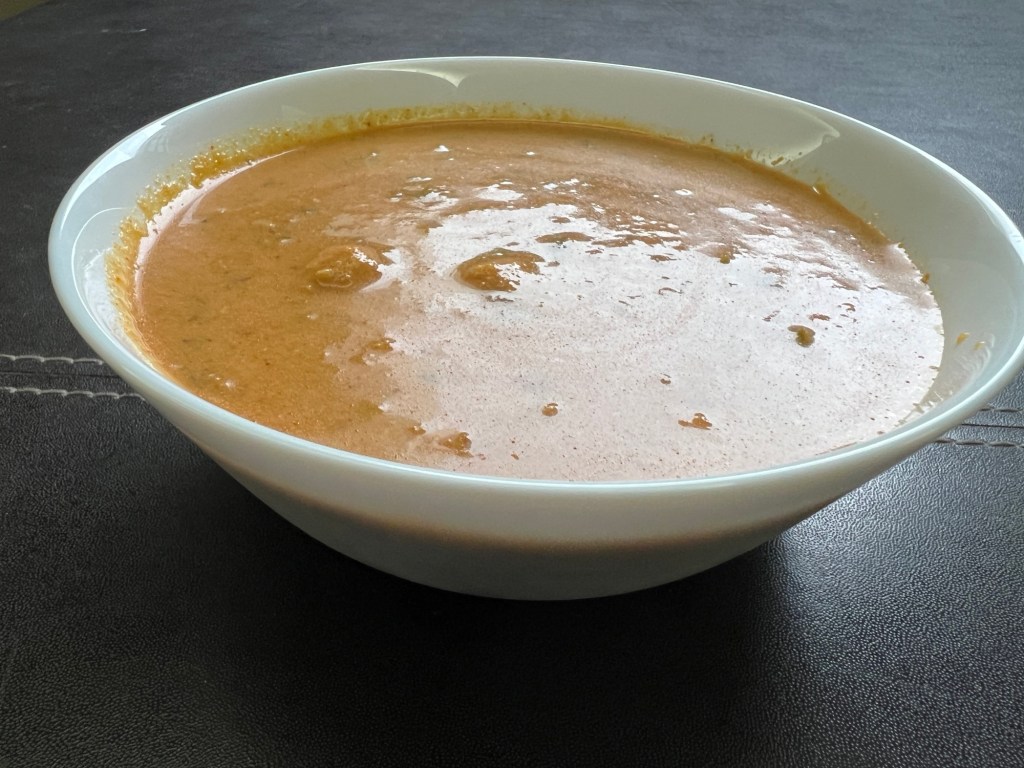
Dahiwale Chole aka Chickpeas in a Tomato Yogurt Sauce

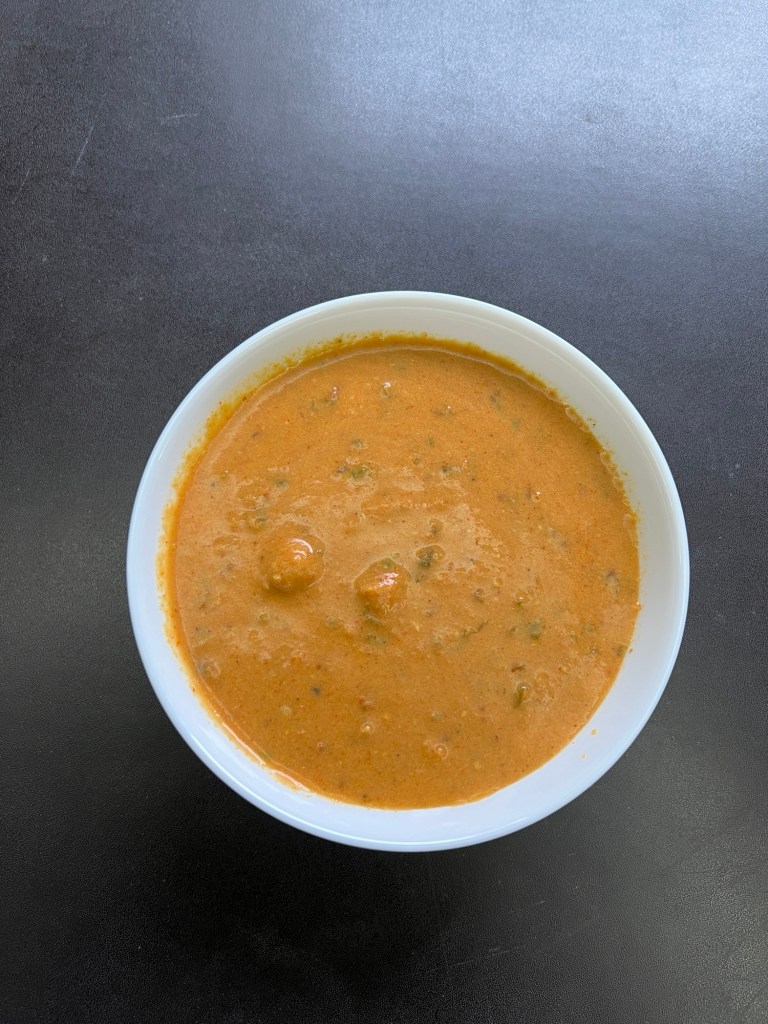
The other day, while wondering what to cook — something that happens to all of us — I suddenly had an epiphany and thought of experimenting with some boiled chickpeas that I had at home. The result was this quick gravy that took about 15-20 minutes to put together and went beautifully with the boiled chickpeas. I will also be making this gravy again, this time trying it with different vegetables.
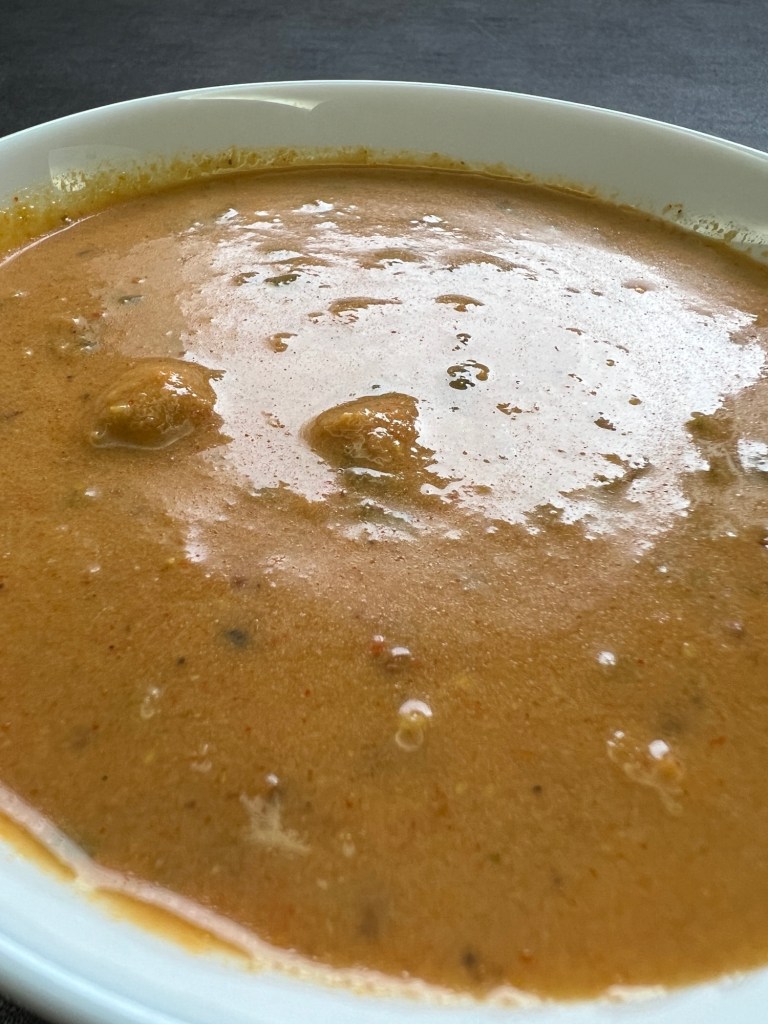
Dahiwale Chole aka Chickpeas in a Tomato Yogurt Sauce

Ingredients:

  • 1 cup boiled chickpeas
  • 2 medium-sized onions, roughly chopped
  • 4 medium-sized tomatoes, roughly chopped
  • 5-6 garlic cloves, peeled
  • 1-inch piece of ginger, peeled
  • 2-3 fresh red chillies, destalked
  • 1 cup yoghurt, whisked
  • 2 tbsp roasted peanut powder
  • 1 tsp cumin seeds
  • ¼ tsp turmeric powder
  • ½ tsp Kashmiri red chilli powder
  • 1 tsp cumin powder
  • 1 tsp coriander powder
  • 1 tsp jaggery powder (optional)
  • Salt to taste
  • 1 tbsp oil or ghee
  • Finely chopped coriander leaves to garnish

Method:

  • Blend together the garlic, ginger and red chillies into a smooth and keep aside.
  • Blend the onions into a fine paste and keep aside.
  • Blend the tomatoes into a fine paste and keep aside.
  • Heat the oil in a pan and when the oil heats up, add in the cumin seeds and let the seeds pop.
  • Pour in the blended garlic, ginger and chillies and stir well for a couple of minutes
  • Then add in the blended onions, sprinkle a bit of salt and cook well until the onion starts to become translucent.
  • Then add the blended tomatoes and cook covered until the oil starts to ooze out.
  • Add the dry spices – turmeric powder, red chilli powder, cumin powder, coriander powder, salt, and peanut powder. If you are adding jaggery powder or sugar, add it now.
  • Once the oil oozes out, add in the whisked yoghurt and stir continuously for a few minutes.
  • Now add the boiled chickpeas and cook covered on a medium-low flame for 5-7 minutes.
  • Check for seasoning and adjust what is needed.
  • Garnish with finely chopped coriander leaves and serve hot with rice or any Indian flatbread.
Notes:

  • I used already boiled chickpeas, but if you don’t have them handy, you can make it with canned chickpeas or soak a cup of dry chickpeas for 6–8 hours and then cook it in a pressure cooker or in a pan until they are soft.
  • To make roasted peanut powder, dry roast peanuts until the skin starts to split. Cool them completely and blend to a coarse powder.
  • You can also add powdered sesame seeds instead of peanuts or both together. To make powdered sesame seeds, dry roast white sesame seeds until they start to pop. Cool then pulse to make a fine powder.
  • If you plan to use other vegetables, lightly fry them in 1 tsp oil until they are 80% cooked. Then remove and keep aside and make the gravy as per the recipe above. Add them back into the gravy where I have indicated adding the boiled chickpeas.

In My Hands Today…

Hello, Molly!: A Memoir – Molly Shannon, Sean Wilsey

At age four, Molly Shannon’s world was shattered when she lost her mother, baby sister, and cousin in a car accident with her father at the wheel. Held together by her tender and complicated relationship with her grieving father, Molly was raised in a permissive household where her gift for improvising and role-playing blossomed alongside the fearlessness that would lead her to become a celebrated actress.

From there, Molly ventured into the wider world of New York and Los Angeles show business, where she created her own opportunities and developed her daring and empathetic comedy. Filled with behind-the-scenes stories involving everyone from Whitney Houston to Adam Sandler to Monica Lewinsky, many told for the first time here, Hello, Molly! spans Molly’s time on Saturday Night Live—where she starred alongside Will Ferrell, Adam Sandler, Cheri Oteri, Tracy Morgan, and Jimmy Fallon, among many others. At the same time, it explores with humor and candor her struggle to come to terms with the legacy of her father, a man who both fostered her gifts and drive and was left with the impossible task of raising his kids alone after the loss of her mother.

Witty, winning, and told with tremendous energy and heart, Hello, Molly!, written with Sean Wilsey, sheds new and revelatory light on the life and work of one of our most talented and free-spirited performers.
Genres
Memoir
Audiobook
Nonfiction
Humor
Biography
Biography Memoir
Comedy

Poem:Ode to the Moon

Oh, Luna, my celestial muse,
Your ethereal beauty, I cannot refuse.
You grace the night sky with your gentle light,
A beacon of hope in the darkest of night.

Your silvery glow, a mesmerising sight,
Casts a spell upon the world, a magical rite.
The stars twinkle, a chorus divine,
But you, my dear moon, your radiance is mine.

I stand in awe, my heart filled with wonder,
As I gaze upon your face, a world to ponder.
The craters and shadows, a map of your past,
A story untold, a mystery to last.

You pull at the tides, a celestial dance,
Commanding the oceans with a mere glance.
Your power is mighty, your influence grand,
A guardian of dreams, a keeper of plans.

When clouds obscure your face, I feel a pang of loss,
Longing for your light, to guide me across.
But you always return, a faithful friend,
Reminding me that darkness never will mend.

Oh, Luna, my muse, my celestial queen,
Your beauty unmatched, your grace ever seen.
I’ll bask in your glow, my heart filled with awe,
For you are the moon, the one I adore.

2024 Week 47 Update

Today’s quote from modern-day poet and writer whose work focuses on themes of self-exploration, resilience, and the journey toward inner peace, James Conleevv captures the essence of resilience, self-discovery, and the journey toward personal freedom. Mountains are symbols of stability, patience, and enduring power, whereas storms often signify life’s hardships, obstacles, and moments of chaos. The sea represents the vastness of existence, with its endless waves symbolising the ups and downs of life, the challenges we encounter, and the emotions that can sometimes feel overwhelming. By comparing an individual to a mountain in such a setting,

Conleevv encourages fortitude, urging one to remain grounded and firm regardless of external circumstances. Conleevv suggests a lifelong pursuit of self-knowledge, wisdom, and understanding. It is through facing the storms, and standing firm in our values and beliefs, that one finds clarity and insight. This process leads to an inner freedom that empowers us to live authentically and fully, unburdened by fear or hesitation. Conleevv’s use of natural imagery—a mountain, a storm, and the sea—evokes the fundamental elements of the earth and our place within it, reminding us of both the enormity of the world and our capability to withstand its challenges. To be free, in this context, means to live aligned with one’s true self, no matter how fierce the storm or how unpredictable the sea. Conleevv’s words inspire strength and perseverance, reinforcing the belief that peace and freedom come not from avoiding life’s difficulties but from facing them with courage and an open heart.

After over two weeks of pain in my ankles, I finally have some relief. While I can’t claim to be completely cured, at least I don’t walk with a limp and can do my daily walking for some time. I still cannot do extended walking, but I am grateful for small wins. I also have an appointment to see a specialist, but this will only happen in the new year because I am taking the public healthcare route. Till then, I guess I have to be careful and not put too much pressure on my ankle.

GG’s exams are over and she is enjoying her holidays. I think she has plans to meet friends and go out before we head to India for our holidays. BB is busy in camp and we look forward to meeting him over the weekend.

That’s all from me this week. See you next week! And in the meantime, keep smiling and stay positive.

In My Hands Today…

Slow Noodles: A Cambodian Memoir of Love, Loss, and Family Recipes – Chantha Nguon

A haunting and beautiful memoir from a Cambodian refugee who lost her country and her family during Pol Pot’s genocide in the 1970s but who finds hope by reclaiming the recipes she tasted in her mother’s kitchen.

Take a well-fed nine-year-old with a big family and a fancy education. Fold in 2 revolutions, 2 civil wars, and one wholesale extermination. Subtract a reliable source of food, life savings, and family members, until all are gone. Shave down childhood dreams for approximately two decades, until only subsistence remains.

In Slow Noodles, Chantha Nguon recounts her life as a Cambodia refugee who lost everything and everyone—her house, her country, her parents, her siblings, her friends—everything but the memories of her mother’s kitchen, the tastes and aromas of the foods her mother made before the dictator Pol Pot tore her country apart in the 1970s, killing millions of her compatriots. Nguon’s irrepressible spirit and determination come through in this emotional and poignant but also lyrical and magical memoir that includes over 20 recipes for Khmer dishes like chicken lime soup, banh sung noodles, pâté de foie, curries, spring rolls, and stir-fries. For Nguon, recreating these dishes becomes an act of resistance, of reclaiming her place in the world, of upholding the values the Khmer Rouge sought to destroy, and of honoring the memory of her beloved mother.

From her idyllic early years in Battambang to hiding as a young girl in Phnom Penh as the country purges ethnic Vietnamese like Nguon and her family, from her escape to Saigon to the deaths of mother and sister there, from the poverty and devastation she experiences in a war-ravaged Vietnam to her decision to flee the country. We follow Chantha on a harrowing river crossing into Thailand—part of the exodus that gave rise to the name “boat people”—and her decades in a refugee camp there, until finally, denied passage to the West, she returns to a forever changed Cambodia. Nguon survives by cooking in a brothel, serving drinks in a nightclub, making and selling street food, becoming a suture-nurse treating refugees abused by Thai authorities, and weaving silk. Through it all, Nguon relies on her mother’s “slow noodles” approach to healing and to cooking, one that prioritizes time and care over expediency. Haunting and evocative, Slow Noodles is a testament to the power of culinary heritage to spark the rebirth of a young woman’s hopes for a beautiful life.