In the fast-paced world we live in, where demands and distractions seem to be ever-present, the morning hours can be a sanctuary of calm and productivity. A well-designed morning routine can be the secret weapon that sets the tone for a successful day, allowing you to tackle challenges with focus, energy, and a positive mindset. By intentionally structuring your mornings, you can unlock your full potential and create a foundation for personal growth, productivity, and overall well-being.
A morning routine is a series of intentional habits and practices that you incorporate into the first few hours of your day. It serves as a blueprint for starting your day on the right foot, setting the stage for productivity, clarity, and a sense of control over your time and priorities.
The benefits of establishing a consistent morning routine are numerous and far-reaching. By starting your day with a clear plan and focused mindset, you’ll be better equipped to tackle tasks efficiently and effectively, minimizing procrastination and distractions. A well-structured morning routine helps you prioritize and allocate time for the most important tasks, ensuring that you don’t waste valuable hours on unproductive activities. Incorporating mindfulness practices, such as meditation or journaling, into your morning routine can help you cultivate a clear and focused mind, reducing stress and improving decision-making abilities. By incorporating physical activity, hydration, and a nutritious breakfast into your routine, you’ll experience a natural energy boost that can sustain you throughout the day. When you start your day with intentional actions, you’ll feel more in control of your time and priorities, reducing the sense of being overwhelmed or reactive to external circumstances. A consistent morning routine reinforces positive habits, making it easier to incorporate other beneficial practices into your daily life. By dedicating time to self-reflection, goal-setting, or personal development activities, you’ll create opportunities for continuous growth and self-improvement.
While there is no one-size-fits-all approach to creating a morning routine, there are several key elements that you can incorporate to design a routine that aligns with your personal goals and lifestyle. Here are some essential components to consider:
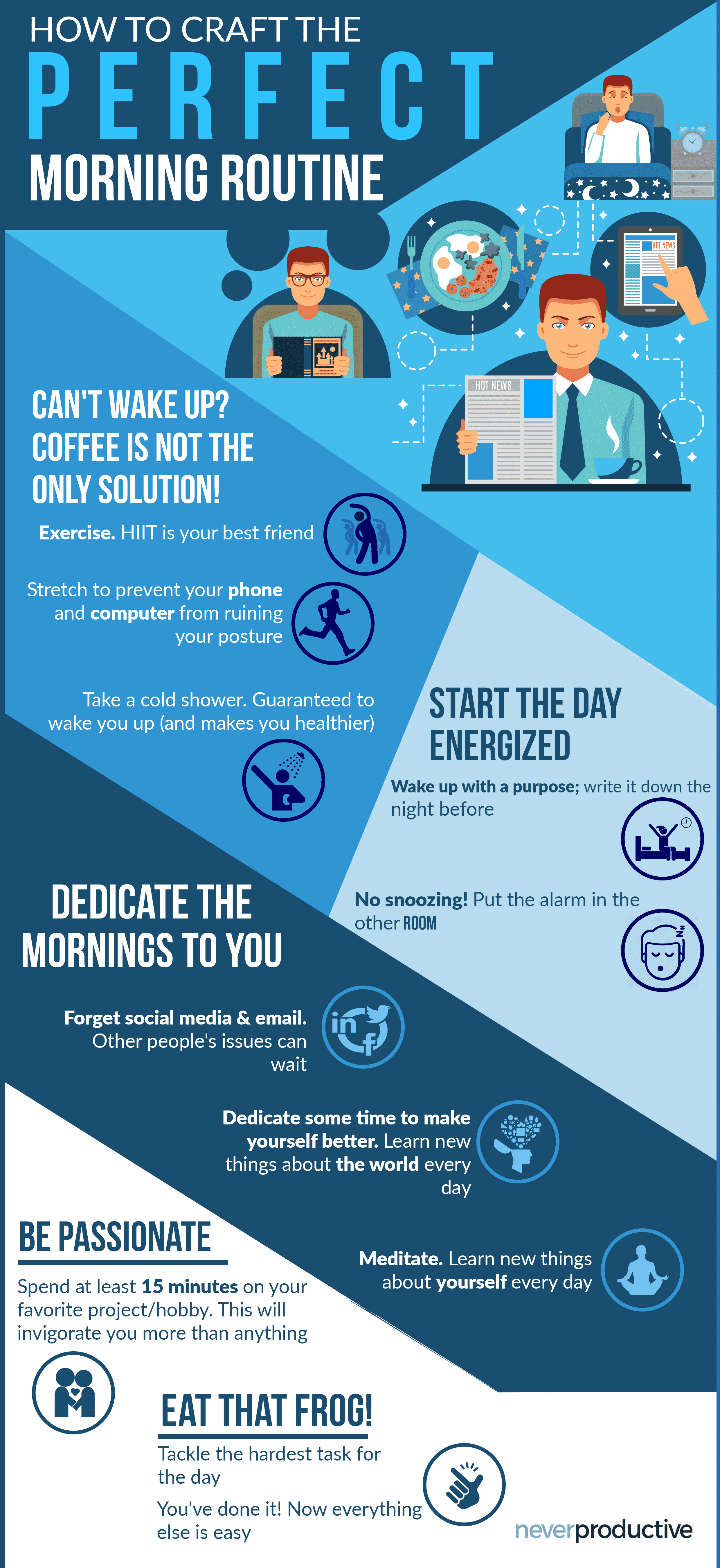
- Wake Up Early: While the specific wake-up time may vary based on your personal preferences and commitments, waking up early can provide a sense of calm and control over your day. Many successful individuals swear by the benefits of rising before the rest of the world, allowing them to start their day with minimal distractions and interruptions.
- Hydrate and Nourish Your Body: Start your day by hydrating with a glass of water or a warm beverage like lemon water or herbal tea. This simple act can kickstart your metabolism and provide a gentle boost of energy. Additionally, incorporate a nutritious breakfast into your routine to fuel your body and mind for the day ahead.
- Practice Mindfulness: Incorporating mindfulness practices, such as meditation, deep breathing exercises, or journaling, can help you cultivate a sense of calm and clarity. These practices can reduce stress, improve focus, and promote self-awareness, setting the stage for a more productive and fulfilling day.
- Move Your Body: Physical activity, whether it’s a full workout, a brisk walk, or gentle stretching, can energize your body and mind. Exercise releases endorphins, which can improve your mood and cognitive function, making it easier to tackle the day’s challenges with a positive mindset.
- Plan and Prioritize: Take time to review your schedule, set goals for the day, and prioritize your tasks. This simple act of planning can help you stay focused and avoid feeling overwhelmed or scattered throughout the day.
- Practice Gratitude and Positive Affirmations: Cultivating a mindset of gratitude and positivity can have a profound impact on your overall well-being and outlook. Start your day by reflecting on the things you’re grateful for or reciting positive affirmations to reinforce a growth mindset and resilience.
- Engage in Personal Development: Dedicate a portion of your morning routine to activities that foster personal growth and self-improvement. This could include reading a book, listening to a podcast, or taking an online course related to your interests or professional development.
- Connect with Loved Ones: If your schedule permits, consider incorporating quality time with your loved ones into your morning routine. This could be as simple as sharing a morning meal or engaging in a brief conversation before starting your day.
- Prepare for the Day Ahead: Before leaving for work or tackling your daily tasks, take a few moments to gather your essentials, review your schedule, and mentally prepare for the day ahead. This simple act can help you feel more organized and in control, reducing the likelihood of forgetting important items or appointments.
While the components mentioned above can serve as a guide, it’s important to remember that your morning routine should be tailored to your unique lifestyle, preferences, and goals. Here are some tips for creating a morning routine that works for you:
- Start Small: If you’re new to the concept of a morning routine, start with one or two simple practices and gradually build upon them. Trying to incorporate too many new habits at once can be overwhelming and lead to burnout.
- Experiment and Adjust: Your morning routine should be a living, evolving practice. Don’t be afraid to experiment with different activities or adjust the order and duration of your practices to find what works best for you.
- Consider Your Chronotype: Are you a natural early riser or a night owl? Understanding your chronotype (your natural sleep-wake cycle) can help you design a morning routine that aligns with your body’s natural rhythms, making it easier to stick to.
- Embrace Flexibility: While consistency is key, it’s important to recognize that life can be unpredictable. Be prepared to adapt your morning routine to accommodate unexpected circumstances, such as travel, illness, or family obligations.
- Involve Your Family: If you have a partner or children, consider involving them in your morning routine. This can not only create a sense of shared purpose but also serve as a positive example for your loved ones.
- Celebrate Small Wins: Establishing a new routine can be challenging, so celebrate the small victories along the way. Acknowledge and appreciate the progress you’ve made, no matter how small, as this will help reinforce the habit and keep you motivated.
Creating a morning routine is one thing, but sticking to it consistently is often the biggest challenge. Here are some strategies to help you overcome common obstacles and maintain your morning routine:
- Set a Consistent Wake-Up Time: Establish a consistent wake-up time, even on weekends or days off. This will help regulate your body’s internal clock and make it easier to maintain your routine.
- Prepare the Night Before: Lay out your workout clothes, prepare your breakfast ingredients, or gather any materials you’ll need for your morning routine the night before. This simple act of preparation can make it easier to follow through in the morning.
- Eliminate Distractions: Identify and remove potential distractions, such as turning off notifications on your phone or avoiding checking emails or social media first thing in the morning.
- Find an Accountability Partner: Enlist the support of a friend, family member, or accountability partner who can encourage and motivate you to stick to your routine.
- Celebrate and Reward Yourself: Set milestones and celebrate your progress by rewarding yourself with something you enjoy, such as a special treat or activity.
- Be Patient and Persistent: Establishing a new routine takes time and effort. Be patient with yourself and persist through the challenges. Remember that consistency is key, and the benefits of a well-crafted morning routine will become more apparent over time.
A well-designed morning routine is a powerful tool that can unlock your full potential and set the stage for a successful day. By intentionally structuring the first few hours of your day, you can cultivate focus, energy, and a positive mindset, enabling you to tackle challenges with greater ease and resilience.
Remember, creating a morning routine is a personal journey, and what works for one person may not work for another. Embrace the process of experimentation and adjustment, and don’t be afraid to tailor your routine to align with your unique lifestyle, preferences, and goals.
Consistency is key, but it’s also important to be flexible and adaptable. Life is unpredictable, and there will be days when your routine is disrupted. On those days, focus on doing what you can and remember that tomorrow is a new opportunity to recommit to your morning practices.
Ultimately, a well-crafted morning routine is an investment in yourself – an investment in your productivity, well-being, and personal growth. By taking control of your mornings, you’ll be better equipped to navigate the demands and challenges of the day, and ultimately, unlock your full potential for success and fulfillment.










 Memories and Such