The Magic of Morning Routines: Starting The Day with Purpose and Positivity

The way we start our mornings can have a profound impact on our overall well-being and productivity throughout the day. A mindful morning routine sets the tone for a positive and fulfilling day, allowing us to cultivate a sense of purpose, focus, and inner peace. Having a morning routine is essential to a successful life with scientists and CEOs extolling the benefits of establishing an early morning ritual for decades. Past research has shown that a consistent morning routine can reduce stress, boost your energy levels and improve your productivity at work.

Our mornings can often feel rushed, chaotic, and stressful, as we juggle multiple responsibilities and obligations. However, by taking the time to establish a mindful morning routine, we can create a peaceful and energising start to our day. How we begin our day sets the tone for the rest of it. By dedicating time to a morning routine, we can set a positive and productive tone that carries through the day. A morning routine allows us to start the day with a clear and focused mind. It allows us to engage in activities that promote mindfulness, self-reflection, and gratitude. By organising our mornings with intention, we can increase our overall productivity because a well-structured morning routine helps us prioritise tasks, set goals, and create a sense of accomplishment. A mindful morning routine provides a buffer against stress. By engaging in activities that promote relaxation and self-care, we can reduce anxiety and set a positive mindset for the day. A morning routine also provides
structure to our day by giving us the power to take control of our schedule and promoting better time management.

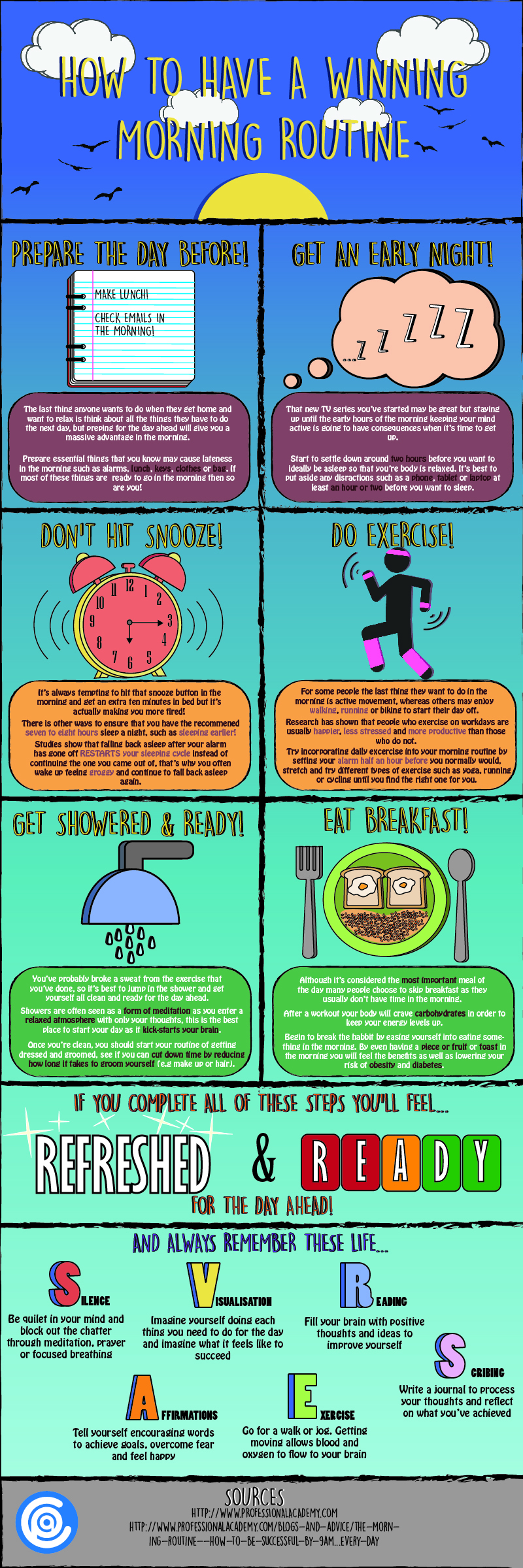
Countless morning rituals can help us start our day with purpose and positivity. While each person’s routine may vary, the key is to choose activities that resonate with you and contribute to your well-being. Here are a few rituals to consider:

Meditation: One of the most powerful rituals for a mindful morning routine is meditation. Sitting in silence and observing the breath or engaging in guided meditations can help calm the mind, reduce stress, and enhance focus. Even a few minutes of meditation can make a significant difference.

Gratitude Journaling: Practicing gratitude can shift the perspective and create a positive mindset. Consider keeping a gratitude journal, where one should write down three things they’re grateful for each morning. This simple practice cultivates a sense of appreciation and can lead to greater happiness throughout the day.

Exercise or Movement: Engaging in physical activity in the morning can boost energy levels and improve overall well-being. Whether it’s a yoga session, a brisk walk, or a workout routine, moving your body in the morning helps release endorphins and sets a positive tone for the day.

Mindful Breakfast: Instead of rushing through breakfast, take the time to savour the meal mindfully. Pay attention to the flavours, textures, and nourishment it provides. This practice helps cultivate a sense of presence and gratitude for the food we consume.

Affirmations and Visualisation: Start the day by affirming positive statements and visualising daily, monthly or even annual goals. Repeat affirmations that resonate, such as “I am capable of achieving my goals” or “I radiate positivity and abundance.” Visualize accomplishing the tasks for the day, creating a positive mindset and boosting self-confidence.

Reading or Learning: Dedicate some time in the morning to reading or learning something new. Engaging with inspiring books, articles, or educational materials can expand knowledge, stimulate creativity, and provide motivation for the day ahead.

Digital Detox: Instead of immediately reaching for the phone or computer, consider incorporating a digital detox into the morning routine, giving at least 30 minutes of technology-free time to engage in activities that promote mindfulness and self-care.

Personal Reflection: Take a few moments each morning to reflect on goals, priorities, and values. Ask yourself what you want to achieve for the day and how you can align your actions with your long-term vision. This reflection helps you stay focused and grounded throughout the day.
Creating a morning routine that works is a personal process. It’s important to experiment and find rituals that resonate with your lifestyle and goals.

Start Small: Begin by incorporating one or two rituals into your morning routine and gradually add more over time. Starting small allows you to establish sustainable habits without overwhelming yourself.

Time Management: Assess how much time you can realistically dedicate to your morning routine. Consider waking up a bit earlier to create a buffer for your rituals. Remember, it’s about quality, not quantity. Even a short routine can be impactful.

Flexibility: Be flexible and adapt your routine as needed. Life can be unpredictable, and there may be days when you have limited time or unexpected responsibilities. Allow yourself to modify your routine without feeling guilty or discouraged.

Consistency: Consistency is key when establishing a morning routine. Try to stick to your routine as much as possible, even on weekends or during vacations. Consistency helps solidify habits and ensures you reap the long-term benefits.

Starting your day with purpose and positivity through a mindful morning routine can have a transformative effect on overall well-being. By prioritising rituals like meditation, journaling, exercise, and gratitude, one can set a positive tone for the day and enhance productivity. Everyone’s routine will be unique, so experiment, be flexible, and find what works best. Embrace the magic of morning routines and watch as they positively impact your life.

2023 Week 35 Update

We’re in the last four months of the year, and for many, the countdown to 2024 has started. September is also my birthday month, so it is usually a very special month for me.

And in that vein, today’s quote is by American novelist, poet, short-story writer, and art and literary critic, John Updike, who was one of only four writers to win the Pulitzer Prize for Fiction more than once. Updike published more than twenty novels and more than a dozen short-story collections, as well as poetry, art, literary criticism, and children’s books, during his career. In this quote, Updike reflects on the idea that the very existence of dreams and aspirations is rooted in the potential for them to become reality. Updike suggests that dreams have the potential to be realized, and this potential is what motivates us to dream in the first place. Our capacity to dream and envision a better future is an inherent part of our nature as human beings. The quote implies that the idea of dreams becoming reality serves as an incentive for us to work hard, persevere, and take action toward achieving our goals. Without the belief that dreams can come true, we might lack the motivation to pursue them.

In my walking quest, I am almost at my destination. I am in the heart of Bengaluru, specifically in Koramangala. From here, it’s another 30-odd km, so by next week, I will not only reach my destination but also start my way back home. I am enjoying this journey and have started thinking about what my next one will be.

This month I read four books, a mixture of fiction and nonfiction. I would love to read more, but because of my new role and the work I am already doing at home, it has become slightly difficult. Speaking of which, I am almost done with my first month in this new position, and so far I am enjoying it. I feel I am making a difference in the community, and this lets me sleep peacefully.

Source

Singapore voted for its ninth President on Friday, and I too did my civic duty and voted for whom I thought would be best for the country. My vote is secret, but the best man for the position and the choice of the majority of Singaporeans will become the next President.

That’s all for this week. We enjoyed a long weekend because of the Presidential election, and now we are all ready for the next week. Have a positive week, people!

In My Hands Today…

Borderlands: Travels Across India’s Boundaries – Pradeep Damodaran

For most residents of India’s bustling metros and big towns, nationality and citizenship are privileges that are often taken for granted. The country’s periphery, however, is dotted with sleepy towns and desolate villages whose people, simply by having more in common with citizens of neighbouring nations than with their own, have to prove their Indian identity every day.

It is these specks on the country’s map that Pradeep Damodaran rediscovers as he travels across India’s borders for a little more than a year, experiencing life in far-flung areas that rarely feature in mainstream conversations.

In Borderlands, he recounts his encounters with the war-weary fishermen of Dhanushkodi at the southernmost tip of Tamil Nadu, who live in fear both of the Indian Coast Guard and the Sri Lankan navy; farmers in Hussainiwala, a village on Punjab’s border with Pakistan, who are unwilling to build concrete houses for fear of them being destroyed in an ever looming war; Tamil traders of Moreh, a town straddling the Manipur–Myanmar border, who pay bribes to at least ten different militant organizations so they can safely conduct their business; and ex-servicemen in Campbell Bay who were resettled there three generations ago and have long been forgotten by the mainland.

From Minicoy in Lakshadweep to Taki in West Bengal, Tawang in Arunachal Pradesh to Raxaul in Bihar, Damodaran’s compelling narrative reinforces the idea that, in India, a land of contrasts and contradictions, beauty and diversity, conflict comes in many forms.

Poem: Turning Fifty

I am turning 50 very soon and am looking forward to hitting this milestone birthday. I know many people dread turning the half-century mark, but I was anticipating it. I feel I can become freer with my thoughts and live a life without a filter. This poem is my thoughts on turning 50.

Turning 50

The day is finally here
One that I have for with suppressed cheer
In the golden glow of the last fifty years,
I stand, triumphant, unafraid, a canvas painted with joy and tears.

I look back and reflect on my life, on the years gone by
The laughter, tears, and reasons why.
I think back on the decades of my life,
A good life, if I may say so, one without much pain and strife

As a young adult, I took flight,
A world of wonder was awaiting me, new and shining bright,
With dreams as vast as endless skies,
I spread my wings, prepared to rise.

Through twists and turns, I found my way,
To a path that led to each new day,
I crossed the ocean to make a new life and faced challenges that came my way,
Carved strength from within, come what may.

Now at the crossroads of life, fifty years,
A chapter ends, and a new one appears,
With the wisdom earned and a steady gaze,
I welcome how and what the future brings and plays.

I am no longer bound by youth’s desire,
Because I’ve found my purpose, my inner fire,
Each wrinkle tells the world a story that is true,
Of life’s rich journey, old and new.

The dreams of youth, I’ll not let fade,
For these are seeds that life has laid,
With the lessons learned, I now believe,
There are still things I have to achieve.

As fifty candles flicker bright,
I’ll embrace the day, the darkest night,
For life’s an ever-changing dance,
And I’ll keep twirling, taking the chance.

With gratitude for the last fifty years,
I’ll face the future, free from fears,
For all that’s passed and all that’s new,
I celebrate my life, the pink and the blue.

So here’s to fifty, an age so fine,
A sparkling toast to me, and to time,
With open arms, I welcome in,
The next adventures I’ll begin.

In My Hands Today…

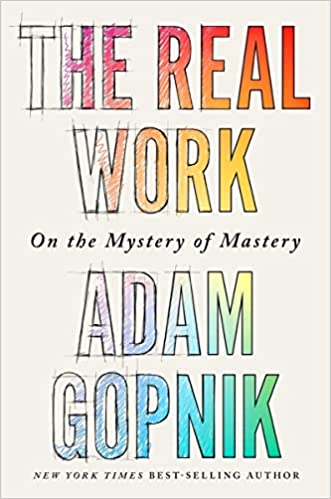
The Real Work: On the Mystery of Mastery – Adam Gopnik

Best-selling author and New Yorker writer Adam Gopnik investigates a foundational human How do we learn―and master―a new skill? For decades now, Adam Gopnik has been one of our most beloved writers, a brilliantly perceptive critic of art, food, France, and more. But recently, he became obsessed by a more fundamental matter, one he had often meditated on in The New Yorker : How do masters learn their miraculous skill, whether it was drawing a museum-ready nude or baking a perfect sourdough loaf? How could anyone become so good at anything? There seemed to be a fundamental mystery to mastery. Was it possible to unravel it?

In The Real Work ―the term magicians use for the accumulated craft that makes for a great trick―Gopnik becomes a dedicated student of several masters of their a classical painter, a boxer, a dancing instructor, a driving instructor, and others. Rejecting self-help bromides and bullet points, he nevertheless shows that the top people in any field share a set of common qualities and methods. For one, their mastery is always a process of breaking down and building up―of identifying and perfecting the small constituent parts of a skill and the combining them for an overall effect greater than the sum of those parts. For another, mastery almost always involves intentional imperfection―as in music, where vibrato, a way of not quite landing on the right note, carries maximum expressiveness. Gopnik’s simplest and most invigorating lesson, however, is that we are surrounded by mastery. Far from rare, mastery is commonplace, if we only know where to from the parent who can whip up a professional strudel to the social worker who―in one of the most personally revealing passages Gopnik has ever written―helps him master his own demons.

Spirited and profound, The Real Work will help you understand how mastery can happen in your own life―and, significantly, why each of us relentlessly seeks to better ourselves in the first place.