Agartala
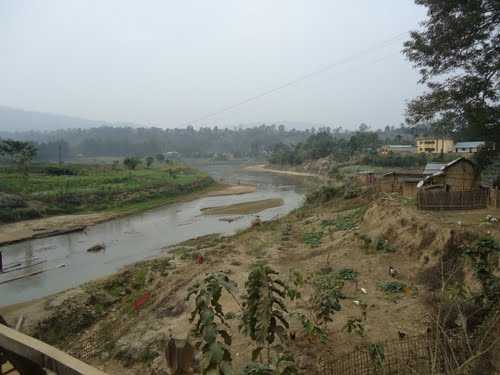
Tripura’s capital city and one of the largest cities of northeast India, Agartala is the seat of the Government of Tripura. It is located on the banks of the Haora River, near the Bangladesh border.
Agartala is a derivative of two words, namely agar, a valuable perfume and incense tree of genus Aquilaria, and the suffix tala, meaning underneath, a reference to the density of agarwood trees in the region. The agar tree is historically referred to in the story of King Raghu who tied up his elephant’s feet to an agar tree on the banks of River Lauhitya.
The ancient capital of the then princely state of Swadhin Tripura was at Rangamati in present-day Udaipur in South Tripura by the bank of the River Gomati. In 1760 it was shifted by Maharaja Krishna Chandra Manikya Bahadur of the Manikya dynasty to present old Agartala by the bank of the River Haora or Saidra and was named Haveli. Due to frequent invasions of the Kukis and also to keep easy communication with the British and the Bengalis, Maharaja Krishna Chandra Manikya started the process of shifting the capital from Old Haveli to New Haveli which is present-day Agartala in 1849.
Bir Bikram Kishore Debbarman is called the founder of the planned city of Agartala. He had gone on a tour to the United Kingdom and was so impressed at the architecture that he started planning a similar township in Agartala. During the 1940s the town was re-organised in a planned manner with new roads and a market building. 1981 saw Agartala expanding and increasing its connectivity as well as businesses in various fields, The Nobel laureate poet Rabindranath Tagore visited the city multiple times and built a house that still exists.
The Ujjayanta Palace used to be the palace of the Kings of Tripura that was converted into the state legislative assembly and today is a museum, situated in the area of the Palace Compound. The palace also served as the meeting place of the Tripura Legislative Assembly until 2011. Tours are conducted by the Tripura Tourism Department. The name Ujjayanta Palace was given by the poet Rabindranath Tagore, who visited the state many times. Maharaja Bir Bikram was the last king of Tripura and the last king who stayed in the palace. It has now been transformed into a museum named Ujjayanta Museum.
Built in 1901, the palace has magnificent tiled floors, carved wooden ceilings and lovely doors. The palace includes the Public halls, a throned room, a Durbar Hall, a Library, the Chinese Room and the Reception Hall. The Palace stands on the banks of a small lake surrounded by the lush greenery of Mughal gardens. Spread over an expanse of 28 hectares of parkland, this exotic palace has several Hindu temples dedicated to the deities, Lakshmi Narayan, Uma-Maheshwari, Kali and Jagannath.
Also known as Nuyungma in the Tripuri language, the palace was constructed between 1899 and 1901 by Maharaja Radha Kishore Manikya Debbarma and stands on the banks of two lakes surrounded by gardens inspired by the European style. Upon the merger of the Kingdom of Tripura with India in 1949, the royal properties were nationalised. The main building along with the area around the palace was purchased from the royal family by the Tripura government in 1972–73 and housed the Tripura Legislative Assembly until July 2011 when the assembly moved to a new location 6 km north of Agartala.
Today it is one of the largest museums in Northeast India, covering an area of over 800 acres of land, it depicts the lifestyle, art, culture, tradition and utility crafts, besides the customs and practices of various communities residing in northeast India. The two-storied palace has three large domes, the largest of which is 86 ft high, and which rests atop a four-storied central tower. The architecture shows a mix of influences – Mughal, Roman and British. There are two large artificial ponds on either side of the garden which is decorated with pools and fountains. Several Hindu temples occupy plots adjacent to Ujjayanta Palace, dedicated to Lakshmi Narayan, Uma-Maheshwari, Durga and Jagannath. Newer attractions in the compound include the musical fountain installed in front of the main entrance and the night-time floodlights. The grounds are laid out as formal Mughal gardens adorned with fountains. The palace and musem is closed on Mondays and other days is open between 10 am to 5 pm and has an entry fee of INR 10 per person.
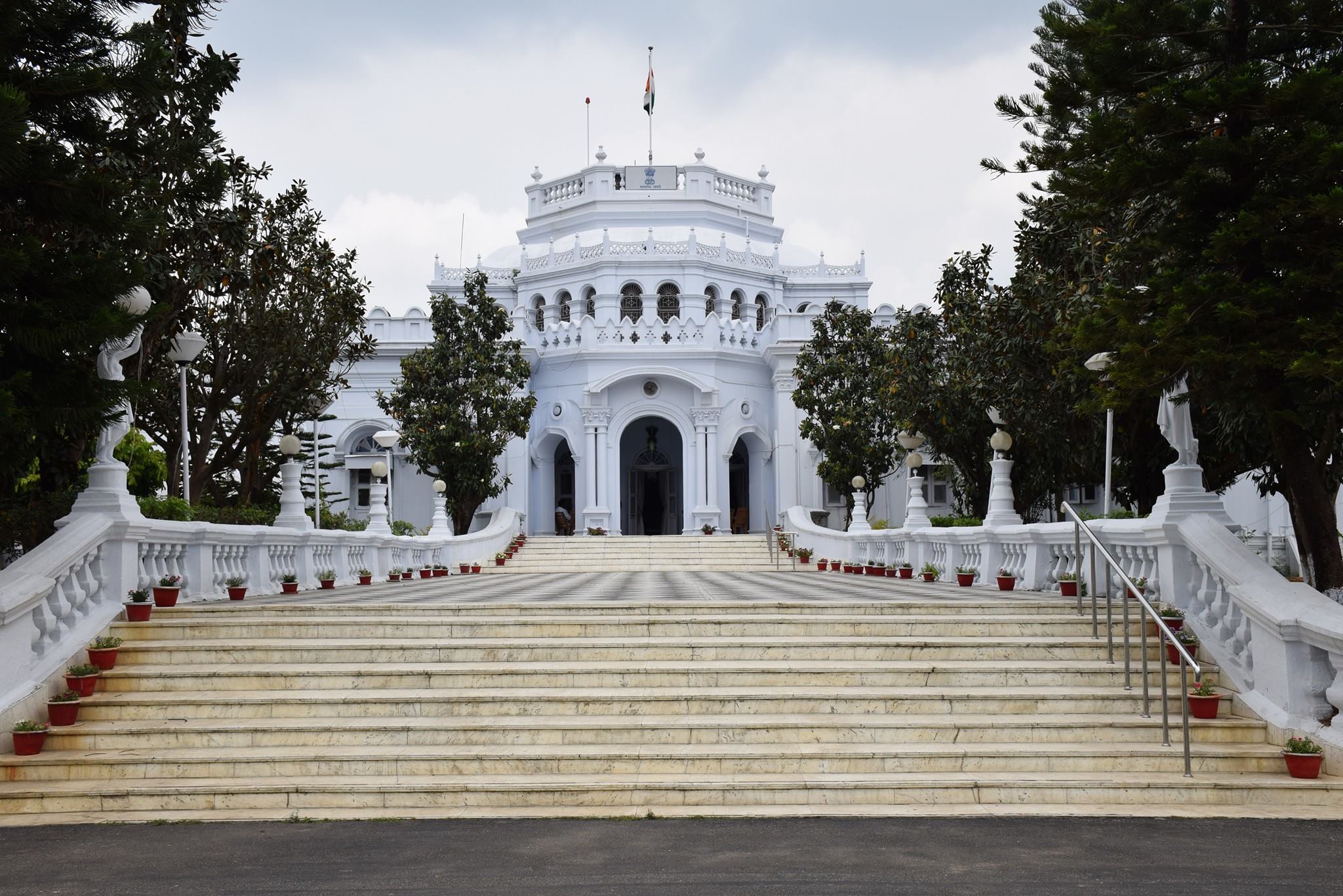
The Kunjaban Palace was constructed by King Birendra Kishore Manikya in 1917 and is today the official residence of the Governor of Tripura. The intricate carvings and magnificent structures built here, along with the magnificent adjoining gardens make it a marvellous monument as a whole.
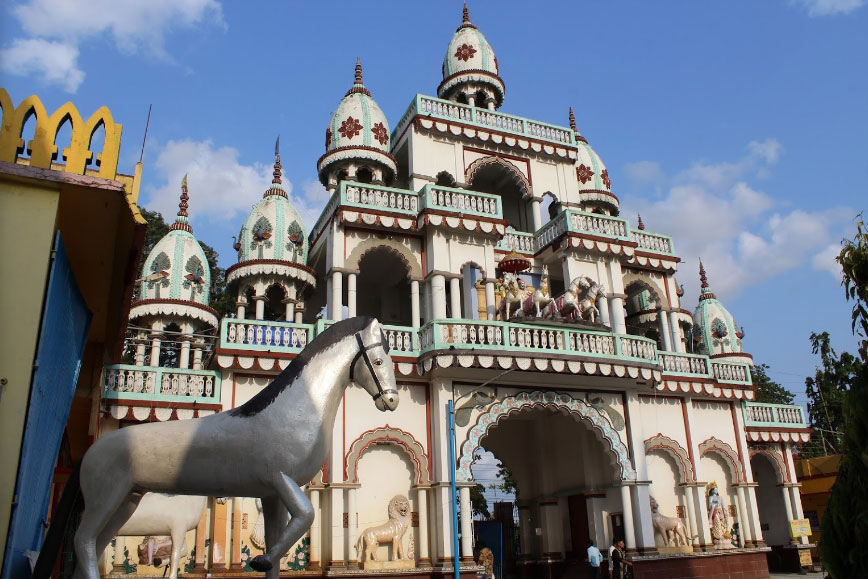
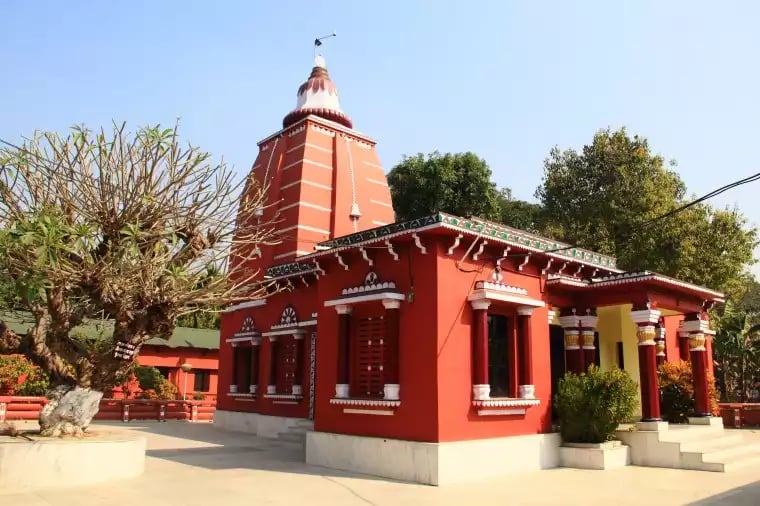
The Jagannath temple was built by the Maharaja of Tripura of the Manikya Dynasty in the 19th century and is located in the Ujjayanta Palace grounds and is dedicated to Lord Jagannath, Lord Balabhadra and Goddess Subhadra. While the Islamic style of architecture is predominant in the exterior of this temple, the interiors are decorated with Hindu splendour. It is widely believed that the Neelmadhav idol that is consecrated at Puri was donated from the Jagganath Bari Mandir of Tripura. The base of the Jagannath temple is an octagon in shape with brightly coloured orange walls. Pyramidal conic structures adorn the pillars of the temple. The impression of the pradhkshin patha that is around the sanctum deserves special mention. The Nitya Puja, Bhoga offerings and distribution, along with the evening Aarti, are the main rituals that are followed here. The Aartis are especially a must-attend event to appreciate the beauty and simplicity of the temple and to be lost in the devotion of the Almighty. The Ratha Yatra, also known as Maha Ratha Yatra is the annual festival of the temple that takes place in June, is an important festival that is attended by hundreds of devotees each year.
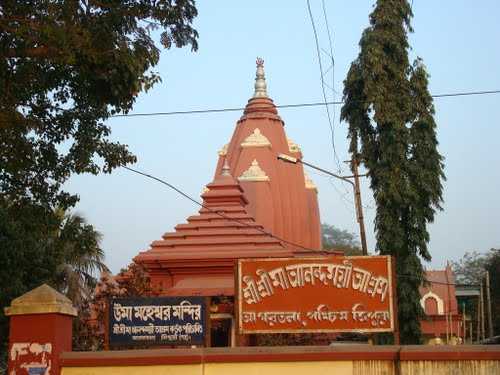
Located within the Ujjayanta palace grounds, the Ummaneshwar Temple is a saffron-coloured temple influenced by West Bengali culture.
The Tripura Sundari Temple is a beautiful temple situated in Udaipur, around 55 km away from Agartala. This ancient, 500-year-old temple is one of the 51 Shakti Peethas and is where the toe of the right foot of Sati fell. The temple is that it is in the shape of a tortoise and is also known as the Kurma Peeth. Dedicated to Goddess Kali, built in 1501, is where a steady stream of pilgrims make almost endless animal sacrifices that leave the grounds as bloody as the temple’s vivid-red shikhara. The temple is also known as Matabari and is served by priests in red robes who minister to the Tripura Sundari.
King Dhanya Manikya who was the ruler of Tripura in the 15th century had a dream asking him to install the idol of Goddess Tripura Sundari in the temple present on the hilltop. However, this temple was already dedicated to Lord Vishnu which is why the king could not decide how to install another idol in the temple which was already devoted to Lord Vishnu. However, the repetition of this message by the oracle made the king decide to follow its command and thus the Tripura Sundar Temple came into existence.
The temple is small and measures 24 square feet at the base and 75 feet at the top where Goddess Parvati is worshipped with the names Tripurasundari, Tripureshwari, and Soroshi. The temple’s structure is similar to that of a tortoise with the roof in the shape of the humped back of the tortoise. This is why the shrine is also known as Kurma Peetha since Kurma means tortoise. There is a square sanctum in the temple having a conical dome. This was constructed in 1501 by Maharaja Dhanya Manikya Debbarma. Inside the glorious temple, two exact images of the same deity are present. These have been given the names Tripura Sundari which is 5 feet high and Chhotima which is 2 feet high. The idol is built from Kasti stone which is reddish-black and it is said that this idol of Chhotima was carried on the battlefield by the king.
Kalyan Sagar is a lake is situated on the eastern side of the Tripura Sundari Temple and is spread over 5 acres of land with a length of 224 yards and a width of 160 yards. 124 years after the Tripura Sundari Temple was set up, the Kalyan Sagar Lake was founded which can be traced back to the rule of Maharaja Kalian Manikya in 1501. Different varieties of aqua species can be found in the lake including huge tortoises. The devotees who visit the temple feed biscuits and puffed rice to the fish. The lake is considered sacred by the devotees and has a fountain in the centre which makes it appear even more beautiful. The temple opens between 5 am and 9 pm during the summer months and between 5:30 am and 8:30 pm during the winter months.
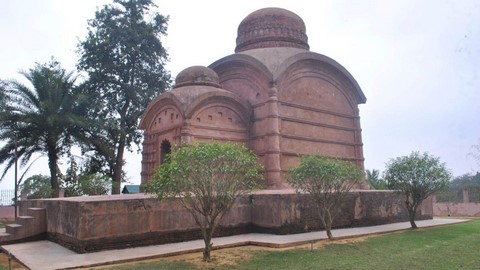
The Bhubaneswari Temple is located in Udaipur about 55 km from Agartala by the bank of the River Gomati. The temple built by Maharaja Govinda Manikya is now under the control and supervision of the Archaeological Survey of India. While approaching the Bhubaneswari Temple one also finds the ruins of the palace of Govinda Manikya.
The Chaturdash Devta Temple is located in Old Agartala and is also known as the Temple of Fourteen Gods. Before 1770 AD, the images of fourteen Gods were in Udaipur in two temples beside the Tripureswar Bhairab Temple, but in 1770 A.D after Maharaja Krishna Kishore Manikya was defeated by Shamsher Gaze, he shifted his capital from Udaipur to Old Agartala and the images of the Fourteen Gods were also taken to the capital and installed in a new temple. The capital was shifted to resent-day Agartala in 1840 AD, but the images of Fourteen Gods remained in the same temple. On the occasion of the special puja of the Fourteen Gods known as Kharchi Puja, a grand fair is held for 7 days in and around the old palace. The worship of the Fourteen Gods has an old history and legend associated with it. During the time of Mahabharata, Trilochana, a contemporary of Yudhisthira, was the king of Tripura who used to worship these Fourteen Gods as Royal deities. The tradition continued with all the subsequent Kings of Tripura. Animal sacrifices offered by the devotees are an integral feature of Kharchi puja. Inside the temple, the images of the Fourteen Gods do not consist of a full body with only the images of the heads of the Gods present.
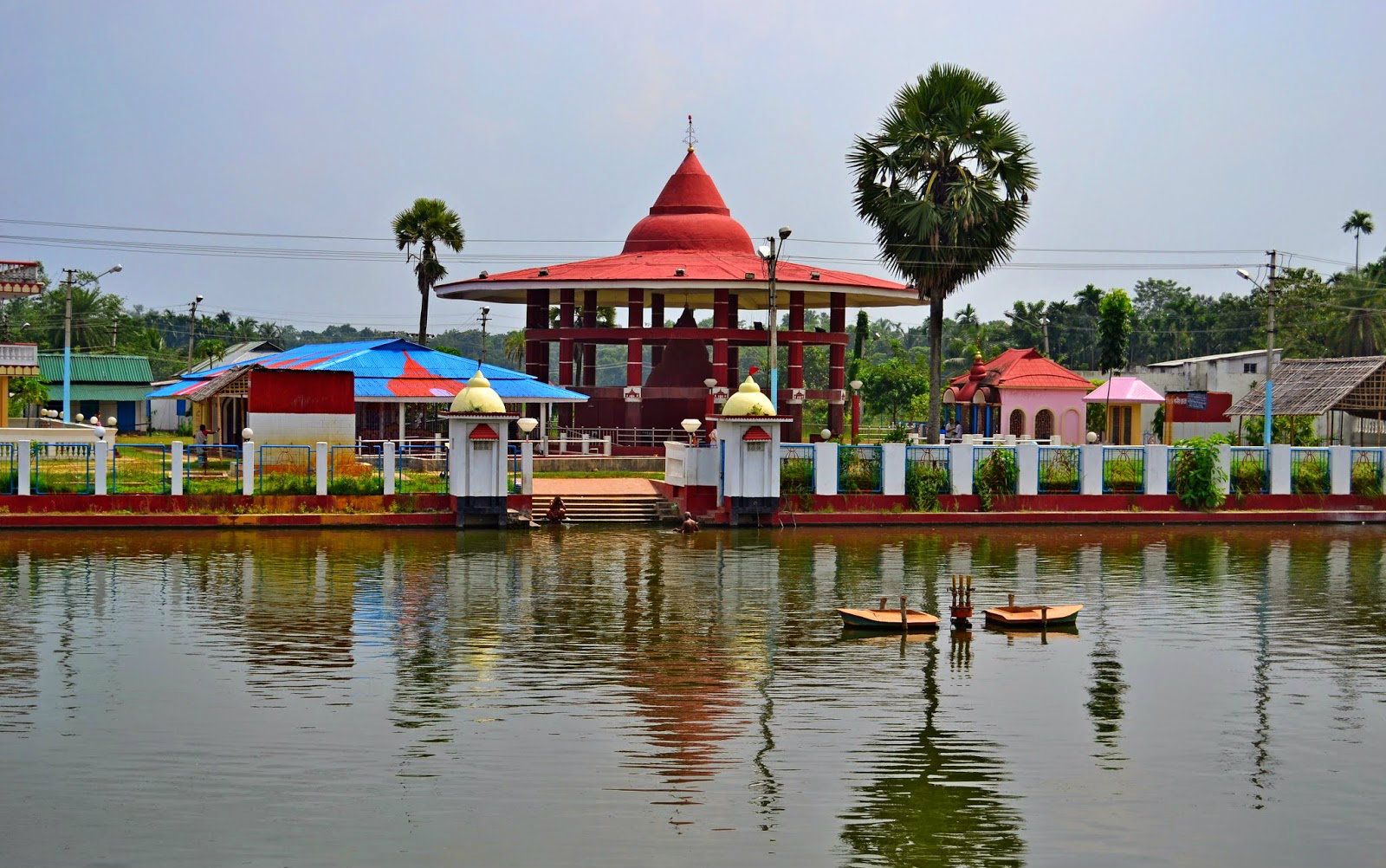
The Kasba Kali Temple is a Shakti shrine about 31 away from Agartala and is located beside the Indo-Bangladesh international border. The serene lake in front of the temple adds to the charm of the place. Although Maharaja Kaliyan Manikya started construction, it was Maharaja Dhanya Manikya who finished building the temple in the late 15th century. The deity installed inside the temple dedicated to Goddess Durga but as the base platform has an image of Lord Shiva , the ten-handed Durga fighting the buffalo demon Mahisasur is worshipped as Goddess Kali. The area where the temple is located is also known as a kasba which is a Persian word meaning town. The ancient name of the place was Kamalagarh or Koilagarh. After defeating Surja, the then-ruler of Bengal, Maharaja Kalyan Manikya built this fort to further secure the princely kingdom of Tripura. A township gradually developed around the fort and the name Koilagarh was replaced by the name Kasba. Maharaja Dhanya Manikya dug a large water body in front of the temple and named it Kamalasagar to honour his wife, Kamaladevi. Today there is an Indo-Bangla Border Hut which is also a special attraction. Every year a big fair is held near the temple in April and thousands of devotees the temple.
Buddhist Temples in Tripura support the fact that Buddhism is quite prevalent in the state. Archaeological evidence suggest that Buddhists have inhabited the region since ancient times with several Buddhist rulers ruling the state who left permanent influences on the culture of the state. In the 16th century, Buddhism was almost eliminated from this region owing to the defeat of Buddhist rulers, but its revival in Tripura began in the 17th century. The Buddha Temple is an important religious site and was constructed in 1946. It houses two idols of Buddha and Bodhisattva, believed to be having a Burmese origin. The surrounding gardens enhance the beauty of the temple premises.
The Gedu Mia’s Maszid is an imposing mosque located in the Shibnagar area of Agartala. Built of imported white marble stones, this exquisite mosque is endowed with a large number of minarets, towers and artworks on doors, fronted by a sprawling green space for religious congregations including weekly Jumma Namaz.
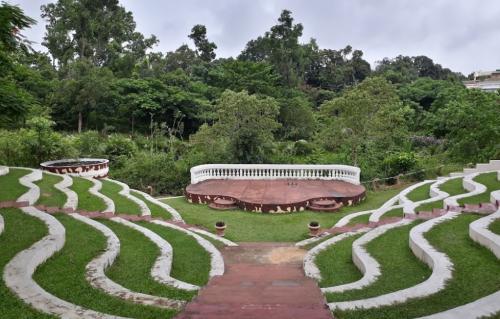
Parks in Agartala include Heritage Park which is the most visited of all the parks in the city. The most notable features are the miniature models of various monuments of the state, the Ayurvedic herb garden and the fountain. Rabindra Kanan is a park in the vicinity of the Pushpavanta Palace, the former Raj Bhavan of Tripura and the Malancha Nivas. This park, close to the Heritage Park, annually holds the birth anniversary ceremony of Rabindranath Tagore after whom the park is named. The Vivek Uddyan is adjacent to the Ujjayanta Palace and the Children’s Park and annually holds the birth anniversary ceremony of Swami Vivekananda, after whom the park is named.
The Lake Palace of Tripura or the Neermahal is the largest palace of its kind in the subcontinent. This architectural beauty derives its name from its location, the middle of the Rudrasagar Lake. One of India’s two water palaces, the former royal palace was the royal summer palace. The palace is the result of Maharaja Bir Bikram Manikya Bahadur’s idea of constructing a summer residence in the middle of Rudrasagar Lake which took nine years to construct. The palace is a beautiful amalgamation of Hindu and Muslim architecture and looks more enchanting during the nighttime when the lights are switched on, and its reflection is made in the water. Sandstone and Marble have been extensively used in the construction and the palace has a profusion of balconies, pillars, rooms, ornated walls, bridges, and pavilions. It is divided into two parts, the Andar Mahal and an open-air theatre. Where the former lies in the west, the latter occupies the eastern part of the palace. The Andar Mahal was formed as the royal family’s private area. It has 24 rooms and 2 stairways built in such a way that they land onto the Rudrasagar Lake. Back then boats were used as transportation mode between the palace and other parts of the land. There is a sound and light show in the evenings and the premises also include water sports activities. The palace is also famous for the three-day-long Neermahal Water Festival which takes place annually in August and December. Boat races and swimming competitions are observed alongside small cultural programmes. The palace is open from 9 am to 5 pm and has an entry fee of INR 5 per person while children below the age of 5 pay INR 3. There is also a camera fee of INR 10 per camera.
The Gondacherra Wildlife Sanctuary is home to multiple species of flora and fauna. Mammals like tigers, bison, wild horses, aquatic life as well as migratory birds can be seen here. The Raima Valley is also known as the Mother of the Tribals of Tripura. This lush green valley, decorated with gardens and plantations has become a preferred tourist spot.
The Akhaura Integrated Check Post was inaugurated on 17 November 2013 and is the second largest trading centre with Bangladesh after Benapole and Petrapole in West Bengal. People travel to the border to witness the flag-lowering ceremony in a mutually coordinated performance. The check post includes a mini-stadium which hosts the Beating of Retreat ceremony like that at the Wagah border with Pakistan.