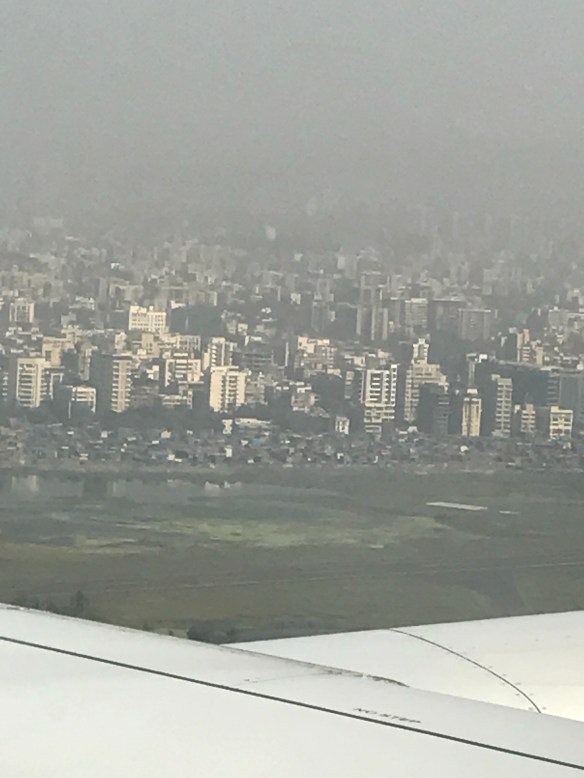
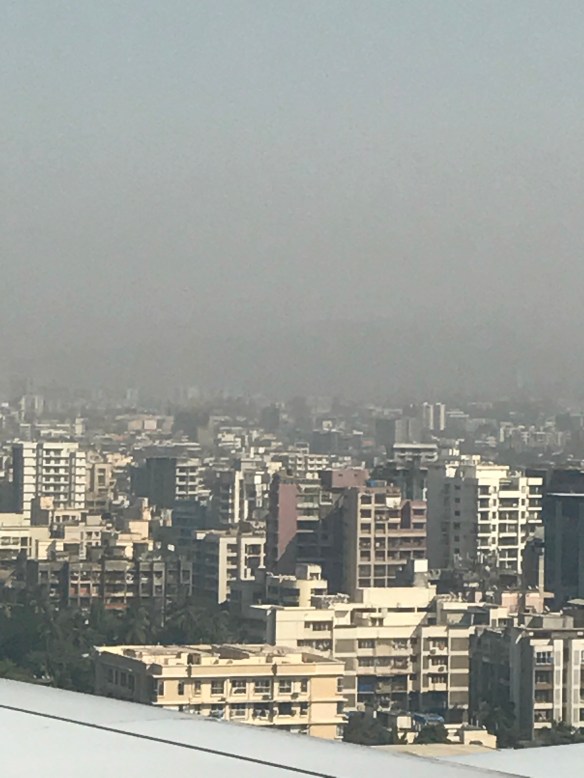
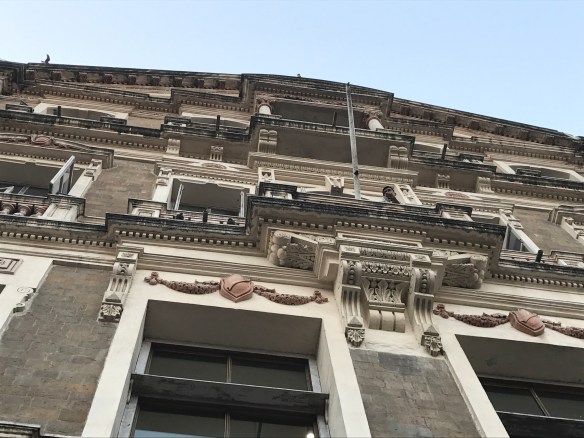
Growing up in Mumbai

Matunga – for any Tambrahm in Mumbai, especially those of a certain age, the very word evokes the feel of home. Sometimes called ‘Mini Madras’, Matunga in what would be some where in the centre of what is the original city (as opposed to the suburbs) was probably the first place the initial immigrants, young, eager, bright and wide-eyed, came to from Dadar station when their trains from the south arrived in Mumbai all ready to conquer the world, with an introduction to perhaps, if they are lucky, to a relative (distant or otherwise), or maybe someone from the same village they belonged to, or even a relative’s relative!

While I am not sure if this is 100% accurate, from what I’ve heard from my parents and grandparents, most young Tamil Brahmin boys and men started arriving in Mumbai (or Bombay as it was called then) somewhere in the early forties, some years before India would finally throw off the yoke of British dominance and become independent.

Both sets of my grandparents arrived in Bombay somewhere in the early to mid-forties, luckier than most as both my grandfathers had an older brother already settled in the city, in Matunga as it were! If I were to probably measure the distance my paternal and maternal grandparents live away from each other, when they first arrived in the city, it should probably be a maximum of 1 km.

Matunga is the heart of the Tamil Brahmin community in Bombay and as such the roads are filled with the sights and sounds of temple bells and the smells of filter coffee and delicious food!

Temples like Bhajana Samaj, Astika Samaj and Sankara Math, shops like Mysore Concerns, Giri Stores and the row of flower sellers in the road outside the post office along with the vegetable sellers who have carts close-by are all hallmarks of the Tamil Brahmin community in Matunga! Who can forget the Ram Navami and Navaratri celebrations in Bhajana Samaj, the Diwali sweets that always were sold in the hall in Sankara Matt, the banana leaf sold by the vegetable vendors during any major festival, the gaggle of priests, outside the temples, the sound of the temple bells and sugarcane stalks just before Pongal?

When their families grew, both sets of my grandparents moved from their family homes and out of Matunga. But they both didn’t’ pull the umbilical cord too much and move far away. Both of them moved another kilometer away from Matunga in opposite directions actually, and that was where my parents were brought up.

So growing up, we lived in another area which was a fifteen minute walk from Matunga, which was in the periphery of our lives, without actually living there. We used to go to Matunga for literally everything and my mum still goes there atleast two to three times a week for her weekly ‘fix’. This area in Bombay is the lifeline for the community and even today when other mini Matungas have sprung up across the city and suburbs – like Chembur, Chedda Nagar, Bangur Nagar, Mulund, Dombivili, Vashi, etc you can still people who have moved away from Matunga come here on weekends to catch-up with family and friends, eat at childhood haunts and buy essentials which you don’t get anywhere else in the city.

Growing up, there was always this disconnect – we were Tamilians, but without the accent which is usually caricatured in movies and television and always had questions on why we needed to wear a bindi on our forehead or flowers in our hair. In my and my sister’s case, it was compounded by the fact we didn’t go to the school that most of our Brahmin friends and relatives went to (which was a school run by a Tamil trust where the language was taught as a second language)!

Growing up also we were quite insular. I would say this with the benefit of hindsight. Every Tamilan I knew at that point in time was a Brahmin – either from one of the districts of Tamil Nadu or from Palakkad (from Kerala who are called Kerala Iyers or Palakkad Brahmins). Where we stayed, while not in Matunga, was in fact another Tamil conclave, with almost all the 30-40 buildings in the area having a sizeable Tambrahm population each. My building had 19 flats and with the exception of 2-3, every flat was a Tambrahm flat! This was pretty much the case (the percentages being slightly more or less, with some exceptions) for the other buildings in the street I lived in. Even in school, my friends who were Tamil were Brahmins. In fact, coming to Singapore with its vast Tamil population was actually a culture shock to me as I had never seen so many people from so many Tamil communities and the temples were the biggest shock – I had not heard of all the different Gods that were worshipped there (all the temples I visited prior to this were my community temples or the other temples in Mumbai)

Since most of the community emigrated to Bombay around 60-80 years back, the dialect of Tamil, we speak is completely different from what is spoken by the community in places like Chennai and Singapore. Bombay Tambrahms have retained the words and cadence of their speech from all those years while communities in Singapore and Chennai have adopted more of the local language. So the Tamil we speak may actually seem strange to those who don’t speak like this! S used to tell me that they used to be made fun of in school when they spoke Brahmin Tamil, which is why his Tamil sounds more like how it is in movies while mine is the one they make fun of in movies!

Writing this post has made me so nostalgic. I think the next time I go to Mumbai, I will try and capture all the sights and sounds of the city so that every time I miss Mumbai, I have these to see and hear! Also this post has made me realise I need to pen down more about my life, so that GG and BB know what that was like….

An Unforgettable Trip

While in India, one of our smaller trips was to Bangalore to meet my maternal grandmother who is nearing close to 90 and also to meet an uncle who is suffering from a double whammy of Alzheimer’s as well as Parkinson’s!

The four of us plus my mum were supposed to be taking IndiGo both ways, with us taking the 12:30 flight from Mumbai, reaching Bangalore around 2:15. The new airport in Bangalore is very, very far away from the city and to get to anywhere in the city is at least a 90 minute drive, this is assuming the horrendous traffic that Bangalore is famous for is clear and non-existent at that point! We’d planned for a two hour drive to my aunt’s place which is in one of the outer suburbs, the other side of the airport and which should take around 70 – 80 minutes at that time of the day and had expected to reach latest by 4 pm. We’d also arranged for a taxi to pick us up at the airport.

In the morning, while getting ready to leave, I got a message from the airline that the flight had been retimed to an hour later than it was supposed to leave. Though it was irritating, we shrug it off and changed our plans accordingly. We left around 10:30 which should get us to the airport around 11:15, which would be well in time for the 1:30 pm flight. On the way to the airport I received two messages from the airlines – one after the other, which now changed the flight’s departure time to 4 pm!

I was thus, quite upset when I reached the check-in counter. The person who checked us in told me that it was a technical problem and he could check us into the next flight to Bangalore which left at 3:45 pm. When asked, he said there was no guarantee that our scheduled 12:30 flight would make it at 4 pm, but the 3:45 flight was assured to leave on time. So we did the change and spoke to my dad. My dad was by that time not interested in us going to the city, he wanted us to cancel the tickets, get a refund and return home. My mum, on the other hand wanted to meet her mum, sisters and brothers-in-law. Around 3 pm, when we were waiting to start the boarding process, I got another message from the airline saying the 3:45 flight had now been postponed to 5:30 pm.

At this point, I completely lost it! The boarding gate area at this point was resembling a small town bus stand with passengers all over the place. The domestic airport didn’t even have decent places to eat and we were hungry, bored and super angry. I then went to the airline counter and spoke to one of the supervisors. What she told me was a completely different story from what the check-in guy told me. Her story was that since all their flights originate in the northern part of India and that part was fogged up, all flights were running 3-4 hours late, there was no technical problem at all!

Then me and another lady who had to get to Bangalore also urgently spoke to her and when I told her what I was told while checking in, she decided to get it reconfirmed. That was a lie I was told initially. Then that sweet lady (I did write down her name, but now I can’t find the paper) told us she will put us back in my original flight (the 12:30 one) which was now going to land shortly and depart for Bangalore at 5:30 pm.
We (the five of us plus the two of them) then were led out of the security area and had to re-checkin for the 5:30 flight. Clear security once again and then start the wait all over again. We finally got in the bus to get to the aircraft around 5:15 pm and when we reached the aircraft, we saw that all the passengers had not disembarked. What we saw made everyone on that bus comment again! We saw groups of people who used the gangway to take photos and selfies! This sheer selfishness of people really threw me away! These people have also been delayed by 3-4 hours and they know this flight has to go to another destination, yet they spend, nay waste precious moments taking pictures that they can do outside the plane.

We finally boarded and the flight left around 6 pm. We reached Bangalore around 7:15 and got to my aunt’s place at 9 pm! What was roughly a 6 hour journey door-to-door became an almost 12 hour one!

The return journey was nothing like what I wrote above! It was a breeze and what IndiGo is renowned for and we made it home by 3 pm (We had taken the same 12:30 flight from Bangalore to Mumbai)!

This is one trip that none of us are going to forget in a hurry I am sure!

The Night of Terror – An Unforgettable Day!

I woke up, excited and happy on the morning of November 26, 2008. I was going to Mumbai later that evening on a Jet Airways flight, flying with BB & GG alone for the first time since they were born. They were 5 years old and were equally excited to be seeing their grandparents that evening.

Everything changed around 7 am when I got a message from my sister, who was in the States at that point, asking me if I was still going to Mumbai. I had no clue what was happening in Mumbai. I waited impatiently till a decent time to call my parents to find out more, and in the meantime rushed to work as I was supposed to be working half day that day. I went online and was shocked by what I read. Twitter, which was around two years old then had exploded with tweets on the situation!

What had happened was that 10 Pakistani members of Lashkar-e-Taiba, an Islamic militant organisation, carried out a series of 12 coordinated shooting and bombing attacks lasting four days across Mumbai. The attacks, which drew widespread global condemnation, began on Wednesday, 26 November and lasted until Saturday, 29 November 2008, killing 164 people and wounding at least 308.

Eight of the attacks occurred in South Mumbai: at Chhatrapati Shivaji Terminus (VT train station), the Oberoi Trident, the Taj Mahal Palace & Tower, (one of the worst places of the killings), Leopold Cafe, Cama Hospital, the Nariman House Jewish community centre, the Metro Cinema, and in a lane behind the Times of India building and St. Xavier’s College. There was also an explosion at Mazagaon, in Mumbai’s port area, and in a taxi at Vile Parle (close to the domestic airport). By the early morning of 28 November, all sites except for the Taj hotel had been secured by Mumbai Police and security forces. On 29 November, India’s National Security Guards (NSG) conducted ‘Operation Black Tornado’ to flush out the remaining attackers; it resulted in the deaths of the last remaining attackers at the Taj hotel and ending all fighting in the attacks.

Ajmal Kasab, the only attacker who was captured alive, later confessed upon interrogation that the attacks were conducted with the support of the Pakistan government’s intelligence agency, the ISI. Kasab was tried and later hanged in Yerwada jail in 2012.

S was on leave that day as he gets more leave than me. I quickly called him and spoke to him. My inlaws were scared of us travelling that evening and asked me to cancel the trip. I was torn – on one hand I didn’t want to risk the trip, on the other hand, I so desperately wanted to go home and meet my parents (I think at that point, it was a year since I had met them). I called the airline office in Singapore and was met with indifference. They seemed not to have any idea of what was happening in their head office city and told me they didn’t have directive from Mumbai (the head quarters of the airline). The flight will take off as scheduled was what I was told. My mother-in-law didn’t want me to travel, but I didn’t listen to her, saying since the flight was scheduled, we’ll go to the airport and decide then. I spent the whole day glued to the internet for any scraps of news that I could get. I told my parents that we are making the trip and to come to the airport to pick us up. Now that was a new problem – due to the trouble, the city was on curfew and there was no one willing to drive them to the airport. Finally around the time we left for the airport, my dad messaged me that they had finally found someone brave enough to drive his taxi to the airport and pick us up. One problem solved, loads more to go…

Praying to the entire pantheon of Gods in Indian Mythology, we left for the airport. We were one of the first ones to check-in. The mood was quite somber. There was a Channel News Asia crew near the check-in counter interviewing passengers brave (or mad) enough to fly to Mumbai. They were looking for Singaporeans against Indians and approached me to ask if I was willing to be interviewed. I did mention that I am not a local, but was told that I spoke like one, so could pass off as one! I was asked if I was scared of going to Mumbai while the shootings were going on and I remember replying that this was very far from the airport, and so the airport area should be safeish (is this even a word?)!

We flew into Mumbai and the airport was very somber and dull! Everyone working the shift was glued to the television screens which were showing live the places where the terrorists had held the hostages. None of the customs officers were really interested in looking at our luggage and we were out in record time. I was so relived to meet my parents and we quickly got into the taxi and drove home. At that point in time (this was before the new flyover which has dramatically shortened travel time from the airport to my home), the normal travel time between the airport to home was 45 – 60 mins. That day, we did the journey in 20 minutes! Once home, I heaved a big sigh of relief and then spent the next few days glued to the television….

This was the most unforgettable day in my life and a flight to remember…..

In My Hands Today…

Such a Long Journey – Rohinton Mistry

It is Bombay in 1971, the year India went to war over what was to become Bangladesh. A hard-working bank clerk, Gustad Noble is a devoted family man who gradually sees his modest life unravelling. His young daughter falls ill; his promising son defies his father’s ambitions for him. He is the one reasonable voice amidst the ongoing dramas of his neighbours. One day, he receives a letter from an old friend, asking him to help in what at first seems like an heroic mission. But he soon finds himself unwittingly drawn into a dangerous network of deception. Compassionate, and rich in details of character and place, this unforgettable novel charts the journey of a moral heart in a turbulent world of change.

In My Hands Today…

The City of Devi – Manil Suri

Mumbai has emptied under the threat of imminent nuclear annihilation; gangs of marauding Hindu and Muslim thugs rove the desolate streets; yet Sarita can think of only one thing: buying the last pomegranate that remains in perhaps the entire city. She is convinced that the fruit holds the key to reuniting her with her physicist husband, Karun, who has been mysteriously missing for more than a fortnight. Searching for his own lover in the midst of this turmoil is Jaz–cocky, handsome, and glib. “The Jazter,” as he calls himself, is Muslim, but his true religion has steadfastly been sex with men. Dodging danger at every step, both he and Sarita are inexorably drawn to Devi ma, the patron goddess who has reputedly appeared in person to save her city. What they find will alter their lives more fundamentally than any apocalypse to come.

A wickedly comedic and fearlessly provocative portrayal of individuals balancing on the sharp edge of fate, The City of Devi brilliantly upends assumptions of politics, religion, and sex, and offers a terrifying yet exuberant glimpse of the end of the world.