In My Hands Today…

Under the Loving Care of the Fatherly Leader: North Korea and the Kim Dynasty – Bradley K. Martin

Under the Loving Care of the Fatherly Leader offers in-depth portraits of North Korea’s two ruthless and bizarrely Orwellian leaders, Kim Il-Sung and Kim Jong-Il. Lifting North Korea’s curtain of self-imposed isolation, this book will take readers inside a society, that to a Westerner, will appear to be from another planet. Subsisting on a diet short on food grains and long on lies, North Koreans have been indoctrinated from birth to follow unquestioningly a father-son team of megalomaniacs.

To North Koreans, the Kims are more than just leaders. Kim Il-Sung is the country’s leading novelist, philosopher, historian, educator, designer, literary critic, architect, general, farmer, and ping-pong trainer. Radios are made so they can only be tuned to the official state frequency. “Newspapers” are filled with endless columns of Kim speeches and propaganda. And instead of Christmas, North Koreans celebrate Kim’s birthday–and he presents each child a present, just like Santa.

The regime that the Kim Dynasty has built remains technically at war with the United States nearly a half century after the armistice that halted actual fighting in the Korean War. This fascinating and complete history takes full advantage of a great deal of source material that has only recently become available (some from archives in Moscow and Beijing), and brings the reader up to the tensions of the current day. For as this book will explain, North Korea appears more and more to be the greatest threat among the Axis of Evil countries–with some defector testimony warning that Kim Jong-Il has enough chemical weapons to wipe out the entire population of South Korea.

Festivals of India: Baisakhi

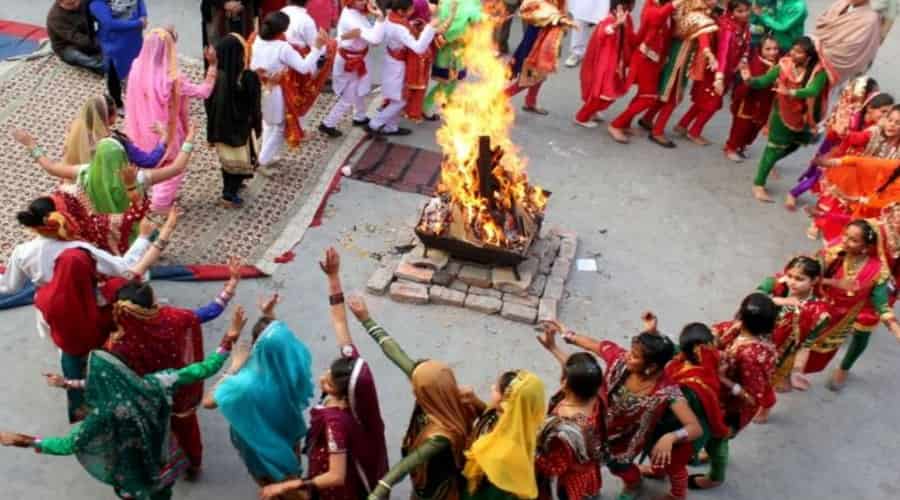
Today marks the beginning of the Hindu solar new year and this means its festival time! The new year is set in sync with the solar cycle of the lunisolar Hindu calendar and it falls on or about 14 April every year according to the Gregorian calendar. Across the Indian subcontinent, various communities celebrate the day as their new year. It is the New Year’s Day for Hindus in Assam, Bengal, Bihar, Himachal Pradesh, Haryana, Kerala, Odisha, Punjab, Tamil Nadu, Uttar Pradesh, Uttrakhand and other parts of India. However, this is not the universal new year for all Hindus. For some, such as those in and near Gujarat, the new year festivities coincide with the five-day Diwali festival. For others, the new year falls on Cheti Chand, Gudi Padwa and Ugadi which falls a few weeks earlier. Essentially a spring harvest festival, in the state of Punjab, it is known as Baisakhi, Vaisakhi or Vaisakha Sankranti as it marks the first day of the month of Vaisakha.

Baisakhi is a historical and religious festival in both Hinduism and Sikhism. For Hindus, the festival is their traditional solar new year, a harvest festival, an occasion to bathe in sacred rivers such as the Ganges, Jhelum, and Kaveri, visit temples, meet friends and take part in other festivities. For the Sikhs, Vaisakhi observes major events in the history of Sikhism and the Indian subcontinent that happened in the Punjab region.

The significance of Baisakhi as a major Sikh festival marking the birth of the Sikh order started after the persecution and execution of Guru Tegh Bahadur for refusing to convert to Islam under the orders of the Mughal Emperor Aurangzeb. This triggered the coronation of the tenth Guru of Sikhism and the historic formation of the Khalsa, both on the Vaisakhi day. The Khalsa tradition started in the year 1699, as it is on this day that the 10th Guru of the Sikhs, Guru Gobind Singh laid down the foundation of the Panth Khalsa, that is the Order of the Pure Ones, by baptising Sikh warriors to defend religious freedoms. This gave rise to the Vaisakhi or Baisakhi festival observed as a celebration of Khalsa Panth formation and is also known as Khalsa Sirjana Divas and Khalsa Sajna Divas. The Birth of the Khalsa Panth was probably on 30 March 1699. Since 2003, the Sikh Gurdwara Prabhandak Committee named it Baisakh or Vaisakh, making the first day of the second month of Vaisakh according to its new Nanakshahi calendar. A special celebration takes place at the Talwandi Sabo, where Guru Gobind Singh stayed for nine months and completed the recompilation of the Guru Granth Sahib, in the Gurudwara at Anandpur Sahib the birthplace of the Khalsa, and at the Golden Temple in Amritsar.

Ranjit Singh was proclaimed as Maharaja of the Sikh Empire on 12 April 1801, which was the Baisakhi day, creating a unified political state with Sahib Singh Bedi, a descendant of Guru Nanak dev, conducting the coronation. Vaisakhi was also the day when the British colonial empire official, General Reginald Dyer, committed the Jallianwala Bagh massacre on a gathering, an event influential to the Indian movement against colonial rule.

On Baisakhi, Mandirs and Gurdwaras are decorated. Hindus perform a mandatory daan or charity especially of hand fans, water pitchers and seasonal fruits. A ritual dip in the Ganga river or other holy water bodies is often performed and community fairs are held at Hindu pilgrimage sites and in many areas, a procession of temple deities is taken out. Sikhs hold kirtans, visit local Gurdwaras, community fairs and Nagar kirtan processions are held, and people gather to socialise and share festive foods.

The tradition of celebrating Baisakhi among Punjabi Hindus predates the birth of Sikhism. In undivided Punjab, before India’s partition, the Hindu shrine of Katas Raj was known for its Baisakhi fair which was attended by around 10,000 pilgrims, mostly Hindus. Similarly, at the shrine of Bairagi Baba Ram Thaman, a Baisakhi fair was held annually since the 16th century, which is today in Kausar in Pakistan’s Punjab, which was attended by around 60,000 pilgrims and Bairagi saints from all over India used to throng the shrine. The most spectacular gathering of the Baisakhi fair is at Thakurdwara of Bhagwan Narainji at Pandori Mahatan village in Gurdaspur district of Punjab where the fair lasts for three days from the 1st day of Vaisakha to the 3rd day of Vaisakha. The celebrations start in form of a procession on the morning of the 1st day of Vaisakha, carrying the Mahant in a palanquin by Brahmacharis and devotees. After that, the Navgraha Puja is held and charities in money, grains and cows are done. At sunset, the Sankirtan is held in which the Mahant delivers religious discourses and concludes it by distributing prasad or holy offerings of Patashas or candy drops. Pilgrims also do the ritual bath at the sacred tank in the shrine.

According to the Khalsa Sambat, the Khalsa calendar started with the creation of the Khalsa which was 13 April 1699 and accordingly, Baisakhi has been the traditional Sikh New Year. The alternative Nanakshahi calendar begins its year a month earlier on 1 Chait which generally falls on 14 March and begins with the birth year of the Guru Nanak Dev in 1469.

Vaisakhi is an important festival among Dogra Hindus of the Jammu region. On this day, people get up early in the morning, throng the rivers, canals, and ponds and take a ritual dip on this occasion. In Dogra households, a puja or prayer is performed then and part of the food crop is offered to the deities. New fruits of the year are enjoyed with the ritual bath at the Tawi river being common in Jammu. Baisakhi is celebrated at Udhampur on the banks of the Devika river where for three days devotees enjoy folk songs. At Sudhmahadev, this festival is celebrated with great pomp and show where folk singers come down and competition of folk songs is held. You will find vendors with stalls of eatables and games during this time. People also go to the Nagbani temple near Jammu to witness the grand new year celebration. The occasion is marked by numerous fairs and people come by the thousands to celebrate the festival.

In Himachal Pradesh, Baisakhi is an important festival for the Hindus. People get up early in the morning and have their ritual bath. Two earthen lamps are lit on this day, one with oil and the other with ghee and kept in a large saucer along with a water pot, blades of evergreen turf, Kusha, Incense, sandal, vermillion and money and the household deities are worshipped with all these items. Alms are given in form of rice and pulses with small coins called Nasrawan. Fried cakes of black gram prepared a day in advance are distributed to neighbours after the prayers and other special delicacies are prepared. In the evenings’ people enjoy the many fairs organised for three days.

In the state of Haryana, Baisakhi is celebrated with a fair in Kurukshetra at Baan Ganga Tirtha, which is associated with Lord Arjuna of the Mahabharata. There is a Vaisakhi tradition of a ritual bath at the sacred tank of Baan Ganga Tirtha and a fair is held annually on Baisakhi. The Haryana government also organises a Baisakhi festival in Pinjore Gardens to commemorate this festival.

In the state of Uttar Pradesh, Baisakhi is also known as Sattua or Satwahi, as Sattu, made by dry roasting and finely grinding grams is donated and consumed on this day. The common rites during this festival are bathing in a river or pond and eating sattu and jaggery.

Wishing everyone who celebrates this festival a very Happy New Year! Enjoy this day and especially the yummy food, though socialising may still not be allowed under social distancing norms in most countries.

In My Hands Today…

The Spy and the Traitor: The Greatest Espionage Story of the Cold War – Ben Macintyre

If anyone could be considered a Russian counterpart to the infamous British double-agent Kim Philby, it was Oleg Gordievsky. The son of two KGB agents and the product of the best Soviet institutions, the savvy, sophisticated Gordievsky grew to see his nation’s communism as both criminal and philistine. He took his first posting for Russian intelligence in 1968 and eventually became the Soviet Union’s top man in London, but from 1973 on he was secretly working for MI6.

For nearly a decade, as the Cold War reached its twilight, Gordievsky helped the West turn the tables on the KGB, exposing Russian spies and helping to foil countless intelligence plots, as the Soviet leadership grew increasingly paranoid at the United States’s nuclear first-strike capabilities and brought the world closer to the brink of war. Desperate to keep the circle of trust close, MI6 never revealed Gordievsky’s name to its counterparts in the CIA, which in turn grew obsessed with figuring out the identity of Britain’s obviously top-level source. Their obsession ultimately doomed Gordievsky: the CIA officer assigned to identify him was none other than Aldrich Ames, the man who would become infamous for secretly spying for the Soviets.

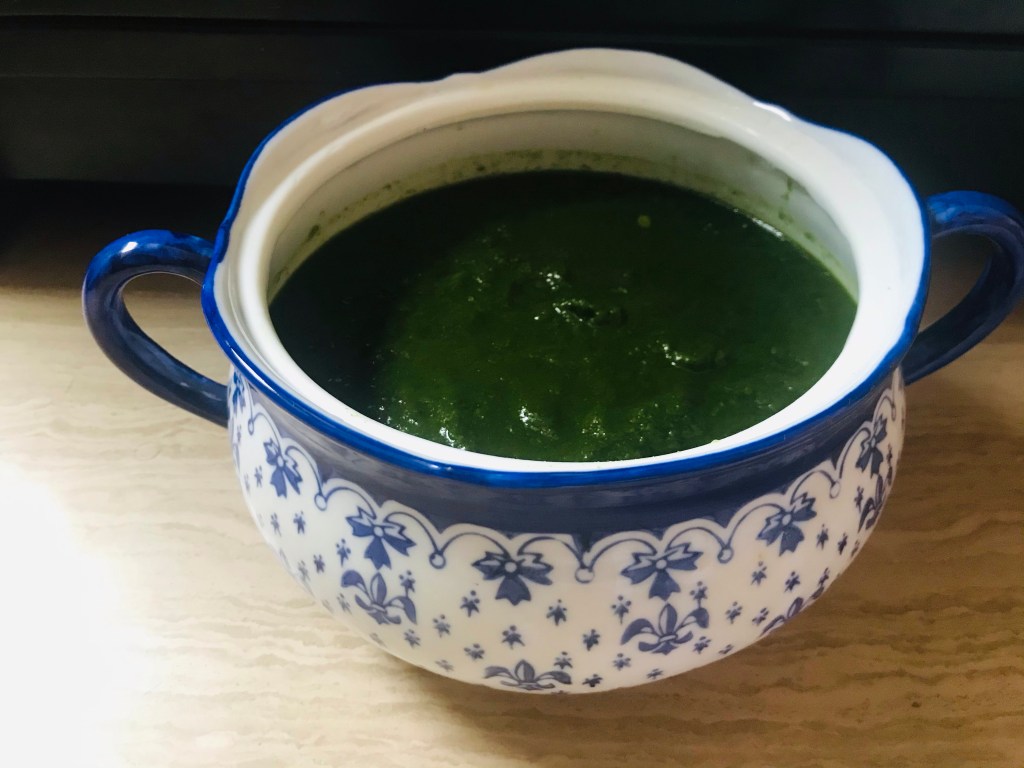
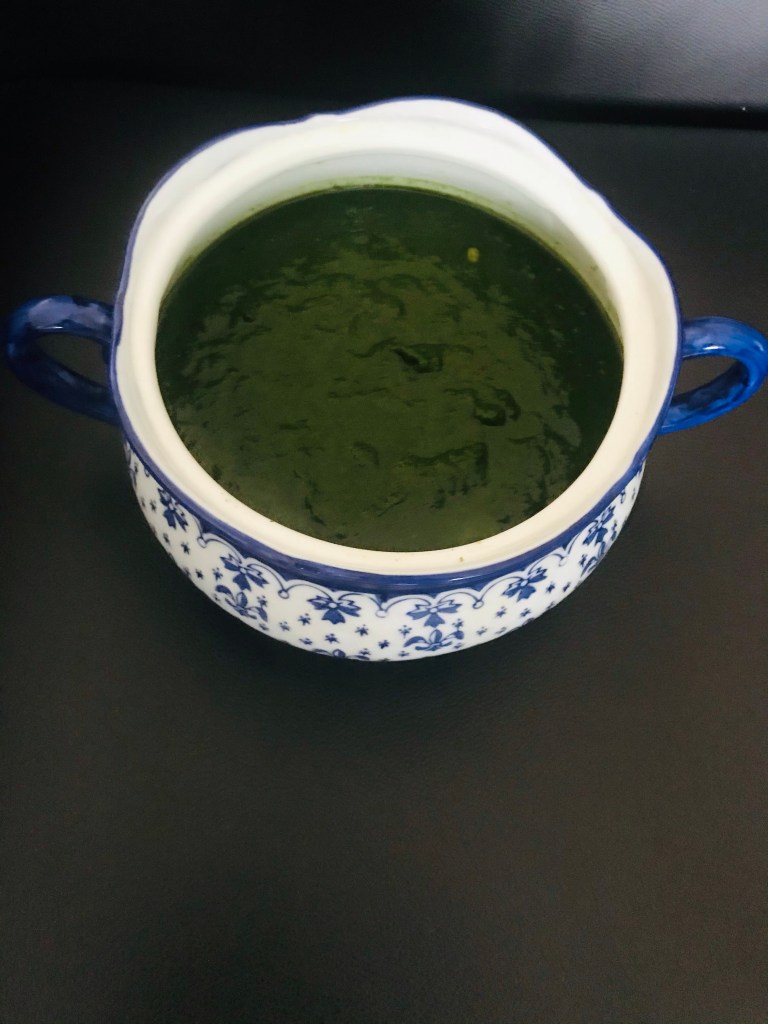
Recipes: Keerai Masiyal aka Spinach Mash

Believed to be Persian in origin, Spinach had spread across Europe by the 12th century and is a storehouse of nutrients and antioxidents. Belonging to the amaranth family and related to beets and quinoa, spinach is well known for its nutritional qualities and has always been regarded as a plant with remarkable abilities to restore energy, increase vitality and improve the quality of the blood. Rich in iron which plays a central role in the function of red blood cells which help in transporting oxygen around the body, in energy production and DNA synthesis, spinach is also an excellent source of vitamin K, vitamin A, vitamin C and folate as well as being a good source of manganese, magnesium, iron and vitamin B2. Eating spinach may benefit eye health, reduce oxidative stress, help prevent cancer, and reduce blood pressure levels.

My go-to recipes for spinach are usually Spinach Dal, Palak Paneer or Mor Keerai. But the other day, I had a some fresh spinach and a hankering for a good old-fashioned Masiyal which is a coarse blended paste of spinach mixed with a minimum of spices. This masiyal is a very healthy dish and is common in Tamil cooking and most households will have their own version of this dish. The version I make is the tambram version which does not use onions and garlic and is also very satvic in nature. This is a very quick recipe if you have spinach handy and can be made in 15-20 minutes and with other greens also.

Keerai Masiyal aka Spinach Mash

Ingredients:

  • 2 cups chopped spinach
  • 4 small green chillies
  • 1 tsp oil or ghee
  • 1 tsp mustard seeds
  • 1 tsp broken urad dal
  • ¼ tsp asafoetida
  • 1 tsp sugar
  • 2 dried red chillies
  • Salt to taste

Method:

  • Chop the spinach and wash them in a large pan and drain.
  • Heat 1-2 cups of water and salt slightly. When the water boils, add the chopped spinach and the green chillies.
  • Let it boil till the spinach is cooked, which should not take long, about 5-6 minutes. Remove and drain the spinach and transfer it to a bowl with cold water. This will help preserve the colour of the spinach.
  • Once the spinach is cool, blend to a coarse paste and keep aside. You can also use a handheld blender or a buttermilk churn to blend the spinach. You can keep the texture as smooth or coarse as you like. Remove this to the pan and keep aside.
  • Heat the ghee or oil in a small skillet. When it warms, add the mustard seeds and let them pop. Once the mustard seeds pop, add the urad dal, asafoetida and broken dried red chillies and stir until the urad dal is a nice golden colour. Pour this seasoning over the blended spinach.
  • Reheat the spinach and check for seasoning and add the sugar, if you are using it. Let it come to a boil and remove from the gas. Serve hot with rice and a sambar or kozambu of your choice.

2021 Week 14 Update

I am pretty excited as this week, S and I will take the first dose of the COVID-19 vaccine. But in my home state of Maharashtra in India, the situation is quite grim as they have run out of vaccines and many vaccine centres have been closed for the past few days. My parents have gotten their first dose and were supposed to get their next dose some time later this week, but now as things stand, it is not certain when they will actually get the dose and the effectiveness of the dose.

Cases are really surging in many countries and the world has seen an excess of 135 million cases with the bulk of the cases in the USA and Brazil and India with India reporting more than 100,000 cases daily multiple times this week. I am very concerned for my parents and other elderly relatives in India. They have been planning to go visit my grandmother in Bengaluru for months now, but because of all the new cases coming up, their plans keep getting postponed time and again. We thought getting the vaccine will be the key, but now that also looks unlikely in the near future. We can only pray.

This week was quite bad for me in terms of productivity because for some reason, I kept getting distracted and could not do everything I wanted to do. I am hoping this coming week will be different and I am able to focus more and get all that I want to do done.

And this is the perfect entry to our thought of the week. That if you think positive, good things will happen to you and believing in negative thoughts and things is definitely the one major obstruction to success. So if you have negative thoughts coming your way, take a deep breath and push that thought away and think something positive instead.

That’s it from us this week. The children will start their second year next week, so things will get heated up for them now, with more face to face lessons. Stay safe everyone.