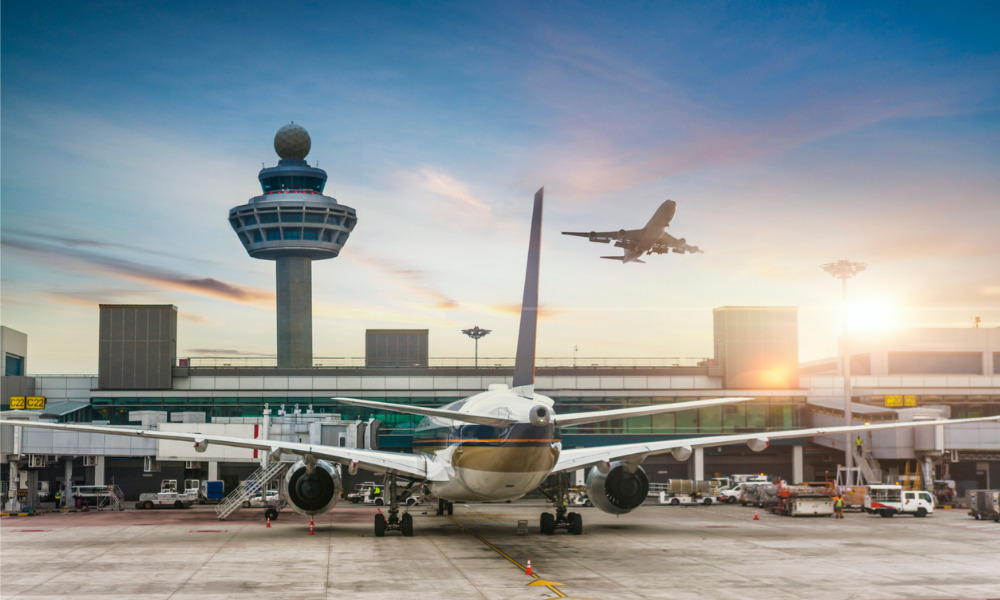
International Civil Aviation Day

Like most toddlers, BB was fascinated by planes, but unlike most boys, this fascination has carried on as he grew up and has propelled him to his area of study and where he is today. But today, with the airline industry in shambles due to the ongoing pandemic, I wonder if he will continue in this field or will make a pivot, but that’s a topic for another day. So, when I heard about this day devoted to civil aviation, I knew I had to find out more.

Tomorrow is the International Civil Aviation Day which has been celebrated on 07 December each year since 1994 by the International Civil Aviation Organisation or ICAO. The ICAO is an autonomous UN Body accountable for keeping up with the safety standards of international aviation. The date was chosen because December 07 1994 was the 50th anniversary of the signing of the Convention on International Civil Aviation. The Convention on International Civil Aviation, also known more popularly as the Chicago Convention, was signed by delegates from 54 countries. This defining international agreement has since permitted the global civil aviation system to develop peacefully and in a manner benefitting all peoples and nations of the world. The purpose of the day is to recognise the importance of aviation, especially international air travel, to the social and economic development of the world and the day is intended is to help generate and reinforce worldwide awareness of the importance of international civil aviation to the social and economic development of countries, and of the unique role of ICAO in helping countries to cooperate and realise a global rapid transit network at the service of all mankind. The importance of aviation as an engine of global connectivity has never been more relevant to look to international flight as a fundamental enabler of global peace and prosperity.

Seventy-five years after ICAO’s foundation, the International Civil Aviation network carries over four billion passengers annually. The global Air Transport sector supports 65.5 million jobs and USD 2.7 trillion in global economic activity, with over 10 million women and men working within the industry to ensure 120,000 flights and 12 million passengers a day are carried safely to their destinations. The wider supply chain, flow-on impacts and jobs in tourism made possible by air transport show that at least 65.5 million jobs and 3.6 per cent of global economic activity are supported by the aviation industry according to research by the Air Transport Action Group (ATAG).
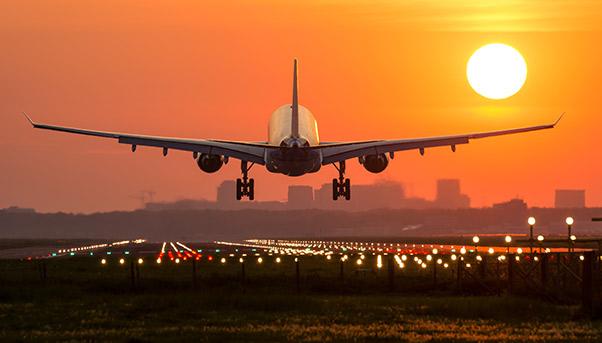
Civil aviation, which includes all non-military aviation, both private and commercial plays a key role in human affairs. It lets us discover our world’s wondrous geographic and cultural diversity, enables us to learn about and benefit from each other and connects societies through global travel and trade, advancing access to food, education and healthcare. Today COVID-19 has severed international connections by air, cut off businesses from clients, kept tourists from destinations and disproportionately affected the vulnerable, it has also disrupted the operations and finances of airlines and airports worldwide, threatening their capacity to assure the global supply of medicines, vaccines, humanitarian aid and other vital goods. Aviation is also an energy-guzzling industry with emissions from the industry accounting for more than 2% of the global total, ranking it in the top ten emitters, so this time can be spent in thinking of ways to make the industry greener.
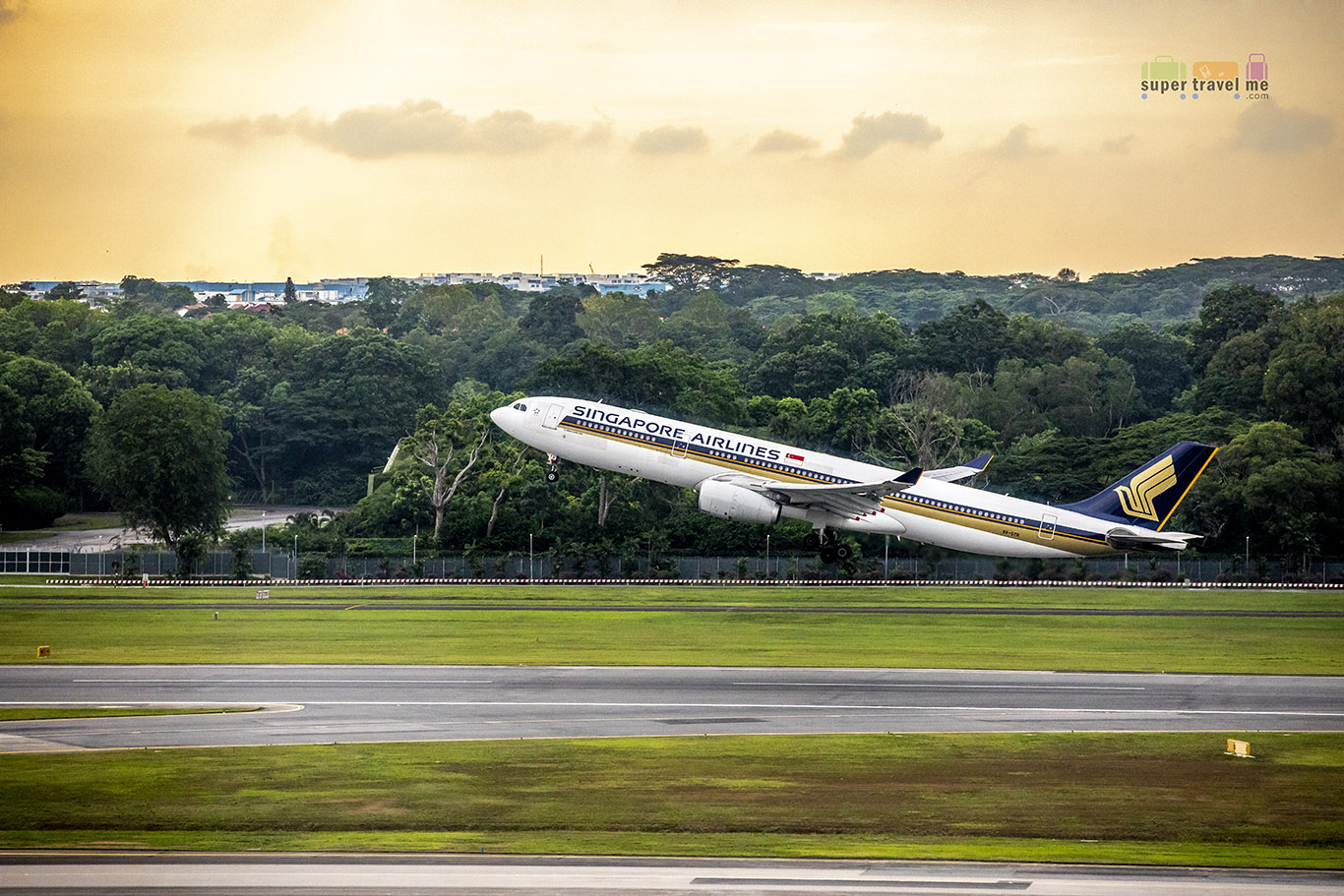
Every five years, coinciding with ICAO anniversaries, the ICAO council establishes a special anniversary theme for International Civil Aviation Day. Between these anniversary years, Council representatives select a single theme for the full four-year intervening period. The theme until 2023 is Advancing Innovation for Global Aviation Development. Aviation is an important engine of our world and will be playing a critical role in lifting the world to recovery from COVID-19. It connects us and allows us to meet family and friends and also broaden our horizons and our minds. To everyone in this industry, especially in these trying times, here’s hoping that times change for the better and the skies are once again filled with planes transporting people and goods across the seas and land.

2021 Week 48 Update

We are in the last weeks of 2021 and Covid is still not done with us. The newest variety Omicron which has come in just as people are planning their year-end holiday and travel has put a pause or in some cases, a full stop to many travel plans.

The variant has been detected in more than 38 countries, though there are no deaths as yet attributed to this variant. Many countries, including Singapore and India, have increased testing on incoming travellers and have stopped flights to the southern part of Africa. Other countries including Israel, Japan have already started closing their borders to all foreigners, with others probably following suit should the variant prove to be more severe or dangerous. At this point, we can only wait and see how things pan out. I am planning a trip to see my parents in early 2022 and hope things settle down by then.

In other news, the world just got a new country this week. After 396 years of rule by the British, Barbados has gained its independence with Dame Sandra Mason sworn in as president, replacing the British Queen as head of state.

Today’s quote is a very easy one to internalise. Nothing is impossible, because the word impossible itself has the word possible in it, so everything is possible, you just have to do it! This quote is attributed to the gorgeously talented Audrey Hepburn.

GG had her review with her endocrinologist this week and though her numbers are still much better, they are still a way to go before she reaches normal levels. She has another review after six weeks, so I am hoping the numbers get better by then.

That’s all from me this week. Stay safe, stay masked, and get vaccinated!

In My Hands Today…

The Long Partition and the Making of Modern South Asia: Refugees, Boundaries, Histories – Vazira Fazila-Yacoobali Zamindar

Nation-states often shape the boundaries of historical enquiry, and thus silence the very histories that have sutured nations to territorial states. “India” and “Pakistan” were drawn onto maps in the midst of Partition’s genocidal violence and one of the largest displacements of people in the twentieth century. Yet this historical specificity of decolonization on the very making of a nationalized cartography of modern South Asia has largely gone unexamined.

In this remarkable study based on more than two years of ethnographic and archival research, Vazira Fazila-Yacoobali Zamindar argues that the combined interventions of the two postcolonial states were enormously important in shaping these massive displacements. She examines the long, contentious, and ambivalent process of drawing political boundaries and making distinct nation-states in the midst of this historic chaos.

Zamindar crosses political and conceptual boundaries to bring together oral histories with north Indian Muslim families divided between the two cities of Delhi and Karachi with extensive archival research in previously unexamined Urdu newspapers and government records of India and Pakistan. She juxtaposes the experiences of ordinary people against the bureaucratic interventions of both postcolonial states to manage and control refugees and administer refugee property. As a result, she reveals the surprising history of the making of the western Indo-Pak border, one of the most highly surveillanced in the world, which came to be instituted in response to this refugee crisis, in order to construct national difference where it was the most blurred.

In particular, Zamindar examines the “Muslim question” at the heart of Partition. From the margins and silences of national histories, she draws out the resistance, bewilderment, and marginalization of north Indian Muslims as they came to be pushed out and divided by both emergent nation-states. It is here that Zamindar asks us to stretch our understanding of “Partition violence” to include this long, and in some sense ongoing, bureaucratic violence of postcolonial nationhood, and to place Partition at the heart of a twentieth century of border-making and nation-state formation.

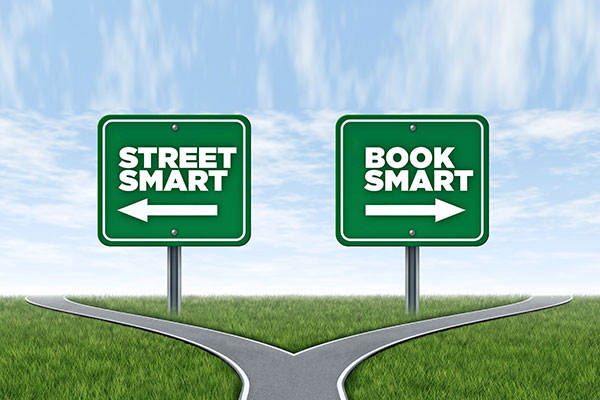
Book Smart or Street Smart

Source

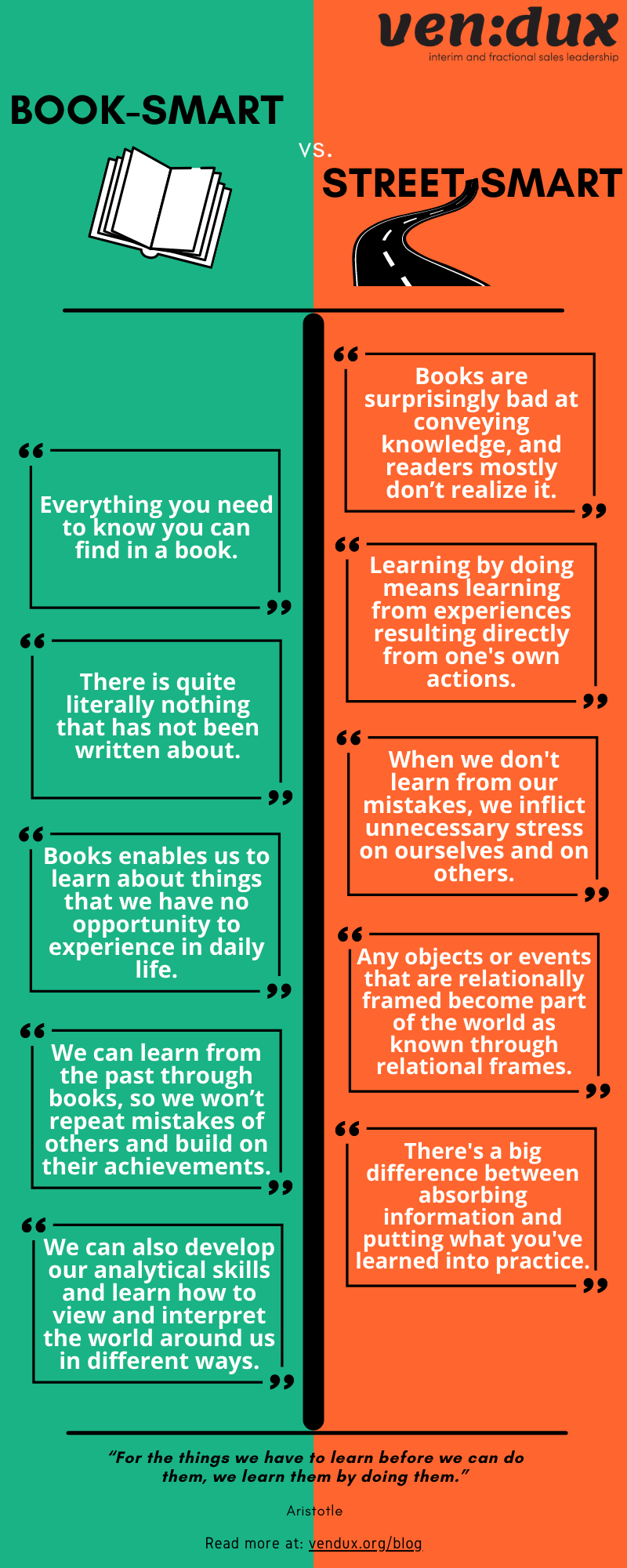
A topic that has been in my mind for a while now, is the eternal debate between being book smart and street smart and which is better. Book smart is an adjective that refers to the learning or education one gets and describes a person whose knowledge greatly derives from book-learning, as opposed to practical experience, or street smarts. Book smart is knowledge derived from facts, science and communication and is explicit knowledge. Street smart, on the other hand, is procedural or practical knowledge on how to accomplish something. It is often tacit knowledge, which means that it can be difficult to transfer to another person through writing it down or verbalising it.

Someone who is known as being book smart people is usually well-read and often have read the classics, know facts and information that many other people don’t and are usually good at things like trivia games and crossword puzzles. The stereotype of a book-smart person is someone who deals with ordinary but challenging situations, especially bad or difficult ones, only from an intellectual point of view by basing their decisions strictly on available facts, accumulated knowledge, or personal insights primarily obtained from an educational environment. Book smart people are good with exams and academically inclined and enjoy the structure of the learning environment. They believe value lies in knowing things and reading things and are sometimes described as smart dumb people. In fact, in Tamil, there is a term for such people known as Padicha Muttal which means an educated fool

On the other hand, people who are good at dealing with practical life problems have lots of street-smarts. They may not be as educated or read as much as those with book smarts, but they have something just as valuable – the ability to use their experiences in many different situations. They are very aware of their surroundings. The stereotype of a street-smart person is someone who knows how to handle practical situations in everyday life necessary to get things done but is not as inherently educated or gifted academically.

In their most extreme and negative stereotypes, book-smart people are essentially naive, easily manipulated, unfeeling, and display bad judgment in ordinary situations while street-smart people are unintelligent and incapable of achieving higher education, but are more passionate and can usually find an answer to a problem through trial and error.

In my opinion, neither alone is good and a combination of book smarts with a dash of street smartness is what differentiates the wheat from the chaff. A highly educated person should not be derided for the advantages they may have and at the same time, just having a certificate does not prove that they know. Conversely, street-smart people are often demeaned simply because they are classified as those who didn’t have the grades to study at an institute of higher learning. Sometimes they are much smarter than those who are highly qualified.

Politics, power, social dynamics, leadership abilities, professional networks, and social status play a big part in an individual’s ability to succeed in life. To succeed in this environment, a person needs to navigate successfully in an opaque world and make the right decisions. In many situations and, in most industries, with the possible exception of teaching and academia, being book smart but not street smart is a distinct disadvantage. Being street smart doesn’t mean one is uneducated, undereducated or unintelligent and dumb. Being street smart means one is more aware of what is happening around them. They have environmental and situational awareness and can judge a situation so they can react to it accordingly. Street smartness comes from life’s experiences and situations that one would have encountered.

Someone who is only book smart, with low to no street smartness will only have the theoretical aspects of what he or she has learnt, but will not know if the theory works in real life. But, without the foundation of that theory, maybe the practical applications can only go so far. So a combination of both is where you hit that sweet spot. The key to success in the workplace and, in all aspects of life, is to have some, actually quite a bit of street smartness. With only book knowledge, when an individual enters the real world, the going is get tough. In these situations, those with street smarts are ready to fight and defend themselves because they have prepared themselves for these moments. This is where their expertise comes into play. They have the world experience, which trumps the book smarts word experience every single time. They have life skills, which trumps the abstract learning of those with bookish knowledge and they know and understand their environment and who is in it.

For someone who is not very street smart, and I count myself in this, here are some good tips to increase your confidence levels.

Recognise your faults and use setbacks to learn and grow. Get in there, the environment you want to succeed in and immerse yourself in it. Get involved with all the nitty-gritty of the work you are doing and be completely hands-on. Learn from mistakes and make sure every experience, whether positive or negative, teaches you something, even if it is what not to do. Doing so will make you more accustomed, more comfortable, and more aware of your world. Also, learn to look for opportunities that are everywhere, but need a keen eye to spot. Acknowledge that people are different and so keep track of their biases, consciously put them aside and judge each person on their merit. That will make you more effective at evaluating people. Choose what feels most certain rather than what’s most logical. And this is something I struggle with, I feel some decisions, and then my logical brain takes over and I change my decision which more often than not backfires. If something is too perfect, too simple, then it’s probably not right, you need to prod and find out more. Everything you do, keep an eye on the future and not just be in the present. A street-smart person puts aside the primal pull of scarcity and assesses value based on utility. In some cases, they may even profit off of other people’s obsession with scarcity.

Become more aware, detach yourself from your emotions because emotions lead to poor decision-making skills, slow down your thinking and become more deliberate using logic which allows seeing through manipulative efforts to choose what’s best for you rather than what feels emotionally satisfying will make you more street smart, even if you are not one now.

In My Hands Today…

The Sun Is a Compass: A 4,000-Mile Journey into the Alaskan Wilds – Caroline Van Hemert

During graduate school, as she conducted experiments on the peculiarly misshapen beaks of chickadees, ornithologist Caroline Van Hemert began to feel stifled in the isolated, sterile environment of the lab. Worried that she was losing her passion for the scientific research she once loved, she was compelled to experience wildness again, to be guided by the sounds of birds and to follow the trails of animals.

In March of 2012, she and her husband set off on a 4,000-mile wilderness journey from the Pacific rainforest to the Alaskan Arctic, traveling by rowboat, ski, foot, raft, and canoe. Together, they survived harrowing dangers while also experiencing incredible moments of joy and grace — migrating birds silhouetted against the moon, the steamy breath of caribou, and the bond that comes from sharing such experiences.