Kota Kinabalu
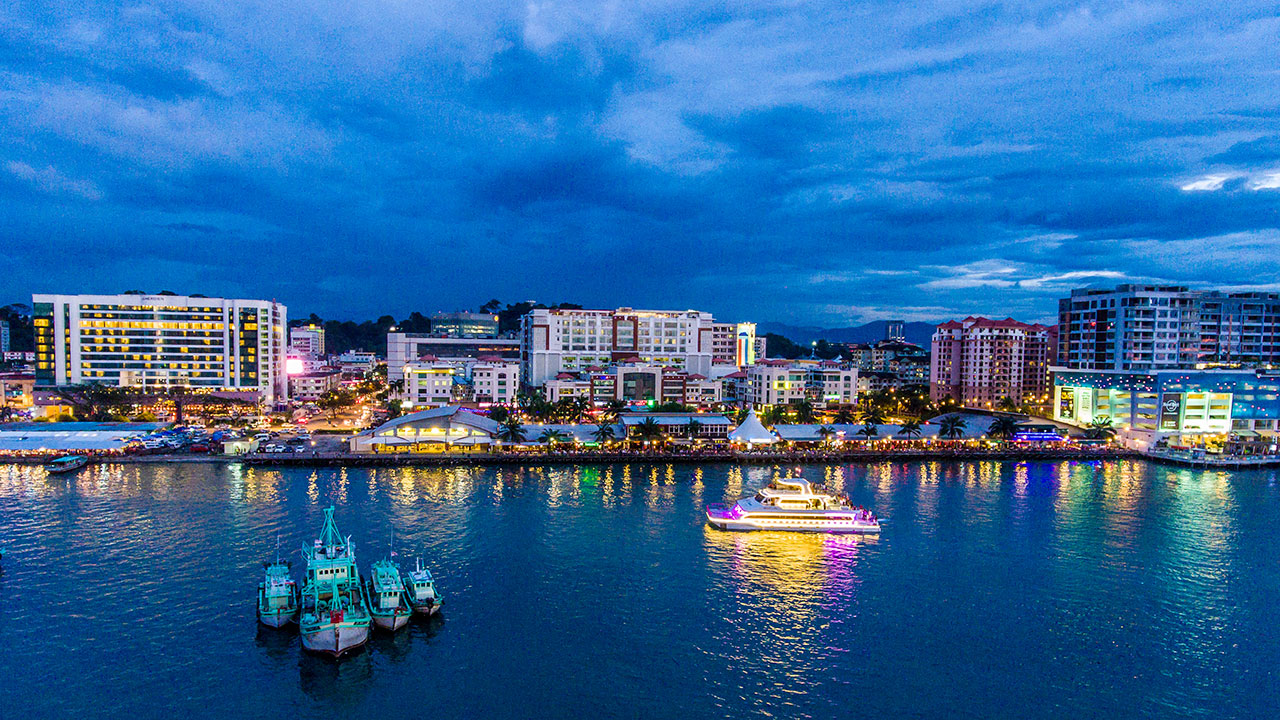
Affectionately known as KK, Kota Kinabalu, Sabah’s capital was formerly known as Jesselton. The city is located on the northwest coast of Borneo facing the South China Sea. The Tunku Abdul Rahman National Park lies to its west and Mount Kinabalu, which gave the city its name, is located to its east.
In the 15th century, the area of Kota Kinabalu was under the influence of the Bruneian Empire. Historically, the Kadazandusuns called the area by the name of Dondoung. In the 19th century, the British North Borneo Company, BNBC first set up a settlement near Gaya Island. However, it was destroyed by fire in 1897 by a local leader named Mat Salleh. In July 1899, the place located opposite Gaya Island was identified as a suitable place for settlements. Development in the area was started soon after that; and the place was named Api-api before it was renamed after Sir Charles Jessel, the vice-chairman of BNBC, as Jesselton. Jesselton became a major trading port in the area and was connected to the North Borneo Railway. Jesselton was largely destroyed during World War II. The Japanese occupation of Jesselton provoked several local uprisings notably the Jesselton Revolt but they were eventually defeated by the Japanese. After the war, BNBC was unable to finance the high cost of reconstruction and the place was ceded to the British Crown Colony. The British Crown declared Jesselton as the new capital of North Borneo in 1946 and started to rebuild the town. After the formation of Malaysia, North Borneo was renamed as Sabah. In 1967, Jesselton was renamed Kota Kinabalu, Kota being the Malay word for City and Kinabalu after the nearby Mount Kinabalu. Kota Kinabalu was granted city status in 2000.
Kota Kinabalu is a major tourist destination and a gateway for travellers visiting Sabah and Borneo. Kota Kinabalu is named after Mount Kinabalu, which is situated about 50 kilometres east-northeast of the city. Kinabalu is derived from the name Aki Nabalu meaning the revered place of the dead. Aki means ancestors or grandfather, and Nabalu is a name for the mountain in the Dusun language. There is also a source claiming that the term originated from Ki Nabalu, Ki meaning have or exist, and Nabalu meaning the spirit of the dead. The word kota comes from Malay word kota which in turn comes from the Sanskrit word kota which means fort, fortress, castle, fortified house, fortification, works, city, town, or place encircled by walls. A direct translation of the name Kota Kinabalu into English would be the City of Kinabalu or Kinabalu City.
Besides Jesselton, there are also other older names for Kota Kinabalu. The most popular is Api-Api, or simply Api, which is a Malay word meaning Fire. Another suggested historical name is Deasoka, which roughly means below the coconut tree in the Bajau language. The Bajau locals purportedly used this name to refer to a village in the southern part of the city which was filled with coconut trees. Yet another name was Singgah Mata which means transit eye, but can be loosely translated as pleasing to the eye. It is a name said to have been given by fishermen from Gaya Island referring to the strip of land that is today’s downtown Kota Kinabalu. Today, all these names have been immortalised as names of streets or buildings around the city.
Kota Kinabalu is located on the west coast of Sabah. The city lies on a narrow flatland between the Crocker Range to the east and the South China Sea to the west. There are six islands off the coast of the city. The largest is Gaya Island, the site of the first British settlement. Approximately 8,000 people live there. The smaller islands, mainly uninhabited, are named Sapi Island, Manukan Island, Sulug Island, Mamutik Island and Sepanggar Island to the north. Sepanggar Island is located north of the National Park opposite Sepanggar Bay.
Besides being the capital city, Kota Kinabalu is also the main industrial and commercial centre for Sabah. The economy is dominated by the primary sector of industry. Historically, the secondary sector dominated the economy, but due to rapid urbanisation and economic development, this sector of the economy is slowly diminishing. More recently, a move towards a more tertiary-based industry has become more apparent, especially with the boom in the tourism industry.
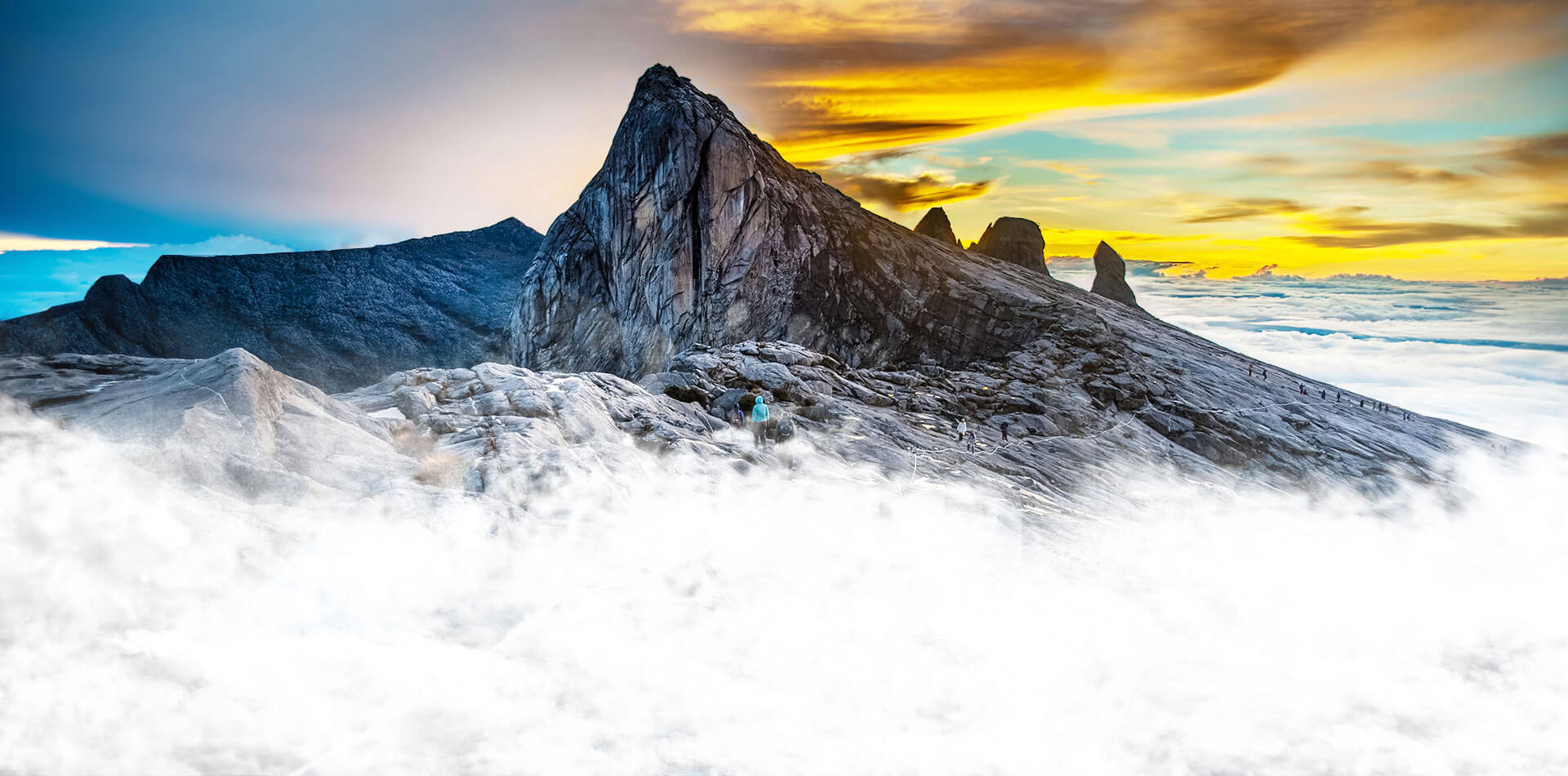
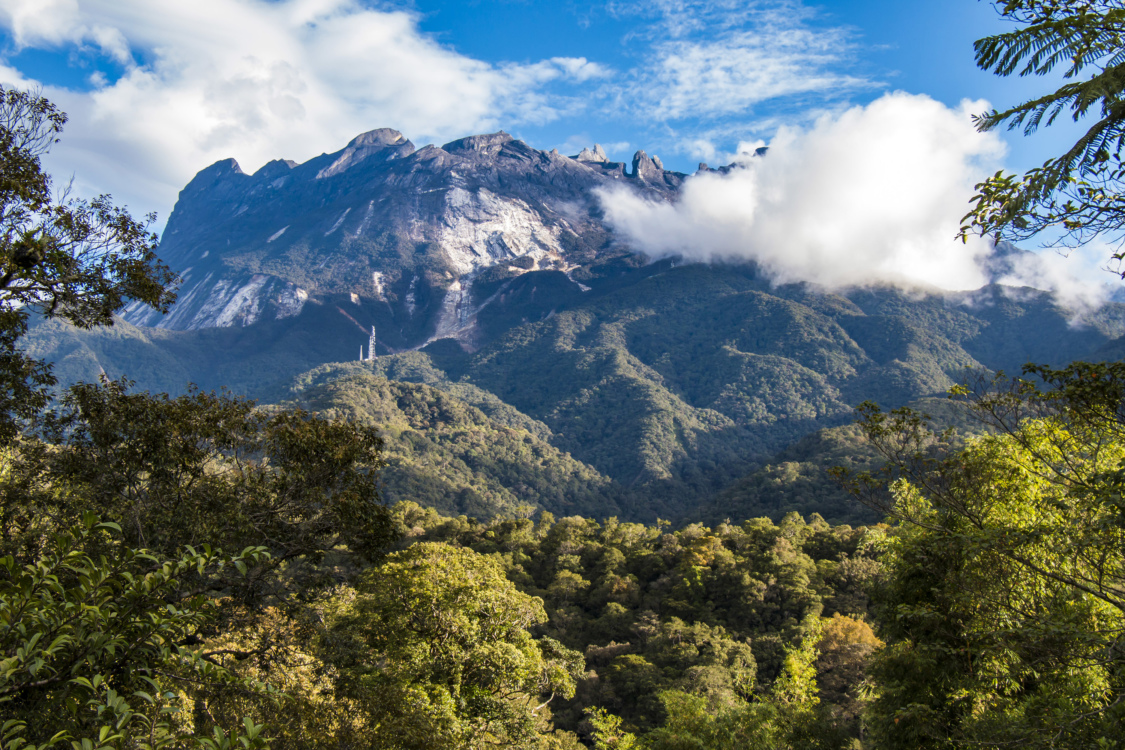
Malaysia’s highest mountain, known as Gurung Kinabalu in Malay, Gayo Ngaran or Nulu Nabalu in Dusun, Mount Kinabalu is protected as Kinabalu Park, a World Heritage Site. Standing at a height of 4,101 m, this is the most accessible mountain in the world. The mountain and its surroundings are among the most important biological sites in the world, with between 5,000 and 6,000 species of plants, 326 species of birds, and more than 100 mammalian species identified. Mount Kinabalu has been accorded UNESCO World Heritage status.
Low’s Peak can be climbed by a person in good physical condition and there is no need for mountaineering equipment at any point on the main route, but climbers must be accompanied by accredited guides at all times due to national park regulations and may experience altitude sickness. Its vast altitude allows a wide array of habitats to thrive and is one of the world’s most important biological sites.
The climate of the mountain varies from humid tropical at its base to alpine at its summit. Due to the coldness of the mountain from December to January, there are a few occasions where frost and ice appear at the summit of Mount Kinabalu. Snow has been recorded three times in this area; in 1975, 1993 and 2022.
Mount Kinabalu gets its name from the Kadazan word Aki Nabalu which translates to the revered place of the dead. Mount Kinabalu is sacred to the locals as they believe that the spirits of their ancestors occupy the peak of the mountain. Initially, every time someone tried to climb the mountain, a chicken was sacrificed to pacify the spirits. However, this ritual takes place only once a year where seven chickens are sacrificed to pacify the spirits. Another popular legend among the locals is that the mountain belongs to a Chinese Widow. The legend says that a Chinese prince married a Kadazan woman after he defeated a dragon. However, soon after his marriage, he left for China thus abandoning the Kadazan woman. The woman then headed into the mountains where she was later turned to stone.
Ascending and descending the mountain can take up to 4 hours. However, visitors generally take two days with an overnight stay at Laban Rata, which is located 3,272 meters above sea level. Visitors generally try to reach the peak of the mountain by sunrise to catch the beautiful sun and capture sensational pictures.
The entry fee to enter Kinabalu Park is RM 15 for adults and RM 10 for children. A climb fee permit is charged at RM 200 for foreigners and RM 50 for Malaysians. A maximum of 120 people are allowed to climb the mountain each day to preserve the environment and for safety measures. Climbing permits are subject to availability so visitors are recommended to book their climbing packages in advance. Permits for the climb can be obtained from the tour guides or agencies. The cost of hiring mountain guide services is RM 230, while the porter service per day is RM 65.
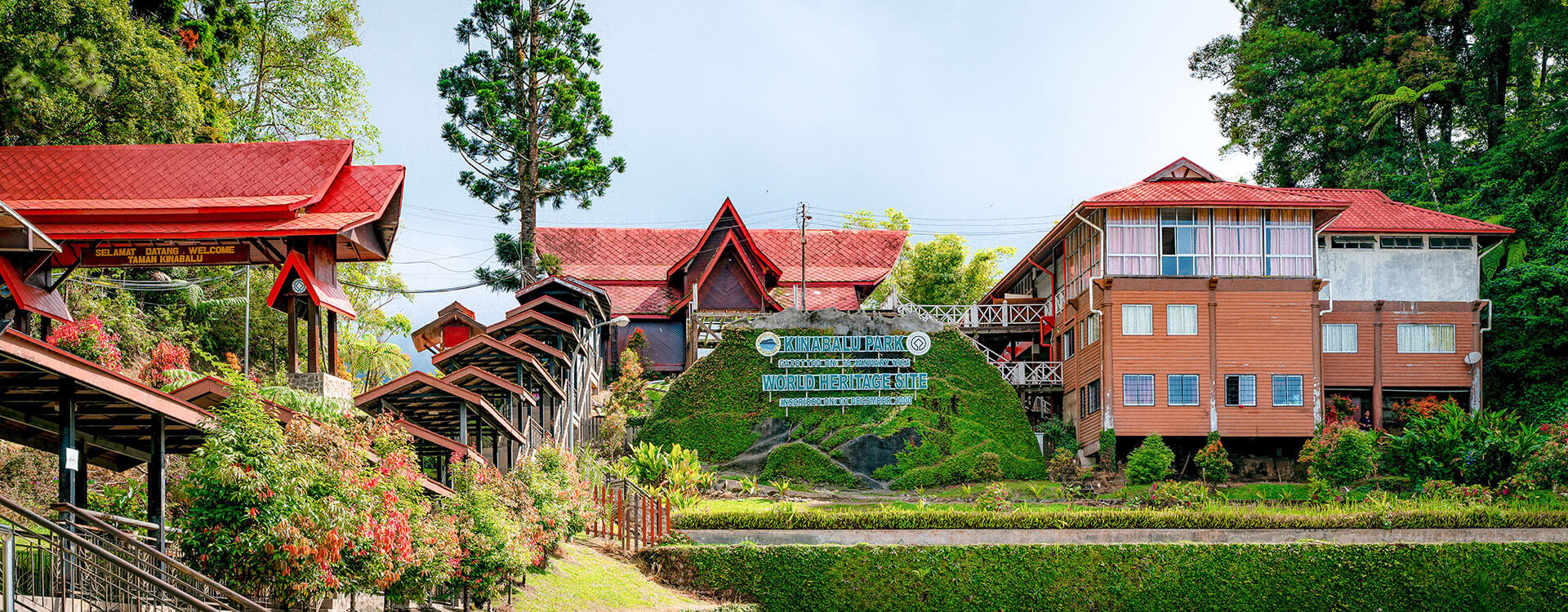
Malaysia’s first national park, Kinabalu Park was opened to the public in 1964 and is today a UNESCO World Heritage Site by UNESCO. The park is buzzing with plant species such as the alpine meadow plants and montane oak.
It is one of the most important biological sites in the world with more than 4,500 species of flora and fauna, including 326 bird and around 100 mammal species, and over 110 land snail species. It covers an area of 754 sq km surrounding Mount Kinabalu, which is the highest mountain in Borneo.
The park contains a variety of flora and fauna that ranges over 4 climate zones; from rich lowland dipterocarp forest through the montane oak, and rhododendron, to the coniferous forests, to the alpine meadow plants, and the stunted bushes of the summit zone. The mountain is also known for its many carnivorous plants and orchid species, most notably Nepenthes rajah. It is also home to a multitude of endemic animal species, including the Kinabalu giant red leech and Kinabalu giant earthworm. The park also plays host to a variety of birds, insects, mammals, amphibians, and reptiles.
Mount Kinabalu is one of the youngest non-volcanic mountains in the world. It was formed within the last 10 to 35 million years. The mountain still grows at a rate of 5 millimetres a year. Kinabalu Park has eight nature trails for visitors who want to explore nature without trekking the mountain. There are several other attractions in the park such as the Orchid Conservation Center and the Butterfly Farm which will be an educative experience. One should not miss the waterfalls in the park, Kipungit Waterfall and Langanan Waterfall. The latter stands at 120m high and is a sight to behold.
April is the most preferred month for climbing the mountain as the weather is stable and is more suited for climbing. Visitors are advised to avoid climbing the mountain during November and December, as these months witness heavy rainfall which can make climbing difficult and dangerous.
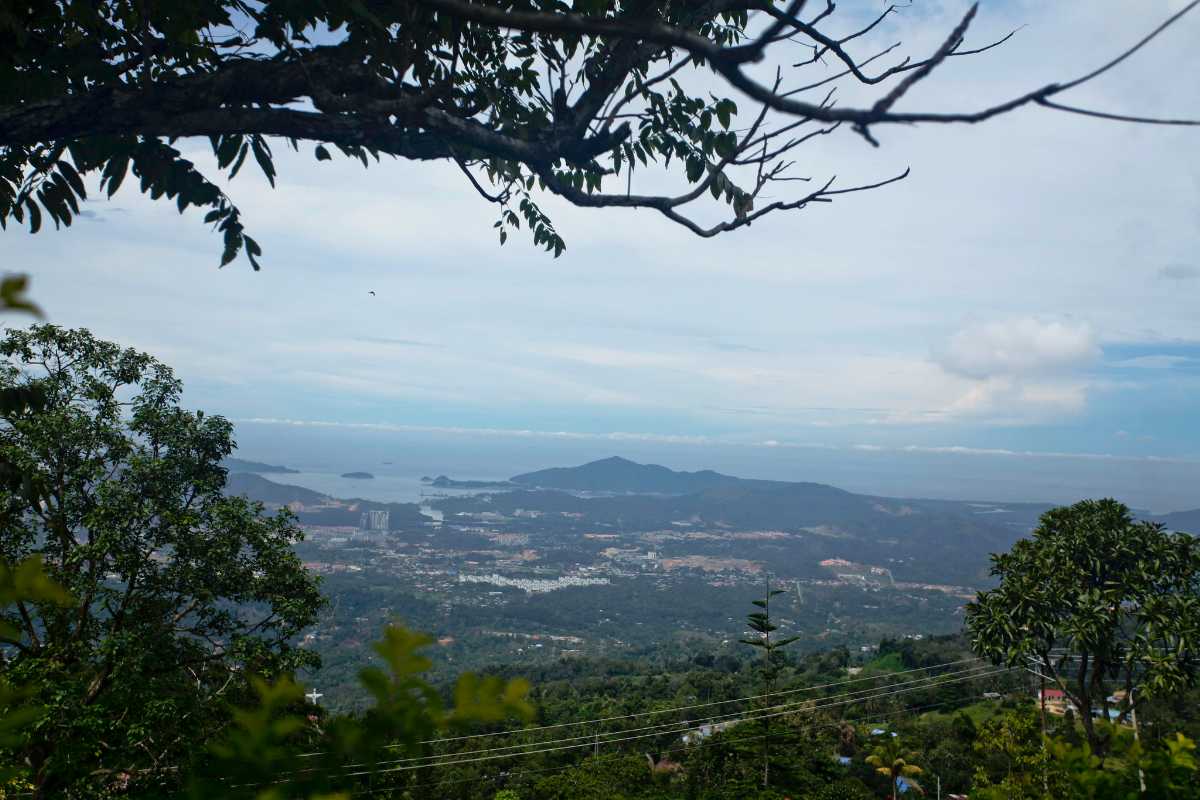
Standing at 800 m above sea level, Kokal Hill is popular for its mesmerising city view, cool and fresh air, chilly temperatures and relaxing atmosphere. To get to the panoramic view, one needs to hike to the top which has resorts, cafes, homestays and a perfect location for landscape photography. Kokol Hill experiences a cool and pleasant climate mostly and is very crowded on clear days. It is best to visit around 6 am and in the evenings to experience the beautiful sunrise and sunset respectively.
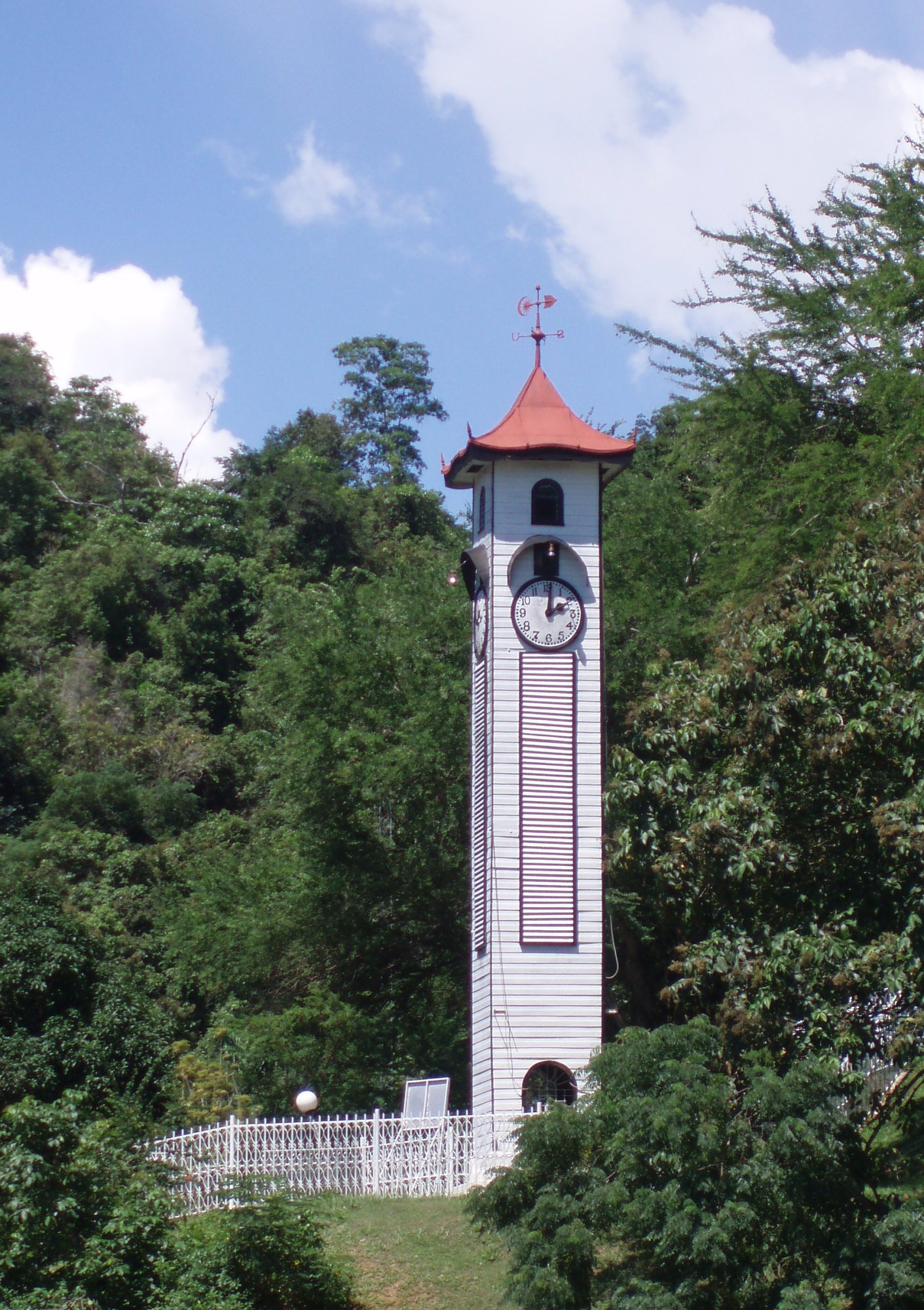
The oldest standing structure in Kota Kinabalu, the Atkinson Clock Tower was originally known as the Atkinson Memorial Clock Tower and sits in solitary on the bluff along Signal Hill Road. The clock tower was built in memory of Francis George Atkinson, Jesselton’s first district officer who died of Malaria or Borneo Fever. His mother Mrs Mary Edith Atkinson presented a two-faced clock to Jesselton town as a tribute to the memory of her son and it was decided later that a clock tower would be built in his honour. The clock tower was originally built using Mirabau wood. Measuring 50 feet high, the clock tower stood from its lookout point on the hill facing towards the township of Jesselton. A weather vane with initials of the wind direction added a few more inches to the height of this elegant monument. Ships calling port at the wharf used the Atkinson Clock Tower as their navigation landmark, as it could be seen from the sea. The clock tower was illuminated at night and was used as a shipping landmark right up to the 1950s.
Over the years, the clock tower underwent many transformations. Subsequent repairs and renovations have altered its appearance. Japanese machine-gun fire during World War 2 damaged the dial and cog of the clock tower’s mechanisms. The clock tower was extensively renovated and altered for Jesselton’s Diamond Jubilee celebrations in 1959. In 1961, the Atkinson Clock Tower’s clock face was altered yet again. The dials of the clock were changed and the face was replaced with translucent Perspex, with black figures on a white background for internal lighting. But the building itself has remained intact in its exact location for more than a century. The clock tower is protected with its site gazetted in 1983.
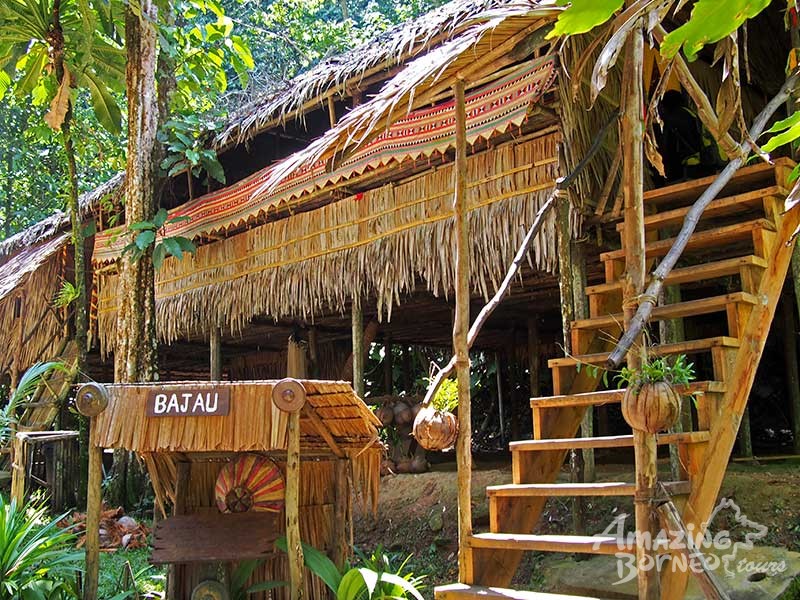
A cluster of traditional homes, the Mari Mari Cultural Village is popular for its tours and traditional art and craft displays. Murut, Dusun, Bajau and more are the communities scattered around Jin Kiansom, in Kota Kinabalu. One can witness tattoo-making, blow-pipe making and other indigenous crafts that these tribes engage in, as well as sample their cuisine and learn about their lifestyles and beliefs. While here, make sure to visit the Kiansom Waterfall which is close to the village.
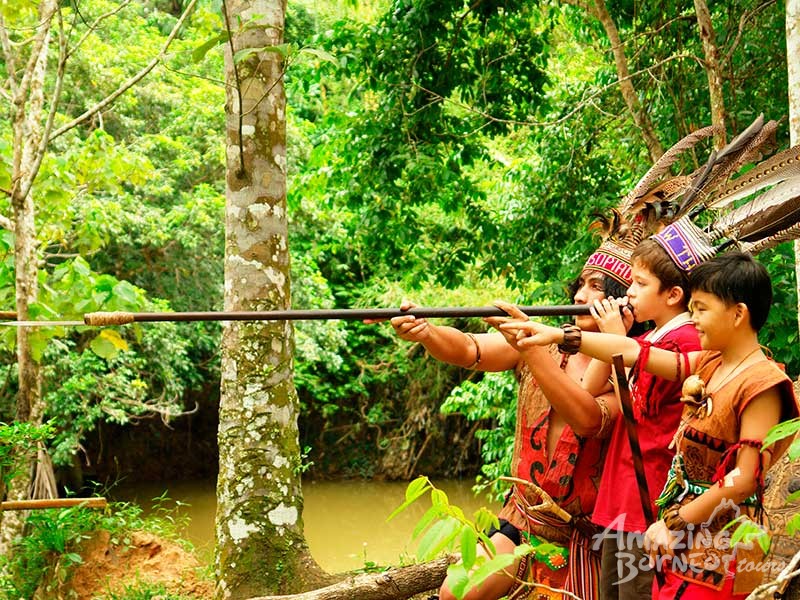
The tour of the Mari Mari Cultural Village takes one through the vast area inhabited by the members of 5 different tribal communities. One can witness the various traditional activities and habits followed by each of these distinct tribes and their daily routines and rituals. Some of the fun activities included in the Mari Mari Tour include rice wine tasting, a unique method of cutting trees and blowpipe dart shooting which was once used as a means of defensive weapon but has now been turned into a harmless entertaining game. One can also volunteer for their special folk music and tribal ethnic dances like the Magunatip bamboo dance performed by the Murut tribes.
The Murut Tribe is one of the oldest tribal communities residing in the Mari Mari Village. They used to have quite a dominant grasp over the other tribes residing in and around the area due to their headhunting practices. They were also well-known for their fatal weapons like poisoned blowpipes, swords and ribbed spears coated with venom. One of their ancient traditions involved strategically placing the skeleton heads of those sacrificial humans to display their might to the neighbouring tribes and preventing any attempts of attacks or threats to the members of their tribe. However, after British colonisation, their population started decreasing rapidly and they became more domesticated leading them to turn into one of the friendlier tribes of the current times.
The Lundayeh Tribe, also called the Lun Bawang tribe, are a hard-working community of fishermen, livestock farmers, hunters and fishermen. They were infamous for their hardcore burak or rice wine drinking habits. In the early 20th century, there was a major smallpox epidemic which wiped out most of the Lundayeh tribe members. This was mainly due to their low immunity caused due to excessive drinking which made them more vulnerable to any kind of outbreaks. Today, the Lundayeh are considered almost extinct.
The Bajau tribal community has two subdivisions – about half of them residing in Kota Belud and the other half in Sempora. The Bajau tribes of Kota Belud are popularly known as the Cowboys of the East due to their skilled horse breeding and horse riding abilities. The Bajau Laut tribes of Semporna are fondly known as Sea Cusps due to their proficient sailing skills.
The Kadazan tribe is truly the people of the land. They cherish their produce and celebrate Kaamatan annually which they consider to be one of the most auspicious harvest festivals to honour and thank the agricultural deities. Most of the Kadazans are Christians, mainly Roman Catholics and a minority community of Protestants and Islamic followers.
The Rungus tribe was earlier considered to be a sub-community of the bigger Kadazan ethnic group until recently when they were declared to be a separate, independent tribal community that happened to be heavily influenced by Malaysian society. The entire community is quite heavily dependent upon rice harvest and processing making it their main source of income.
The cultural village is open from 10 am to 6 pm daily. Entry fees are RM 180 for adults RM 160 for children between the ages of 5 and 11.
The Japanese thermal pools at the Poring Hot Springs are part of the Kinabalu National Park and are a perfect way to relax after an exhaustive trek on Mount Kinabalu. The natural hot springs and the baths contain sulphur which is known for its skin-curative and restorative properties. The complex also has an enchanting forest filled with life, where a lucky few might even get to see some rare flora or fauna like the Rafflesia flower which only blooms rarely. Poring Hot Springs makes for a great trip for anyone looking for some adventure and the chance to attune to oneself.
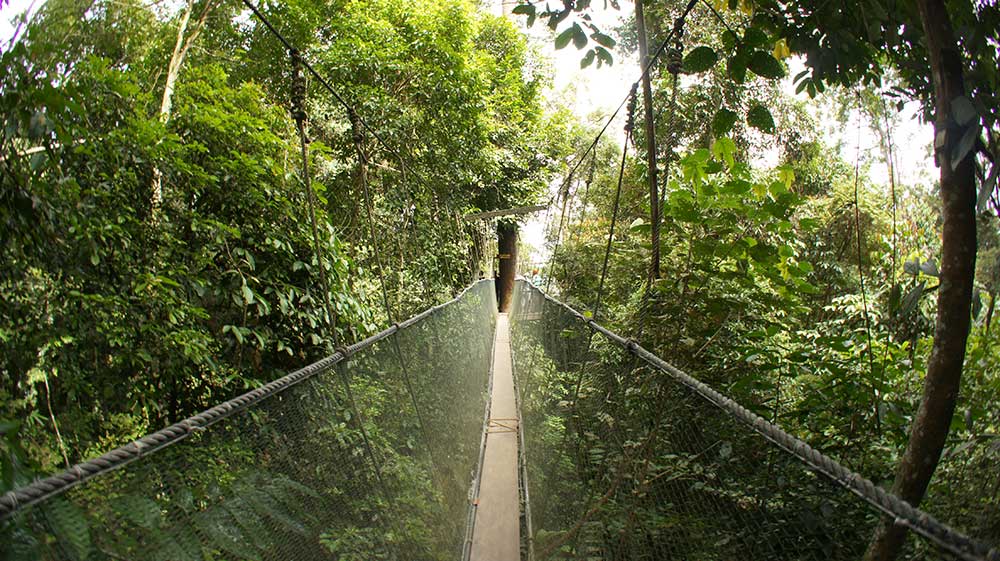
The Poring Canopy Walk offers a chance to have a thrilling bird’s eye view of the entire spring complex from a height of 30 metres. It consists of a series of walkways suspended from trees in a circular shape. Visitors can opt to undertake an unguided trek through the forest complex to the Kipungit and Langanan waterfalls. The park complex also houses a beautiful butterfly park, located en route to the canopy walk. Another attraction for lovers of flora and fauna is the orchid garden within the park, home to a wide variety of orchids and also certain kinds of animals. The forest also has activities like bird watching that are highly enjoyable. The spring is open daily from 8 am to 6 pm.
The Kota Kinabalu City Mosque is the largest and second main mosque in Kota Kinabalu. Surrounded by a man-made lagoon, it is popularly known as the Floating Mosque because it appears to be floating on the water. The mosque is believed to be an epitome of Islamic architecture having been built in the lines of the Mosque Of Nabawi Al-Munawwara. It consists of a huge prayer hall along with three distinct madrasahs or Islamic schools with the capacity of accommodating up to 12,000 people at a time. Visitors are permitted to enter the mosque and look through it, however, they must register themselves with the Kota Kinabalu City Mosque Tourism Management first.
The dome of the mosque is striking and resplendent in gold and blue colours with the structure resembling Al Masjid an Nabawi, the second holiest mosque in the world. It is surrounded by an artificial lagoon that gave it the name of the floating mosque. Apart from 3 madrasahs and a prayer hall, a palliative care clinic as well as a fish farm. The mosque also introduced paddle boat rides for visitors in 2008. The mosque is open from 8 am to 12 noon and then again between 2 to 3:30 pm and 4 to 5:30 pm. It is closed on Fridays, but open all other days. Entry is free for Malaysians, but foreigners need to pay RM 5.
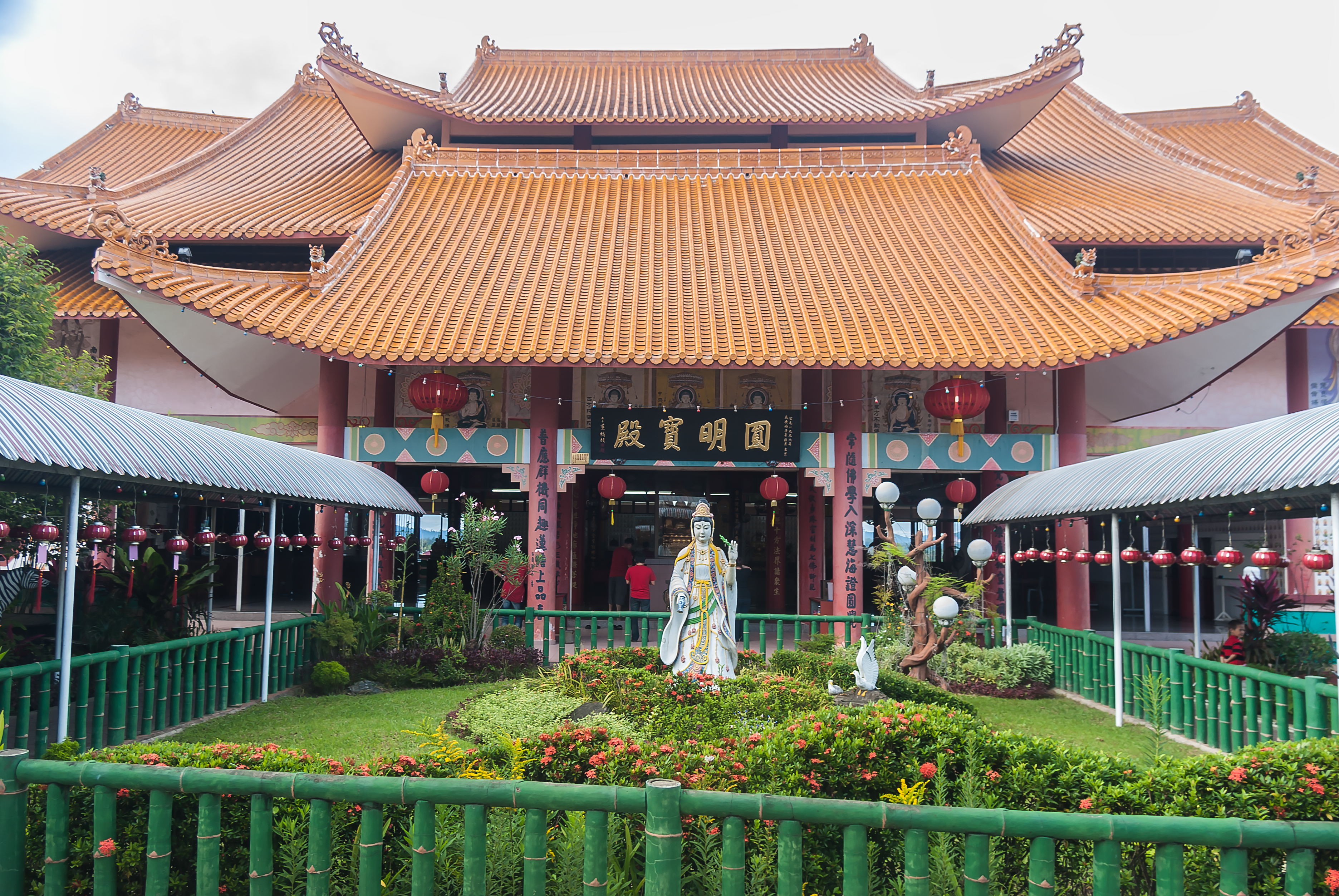
The Puh Toh Tze Temple is one of the most popular Buddhist temples in the country. The temple is adorned with traditional carvings and sculptures of the local deities. Built in the late 21st century, the temple was constructed to pay respect to and worship the Chinese goddess Kwan Yin, the Goddess of Mercy and Compassion, who is considered to be one of the most influential goddesses in the kingdom of Chinese deities. The architecture of this temple has gained its inspiration from the traditional Chinese designs and patterns making it one of the most popular tourist attractions at Kota Kinabalu. There are several intricate features in the temple. A massive stone staircase pavilion is flanked by statues of 10 deities on either side. However, the statue of Kwan Yin which greets visitors right as they cross the main entrance captivates their attention and dominates over the rest of the statues. Inside the temple is a huge Chinese laughing Buddha statue with miniature followers clinging onto him giving the statue a humorous touch. The walkway of Puh Toh Tze Temple houses the giant bell which is believed to have brought about good fortune to anyone who rings it.




/newsdrum-in/media/media_files/9UyYkq7ZBj0EYhd2ECGf.jpg)