February is almost over and this week’s quote is a reminder that if you are currently facing a tough time, remember it won’t last, but those who are tough internally will outwit and outlast everyone and everything. What this means is that our lives are full of challenges with ups and downs happening in life. But every time there is a down, there will always be an upside, every dark night is always followed by the glowing dawn. No matter how dark a situation is, there is always a light at the end of the tunnel. We can’t stop tough times from happening to us, but accepting the reality of the situation and hoping and working for a better tomorrow is the best thing we can do. The resilience we have and the impact tough times have on us when we work to overcome them is a stepping stone to overcoming life’s challenges.
I read something very interesting this week and thought to share it with you all. A few days back, ChatGPT was asked questions from Singapore’s PSLE or Primary School Leaving Exam which 12-year-olds sit for to go to the next level of their education journey, Secondary school. But the AI bot failed the exam miserably scoring 16% for Maths, 21% for Science and barely scrapped through the English paper. This is when ChatGPT managed to pass a final exam at the Wharton Business School, passed tests in four law school courses, and comfortably cleared a US medical licensing exam. According to an educator, the PSLE’s approach of getting pupils to make informed guesses using varied strategies is not common in other syllabuses worldwide, and this may have been too much to ask of ChatGPT, hence the dismal grades.
GG & BB have finally finished with their polytechnic education, having done their last exams this week. It seems just yesterday, they got their O-level results and now they finish another academic milestone. GG will go on to university while BB will enlist for his national service soon.
India in the Persianate Age, 1000–1765 – Richard M. Eaton
Protected by vast mountains and seas, the Indian subcontinent might seem a nearly complete and self-contained world with its own religions, philosophies, and social systems. And yet this ancient land and its varied societies experienced prolonged and intense interaction with the peoples and cultures of East and Southeast Asia, Europe, Africa, and especially Central Asia and the Iranian plateau.
Richard M. Eaton tells this extraordinary story with relish and originality, as he traces the rise of Persianate culture, a many-faceted transregional world connected by ever-widening networks across much of Asia. Introduced to India in the eleventh century by dynasties based in eastern Afghanistan, this culture would become progressively indigenized in the time of the great Mughals (sixteenth, seventeenth, and eighteenth centuries). Eaton brilliantly elaborates the complex encounter between India’s Sanskrit culture—an equally rich and transregional complex that continued to flourish and grow throughout this period—and Persian culture, which helped shape the Delhi Sultanate, the Mughal Empire, and a host of regional states. This long-term process of cultural interaction is profoundly reflected in the languages, literatures, cuisines, attires, religions, styles of rulership and warfare, science, art, music, and architecture—and more—of South Asia.
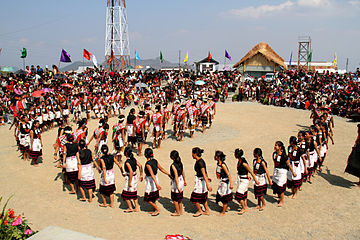
Also known as Sokre-n and Phousanyi, Sekrenyi is a major annual festival of the Angami Nagas, in the northeast Indian state of Nagaland. It is observed for ten days from the 25th day of the Angami calendar month of Kezei, usually corresponding to 25 February in the Gregorian calendar. The festival is a time for purification, renewal, and thanksgiving, and is celebrated with a variety of rituals, feasts, and dances. It is a purification festival held to wash off all past sins. The objective of the festival is to renew and make holy by cleansing the body and the soul of the village as a whole, and to bring forth unity among all communities of Nagaland. It also marks the initiation of young people to adulthood and is considered an identity marker of the Angami. Christian converts among the tribals have gradually rejected these rituals.
Sekrenyi is a compound word formed by Sekre meaning sanctification and Nyi meaning festival. The festival calendar is linked to the agricultural cycle, which varies from village to village. Thus, the celebration is held between the months of December–March, and the duration also varies from ten to fifteen days. It is celebrated by both the Kruna Angami or Pfutsana and Christian Angami. The duration is reduced to five days for the Christian villagers who had earlier converted to Christianity but belonged to the same ethnic group; they participate in the festivities but they do not follow any of the rituals connected with it.
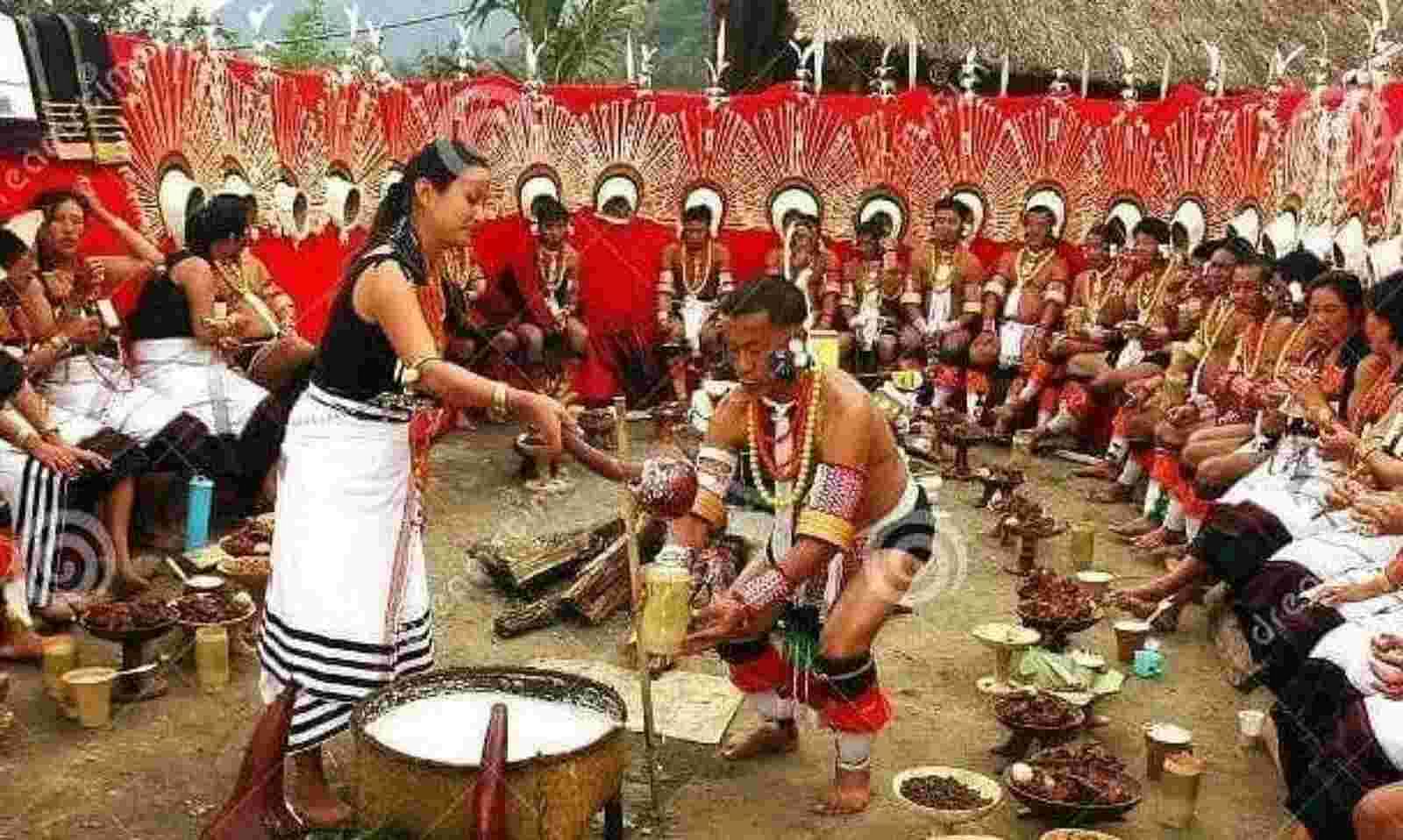
Many rituals and ceremonies are involved with the festival. On the first day, which is known as Kezie, people sprinkle themselves with a few drops of rice water drawn from a pot named Zumho. The water drops are first gathered into leaves, and the chief lady of the house reverently fixes the leaves at the three main corner pillars of the house. This is followed by the men assembling at the well to bathe. On the second day, young men of the village assemble in the village to perform ablutions. They adorn themselves with two new shawls, and then ritualistically sprinkle the holy water on their chests, knees and right arms as a mark of washing away all their sins and ill luck. When they come back from the well, a sacrificial offer of a cock is performed.
The fourth day of the festival marks the New Year of the Angamis. It begins with revelry by singing and feasting which lasts for three days. The young people, both men and unmarried girls with shaven heads gather and sing traditional songs the entire day; the songs relate to past days of valour and bravery. For the revelry of music and dance, the men and women of the community wear the traditional dress; while men carry head hunting spades, women carry baskets. The seventh day is devoted to hunting by the young men of the ethnic group. On the eighth day, the ritual involves pulling down a gate and replacing the old gate that demarcates the property. This is followed in the next two days by the people of villages formally exchanging visits and offering greetings. During the period of the ten-day festivities, field operations are suspended, In local terminology, this is called Penyu. Following the completion of the festival period, when men of the villages have cleansed themselves and sought blessings, cultivation, house building and marriages may restart for the year.
One of the most important rituals of the Sekrenyi festival is the offering of food and other items to the ancestors and the gods. This is done in the form of a feast, known as the Thuwali feast. The Thuwali feast is a grand affair, with a variety of dishes being prepared and served to the community. The food is prepared by the women of the community, who spend days preparing for the feast. This feast is a time for the community to come together and give thanks for the blessings of the past year, and ask for continued blessings in the coming year.
Another important ritual of the Sekrenyi festival is the performance of dances. The Angami people are known for their traditional dances, which are performed during the festival. These dances are performed by both men and women and are a form of storytelling. They tell the stories of the Angami people, their history, and their culture. The dances are accompanied by music, which is played on traditional instruments such as the nga or a bamboo flute and the dama or a drum. The dances are a vibrant and colourful spectacle and are enjoyed by the entire community.
The Sekrenyi festival is also an important social and cultural event, bringing together members of the community from across the region. During the festival, people from different villages come together to participate in the rituals and ceremonies. This is an opportunity for people to reconnect with friends and family, and to strengthen the bonds of the community. The festival is also an opportunity for young people to meet and mingle, and for potential partners to be introduced.
Animal, Vegetable, Miracle: A Year of Food Life – Barbara Kingsolver
Author Barbara Kingsolver and her family abandoned the industrial-food pipeline to live a rural life—vowing that, for one year, they’d only buy food raised in their own neighborhood, grow it themselves, or learn to live without it.
Part memoir, part journalistic investigation, Animal, Vegetable, Miracle is an enthralling narrative that will open your eyes in a hundred new ways to an old truth: You are what you eat.
The ancient Greek poet Archilochus wrote a now-lost parable with the following moral: “The fox knows many things, but the hedgehog knows one big thing.” The general gist of the line is this: Some people see the details in everything they do, like the fox, while others are great at having one singular vision, like the hedgehog. This animal-centric adage is at the heart of a lesson in “On Grand Strategy,” an instruction manual for would-be leaders based on popular seminars by Yale professor John Lewis Gaddis. Taking a cue from a 1953 essay by British-American philosopher Isaiah Berlin, Gaddis discusses how great leaders and thinkers can be categorized as either hedgehogs or foxes. Berlin went so far as to say that this split is “one of the deepest differences [that] divide writers and thinkers, and, it may be, human beings in general.”
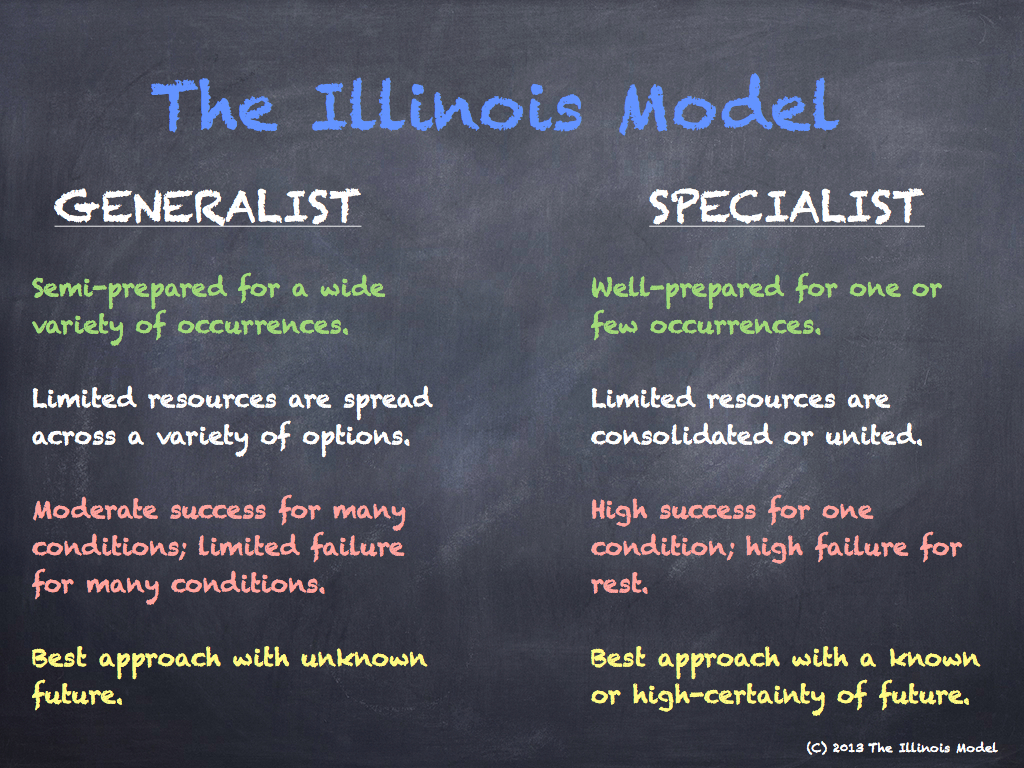
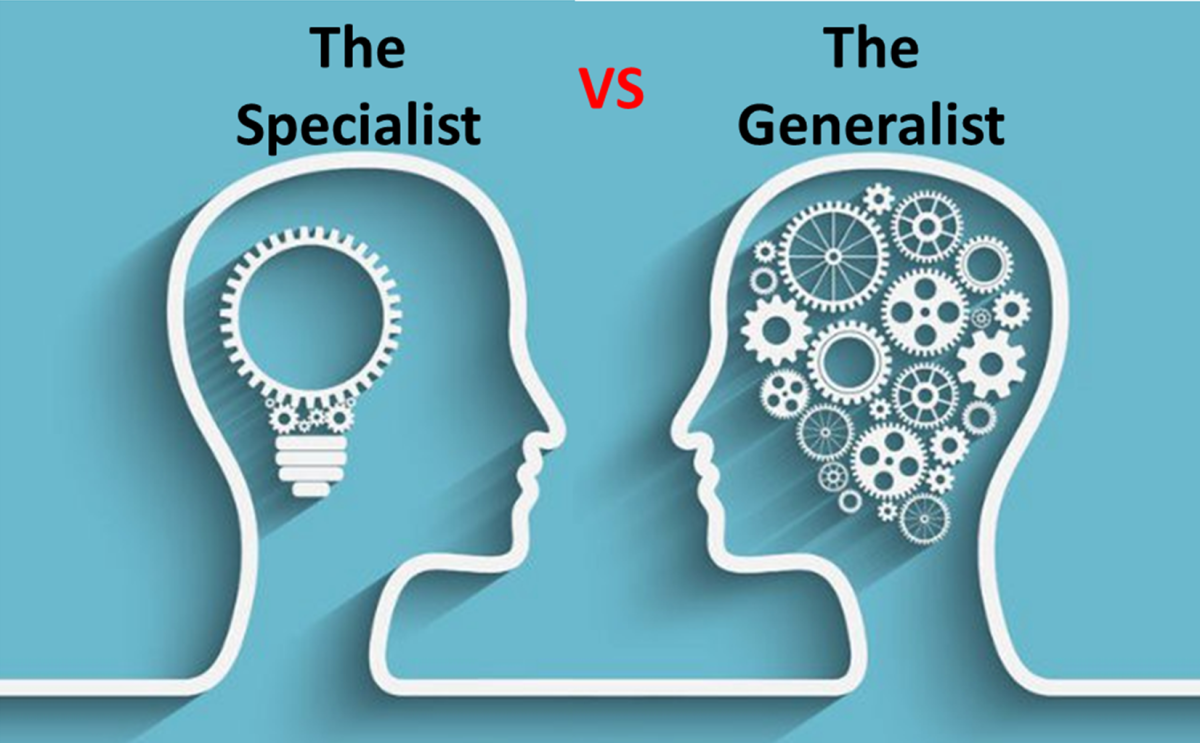
Typically, a generalist is someone who has a broad range of knowledge and skills across multiple fields, while a specialist is someone who has deep knowledge and expertise in a specific field or area. Generalists tend to have a wider range of job opportunities and can adapt to new situations and changing circumstances more easily than specialists. They also tend to have a better understanding of how different fields and disciplines are interconnected and can often see connections and opportunities that specialists might miss. Specialists, on the other hand, tend to have a more in-depth understanding of their field of expertise and can contribute more to projects and teams that require specialized knowledge and skills. They also tend to be more sought after and command higher salaries in their field of expertise. Generalists can understand and see connections between different subjects, while specialists can focus on and solve complex problems within their area of expertise. Generalists are often more adaptable and can work on a wider range of tasks, while specialists have a deeper understanding of their field and can contribute significantly to its advancement.
While a specialist systematically hones skills related to their domain, a generalist seeks to sharpen a wide range of related skills that will prove useful in multiple domains. The proliferation of startups and small businesses has surged the demand for generalists who come with a vast spectrum of knowledge and experience. However, when the requirement is for deep technical knowledge in critical fields, the skills of a specialist are much more marketable. When a company is looking at upscaling operations within its domain, the specialist is more progressive when it comes to creative ideas. Generalists are progressive when it comes to accepting a varied number of clients with different needs and expectations. Owing to their interpersonal skills and a broad-based learning curve, generalists can handle uncertainties efficiently. In terms of transferability, generalists fare better than specialists as their wide range of specialities is easily transferable to different domains. Specialists aren’t able to transfer their domain-related expertise to another field or even to another discipline within the same domain.
Both generalists and specialists have their own advantages and disadvantages, depending on the particular situation and the needs of the employer or organization. It’s also worth mentioning that, while some people may naturally lean towards being a generalist or a specialist, it is also possible to develop skills in both areas through continuous learning and development.
Specialists have expertise in their area of specialisation because they are focused on one domain, which attracts high-paying clients since subject-specific expertise gaps are more difficult to fill. The ability to undertake extensive targeted research and a quality understanding of the domain earn specialists attractive remuneration. Specialists are also more equipped to handle any new technological complexity in the field as they dedicate years to exploring the different facets of the domain. On the other hand, because they are focused on one area of expertise, the lack of diversity within the job profile hinders growth. A specialized portfolio has limited scope for independent expansion. With rapid technological advancements, specialists risk falling behind if they don’t update their skill sets frequently. Specialists usually perform within a narrower domain than generalists. As they dive deeper into their domain, the relevant working fields surrounding them gradually shrink.
Generalists cover several domains and envision the bigger picture as they combine multiple perspectives from different departments. A direct result of being open to a lot of unique challenges is acquiring strong critical thinking skills and this enables generalists to offer actionable insights into their areas of expertise. Their ability to explore various domains and a high multitasking quotient make generalists excel in leadership roles. A large number of skills arm generalists with the capacity to diversify their services which helps them swap career paths easily and give their clients a lot of alternatives to work with. But a lack of specific expertise in any domain puts them on a back foot as they aren’t that competent in niche projects. A high percentage of generalists work across multiple teams and tackle a host of responsibilities, especially if they are in leadership roles. This often leads to psychological burnout. Generalists are also easier to replace owing to their overlapping or vaguely defined work responsibilities and so these positions are prone to lower pay scales as compared to a specialist.
Whether it is better to be a generalist or a specialist depends on the individual’s goals, interests, and circumstances. For some careers, such as medicine or law, specialisation is required to achieve a high level of expertise and be successful in the field. In other fields, a generalist approach can be beneficial, as it allows individuals to have a wider range of skills and knowledge, making them more versatile and adaptable in the face of changing circumstances. In many cases, a combination of both generalist and specialist skills can be advantageous, allowing individuals to understand the broader context of their area of expertise and effectively communicate and apply their knowledge. Ultimately, the choice between being a generalist or a specialist is a personal one and should be based on individual strengths, interests, and career goals.
Some of the questions one needs to ask themselves are if one seeks a diverse breadth of knowledge or if one prefers deep research on any specific topic. Do they change their career perspective often and prefer taking time to find the niche they are interested in? Or have they already determined their career trajectory? One also needs to work out what kind of work ignites their interests and passions and if it requires them to hone different skills or demands specific subject-matter expertise. The ideal workforce of today is a carefully balanced group of specialised generalists who recognise their varied strengths but rely on others’ domain-specific expertise, and generalised specialists who are people with core competencies who also delve into other related areas.