Two Wings of a Nightingale: Persian Soul, Islamic Heart – Jill Worrall
Iran is probably the most misunderstood country on Earth, and one of the most fascinating. Few people in the West know anything about Iranian people beyond their current politics and religion. In this book, award-winning travel writer Jill Worrall, with her friend Reza Mirkhalaf, a leading tour manager from Tehran, describe an Iran the world has forgotten about. Using the threads of Iran’s silk road heritage as a basis for a road trip travelogue, they visit places both ancient and modern, many rarely written about by westerners. Jill’s vivid observations are complemented by Reza’s expert knowledge of Iran’s history, religion, culture and architecture.
During their journey, Jill and Reza explore the caravanserai that were once a vital part of the silk routes that once crossed Persia, while also encountering many ordinary Iranians. The result is a picture of Iran that offers a detailed insight into the landscapes, landmarks and people of the country at a grassroots level. The title reflects the dual nature o Iranian life and also the fact Jill and Reza are two people of different sexes, different religions and cultures travelling together, yet keeping their travels harmoniously on course. Together they visit the holiest city in Iran, Mashhad, paddle in the Persian Gulf, pass close by the borders of both Afghanistan and Iraq, stay with local families, play in the snow near Mt Ararat, pray in mosques, read poetry in Shiraz and eat ice creams in Isfahan.
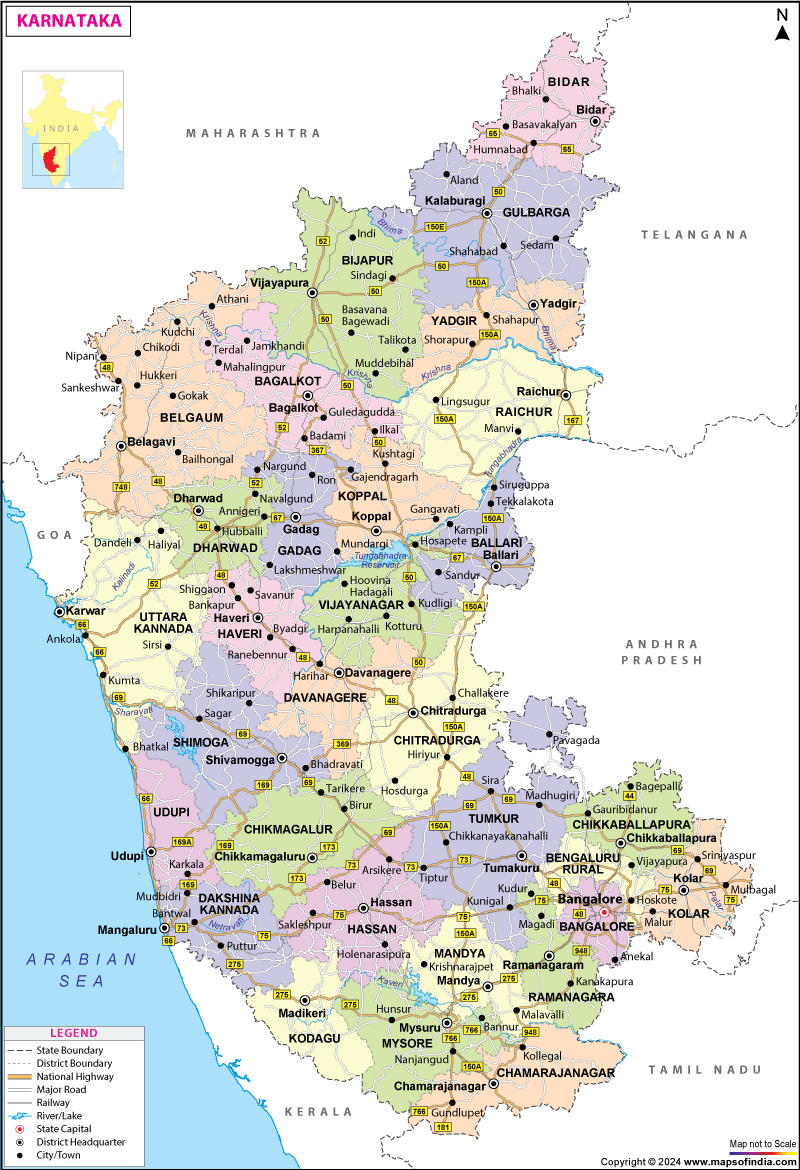
The southwestern state of Karnataka was formed on 1 November 1956, with the passage of the States Reorganisation Act. Originally known as the State of Mysore, it was renamed Karnataka in 1973 and the state corresponds to the Carnatic region with the capital and its lagest city being Bengaluru.
The state is bordered by the Arabian Sea to the west, Goa to the northwest, Maharashtra to the north, Telangana to the northeast, Andhra Pradesh to the east, Tamil Nadu to the southeast, and Kerala to the south. It is the only southern state to have land borders with all of the other 4 southern Indian sister states. The state covers an area of about 5.83 percent of the total geographical area of India and is the sixth largest Indian state by area and the eighth largest state by population. Karnataka is the fourth largest state in terms of economy. The state language is Kannada, which is one of India’s classical languages. One unique aspect of Karnataka is that the state contains some of India’s only villages where the ancient language of Sanskrit is primarily spoken.
The generally accepted notion for the state name is that the word Karnataka is derived from the Kannada words karu and nādu, which means “elevated land”. Karu Nadu may also be read as karu, meaning “black” and nadu, meaning “region”, as a reference to the black cotton soil found in the Bayalu Seeme region of the state. The ancient Tamil scripture, Shilappadigaram has references to Karunaadaar, which refer to this region, which some experts believe is the sanskritised version of Kannadar referring to the two tribes of Kanna and Nadar who lived in this area. There is also some reference to Karnata Desa in ancient texts which could also be why the state got the name Karnataka. The early references to Karnata Desa can be found in texts like Sambhava Parva and Bhisma Parva of the Mahabharata. The British used the word Carnatic, sometimes Karnatak, to describe both sides of peninsular India, south of the Krishna.
With an antiquity that dates to the paleolithic, Karnataka has been home to some of the most powerful empires of ancient and medieval India. The philosophers and musical bards patronised by these empires launched socio-religious and literary movements which have endured to the present day. Karnataka has contributed significantly to both forms of Indian classical music, the Carnatic and Hindustani traditions.
Karnataka’s pre-history goes back to a paleolithic hand-axe culture as evidenced by discoveries of, among other things, hand axes and cleavers in the region. Gold discovered in Harappa was found to be imported from mines in Karnataka, prompting scholars to hypothesise about contacts between ancient Karnataka and the Indus Valley Civilisation. Prior to the third century, most of Karnataka formed part of the Nanda Empire before coming under the Mauryan empire of Emperor Ashoka. Four centuries of Satavahana rule followed, allowing them to control large areas of the state. The decline of Satavahana power led to the rise of the earliest native kingdoms, the Kadambas and the Western Gangas, marking the region’s emergence as an independent political entity. The Kadamba Dynasty, founded by Mayurasharma, had its capital at Banavasi in northern Karnataka while the Western Ganga Dynasty was formed with Talakad as its capitalclose to the border with Tamil Nadu. These were also the first kingdoms to use Kannada in administration.
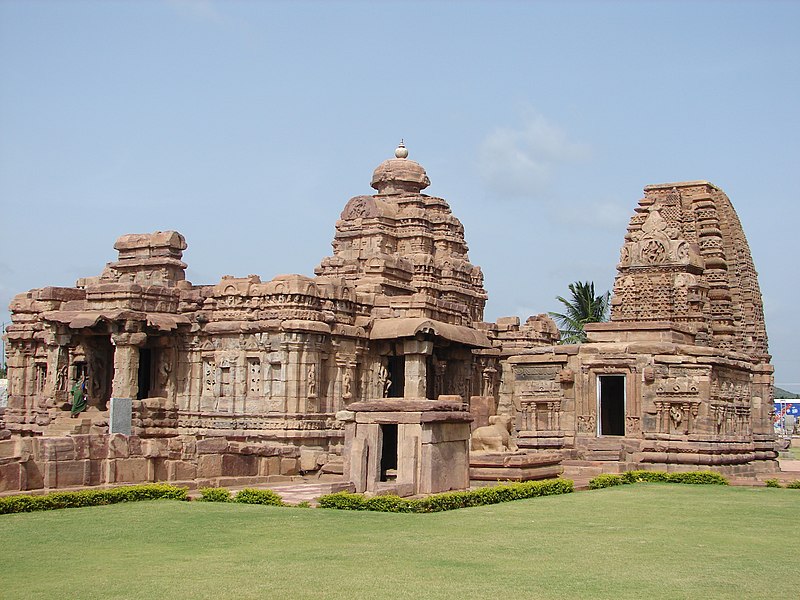
These were followed by imperial Kannada empires such as the Badami Chalukyas, the Rashtrakuta Empire of Manyakheta and the Western Chalukya Empire, who ruled over large parts of the Deccan and had their capitals in what is today the state of Karnataka. The Western Chalukyas patronised a unique style of architecture and Kannada literature which became the precursor to the Hoysala art of the 12th century. Parts of modern-day Southern Karnataka, also known as Gangavadi were occupied by the Chola Empire at the turn of the 11th century. In early 12th century, this region was the bone of contention between the Cholas and the Hoysalas before eventually coming under Hoysala rule.
At the turn of the first millennium, the Hoysalas gained power in the region. Literature flourished during this time, which led to the emergence of distinctive Kannada literary metres and the construction of temples and sculptures adhering to the Vesara style of architecture and the expansion of the Hoysala Empire brought minor parts of modern Andhra Pradesh and Tamil Nadu under its rule. In the early 14th century, Harihara and Bukka Raya established the Vijayanagara empire with its capital, Hosapattana, later named Vijayanagara, on the banks of the Tungabhadra River in modern Bellary district. The empire rose as a bulwark against Muslim advances into South India, which it completely controlled for over two centuries.
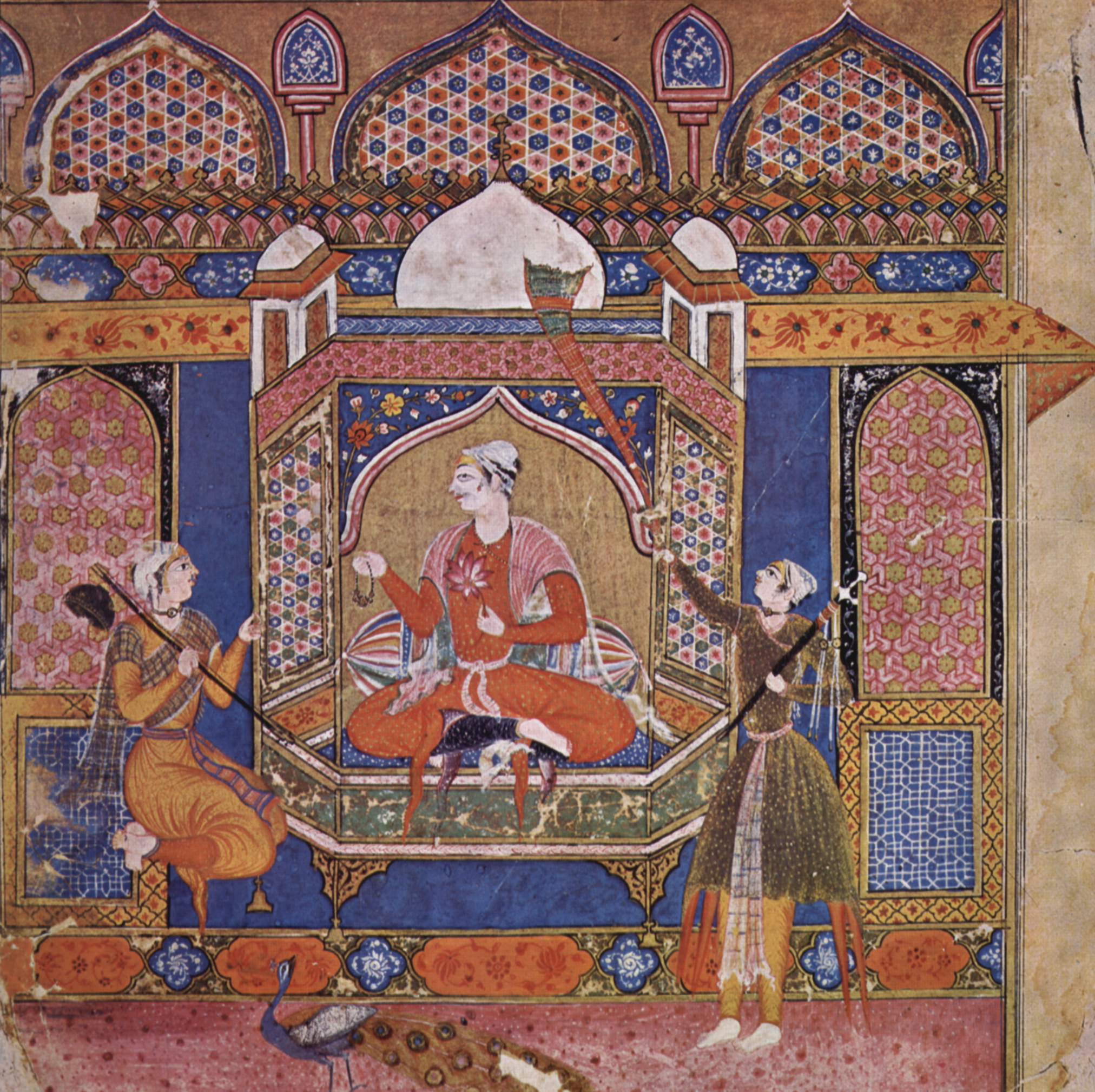
In 1565, Karnataka and the rest of South India experienced a major geopolitical shift when the Vijayanagara empire fell to a confederation of Islamic sultanates in the Battle of Talikota. The Bijapur Sultanate, soon took control of the Deccan but was defeated by the Mughals in the late 17th century. The Bahmani and Bijapur rulers encouraged Urdu and Persian literature as well as the Indo-Saracenic architecture, the Gol Gumbaz being one of the high points of this style. During the 16th century, Konkani Hindus migrated to Karnataka, mostly from Salcette, Goa, while during the 17th and 18th centuries, Goan Catholics migrated to the North Canara and South Canara regions, as a result of food shortages, epidemics and heavy taxation imposed by the Portuguese.
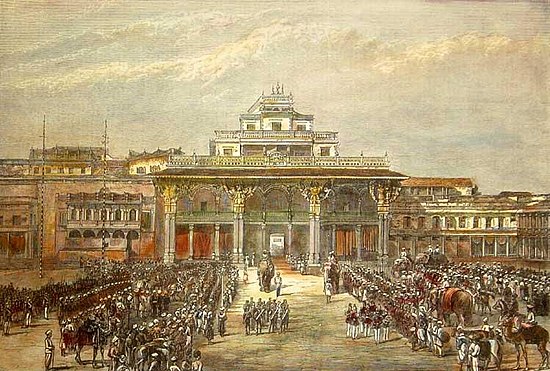
In the period that followed, parts of northern Karnataka were ruled by the Nizam of Hyderabad, the Maratha Empire, the British, and others. The Mysore Kingdom, a former vassal of the Vijayanagara Empire, in south Karnataka was briefly independent, but with the death of Maharaja Krishnaraja Wodeyar II, Haidar Ali, the commander-in-chief of the Mysore army, gained control of the region. After his death, the kingdom was inherited by his son Tipu Sultan, both of whom four significant Anglo-Mysore wars to contain the European expansion in South India, the last of which resulted in Tippu Sultan’s death and the incorporation of Mysore into the British Raj in 1799. The Kingdom of Mysore was restored to the Wodeyars and Mysore remained a princely state under the British Raj.
Dissent and resistance from princely states from across the country fanned the flames of rebellions in Karnataka in 1830 and by the late 19th century, the independence movement had gained momentum leading to India’s independence in 1947. After independence, the Maharaja of Mysore, Jayachamarajendra Wodeyar, acceded his kingdom’s to India and in 1950, Mysore became an Indian state of the same name with the former Maharaja serving as its Rajpramukh or head of state until 1975. Following the long-standing demand of the Ekikarana Movement, the Kodagu and Kannada-speaking regions from the adjoining states of Madras, Hyderabad and Bombay were incorporated into the Mysore state, under the States Reorganisation Act of 1956 and the newly expanded state was renamed Karnataka, in 1973.
The state has three principal geographical zones – the coastal region of Karavali, the hilly Malenadu region comprising of the Western Ghats and the Bayaluseeme region comprising the plains of the Deccan Plateau. The bulk of the state is in the Bayaluseeme region, the northern part of which is the second-largest arid region in India.
The diverse linguistic and religious ethnicities native to the state, combined with their long histories, have contributed immensely to the varied cultural heritage of Karnataka. Apart from Kannadigas, Karnataka is home to the Tuluvas, Kodavas and Konkanis. Minor populations of Tibetan Buddhists and tribes like the Soligas, Yeravas, Todas and Siddhis also live here. Yakshagana of Malnad and coastal Karnataka, a classical dance drama, is one of the major theatrical forms of Karnataka. Sringeri in previously. The Dusshera festival of Mysore is a highlight of the state and is famous all over the world.
In terms of tourism, the state has something for everyone. Be it ancient sculptured temples, modern cities, scenic hill ranges, forests or beaches, this state has everything. Karnataka has been ranked as the fourth most popular destination for tourism among the states of India and has the second highest number of nationally protected monuments in India, second only to Uttar Pradesh. In addition to 752 monuments protected by the State Directorate of Archaeology and Museums, there are 25,000 monuments yet to receive protection.
As I explore each state, I will start with the capital city of Bengaluru which is very close to my heart, then it’s cultural heart, Mysuru followed by other major cities and then some beaches from its coastline, wildlife reserves and hillstations. So let’s explore Bengaluru in our next post.
I Shot the Buddha (Dr. Siri Paiboun #11) – Colin Cotterill
Laos, 1979: Retired coroner Siri Paiboun and his wife, Madame Daeng, have never been able to turn away a misfit. As a result, they share their small Vientiane house with an assortment of homeless people, mendicants, and oddballs. One of these oddballs is Noo, a Buddhist monk, who rides out on his bicycle one day and never comes back, leaving only a cryptic note in the refrigerator: a plea to help a fellow monk escape across the Mekhong River to Thailand.
Naturally, Siri can’t turn down the adventure, and soon he and his friends find themselves running afoul of Lao secret service officers and famous spiritualists. Buddhism is a powerful influence on both morals and politics in Southeast Asia. In order to exonerate an innocent man, they will have to figure out who is cloaking terrible misdeeds in religiosity.
Today is the festival of Avani Avittam and Raksha Bandhan. Both are festivals which are male centric festivals and which come on the same day each year. I have written about both festivals previously so will not go into the details here. I have always wondered why two diverse festivals – one celebrated in North India and the other mostly in South India, which are possibly the only festivals in the respective cultures which are a celebration of the male gender fall on the same day. Recently I had a ephipany. In both these festivals, the star of the show, if we can call it that, are threads that bind us to our loved ones, to our traditions and to our roots.
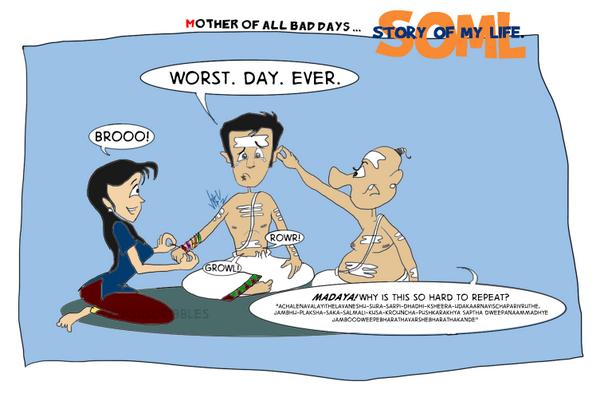
During Avani Avittam, which typically falls on the full moon day of the Shravan month, male Brahmin men and boys who have had their thread ceremony done, reaffirm their faith as a twice born and by changing their sacred thread, they symbolically throw away their sins of the previous year and start the year on a clean slate.
The festival is one of the most auspicious festivals for Brahmins and the day is an important one for those who follow the Yajurveda as on this day they start reading Yajur Veda, which they continue to read for the next six months. It is believed that on Avani Avittam, Lord Vishnu has reincarnation himself as Lord Hayagriya, who is seen as the symbol of wealth and knowledge. On this day, God Vishnu who is worshiped as the high deity power actually restored the Vedas to Brahma.
There is a story behind these sacred threads. Lord Brahma, the creator was filled with pride for knowing the entire Veda. Lord Vishnu to crush his pride created two demons Madhu and Kaitabha to steal Vedas from him. Brahma then not being able to save Vedas, he asked Vishnu to help him restore it. Lord Vishnu took the form of Hayagriva and restored the Vedas and supressed the pride of Brahma. Hence, Hayagriva incarnation is associated with knowledge and wisdom.This day is celebrated as Upakarma(Beginning) also called as Hayagriva utpatti. Restoration of Vedas is known as a mark of new beginning and hence Upakarama is celebrated.This day is also referred as Hayagriva Jayanti.
The sacred thread comprises of three strands, joined by a knot known as Brahmagranthi or the knot of Brahma. The three strands symbolise the Hindu trinity – Shiva, Vishnu and Brahma. There are other interpretations which represent many of the other triads like Mahasaraswati, Mahalakshmi and Mahakali; or the three tendencies known as sattva or harmony, rajas or passion and tamas or chaos. You could also interpret the three strands as the link between the past, present and the future or the three states of wakefulness, dream and deep sleep. Some even say that it represents the three dimensions known as heaven or swarga, earth or martyaloka and the nether regions or patala. The sacred thread is also a kind of an indication to the marital status of the wearer. An unmarried man will wear one thread of three stands, a married man will wear two and a married man who has had his first child will wear three. In the old days, when most men did not wear a upper garment, this was the indicator people had about their marital status and if they had any children.
This year, the ceremony of changing the sacred thread was done online at our home. S and BB woke up early and after completing their morning prayers, sat down in front of the laptop where they joined others across the island on a video platform where the resident priest chanted the mantras and went through the ceremony with them. We also received the new sacred thread by post last week after signing up and paying for the ceremony online.
BB had to rush for school, so GG quickly tied her thread of love on his wrist before he headed out of the house.
These are the threads that tie us to our roots and our traditions. I call these ceremonies and functions our anchors because without them, we are left floundering and rootless. Especially in today’s world which is so uncertain and vague, it is good to hold on to traditions that are special to you. Your lineage, irrespective of where you come from, goes back at least a few hundred years, if not millennia, so be proud of who you are and where you come from, so you can show your children and your grandchildren where they can go to.
Happy Raksha Bandhan and Avani Avittam to everyone celebrating these festivals.
August has snuck up and things are pretty much the same. BB & GG are mostly doing home based learning and going to school only when needed. In fact last week, BB had one class at home and then had an hour to make it to school for his next class. He made it with minutes to spare. S could not drop him to school because he had a call at that exact same time.
Over the Hari Raya weekend, we went suit shopping for GG as she has a presentation this week. We ended up buying everything – a skirt, shirt, jacket and shoes so she can look the part when she goes for her presentation. The module actually some points for dressing and appearance so hopefully that is taken care of.
Singapore has about close to 53,000 cases as of now with about 47,000 of those having recovered. Worldwide, 17.5 million people have been infected with nearly 700,000 deaths and more than 10 million people having recovered from the virus. India is still at number three position with 1.6 million infected people with 1 million people who have recovered.
Of course being home for months together has impacted pretty much everyone. Work-Life balance has taken a complete hit and I can see this pretty much everywhere. Many people I know, including S, start working quite early, almost as soon as they wake up, and this goes on till the end of the day when they go to bed. Stuck at home, hunched over a laptop, it is easy to forget health. At times like this, we sit for far too long, eat at irregular intervals and eat a lot of junk food. Let’s not forget that interaction with anyone other than family members is via a screen, so that sense of interaction with friends and colleagues is also missing which is not really good for our mental health. So take care of your helath, there are some stories of individuals who have used this time to turn around their lives.
That’s all from us this week. Take care people and stay safe!





 Memories and Such