
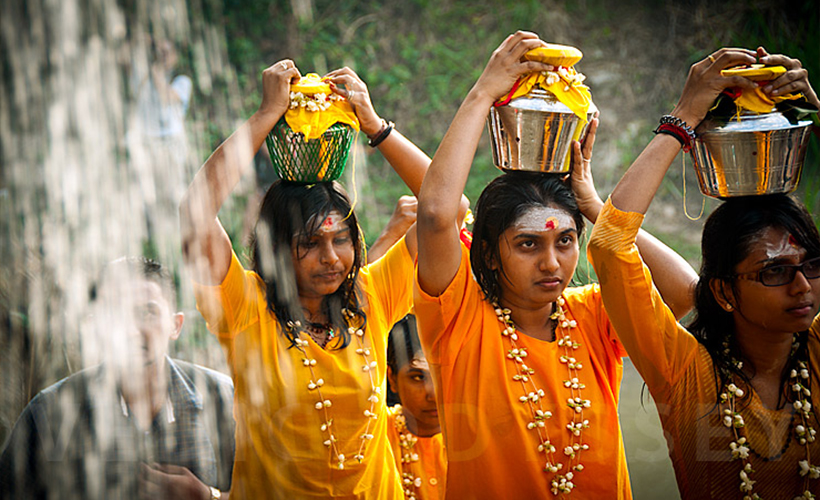
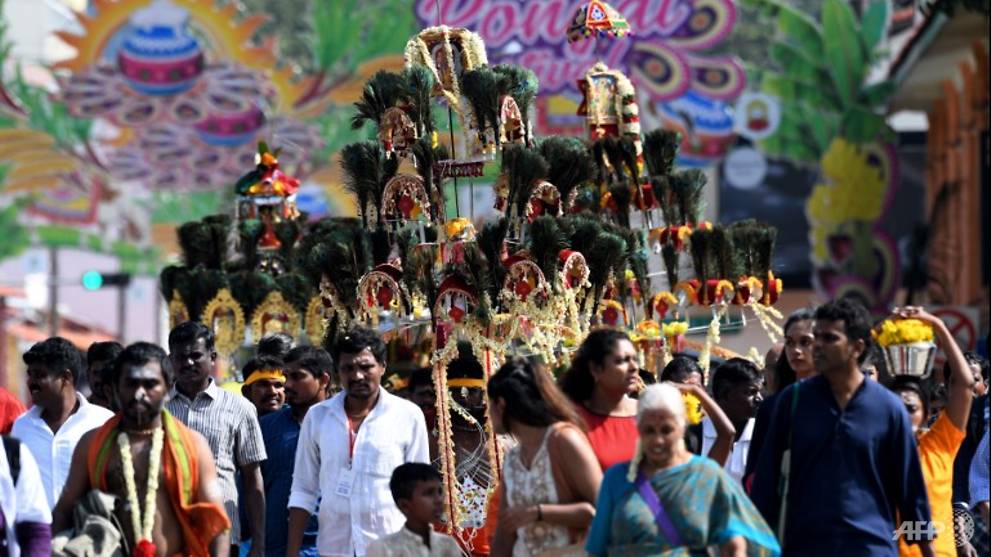
Last Saturday, Tamils all over the world celebrated the festival of Thaipusam. This festival is celebrated on the full moon in the Tamil month of Thai which starts in in mid-January, usually coinciding with Pushya star, known as Poosam in Tamil. It is mainly observed in countries where there is a significant presence of Tamil community. It is quite a big celebration
It is a national holiday in countries like Malaysia, Sri Lanka and Mauritius. In certain states of Malaysia and in the nations of Sri Lanka and Mauritius it is a government and a bank holiday.In Singapore, it was previously a national holiday but was removed from the official list of national holidays.
The word Thaipusam is a combination of the name of the month, Thai, and the name of a star, Pusam. This particular star is at its highest point during the festival. The festival commemorates the occasion when Parvati gave Murugan a Vel “spear” so he could vanquish the evil demon Soorapadman. It is commonly believed that Thaipusam marks Murugan’s birthday.
This festival was, according to one tradition, said to have been supposedly created during one of the battles between the Asuras (or to be more specific Soorapadman) and the Devas. At one point, the latter were defeated several times by the former. The Devas were unable to resist the onslaught of the Asura forces. In despair, they approached Shiva and entreated to give them an able leader under whose heroic leadership they might obtain victory over the Asuras. They surrendered themselves completely and prayed to Shiva. Shiva granted their request by creating the mighty warrior, Skanda, out of his own power or Achintya Shakti. He at once assumed leadership of the celestial forces, inspired them and defeated the Asura forces and to recognise that day the people created the festival, Thaipusam.
According to Skanda Puranam, the legend of Murugan, and Thirupugal which are divine verses on Murugan, adhere to Shaivam principles. Murugan is the embodiment of Shiva’s light and wisdom and devotees pray to him to overcome the obstacles they face, as He is the divine vanquisher of evil. The motive of Thaipusam festival is to pray to God to receive his grace so that bad traits are destroyed.
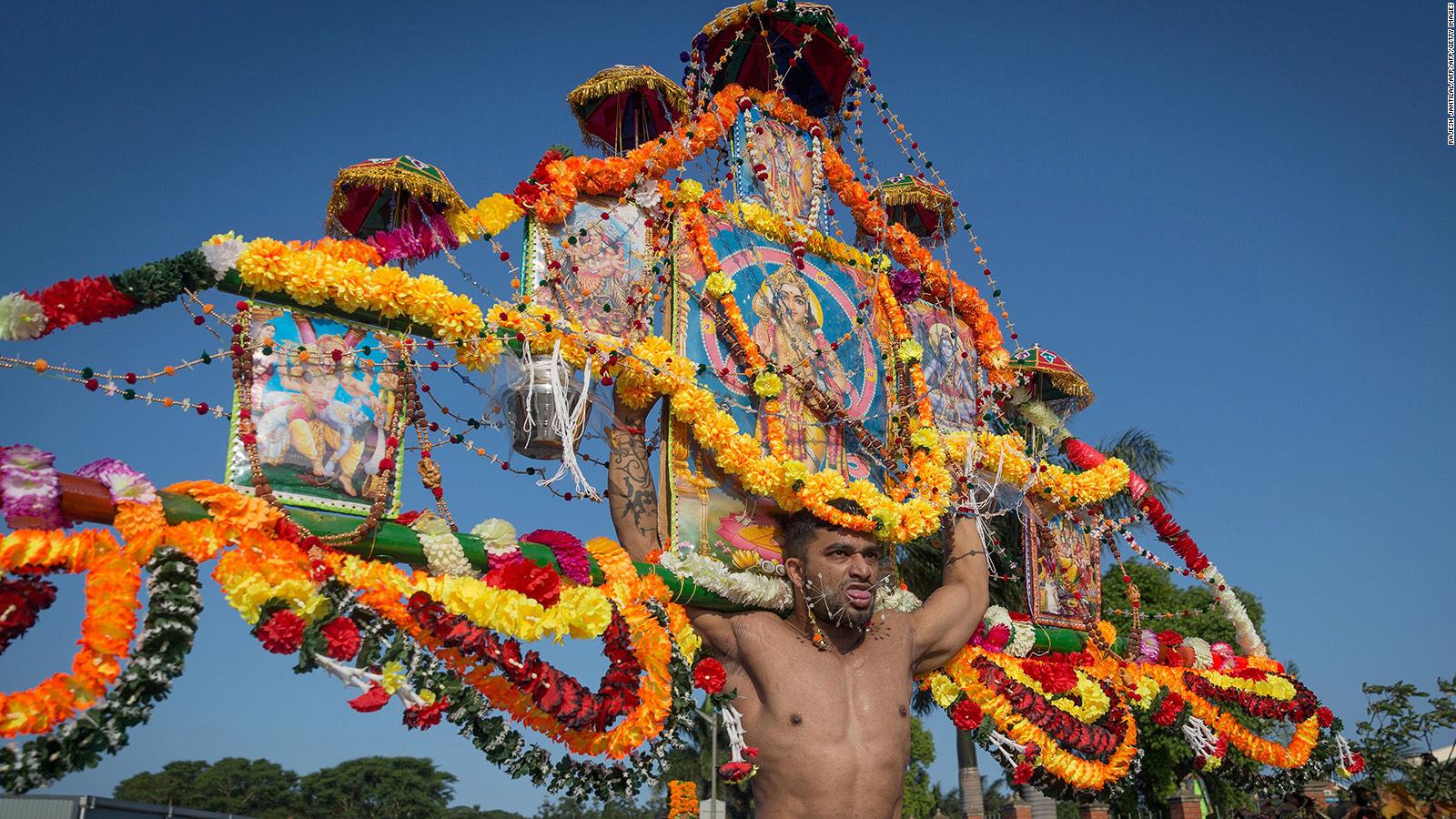
The Kavadi Attam (“kavadi dance”) is a ceremonial act of devotional sacrifice through dance, food offerings, and bodily self-mortification. It is often performed by devotees during the festival of Thaipusam in honor of Murugan. The kavadi is a heavy semicircular, decorated canopy or shrine supported by a wooden rod that the pilgrim carries on their shoulders to the temple and attached to the devotee with shrap skewers. They symbolize the burdens carried. The largest of the burdens, known as the vel kavadi, requires the person carrying it to be pierced by 108 small spears or vels! Other worshipers carry pots of milk, fruit, or grains as offerings to Lord Murgan, symbolising abundance and fertility.
The worshipers who pierce their tongues, cheeks, and faces with sharp objects hardly bleed and report feeling very little pain! Many claim that their wounds heal nearly immediately and don’t produce scars. Before being pierced, devotees are worked into a trance-like state with chanting and drums. Once entranced, the crowd helps to take care of them as they are led through the procession. Tongues are often pierced and pinned through the cheeks as a symbolic gesture of the volunteer giving up the gift of speech.
The devotee makes the pilgrimage (the nadai payanam) with bare feet, dressed in bright orange and yellow — Lord Murugan’s favorite colors — while they chant and walk to the temple. bearing food offerings on the kavadi. Depending on the location of the temple, this walk to the temple can take more than a week. The temple of Murugan in Palani is a popular destination, as it is one among the arupadai veedu (“six houses” – the sites sacred to Murugan). The Palani Murugan temple also has a reputation as a place of healing. Bogar (an ancient siddhar and devotee of Murugan) made the statue of Murugan in Palani, with the mixture of several sidhha medicines.
Devotees prepare for the celebration by keeping their body always clean, doing regular prayers, following a vegetarian diet and fasting before the Thaipusam. Kavadi-bearers have to perform elaborate ceremonies at the time of assuming the kavadi and at the time of offering it to Murugan. The kavadi-bearer observes celibacy and consumes only certain types of foods known as satvik food, once a day, while continuously thinking of God. On the day of the festival, devotees shave their heads and undertake a pilgrimage along a set route, while engaging in various acts of devotion, notably carrying the various types of kavadi. The devotees believe that worshiping lord Murugan every year in this way makes them physically and mentally healthy, and helps clear them of karmic debts they may have incurred. It is believed that only when the mind is free of material worth and the body free from physical pleasures can a devotee undertake the sacred task without feeling any pain.
At its simplest, the pilgrimage may entail walking the route carrying a pot of milk, but mortification of the flesh by piercing the skin, tongue or cheeks with vel skewers is also common. In addition, some pierce their tongues or cheeks, all the way through, with a small spear. similar practice is performed by the Nagarathar community in Pazhani, India. This is known as the Nagarathar Kavadi.




 Memories and Such