School is in full swing now as the Teachers race to finish the syllabus for the year before the O level exams in October/November.
This week, I got a call from BB’s school, his E Math teacher specifically. She called me about Bb’s handwriting and slipshod work submitted. So I had my talk with him and made him apologise to her with a promise that he will not do it again. He has said he will improve and that’s my hope for him too.
We’ve also been thinking seriously about their Early Admissions to Poly these days. When we went to the open houses last week, we learnt that the course BB is interested in is very competitive and the admission committee even rejects good students because they feel they can get in through merit. So to distinguish themselves from the others, we have been thinking of hooks that they both can use when they start applying. We’ve identified one each as of now, and the children have to research a bit more on the hooks to make sure they speak and write well about it.
Kate Battista feels stuck. How did she end up running house and home for her eccentric scientist father and uppity, pretty younger sister Bunny? Plus, she’s always in trouble at work – her pre-school charges adore her, but their parents don’t always appreciate her unusual opinions and forthright manner.
Dr. Battista has other problems. After years out in the academic wilderness, he is on the verge of a breakthrough. His research could help millions. There’s only one problem: his brilliant young lab assistant, Pyotr, is about to be deported. And without Pyotr, all would be lost.
When Dr. Battista cooks up an outrageous plan that will enable Pyotr to stay in the country, he’s relying – as usual – on Kate to help him. Kate is furious: this time he’s really asking too much. But will she be able to resist the two men’s touchingly ludicrous campaign to bring her around?
Earlier in the week, we celebrated the harvest festival of Pongal and on that day I made Venn Pongal for dinner. I wanted to make something to go with this but was not in the mood for Coconut chutney, so decided to search for something else to make to go with Pongal.
I came across Gotsu, which is also a traditional accompaniment to Pongal, but this is usually made with Brinjals or Aubergines. S is allergic to this vegetable, so I decided to substitute it with other vegetables. This is also a one-pot recipe and I made it from start to end in my pressure cooker. It can also be made in a large pan or dutch oven but will take longer than if you use a pressure cooker. It was so yummy and tasty and everyone gobbled it up.
This Gotsu is also served in weddings, especially for breakfast with Idlis, Vadai and Pongal.
Kalyana Gotsu
Ingredients:
2 carrots, chopped finely
2 potatoes, chopped finely
1 large tomato, chopped finely
1 lemon sized ball of tamarind or 3 tbsp tamarind paste
1/4 cup moong dal
3 tbsp chana dal
1 tbsp oil
1 tsp mustard seeds
2 green chillies, slit lengthwise
5-6 curry leaves
2 tbsp sambhar powder
1 tbsp jaggery (can omit this or even substitute with sugar)
1/4 tsp asafoetida
Salt to taste
Method:
Soak the tamarind in hot water for 30 minutes, then squeeze the pulp out and strain the water. Keep aside.
Soak the dals together in warm water for 30 minutes, strain and keep aside.
Heat the oil in the pressure cooker and add the mustard seeds. When the seeds pop, add the curry leaves, asafoetida and green chillies and stir for a few seconds.
Now add the finely chopped tomatoes and stir for a few minutes.
Then add the finely chopped potatoes and carrots and stir well.
Then add the soaked dals and give it a good stir.
Now add the tamarind water, sambhar powder and salt to taste and stir everything well.
Cover the pressure cooker and cook for 3-4 whistles.
If you are using a pan or dutch oven to cook, cover and cook, stirring occasionally. Periodically check and add water if needed. You need the vegetables to be fully cooked and the dals to be soft and mushy.
When the pressure reduces in the cooker, open and lightly mash the gotsu with a potato masher. Don’t mash it completely like we do for Pav Bhaji, but just a bit to make the gotsu thicker.
Add the jaggery and check for seasoning. Garnish with coriander leaves and serve hot with Idli, Dosai, Vadai or Pongal.
Notes:
I made this without onions or shallots because I made it on a festival day. If you want, you can add onions or shallots and the place to add it is just after popping the mustard seeds.
You can use any vegetables you like though it’s usually made with Brinjals or Aubergines.
When Felix is deposed as artistic director of the Makeshiweg Theatre Festival by his devious assistant and longtime enemy, his production of The Tempest is cancelled and he is heartbroken. Reduced to a life of exile in rural southern Ontario—accompanied only by his fantasy daughter, Miranda, who died twelve years ago—Felix devises a plan for retribution.
Eventually, he takes a job teaching Literacy Through Theatre to the prisoners at the nearby Burgess Correctional Institution and is making a modest success of it when an auspicious star places his enemies within his reach. With the help of their own interpretations, digital effects, and the talents of a professional actress and choreographer, the Burgess Correctional Players prepare to video their Tempest. Not surprisingly, they view Caliban as the character with whom they have the most in common. However, Felix has another twist in mind, and his enemies are about to find themselves taking part in an interactive and illusion-ridden version of The Tempest that will change their lives forever. But how will Felix deal with his invisible Miranda’s decision to take a part in the play?
I have a serious case of writers’ block and just can’t think of anything to write. So I was browsing the net to see if I can find some inspiration when I came across this list about my hometown Mumbai. This is a list of the top attractions in Mumbai if you want to know.
Some of these places are old favourites, and some of them are places where I have never been earlier. This list is a good starting point for me to use when I next go to Mumbai and take BB & GG around to play tourist.
I’ve spoken many times about my birthplace and hometown of Mumbai before. The financial capital of India, and one of the most cosmopolitan cities in the country (before the word was even a word), Mumbai is fast-paced, and some may even say a cold city. But it’s a city like no other. I may go anywhere in the world, live across continents, but Mumbai will always hold a very special place in my heart. Like someone once said, “Mumbai is a city, but Bombay is an emotion”. Old-timers still call the city Bombay, we still can’t get Mumbai as easily in our lips as Bombay, even though the name change was way back in 1995!
So anyway on to the attractions and experiences which make this city so special.
Kala Ghoda which means black horse in Hindi is where the biggest cultural festival of the year takes place. The entire main street is taken over by stalls selling art and craft work, and prime performance venues are booked for plays, workshops and other events. The street is also lined with art installations, food stalls and street performers. If you are in Mumbai when it’s not festival time (which happens in February), you can still stroll along this area to see the neo-colonial and classic British architecture. I love walking here on Sundays when it is quite empty of the crowds which happen during a weekday because this is the heart of the city’s business centre. Walk along PM Road from CST station to Kala Ghoda and soak in the atmosphere of colonial British Bombay.
The Queen’s Necklace as it’s fondly called is a 3.5 kilometre stretch in south Mumbai which turns into a major hangout spot during the evenings. It is called the Queens’s Necklace because, if viewed at night from an elevated point anywhere along the drive, the street lights resemble a string of pearls in a necklace. There’s a great view of the Mumbai skyline from Marine Drive and if you happen to be in Mumbai during the monsoon season, make sure you head there during the rains. The crashing waves make it so much fun!
A small island two km off the shore of Mumbai in the Arabian Sea, Elephanta Caves, which is a UNESCO World Heritage Site is an hour-long ferry ride away from Gateway of India. The complex consists of five Shaivite caves and a few Buddhist stupa mounds that may be dating to the 2nd century BCE, as well as a small group of two Buddhist caves with water tanks. It is divided into wings and the ‘Trimurti’ or the three-headed sculpture is one of the most important sculptures there. This cave structure has some of the world’s best rock-cut sculptures and most of the carvings here depict stories from Hindu mythology. Watch out for the monkeys though, they can be something of a nuisance on the island. The caves are closed on Mondays and possibly during the monsoon season.
Tucked away in the depths of South Mumbai, Chor Bazaar or Thieves Market is famous as the underbelly of the city. More of a flea market today, it is a good place to search for random goods like automobile parts, furniture, old Bollywood paraphernalia, gramophone records and a bunch of other vintage stuff. What you find depends on your ability to unearth some classics from the eclectic souveniers abounding there. Haggling comes quite naturally to these shop owners so you can get away with pretty decent bargains. This market stretches out on Mutton Street, and the shops are open from 11 am to 7:30 pm.
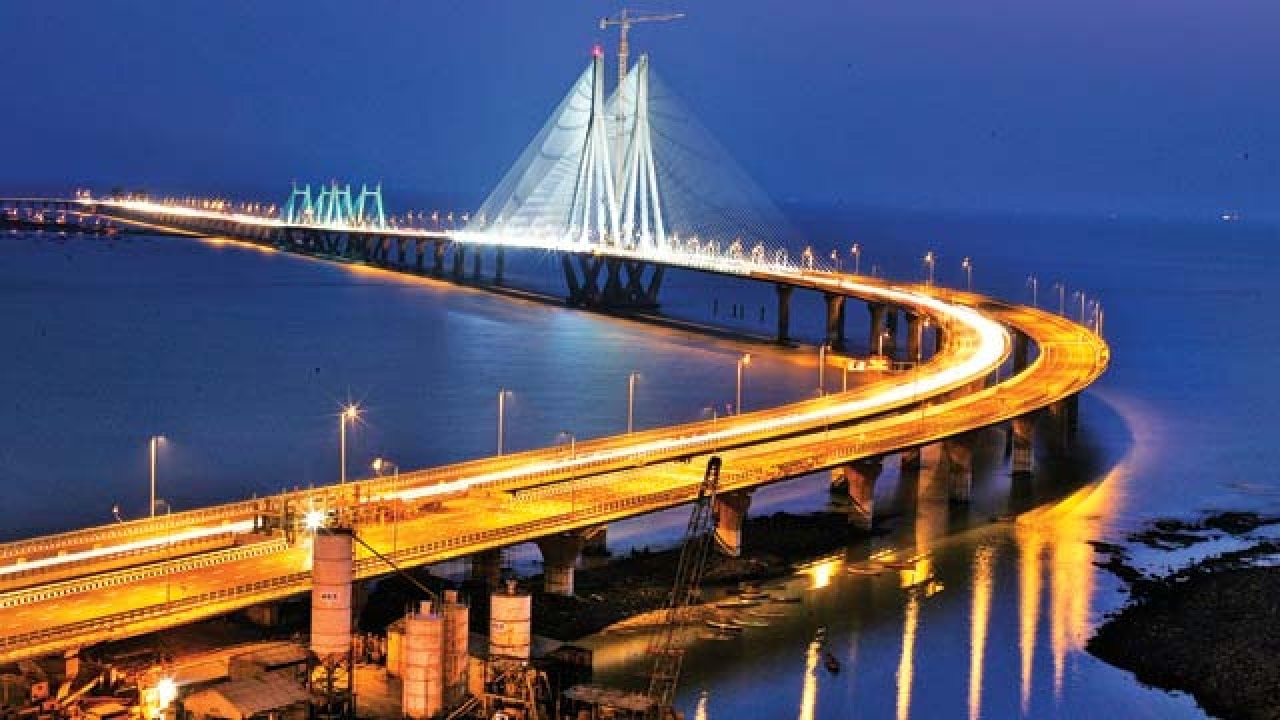
The Bandra-Worli sea-link is truly a modern-day architectural marvel, that helps the choked traffic of Bombay by diverting a large part of it on a high-speed, six-lane expressway over the sea. It’s clean, it’s fast, no stopping, no two-wheelers, no people on foot, no photography. Driving down the sea-link can only be described as exhilarating. In this city of overcrowded houses, with stuck traffic and loud honking all around, a drive down this road can be the highlight of your day. Drive down this road, or get into a metered taxi and enjoy 6–7 minutes of pure, clean air as you drive above the deep Arabian Sea. It’s even better when you have the a view of the orange sky as the sun rises or sets, or the lit-up skyline of Mumbai, the city that never sleeps.
Sewri, a station on the Central Railway Harbor Line, and one of the original seven islands of Bombay has a vast expanse of mangrove mudflats that are a protected ecology. Every October onwards, until February, thousands of pink flamingoes descend upon the seas of Mumbai in Sewri, along with other rare birds like the Egret. Head to Sewri on a weekend, and watch a rare phenomena take place in front of you in one of the most unlikely of places- Mumbai, the city of cars and buildings and taller buildings.
A small heritage village tucked away in Girgaon, Khotachiwadi has the prettiest old style Portuguese houses in South Mumbai. They are mostly constructed out of wood, have small verandahs, and even tiny backyards. Unfortunately, a lot of these houses have been torn down in the past to make way for new constructions and now only a handful of them are still standing, so if you are in Mumbai, make sure you see these houses before they are all gone.
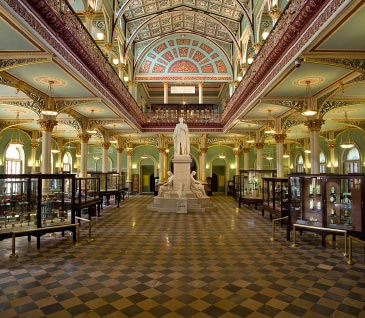
The oldest museum in Mumbai, the Dr Bhau Daji Lad Museum houses artefacts and finds related to the cultural history of the city. Among the most interesting displays are old maps of Bombay harbour, dioramas of different parts of the city, and an old but complete warrior’s suit of chainmail.








 Memories and Such