As young adults transition into the workforce or pursue higher education, many experience a psychological phenomenon known as imposter syndrome. This feeling of self-doubt and inadequacy can hinder personal and professional growth, making it essential to understand its nature and learn how to overcome it.
What is Imposter Syndrome? Imposter syndrome, often referred to as the imposter phenomenon, is characterised by persistent feelings of self-doubt, insecurity, and a sense of being a fraud despite evident success or accomplishments. Individuals experiencing imposter syndrome often attribute their achievements to luck or external factors rather than their abilities or hard work. This phenomenon can lead to anxiety, stress, and a fear of being exposed as a fraud.
Some common characteristics characterise someone with imposter syndrome.
Self-doubt: Individuals frequently question their skills and qualifications, feeling unworthy of their achievements.
Fear of exposure: There is a constant fear that others will discover their perceived inadequacies.
Perfectionism: Many individuals set excessively high standards for themselves and feel disappointed when they do not meet these expectations.
Attributing success to external factors: People often believe that their successes are due to luck or timing rather than their efforts.
Overworking: To compensate for feelings of inadequacy, individuals may over-prepare or work excessively hard to prove their worth.
Imposter syndrome is surprisingly common. Research indicates that approximately 70% of people experience imposter feelings at some point in their lives. It can affect anyone, regardless of their background, education level, or professional success.
Many young adults experience imposter syndrome. Young adults often face significant transitions in their lives, such as moving from high school to university or entering the workforce for the first time. These changes can trigger feelings of uncertainty and self-doubt. Societal pressures and expectations can exacerbate feelings of inadequacy. Young adults may feel compelled to achieve success quickly or meet unrealistic standards set by themselves or others.
In the age of social media, young adults are constantly exposed to curated representations of others’ lives and achievements. This can lead to unhealthy comparisons and feelings of inferiority. Entering a new environment—whether it’s a university setting or a workplace—can amplify feelings of being an imposter. Young adults may feel they lack the experience necessary to succeed in these new roles.
The Impact of Imposter Syndrome on Young Adults Imposter syndrome can have significant consequences for young adults, affecting various aspects of their lives. Feelings of inadequacy can lead to increased anxiety, depression, and stress levels. The constant pressure to prove oneself can take a toll on mental well-being. Imposter syndrome can hinder career growth by preventing individuals from pursuing opportunities or taking on new challenges due to fear of failure. When individuals feel like imposters in their roles, it can lead to decreased job satisfaction and motivation. They may struggle to appreciate their accomplishments or contributions. Young adults may avoid situations that could lead to exposure as an imposter, such as networking events or public speaking opportunities, limiting their professional development.
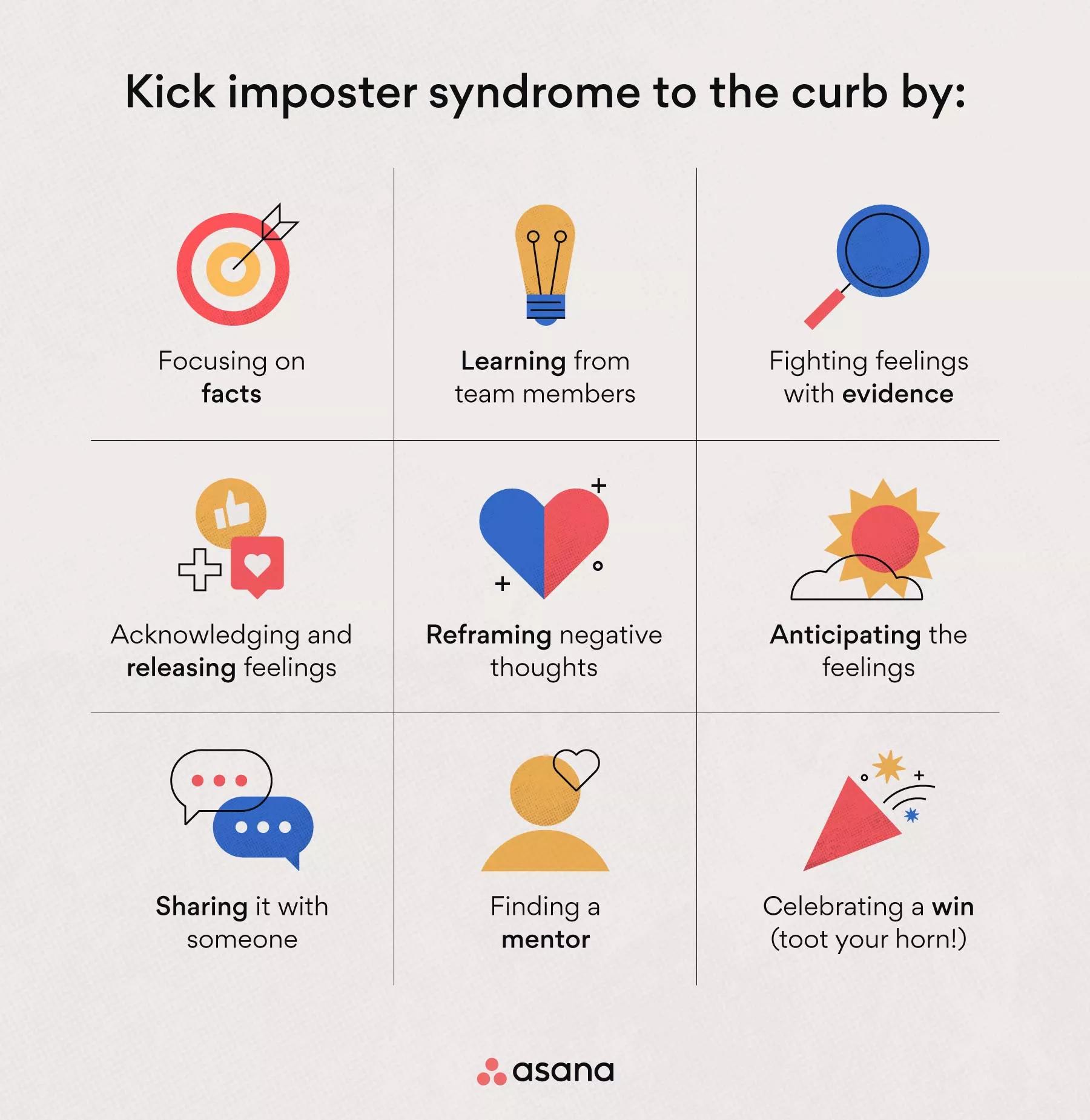
Strategies for Overcoming Imposter Syndrome While overcoming imposter syndrome is not an overnight process, there are several strategies that young adults can employ to manage these feelings effectively:
Acknowledge your feelings: The first step in overcoming imposter syndrome is recognizing and acknowledging your feelings. Understand that experiencing self-doubt is normal and that many others share similar experiences. Write down your thoughts and feelings related to imposter syndrome when they arise. This practice can help you gain clarity about your emotions and identify triggers.
Challenge negative self-talk: Imposter syndrome often manifests through negative self-talk that reinforces feelings of inadequacy. To combat this, pay attention to your inner dialogue and identify negative thoughts that contribute to self-doubt. Reframe thoughts and replace negative thoughts with positive affirmations or balanced perspectives. For example, instead of thinking “I don’t deserve this promotion,” reframe it as “I have worked hard for this opportunity.”
Recognise accomplishments: Recognising your accomplishments is crucial in combating imposter syndrome. Keep a success journal and document achievements, no matter how small they may seem. Reflecting on your successes can help reinforce your capabilities. Don’t hesitate to share accomplishments with friends, family, or mentors who can celebrate with you.
Seek support from others: Talking about feelings with trusted friends or mentors can provide valuable perspective and support. Find a mentor as connecting with someone who has navigated similar challenges can offer guidance and reassurance. Join support groups where individuals share experiences related to imposter syndrome; this fosters a sense of community and understanding.
Embrace lifelong learning: Understanding that everyone has areas for growth can help alleviate pressure. Pursue professional development and engage in training sessions, workshops, or courses that enhance your skills and knowledge in your field. Accept mistakes as learning opportunities and recognise that making mistakes is part of growth; use them as opportunities for improvement rather than evidence of inadequacy.
Practice mindfulness: Practice mindfulness techniques that can help ground you in the present moment and reduce anxiety related to imposter feelings. Regular meditation practice can help calm the mind and promote self-awareness. Incorporate deep breathing exercises into your daily routine to manage stress levels effectively.
Set realistic goals: Setting achievable goals helps mitigate perfectionism associated with imposter syndrome. Divide larger goals into smaller, manageable tasks that allow you to track progress without overwhelming yourself. Shift your mindset from striving for perfection to celebrating progress along the way.
Limit social media exposure: Social media can exacerbate feelings of inadequacy through constant comparisons. Get rid of negative influences and curate your feed by unfollowing accounts that trigger negative thoughts about yourself. Engage with positive content and follow accounts that inspire you or provide educational content relevant to your interests.
In addition to the strategies mentioned above, here are some practical tips that young adults can implement in their daily lives:
Develop a personal brand: Creating a personal brand involves defining who you are professionally and what you stand for in your career. Take time to reflect on your skills and strengths; knowing what you bring to the table can enhance confidence. Develop a personal narrative that highlights your journey—this helps reinforce your identity beyond just accomplishments.
Engage in networking: Building connections with others in your field not only opens doors but also provides reassurance through shared experiences. Participate in conferences, workshops, or networking events where you can meet others facing similar challenges. Utilise platforms like LinkedIn to connect with professionals in your industry; and engage in discussions around shared interests.
Practice self-compassion: Being kind to yourself during moments of doubt is crucial. Understand that everyone makes mistakes; self-compassion allows you room for growth without harsh judgment. When experiencing self-doubt, consider how you would respond if a friend expressed similar feelings—offer yourself the same kindness!
Focus on contribution rather than comparison: Shift focus from comparing yourself with others towards how you can contribute positively within your environment. Consider how sharing knowledge or supporting colleagues enhances collaboration rather than competition.
Imposter syndrome is a common experience among young adults navigating new environments in university and the workforce; however, it doesn’t have to define one’s journey! By understanding its nature while implementing effective strategies—such as acknowledging feelings, challenging negative self-talk, celebrating achievements, seeking support from others, and embracing lifelong learning practices—young adults can combat these feelings successfully.
Ultimately, recognising that experiencing self-doubt does not diminish one’s abilities is key; instead of allowing imposter syndrome to hold you back from seizing growth opportunities, embrace it as part of the journey! With patience combined with supportive practices, young adults will find themselves equipped not only with skills but also the confidence needed for future success! By fostering resilience against imposter syndrome while building meaningful connections along the way, young professionals are sure to not only thrive but also create fulfilling careers ahead!
The quote for today is from the Greek philosopher Epicurus, who lived between 341 and 270 BC and was the founder of Epicureanism, a school of thought that taught that the pursuit of happiness comes from simple pleasures, self-sufficiency, and the absence of fear or pain. He believed that pleasure, when pursued wisely, leads to a fulfilling and tranquil life. Today’s quote reflects that true happiness comes not from wealth, status, or material possessions but from contentment and simplicity. It emphasises that fulfilment is found in appreciating what we have rather than constantly seeking more. Epicurus believed that the key to a happy life was moderation, self-sufficiency, and inner peace.
In today’s world, where consumerism encourages people to always want more, this quote serves as a reminder that happiness is not about accumulating wealth or possessions but about cultivating a mindset of gratitude and sufficiency. Many people believe that they will be happy once they achieve a certain goal—buying a bigger house, earning a higher salary, or gaining social recognition. However, this pursuit more often leads to stress, dissatisfaction, and never-ending desires. Instead of chasing external sources of happiness, Epicurus suggests that one can find joy by embracing what is already present in life.
The quote also touches on the idea that happiness is a choice. If one can learn to be content with little, one can remain happy in almost any situation. This does not mean rejecting ambition or progress but rather not depending on external factors for inner joy. In summary, Epicurus teaches us that the secret to happiness is not in having more but in needing less. By shifting our mindset from lack to gratitude, we free ourselves from unnecessary suffering and discover a profound sense of well-being in life’s simplest pleasures.
The other day when I was speaking with my parents, I realised that I live a very boring life. Thus, today’s quote is apt. I need to relish and enjoy the simple pleasures in life. Things like reading a good book, writing an article that resonates with me, making plans for a new trip, or speaking to an old friend should be the highlights of my day.
There’s nothing more to update today. Life is going on; GG & BB are busy with their lives, school, and camp. I am busy with my writing. I am not sure if I ever mentioned this previously, but I am now a freelance content writer. I have a friend who is an editor for an online magazine, and this friend sends me work for a few articles each month. I am really enjoying this phase of my life and hope to continue doing this for years to come, hopefully, and potentially with more work.
That’s all from my side this week. Keep smiling, enjoy the simple pleasures, be happy in all situations, and above all, remain positive!
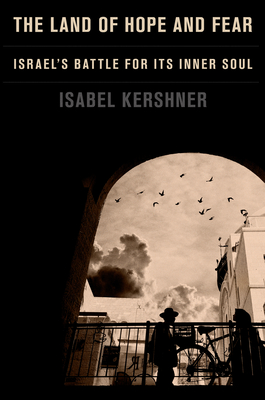
The Land of Hope and Fear: Israel’s Battle for Its Inner Soul – Isabel Kershner
Despite Israel’s determined staying power in a hostile environment, its military might, and the innovation it fosters in businesses globally, the country is more divided than ever. The old guard—socialist secular elites and idealists—are a dying breed, and the state’s democratic foundations are being challenged. A dynamic and exuberant country of nine million, Israel is now largely comprised of native-born Hebrew speakers, and yet any permanent sense of security and normalcy is elusive.
In The Land of Hope and Fear , we meet Jews and Arabs, religious and secular, Eastern and Western, liberals and zealots—plagued by perennial conflict and existential threats, citizens who remain deeply polarized politically, socially, and ideologically, even as they undergo generational change and redefine what it is to be an Israeli. Who are these people and to what do they aspire?
In moving narratives and with on-the-ground reporting, Isabel Kershner reveals the core of what holds Israel together and the forces that threaten its future through the lens of real a son of Zionist pioneers, cynical about what is to come and his people’s status in it; a woman in her nineties whose life in a kibbutz has disintegrated; a brilliant poet caught up in the political maelstrom; an Arab gallery owner archiving a lost Palestinian landscape; and a descendant of the Russian aliyah; representing millions of culturally and religiously different Jews, laying bare the question Who is an Israeli? The Land of Hope and Fear decodes Israel today at its seventy-fifth anniversary, examining the ways in which the country has both exceeded and failed the ideals and expectations of its founders.
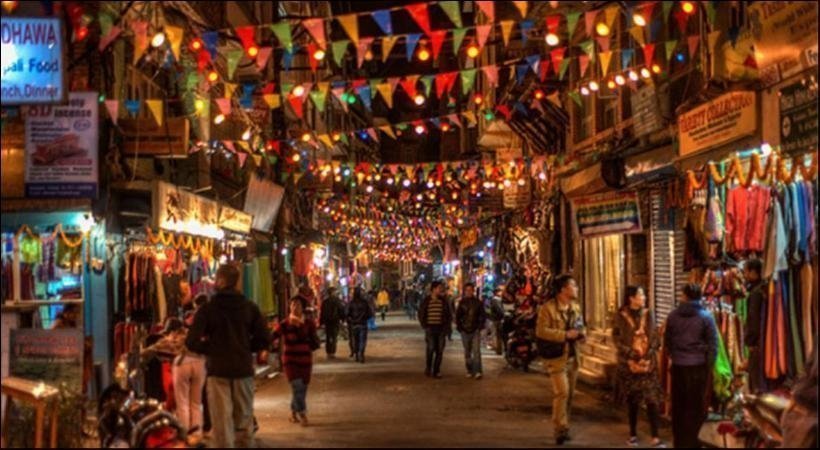
Located in the heart of Kathmandu, Thamel is a vibrant and bustling neighborhood that serves as the tourist hub of the city. It is a bustling maze of narrow streets teeming with shops offering colorful textiles, traditional handicrafts, and trekking gear. It also has an extensive selection of restaurants, cafes, bars, and entertainment venues. Formerly known as Tabitha Bahal, the maze of streets that make up Thamel is home to numerous stalls. Thamel is also home to several restaurants that serve delicious and varied cuisine. One can almost always get a good bargain on the items that are sold here, especially on handcrafted materials. Thamel is also the prime entertainment district in the capital with a plethora of bars, clubs and casinos, most of them operating for 24 hours,
At its centre, Thamel has the serene Vikramshila Mahavihara Monastery which dates back several decades. The manuscript Swayambhu Purana, which narrates the story of Kathmandu Valley, is said to be housed within it. In addition to this historical treasure, Thamel houses several other cultural monuments. One of the lesser-known temples in Thamel, the Tri Devi temple houses temples devoted to the Goddesses Jawala Mai, Dakshinkali, and Manakamana. Below a pavement in the northern region of Thamel stands a bland concrete monument with the most beautiful deity of Lord Ganesha inside it. Planted below street level, the deity at the Sunken Ganesh Shrine is ornate with intricately detailed ornaments and carvings. Ghairi Dhara is a colossal natural water source which is still in use in spite of being damaged by the 2015 earthquake. For several centuries, this spot has been used by the locals to draw water for different purposes. Close to the Thamel Marg stands the picturesque Shiva Shrine, thronged by devotees on a daily basis. The Ashoka Stupa, dedicated to Emperor Ashoka, is a newly renovated Stupa which holds a rich historical significance. Even though there are no written archives stating the age of the monument, it is said that it is over a thousand years.
Asan Tole is a famous market street in Asan. The six spoked juncture of the street is always bustling with people selling everything from vegetables and fishes to clothes, jewellery and spices. It is a place where one can experience the daily life of Nepali people. Other than the bazaar, tourists can also explore some sites in Asan Tole. There is the Annapurna Ajima Temple located on a busy street. It has a traditional three-tiered pagoda, wooden architecture and houses a pot with grains representing the Goddess. A little distance away, to the north of the square, is a temple dedicated to Lord Ganesh and the north-west is another shrine dedicated to Lord Narayan. From a distance, one would notice the new construction all around the temple. This proves that the culture and the belief are so strong that locals embrace it even after centuries of evolution. At the centre of the attraction, a stone figurine of a fish, also called the Nyalon or the Fish Stone has been installed. This is believed to be the exact location where a fish miraculously fell from the sky. After this incident, Asan Tole was founded. To the southern side of the square is a building called Yita Chapa. This building has a prayer or hymn hall and several shrine rooms where locals get together and sing hymns. A stone platform, called the Asan Dabu is specially used for cultural performances held during festivals.
The rest of the streets that radiate out from the square are lined with more shrines and religious courtyards like the Kwathu Baha, Thakse Baha, Dhalasikwa Baha, Asan Baha, Haku Baha and the Dagu Baha. All these courtyards have decorated shrines with stupas and statues of Buddha that emphasise on the spiritual aspect of the city. This ancient commercial centre in Kathmandu, Asan Tole is one place that truly is the lifeline of Kathmandu and the local traders. Those who wish to witness this unique facet of Nepal must visit this part of the city.
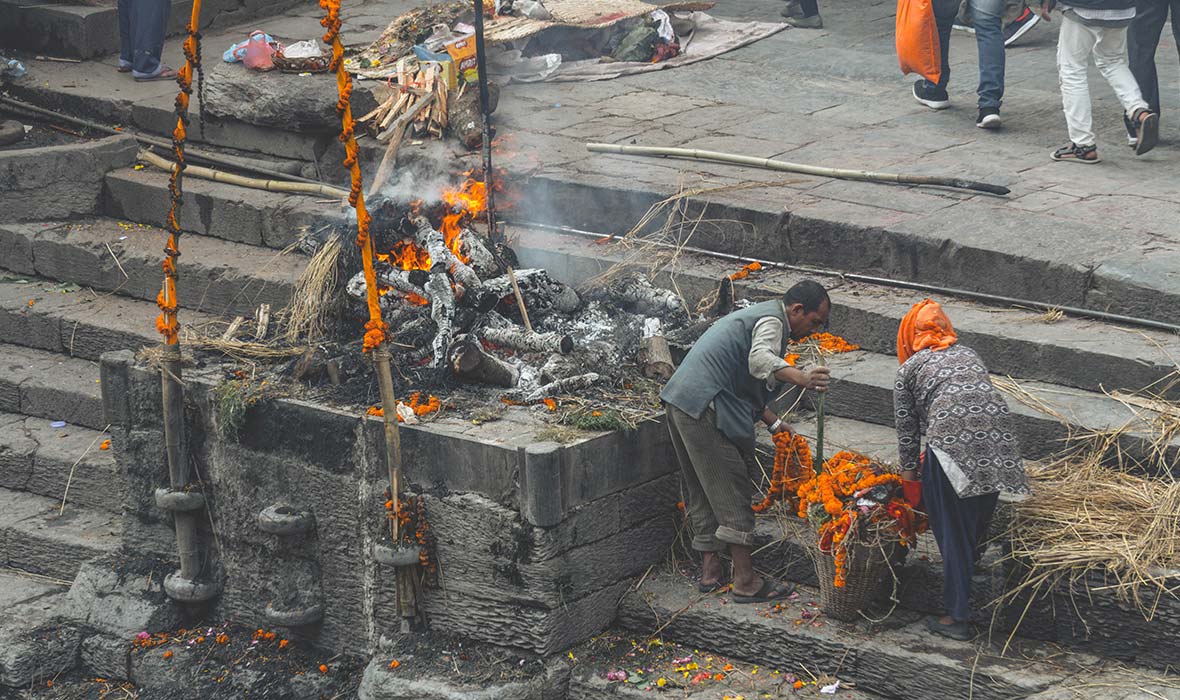
Located near the Pashupatinath Temple on the banks of Bagmati River, the crematoria is where Nepali Hindus go for their last rites. Visitors can sit on the other bank of the river and observe the last rites. The Cremetoria is open from 10:30 am to 4 pm on Tuesdays to Saturdays. Entry is free for Nepalis, while foreigners need to pay NPR 1000.
Kathmandu is home to a number of museums and art galleries, including the National Museum of Nepal and the Natural History Museum of Nepal. Nepal’s art and architecture is an amalgamation of two ancient religions, Hinduism and Buddhism. These are amply reflected in the many temples, shrines, stupas, monasteries, and palaces in the seven well-defined Monument Zones of the Kathmandu valley, part of a UNESCO World Heritage Site.
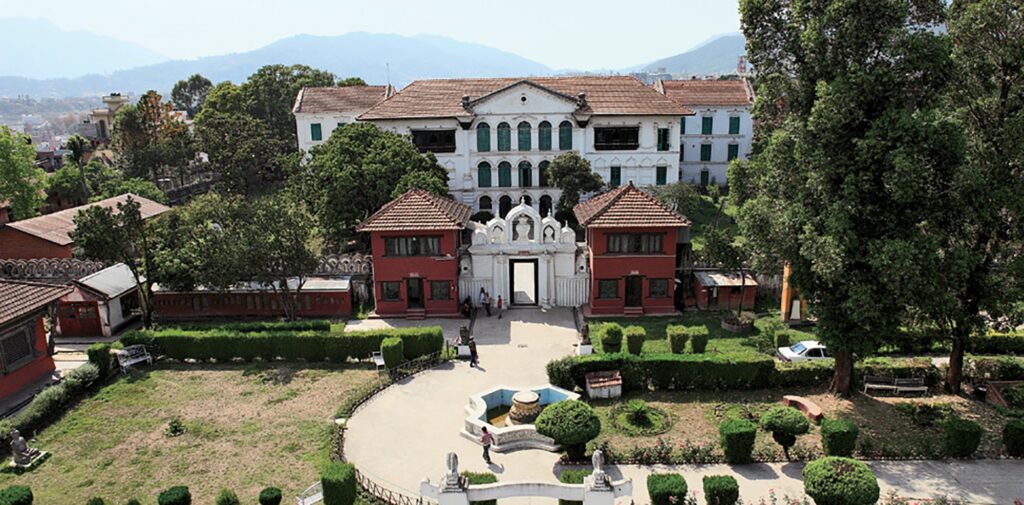
Also known as the Rashtriya Sangrahalaya, the National Museum is a century-old museum that has preserved the exhibits depicting the rich historical significance of Nepal. Located in the western part of Kathmandu, near the Swayambhunath stupa, the National Museum is in a historical building constructed in the early 19th century by General Bhimsen Thapa. It is the most important museum in the country, housing an extensive collection of weapons, art and antiquities of historic and cultural importance. The museum was established in 1928 as a collection house of war trophies and weapons, and the initial name of this museum was Chhauni Silkhana, meaning the stone house of arms and ammunition. Given its focus, the museum contains many weapons, including locally made firearms used in wars, leather cannons from the 18th–19th century, and medieval and modern works in wood, bronze, stone and paintings.
Home to three buildings: the Historical Museum Building, the Buddhist Art Gallery, and the Juddha Jayatia Kala Shala, this monument houses cultural, historical, and philatelic sections, including weapons, artworks, coins, statues, postage stamps, and several species of plants and animals.
The main building houses a Philatelic Gallery, a Historical Gallery, a Natural Science Gallery, and a Numismatics Museum. It also houses leather canons seized during the first war fought between Nepal and Tibet in 1792, cane helmets, Birgun, and Thomson submachine guns. The sword presented by Louis-Napoleon Bonaparte remains the most valuable treasure, along with the plethora of relics from 1934, the year in which Kathmandu became a victim of a massive earthquake. The displays of the Natural Science section houses a variety of species of birds and animals of the wild, including mammals, reptiles, insects, and butterflies. The philatelic section, including an extensive collection of stamps from previous centuries, primarily draws in collectors. On the other hand, the numismatic section houses bronze, copper, silver, and gold coins dating back to the Licchavi era. Finally, life-sized paintings of the rulers during the Malla and Shah dynasties along with the Prime Ministers adorn the walls of the building.
A repository of Buddhist sculptures, paintings, and ceremonial objects, the Buddhist Art Gallery provides a rich insight into Buddhist art in the country of Nepal. This gallery is segregated into three sections, namely the Kathmandu Valley, the Terai, and the northern Himalayan sections. While the first section comprises of figures of Bodhisattvas and the Buddha and Chaityas cast in bronze, the Terai section is ornate with numerous pictures of Lumbini, the birthplace of the Buddha. On the other hand, the northern Himalayan part offers a glimpse of the impact of Tibetan Buddhism on the country, which was supposedly full of rituals and religious practices. Ritualistic artefacts like Phurpas, Dorje, Thangka paintings, and Tibetan amulets are displayed in the gallery, among other religious materials. Breathtaking images and paintings of the Goddess of Wisdom, Manjushri, Dipankara Buddha, and Yantras belonging to the 19th century wrap up the priceless collection of the Buddhist Art Gallery.
Also referred to as the Hall of Sculpture, the Juddha Jayatia Kala Shala is devoted to stone and wood carvings and intricate metal works. Among the several stone images, the one of Jayavarma, the Licchavi King of the 2nd century, is the most prominent. The artefacts that attract several connoisseurs are the four stolen sculptures, namely, the Buddha of Bhinchhe Bahal from the 9th century, Hyumat Tole’s Garudasana Vishnu from the 10th century, Veena Dharini Saraswati from Kamalpokhari in Pharping from the 12th century, and Surya, belonging to Panauti’s Triveni Ghat from the 14th century.
Other exquisite sculptures include the exquisite Uma and Maheshwara, the fat-bellied Lord Brahma, and the dancing Lord Ganesha. A restored statue from the 15th century of the dancing goddess, Nrittya Devi, adorns the wood carving section. Intricate and detailed carvings made on sal, teak, rosewood, as well as on the window frames, provide a glance at the refined wood carving skills of the artisans. The painting section is ornate with images of the mystical deeds of Lord Krishna, and has been named Krishna Leela. Apart from these three exhibits, the museum is home to a captivating Doll Gallery, consisting of dolls from all over the world. This unique range of dolls was given to the female royalty from the heads of states and other countries over the years.
Between February and October, the museum is open from 10:30 am to 4:30 pm on Wednesdays to Sundays and from 10:30 am to 2:30 pm on Mondays. Between November and January, the the museum is open from 10:30 am to 3:30 pm on Wednesdays to Sundays and from 10:30 am to 2:00 pm on Mondays. Entry fees are NPR 50 for SAARC country citizens, NPR 75 for those with a still camera, NPR 150 for those with a video camera. For foreigners, entry fee is NPR 150, NPR 100 for those with a still camera, and NPR 200 for those wanting to take a video camera inside.
The Natural History Museum is in the southern foothills of Swayambhunath hill and has a sizeable collection of different species of animals, butterflies, and plants. The museum is noted for its display of species, from prehistoric shells to stuffed animals. The Tribhuvan Museum contains artifacts related to King Tribhuvan, who ruled between 1906 and 1955. It has a variety of pieces, including his personal belongings, letters, and papers; memorabilia related to events he was involved in and a rare collection of photos and paintings of Royal family members. The Mahendra Museum is dedicated to King Mahendra, who ruled between 1920 and 1972. Like the Tribhuvan Museum, it includes his personal belongings, such as decorations, stamps, coins and personal notes and manuscripts, but it also has structural reconstructions of his cabinet room and office chamber. The Hanumandhoka Palace, a lavish medieval palace complex in the Durbar, contains three separate museums of historic importance. These museums include the Birendra Museum, which contains items related to the second last monarch, King Birendra.
The Taragaon Museum presents the modern history of the Kathmandu valley. It seeks to document 50 years of research and cultural heritage conservation of the Kathmandu Valley, documenting what artists, photographers, architects, and anthropologists from abroad had contributed in the second half of the 20th century. The actual structure of the museum showcases restoration and rehabilitation efforts to preserve the built heritage of Kathmandu. It was designed by Carl Pruscha, the master-planner of the Kathmandu Valley in 1970 and constructed in 1971. Restoration works began in 2010 to rehabilitate the Taragaon hostel into the Taragaon Museum. The design uses local brick along with modern architectural design elements, as well as the use of circle, triangles and squares. The museum is within a short walk from the Boudhanath stupa, which itself can be seen from the museum tower.
Kathmandu is a centre for art in Nepal, displaying the work of contemporary artists in the country and also collections of historical artists. Patan in particular is an ancient city noted for its fine arts and crafts. Art in Kathmandu is vibrant, demonstrating a fusion of traditionalism and modern art, derived from a great number of national, Asian, and global influences. Nepali art is commonly divided into two areas: the idealistic traditional painting known as Paubhas in Nepal and perhaps more commonly known as Thangkas in Tibet, closely linked to the country’s religious history, crafts and on the other hand the contemporary western-style painting, including nature-based compositions or abstract artwork based on Tantric elements and social themes of which painters in Nepal are well noted for.[76] Internationally, the British-based charity, the Kathmandu Contemporary Art Centre is involved with promoting arts in Kathmandu. Kathmandu houses many notable art galleries. The NAFA Gallery, operated by the Arts and Crafts Department of the Nepal Academy is housed in Sita Bhavan, a neo-classical old Rana palace.
The Srijana Contemporary Art Gallery, inside the Bhrikutimandap Exhibition grounds, hosts the work of contemporary painters and sculptors, and regularly organizes exhibitions. It also runs morning and evening classes in the schools of art. Also of note is the Moti Azima Gallery, in a three-storied building in Bhimsenthan which contains an impressive collection of traditional utensils and handmade dolls and items typical of a medieval Newar house, giving an important insight into Nepali history. The J Art Gallery near the former royal palace in Durbarmarg displays the artwork of eminent, established Nepali painters. The Nepal Art Council Gallery, in the Babar Mahal, on the way to Tribhuvan International Airport contains artwork of both national and international artists and extensive halls regularly used for art exhibitions.
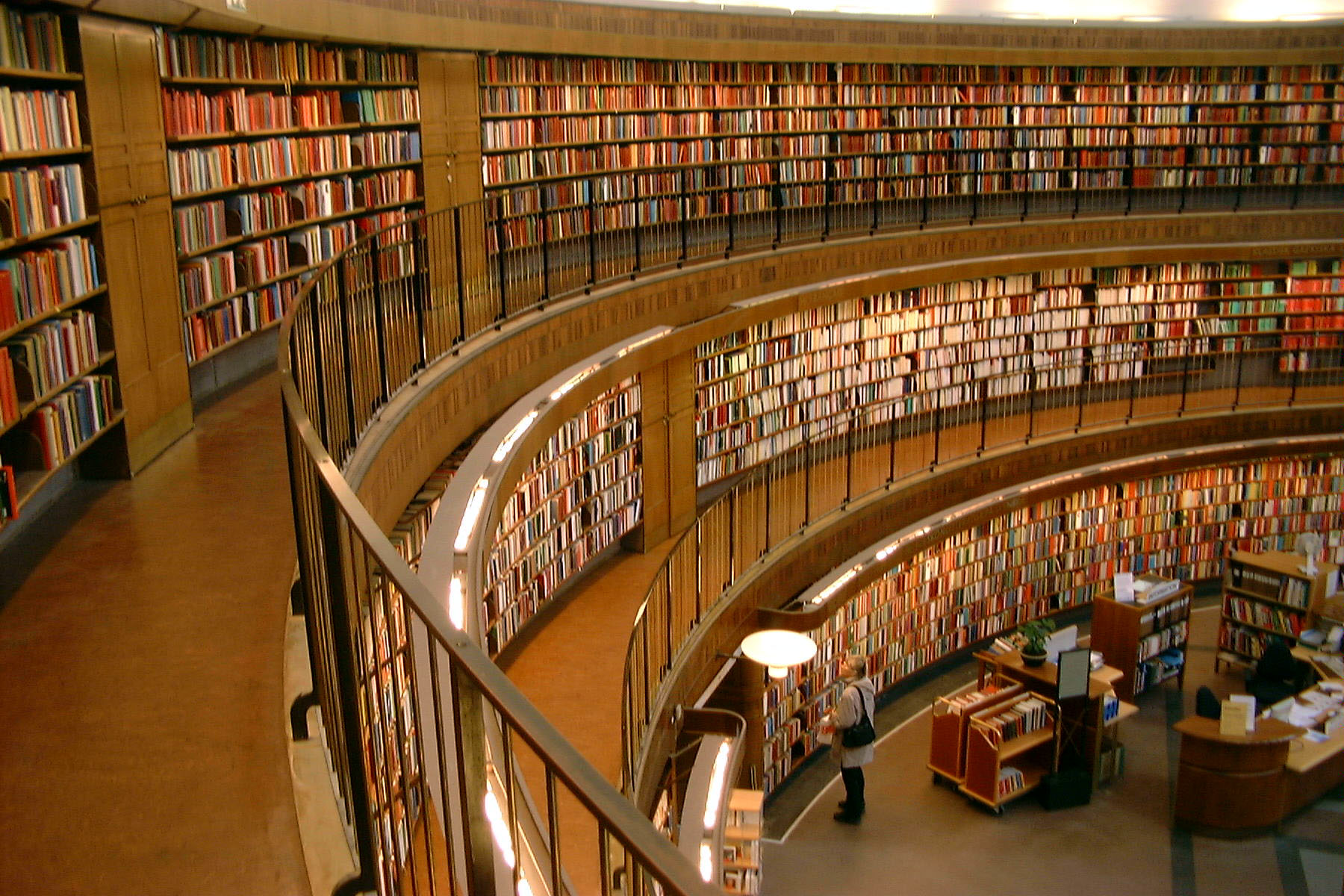
The National Library of Nepal is located in Patan. It is the largest library in the country with more than 70,000 books in English, Nepali, Sanskrit, Hindi, and Nepal Bhasa. The library is in possession of rare scholarly books in Sanskrit and English dating from the 17th century. Kathmandu also contains the Kaiser Library, in the Kaiser Mahal on the ground floor of the Ministry of Education building. This collection of around 45,000 books is derived from a personal collection of Kaiser Shamsher Jang Bahadur Rana. It covers a wide range of subjects including history, law, art, religion, and philosophy, as well as a Sanskrit manual of Tantra, which is believed to be over 1,000 years old. The 2015 earthquake caused severe damage to the Ministry of Education building, and the contents of the Kaiser Library have been temporarily relocated.
The Asa Archives are also noteworthy. They specialise in medieval history and religious traditions of the Kathmandu valley. The archives, in Kulambhulu, have a collection of some 6,000 loose-leaf handwritten books and 1,000 palm-leaf manuscripts, mostly in Sanskrit or Nepal Bhasa and a manuscript dated to 1464.
Tundlikhel is a former parade ground of Gurkha soldiers which has been converted into a picnic spot and viewpoint, popular amongst locals and tourists. On a clear day, one can view the mesmerising Himalayan peaks including including Dhaulagiri, Machhapuchhare, Langtang Lirung, Manaslu and Ganesh Himal. Best time to visit is during sunrise or sunset. Once upon a time, this plateau region was used by traders to sell off some goods before making their way to Tibet or India. The ground was also used for parade purposes by the Gorkha regiment. Nowadays, it is open for anyone to enjoy and relax.
Located on the outskirts of Kathmandu, Taudaha Lake is a famous freshwater lake surrounded by hills covered with dense forests. The lake is full of fishes and is also a heaven for birdwatchers because of the migratory birds in the area. As per a legend, Taudaha is one of the lakes that were formed from the waters of a large lake after a mythical character cut the hill behind it and let the water flow away.
Legend states that there was once an enormous water body where Kathmandu now exists. This water body was believed to be home to mythical creatures that were a part serpent and part human and were recognised as the Nagas. Manjushree, a bodhisattva who was associated with Mahayana Buddhism, is believed to have cut through a hill located in the south of the Kathmandu Valley and let the water drain away to expose the land underneath to use it for human settlement. The water, however, did not drain off entirely and smaller ponds and lakes were formed in and around the region. One of these is believed to be the Taudaha Lake.
The Nagas were left homeless after the water body no longer remained and their King, Karkotak set out in rage to take revenge. To calm the king, the people who settled near Taudaha Lake built a magnificent palace underwater, studded it with precious stones and offered it to the Naga King. He was extremely pleased with the gesture but put forth a condition that nobody would disturb the biodiversity of the lake if they wanted him to rule the Nagas harmoniously underwater. The people agreed, and ever since, no fishing or swimming is allowed in the Taudaha Lake.
The lake has incredible biodiversity, home to a number of plant, bird and animal species. Researchers have found that the place is home to 17 species of resident birds, two summer migrants and about 20 species of winter migrant birds. The lake is open daily between 9 am and 5 pm and has an entry fee of NPR 25 for SAARC country nationals while others need to pay NPR 100.
The national botanical garden or the Royal Botanical Gardens is located at the base of Phulchowki hill, covering an area of 82 hectares and is surrounded by beautiful evergreen natural forests. Various indigenous plants such as ornamental plants, rock plants, rose cultivars, trees and shrubs, lilies, ferns, medicinal plants and native flora, aquatics, cacti, orchids are housed here for display. It is open from 9 am to 5 pm and foreigners can enter by paying NPR 100 while SAARC tourists need to pay NPR 25.
The Garden of Dreams, also referred to as the Swapna Bageecha and garden of six seasons is a neo-classical garden built by Kishore Narshingh in1920. The garden has a magnificent amphitheatre, urns, gorgeous pavilions, paved perimeter paths, pergolas, and ponds that draw in locals and tourists alike. After the patron of this garden, Kaiser Sumsher Rana, passed away in the 1960s, the site lay in neglect until recent years, when it was beautifully restored by the Austrian government and reopened for visitors.
When set in contrast to the other gardens that were designed in those years, this garden, inspired by the Edwardian style of architecture, was wonderfully modern in its time. Under the professional supervision of the renowned architect, Kishore Narsingh, this European garden was a repository of fascinating features. After Kaiser Sumsher Rana passed away, the Government of Nepal took over the responsibility of the garden. After lying dormant for several years without any attempts at restoration, the Garden of Dreams came back to life after a renewal project was begun with the financial aid of the Government of Austria and the implementation of Eco Himal.
Spread out across 6895 square metres, it houses some smaller gardens within the walls. Along the perimeter of the path paved across the place, sunken flower gardens, with viridescent ponds in the middle, add to the beauty of the attraction. This place is also home to several classical concerts, corporate functions, private receptions, as well as cultural programs. In 2016, a small museum was integrated within the garden, and at present, it also houses a library and a cafe. The garden, which can be visited by paying an entry fee of NPR 320 for adults and NPR 160 for children, is open from 9 am to 10 pm with the last entry at 9 pm.
With trekking trails, lush greenery, and a variety of species of flora and fauna, the Langtang National Park is the fourth national park established in Nepal in 1976. The national park is situated approximately 32 km to the north of Kathmandu and is connected to the Qomolangma National Nature Preserve in Tibet. The picturesque park is also home to the serene, high altitude Gosaikunda Lake, believed to be sacred. From the dense forests which comprise the hilly areas, the area of the park spreads across the Nepalese larch in the middle before cascading down to the vast meadows of green grasslands. With more than 250 species of birds, around 46 species of mammals, and a whopping 1000 species of plants, this place is ideal for nature enthusiasts.
The park encompasses 26 village executives and is perched at an altitudinal range of 6450 masl. The peak of the gigantic Langtang Lirung, at an altitude of 7245 m, is the zenith of the park. The numerous trekking tracks, each differing in its level of difficulty from the other cater to those who come here seeking adventure. While the international boundary of Tibet coincides with the borders of the park in the north and east, the western border follows the rivers Trisuli and Bhote Kosi. The protected area within the park is representative of both the Palearctic and Indo-Malayan ecozones, which houses a rich and vast biodiversity.
Of the numerous trekking routes that make up a significant part of the Langtang National Park, the three main trails are the Langtang Valley, the Gosaikunda Lake, and Helambu. A significant portion of the Langtang valley is loosely connected to the southern section of the Helambu region through Laurebina La. To make sure that trekkers do not face any inconvenience, all three routes have locally operated lodges, hotels, tea stalls, and campgrounds, in addition to other facilities. The Langtang National Park lets the visitors make the final choice by offering them trekking options ranging from moderate to difficult. The duration of each trekking trip ranges from 3 days to 3 weeks. The trekkers can also ask for extra time to explore the vast wilderness, the breathtaking hilltop view, and the cultural heritage sites. For the more adventurous, the remote areas of the park, including the Panch Pokhari, Langshisa glacier, the eastern part of Helambu, and the upper sections of Kyanjin, along with the Ganja La Pass, are also accessible.
Langtang National Park is a repository of mammalian and avian fauna, the former falling into an intermediate category of the Palaearctic and the Indo-Malayan. While most of the species belonging to the Indo-Malayan group have chosen the lower altitudes as their abode, the red panda is the only fauna belonging to the same group which has found its shelter at an elevation of 4800 metres. Up to 46 species of mammals have been found and recorded in this beautiful park, of which the ones that have been segregated into the protected list of the National Park and Wildlife Conservation Act 1973 are the grey wolf, red panda, leopard cat, clouded leopard, snow leopard, Tibetan sheep, Assamese monkey, and the musk deer. If one wants to spot snow leopards and their prey, the Himalayan Tahr, they should visit the upper sections of the Langtang, Lendi, and Yangri Valleys. The red panda may be sighted in Ghodatabela and Polangpati, along with the southern sections of Panch Pokhari, Cholangpati, Magnigoth and Yangri areas. To The mighty Himalayan black bear is one of the animals that throng the Thulo Bharu, Briddim, Timure, Thulo Syabru, and Ghodatabela frequently. The national park is also home to over 250 species of birds. The National bird of Nepal- the Himalayan Monal is the most sought after, along with the Satyr tragopan that falls under the list of protected birds sheltered in the park. Of the thousands of plant species that are housed in the park, 21 are endemic, which include two species of Meconopsis. one species of Zanthoxylum, and two species of Rhododendron.
Nepalis do not have any entry fee to the park while SAARC nationals need to pay NPR 1500 and other foreigners pay NPR 3000. For SAARC and other foreigners, an an additional 13% VAT is charged. Children below the age fo ten are granted free entry, irrespective of their nationalities.
How Big Things Get Done: The Surprising Factors That Determine the Fate of Every Project, from Home Renovations to Space Exploration and Everything In Between – Bent Flyvbjerg, Dan Gardner
Nothing is more inspiring than a big vision that becomes a triumphant, new reality. Think of how the Empire State Building went from a sketch to the jewel of New York’s skyline in twenty-one months, or how Apple’s iPod went from a project with a single employee to a product launch in eleven months.
These are wonderful stories. But most of the time big visions turn into nightmares. Remember Boston’s “Big Dig”? Almost every sizeable city in the world has such a fiasco in its backyard. In fact, no less than 92% of megaprojects come in over budget or over schedule, or both. The cost of California’s high-speed rail project soared from $33 billion to $100 billon—and won’t even go where promised. More modest endeavors, whether launching a small business, organizing a conference, or just finishing a work project on time, also commonly fail. Why?
Understanding what distinguishes the triumphs from the failures has been the life’s work of Oxford professor Bent Flyvbjerg, dubbed “the world’s leading megaproject expert.” In How Big Things Get Done, he identifies the errors in judgment and decision-making that lead projects, both big and small, to fail, and the research-based principles that will make you succeed with yours. For example:
Understand your odds. If you don’t know them, you won’t win.
Plan slow, act fast. Getting to the action quick feels right. But it’s wrong.
Think right to left. Start with your goal, then identify the steps to get there.
Find your Lego. Big is best built from small.
Be a team maker. You won’t succeed without an “us.”
Master the unknown unknowns. Most think they can’t, so they fail. Flyvbjerg shows how you can.
Know that your biggest risk is you.
Full of vivid examples ranging from the building of the Sydney Opera House, to the making of the latest Pixar blockbusters, to a home renovation in Brooklyn gone awry, How Big Things Get Done reveals how to get any ambitious project done—on time and on budget.



:max_bytes(150000):strip_icc()/imposter-syndrome-5089237-Final-d5b53a0d2f9b4a568022933d5f267930.jpg)









 Memories and Such