In My Hands Today…

Ultra-Processed People: The Science Behind Food That Isn’t Food – Chris van Tulleken

It’s not you; it’s the food.

We have entered a new age of eating. For the first time in human history, most of our calories come from an entirely novel set of substances called Ultra-Processed Food. There’s a long, formal scientific definition, but it can be boiled down to this: if it’s wrapped in plastic and has at least one ingredient that you wouldn’t find in your kitchen, it’s UPF.

These products are specifically engineered to behave as addictive substances, driving excess consumption. They are now linked to the leading cause of early death globally and the number one cause of environmental destruction. Yet almost all our staple foods are ultra-processed. UPF is our food culture and for many people, it is the only available and affordable food.

In this book, Chris van Tulleken, father, scientist, doctor, and award-winning BBC broadcaster, marshals the latest evidence to show how governments, scientists, and doctors have allowed transnational food companies to create a pandemic of diet-related disease. The solutions don’t lie in willpower, personal responsibility, or exercise. You’ll find no diet plan in this book, but join Chris as he undertakes a powerful self-experiment that made headlines around the world: under the supervision of colleagues at University College London, he spent a month eating a diet of 80 percent UPF, typical for many children and adults in the United States. While his body became the subject of scientific scrutiny, he spoke to the world’s leading experts from academia, agriculture, and, most importantly, the food industry itself. But more than teaching him about the experience of the food, the diet switched off Chris’s own addiction to UPF.

In a fast-paced and eye-opening narrative, he explores the origins, science, and economics of UPF to reveal its catastrophic impact on our bodies and the planet. And he proposes real solutions for doctors, for policy makers, and for all of us who have to eat. A book that won’t only upend the way you shop and eat, Ultra-Processed People will open your eyes to the need for action on a global scale.
Poem: Pillow Thoughts

When my head hits the pillow at night,
And darkness surrounds me, a blanket of night.
My mind starts to wander, thoughts swirling around,
Echoing loudly, without any sound.

The day’s events replay in my head,
The things I should’ve done, the words I should’ve said.
Regrets and worries, they creep in with ease,
Robbing me of sleep, denying me peace.

But amidst the chaos, a glimmer of light,
Memories surface, bringing comfort and might.
Moments of laughter, of love and of cheer,
Reminding me that joy is always near.

I think of my loved ones, their faces so dear,
And know that their presence will always be here.
Their support and their kindness, a strength I can’t deny,
Helping me face each day, helping me try.

So when my head hits the pillow at night,
And the world seems to fade, a canvas of white.
I’ll embrace the stillness, the quiet so sweet,
And let my heart and mind finally meet.

For in this moment, when all else is still,
I find the answers, the peace, and the will.
To face the next day, with courage and grace,
Knowing that tomorrow is a brand new place.

In My Hands Today…

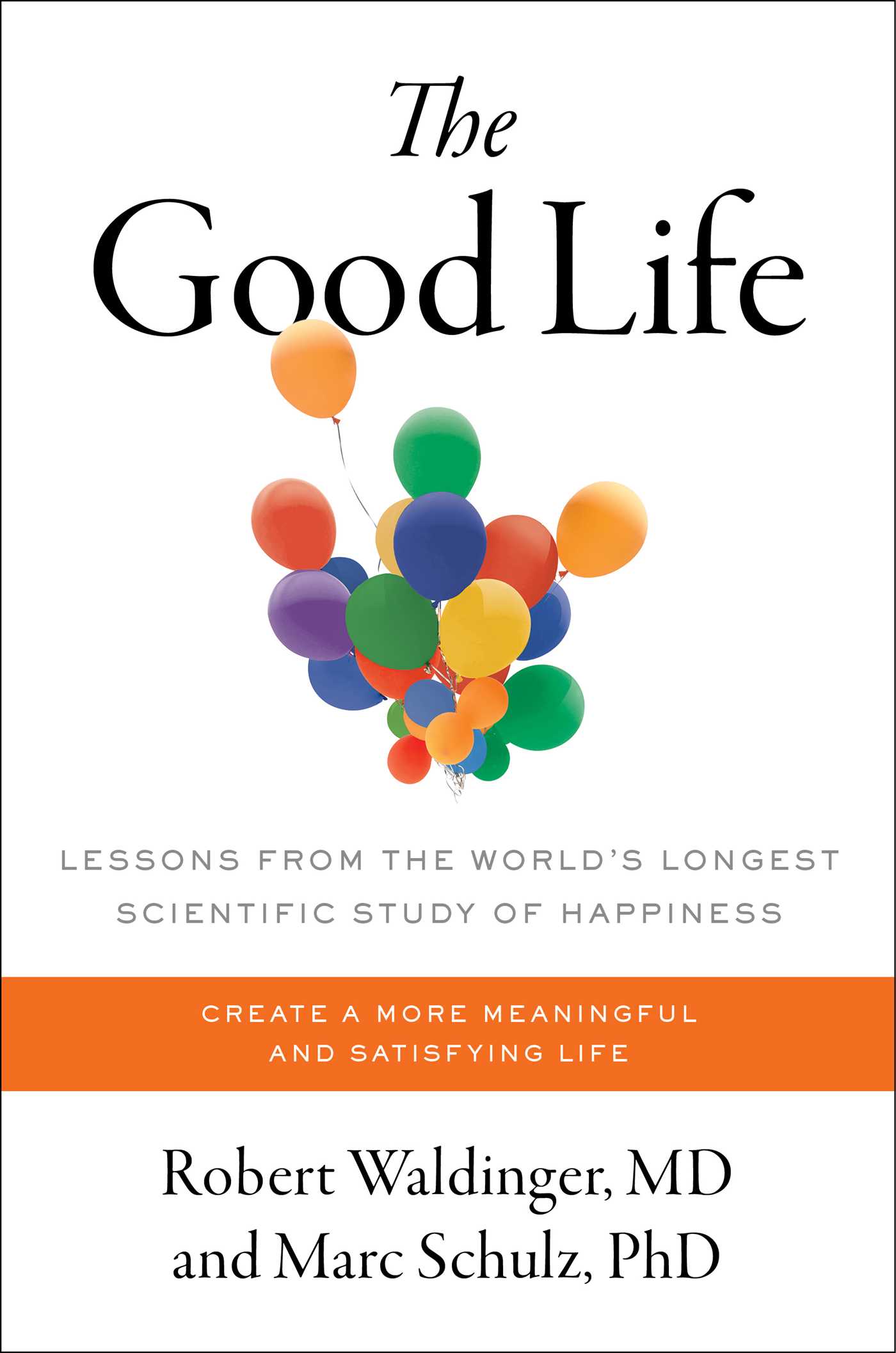
The Good Life: Lessons from the World’s Longest Scientific Study of Happiness – Robert Waldinger, Marc Schulz

What makes for a happy life, a fulfilling life? A good life? In their “captivating” ( The Wall Street Journal) book, the directors of the Harvard Study of Adult Development, the longest scientific study of happiness ever conducted, show that the answer to these questions may be closer than you realize.

What makes a life fulfilling and meaningful? The simple but surprising answer relationships. The stronger our relationships, the more likely we are to live happy, satisfying, and healthier lives. In fact, the Harvard Study of Adult Development reveals that the strength of our connections with others can predict the health of both our bodies and our brains as we go through life.

The invaluable insights in this book emerge from the revealing personal stories of hundreds of participants in the Harvard Study as they were followed year after year for their entire adult lives, and this wisdom was bolstered by research findings from many other studies. Relationships in all their forms—friendships, romantic partnerships, families, coworkers, tennis partners, book club members, Bible study groups—all contribute to a happier, healthier life. And as The Good Life shows us, it’s never too late to strengthen the relationships you already have, and never too late to build new ones. The Good Life provides examples of how to do this.

Dr. Waldinger’s TED Talk about the Harvard Study, “What Makes a Good Life,” has been viewed more than 42 million times and is one of the ten most-watched TED talks ever.

2024 Week 42 Update

I am knee-deep in annual cleaning and prepping for the festival of lights, Diwali. In Singapore, we don’t go as all out as we do in India, but there is still that air of anticipation and excitement for this pan-Indian festival. It doesn’t matter which region you belong to, which language you speak, or even which religion you adhere to, the festival of Diwali or Deepavali as it is sometimes also called, brings out the inner child in you. Whether it is wearing new clothes, eating loads of sweets and savoury foods, meeting family and friends, going to Diwali parties, or bursting firecrackers, everyone is caught up in the festivities. Do you celebrate the festival? Where are you in the planning process?

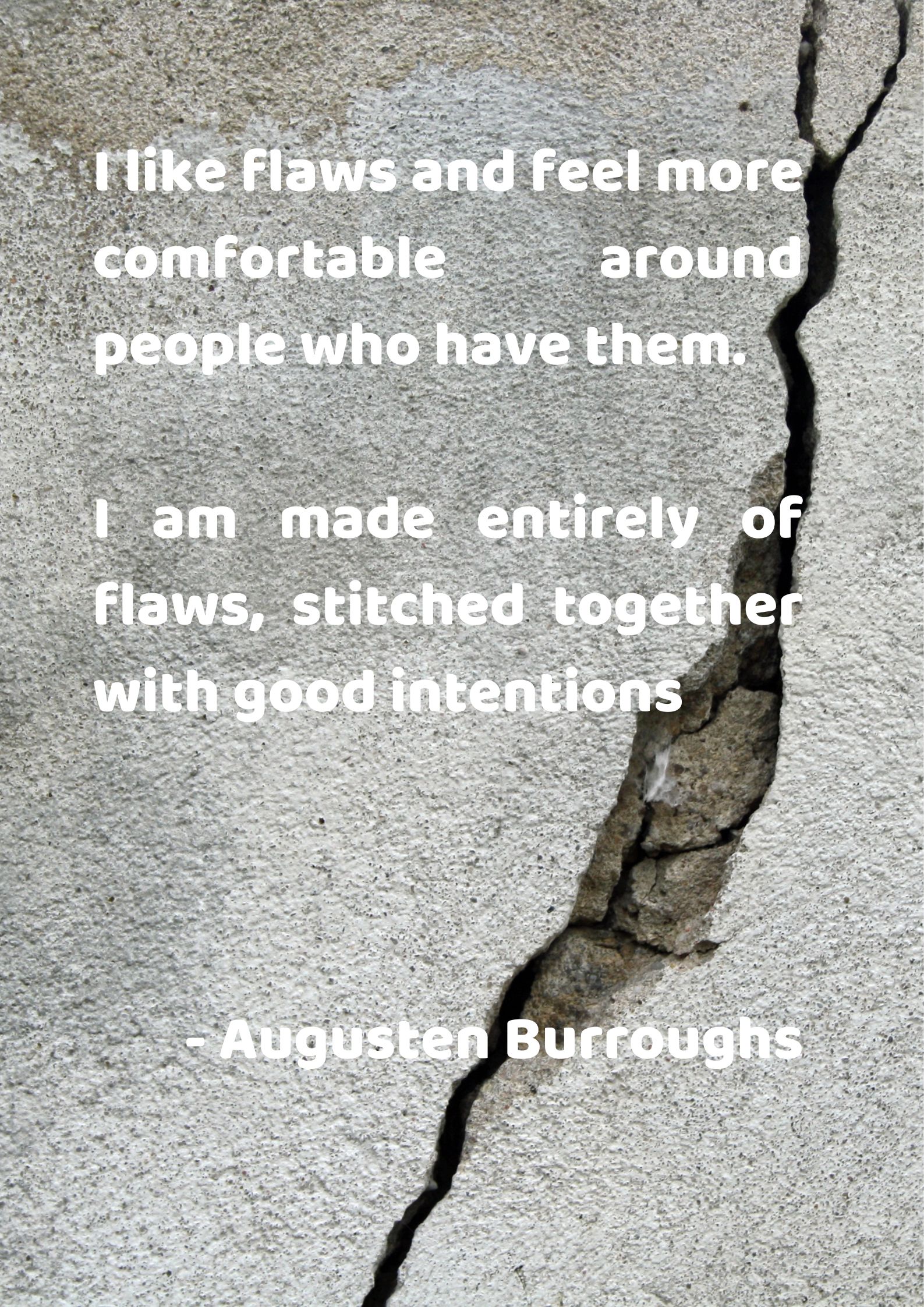
Today’s quote by American author Augusten Burroughs highlights the acceptance of human imperfections. Burroughs is best known for his memoirs, particularly Running with Scissors, which chronicles his unconventional and often difficult upbringing, and his work often explores themes of resilience, imperfection, and finding humour in life’s challenges, which resonates with his own experiences of overcoming adversity. In the quote, Burroughs emphasises that flaws are a natural part of being human. He finds comfort in being around others who are also imperfect, suggesting that vulnerability and authenticity are more relatable than striving for perfection. He acknowledges his own flaws but views them with understanding, knowing that despite his imperfections, he has good intentions. This reflects a healthy self-awareness and acceptance of the complexities of human nature. The quote suggests that true connections with others come from shared imperfections rather than a façade of perfection. Being open about flaws allows for deeper, more meaningful relationships.

Life is going on for all of us. I am still unemployed on a fulltime basis, but am doing some freelance writing, so that is some small consolation. I have been continuously applying for positions where I feel I would add value, but nothing has clicked so far. Please send positive thoughts my way, if you can that something clicks soon. GG is busy with school and the stress and pace has picked up a notch, but she is doing ok, so that’s a blessing. BB is also doing ok at national service, which, frankly speaking, I am surprised because most boys do not seem to enjoy the two years. I guess since he is doing something somewhat relevant to his course of study, he is not finding it as difficult as others. We miss him terribly, of course, but speak with him daily and see him for 48 hours every weekend!

That’s all from me this week. Stay positive and keep smiling!