Travel Bucket List: India – Tripura Part 3

Kailashahar
Tripura’s fourth largest town, Kailashahar is located near the northwest Bangladesh border, about 155 km northeast of Agartala and is surrounded by the Unakoti hills Tripura’s longest river, River Manu flows through the town.

Kailashahar was the ancient capital of the Tripuri kingdom. Its history is associated with Unakoti, noted for its 7th to 9th-century stone and rock-cut images. A Shiva disciple who started the Tripurabda or the Tripuri calendar prayed to Lord Shiva in Chhambulnagar village on the banks of the Mau river. It is speculated that Chhambulnagar, which is mentioned in Rajmala, was situated near Unakoti Hill. The Prince prayed for Mahadeva in Unakoti. Kailashahar may be the legendary Chhambulnagar. Some believers thought that Har or Lord Shiva resides in Kailash. Therefore, the place was known as Kailash Har which was later on transformed into Kailashahar. Tripura King Adi-Dharmapha ruled there in the 7th century.

Today the town is famous for tea estates, with about 16 tea estates in Kailashahar dating back to the 16th century. The tea leaves grown here are entirely organic. Trekking options are also present here. This place is also known for the bamboo work done here, as well as handloom products made here.

Dedicated to Lord Krishna, the Lakhi Narayan Bari temple was installed by Krishnanada Sevayet and has monumental value today. The Chouddo Devotar Mandir or the 14 Deities Temple is dedicated to Ama or Tripuri, the mother of the people of Tripura. It is situated atop a tortoise-shaped hill with Lake Kalyansagar to its eastern side. Along with the several inscriptions of shlokas and ancient paintings found here, a structure looking like a Buddhist Stupa is seen on the roof of this temple. This place is located just 14km from the city of Agartala.

Unakoti
Lying 178 km to the northeast of Agartala, Unakoti is an ancient pilgrimage centre and hill. The Kokborok name of Unakoti is Subrai Khung as claimed by Jamatia Hoda. Unakoti hill means one less a koti or crore or ten million in Hindi and Bengali. The hill hosts an ancient Shaivite place of worship with huge rock reliefs celebrating Lord Shiva. The carvings are located in a beautifully landscaped forest area with green vegetation all around which adds to the beauty of the carvings.

Many of the rock carvings here depict the life of Lord Shiva as well as other deities from the Hindu pantheon. Sculptures of the Nandi Bull, Lord Ram, Lord Ganesha, and Lord Hanuman can also be seen here. The images found at Unakoti are of two types: namely rock-carved figures and stone images. Among the rock-cut carvings, the central Shiva head and gigantic Ganesha figures deserve special mention. The central Shiva head known as Unakotiswara Kal Bhairava is about 30 feet high including an embroidered head-dress which itself is 10 feet high. On each side of the head-dress of the central Shiva, there are two full-size female figures – one of Durga standing on a lion and another female figure on the other side. In addition, three enormous images of Nandi Bull are found half-buried in the ground. There are various other stone as well as rock-cut images at Unakoti.

The carvings are said to date to the 7th and 9th centuries if not earlier. According to Hindu mythology, Lord Shiva once spent a night here en route to Kashi. 99,99,999 gods and goddesses followed him. He had asked his followers to wake up before sunrise and make their way towards Kashi. Unfortunately, none awoke, except Lord Shiva himself. Before he set out for Kashi alone, he put a curse on the others, turning them to stone and that is how the site got its name.

Unakoti also makes a good place for hiking, trekking and other activities given the terrain and the natural offerings of the area. Every year a big fair popularly known as the Ashokastami Mela is held in April and is visited by thousands of pilgrims. Another smaller festival takes place in January.

Udaipur
Known as Tripura’s tourism capital, Udaipur was formerly known as Rangamati and is the third biggest urban area in the state. The town was the capital of the state during the reign of the Manikya Dynasty and is famous for the Tripura Sundari temple also known as Tripureswari temple, one of the 51 Shakti Peethas. Udaipur lies about 51 km south of Agartala. The Gomati river passes through the heart of Udaipur.

Udaipur is dotted with temples the most famous of which is the Tripura Sundari temple, which is one of the 51 Shakti Peethas. The temple was constructed by Maharaja Dhanya Manikya Debbarma in 1501. There is a big lake beside the temple known as Kalyan Sagar. The Bhubaneshwari Temple is another famous temple and the Gunabati Temple, The Jagannath Temple, The Mahadev Temple are other famous temples. Udaipur is also known as the lake city and has many beautiful lakes. Some of them are the Jagannath Dighi, the Mahadev Dighi, the Amar Sagar, the Dhanisagar and Kalyan Sagar. It also has a national library named Nazrul Granthagar, after Kazi Nazrul Islam. The Tepania Eco Park and the Puran Rajbari are other attractions of Udaipur.

The Gunabati Group of Temples was built in the name of Maharani Gunabati, the wife of Maharaja Govinda Manikya, in 1668. The two other temples also bear a contemporary look but their actual history is still to be unveiled. The architecture of these temples resembles other contemporary temples of Tripura except that the topmost parts are without a stupa. The core chambers are marked by the presence of a pitcher circular core chamber and its vestibule which was large with a stupa-like crown is beautifully crafted like a lotus.

Ambassa
Ambassa is a quiet little town popular for its several temples and pleasant surroundings. Initially, a hilly area, which was covered in dense woods, the forests were cleared to create the district only in 1995. Boasting picturesque surroundings and ample natural resources, the town has not only become a popular tourist spot but also has earned fame for being extremely resourceful. Ambassa is inhabited by tribes which mainly live in houses built on platforms. Other residents have mostly migrated from India and Bangladesh. The places of attraction in Ambassa are its several beautiful gardens and the plethora of temples.

A massive juice plant is situated in Nalkata, some 38 km from Ambassa which is a major tourist attraction. Around the spot are also several handicraft shops which one can visit. The Longtharai Mandir is dedicated to Lord Shiva and is believed to be where Lord Shiva rested while he was on his way to Mount Kailash. The temple is situated atop a hill with a picturesque valley below which is how the temple’s name, Longtharai came to be as the word means a deep valley. Beautiful Khumpi flowers bloom here and the peace and calm at the temple is beyond description. Located at a distance of around 35 km from Ambassa, the Kamaleswari Mandir is a temple that is enshrined by Goddess Kali who is also known by the name of Goddess Kamaleswari.

The Sanaiya Waterfalls have a green and soothing natural beauty with panoramic views of the Kamalpur valley from a hilltop adjoining the border with Bangladesh. The village, consisting of the Upper and Lower Sanaiya Reang Para is the habitat of the Reang tribes, which are one of the prominent tribes of Tripura. The waterfall located in a gorge provides a unique tourist spot.

Pilak Archaeological Sites
Located at Jolaibari, about 100 km south of Agartala, Pilak is an archaeological site in South Tripura. Many images and structures, belonging to Buddhist and Hindu sects, have been discovered here since 1927 with the antiquities found here dating to between the 8th and 13th centuries and are on display at the Tripura Government Museum. There runs a hilly rivulet near the place which is known as Pilak Stream and the whole area is beautiful. Thousands of visitors gathered here during the Pilak Festival held in December.

The archaeological site used to be a part of the Samatata kingdom in historical Bengal and is part of a series of archaeological sites that includes Mainamati and Somapura Mahavihara in Bangladesh. The earliest dates of Hindu and Buddhist sculptures, terracotta plaques and seals found at the site are between the 8th and 9th centuries. The artefacts unearthed at the site belong to the Bengal’s Palas and Guptas sculptural and architectural features; also the style of the Arakan in Myanmar and indigenous features are noticeable. The Archaeological Survey of India or ASI carried out excavations at the site in the early 1960s when stupas built with bricks were found. Recent investigations by the ASI unearthed statues of the Buddha and idols of Mahayana Buddhism.

The Pilak archaeological site represents both Hinduism and Buddhism co-existing peacefully. Artefacts of Hinduism are in the form of sculptures and plaques of Hindu gods and a large number of antiquities of the Hinayana, Mahayana, and Vajrayana Buddhism practices. The site is strewn with a large number of terracotta plaques and statues and very large stone sculptures of Avalokiteśvara and Narasimha have been unearthed at the site.

The inscribed terracotta seals found at Pilak depict Buddhist stupas of very small sizes. In Tripura, it is the seal which is worshipped and not the stupa. There is a cone-shaped stone slab with an image of Buddha in an upright posture, dated to the 8th century. A statue of Avalokiteshvara with two arms found at the site is now exhibited in the Tripura Government Museum. A sculpture of the 8th or 9th centuries found here is that of Goddess Marichi, venerated by both the Mahayana and Vajrayana Buddhists. However, it is now an iconic idol which is installed in a Hindu temple known as Vasudev-badi. The idol in an upright posture is called Pratyalida and is mounted on a simple plinth, and is well preserved. A sculpted sandstone statue from the site dated to the 8th – 9th century is of Chunda which is now revered as Raja Rajeshwari in a temple at Muhuripur. The image is carved with 18 arms in a posture called Vajaparyankasana deified over a padmapitha or a lotus pedestal. A new find from the Sundari Tilla is a stupa dated to the 11th century similar to the architectural features of the rule of the Palas of Bengal. A Hindu religious terracotta image made in fired clay found at Pilak is of Trimurti. Another image from the Sagardheba mound is of Surya, the Sun god, riding a chariot driven by seven horses, dated to the 7th to 9th centuries which is deified in a temple in the Rajesvari Ashram in Muhuripur.

Chabimura
Located about 77 km southeast of Agartala and about 30 km east of Udaipur, Chabimura is famous for its panels of rock carvings on the steep mountain wall on the bank of the River Gomati. There are huge images carved of Lord Shiva, Lord Vishnu, Lord Kartika, Goddess Mahisasurmardini Durga and other Gods and Goddesses. These images date back to the 15th and 16th centuries. These beautiful images are curved with a lot of dexterity on the rocky faces of Devtamura which is steep at 90 degrees. The hill ranges are covered with thick jungles and one can reach this place only after trekking through these jungles. The road leading to the river bank where the rock-cut images exist is a treat to the eye. The area is also an eco-tourism centre.

The first panel is just on the other side of the bank measuring 10.3 m in height and is spread over an area of 28 m and is south-facing. The area to the right of the panel extends up to 60 m where some other images existed. At present some of the images are lost by sliding of rock panels. The second image is that of Mahishasurmardini and is about one km away from the 1st panel and is curved at a height of 10 meters from the river bed. The local tribe worshipped it as Chakrak-Ma. This is one of the largest reliefs of the Goddess present in the country which itself makes it unique. The image has a height of 10.70 meters and a width of 7.70 meters. The face is depicted as round with dishevelled hair-and several hair locks. She is ten-armed and is holding a weapon in nine arms except for the lower arm which holds the hair of the demon king. The weapons are mostly indistinct due to erosion and floral growth.

Mahamuni Pagoda, Manubankul
The Mahamuni Pagoda at Manubankul is located about 134 km south of Agartala. The Buddhist temple not only draws devotees from within India, but it also attracts Buddhist pilgrims from countries like Thailand, Sri Lanka, Myanmar, Japan and Bangladesh. The temple was built under the leadership of Mathu Mog and others. The monastery bears the Buddhist idioms of expressions in religious architecture. Annually, during March and April, a week-long festival is held and the festival brings about a lot of happiness and bliss to the people. During the festival Lord Buddha is worshipped in the monastery by both Buddhist and Hindu devotees. The Mahamuni Buddha Temple is open throughout the year and the visiting hours are from 6 am to 7 pm.

Buddhist Stupa, Boxanagar
About 36 km southwest of Agartala lies the town of Boxanagar, where, recently after the denudation of a natural forest area, ruins of a brick-built building emerged on the edge of the border with Bangladesh. The local people initially attributed the remains to an ancient temple of Manasa the Goddess of Snakes. After the Archaeological Survey of India took over the site, excavations began and an idol of Lord Buddha was discovered and it was confirmed that it had been a Buddha temple. Other discoveries here include a massive Buddhist stupa, a Chaityagriha, a monastery and other associated burnt brick structures.

The brick-built stupa exposed through archaeological excavation is of a square plan. The basement of the stupa is arrayed in eight mouldings in diminishing order over which the tapering medhi is set with mud mortar and burnt bricks of different sizes. The ruin of the Chaityagriha has been exposed on the eastern side of the stupa which is rectangular on plan and is aligned in the east-west direction. The superstructure of the Chaityagriha is completely damaged except on the side walls which survived up to 1.60 m. The brick-built monastery have a long corridor between rows of five cells on each side.

The excavation of another mound at Boxanagar has exposed a fully burnt-brick structure with Triratha projections having a square sacred chamber which appears to contain the extant remains of three spokes. These spokes are found radiating out from a semi-circular structure located on the eastern side of the sacred chamber. In front of this structure, there is a rectangular hall enclosed by a wall all around. A brick-rammed floor is provided inside this hall probably for facilitating the congregation of devotees. A wide Pradakshinapatha is also provided around these structures.

2022 Week 46 Update

Today’s quote is attributed to American psychologist, Todd Kashdan. This quote tells us to keep an open mind and question everything. It is only at this point when we are open to new things, that we will find them. When we close our minds, even if something is right under our noses, we will ignore it, because our minds are closed.

This week was pretty much the same as other weeks, and nothing new happened in our household. Yesterday, we met S’ cousins for a family lunch and that was the highlight of the week. It was a fun-filled afternoon of talking, sharing, and having fun.

2022 is winding down and many of us have probably started thinking of our goals and what we want to achieve in 2023. I too have started this thinking and once I have my thoughts in order, I will share.

BB and GG are busy with school with GG busy with projects and also prepping for her university application. BB is busy with his project work and goes to school daily. He works in a lab and seems to be interested in doing this kind of work. I am hoping that he does well this semester so that after his national service, he goes to university, this may be something he could pursue later in life.

That’s all from me this week. Take care and speak soon!

In My Hands Today…

Made to Stick: Why Some Ideas Survive and Others Die – Chip Heath and Dan Heath

Mark Twain once observed, “A lie can get halfway around the world before the truth can even get its boots on.” His observation rings true: Urban legends, conspiracy theories, and bogus news stories circulate effortlessly. Meanwhile, people with important ideas–entrepreneurs, teachers, politicians, and journalists–struggle to make them “stick.”

In Made to Stick, Chip and Dan Heath reveal the anatomy of ideas that stick and explain ways to make ideas stickier, such as applying the human scale principle, using the Velcro Theory of Memory, and creating curiosity gaps. Along the way, we discover that sticky messages of all kinds–from the infamous “kidney theft ring” hoax to a coach’s lessons on sportsmanship to a vision for a new product at Sony–draw their power from the same six traits.

Made to Stick will transform the way you communicate. It’s a fast-paced tour of success stories (and failures): the Nobel Prize-winning scientist who drank a glass of bacteria to prove a point about stomach ulcers; the charities who make use of the Mother Teresa Effect; the elementary-school teacher whose simulation actually prevented racial prejudice.

International Men’s Day

Every year, I write about International Women’s Day as I believe that women do not have the voice they should have in this world and so this is my small effort in spreading the word about women’s voices and the need to be heard and to hear. And so when I realised that I had never written about men’s day, I knew that this year, there had to be a blog post about this day.

International Men’s Day is celebrated annually in November to recognise and celebrate the cultural, political, and socioeconomic achievements of men. It is an occasion to celebrate boys’ and men’s lives, achievements and contributions, in particular for their contributions to the nation, union, society, community, family, marriage, and childcare. The broader and ultimate aim of the event is to promote basic awareness towards men’s issues. The objectives of celebrating an International Men’s Day are set out in All The Six Pillars of International Men’s Day. The day celebrates worldwide the positive value men bring to the world, their families and communities and highlights positive role models and raise awareness of men’s well-being.

Calls for an International Men’s Day have been going on since at least the 1960s. Since this time there have been persistent international calls for the creation of an IMD, calls in the form of rhetorical questions about gender equality. The proposed objectives of International Men’s Day included a focus on men’s and boys’ health, improving gender relations, promoting gender equality, and highlighting positive male role models. Early pioneers of IMD reminded us that the day is not intended to compete against International Woman’s Day, but to highlight men’s experiences.

There were various attempts to start an International Men’s Day that received little response. An event was conceptualised on 7 February 1992 by Thomas Oaster, with International Men’s Day conceived one year earlier on 8 February 1991. The project was re-initialised in 1999 on November in Trinidad and Tobago by Dr Jerome Teelucksingh in 1999 that the International Men’s Day began to get international traction. The new event received overwhelming support in the Caribbean and soon took root on the international scene. Jerome Teelucksingh chose November 19 to honour his father’s birthday and also to celebrate how on that date in 1989 Trinidad and Tobago’s football team had united the country with their endeavours to qualify for the World Cup. Unlike International Women’s Day, observed on March 8, International Men’s Day is not officially recognised by the United Nations, which observes World Toilet Day on November 19. The theme for the 2022 International Men’s Day is Helping Men and Boys.

Although International Men’s and Women’s Day are considered to be gender-focused events, they are not ideological mirror images because they highlight issues that are considered unique to men or women. The history of IMD primarily concerns celebrating issues that are considered unique to the experiences of men and boys, along with an emphasis on positive role models, which is especially deemed necessary in a social context which is often fascinated with images of males behaving badly. In highlighting positive male role models IMD attempts to show that males of all ages respond much more energetically to positive role models than they do to negative stereotyping.

  • The objectives of International Men’s Day are set as six pillars which include:
  • To promote positive male role models – not just movie stars and sportsmen but everyday, working-class men who are living decent, honest lives.
  • To celebrate men’s positive contributions to society, community, family, marriage, child care, and the environment.
  • To focus on men’s health and well-being: social, emotional, physical, and spiritual.
  • To highlight discrimination against men in areas of social services, social attitudes and expectations, and law.
  • To improve gender relations and promote gender equality.
  • To create a safer, better world, where people can be safe and grow to reach their full potential.

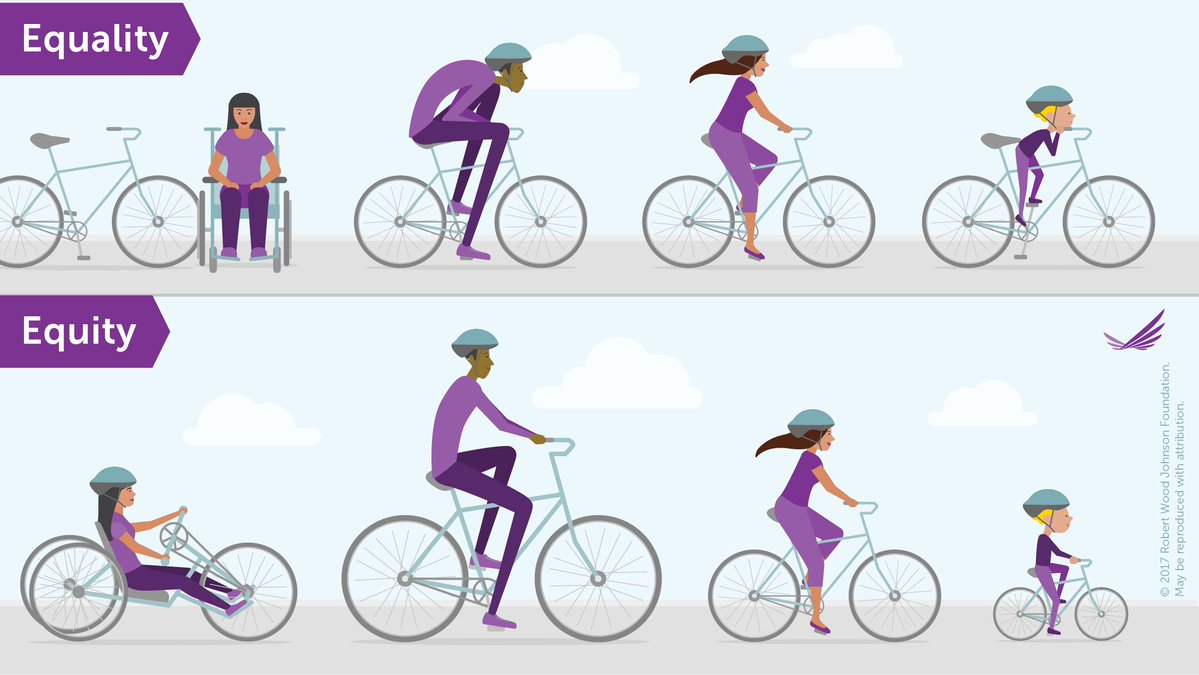
Like many others, I also wondered why we needed a day to celebrate men when they are celebrated and feted the whole year. For many, celebrating the notion of man which has dominated the socio-economic-political narrative for hundreds of years, leaves a sour taste. International Women’s Day or IWD, which has been marked since 1911, is a global day to celebrate women’s emancipation and draw attention to the barriers still faced by women all over the world. However, International Men’s Day is not intended to compete with International Women’s Day and there are some major objectives behind having a day dedicated to men’s issues.

Many men are still trapped by stereotype threat, conforming to society’s idea of what a man should be. It’s part of the reason that according to the World Health Organization, WHO, suicide is the top cause of death among men under the age of 45, boys are struggling academically and prisons are full of men. Men die 6 years younger than women on average, single fathers who want to be more involved in their children’s lives face a range of barriers and men are less likely to go and see a medical practitioner as compared to women.

Arguably it’s harder for men to be vulnerable because that is acting outside their prescribed gender role. If International Women’s Day is to celebrate women’s success in the face of sexism, IMD can celebrate men challenging stereotype threat. Men have parenting rights, do suffer domestic abuse and do have unmet mental health needs. They are just as lonely, just as vulnerable, but far less likely to admit it and seek help. IMD aims to open the conversation, break down toxic forms of masculinity and remind us all that men don’t have to be imprisoned by stereotypes.

International Men’s Day celebrates positive male role models and raises awareness of men’s issues which are often overlooked including mental health, toxic masculinity and the prevalence of male suicide. International Men’s Day coincides with Movember, when men grow their facial hair to promote conversations about men’s mental health, suicide prevention, prostate cancer and testicular cancer.

To all the men reading this post, Happy Men’s Day and to all the women reading this, please celebrate the men in your life tomorrow.

In My Hands Today…

Aimless in Banaras: Wanderings in India’s Holiest City – Bishwanath Ghosh

While cremating his mother at the famed Manikarnika Ghat, Bishwanath Ghosh pretended he was a writer collecting material for a future book rather than a grieving son—his way of dealing with the last rites. A few years later, he returns to Banaras to write that book.

Plunging into its timeless aura, he roams its ghats and galis, sails through the cool breeze of the Ganga, walks through the heat of funeral pyres. One moment he is observing a sadhu show off his penile strength, in the next he is on a boat with a young woman who has been prophesied to marry seven times; one moment he is in conversation with the celebrated writer Kashinath Singh, who is an atheist, and in the next he is having tea with a globe- trotting priest and a god-fearing doctor … Ghosh finds a story in every bend as he engages with quintessential Banarasis—their paan-stuffed mouths spouting expletives and wisdom with equal flair—and discovers why they are among the happiest people on earth.

Then one evening at Manikarnika, as he emerges from a temple, wearing ash from the cremation ground on his forehead, he finds a bit of Banaras in himself.

Aimless in Banaras is not only a sensuous portrait of India’s holiest city but also a meditation on life—and death.