How Money Became Dangerous: The Inside Story of Our Turbulent Relationship with Modern Finance – Christopher Varelas and Dan Stone
From a veteran of the trade, a provocative and entertaining voyage into the turbulent heart of modern money that sheds new light on the rise of our threatening and complicated financial system, how money became our adversary, and why finding a new course is crucial to a healthy society
In the not too distant past, money was simple. You might have had a bank account and a mortgage, perhaps some basic investments. Wall Street didn’t have a reputation for greed and recklessness. That all started to change in the eighties, as our financial systems became increasingly complex, moving beyond the understanding of the general public while impacting our lives in innumerable ways. The financial world began to feel like an enigma—a rogue force working against us, seemingly controlled by no one.
From an industry veteran who’s had firsthand involvement in the events that shaped modern money, How Money Became Dangerous journeys from the crime-ridden LA jewelry district to the cutthroat Salomon Brothers trading floor, from the high-stakes world of investment banking to the center of the technology boom, capturing the key deals, developments, and players that made the financial world what it is today. The book illuminates the dark, hidden forces of Wall Street and how it has dehumanized and left behind everyday Americans. A fresh and enlightening take on how we reached this point, How Money Became Dangerous also makes the case for why Wall Street needs to be saved, if only to save ourselves.
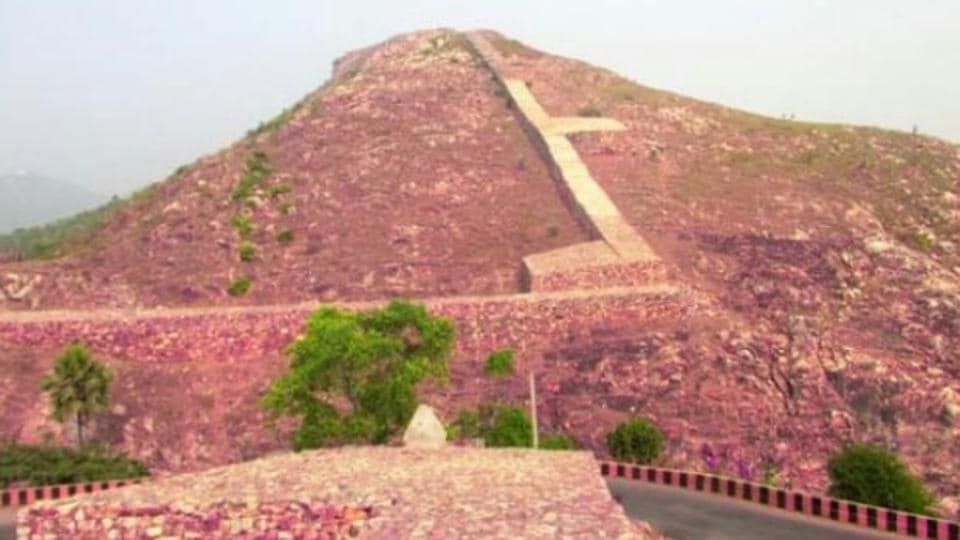
Rajgir Historically known as Girivraj, Rajgir is an ancient city which was the first capital of the kingdom of Magadha, which eventually evolved into the Mauryan Empire. The city finds mention in India’s greatest literary epic, the Mahabharata, through its king Jarasandha. Its date of origin is unknown, although ceramics dating to about 1000 BC have been found in the city. The 2,500-year-old Cyclopean Wall is located in the city. Rajgir was the birthplace of the 20th Jain Tirthankar Munisuvrata and is closely associated with the Arihant Mahavira and Gautama Buddha. Both Mahavira and Buddha taught their beliefs in Rajgir during the 5th and 6th centuries BC, and the Buddha was offered a forest monastery here by King Bimbisara and so Rajgir became one of the Buddha’s most important preaching locations. The ancient Nalanda university was located in the vicinity of Rajgir and it was also through Rajgir that the Mauryan Emperor Ashoka travelled to Bodh Gaya around 250 BC when placing the diamond throne or Vajrasana at the great temple where Buddha attained enlightenment.
The name Rajgir came from Rajagṛiha, meaning the house of the king or royal house, or the word Rajgir might have its origin in its plain literal meaning, royal mountain. It was the ancient capital city of the Magadha kings until the 5th century BC when Udayin who ruled between 460 and 440 BC, the son of Ajatshatru, moved the capital to Pataliputra. In those days, it was called Rajgriha, which translates as the home of royalty.
The city is in a valley surrounded by seven hills, namely Vaibhara, Ratna, Saila, Sona, Udaya, Chhatha, and Vipula. The Panchane river flows through the outskirts of the town and the town has also developed as a health and winter resort due to its warm water ponds. These baths are said to contain some medicinal properties that help in the cure of many skin diseases.
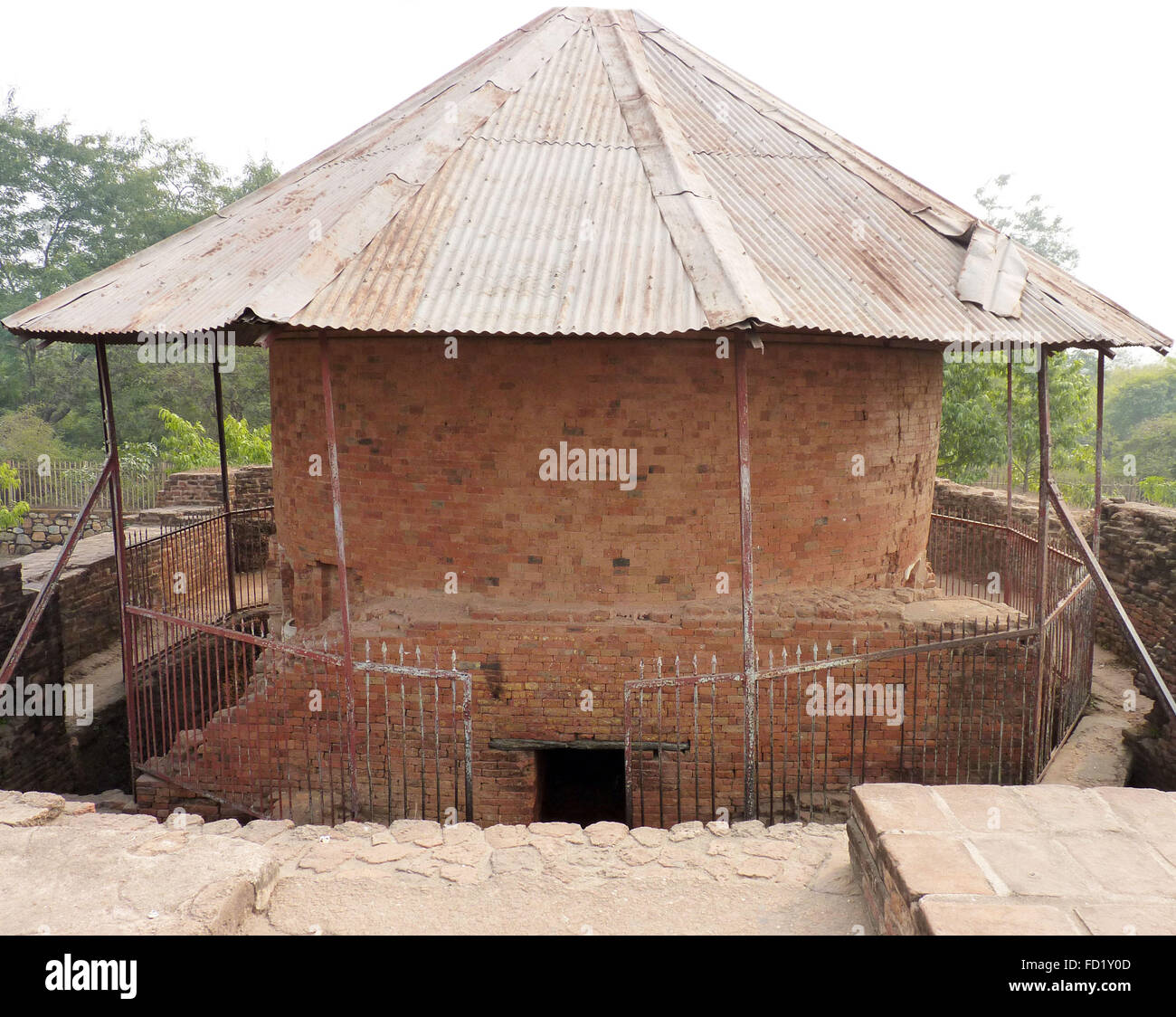
The Maniar Matth was once a monastery of a cult that worshipped snakes. This can be seen by the figures of different snakes that are found here. The structure is in the shape of a stupa and named after a small shrine that was found here on excavation. Buddha photos are seen on the outer walls.
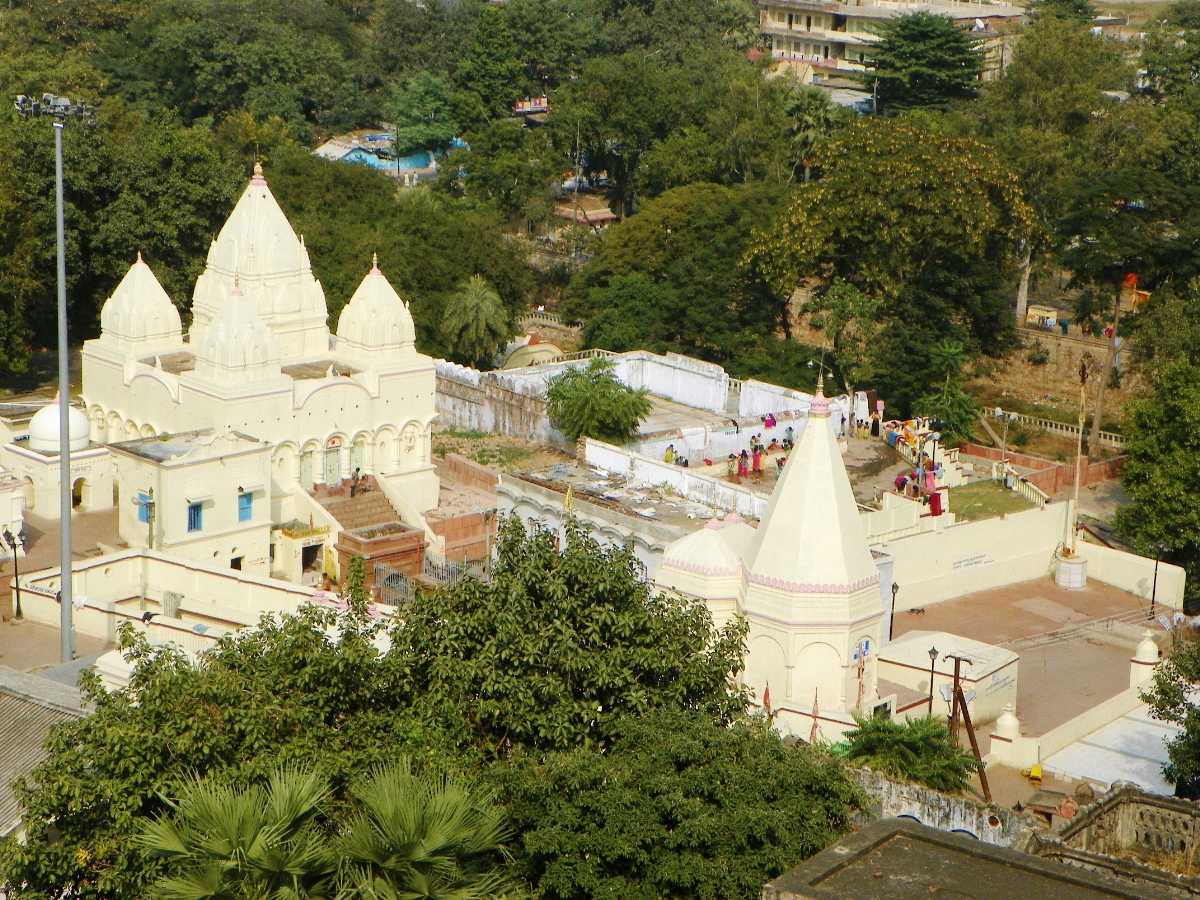
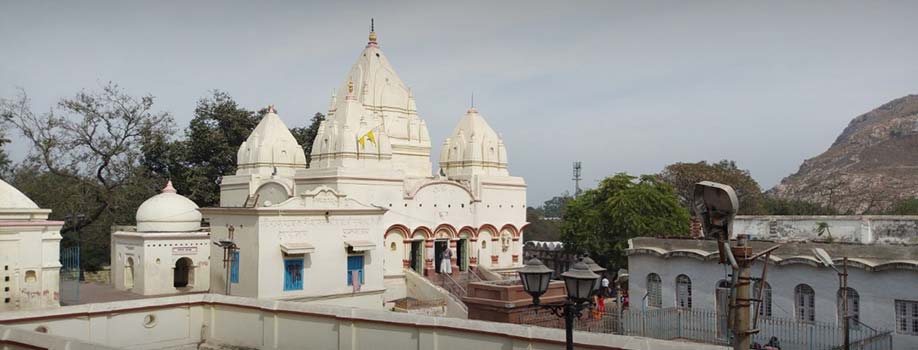
The Lakshmi Narayan Mandir has been built over an ancient Buddhist monastery was once present at Tapodharma. There are a few hot springs found at the place and it is believed that these hot water springs have curative properties. The Brahmakund here is a popular spring and its temperature is generally around 45-degree celsius.
Also known as the Vishwa Shanti Stupa, the Japanese Stupa is a pillar situated atop the Gridhakuta hill at an altitude of 400 m and was built as a symbol of world peace by Japan. This marble pillar also showcases four golden statues of Buddha depicting different stages of his life – birth, enlightenment, preaching and death. This location can be accessed by an aerial ropeway.
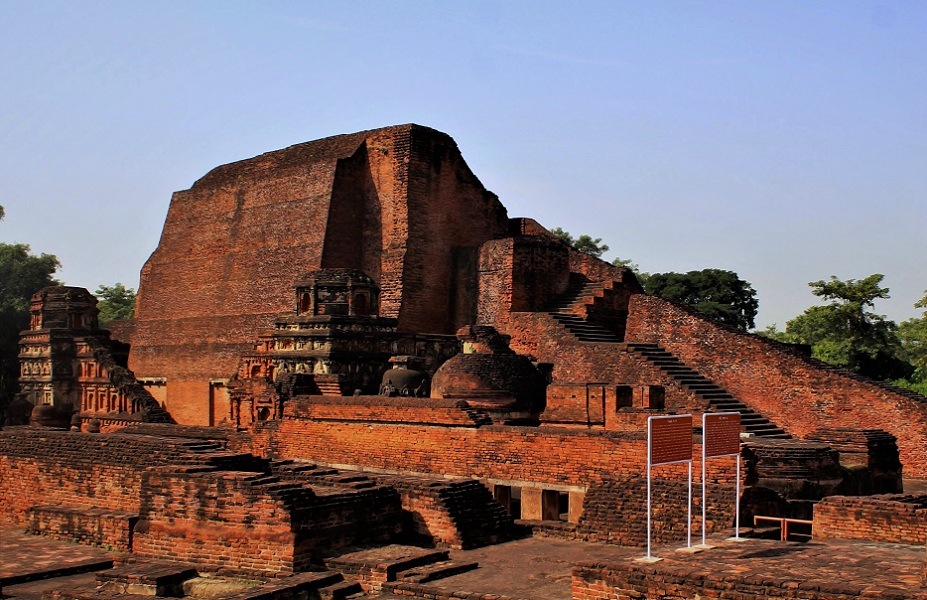
The Stupa of Sariputra contains the bones of one of the two chief disciples of Gautam Buddha. Sariputra became a celebrated Arhat after he was able to attain salvation following Buddha’s footsteps. The stupa is pyramidal and is imposing in size, surrounded by pillared structures, typical to Buddhist structures. Seven layers of construction explain its colossal size, making it a sight to behold.
The Vulture peak, also known as Griddhakuta is an important pilgrimage site for Buddhists. It is one of the three places where Shakyamuni Buddha or the Gautama Buddha lived for many years and preached the Lotus, Heart and Prajnaparamita sutras. Located on a small hill, just outside of Rajgir, Griddhakuta is a popular sightseeing location perched at an altitude of 400 m. This peak is known as the Vulture’s Peak as it is shaped like a vulture and also provides frequent sightings of the bird as well as offering a brilliant 360-degree view of the entire surroundings.
Makhdum Kund is a shrine of Makhdum Shah, a Muslim Sufi saint popular among Muslim devotees for religious and spiritual purposes. It is a Muslim shrine and also a hot spring near the Vipula Hills. According to local legends Makhdum Shah spent twelve years in the jungles of Rajgir during the 13th century. The hottest spring has a temperature of over 450 degrees Celcius and there are separate areas for men and women to bathe, where the temperature is fitting.
The Ghora Katora Lake derives its name from its shape which is that of a horse and the name means horse bowl. The lake is an excellent picnic spot and is known for being one of the cleanest sight-seeing locations in Rajgir. A local favourite, the lake is located at the same place where it is believed that Jarasandha from Mahabharata had his stable.
Believed to be the place where Bimbisara was confined by his son King Ajatshatru, Bimbisara’s Jail offers a brilliant view of the Japanese Stupa situated on the same hill.
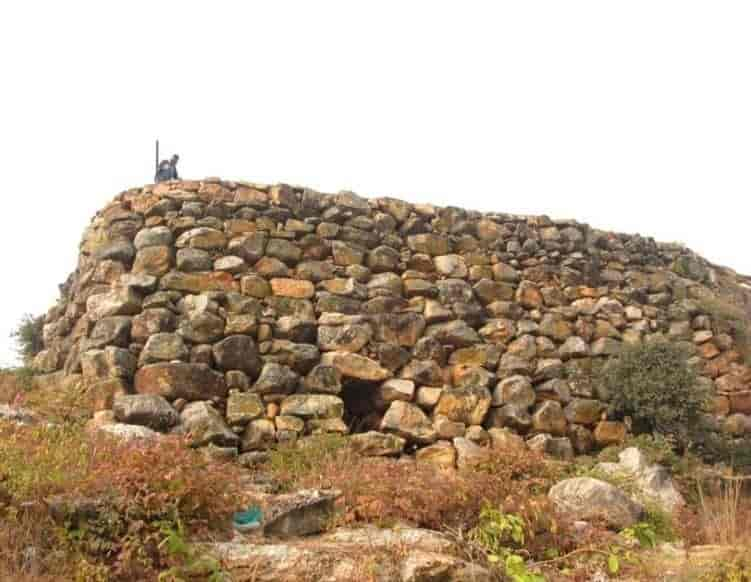
Dating back 2500 years, the Cyclopean Walls are 4 meters wide and encircle the city and are 40 km long. It was built by the Mauryans to fortify the city. Today most of it stands in ruins.
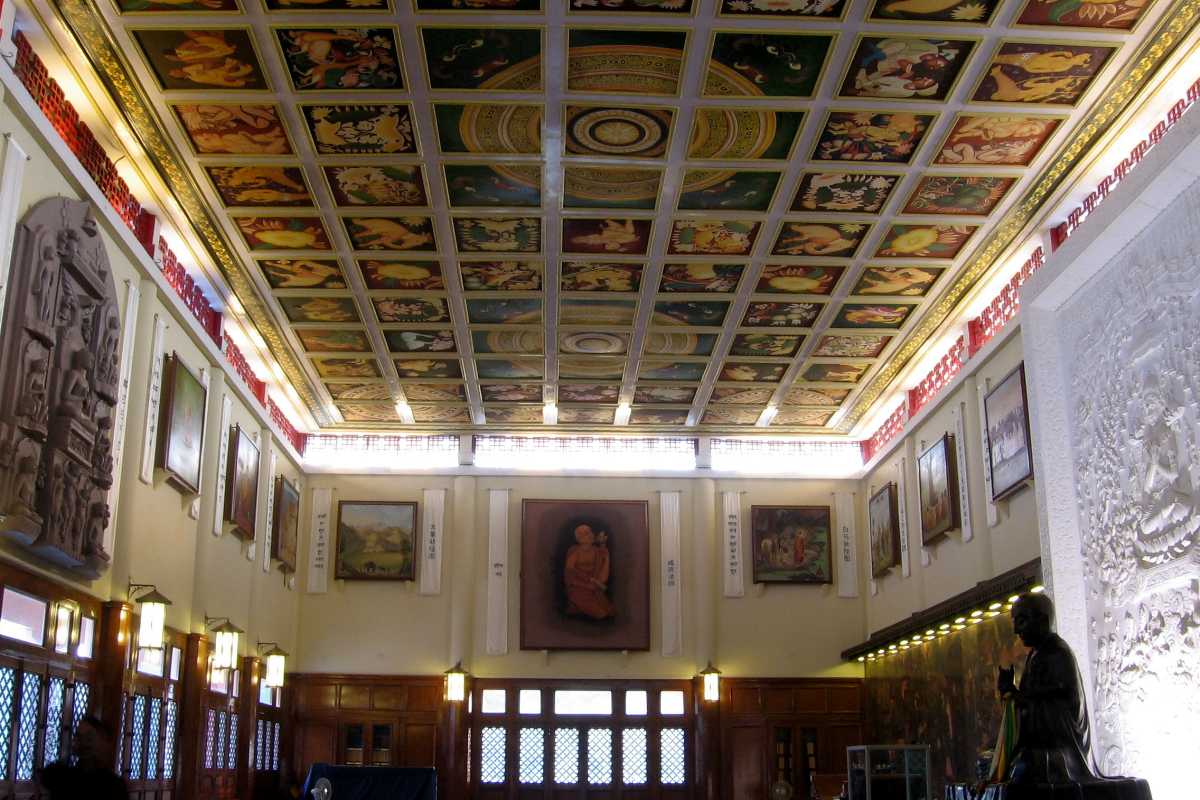
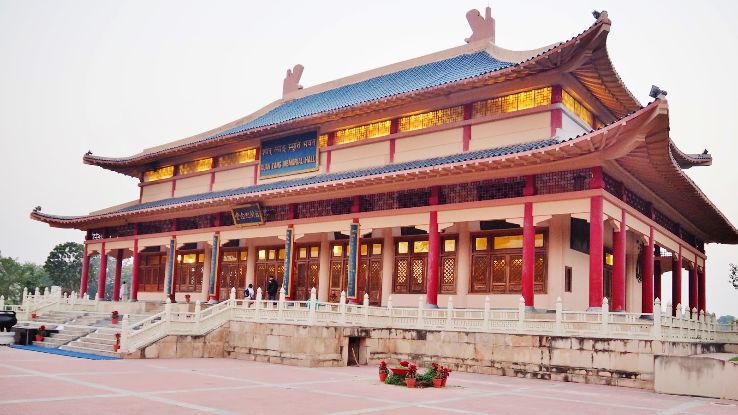
The Hiuen Tsang Memorial Hall was built in memory of the Chinese scholar where he was said to have resided for over 12 years during his time in the country. The memorial hall is home to writings of the scholar about his observations regarding medieval India, which forms the basis of much of the knowledge of that time.
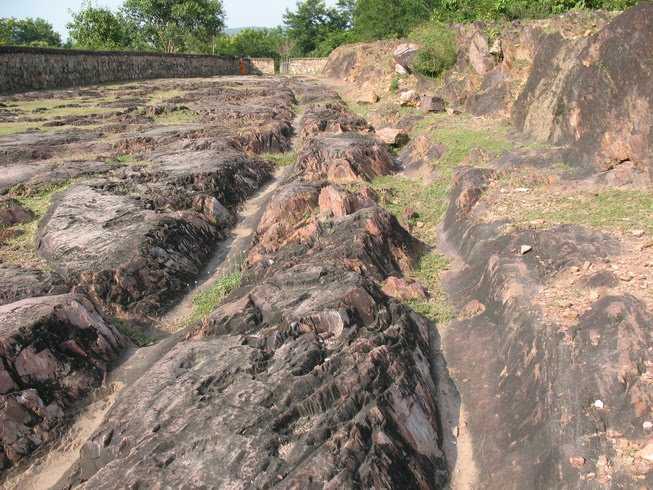
The Chariot Tracks are two thirty-feet long deep marks or parallel furrows cut into the rocks near the Jarasandha monuments and are believed to have been made by Lord Krishna’s chariot when he arrived in Rajgir. Other than the marks, around this area, there is an engraved script which is yet to be decrypted. The script was written at some time between the first and fifth centuries AD, probably in a language unknown today.
Two kilometres away from the jail of Bimbisar, the Sankhalipi Inscriptions are seen to be inscribed on the rocky terrain. Near the inscriptions are the Chariot Tracks. The inscriptions are of great cultural significance, as well as a tourist spot.
Ajatshatru was a king and the ruler of Magadha in the 6th century BC when he built this grand fort known today as Ajatshatru Fort. According to legend, Ajatshatru imprisoned his father Bimbisar in jail inside this fort after he ascended the throne; and Bimbisara, a staunch Buddhist, chose a spot from where he could see Lord Buddha give his sermons every morning. The once sturdy fort is now in ruins.
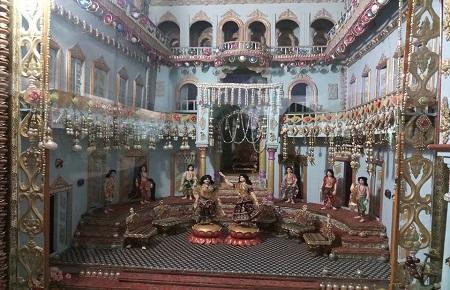
The Veerayatan Museum is a fascinating Jain museum showcasing the history of each of the 24 Jain Tirthankaras. It features ornate dollhouse-like 3-D panel depictions made from wood and metal. Visitors will see a lot of fantastic art on display here by the artist Acharya Shri who resides here and are a must-see.
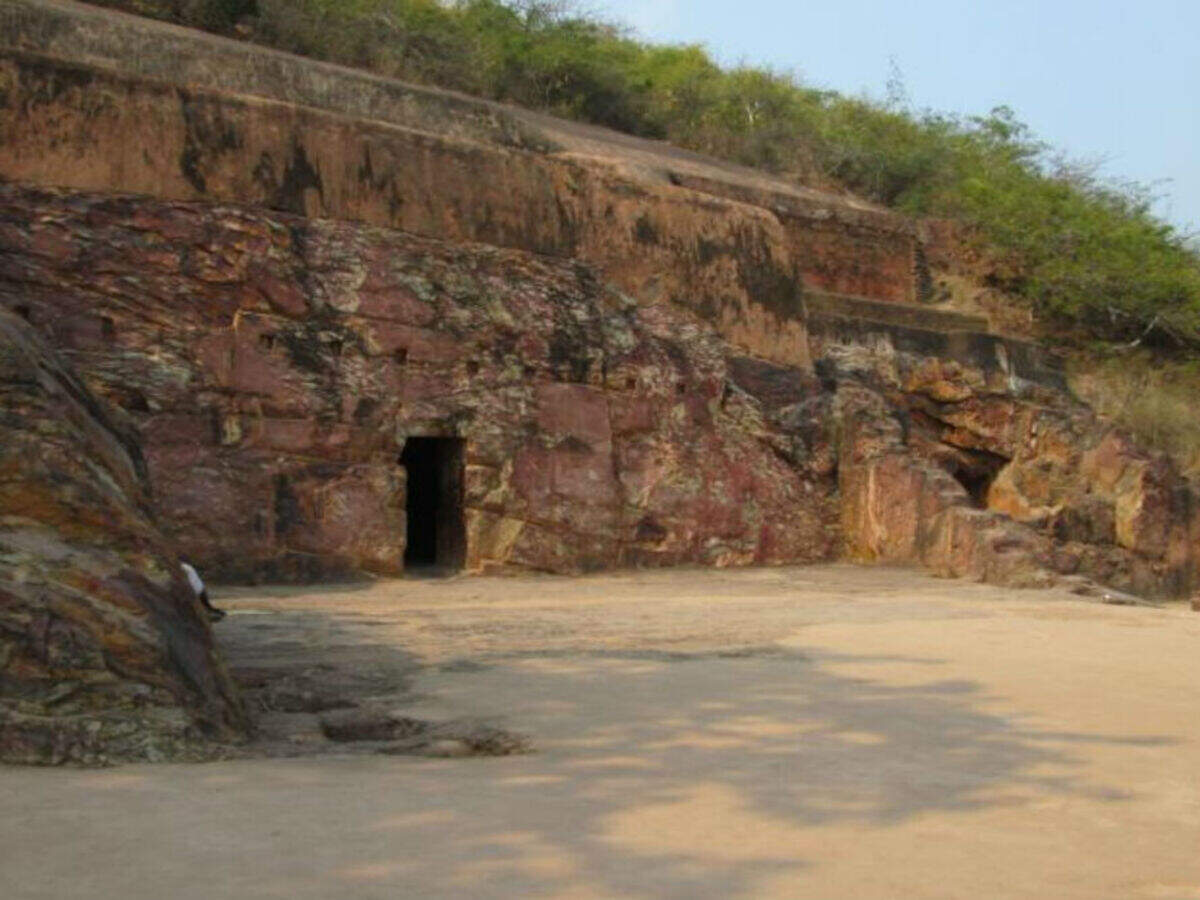
The Sonabhandar caves meaning treasure of gold are situated on the southern slopes of the Vaibhava Hills and feature black stone statues of the first four Jain Tirthankaras and Lord Buddha. The caves are two identical caverns cut out of monolithic rocks and it is believed that the treasury of King Bimbisara is still present here and the key to opening the doorway lies in the inscriptions on the walls. . There are seated and standing figures etched onto the walls of the rocks as well as inscriptions in the ancient text of Sanklipi, which say that the cave was used by Jain saint Muni Vairadevi and other ascetics as a refuge.
Located on the Vaibhava Hills, the Saptaparni Caves was the host to the first Buddhist council, attended by over 500 monks and was led by Maha Kashyapa.
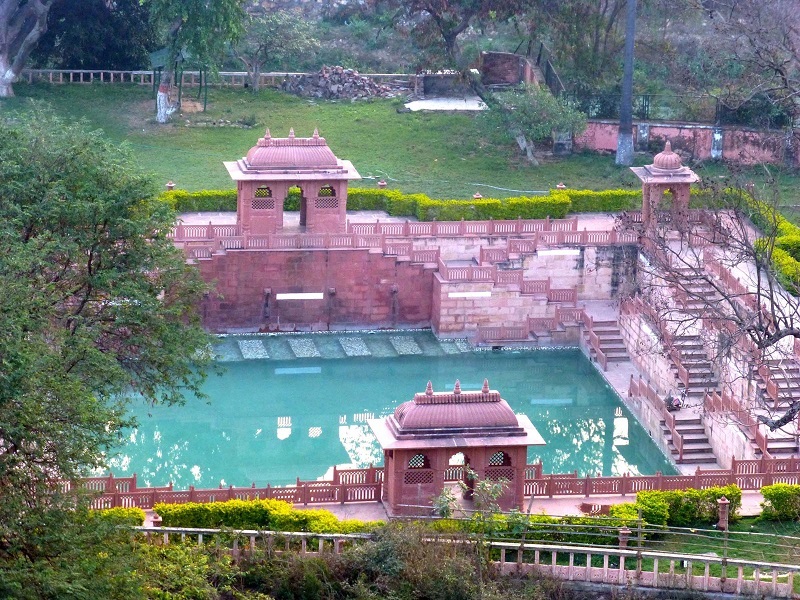
Rajgir city is famous for the seven hot springs or Saptarshi, which come and mingle together into a big pool of warm water, named Brahmakund. This is a holy place for bathing of the Hindus, Buddhists and Jains alike. The water is said to contain medicinal properties and healing features and was visited by the likes of Gautam Buddha and Mahavira.
Jivaka’s Mango Garden is located in the Jivakameavan Gardens. Jivaka was the royal physician of Bimbisara and Ajatashatru and had his dispensary within this garden gifted to him by Bimbisara. Jivika used the plants here to make ayurvedic medicines and cure his patients and was famous for being the one who treated Lord Buddha’s wounds when Buddha came to him for treatment. The garden contains the ruins of an old monastery built by the doctor.
Jarasandha Ka Akhara, located near the Vaibhava Hill, was previously a wrestling arena and place for martial arts training for the armies which stood against Lord Krishna and the Yadava clan for King Jarasandha of Magadha. The great battle between Bheema and Jarasandha took place right here which lasted for a month, according to legend, and in the end, Bheema tore Jarasandha’s body into half to defeat and kill him. Now a deserted ruins with overgrown flora, it is a favourite spot for picnickers.
Jarasandha’s Baithak, located near Vaibhava Hill, is a rectangular stone at the foot which was used when Jarasandha of Mahabharata was the rule of Magadha. Locals believe that the place used to be an outpost of the military and had locations which were used as living quarters for the soldiers. The rock has two parallel cuts on it and it is famous, as the belief is that Lord Krishna made the cuts himself during the many battles between Jarasandha and Yadavas.
Yesthivana area used to be a retreat in the forest, but today is a nature park near the Tapovana and is said to be where Lord Gautam Buddha met the Magadha King, Bimbisar before the latter became a devotee. One of the major sights to see here is the 6 feet tall carved statue of Lord Gautam Buddha and the sapling of the Great Mahabodhi Tree under which Buddha attained enlightenment.
Said to be the oldest ropeway in India, the Rajgir ropeway line is the only ropeway in existence in the state of Bihar. The single person seater rope line leads you to the top of the scenic Ratnagiri Hill which houses the famous Vishwa Shanti Stupa, also known as the Peace Pagoda. The chairlift ropeway rises to a height of over 1000 feet from the ground level and is a thrilling ride to undertake. The area falls under the Pant Wildlife Sanctuary which provides unmatched views of the surrounding forest area. Other places of interest nearby include the Sugarakhata Caves which according to legends, was where the Buddha preached the Lotus Sutra and delivered sermons, the Gridhkut peak which was one of the several sites frequented by Buddha and his disciples for training, retreat and delivering of sermons and is frequently mentioned in ancient Buddhist texts. A small, quiet temple situated on the hilltop nearby has amazing views of the surroundings as well as the Ashoka Stupa. The Ropeway is open between 8 am to 5 pm and adults pay INR 60 while children pay INR 30 to go up.
Sasaram Known as the gateway of Vihar to visit Gaya, Rajgir and Nalanda in ancient times, Sasaram, also sometimes spelt as Sahasram, is a city that the Buddha passed through on the way to be enlightened under the Mahabodhi tree in Gaya.
Modern Sasaram city covers the largest sub-metropolitan area of Bihar and is famous for the many religious and historical spots to visit such as Shershah Suri’s tomb, Rohtasgarh fort, Indrapuri Dam, Shergarh fort, Sacred Tarachandi Shaktipith, Gupta Dham and the Tutla Bhawani temple and is surrounded by the scenic mountains of the Kaimur range as well as many as 200 waterfalls, the most famous ones being Manjharkund, Dhuvan Kund, Sitakund and the Tutla Bhavani waterfalls and rivers like the Sone. During the Vedic age, Sasaram was a part of the ancient Kashi kingdom and its name originated from the word Sahastrarama, meaning a thousand groves. Sasaram was once also named Shah Serai or the Place of King as it is the birthplace of the Afghan king Sher Shah Suri, who ruled over Delhi, much of northern India, what is now Pakistan, and eastern Afghanistan for five years, after defeating the Mughal Emperor Humayun.
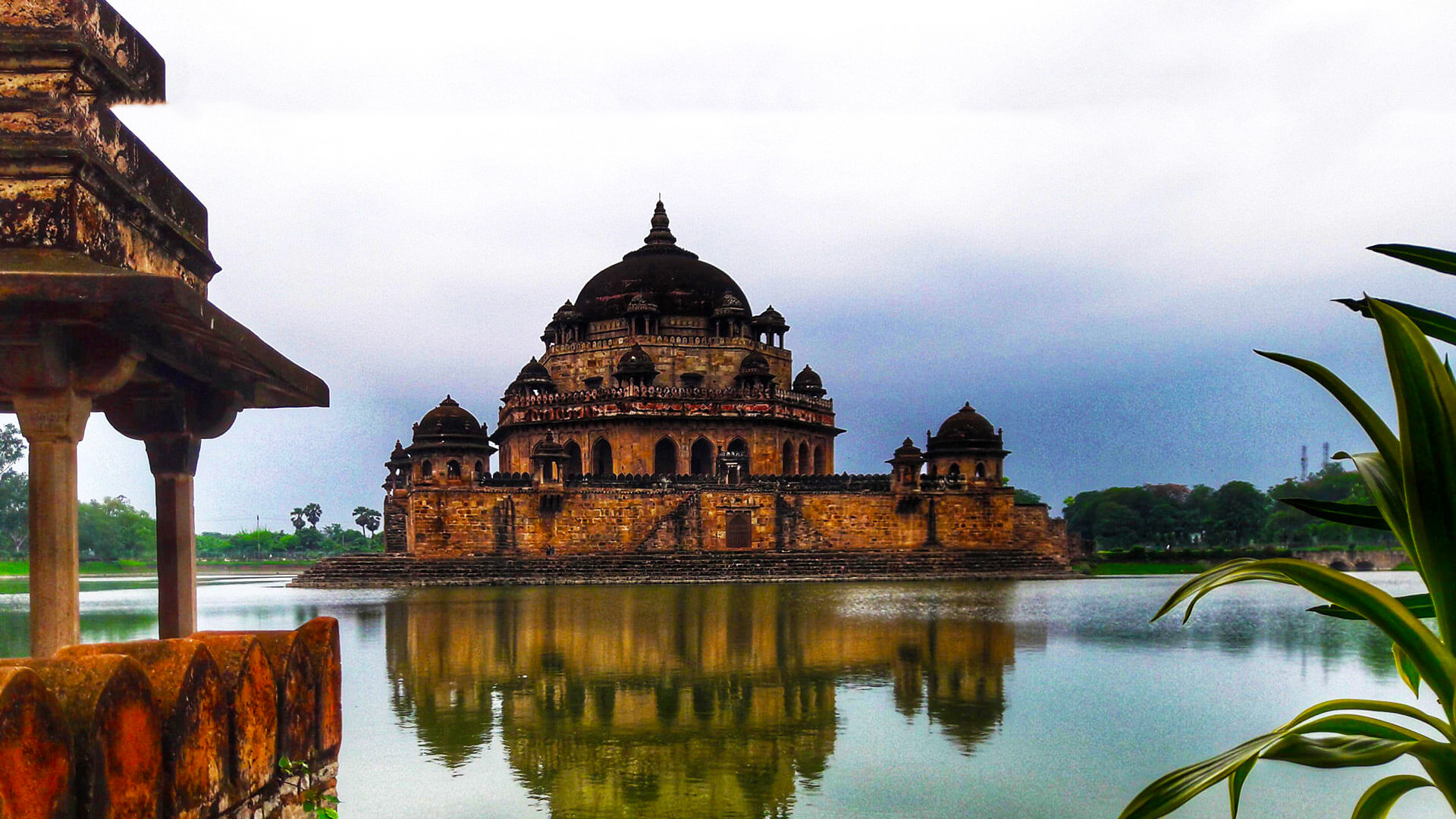
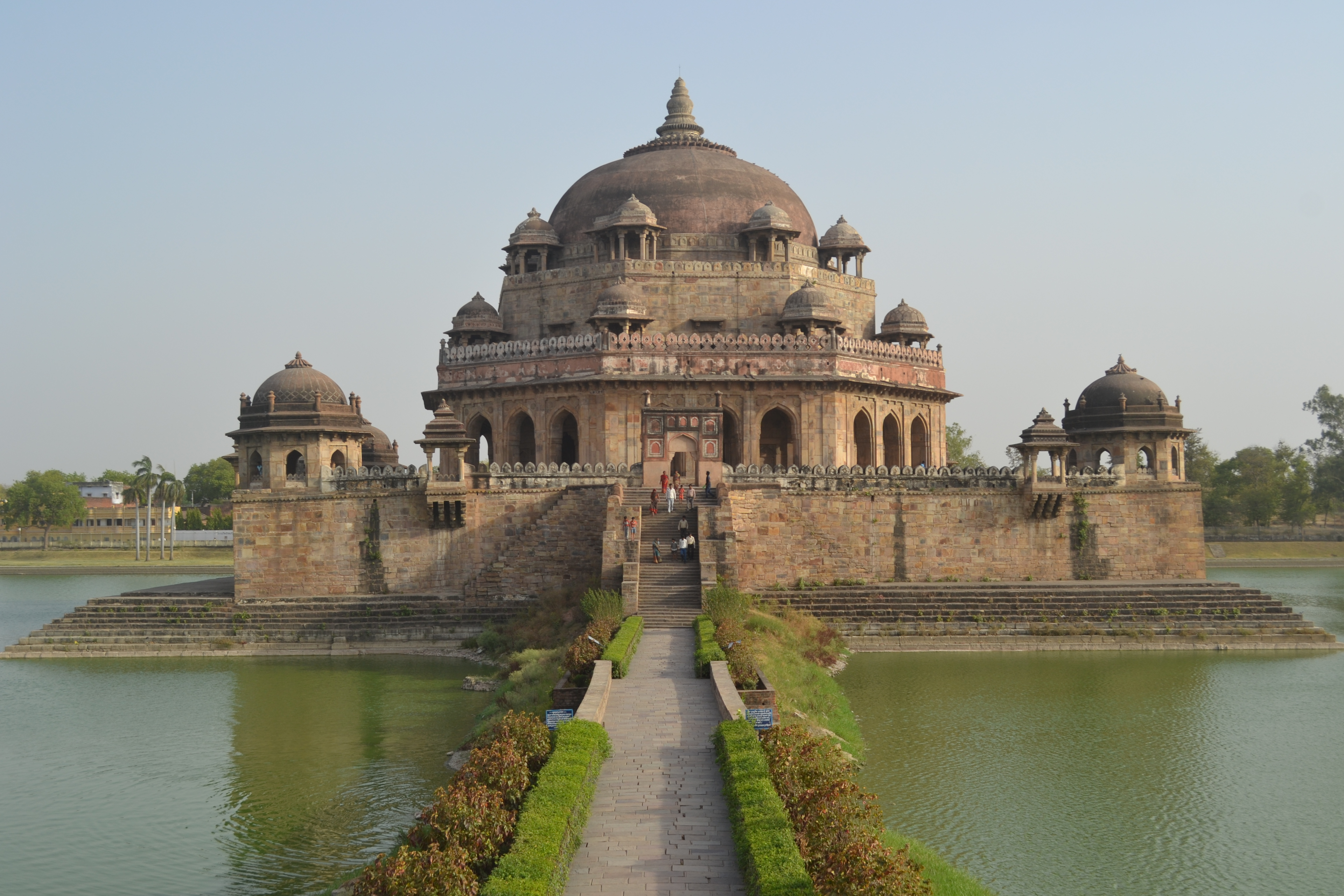
Sher Shah Suri’s 122 feet red sandstone tomb, built in the Indo-Afghan style stands in the middle of an artificial lake in Sasaram. It borrows heavily from the Lodhi style and was once covered in blue and yellow glazed tiles indicating an Iranian influence. The massive free-standing dome also has an aesthetic aspect of the Buddhist stupa style of the Mauryan period. Built between 1540 and 1545, the mausoleum is three storeys high (122 ft.) and stands proudly in the centre of an artificial square lake. For the same reason, it is also locally known as the Second Taj Mahal of India. The tomb of Sher Shah’s father Hasan Khan Suri is also at Sasaram and stands in the middle of a green field at Sherganj, which is known as Sukha Rauza. About a km to the north-west of Sher Shah’s tomb lies the incomplete and dilapidated tomb of his son and successor, Islam Shah Suri. Sasaram also has a Baulia, a pool used by the emperor’s consorts for bathing. The tomb is also a UNESCO World Heritage Site.
The fort of Sher Shah Suri at Rohtasgarh has a history dating back to the 7th century. It was built by Raja Harishchandra, known for his truthfulness in the name of his son Rohitashwa. It houses the Churasan temple, Ganesh temple, Diwan-e Khas, Diwan-e-Aam, and various other structures dating back to different centuries. The fort also served as the headquarters of Raja Man Singh during his reign as the governor of Bihar and Bengal under the regime of Akbar. The Rohtaas fort in Sasaram was also built by Sher Shah Suri, during the period when Humayun was exiled from India.
The temple of goddess Tarachandi, as well as an inscription of Pratap Dhawal on the rock close to the temple of Chandi Devi, lies about 7 km south of the city. The Dhuwan Kund, located about 4.5 km south of the Tarachandi temple and Gupta Dham are also tourist destinations. Sasaram is also also a famous centre of Shiva Aradhana where devotees assemble in large numbers to worship Lord Shiva. Sasaram is also famous for an inscription by Ashoka which is one of the thirteen Minor Rock Edicts, situated in a small cave of Kaimur hill, near Chandan Shaheed.
Kaimur The Mundeshwari Devi Temple on the Mundeshwari Hills in Kaimur is an ancient temple dedicated to worshipping the eternal duo of Lord Shiva and Shakti. It is considered as one of the oldest temples in India as well as the oldest functional Hindu temple in India with its origin put it around 625 CE and is built of stone, with the temple architecture following a rare octagonal plan. The main deities in the temple are Devi Mundeshwari and the four-faced Shiva linga. It also hosts murtis of Ganesha, Surya and Vishnu. It has been an official subject of archaeological study for some time now, with certain inscriptions dating to 635 CE.
After a study of the broken Mundeshwari inscription of Brahmi script and its two parts found in 1891 and 1903 archaeologists thought the temple to be older than the 4th century. However, the recovery of a royal seal of the great Sri Lankan emperor Maharaju Dutthagamani who ruled between 101 and 77 BC from the place in 2003, established that a group of royal pilgrims or monks from Sri Lanka visited the place during their journey to Sarnath from Bodh Gaya through the famous Dakshinapath highway sometime between 101 to 77 BC and lost the seal here. The existence of Naga or serpent on the four-faced shiva lingam, the Naga janeu or sacred thread on the Ganesha idols, not found anywhere in India, and also on broken pieces scattered around the hill indicated that it was constructed by rulers of the Naga dynasty who ruled between 110 BC to 315 AD who used the serpent as their royal insignia. After this, the date of the Mundeshwari inscription was unanimously decided as 108 AD.
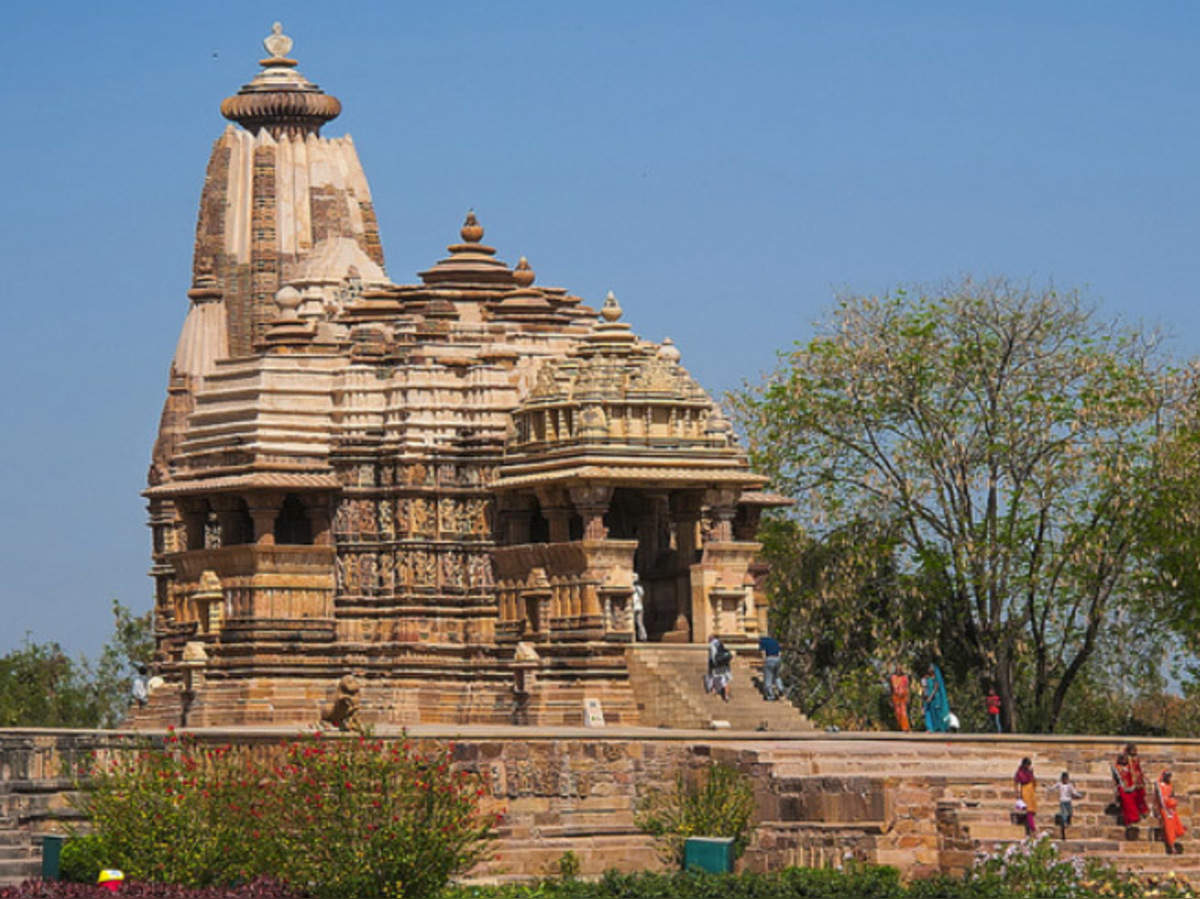
The temple, built of stone, is on an octagonal plan which is rare and is the earliest specimen of the Nagara style of temple architecture in Bihar. There are doors or windows on four sides and small niches for the reception of statues in the remaining four walls. The temple shikhara or tower has been destroyed, however, a roof has been built, as part of renovation work. The interior walls have niches and bold mouldings which are carved with vase and foliage designs. At the entrance to the temple, the door jams are seen with carved images of Dvarapalas, Ganga, Yamuna and many other deities. The main deities in the sanctum sanctorum of the temple are of the Devi Mundeshwari and Chaturmukh or the four-faced Shiva linga with two stone vessels of an unusual design. Even though the Shiva linga is installed in the centre of the sanctum, the main presiding deity, Devi Mundeshwari is deified inside a niche, which is seen with ten hands holding symbols riding a buffalo, attributed to Mahishasuramardini. The temple also has murtis of other popular gods such as Ganesha, Surya and Vishnu. A substantial part of this stone structure has been damaged, and many stone fragments are seen strewn around the temple. However, under the jurisdiction of ASI, it has been the subject of archaeological study for quite some time.
The holy city of Bodh Gaya and the ancient city of Vaishali are are next destinations as we explore Bihar.
No Mercy: A Journey to the Heart of the Congo – Redmond O’Hanlon
Redmond O’Hanlon has journeyed among headhunters in deepest Borneo with the poet James Fenton, and amid the most reticent, imperilled and violent tribe in the Amazon Basin with a night-club manager. This, however, is his boldest journey yet.
Accompanied by Lary Shaffer – an American friend and animal behaviorist, a man of imperfect health and brave decency – he enters the unmapped swamp-forests of the People’s Republic of the Congo, in search of a dinosaur rumored to have survived in a remote prehistoric lake.
The flora and fauna of the Congo are unrivalled, and with matchless passion O’Hanlon describes scores of rare and fascinating animals: eagles and parrots, gorillas and chimpanzees, swamp antelope and forest elephants. But as he was repeatedly warned, the night belongs to Africa, and threats both natural (cobras, crocodiles, lethal insects) and supernatural (from all-powerful sorcerers to Samale, a beast whose three-clawed hands rip you across the back) make this a saga of much fear and trembling. Omni-present too are ecological depredations, political and tribal brutality, terrible illness and unnecessary suffering among the forest pygmies, and an appalling waste of human life throughout this little-explored region.
Hajipur Hajipur is the largest city and headquarters of Vaishali district and is the 10th largest and 17th most populous city in the state as well as the second-fastest developing city, next to Patna. The city is known for cultivating bananas and is only 10 km from the state capital of Patna. The Mahatma Gandhi Setu connects Hajipur to Patna and is separated by the Ganges river. Another bridge known as the Digha Pool connects the river Gandak and Ganga and narrows the distance between Hajipur and Patna. There are plans to expand Patna to Greater Patna, by absorbing Hajipur and other surrounding towns into it.
In ancient times, Hajipur was known as Ukkacala and was the first village to come after crossing the River Ganges at Patna. The village of Hajipur gained significance, as it was the venue of one of the discourses given by Gautam Buddha who preached the Cula Gopalaka Sutta, a middle-length discourse here. The place is also of interest because a portion of Ananda’s ashes, the closest disciple of Buddha who acted as the Buddha’s attendant for twenty years and outlived him by several decades were enshrined in the town. During the British colonial rule, Hajipur was a small town in the Muzaffarpur district situated on the confluence of the Ganges and Gandak. Hajipur figures conspicuously in the history of struggles between Emperor Akbar and the rebellious Afghan Karrani rulers of Bengal. The town finds its origin from the Mahabharata period and is the place where democracy found its origin around 600 BC. The ancient Licchavi republic was established here and is the place where Mahavir took birth and Gautam Buddha delivered his last sermon and announced his Parinirvana.
The Kaun Haara Ghat is one of the main attractions of Hajipur, not so much for its current existence as much as for the ancient legend associated with it. The very famous fight between the Gaja elephant and the Graah crocodile is said to have been fought here, and the place got its name from everyone asking Kaun haara? or who lost the fight? This is one of the most significant events of Hindu mythology, related to the stories of Lord Vishnu. A pictographic depiction of this fight can be seen all over the city of Hajipur, like an emblem of the place. The Sweet Water Well or Mitha Kuwan is famous for its water quality. Because Hajipur situated on the confluence of the Ganges and Gandak, the water of the well is very sweet. From ancient times till today, many many people in Hajipur use the water from this Mitha Kuwan for drinking purposes and also use it for cooking.
Located right in the heart of Hajipur at Gandhi Ashram, the Deep Narayan Singh Museum Is named after the late Chief Minister of Bihar and was established in 1979. Among the collections here are weaponry, coins and artefacts from the Mauryan and Gupta era, both of which prospered around the then seat of power Pataliputra, now Patna. It also has blow-ups of local freedom fighters. It provides an important insight into Bihar’s past and present.
The Ramchaura Mandir is a Hindu temple dedicated to Lord Rama located at Rambhadra near Helabazar. Folklore says that the temple has stood here since the days of the Ramayana and Lord Rama himself blessed the place with his presence on his way to Janakpur, where his footprints are worshipped by his devotees. Ram Navami is a huge and important festival here and it is celebrated with lots of enthusiasm with a small fair also organised on the eve of the festival. Archaeological objects excavated from Ramchaura are kept at the Patna Museum.
The Bateshwar Nath Temple is the oldest in Bihar as it goes back to the Mughal era, or so says the myth. The local legend goes that the temple is a self-made and established one and it appeared magically under a thousand-year-old Banyan tree. Because of such an interesting story about its past, the local people have a lot of respect for this temple. It is, however, a quiet and spiritual place in the middle of the green stretches of pastures and will appeal to those who love to travel in the more uncommon, quaint sites. The temple has a tradition of celebrating the Vasant Panchami festival every year in February/March and a small fair is organised on the eve of Maha Shivratri for a month.
Hajipur is one of the 84 Baithaks in India. The Krishna Baithakji temple, like all other ones, is dedicated to Shri Mahaprabhuji, also known as Vallabhacharya, the founder of the Pushtimarg sect of Vaishnavism, who toured the country barefoot thrice to spread his knowledge, conduct Krishna-related seminars and discuss his path with other religious leaders. The Baithaks are the shrines which the followers of this sect visit and pay their respect. It is a spiritual and peaceful establishment to visit and take in the essence of the faith.
Located in the west of Hajipur, the Nepali Mandir is a pagoda-style temple dedicated to Lord Shiva. Unlike the other Shaivite temples which are made of stones, this one is made of finely carved wood and resembles the architectural style of the Himalayan shrines. Hence it was given the name Nepali. It is a wonderful piece of structure to look at, and the confluence of traditional Hindu style and the touch of the northern mountains is worth experiencing.
The Pataleshwar Mandir, dedicated to Lord Shiva, is said to have been in existence since ancient times and Lord Shiva is believed to be enshrined here in the form of Lingam according to local folklore.
The Jami Masjid is one of the state’s oldest mosques constructed in 1587 during the Mugal rule by Makhsus Shah the brother of Said Khan, who was the governor of Bihar Sharif according to the Akbarnamah. This remarkable monument is a spectacular example of the Indo-Persian architectural style. Measuring 84.5 feet in height and 33.5 feet in width, the mosque is crowned with three domes, the central dome being larger than the others. According to some historians, Haji Iliyas was the founder of the mosque.
Nalanda An ancient Mahavihara and a revered Buddhist monastery which also served as a renowned centre of learning, in the ancient kingdom of Magadha, Nalanda was a university town which rose to legendary status due to its contribution to the emergence of India as a great power around the fourth century. Located about 95 km southeast of Patna near the city of Bihar Sharif, and was one of the greatest centres of learning in the world from the 5th to the 11th centuries and today, it is a UNESCO World Heritage Site.
Nalanda was initially a prosperous village by a major trade route that ran through the nearby city of Rajagriha, which is modern Rajgir which was the capital of Magadha. It is said that the Jain Tirthankara, Mahavira, spent 14 rainy seasons at Nalanda. Gautama Buddha too is said to have delivered lectures in a nearby mango grove named Pavarika and one of his two chief disciples, Shariputra, was born in the area and later attained nirvana there. This traditional association with Mahavira and Buddha tenuously dates the existence of the village to at least the 5th or 6th century BC.
At its peak, the school attracted scholars and students from near and far, with some travelling from Tibet, China, Korea, and Central Asia. The highly formalised methods of Buddhist studies helped the establishment of large teaching institutions such as Taxila, Nalanda, and Vikramashila, which are often characterised as India’s early universities. Archaeological evidence also notes contact with the Shailendra dynasty of Indonesia, one of whose kings built a monastery in the complex. Nalanda flourished under the patronage of the Gupta Empire in the 5th and 6th centuries, and later under Harsha, the emperor of Kannauj. The liberal cultural traditions inherited from the Gupta age resulted in a period of growth and prosperity until the 9th century. The subsequent centuries were a time of gradual decline, a period during which the tantric developments of Buddhism became most pronounced in eastern India under the Pala Empire. Much of the current knowledge of Nalanda comes from the writings of pilgrim monks from Asia, such as Xuanzang and Yijing, who travelled to the Mahavihara in the 7th century. All students at Nalanda studied Mahayana, as well as the texts of the eighteen Hinayana sects of Buddhism. Their curriculum also included other subjects, such as the Vedas, logic, Sanskrit grammar, medicine, and Samkhya.
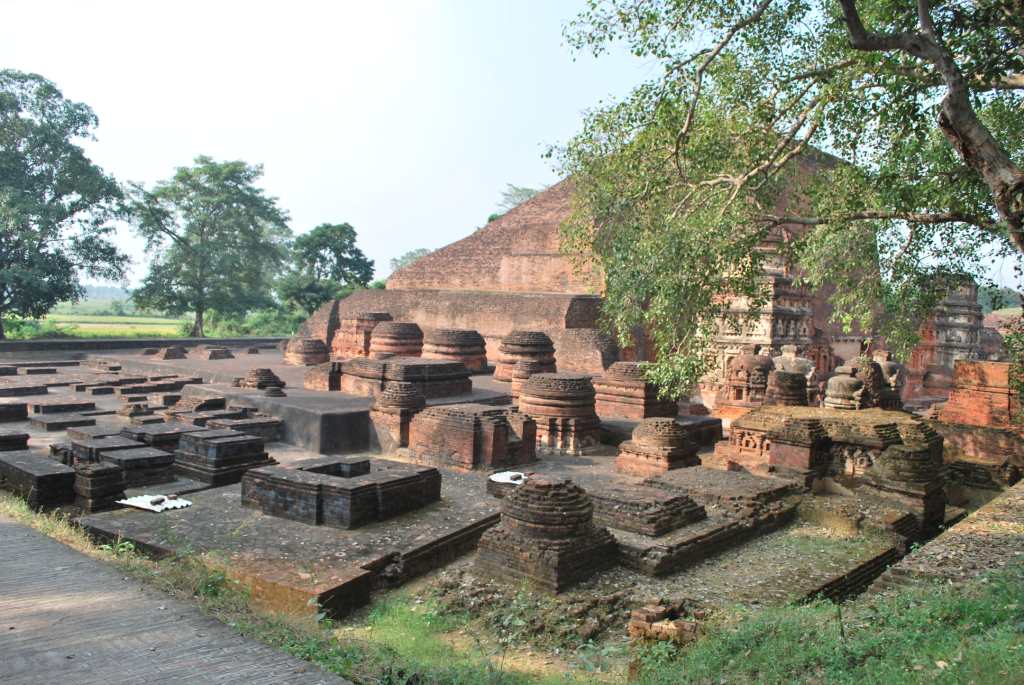
Nalanda was destroyed thrice but rebuilt only twice. It was ransacked and destroyed by an army of the Mamluk Dynasty of the Delhi Sultanate under Bakhtiyar Khalji in 1200. While it is said the Mahavihara continued to function in a makeshift fashion after this attack, it was eventually abandoned altogether and forgotten until the 19th century, when the site was surveyed and preliminary excavations were conducted by the Archaeological Survey of India. Systematic excavations commenced in 1915, which unearthed eleven monasteries and six brick temples neatly arranged on grounds 12 hectares or 30 acres in area. A trove of sculptures, coins, seals, and inscriptions have also been discovered in the ruins, many of which are on display in the Nalanda Archaeological Museum, located nearby. Today, Nalanda is a notable tourist destination and part of the Buddhist tourism circuit. On 25 November 2010, the Indian government, through an Act of Parliament, resurrected the ancient university through the Nalanda University Bill, and subsequently, a new Nalanda University was established which has been designated as an International University of National Importance.
Several theories exist about the etymology of the name, Nalanda. According to the Tang Dynasty Chinese pilgrim, Xuanzang, it comes from Na al, lllam da meaning no end in gifts or charity without intermission. Yijing, another Chinese traveller, however, derives it from Naga Nanda referring to the name of a snake in the local tank, nanda being the name of the snake and naga being a snake. Hiranand Sastri, an archaeologist who headed the excavation of the ruins, attributes the name to the abundance of nalas or lotus-stalks in the area and believes that Nalanda would then represent the giver of lotus-stalks.
A UNESCO World Heritage Site, Nalanda University is considered as one of the oldest universities in the world and was known as Nalanda Mahavira, its origins dating back to the 3rd century. Mahavira is a Sanskrit term for a great Vihara or Buddhist monastery. Located about 85 km away from Patna, it finds references in the oldest epics of India as well as in the travels of Hiuen Tsang. The Gupta kings built various monasteries in old Kusan style of architecture. Emperor Ashoka and Emperor Harshavandhana were also patrons of this university who built few temples, viharas, and monasteries for the university. With reference found in the Tibetan and Chinese scriptures, the university was a centre of advanced Vedic learnings until it was ransacked by Bakhtiyar Khilji in the 12th century. Lord Buddha visited Nalanda several times during his lifetime, but the university became popular in the later years when Hieun Tsang stayed here in the 7th century AD and he left a detailed description of the education system and monastic life here. The site was recovered by Archeological Survey of India in 1915. It’s said that the library of the university had so many books and manuscripts that it kept on burning for six months after the entire structure went up in flames.
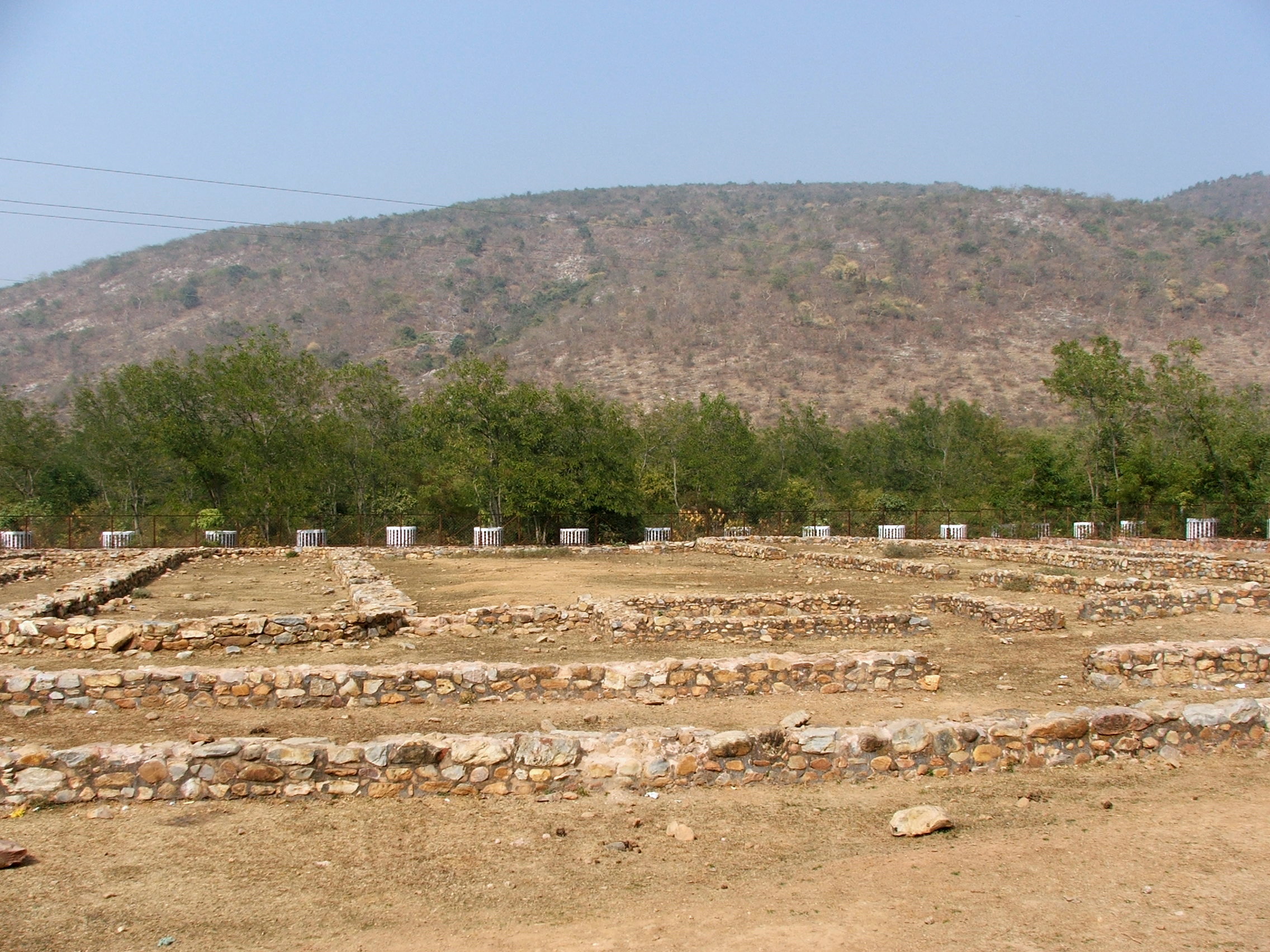
The total area of excavation of the Nalanda University ruins archaeological complex is about 14 hectares. The edifices are of red bricks and the gardens are extremely beautiful. The buildings are divided by a central walkway. The monasteries are situated on the east of the walkway and the temples are situated in the west. Six temples built of brick and eleven monasteries orderly laid out were revealed during the excavations. Evidence of structures built over older ones is in plenty and many of these bore signs of fire damage. The university site is open from 9 am to 5 pm and visitors will need between one to two hours to tour the place. Entry fees for Indians, SAARC and BIMSTEC passport holders is INR 15 while others pay INR 200. Children below the age of 15 enter free.
Housing the ancient relics of Nalanda University, the Nalanda Archaeological Museum offers a glance into the culture of ancient Nalanda. Pala Art is displayed through the assorted artefacts maintained here. The statues here are mainly engraved on basalt stone, but others made out of stucco, bronze, stone and terracotta are also present. The Archaeological Survey of India maintains the museum which opened in 1917 and exhibits the antiquities that have been unearthed at Nalanda as well as from nearby Rajgir. Out of 13,463 items recovered, only 349 are on display in four galleries.
Another museum adjoining the excavated site is the privately run Nalanda Multimedia Museum which showcases the history of Nalanda through 3-D animation and other multimedia presentations.
The Hiuen Tsang Memorial Hall was built as a dedication to the Chinese scholar Hiuen Tsang and is a distinct reminder of the architectural style of the Nalanda University. Visitors will find multiple writings of Tsang preserved here. The Xuanzang Memorial Hall is an Indo-Chinese undertaking to honour the famed Buddhist monk and traveller. A relic, comprising a skull bone of the Chinese monk, is on display in the memorial hall.
Present amongst the ruins of the Nalanda University, the Great Stupa was built in the 3rd century by Emperor Ashoka in the honour of Sariputra. After the seven accretions to it, this structure is shaped like a pyramid and is flanked by flights of steps and splendid sculptures as well.
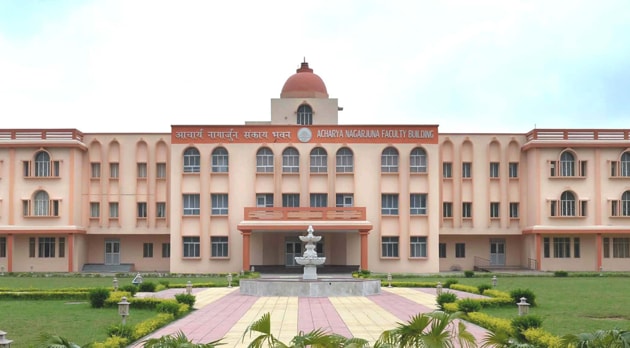
The Nav Nalanda Mahavihara was established by the Bihar government in 1951 to showcase the state’s ancient tradition to the modern world. It was built as a modern centre of Buddhism and today helps in educating people about the ancient Pali script and the Buddhist religion and is a great starting place for those interested in about the roots and history of the religion.
The Surya Mandir is a temple dedicated to the Sun God and is located near Nalanda University. Various Buddhist, as well as Hindu deities, are enshrined in this temple with the most attractive one being the five feet high idol of Goddess Parvati. Chatth Puja is held here twice a year in the Hindu months of Vaishakha and Kartika and is celebrated with great fervour.
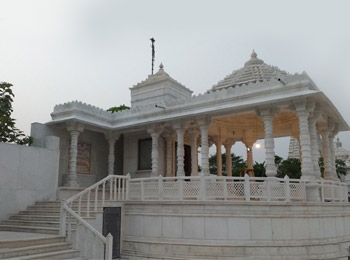
Kundalpur, located just outside Nalanda, is believed to be the birthplace of Lord Mahavira, the 24th and last of the Jain Tirthankaras. It is also the place of birth of Gautam Swamiji who was the first disciple of Lord Mahavira. A grand temple with beautiful spires has been built here to mark the birthplace with a four and a half feet tall idol of Bhagwan Mahavira Padmasana. Within the complex, there is a serene Trikal Chaubeesi Jinmandir where there are 72 idols of Tirthankaras, representing 24 each of the past, present and the future age.
A holy city for the adherents of the Jain faith, Pawapuri is located about 12 km east of Nalanda. A long time ago, Pawapuri was the twin capital of Mall Mahajanpad. Mahajanpad later became a part of the kingdom of Magadha and Ajatshatru was a devotee of Lord Mahavira. During the rule of Ajatshatru, the king of Pawapuri was known as Hastipal. When in Pawapuri, Mahavira stayed in the Rajikshala of the king. It is considered as a sacred place because Lord Mahavira was buried here in 500 BC. Pawapuri has also been given the name Apapuri which means sinless town because Lord Mahavira was cremated here. After the cremation, there was a rush while collecting the ashes which led to the removal of a layer of the soil thereby resulting in the formation of a pond. This pond was later converted into a lotus pond, and a marble temple named Jalmandir was built in the centre of the pond. Some festivals celebrated here include the Rajgir Dance Festival and Chhath Puja. Other places of interest in Pawapuri include the Gaon Mandir which is the temple of the village and the place where Lord Mahavira took his last breath and the Samosaran temple which is the place where Lord Mahavira used to deliver sermons to his disciples, Gunayaji village which is located 20 km away from Pawapuri and is the place where the Shri Gunayaji Teerth Temple is situated.
In the next part, we shall see what the ancient city of Rajgir, the gateway of Vihar that is Sasaram and Kaimur have to offer its visitors
And just like that, with the click of a finger, today is the last day of February.
I am still going strong with my resolutions and I am positively cautious that this will be sustained on an on-going basis for the rest of my life. My average steps per day were slightly less this month as compared to January, but I still managed to hit my target number each day. I have walked up to the norder between the states of Selangor and Perak. This means, from my house in the western part of Singapore, I have crossed the three states of Johor, Malacca and Negri Sembilan plus the Federal Territory of Kuala Lumpur and almost traversed the state of Selangor with the state of Perak just a few kilometers away.
I am reading enough, but not enough for my standards yet. I do try to read for 15-20 minutes daily, but sometimes social media and other distractions get in the way. In the past two months, I have read 14 books and am ahead on my yearly target for books to read.
And on that note, today’s positivity quote is something I am going to abide by. Nobody is ever too old to set another goal or dream a new dream.
We are still seeing COVID-19 cases across the world, but there seems to be trend of the number of cases dropping in many countries. Singapore routinely sees single to low double digit cases almost everyday with most of them being cases coming into the country or imported cases as it’s called. Local cases are zero to low single digits on a daily basis but we will not be moving out of our current phase of mask wearing and having people in homes anytime soon. I assume and pray that sometime in end 2021 or maybe early 2022, there may be enough herd immunity or enough people vaccinated across most of the world to allow some sort of pre-COVID travel.
We also had some family over yesterday for a dinner after so long, that it was refreshing to sit down and have a good chat. We did abide by our social distancing rules and there were not more than eight people in the house.
Have a wonderful week and stay safe, stay masked and be careful, especially with the vulnerable in your family, community and the wider areas.