For Rory Archer, going deep under cover with her best friend Zeke Sherwood to bust a doomsday cult was a way of making up for her unprofessional behavior after a relationship breakup with her boss, Zeke’s older brother.
All she had to do was act her part, find the evidence they needed to tear down the cult and help the people who’d been gaslit into joining to start new lives.
It was a far cry from the usual work she did, conning arrogant mega-rich men out of ill-gotten money to spend on deserving causes. And with Zeke by her side, it would be a blast.
For Zeke Sherwood, busting the cult was the easy part, even if it meant no way to feed his addiction to Frappuccinos, but surviving months, partnering the woman he’d been in love with forever would be the toughest job he’d ever signed on for. He and Rory had never been anything more than sidekicks and Zeke had given up thinking they ever would be.
But inside the cult, the truth is stranger than fiction, drawing them closer until uncertainty strips away old patterns of behavior and longing and lust bloom, bringing with them the danger of discovery and the fear that none of the new love they feel for each other is real.
Can any of us imagine a world without television. The generation which has grown up with the flickering television screen would probably be as brefet of it as today’s generation without access to the internet.
In 1927, a 21 year old inventor by the name of Philo Taylor Farnsworth invented the world’s first electronic television. He lived in a home without electricity until he was 14 years old. In high school, he began to think of a system that could capture moving pictures, change them into a code, and them move those images with radio waves to different devices. He was years ahead of the mechanical television system as his structure captured moving images using a beam of electrons. Farnsworth later famously transmitted the image of a dollar sign using his television after a fellow inventor asked “When are we going to see some dollars from this thing?” Neither of them knew how prelevant the television would become across the world with young people today having no concept of a world without one. The first mechanical tv station called W3XK, created by Charles Francis Jenkins aired its first broadcast in 1928.
Television continues to be the single largest source of video consumption. I seriously doubt there are many households in this world today who don’t have access to a television set. Though screen sizes have changed, and people create, post, stream and consume content on different platforms, the number of households with television sets around the world continues to rise. The interaction between emerging and traditional forms of broadcast creates a great opportunity to raise awareness about the important issues facing our communities and our planet.
In times of internet, with people hooked to their laptops and mobile screens, does the television still hold importance, one may ask. As per the United Nations, television continues to be the single largest source of video consumption with the number of TV households across the world rising from 1.63 million in 2017 to 1.74 billion by 2023, according to a study. The World Television Day stands as a reminder of the power of visual media and how it helps in shaping public opinion and influencing world politics.
In recognition of the increasing impact television has on decision-making by bringing world attention to conflicts and threats to peace and security and its potential role in sharpening the focus on other major issues, including economic and social issues, the United Nations General Assembly proclaimed 21 November as World Television Day, through resolution 51/205 of 17 December 1996.
World Television Day is not so much a celebration of the tool, but rather the philosophy which it represents. Television represents a symbol for communication and globalisation in the contemporary world. On 21 and 22 November 1996 the United Nations held the first World Television Forum, where leading media figures met under the auspices of the United Nations to discuss the growing significance of television in today’s changing world and to consider how they might enhance their mutual cooperation. That is why the General Assembly decided to proclaim 21 November as World Television Day. This was done in recognition of the increasing impact television has on the process of decision-making. Television was thus acknowledged as a major tool in informing, channelling and affecting public opinion. Its impact and presence and its influence on world politics could not be denied.
Now the day is commemorated with meet-ups at local and global levels to raise awareness among people about the role television plays in communication and globalisation. This day acknowledges the role of broadcast media. Writers, journalists, bloggers and others associated with the medium come together to promote this day. The interaction between emerging and traditional forms of broadcast creates a great opportunity to raise awareness about the important issues facing our communities and our planet. The World Television Day also marks the commitment of governments, news organisations and individuals to deliver unbiased information in times when veracity of content on social media is questionable.
No matter what you see, no matter what you’ve heard, assume nothing.
Adam and Sophie Warner and their three-year-old daughter are vacationing in Washington State’s Hood Canal for Memorial Day weekend. It’s the perfect getaway to unplug—and to calm an uneasy marriage. But on Adam’s first day out on the water, he sees Sophie abducted by a stranger. A hundred yards from shore, Adam can’t save her. And Sophie disappears.
In a nearby cabin is another couple, Kristen and Connor Moss. Unfortunately, beyond what they’ve heard in the news, they’re in the dark when it comes to Sophie’s disappearance. For Adam, at least there’s comfort in knowing that Mason County detective Lee Husemann is an old friend of his. She’ll do everything she can to help. She must.
But as Adam’s paranoia about his missing wife escalates, Lee puts together the pieces of a puzzle. The lives of the two couples are converging in unpredictable ways, and the picture is unsettling. Lee suspects that not everyone is telling the truth about what they know—or they have yet to reveal all the lies they’ve hidden from the strangers they married.
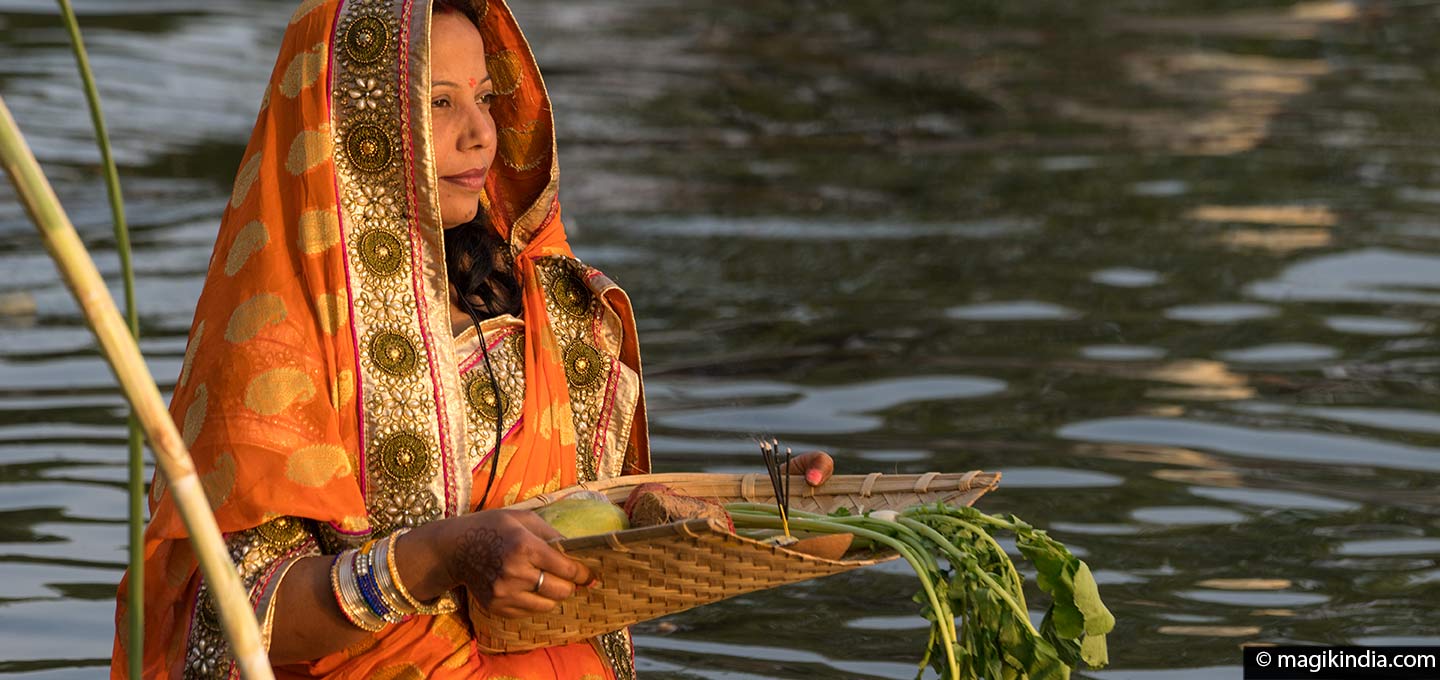
India is a land of festivals and you will see various communities across the country celebrating different festivals throughout the year. An ancient Hindu Vedic festival, Chhath is historically native to the Indian subcontinent, specifically, the north-eastern states of Bihar, Jharkhand and Uttar Pradesh and the Madhesh region of Nepal. Celebrated a week of Diwali, Chhath Puja is dedicated to the Sun and Shashthi devi, also known as Chhathi Maiya in order to thank them for bestowing the bounties of life on earth and to request the granting of certain wishes with devotees believing that the Sun is also a source of healing and helps to cure many illnesses and diseases. The most unique feature of this festival is the fact that unlike all the other major Hindu festivals, there is no idol worship. The Chhath Puja in 2020 is on Saturday, November 21.
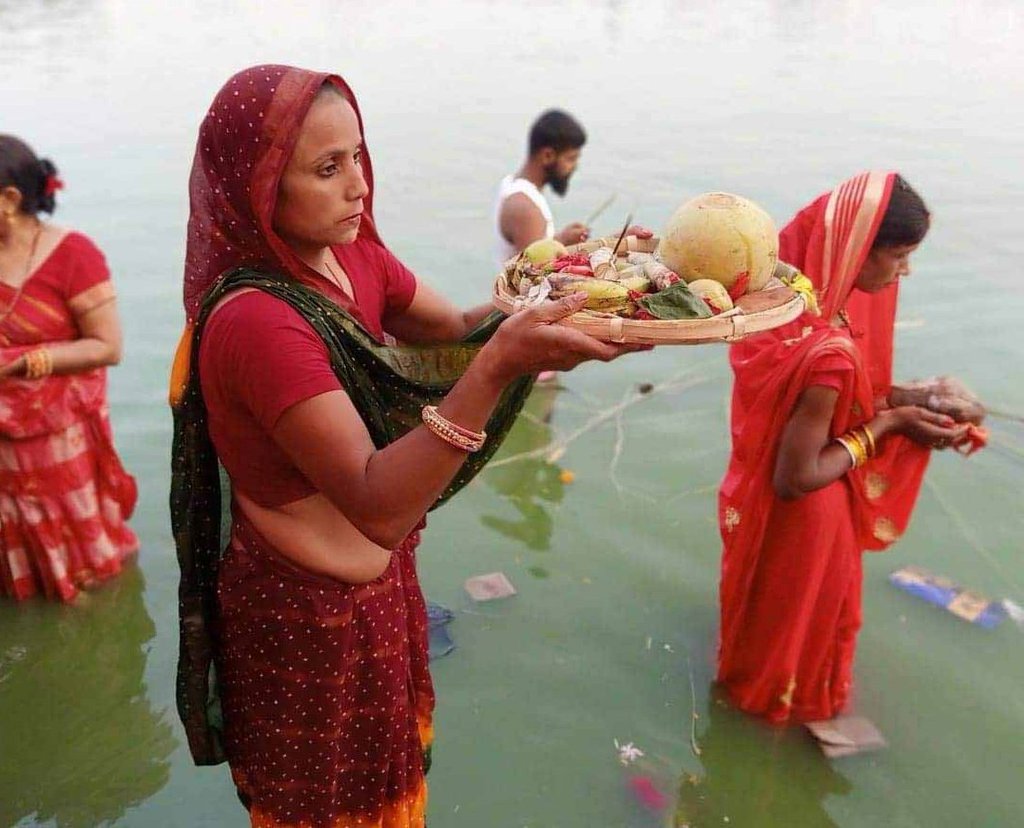
It is believed that the main sources of Sun’s powers are his wife Usha and Pratyusha. In Chhath, there is a combined worship of both the powers along with the Sun. In the morning, the worship of the first ray or Usha and the last ray or Pratyusha of the sun in the evening are offered to both of them. And the rituals are rigorous and are observed over a period of four days. They include holy bathing, fasting and abstaining from food and water, standing in water for long periods of time, and offering Prasad or prayer offerings and arghya to the setting and rising sun. Some devotees also perform a prostration march as they head for the river banks.
Although the festival is observed most elaborately in the Madhesh or the southern region of Nepal and the Indian states of Bihar, Jharkhand and UP, it is also more prevalent in areas where migrants from those areas have a presence. It is celebrated in all Northern regions and major Northern urban centers in India.
There are two types of the Chhath Puja, the Chaitra Chhath which is celebrated in the Chaitra month which begins around 22/23 March and the Kartik Chhath which is the more famous one and which is celebrated in a large scale in the month of Kartika, which corresponds to about 22/23 October according to the Gregorian calendar. The word “Chhath” translates to sixth in Bhojpuri, Maithili and Nepali dialects. The festival is celebrated on the 6th day of the Kartikeya month of the Hindu calendar and hence is known as the Chhath Puja. According to the English Calendar, it falls in the month of October or November. This festival lasts for 4 days, which makes it the longest festival after Navratis.
Chhath Puja is considered to be one of the oldest rituals mentioned in the prominent mythological scriptures. The Rigveda also contains some hymns worshipping the Lord Surya. Chhath Puja has been mentioned in both the major Indian epics. In the Ramayana, when Lord Rama and Sita returned Ayodhya, people celebrated Diwali in the joy of their arrival. On the sixth day the Ramrajya was established and on this day Rama and Sita fasted and the Surya Shashthi or Chhath Puja was performed by Sita. It is said she was blessed with the twins, Luv and Kush. It is believed that Sita Charan temple in Munger, Bihar is the place where she performed the Chhath vrat.
According to the Mahabharata, Lord Surya’s son Karna was the first person to perform some of these rituals. He offered prayer to the Sun god standing in the water and offered Prasad to the needy. This gradually became a ritual of the Chhat Puja. Later, Draupadi and the Pandavas performed these rituals to regain their lost kingdom.
Apart from the religious significance, there is also some science associated with the rituals of Chhath Puja. To complete the rituals, devotees have to stand at the banks of the rivers for long hours. So these rituals take place in the morning and evening as the ultraviolet rays of the sun are at their weakest during the sunrise and sunset. The sun rays at these moments are extremely beneficial and help in the detoxification of the body, mind, and soul. The festival also has an agricultural significance and is referred to as a post-harvest festival, where people show gratitude for a good harvest in the season just ended.
The main worshipers, called parvaitin, which comes from the Sanskrit word parv, meaning “occasion” or “festival”, are usually women. However, many men also observe this festival as Chhath is not a gender-specific festival. The parvaitin pray for the well-being of their family, and for the prosperity of their offspring. In some communities, once a family member starts performing Chhath Puja, it is their duty to perform it every year and to pass it on to the following generations. The festival is skipped only if there happens to be a death in the family that year. If the person stops performing the ritual on any particular year, it stops permanently and one cannot resume it. In other communities, this is not mandatory.
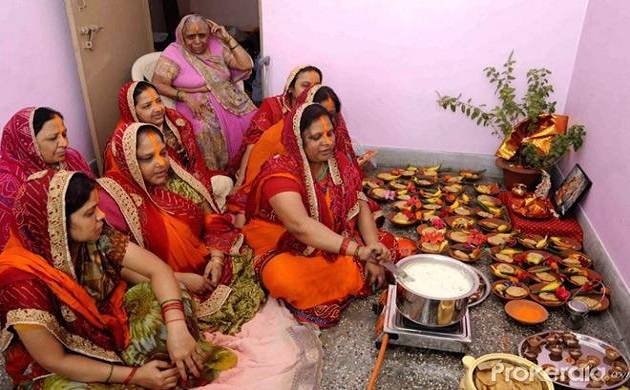
The 4-day rituals of Chhath Puja include taking holy baths in the river, fasting, and offering Prasad and arghya to the sun during sunrise and sunset. On the first day, called Nyay-Khay, devotees take a bath in the holy water of Ganga early in the morning. After this they prepare prasad to offer to the Sun god. The entire house and surroundings are purified with Ganga Jal. People observe fast and eat just one meal in the entire day. They prepare chane ki daal, kaddu ki sabzi, and kheer in bronze or soil utensils. Salt is not added in the preparation of this meal.
During the second day, called Lohanda and Kharna or Argasan, the devotees fast for the entire day and break it after worshipping the Sun god in the evening. A special meal of Tasmai, which is a dish similar to kheer, and puris are offered to the Sun God, after which devotees can break their fast. After worshipping the god and breaking their fast, people again fast for the next 36 hours. They go without water and food during this time.
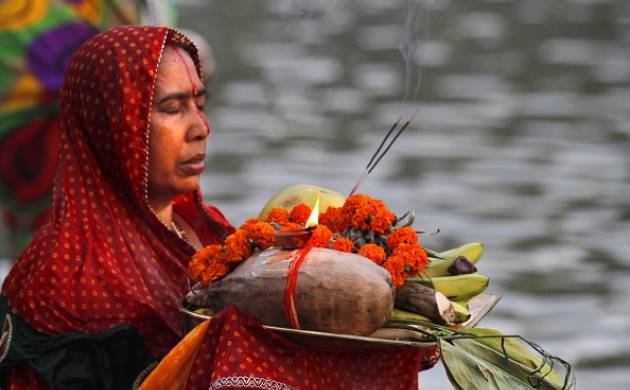
The third day of Chhath Puja called Sandhya Arghya or the evening offerings is also observed by fasting and without drinking even a drop of water. On this day, the children of the family prepare bamboo baskets and fill them with seasonal fruits like apples, oranges, bananas, dry fruits and sweets like ladoo, saanch, and thakua. The male members take the basket in their heads to the riverside. These baskets are kept open at the ghats where the Vratin takes a dip, and offer ‘arghya’ to the setting sun. These baskets are brought back to the house after the ritual. At night, a colorful event called Kosi is celebrated by lighting diyas under five sugarcane sticks while singing folk songs and mantras. These five sticks represent the five elements of nature or the Panchatattva which includes the earth, water, fire, air, and space.
On the last day, called Bihaniya Arghya or morning offerings, devotees gather with their families on the banks of the River before sunrise. The baskets are brought back to the ghats and vratin takes a dip in the water and offer prayers and prasad to the Sun and Usha. After the offerings, the devotees break their fast and have Prasad from the baskets. On the way back home, the vratin worship the soil as a gesture of thanks for providing them with food.
The process of Chhath Puja is divided into six stages of purification and infusion of cosmic solar energy. The process of fasting during the Chhath Puja helps in detoxifying the mind and body. This is done to prepare the mind and body of the devotee to accept the cosmic solar energy. Standing in a river or any water body reduces the release of energy from your body. This stage also facilitates the prana or the psychic energy to move upwards to the Sushumna or the psychic channel in the spine. At this stage, the cosmic solar energy enters the Triveni complex which are the pineal, pituitary and hypothalamus glands. This process is done through the retina and optic nerves and in this stage, the Triveni complex gets activated. After activation of the Triveni complex, the spine gets polarised which turns the body of devotee into a cosmic powerhouse that can receive the Kundalini Shakti. In the final stage, the body of the devotee turns into a channel that can conduct, recycle and transmit the energy of the entire universe. It is believed that these rituals detoxify the body and mind and provides mental calmness. It also enhances immunity, infuses energy and reduces the frequency of anger, and all other negative emotions.
Although celebrated in many Indian states, the Chhath Puja celebrations in Bihar and Jharkhand have a distinct charm. Both of these places attract a crowd of devotees from around the country during this time. In Bihar, the capital city of Patna, which is situated on the banks of the Ganges river celebrates the festival on a grand level and is probably the best place to offer prayers and witness the magnificent celebrations across the city. The Kaunhara ghat located on the banks of the Ganga-Gandaki confluence in Hajipur, is decorated with lights and earther lamps with the ghats and other water bodies being a sight to behold. It is believed that that the Goddess Sita performed the Chhath Puja rituals at the Sita Charan temple located in Munger where millions of devotees take a dip in the water in the Kastaharni Ghat. In the state of Jharkhand, the most popular place for Chhath Puja rituals in the city of Ranchi is the Ranchi Lake. Other popular places include the Button Talab, Kunkay Talab, and Hatia Ghat. In Jamshedpur, the ghats of Bagbera, Mango, Kharkai, Subarnarekha and Sidhgora are some of the favorite spots for devotees to offer prayers to the Sun God. Bokaro’s Ganga river and the seven ghats along the river see devotees from around the country. Other ponds and reservoirs including the Cooling pond, City park pond, and Rani Pokhar pond are also used by devotees to offer their prayers.
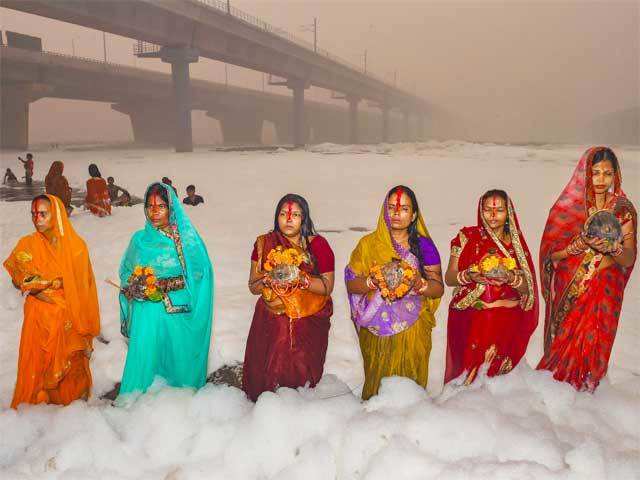
This is a very interesting and unique festival which I had not really heard of before the infamous photo that went viral of devotees standing in a chemical infused, foam filled toxic waters of the Yamuna river in New Delhi. So I decided to research more on this festival and I am intrigued and want to, one day, visit Bihar or Jharkhand to see it for myself.
In one of the most momentous events of the Cold War, Svetlana Alliluyeva, the only daughter of the infamous Soviet despot Joseph Stalin, abruptly abandoned her life in Moscow in 1967, arriving in New York to throngs of reporters and a nation hungry to hear her story. By her side is Peter Horvath, a young lawyer sent by the CIA to smuggle Svetlana into America.
She is a contradictory celebrity: charismatic and headstrong, lonely and haunted, excited and alienated by her adopted country’s radically different society. Persuading herself that all she yearns for is a simple American life, she attempts to settle into a suburban existence in Princeton, New Jersey. But one day an invitation from the widow of the architect Frank Lloyd Wright arrives, and Svetlana impulsively joins her cultlike community at Taliesin West. When this dream ends in disillusionment, Svetlana reaches out to Peter, the one person who understands how the chains of her past still hold her prisoner. Their relationship changes and deepens, moving from America to England to the Soviet Union and back again, unfolding under the eyes of her CIA minders, and Svetlana’s and Peter’s private lives are no longer their own.
Novelist John Burnham Schwartz’s father was in fact the young lawyer who escorted Svetlana Alliluyeva to the United States. Drawing upon private papers and years of extensive research, Schwartz imaginatively re-creates the story of an extraordinary, troubled woman’s search for a new life and a place to belong, in the powerful, evocative prose that has made him an acclaimed author of literary and historical fiction.