
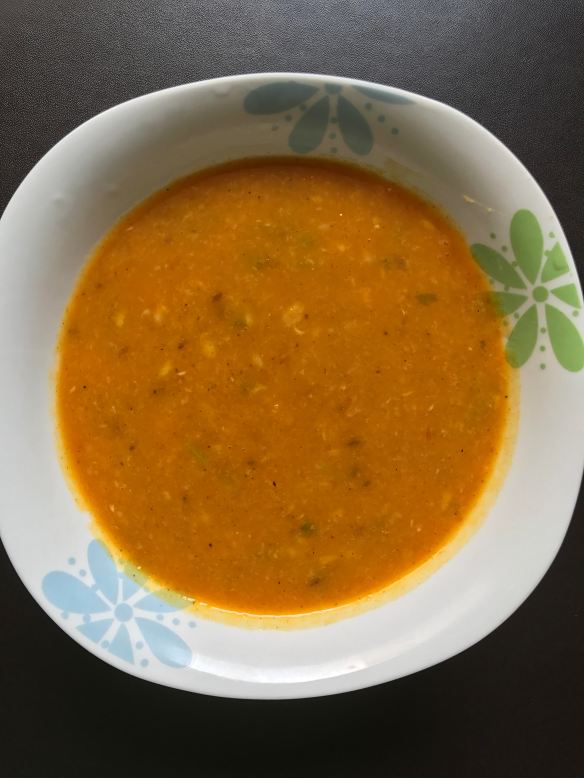
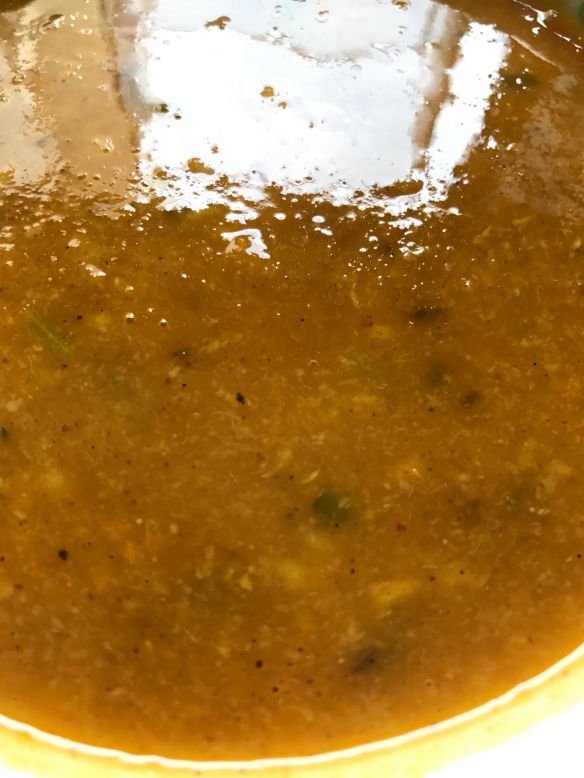
 The other day, it was just me and BB at home for dinner. S was eating out with friends and R was also out. GG had to stay back in school and so would not have lunch with us. I was wondering what to cook for just the two of us when I saw that a quarter of an orange pumpkin which was starting to go bad. After thinking about what to make, I decided to make a dal with the pumpkin. It turned out great and is super easy to make. There’s hardly any cooking to be done once you cook the dal and then just lightly temper it.
 Pumpkin Dal
Ingredients:
- 1 cup orange pumpkin or squash, chopped into small pieces
- 1 cup yellow split moong dal, washed and kept aside
- Salt to taste
- 1 tsp red chilli powder
To temper:
- 1 tsp cumin seeds
- 1/4 tsp asafoetida powder
- 2-3 red dried red chillies (optional)
- 2 tsp ghee
Method:
- In a pressure cooker, add the moong dal and pumpkin and pressure cook it for 3 whistles or until the dal and pumpkin are fully cooked. and
- If you are using the stove top to cook, cook it till the dal is soft and mushy and the pumpkin is fully cooked and starts to disintegrate.
- When the pressure cooker cools down, open and mash the dal and pumpkin together till it becomes a homogenous mixture.and
- Add salt and red chilli powder to taste and keep aside.and
- In a smaller pan, heat the ghee and add the cumin seeds. When it splutters, add the asafoetida and the dried red chillies (if using) and pour the tempering to the dal immediately. Cover the dal for five minutes to let the tempering infuse the dal.
- Garnish with coriander leaves and serve hot with rice or any flat bread
 Teza once electrified the people of Burma with his protest songs against the dictatorship. Arrested by the Burmese secret police in the days of mass protest, he is seven years into a twenty-year sentence in solitary confinement. Cut off from his family and contact with other prisoners, he applies his acute intelligence, Buddhist patience, and humor to find meaning in the interminable days, and searches for news in every being and object that is grudgingly allowed into his cell.
 When Adela Quested and her elderly companion Mrs Moore arrive in the Indian town of Chandrapore, they quickly feel trapped by its insular and prejudiced ‘Anglo-Indian’ community. Determined to escape the parochial English enclave and explore the ‘real India’, they seek the guidance of the charming and mercurial Dr Aziz, a cultivated Indian Muslim. But a mysterious incident occurs while they are exploring the Marabar caves with Aziz, and the well-respected doctor soon finds himself at the centre of a scandal that rouses violent passions among both the British and their Indian subjects. A masterly portrait of a society in the grip of imperialism, A Passage to India compellingly depicts the fate of individuals caught between the great political and cultural conflicts of the modern world.

