In pretty much every Indian language, every relationship has a specific name. A paternal grandmother is referred to differently than a maternal grandmother and a mother’s sister has a different name than a father’s sister and some communities have specific ways to distinguish a sister’s daughter from a brother’s daughter and the same for their sons. In Tamil, your mother’s sister and father’s brother’s wife are both called Chitti. I looked but could not find the exact meaning, but it probably means a younger mother or someone who could potentially replace a mother if something happens to her.
My mother is the oldest of four sisters and consequently I am the oldest grandchild from my maternal side. I was very young, maybe slightly older than a toddler when the next sister after her got married and so I don’t have many memories about her. Her last sister was brought up by their childless aunt who lived close by, and so my biggest and best memories are about my second aunt. I was her favourite and in fact, long after she married and moved overseas, I was her favourite. So much so that on one of their trips to Mumbai, during an outburst, her older daughter even complained that she loved me more than she loved her and her sister.
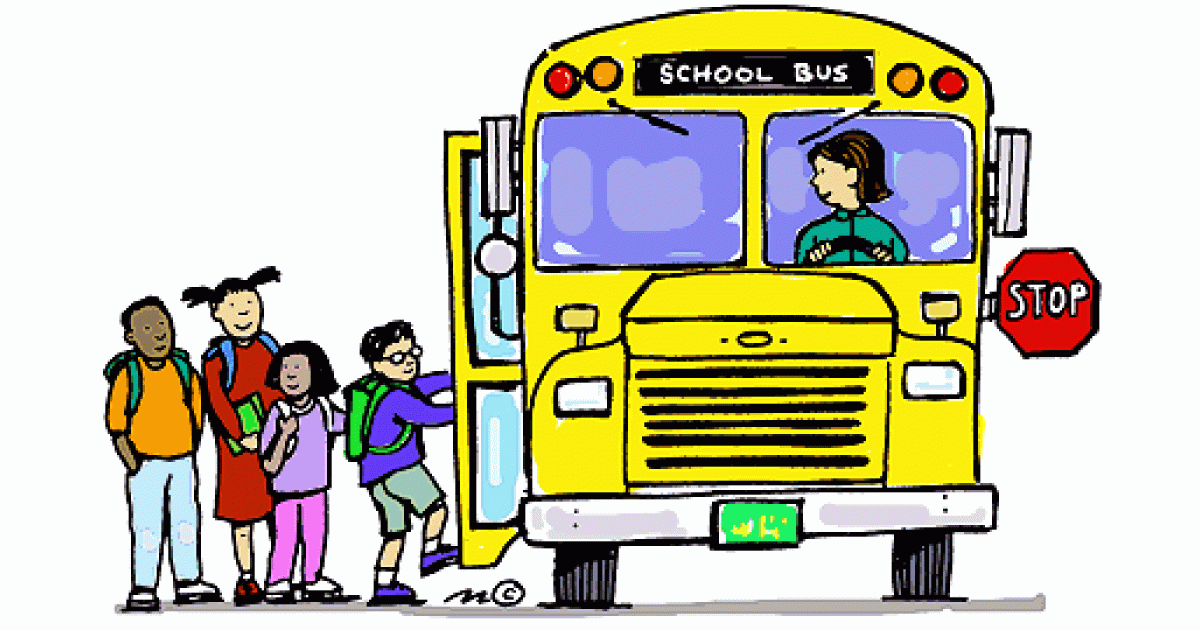
When I first started school, around the time I was about four years old, my parents and paternal grandparents had to go to a temple town in South India for a family wedding. I can’t really remember why I didn’t go, but I assume it was a combination of me refusing to go because I didn’t want to miss school and the fact that my aunt may have jumped at the chance to look after me. I do remember that I was supposed to live with my maternal grandparents and aunt for about a month or so since my parents were supposed to do a small pilgrimage given they were going to a temple town which was close to other temples. My sister would have been a toddler at that point, so they took her along and I was sent to my grandparents house along with my things. My aunt was working as a teacher then in a nearby school and used to take tuitions in the evening and perhaps in the mornings too. On the first that I was to go to school from there, we were at the building gate bright and early, waiting for the school bus. Even after waiting for more than 30 minutes, the bus did not come and after asking around, we were told the bus had already left. My aunt was so angry, but because we were getting late, she quickly bundled me into a taxi and dropped me off to school. At school, she made sure to tell the teacher to put me in the correct bus (otherwise I would have landed in my parents place which was empty) and when the bus dropped me home, tore the bus driver a good one, which ensured that I was never forgotten as long as I stayed at their place.
Kindergarten ended around noon and I would reach home around 12:30, around which time, chitti would be getting ready for school. She taught primary classes which meant she would leave home around the time I got home. Once she left, my grandmother would get me changed, feed me lunch and make me take a nap. By the time I woke up and was ready, chitti would be back from school. She would then start her tuitions on the days she had them and teach me together with her students and get me to complete my homework. Once that was done, I would go down to play with friends before it was dinner time.
The month flew past before long and I went back home to my parents. But the bond between me and my aunt has remained till day. For both her pregnancies, when she came home from the hospital, I insisted to spending time with her, especially during her second pregnancy because I was older and it was our summer holidays. I must have spent the whole holiday there playing with my sister, cousin and friends and helping her look after the new baby.
This post took me down so many memory lanes that I throughly enjoyed putting it down. I am going to show this post to my chitti the next time I meet her to show her that I still remember our time together even after so many decades.
I grew up in Mumbai, very close to what is the heart of the tambram community in the city, Matunga. Where we lived was a 15 minute walk to the heart of the community, to the market and the temples, to the flower shops and the vegetable vendors, some of whom though they came from the northern states of Bihar and Uttar Pradesh, but could banter with the mamas and manis in Tamil. Before COVID-19 stuck and life changed, my mother used to make the thrice weekly trip every week to Matunga to get her fix of all of the above.
The other day while I was thinking about this, I realised that I actually grew up in an urban agraharam. So what is an agraharam you may ask? An Agraharam or Agrahara was a grant of land and royal income from it, typically by a king or a noble family in India, for religious purposes, particularly to Brahmins to maintain temples in that land or a pilgrimage site and to sustain their families. Agraharams were also known as Chaturvedimangalams in ancient times as well as known as ghatoka, and boyas. Agraharams were built and maintained by dynasties such as the Cholas and Pallavas. The name originates from the fact that the agraharams have lines of houses on either side of the road and the temple to the village god at the centre, thus resembling a garland around the temple. According to the traditional Hindu practice of architecture and town-planning, an agraharam is held to be two rows of houses running north–south on either side of a road at one end of which would be a temple to Shiva and at the other end, a temple to Vishnu. An example is Vadiveeswaram in Tamil Nadu.
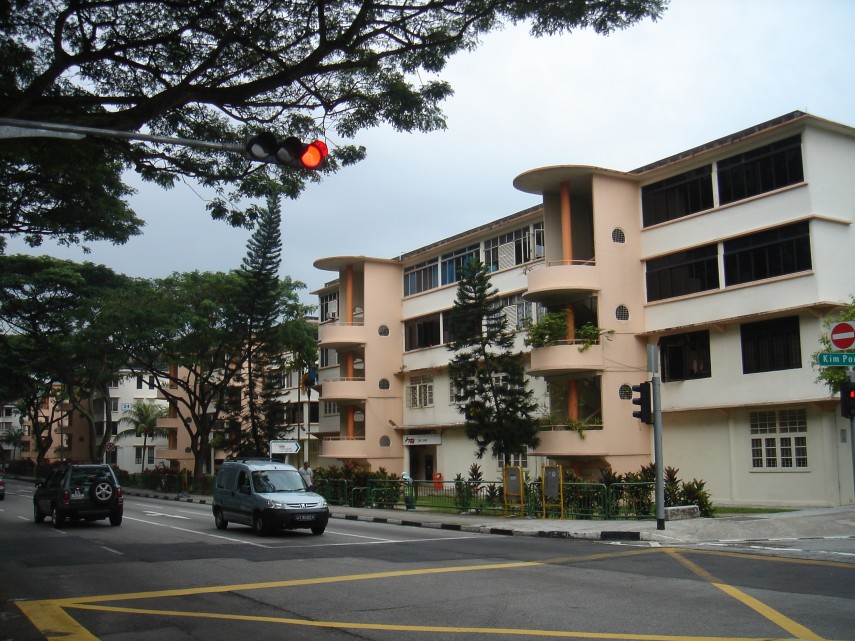
Where we grew up was a collection of about 50-60 two to three storey buildings set in a sort of square with roads intersecting them. We were framed by educational institutes on three sides and a main road on the fourth. While our small community comprised of people from different communities across the various states of India, if I look back, I can see the Tamil Brahmin community most predominant here, with most of them from Kerala or the Palakkad Iyers. Most buildings, with some exceptions which only had people from a certain community as residents, had a few tambram families in residence. Everyone was a mama or mami and not uncle or aunty and everyone knew everyone, or at the very least knew our parents and grandparents, many of whom they were either together at school, in the same class or from the same village in Tamil Nadu or Kerala.
In my own building, the bulk of our neighbours were from my own community and this is why I call my small slice of area an urban agraharam. Everyone was solidly middle class and if you probed enough, you found some connection with them, either through family or friends and once the connection was made, you were part of them. I know now that even living in a secular and multi-community city like Mumbai made us quite insular when it came to Tamil culture. The only Tamil culture I knew was the Tambram one and coming to Singapore, to a culture similar to my own was actually a culture shock to me.
But, growing up in a community made mostly of people who had the same values, the same traditions as us was just as charming. Festivals which are unique to my community was commonplace here and I never questioned why the rest didn’t celebrate it. For example, the annual Avani avittam festival which is the only festival for the men who on this day would change their sacred threads used to be held in a nearby school with a few priests from one of the temples in Matunga coming over to conduct the rituals. Since there were enough men who wore the sacred thread, it probably made sense for the organizers to hold a mini session in our area. Since the day was not a public holiday, they used to do the session fairly early so the men and boys could then go on to work and school. And in all the years my grandfather and then father went here instead of to our temple in Matunga, I never questioned why. It all seemed normal to me. We loved going to each other’s homes for festivals like Diwali, Navratri and Ganesh Chaturti in our pavadais and sing songs and gorge on the delicacies.
That was a lovely time growing up. Everyone looked out for each other and mamas and mamis didn’t heaitate to scold or tell on a child they knew if the said child did something wrong. We thought nothing of going into anyone’s house for a drink of water or to use the bathroom. We were also quite safe in our little enclave and most of us pretty much lived our whole lives there till we moved out.
Life in our small community has changed now. Many buildings are being knocked down to make way for high rises, especially since this area is now a prime area, within what is considered the original Bombay and close, but not too close to the city. A lot of people from the community moved to suburbs like Chembur, Thane and Dombivili when the real estate prices here started picking up in the nineties. I think my grandparents and parents even explored the idea of moving to Chembur, but thankfully dropped the idea very soon. Life goes on, but in our area, the percentage of tambrams has reduced tremendously, so much so it can’t be called an agraharam anymore. I mourn for this loss, but c’est la vie and life must go on. The chakra of life never stops and I am sure in some of the suburbs I mentioned newer urban agraharams have been created.
A couple of weeks back, in our class WhatsApp chat, we started talking about our school days and the conversation veered towards our sports day. I enjoyed that conversation so much that I decided to take a trip down memory lane to reminisce about those days.
Our school sports day was the highlight of the second term, which happened after the Diwali holidays in the second term. The main sports day would happen sometime in December/early January before the class X students had their prelims.
Our school was divided into four houses and this was only for the secondary section. Unlike other schools, we didn’t have house named for flowers, national leaders or even landmarks. Since my school is a Parsi school, our houses were named for ancient Persian princesses. Selection of students to the different houses was completely random and we’ve tried to think of the various ways they may have done the choosing, but other than randomness, we have never been able to figure it out. In one family, you would have sisters in different houses, as it was in my house and also in my neighbour’s place where all the sisters were in different houses. I was in the green house while my sister was in the yellow house. As part of our school uniform, along with our school badge which was pinned on the top left of our uniform, above our hearts, we had to pin our house badge to the left of the school badge.
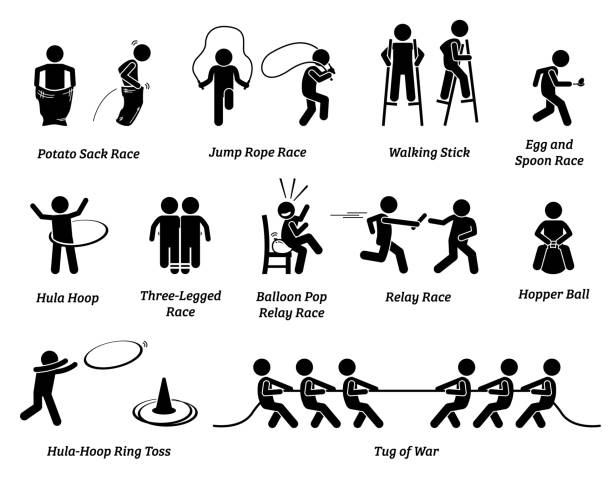
For a few months before the actual day, we would have what was known as indoor games as well as sports for which the school did not have the facilities to play and which needed to be played at a nearby gymkhana. These included sports like carrom, chess, badminton and table tennis. We also had some games like square ball and volley ball, which we played in our school grounds, competing with each other. The sports day was held in a small stadium not very close to the school, but in a centrally located area. A month or so before the actual sports day, we all trooped to the stadium for our heats. This was usually a half day and those of us who were not so inclined, used that half day to just chill and gossip with friends and cheer those who are competing. For children in the primary and kindergarten sections, they had their heats in a small garden behind the school.
In the days leading to the sports day, while the other events were held, we would anxiously keep track of the wins of each house and at the same time start the practice for the march past. Usually the class five students will be super eager to take part in the march past and would audition for the same. By the time we reached class eight, it was the other way around – we had to be forced to go down and take part. The march past contingent was made up of one girl who would carry the placard with the name of the house followed by the house captain who carried the house flag who would be followed by the march past contingent made up of 30 girls in 10 rows of three girls each. Every one on the field will be in white shorts and the school shirt which was our PE uniform and anyone representing a house will have a length of silk ribbon in the colour of the house stitched down both sides of their shorts.
The primary, kindergarten sections and any guests and parents sit together, but the secondary girls sit in their houses. This means that we would get very noisy, especially when we are cheering for our team and booing the opposition. The day’s finale was the march past and the house which scored the highest number of points aka the winner for the year had the honour of leading the march past. During my school years, it had always been the green house which led the march past with usually the red house coming second, the blue house at third position and the yellow house bringing up the rear. And usually, it would be the yellow house which would win the march past trophy. I only remember one year when I was probably in class 6, when there was a three-way tie for first position. Green, red and blue houses all tied and there was a toss to determine who would lead the march past and who would walk in second. I remember red house winning the toss and the captain of the house, who later became famous, was screaming and jumping with joy, because under her captaincy, the red house led the march past.
Our sports day would always be on a Sunday afternoon and would usually start around 2 pm and end around 6ish in the evening. We would go home tired but happy that day, especially since the next day used to be school holiday to help us (and more likely the teachers) recuperate from a hectic day.
This blog post was a blast to write as memories all kept flooding in and I wrote this post with a huge smile on my face. For most of us, our school days are the golden days which we remember fondly, with all the bad parts edited out. Maybe it’s our way of keeping our innocent and young years in our heart?
Sometime back I received a video on one of my family Whatsapp groups. This was a small documentary about Sanskrit scholars who had settled down in the villages on the banks of the Tamarabarani River in Tirunelveli district in Tamil Nadu a few centuries back. They were fleeing muslim invaders, most likely the Mughals and fled to preserve their culture and way of life. These scholars are today most likely known as the Tamil Brahmins who are my ancestors. When I saw this video, I was instantly taken back to a conversation I had with my paternal grandmother a few weeks before she passed away.
We were travelling back to Bangalore from Sringeri, after a wonderful trip to celebrate my cousin’s thread ceremony and we stopped at a place, whose name escapes me now for a break. That was when she told me, possibly in passing, that her ancestors originally came from either or someplace close to Nagpur in Maharashtra and then moved to someplace in Karnataka, where they settled down for a few centuries before finally moving down south to settle on the banks of the Tamarabarani in Tirunelveli district. So when I saw that video, I immediately thought of my ammama and was very sad that she passed away before I really got to know her as an adult. I did some research on this and this is probably true. I also found writings which said that Tamil brahmins probably came down to the south from either coastal Andhra Pradesh from the Godavari basin or coastal Karnataka. This ties in to what my ammama told me.
I was very close to her and I was her favourite, maybe necause I was her first grandchild and was named after her. I am also told I resemble her a lot, both in looks as well as in temperament and in the way we look at things. I have only seen her in the traditional tambram saree called the Madisar and when I wore one at my wedding, pretty much everyone in the room, including my parents and extended family said they felt I looked like her. She loved reading and was interested in history. I really wish we had some more time with her so I could get to know her as a person, speak with her as an adult and learn more about my family.
Unfortunately, we don’t have any written family history, and those who knew the oral history have passed away. This is a very sad thing and I wish I was interested in this a lot earlier, when I could have perhaps gotten to know my own ancestral history a bit more.
While this is not really memories of my grandmother, when I read about things like this, I remember her a at that point in time and have a happy smile the rest of the day.
There’s something special about travelling by train. While I have travelled quite a bit in India, I have not travelled by train outside of India, so this blog post will be about train travel within India.
The Indian Railways is the world’s largest railway network by size, with a route length of 95,981 km as of March 2019 and is the word’s eighth largest employer employing about 1.4 million employees as of 2015. It runs more than 20,000 passenger trains daily, on both long-distance and suburban routes, from 7,321 stations across India.
The railways, a product of British colonisation has been in India since 16 April 1853 when the first passenger train ran between Bori Bunder and Thane between downtown and the suburban Mumbai of today. Today Bori Bunder is the majestic Chatrapati Shivaji Maharaj Terminus or CSMT, which locals still fondly call VT Station or Victoria Terminus in honour of the Empress of India, Queen Victoria.
As of 31 March 2019, the Indian Railways has electrified 50% of the route kilometers and 46% of the total running track. The first line to be electrified was between what is today the CSMT station and Kurla station in Mumbai’s suburban rail network way back in 1925.
The longest train route on the Indian Railways is the Dibrugarh to Kanyakumari Vivek express which covers India lengthwise from Dibrugarh in the north-east in the state of Assam to India’s mainland tip of Kanyakumari in the southern state of Tamil Nadu. The train covers a distance of about 4,282 kms in approximately 80 hours or roughly three and a half days, traversing eight Indian states. It crosses the states of Assam, Bihar, Nagaland, West Bengal, Jharkhand, Odisha, Andhra Pradesh, Tamil Nadu & Kerala. Another long distance train which also covers a distance of 4282 km is the Dibrugarh to Okha Weekly Border Service which travels across the breadth of India, from the East from Dibrugarh in Assam to India’s western borders, ending at Okha in the western state of Gujarat. Both these trains are currently tied for the 24th longest running trains in the world. The longest running train in the world today is the train that runs from Moscow in Russia to Pyongyang in North Korea. This train travels a distance of 10,267 km and if you travel from Moscow to Pyongyang, you will take approximately 206 hours or about 8.5 days!
Another interesting train on the Indian Railways route is the Navyug Express, a weekly train which runs from Mangalore Central in the south Indian state of Karnataka to the holy city of Katra which houses the very revered Mata Vaishno Devi shrine in the northern Union Territory of Jammu & Kashmir. This train takes about 68 hrs to cover a distance of 3,685 km and in this process covers about 14 states and union territories of India, viz. Jammu & Kashmir, Punjab , Haryana, Delhi, Uttar Pradesh, Madhya Pradesh, Maharashtra, Puducherry(Mahe), Telangana, Andhra Pradesh, Tamil Nadu, Kerala & Karnataka.
What I find most fascinating is that parts of India I never thought possible to connect have been connected by train and this connection is an end-to-end connection. For example the train which plies the route from Sri Ganganagar in Rajasthan to Tiruchirapalli in Tamil Nadu. Both are not big metro cities and the fact that there exists a demand for a fully airconditioned train, the Humsafar Express between these two cities is a measure of how popular and engraved the Indian Railways in the psyche of the Indian traveller.
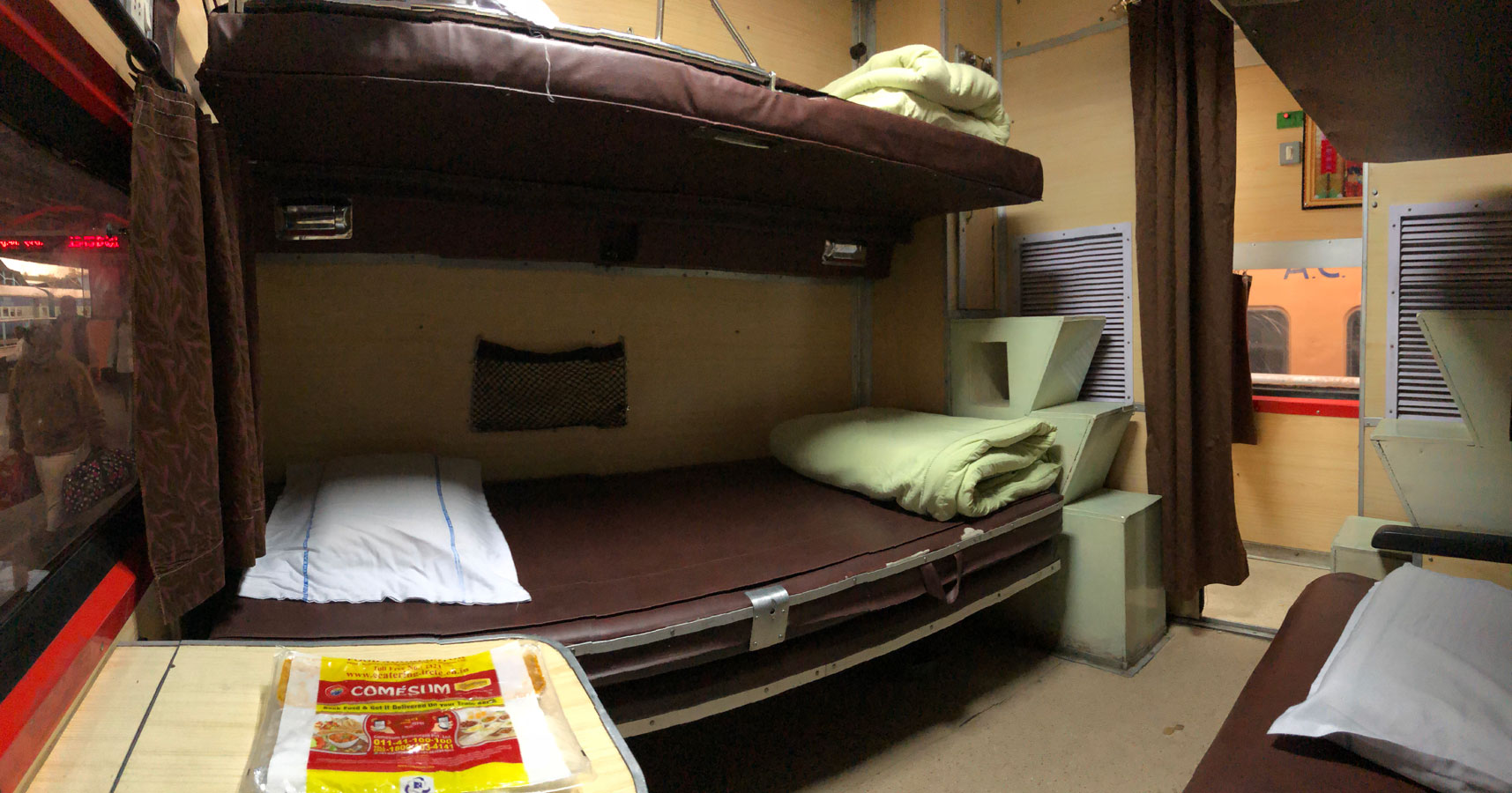
SourceThis is the closest I could find which corresponds to my memory of a coupe from the 70s
I have numerous memories of travelling by train. In my childhood, most summer holidays would be spent in Bangalore with my paternal grandparents and at some point when my maternal grandparents moved to Chennai, we would first travel to Chennai, spend a couple of weeks there and then take an overnight train to Bangalore to spend the rest of the holidays with my other set of grandparents.
I don’t have much memory of my first train travel, but have some fuzzy flashes. This was way back in the seventies and I must have been around three years old. I was travelling with my parents and my sister who must have been a toddler at that point to New Delhi. I do remember travelling in a coupe compartment. A coupe is first class compartment at a time when there was probably no air conditioning in the train. Today’s coupes are first class airconditioned compartments. My memory is very fuzzy for this trip, but if I think hard, I have flashes of memory of being in a closed compartment with my parents and sister and can see the scenary flying by.
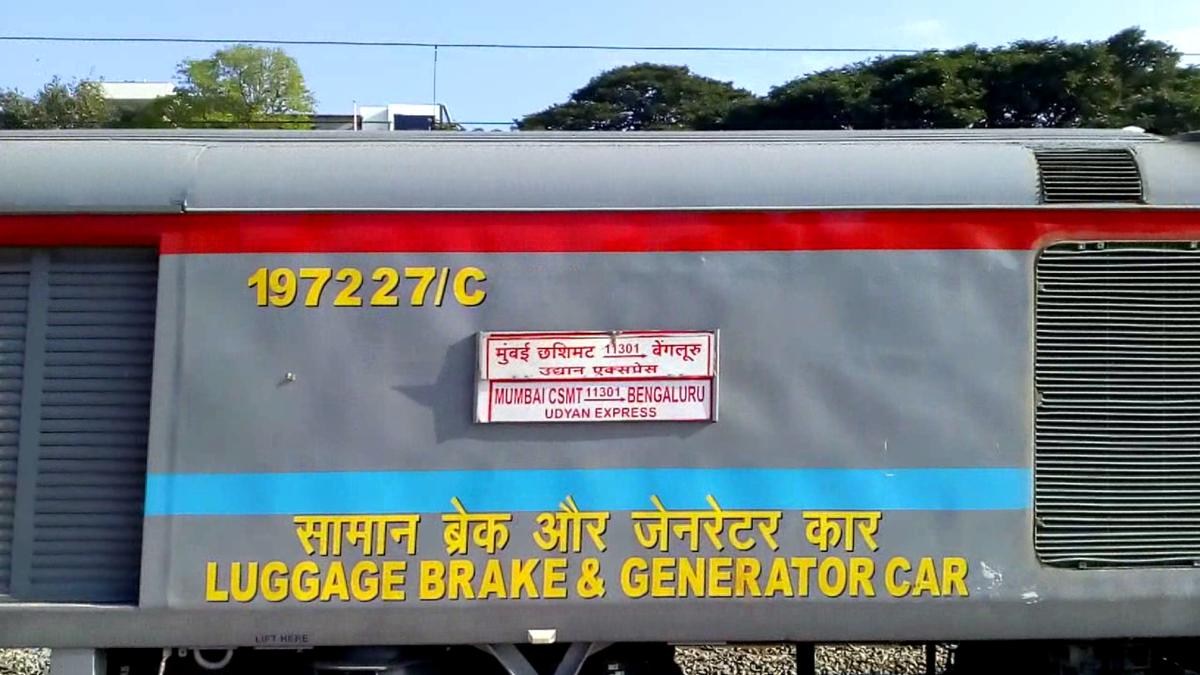
My biggest memories, however, are of the Udyan Express which is superfast train running between Mumbai’s CSMT and Bangalore’s City stations. The name is because Bangalore is called a Garden City and is famous for all the green spaces in the city, Udyan meaning ‘garden’ in pretty much all Indian languages. The train is probably 30 odd years old and I remember travelling from the time it started. Before this train started, there was no end-to-end service between Mumbai and Bangalore and you had to take trains on the Mumbai-Chennai route and get down in a station called Guntakal and then transfer to another train which took you all the way to Bangalore. I think this route between Guntakal and Bangalore used to be meter gauge while the Mumbai-Chennai route used to be broad gauge.
Once, when we were young adults, my sister and I travelled alone to Bangalore. We took what was a fairly new train then whose name escapes me now. That train used the Konkan Railway route and took a coastal route to get to Bangalore. I have searched quite a bit for the name of this train, but maybe this train has been either discontinued or merged with another train. I remember it being a very scenic route with lots of greenery and we passed many smaller towns and cities, unlike the Udyan Express which used to pass through mostly farmland and barren parts of Maharahtra, Andhra Pradesh and Karnataka. If anyone knows what is the name of this train, please put it in the comments below, I would love to know.
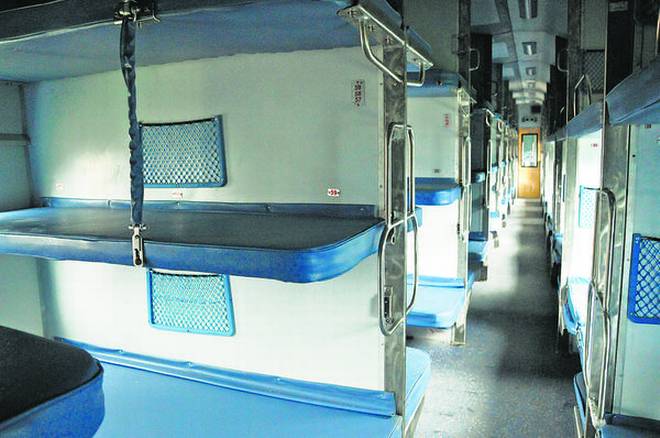
I loved travelling in the second class sleeper compartment where the windows would be bitterly fought with my sister. Both would want the window seat and if we were lucky to travel nice travelling companions, we would both get a window seat, otherwise, it would be up to my mother to play referee. The second class sleeper has six seats with three across each side and then across the aisle, two more seats. Most years, we would go ahead of my father who would join us later during the holidays. Also the sleeper class berths meant that the middle berth pulled out from the back rest of the lower berth and this also used to be a point of contention between us. After a few years, I started disliking the middle berth and used to want to sleep in the lower berth and my mum used to take the middle berth with my sister ensconcing herself in the top berth where she could sleep to her heart’s content.
I can’t sleep while travelling, so I was my family’s guard at night. Everytime the train stopped, my sleep would break and I would wake up. Because there was no airconditioning in the sleeper class, we would sleep with the windows open and a steel slatted cover over it. This, because there used to be heavy thefts in this class as the door used to not be locked and anyone can enter the compartment anytime of the day or night. The camadarie that you used to find in those days travelling by the sleeper class can’t be found today. We used to make friends during the 24 hours it would take to get to our destination and there are times when those fleeting friendships used to be continued. This is a time without any smart devices, not even mobile phones, remember and the only way to pass the time during the trip was to talk to people and share stories about your lives. We also didn’t have a lot of access to books and we would purchase a few magazines to read during the journey. Then you hope that your co-passengers would also have some reading material with them which you would then exchange to read. We would also play a lot of card games as well as games like anthakshari or similar games. And then when your destination arrives, you would smile at your new friends, promise to keep in touch and more often than not, slowly glide out of their lives.
My last train trip in India was this year during my India trip where we did back-to-back two trips, both overnight. The first was from Chennai to Thanjavur and the second from Mayiladuthurai to Bengaluru. Both trips were in AC 2 tier and this trip made me realise that I am growing old, I prefer my luxuries, slight as they are. The children were absolutlely fascinated by these short train trips and have been asking me when we can do this again. One train I absolutely want to travel in and in first class no less, is the Rajdhani Express which connects Mumbai to New Delhi. Rajdhani which means capital was meant to be a series of passenger trains which connect state capitals to India’s capital of New Delhi. This series of trains gets the highest priority in the Indian Railways network and is also considered as prestigious and premium, so when this train travels, it is not allowed to stop at any signals, other lesser important trains get shunted to the nearest station to wait and to make way for the Rajdhani to fly past. We were planning a trip this December, but with COVID-19, this is not possible and given how dire things are, I really don’t know when we can travel on the Rajdhani.
Something I love doing is watching train videos on YouTube. There are many people who patiently stand on the doorstep and share with the world their train journeys and each time I watch these videos, I am reminded of how much I love train travel. I also think if I was still living in India and younger, would I also be like one of these vloggers?
Travel is such a fascinating thing and you learn so much when you are out of your comfort zone. Train travel on the other hand, is a great equaliser, you meet such a diverse group of people in your travels that like it or not, there is some learning every single trip.







 Memories and Such
