Embracing Hygge: The Art of Cosy Living for the Modern World

In our fast-paced, technology-driven world, where stress and burnout have become all too common, the Danish concept of hygge offers a refreshing antidote. Pronounced “hoo-gah,” hygge is a way of life that celebrates simple pleasures and fosters a sense of cosiness, contentment, and well-being. While deeply rooted in Scandinavian culture, the principles of hygge transcend geographical boundaries, providing a blueprint for creating a more mindful, joyful, and fulfilling existence, no matter where you live.

At its core, hygge is about cultivating a warm, inviting atmosphere that nurtures the soul and encourages moments of genuine connection and presence. It’s a mindset that embraces the beauty in the ordinary, cherishing the small, everyday rituals that bring comfort and joy. From the gentle flicker of candlelight to the warmth of a cosy blanket, hygge is about surrounding oneself with the things that make one feel at home, both physically and emotionally.

While the concept of hygge may seem simple, its impact on overall well-being is profound. In a world that often prioritizes productivity and material success, hygge reminds us to slow down, savour the present moment, and find contentment in the here and now. It’s a conscious choice to create a sanctuary amidst the chaos, a space where one can truly unwind, recharge, and connect with the people and activities that bring one happiness.

Incorporating hygge into one’s daily routine is easier than one might think, and the benefits are numerous. Here are some practical ways to embrace the hygge lifestyle, regardless of where one lives or the pace of their life.

Create a Cosy Home Environment: One’s home should be a haven, a place where one can truly relax and feel at ease. Start by decluttering and organizing the living spaces, creating a sense of calm and order. Then, focus on adding elements that evoke warmth and comfort, such as soft lighting, plush textiles, and natural materials like wood and wool. Invest in cosy blankets, plush rugs, and comfortable seating arrangements that encourage relaxation and conversation. Consider adding a fireplace or a space heater to create a warm, inviting ambience. Surround oneself with personal touches, such as family photos, artwork, and cherished mementoes that bring joy and a sense of belonging.

Embrace Hygge Rituals: Hygge is all about savouring the simple pleasures in life, and incorporating rituals into one’s daily routine can help one cultivate a more mindful and present state of being. Start the day by enjoying a warm beverage, such as a cup of tea or coffee, in a cosy nook or by a window, allowing oneself to fully appreciate the moment before diving into the day’s tasks. In the evening, consider lighting candles and playing soft music to create a calming atmosphere. Indulge in a warm bath or shower, using aromatic oils or salts to enhance the sensory experience. Curl up with a good book or engage in a favourite hobby, allowing oneself to fully immerse in the activity without distractions.

Prioritise Quality Time with Loved Ones: Hygge is not just about creating a cosy physical environment; it’s also about fostering meaningful connections with the people one cares about. Make it a priority to spend quality time with loved ones, whether it’s sharing a home-cooked meal, playing board games, or simply engaging in heartfelt conversations. Encourage a technology-free environment during these gatherings, allowing one to fully engage with one another without the distractions of screens and devices. Create traditions and rituals that bring family or friends together, such as weekly movie nights, game nights, or outdoor adventures.

Embrace Nature and the Outdoors: While hygge is often associated with indoor cosiness, it’s also about appreciating the beauty and tranquillity of nature. Spend time outdoors, whether it’s taking a leisurely walk in the park, hiking in the mountains, or simply sitting in the backyard or balcony, soaking up the fresh air and natural surroundings. Bring elements of nature into the home by incorporating houseplants, fresh flowers, or natural materials like wood and stone. Consider creating an outdoor living space, such as a cosy patio or garden area, where one can enjoy the beauty of the outdoors while still embracing the principles of hygge.

Indulge in Comfort Foods and Beverages: Food and drink play a significant role in the hygge lifestyle, as they provide nourishment and comfort for both the body and soul. Embrace the art of home cooking, experimenting with hearty, comforting recipes that evoke a sense of warmth and nostalgia. Bake fresh bread or pastries, filling the home with the inviting aroma of baked goods. Prepare warm, nourishing soups and stews, perfect for cosy evenings. Indulge in hot beverages like tea, coffee, or hot chocolate, savouring the warmth and flavours with each sip.

Cultivate a Mindful Approach to Life: At its core, hygge is about being present and appreciating the simple joys in life. Cultivate a mindful approach to daily activities, focusing attention on the task at hand and savouring each moment as it unfolds. Practice mindfulness techniques like meditation, deep breathing exercises, or journaling to help one stay grounded and centred. Embrace a slower pace of life, allowing oneself to fully experience and appreciate the world around one rather than rushing through it.

Surround Oneself with Hygge-Inspired Decor and Accessories: While hygge is primarily a state of mind, surrounding oneself with cosy, inviting decor and accessories can help reinforce the hygge lifestyle. Invest in soft, warm lighting sources like candles, string lights, or lamps with dimmers to create a cosy ambience. Incorporate plush textiles like throw blankets, pillows, and area rugs to add warmth and texture to living spaces. Consider adding hygge-inspired accents like wooden bowls, ceramic mugs, or woven baskets to create a sense of rustic charm and simplicity.

While the principles of hygge may seem at odds with the fast-paced, high-stress lifestyles that many of us lead, it’s precisely this contrast that makes embracing hygge so valuable. In a world that often demands constant productivity and hustle, hygge offers a much-needed respite, a chance to slow down, recharge, and reconnect with the things that truly matter.

Even if one lives in a bustling city or has a demanding career, one can still incorporate hygge into your daily routine. Start small by setting aside dedicated “hygge time” each day, whether it’s a quiet morning ritual or a cosy evening routine. Prioritise self-care activities that nourish the mind, body, and soul, such as taking a warm bath, practising gentle yoga, or simply curling up with a good book.

One should remember, hygge is not about perfection or adhering to strict rules; it’s about embracing a mindset of contentment, gratitude, and simplicity. By making small, intentional changes to one’s environment and daily habits, one can cultivate a sense of hygge that transcends one’s physical surroundings and becomes a way of life.

In a world that often prioritises busyness and material success, the Danish concept of hygge offers a refreshing alternative – a way of life that celebrates simple pleasures and fosters a sense of cosiness, contentment, and well-being. By embracing hygge, one can create a sanctuary amidst the chaos, a space where one can truly unwind, recharge, and connect with the people and activities that bring one joy.

Whether one lives in a fast-paced city or a quiet suburban neighbourhood, the principles of hygge can be woven into one’s daily routine, helping one cultivate a more mindful, present, and fulfilling existence. From creating a cosy home environment to embracing hygge rituals and prioritising quality time with loved ones, the path to hygge is paved with small, intentional choices that add warmth, comfort, and joy to one’s life. So, embrace the art of cosy living, and let hygge be one’s guide to a more mindful, joyful, and fulfilling existence, no matter where one calls home.

In My Hands Today…

Latitude: The astonishing journey to discover the shape of the earth – Nicholas Crane

The year is 1735.
Twelve unruly men board ships bound for South America.
Their mission? To discover the true shape of the earth.
They will be exposed to a wilderness of dangers none can imagine.
The survivors won’t return for ten years.

They knew the world wasn’t a sphere. Either it stretched at the poles or it bulged at the equator. But which?

They needed to know because accurate maps saved lives at sea and made money on land. But measuring the earth was so difficult that most thought it impossible.

The world’s first international team of scientists was sent to a continent of unmapped rainforests and ice-shrouded volcanoes where they attempted to measure the length on the ground of one degree of latitude.

Beset by egos and disease, storms and earthquakes, mutiny and murder, they struggled for ten years to reach the single figure they sought.

Latitude is an epic story of survival and science set in mountain camps and remote observatories. A breathtaking tale of courage in adversity, it is celebrated today as the first modern exploring expedition.

Recipes: Bharvan Baingan or Stuffed Eggplant

One of my favourite recipes to order at restaurants (if they have them) is stuffed eggplant or stuffed okra. I love the stuffed eggplant recipe from my home state and when I saw this recipe on Facebook, I saved it for making one day. That one day was a couple of weeks back. The chef who posted the recipe promised it was an easy one. Well, it was easy, but she didn’t mention that it took so long. The recipe took me two hours to make, start to end. But it was so worth it, it was so tasty that even GG, who does not like eggplant, had some of the gravy and pronounced it delicious!

Bharvan Baingan or Stuffed Eggplant

Ingredients:

  • 12-15 medium sized baby eggplants

For the stuffing:

  • 1 tbsp besan or chickpea flour
  • 3 tbsp coriander powder
  • 1 tbsp cumin powder
  • 1 tsp turmeric powder
  • 1 tbsp red chilli powder
  • 1 tbsp Kashmiri red chilli powder
  • 1 tbsp amchur powder
  • 1 tsp asafoetida podwer
  • 1 tbsp fennel seed powder
  • 1 tsp garam masala powder
  • 2 tbsp kauri methi
  • 4 tbsp oil (any oil, but mustard oil will be the best)

For the Gravy:

  • 2 tbsp oil
  • 1 tsp cumin seeds
  • ½ tsp mustard seeds
  • 3-4 finely chopped green chillies
  • 2 medium-sized finely minced onions
  • 2-3 medium-sized finely minced tomatoes
  • Salt to taste
  • 5 tbsp yoghurt, whisked
  • ½ tsp turmeric powder
  • 1 tsp Kashmiri red chilli powder
  • 1 tsp coriander powder
  • The balance masala
  • 1 tsp ginger garlic paste

Method:

  • If the stalk of the eggplant is more than 1 inch, cut it off and also remove the excess crown. Keep aside.
  • Make a cross on the bottom of the brinjal (opposite the crown), check and see inside for any worms and discard any unsightly ones. Put the cut brinjals in water for a while to avoid oxidation.

For the Masala:

  • Heat a pan and when warm, take the chickpea flour and lightly roast it till it starts to emit an aroma. This should take about 3-4 mins.
  • At this point switch off the flame and add the dry masalas –coriander powder, cumin powder, turmeric powder, Kashmiri red chilli powder, red chilli powder, amchur powder, asafoetida, fennel powder, garam masala and kasuri methi. Toss the masalas with the chickpea flour and keep them aside on a plate. Add 2 tbsp oil to it and mix well.
  • Fill the masalas into the brinjal, filling it tightly. The masala should show up as a nice thick line. Remove the extra masala and drop it into the masala plate.
  • In a pan, take 2 tbsp oil and shallow fry the stuffed brinjals for about 3-4 mins. Remove and keep aside.

For the Gravy:

  • In another pan, take 2 tbsp oil and when it heats, add the cumin seeds, mustard seeds and finely chopped green chillies.
  • Then add the finely chopped onions and fry until they become translucent.
  • At this point, add the finely chopped tomatoes and let it cook.
  • Add salt to taste and let the tomatoes cook well until the gravy starts to ooze oil.  
  • In a bowl, add the yoghurt and whisk it well. To this, add ½ tsp turmeric powder, 1 tsp Kashmiri red chilli powder, 1 tsp coriander powder, 1 tsp ginger-garlic paste and the balance masala. Whisk everything well and keep it aside.
  • Once the tomatoes are cooked, add 2-3 tsp water, switch off the gas and add in the yoghurt mixture.
  • Mix well and switch on the gas again. Add water if needed.

To assemble:

  • Gently add the stuffed eggplants and garnish with coriander leaves. Cover and cook on a low flame for 5 mins.
  • Serve with rotis or Indian flatbreads or rice.

2024 Week 34 Update

The author of today’s quote, Chuang Tzu, also known as Zhuangzi, was an influential Chinese philosopher who lived during the 4th century BCE. He is considered one of the most important figures in Taoism, alongside Laozi, the author of the “Tao Te Ching.” His writings emphasise living in harmony with the Tao (the Way), embracing natural simplicity, and transcending societal norms and distinctions. This quote reflects on the transformative power of change and the potential for growth that often arises from challenging or seemingly hopeless situations. 

The quote illustrates how moments of despair or perceived endings can lead to profound personal transformation. Just as the caterpillar undergoes a significant change to become a butterfly, individuals can emerge stronger and more evolved after facing difficulties. It conveys a message of hope, suggesting that what may seem like the end could actually be the beginning of something beautiful and new. The process of transformation can be painful, but it often leads to a better, more fulfilling state of being. The quote encourages embracing change and trusting that even in the darkest moments, there is potential for renewal and growth.

Life moves at its own pace for me, given that I still haven’t managed to find a new job. I am using this time to write more, especially my creative writing like poems and short stories, which I can then use when I am busy (fingers crossed).

BB starts his class 3 and class 4 driving courses tomorrow and for the duration of the course, he will be stationed at a different camp than his home camp. The new camp is in a different part of Singapore, and the travel time is more or less the same. I am excited for BB for this course, as this one will give him practical knowledge and know-how and hopefully he will be able to convert this to a civilian license once he finishes his national service.  

GG is busy with school and her schedule is pretty hectic. She is also exploring on completing her Singapore Chartered Accountancy certification, so that is something she is looking forward to and dreading, at the same time. She was complaining that since the age of seven, all she has been doing is school and studies and I reminded her that she has another three years of school to finish and another two to three years to work to complete her CA certification and she only looked at me and groaned!

That’s all from me this week. Stay positive (I keep trying to) and keep smiling!

In My Hands Today…

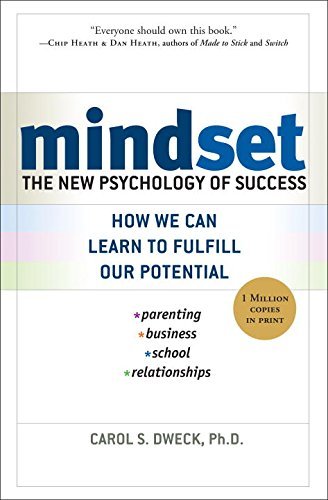
Mindset: The New Psychology of Success – Carol S. Dweck

After decades of research, world-renowned Stanford University psychologist Carol S. Dweck, Ph.D., discovered a simple but groundbreaking idea: the power of mindset. In this brilliant book, she shows how success in school, work, sports, the arts, and almost every area of human endeavor can be dramatically influenced by how we think about our talents and abilities. People with a fixed mindset — those who believe that abilities are fixed — are less likely to flourish than those with a growth mindset — those who believe that abilities can be developed. Mindset reveals how great parents, teachers, managers, and athletes can put this idea to use to foster outstanding accomplishment.

In this edition, Dweck offers new insights into her now famous and broadly embraced concept. She introduces a phenomenon she calls false growth mindset and guides people toward adopting a deeper, truer growth mindset. She also expands the mindset concept beyond the individual, applying it to the cultures of groups and organizations. With the right mindset, you can motivate those you lead, teach, and love — to transform their lives and your own.