In My Hands Today…

The Secret Sky – Atia Abawi

This image has an empty alt attribute; its file name is 18350034.jpg

Fatima is a Hazara girl, raised to be obedient and dutiful.

Samiullah is a Pashtun boy raised to defend the traditions of his tribe.

They were not meant to fall in love. But they do.

And the story that follows shows both the beauty and the violence in current-day Afghanistan as Fatima and Samiullah fight their families, their cultures and the Taliban to stay together.

Based on the people Atia Abawi met and the events she covered during her nearly five years in Afghanistan, this stunning novel is a must-read for anyone who has lived during America’s War in Afghanistan.

Festivals of India: Tamil New Year

Tomorrow is the first day of year on the Tamil calendar and is set in sync with the solar cycle of the lunisolar Hindu calendar, as the first day of the Tamil month Chithirai. It therefore falls on or about 14 April every year on the Gregorian calendar. The same day is observed by Hindus elsewhere as the traditional new year, but is known by other names such as Vishu in Kerala, and Vaisakhi or Baisakhi in central and northern India. The Tamil calendar follows a 60-year cycle which is also very ancient and is observed by most traditional calendars of India and China. According to popular belief it is related to 5 revolutions of Jupiter around the Sun, and also to 60-year orbit of Nakshatras or stars as mentioned in Surya Siddhanta. The 2020 Tamil New Year is called Saarvari.

The day is observed as a family time and before this day, households clean up the house, prepare a tray with fruits, flowers and auspicious items, light up the family Puja altar and visit their local temples. People wear new clothes and children go to elders to pay their respects and seek their blessings, then the family sits down to a vegetarian feast.

The Tamil New Year follows the spring equinox and generally falls on 14 April of the Gregorian year. The day celebrates the first day of the traditional Tamil calendar and is a public holiday in both Tamil Nadu and Sri Lanka. The same date is observed as the traditional new year by many Hindus in Assam, West Bengal, Kerala, Manipur, Tripura, Bihar, Odisha, Punjab, Uttar Pradesh, Uttarakhand, Himachal Pradesh, Haryana, Rajasthan as well as by Hindus in Nepal and Bangladesh. Several Buddhist communities in Myanmar, Cambodia, Laos, Thailand, and Sinhalese in Sri Lanka also celebrate the same day as their new year, likely an influence of the shared culture between South and Southeast Asia in the 1st millennium. The day is celebrated as Vishu in Kerala, Vaisakhi or Baisakhi in central and north India, Pohela Sankranti in Odisha, Pohela Boishakh in West Bengal, and Bangladesh, Rongali Bihu in Assam, Bikram Samwat or Vaishak Ek in Nepal, Aluth Avuruthu in Sri Lanka as the Sinhalese New Year, Songkran in Thailand, Pi Mai in Laos, Choul Chhnam Khmer in Cambodia and Thingyan in Myanmar

There are several references in early Tamil literature to the April new year. Nakkirar, the Sangam period author of the Neṭunalvāṭai, wrote that the sun travels from Mesha/Chitterai through 11 successive signs of the zodiac. Kūdalūr Kizhaar refers to Mesha Raasi/Chitterai as the commencement of the year in the Puṟanāṉūṟu. The Tolkaapiyam is the oldest surviving Tamil grammar that divides the year into six seasons where Chitterai marks the start of the Ilavenil season or summer. The Silappadikaaram mentions the 12 Raasis or zodiac signs starting with Mesha/Chitterai or roughly Aries as per the western zodiac. The Manimekalai alludes to the Hindu solar calendar as we know it today. Adiyarkunalaar, an early medieval commentator or Urai-asiriyar mentions the twelve months of the Tamil calendar with particular reference to Chitterai. There were subsequent inscriptional references in Pagan, Burma dated to the 11th century and in Sukhothai, Thailand dated to the 14th century to South Indian, often Vaishnavite, courtiers who were tasked with defining the traditional calendar that began in mid-April

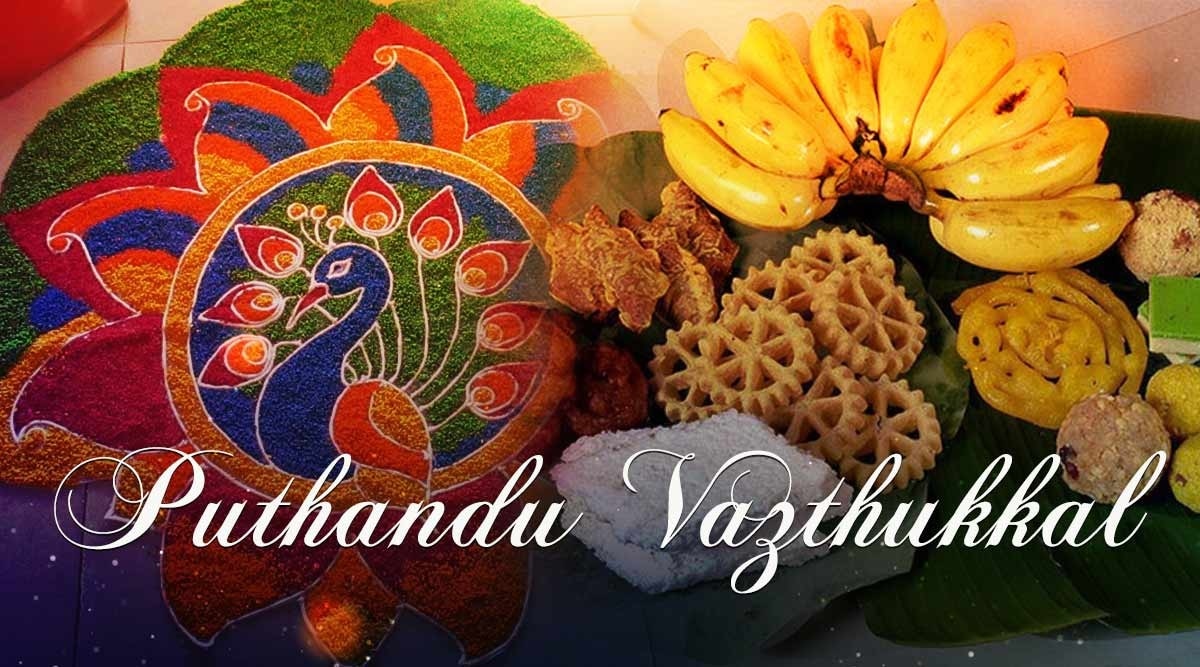
On the eve of the New Year or Puthandu, a tray arranged with three fruits (mango, banana and jack fruit), betel leaves and arecanut, gold/silver jewellery, coins/money, flowers and a mirror. This is similar to the Vishu new year festival ceremonial tray in Kerala. According to the Tamil tradition, this festive tray is auspicious as the first sight upon waking on the new year day. Home entrances are decorated elaborately with colored rice powder designs called kolams.

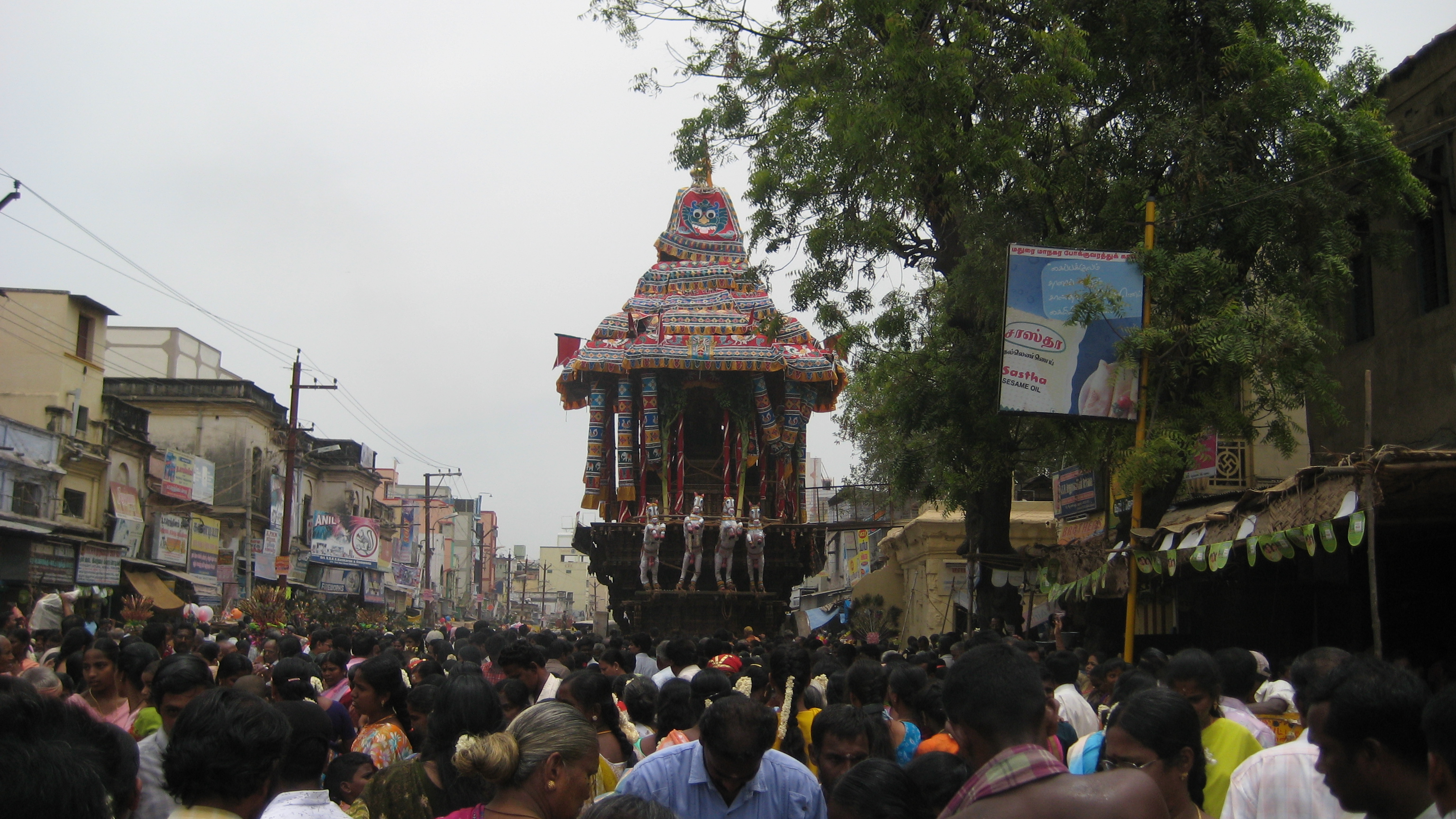
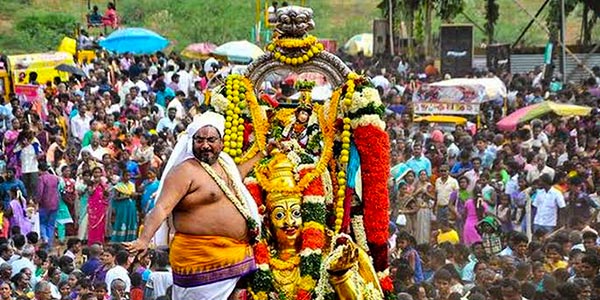
In the temple city of Madurai, the Chitterai Thiruvizha is celebrated in the Meenakshi Temple. A huge exhibition is held, called Chitterai Porutkaatchi. On the day of the Tamil New Year, a big Car Festival is held at Tiruvidaimarudur near Kumbakonam. Festivals are also held at Tiruchirapalli, Kanchipuram and other places.

In Sri Lanka, the Tamils observe the traditional new year in April with the first financial transaction known as the Kai-vishesham. In this transaction children go to elders to pay their respect, and elders give their blessings and gift pocket money to the children in return. The event is also observed with the ‘arpudu’ or the first ploughing of the ground to prepare for the new agricultural cycle. The game of ‘por-thenkai’ or coconut wars between youth is played in villages through the Tamil north and east of the island while cart races are also held. The festive Puthandu season in April is a time for family visits and the renewal of filial bonds. It also coincides with the Sinhalese new year season and so is a time of joy and celebration throughout the island.

During the festive lunch that day, families eat dishes which are a combination of all flavours – sweet, sour, bitter and pungent. This is usually in the form of a mango pachadi or salad since mangoes would have started to come into season by this time. These traditional recipes combining different flavours are a symbolic reminder that one must expect all flavors of experiences in the coming new year, that no event or episode is wholly sweet or bitter, experiences are transitory and ephemeral, and to make the most from them.

In our temple in Matunga, we also have the head priests of the temple reach the annual Panchangam or calendar or alamanc for the coming year. The priest will also interpret any interesting configurations of the stars and planets and let know know which nakshatras or stars and rashis or zodiac signs would likely to be affected or blessed in the coming year. This is only a very general and cursory reading, but is something my parents look forward to each year. This year, with the country under lockdown, they will not be partaking in this activity.

To everyone celebrating their new year these days, here’s wishing you a very Happy New Year and may the coming year put to rest all the calamities of the old year and bring you and your families happiness and prosperity!

2020 Week 15 Update

The numbers are brining to get scary now. Singapore has more than 2200 positive cases with nine deaths so far. All of the deaths in Singapore have been the elderly. Worldwide the numbers of positive cases and deaths are worse.

After implementing a sort of lockdown which is called a ‘Circuit Breaker’ here, we will now start week 2 of this from tomorrow. But you still have people who just can’t seem to stay put at home. I feel so frustrated when we see and hear cases of people who are bored at home and so want to go to malls and parks with their whole family. Why can’t they just listen to what the experts say and stay home so everyone – them and us can remain safe?

Now they’re going to start fining people if they break the circuit breaker regulations here which is a very good thing and which I feel should have been implemented earlier.

On to better news. Last night, us cousins did a video call which was across three continents and four countries and this was so fun that we are already planning the next one. And this morning I woke up to a slew of messages from my friends in school talking about the same thing. That will be more challenging because we are spread across some 10-15 countries across four continents. But we are determined to do this and hopefully this will work out soon.

Stay home and stay safe folks! We will beat this and soon!

In My Hands Today…

Death Wears a Beauty Mask and Other Stories – Mary Higgins Clark

This image has an empty alt attribute; its file name is 24613096.jpg

From Clark’s first-ever published story to classic tales featuring Alvirah and Willy, My Gal Sunday and many more, Death Wears a Beauty Mask and Other Stories gives readers the chance to revisit the short story highlights from the “Queen of Suspense.”

The jewel of this collection is the novella showcasing the dazzling and dangerous world of high fashion in 1970s New York City: Death Wears a Beauty Mask, which Mary began in 1974 and put aside to write Where Are the Children, the book that launched her career. Mary returned to Death Wears a Beauty Mask nearly forty years later and the result is spectacular.

Featuring the same chills and heart-pounding drama we’ve come to expect from a Mary Higgins Clark title, and including an exclusive author’s introduction, Death Wears a Beauty Mask and Other Stories is a spine-tingling read and glimpse into the evolution of the remarkable career of the “Queen of Suspense.”

Recipes: Masoor Dal Fry

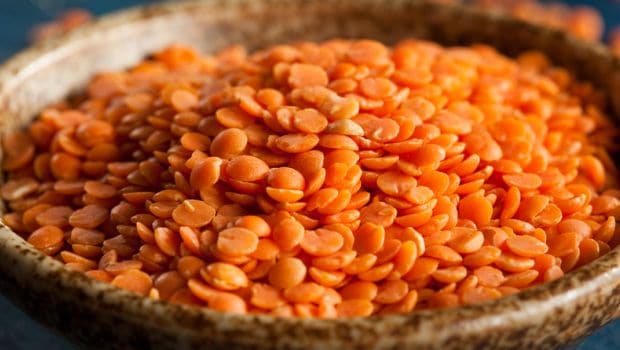
Masoor or split red lentils are a powerhouse of nutrients. A mere cup of masoor dal has 230 calories, about 15 grams of dietary fibre and about 17 grams of proteins. It also has various positive impacts on one’s health and body.

This inexpensive dal does not need much time to soak or cook as it is a soft dal and cooks quickly. When cooked, masoor dal turns a soft golden colour and has a pleasant earthy flavour. With 26 per cent protein, these lentils have the third-highest level of protein, by weight, of any plant-based food after soybeans and hemp.

These lentils help stabilise blood sugar levels as it is low in glycemic index and slows the the rate of digestion and prevents sudden or unexpected raises in the blood sugar level. It also keeps the heart healthy by lowering cholesterol levels due to the large propotion of dietary fibre and is an effective weight loss remedy because it has the perfect amount of carbs, yet is low in fat content. Because it is a powerhouse of antioxidents, it has anti-ageing properties and being a rich source of vitamins and minerals like calcium and magnesium, Masoor dal nourishes your teeth and bones. For skincare junkies, if you are looking for a healthy, spotless, glowing and raditing skin, make and apply a face mask of ground masoor dal, turmeric and rose water and apply on your skin. Wash off when the mask dries up. You can also add some milk to this mask for hydrating benefits.

Growing up, my mum never made this dal because my father used to say it was not good for us. When I researched, I found that sometimes, this dal can be adultrated by missing it with another, similar looking dal called kesari or kultha dal which can cause nervous problems and issues with your limbs, especially for pregnant women if eaten in excess. Of course eating anything excess is bad for you and excessive consumption of masoor dal may lead to adverse effects such as kidney ailments, gas from potassium toxicity and side effects of large proportions of amino acids. It may also cause an allergic reaction in some people.

This simple dal fry is very easy to prepare and start to finish, takes around 20-30 minutes (including cooking the dal in a pressure cooker) and is very tasty to have for a homely lunch with rice.

Masoor Dal Fry

Ingredients:

  • 1 cup masoor dal or split red lentils, washed and cooked with turmeric powder till it is soft and completely broken down
  • 1 medium sized onion, finely chopped
  • 1 medium sized tomato, finely chopped
  • 3-4 garlic pods, finely chopped or grated
  • 1 inch piece of ginger, finely chopped
  • 1 green chilli, slit lengthwise
  • 1 tbsp ghee or oil
  • 1 tsp cumin seeds
  • ¼ tsp turmeric powder
  • 1 tsp (more or less) red chilli powder
  • ½ tsp cumin powder
  • ½ tsp coriander powder
  • 1 tsp kasuri methi
  • 1 tbsp (or more) lemon juice
  • Salt to taste
  • Coriander leaves, finely chopped to garnish

Method:

  • Cook the masoor dal in the stove top or pressure cooker with the turmeric powder. Once the dal is cooked, whisk it with a wire whisk till smooth and keep aside.
  • In a pan, heat the ghee or oil and when it warms, add the cumin seeds and let the seeds splutter. Then add the garlic and stir for a couple of seconds. After this add the ginger and stir for a few seconds.
  • Now add the finely chopped onion and stir well and let the onions become translucent. Then add the chopped tomatoes and let the tomatoes soften and become mushy. Add a pinch of salt to help the softening process.
  • When the tomatoes are soft and mushy and oil starts to leave the sides of the pan, pour the cooked dal into this mixture. Add another cup of water and thin it to the consistency you want.
  • Let the dal boil in medium heat for about 5 minutes. Check for seasoning and then crush the kasuri methi in the palms of your hands and sprinkle it over the dal.
  • Switch off the flame and add the lemon juice as well as the finely chopped coriander leaves to garnish.
  • Serve hot with any kind of rice with a stir fried vegetable of your choice.