
Other than Mumbai and Pune, Maharashtra has a rich culture, which shows in its smaller cities and towns. Some of the important cities in the state, in alphabetical order are:

Amravati
Amravati is the second most populated city in the Vidarbha district, after Nagpur. Situated at a height of 1125 feet above the mean sea level, the city of Amravati is often referred to as the Land of the Immortals. It is a quaint place located amidst the lush greenery of the Vidarbha region. Also known as Ambanagari, Amravati is a place of great religious significance and is aptly called the Cultural Capital of Vidarbha. It is also known as the city of Lord Indra and is home to numerous temples dedicated to Lord Krishna and Goddess Ambadevi. The most famous tourist attraction of Amravati is the Ambadevi Temple. This ancient temple is located in the heart of the city and is known for the connected tunnel through which Lord Krishna had eloped with princess Rukmini on the eve of her wedding. Apart from being known for its religious significance, Amravati is also known for its Varhadi cuisine and grand celebrations of prominent festivals. Agriculture and its related activities form the primary source of income for the people in this region. The Melghat Tiger Reserve, located in the Satpura range, is famous for its unique mix of flora and fauna.
Aurangabad
Aurangabad, which was declared by the Government as the Tourism Capital of Maharashtra back in 2010, is a famous tourist hub which greets its visitors with a richly woven tapestry of sights and sounds. The city got its name for being the erstwhile capital of Mughal Emperor Aurangzeb in the 17th century AD. The town is used as the base to explore the extremely famous caves of Ajanta and Ellora, Daulatabad Fort which is renowned for its strong defence systems, Mausoleums of Aurangzeb and Bibi-Ka-Maqbara famous for its architecture and the Grishneshwar Temple, one of the only 12 Shiva Jyotirlingas in India.
From UNESCO World Heritage Sites to bustling markets brimming with delicate silk items and exquisite hand-woven garments, Aurangabad promises all tourists an exciting holiday experience. While the city is rapidly heading towards industrial growth and globalisation, it still retains most of its past glory, heritage, charms and traditions.
The most famous tourist attraction of Aurangabad is the Ajanta and Ellora Caves. Declared a World Heritage Site by UNESCO, the Ajanta Caves is home to 29 different caves, all of which showcase Buddhist artwork belonging to the period ranging from 200 B.C to 650 A.D. All paintings and sculptures in the caves were constructed painstakingly by Buddhist monks using only simple tools such as chisels and hammers. These paintings and sculptures portray a varied range of stories, starting from the Jataka Tales to intriguing accounts of ancient nymphs and princesses. The Ellora Caves, a little distance away from the Ajanta Caves, houses a total of 34 caves and has sculptures and paintings depicting not one, but three different religions – Hinduism, Buddhism and Jainism. The sheer diversity of the sculptures, the architectural expertise, and the centuries of hard work undertaken by artisans are enough to leave you speechless.
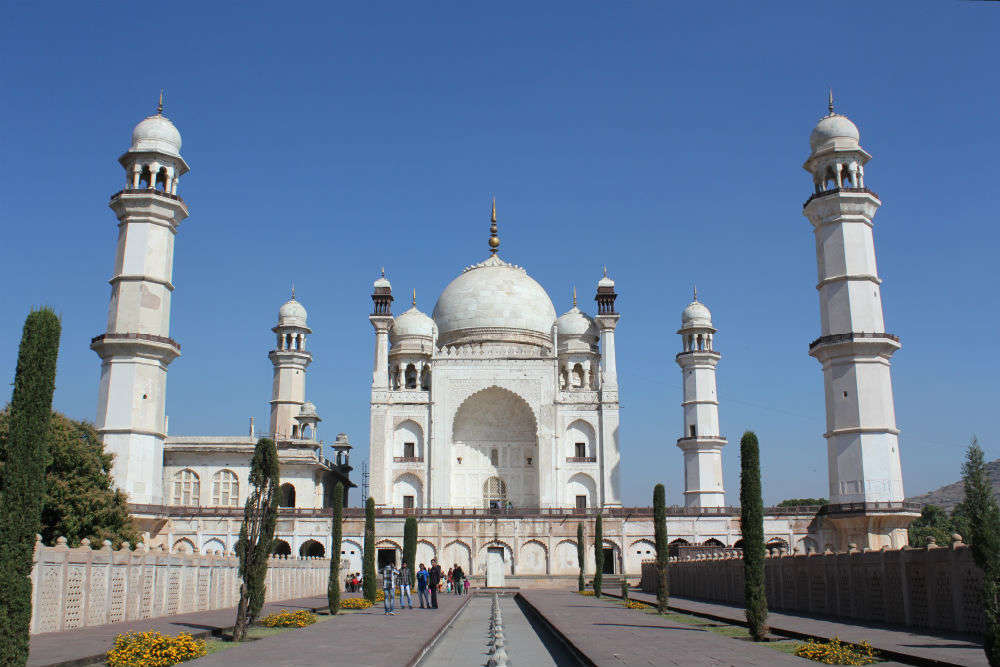
The sole remaining example of Mughal architecture in this part of the country, Bibi ka Maqbara is a mausoleum dedicated to Rabia-ul-Daurani, wife of Mughal Emperor Aurangzeb. Designed by the Persian architect Ustad-Ata-Ullah, Bibi ka Maqbara has a structure similar to that of the Taj Mahal, with the main structure bordered by four towering minarets on four sides. The entire building is a sight to behold, and sunrises and sunsets are resplendent, with the rays of the sun beautifully casting the reflection of the mausoleum on the water of the canal in front of the building.
Aurangabad is also home to temples such as the Jyothirlinga Grishneshwar temple and the Bhadra Maruti Temple, both of which have legends and myths of their own. The erstwhile Mughal capital has retained most of its traditional Tughlaq cuisine, with Tandoors and Kebabs being local staples that you will find at almost every roadside eatery. Known for its arts and crafts, and especially its silk, Aurangabad has plenty of markets from where you can buy various local handicrafts, exotic gems, shawls, and of course, the region’s famous paithani silk sarees.

Ajanta and Ellora Caves
Located around 400 km from Mumbai and near Aurangabad, the famous UNESCO World Heritage Site of Ajanta and Ellora Caves are a must-see destination, both when you visit Maharashtra and if you are in the Marathwada region of Maharashtra. The Ajanta Caves lie around 99 km north of Aurangabad while the Ellora Caves are just 15 km west of the city. There are 34 caves at Ellora dating from between the 6th and 11th centuries AD, and 29 caves at Ajanta dating back to between the 2nd century BC and 6th century AD. While the Ajanta caves are rich in paintings and sculpture, the Ellora caves are renowned for their extraordinary architecture. The most incredible thing about all these caves is that they were crafted by hand, with only a hammer and chisel.
Adorned with beautiful sculptures, paintings and frescoes, Ajanta and Ellora caves are an amalgamation of Buddhist, Jain and Hindu monuments as the complex includes both Buddhist monasteries as well as Hindu and Jain temples.
One of the most famous sites in the entire Ajanta and Ellora Caves is the Kailash Temple, which is also the single largest monolithic structure in the world. These rock-cut caves containing carvings are some of the best examples of ancient Indian architecture and sculpture.
Lonar
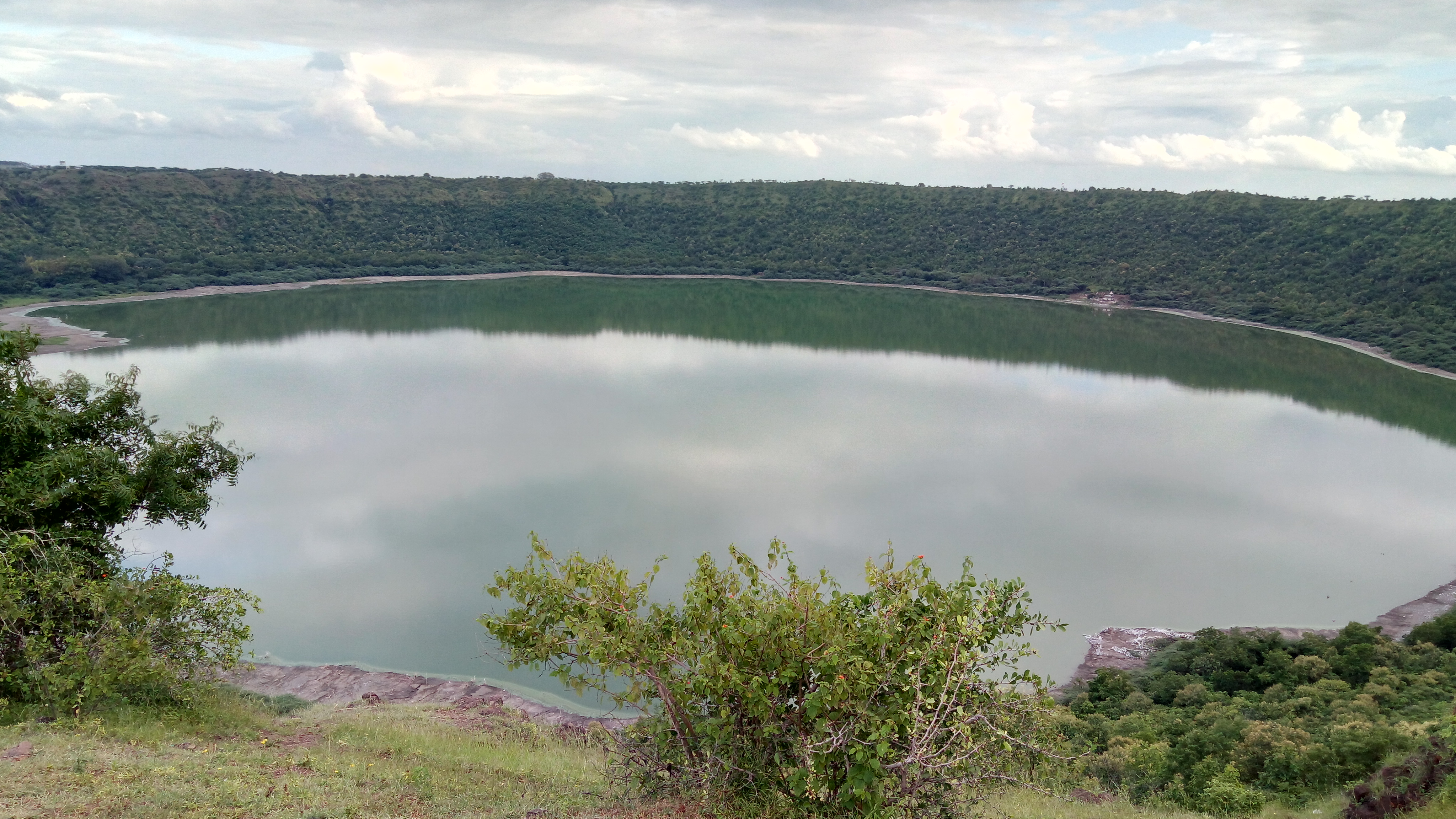
Along with being famous for a crater that was formed over 50,000 years ago due to the collision of a meteorite on the surface of the region, Lonar is also famous for its rich natural heritage. Lonar is a mesmerizingly beautiful place famous for the Lonar crater and the lake formed due to a meteorite hitting the earth around 52, 000 years ago. This 6,000 feet wide and 500 feet deep lake is, therefore, an important source of scientific research and educational importance. It is the only salt water lake in the basaltic rock in the world. The area is also surrounded by a lot of flora and fauna which makes the place even more beautiful. There is also a famous Gomukh temple located at the boundary of the lake where snakes and other animals like fox, mongoose, deers can be spotted. Daitya Sudan temple, another temple located in Lonar is very famous for its architectural style as it reminds of the world famous Khajuraho temples.

Chiplun
In the quiet, far away from the city port district of Ratnagiri in Maharashtra, lies Chiplun, the city that offers you time among mango groves next to the beautiful lake, Vashishti. This town is most known for its white sand beaches and beautiful mango and cashew groves by the Vashishti river. Chiplun, meaning ‘The abode of Lord Parashurama’ got its name because of the famous temple it houses. Chiplun also happens to be an industrial town and most people coming to this side tend to go to the River view resort, a popular getaway on weekends. The sunsets that can be seen from both the Vashishti river and Koyna Dam are so attractive that people book rooms to wake up to the sight of the brilliant scenery. Chiplun falls as an important station on the Konkan railway route for trains heading to Mumbai from Goa and South India. This gives you all the more reason to stop by at this little heavenly place for a breath of fresh air before you greet the city of dreams, Mumbai and all the chaos that comes with it. Travellers describe their experience here as the perfect picnic spot, with the scent of mangoes wafting through the air.

Kolhapur
Situated on the banks of the river Panchganga, Kolhapur is located in the south-western part of Maharashtra. The city boasts of a rich princely legacy dating back to the times of the Maratha kings. Its magnificent temples are one of the main attractions, with the Mahalaxmi Temple being the focus. Kolhapur derives its name from a mythological story of Kolhasur – a demon who was slain by Goddess Mahalakshmi. The famous Mahalakshmi temple is situated here in the honour of Goddess Mahalakshmi. The city has a long line of both Hindu and Muslim rulers, and has been the site of intense confrontations. Prior to India’s Independence, from 1700 it was controlled by the Maratha Empire and the British. The new palace of the Maharaja of Kolhapur, built in 1884, has grandiose Indo-Saracenic architecture. It now houses the Shree Chhatrapati Shahu Museum, containing memorabilia of Kolhapur’s rulers. Kolhapur also has a couple of interesting claims to fame: the famous Kolhapuri chappals or slippers originated from there and the city is said to produce the best Kushti wrestlers. The spicy veg and mutton Kolhapuri, ubiquitous in most restaurant menus offering Indian food, originated in this city.
Nagpur
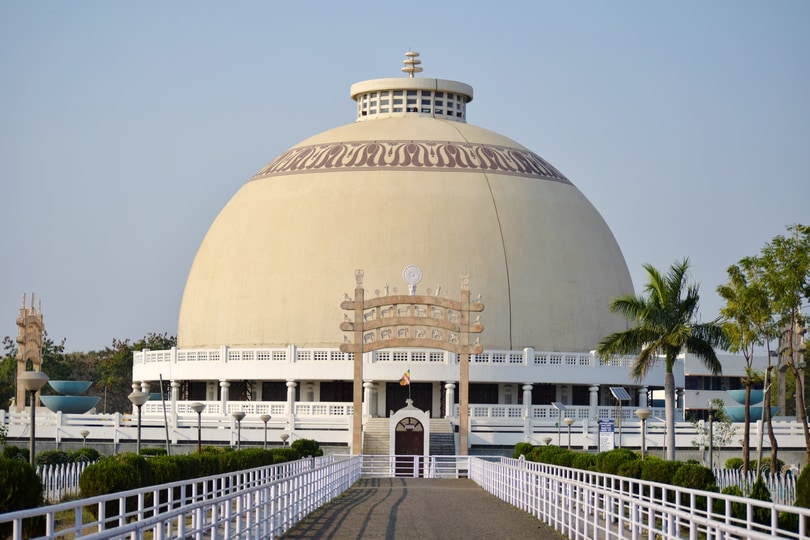
Commonly associated with its delectable juicy varieties of oranges, Nagpur also known is ‘Orange City’ is the winter capital of Maharashtra. With temples, lush green gardens, lakes, connectivity and a rich cultural heritage, the city enchants visitors. Located at the geographical centre of India, Nagpur has plateaus, flat tablelands with rivers and streams flowing through it. Deekshabhumi – the largest hollow Buddhist stupa in the world, Ambazari Lake, Futala Lake, Ramtek fort temple, Bohra Masjid and orange orchards are a must-visit in Nagpur.

Nanded
Nanded is the second-largest city in the Marathwada region of Maharashtra. Nanded is a historic city whose name is believed to have originated from the Nandi, Lord Shiva’s vehicle of consciousness. Lord Shiva is also believed to have performed penance on the banks of River Godavari that flows in the Nanded region. It is famous for its Gurudwara, ancient forts, street food and unique saucer-shaped boats. The city boasts of an exciting blend of the old form with the modern. It has so much historical importance and is home to the Sikh Gurudwara and several Sufi shrines as well. The historic city is also very rich in natural resources such as granite, calcium, magnesium and limestone. The presence of one of the five Takthas of Sikhs, Hazur Sahib, make Nanded the second holiest city among the Sikhs. Another popular tourist attraction is the Kaleshwar Temple that is dedicated to Lord Shiva. Kandahar, Kunthaligiri and Dharur are ancient forts that draw tourist crowds as well.

Nashik
Nashik, approximately four hours northeast of Mumbai in Maharashtra, is a city of contrasts. On one hand, it’s an ancient and sacred pilgrimage destination with a fascinating Old City and temples, such as Naroshankar and Kalaram. On the other, its home to the biggest winery region in India. Nasik is a religious Hindu city, host to the Kumbh Mela every 12 years. It also makes for a perfect wine tasting destination. Nashik or Nasik, named after a relic associated with Ramayana plays host to the famous Kumbh Mela every 12 years. The city is home to plenty of exotic temples and is known in Hindu mythology as the place where Ravana’s sister, Surpanakha, tried to seduce Lord Ram and got her nose cut off by Lakshman in the process. Its religious importance doesn’t end there. It also plays host to the thousands of tourists visiting Shirdi and Trimbakeshwar. Apart from its temples, Nashik also has forts, waterfalls and vineyards to look out for. With multiple vineyards present in Nashik, the most popular being Sula, the wine-tourism industry is mushrooming in this part of Maharashtra. Nashik gives you the chance to experience a fabulous cocktail of extremes – from temples to vineyards, hills to waterfalls, this place offers a lot to see.

Trimbakeshwar
Counted as the holiest temple of India, the Trimbakeshwar Temple houses one of the most important twelve Jyotirlingas, a form of Lord Shiva. Perched on the foot of Brahmagiri Hills, the temple is situated in the pious city of Trimbak close to Nashik city, which finds its mention in the powerful Mrityunjaya Mantra that bestows immortality and longevity. Built in the 18th century by Maratha ruler, Peshwa Nana Saheb, the temple is a perfect epitome of classic architecture. The sacred river Godavari originates near Trimbak. There is a kunda in temple premises that is considered to be the source of river Godavari. The fascinating feature of the Jyotirlinga is its three faces symbolizing Lord Brahma, Lord Vishnu and Lord Rudra. The fecund mountains clad in rich vegetation with cascades falling, encloses the town and makes it even more serene and bewitching.
Shirdi
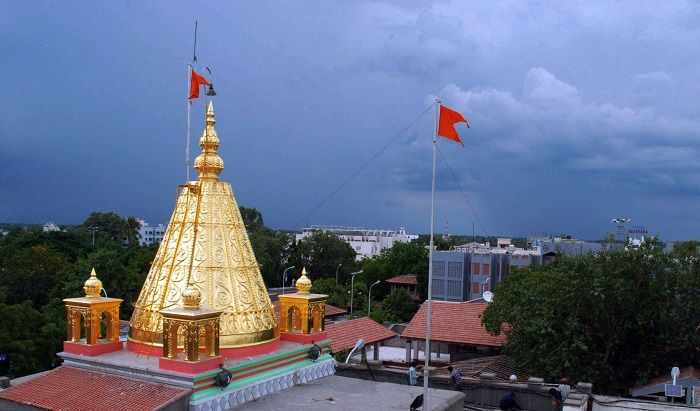
The home of great saint Sai Baba, Shirdi is a religious site close to Nasik with various temples apart from the famous Sai Baba temple and a few historical sites. Shirdi holds a strong importance as a holy and pilgrim place by Sai Baba devotees. The small town is filled with religious spots and activities which will soothe and calm your soul on its visit. The air here carries chants lingering with spirituality and the whole grandness about the same too will leave you spellbound. There are many religious places to be seen in Shirdi such as Chavadi, Samadhi Mandir, Dwarkamai masjid, Shani Shignapur, to name a few.

Shani Shingnapur
The Shani Shignapur Temple is a Jeet Devasthan (alive temple), well-known for the magical and powerful Lord Shani, who is believed to reside in a black stone till date. The Hindu God symbolising the planet Saturn is referred to as Swayambhu, which means that he has emerged himself in the form of the black stone that scores lakhs of devotees every year. The trust of people in the lord is so strong that none of the houses in the wondrous village has doors and locks as people believe that Lord Shani is protecting their valuables from thieves. On some of the holiest days like Saturdays, Amavasya and Shri Shaneshchar Jayanti, the enthusiasm and vehemence rise to the next level. Some Hindus worship Lord Shani to please him as the influence of planet Saturn on anyone’s life is considered as bad luck.

Raigad
Raigad, is a historically rich district is situated in the Konkan region of Maharashtra. Located at 2,851mts, it is surrounded by Mumbai Harbour, Thane, Pune, Ratnagiri and the Arabian Sea. Chatrapati Shivaji Maharaj, renowned Maratha ruler, won this place in 1656 and his Maratha kingdom thus shifted base to Raigad. His prized win, the Raigad Fort is one of the main attractions of this place. The fort is built on an irregular mould of rock at a considerable height from the sea level. The Samadhi(tomb) of Shivaji is placed in this fort. Raigad is also known for it’s other forts all once under the reign of Shivaji, it is primarily preferred by tourists because it has, as yet managed to preserve the culture of it’s ancestors through it’s historical sites, art and cuisine.

Ratnagiri
Situated in pretty surroundings, Ratnagiri is blessed with hills, sea shores, creeks, beautiful rivers, hot water springs, forests and water falls and offers a rejuvenating experience to travelers. Ratnagiri is a travelers dream come true destination with its majestic Sahyadri range and Arabian sea with virginal white beaches, cascading waterfalls, hot water springs palm groves, majestic monuments and the most famous, Alphonso mangoes. Ratnagiri has some of the magnificent forts built during the Shivaji period. One of the gems in Konkan region, Ratnagiri is now a big district comprising of several touristy small villages and towns and it forms for a brilliant weekend getaway from the cities of Maharashtra including Mumbai. Ratnagiri was also where the last Burmese King Thibaw Min was exiled by the British in 1885. The King and his family lived in a specially constructed palace called Thibaw Palace which is open to the public.
Satara
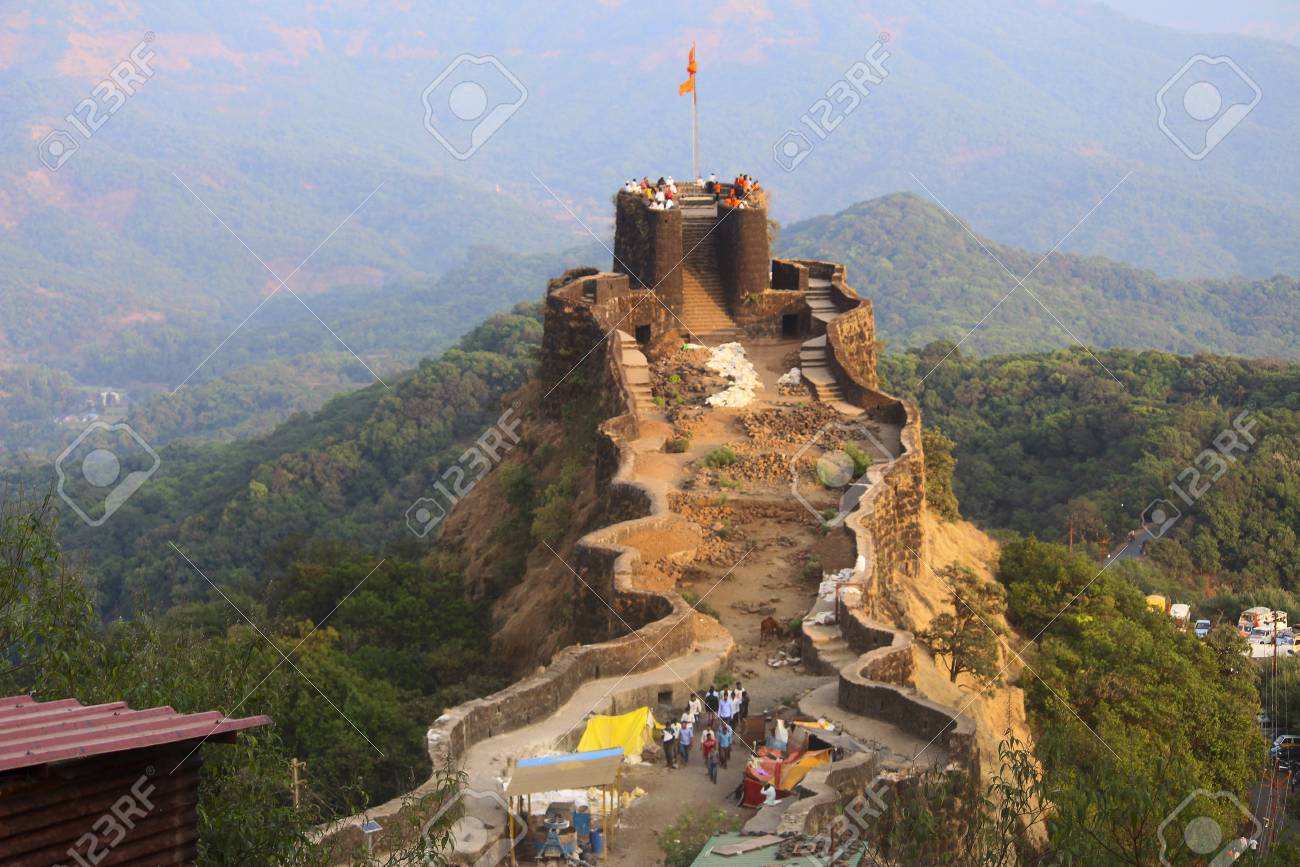
Located in Western Maharashtra, Satara gets its name from the seven (Saat in the local language of Marathi) hills (Tara in Marathi) that envelope Satara. This historic site of Maratha Kingdom is located near the confluence of Krishna and its tributary Venna. Satara was established in the 16th century and had the honour of being the seat of Chatrapati Shahu, Raja of Satara. It was conquered by Shivaji once in 1663 and after his death, his half-brother, Sambhaji was made the king until the release of Shahu, Shivaji’s son from the Mughals. Chhatrapati Shahu was crowned in 1708 at the Satara fort, and Chhatrapati Shivaji’s descendants continue to live in Satara till date. The major attractions in Satara are Ajinkyatara fort, and a statue Chhatrapati Shivaji Maharaj standing near a canon (as opposed to generally seen statue of him riding a horse). Located at about 130 km from Pune, and 270 km from Mumbai, Satara is a great weekend getaway option. As a bonus to a trip to Satara, Mahabaleshwar, Panchgani and Kaas Plateau are situated in the vicinity of just 50 km. Do relish some Kandhi Pedha when you happen to be in Satara.



.jpg.jpg?1458196297)


 Memories and Such
