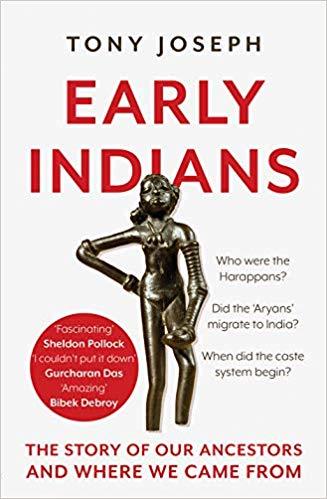
Casey Wilson has a lot on her mind and she isn’t afraid to share. In this dazzling collection of essays, skillfully constructed and brimming with emotion, she shares her thoughts on the joys and vagaries of modern-day womanhood and motherhood, introduces the not-quite-typical family that made her who she is, and persuasively argues that lowbrow pop culture is the perfect lens through which to understand human nature.
Whether she’s extolling the virtues of eating in bed, processing the humiliation over her father’s late in life perm, or exploring her pathological need to be liked, Casey is witty, candid, and full of poignant and funny surprises. Humorous dives into her obsessions and areas of personal expertise—Scientology and self-help, nice guys, reality television shows—are matched by touching meditations on female friendship, grief, motherhood, and identity.
Reading The Wreckage of My Presence is like spending time with a close friend—a deeply passionate, full-tilt, joyous, excessive, compulsive, shameless, hungry-for-it-all, loyal, cheerleading friend. A friend who is ready for any big feeling that comes her way and isn’t afraid to embrace it.
“You don’t sound Indian,” the boy had said at the kopitiam when Kavya ordered her teh c kosong. He’d grinned, like it was a compliment.
Kavya had smiled tightly, thanked him, and walked away. She was used to it.
Born and raised in Singapore, she knew the National Day Parade theme song by heart and could switch between English, Tamil, and a sprinkle of Mandarin like a linguistic gymnast. But somewhere between “pure” Singaporean and “actual” Indian, she felt like she belonged everywhere and nowhere at once.
She’d grown up visiting temples on weekends, dancing Bharatanatyam at community festivals, and eating prata after tuition class. But whenever she visited Little India, there was always someone who’d ask, “You from here or there?” and she never had a clear answer.
This year, she wanted something more. Something beyond tidy traditions and carefully curated heritage trails. She booked a solo trip to India, to Madurai, the city where her grandmother had been born.
“Why now?” Amma had asked, frowning over her glasses.
“I want to feel where I come from,” Kavya replied. “I want to be in India on Independence Day.”
Her mother had sighed but said nothing. That night, she slipped an old photograph into Kavya’s bag: a black-and-white picture of a young woman in a half-saree standing in front of the Meenakshi Temple.
11 August, Madurai, India
The heat struck like a drumbeat. Everything in Madurai pulsed: the honks, the temple bells, and the jasmine sellers with their hypnotic chants.
Kavya stayed in a modest homestay just off a street flanked by banana trees and walls stained with old film posters. The house had creaky wooden shutters, a courtyard with a mango tree, and an old woman who insisted Kavya eat second helpings of everything.
The rhythm of life was different here. Slower, louder, more chaotic, and strangely comforting. Kavya spent her mornings walking to temples and her afternoons scribbling in a notebook she carried everywhere. She didn’t know what she was writing—just thoughts, feelings, and fragments of herself.
12 August, Madurai
On her second morning, Kavya heard a ruckus in the alley. She stepped out and saw a girl, barefoot, dust-streaked, and laughing, chasing a runaway calf down the narrow lane. The girl caught it by the rope, scolded it gently in Tamil, and looked up to see Kavya watching.
“You look like you’re from here but also… not,” the girl said, grinning.
Kavya laughed. “That’s not the first time I’ve heard that. I’m Singaporean. My grandma was from here.”
“Then you’re one of us,” the girl declared. “I’m Meenal. Come. We’re painting flags today. For August 15. Want to help?“
Kavya blinked. “Me? I don’t really paint…”
“That’s okay. You’ll learn. We’re not picky about strokes, only spirit.“
And just like that, she was pulled into a swirling circle of colours, cloth, and conversation.
13 August, Madurai
They sat under a neem tree, painting tiny Indian flags on scraps of cloth. Children swirled around them, cheeks smeared with green and orange.
“What’s National Day like in Singapore?” Meenal asked, dabbing white onto a fabric square.
“There’s a huge parade. Fireworks. Everyone wears red and white. But… it feels curated. Clean.”
“You miss mess?” Meenal teased.
“I miss… rawness. My identity feels like a fusion dish sometimes. Indian, but diluted. Singaporean, but never quite full-blooded.“
Meenal paused and dipped her brush into green. “Being Indian isn’t about passports. It’s about stories. Smells. The way your body remembers mangoes even when your tongue forgets.”
Kavya looked at her. “You make it sound like poetry.“
“It is. We’re both translations of something old and beautiful.”
They sat in silence for a while. A small girl brought them sliced raw mango with chilli salt. Kavya bit into it, eyes watering from the tang.
“This,” she said, “tastes like my grandmother’s kitchen. I didn’t even know I remembered.”
Meenal smiled. “See? That’s the thing about home. It sneaks up on you.”
14 August, Madurai
That evening, Meenal took her to a rooftop near the temple.
“We come here every year to light paper lanterns,” she said. “Some say they carry prayers. Others say they chase away the shadows.”
As the sky dimmed, they lit small lanterns and watched them rise. Kavya stood quietly, fingers curled around her wrist.
“My parents wanted me to study engineering. I chose literature instead,” Meenal said suddenly. “They said it was a waste. But I like words. Words are how I remember who I am.”
Kavya looked at her. “You’re lucky you even knew. I feel like I’m always translating what I want, who I am, who people think I should be.”
“Maybe identity isn’t about choosing one version. Maybe it’s about collecting them, like shells. Some smooth, some cracked. But all real.”
15 August, Madurai
The morning was thick with saffron skies and fried vadai. Children marched barefoot with tricolour kites and hand-painted flags. The air buzzed with pride, promise, and powdered colours.
Meenal tugged Kavya to the rooftop.
“Here. Yours.“
Kavya took the spool and launched her kite into the air.
It wobbled at first, then caught the wind. Higher, stronger.
Below, loudspeakers blared patriotic songs. Kavya felt the strings burn gently against her fingers.
“You know,” she said softly, “In Singapore, we sing ‘One People, One Nation, One Singapore.’ But I never understood how to be one thing.”
Meenal grinned. “Maybe we aren’t meant to be one thing. Maybe we’re meant to be many.”
They watched the sky fill with colour. Saffron, white, green, and somewhere, Kavya imagined, red and white too.
“I came here to find roots,” she said. “But I think I’ve found mirrors.”
One Week Later, Back in Singapore
Back in Singapore, the sky was cleaner, the traffic neater, and the air-conditioning colder.
On her desk sat a jar of Madurai earth, still smelling faintly of turmeric and dust.
On the wall: two flags. Side by side. Equal in colour, different in rhythm.
She opened her journal and flipped to the back.
A new note from Meenal had arrived by post.
Dear Kavya,
Happy National Day (again)! Mango season starts in March. Your kite is still flying, by the way.
We saved the spot on the rooftop for you.
Kavya smiled and picked up her pen.
Dear Meenal,
Tell the mangoes I’m coming. And this time, I’m bringing chilli salt.
Birds, Beasts and Bandits: 14 Days with Veerappan – Krupakar, Senani
In a comic case of mistaken identity; wildlife photographers Krupakar and Senani were kidnapped one night from their home at the edge of the Bandipur National Park by Veerappan; India’s ‘most dreaded bandit’. He thought they were important government officials; and his plan was to hold them hostage in return for clemency and a substantial ransom.
The bandit and his gang kept the hostages on the move in the forest; and their only contact with the outside world was via an old transistor radio. While Veerappan;who had already killed some 250 people; formulated strategies to force the government to agree to his demands; his hostages not only got a close look at the plant and animal diversity in the forests of Karnataka and Tamil Nadu; but the intimacy of their life on the run gave them an insight into Veerappan’s strange mix of cruelty and humanity. Though Krupakar and Senani came from a world that was completely different from that of Veerappan’s gang; the kidnapped and the kidnappers became closely involved in each other’s concerns. Birds; Beasts and Bandits is a witty and poignant account of an extraordinary adventure with the notorious poacher and his companions.
Solo travel is more than just a journey to distant lands, it is a profound exploration of the self. When you venture out on your own, every step, every encounter, and every quiet moment becomes a lesson in freedom, resilience, and discovery. The road tells stories of unexpected adventures, inner growth, and the courage to embrace solitude. It transforms you, leaving indelible marks on your heart and soul.
Wandering on My Own
In a world vast and wonderfully unknown, I set forth on paths uniquely my own. Every step a whisper, every mile a song, In the dance of solitude, I found where I belong.
The road unfurled like a story untold, Winding through cities of glimmering gold. I met strangers who spoke in smiles and dreams, And learned that freedom flows in silent streams.
Each sunrise painted a canvas of hope, As I navigated life on my own slope. No map to follow, just the beat of my heart, In solo travel, every ending sparks a new start.
Mountains echoed with the courage to rise, Valleys whispered secrets under open skies. Every challenge faced, every fear overcome, Wove a tapestry of strength, a journey well begun.
In quiet moments when the world stood still, I discovered the power of my own will. Solo but not lonely, in the silence I found, A universe within me, vast and profound.
For in the art of wandering, one truth is known— The greatest adventure is finding your own home. So I journey on, with courage and delight, Embracing every sunrise, every star in the night.
American author, spiritual teacher, and lecturer whose work blends psychology, spirituality, and self-empowerment, Marianne Williamson’s quote is about releasing attachment to the past, especially to the narratives, identities, and limiting beliefs we carry about ourselves. Our story can include old wounds, failures, labels, or patterns that shape how we see ourselves and what we believe is possible. When we cling to this story, we keep living in its boundaries, unintentionally blocking new opportunities and growth. Williamson encourages us to trust the flow of life and open ourselves to transformation. Letting go doesn’t mean denying our past; it means loosening its grip so that new chapters, filled with fresh possibilities, love, and purpose, can unfold. It’s an invitation to surrender control, embrace uncertainty, and allow the Universe (or life itself) to surprise us with something greater than we had imagined.
Earlier this week, while I was doomscrolling at night, I came across something that I decided to incorporate in my daily life and thought to share it with you all. What I saw was this – when you wake up in the morning, even before you get out of bed, say a small prayer and think of three things you are grateful for. If you are agnostic or an aethist, just be grateful. I’ve always said a small prayer when I wake up, so adding this three gratitude sentences really made me appreciate the goodness in my life and made me thankful for what I already have. I noticed that throughout the day, when I felt disgruntled or unhappy, thinking of what I have and being grateful for that, made my mood shift and turn positive. Try it and let me know if it helps!
GG started school this week and she is very busy. She is also very happy as she managed to secure an offer by the company she interned in for when she graduates in two years time. So that’s one big stressor off her and our head. Now to start worrying about BB when he graduates from national service in a couple of months and what he plans to do after he ORDs.
That’s all from me this week, stay positive people and remember to be grateful for all the small and big things in your lives.