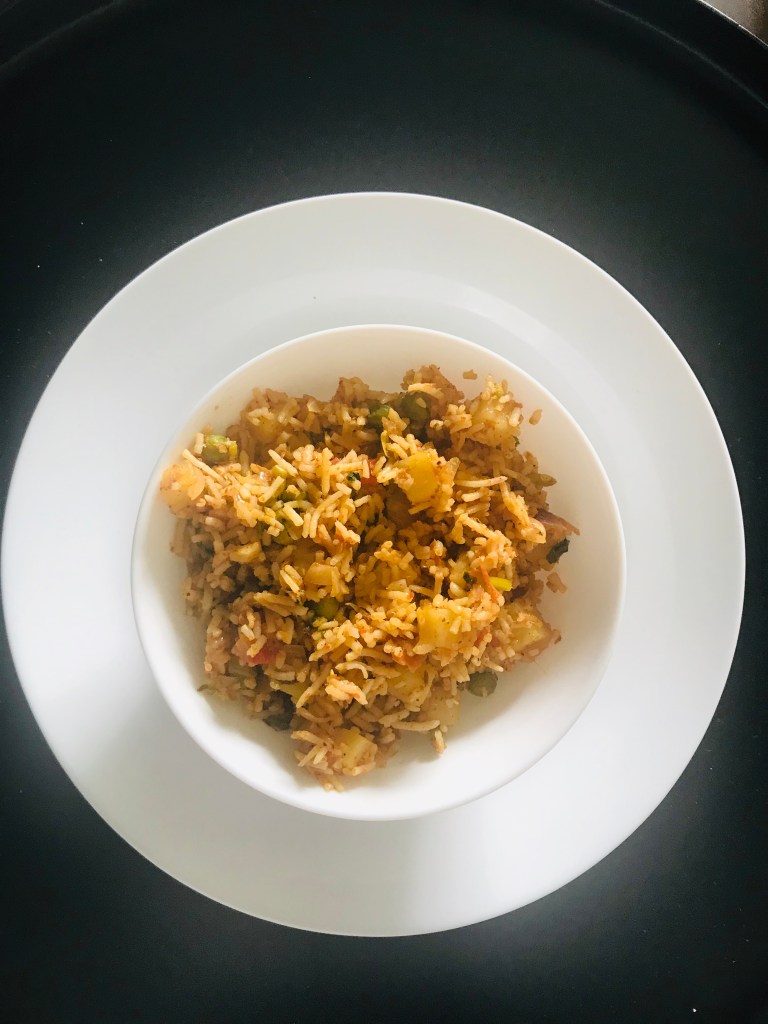
In Bombay or Mumbai, there are street stalls which sell Pav Bhaji and towards the end of the day, when the bhaji is almost over, they add some rice to the gravy and this is the origin of the Tawa Pulao. This rice works best with leftover rice, but can be made with fresh rice which has been cooled down. This makes a very good lunchbox recipe and if you cook the rice in advance, it’s a jiffy dish to make during the morning rush
Bombay Tawa Pulao
Ingredients:
1 cup Basmati rice which has be cooked and completely cooled. It’s best if you can make the rice a day earlier, but making it far ahead of time also works.
1 carrot, chopped into bit sized pieces
1 potato, chopped into bite-sized pieces
2-3 tbsp frozen peas
2 medium sized onions, finely chopped
2 medium sized tomatoes, finely chopped
1 inch piece of ginger
1 pod garlic, peeled
4-5 fresh red chillies (or green if you don’t have red chillies)
2-3 tbsp pav bhaji masala
1 tsp cumin seeds
2 tbsp oil
2 tbsp coriander leaves, finely chopped
2-3 tsp lemon juice (more or less as per taste)
1 tbsp butter
1/4 tsp turmeric powder
Salt to taste
1 tsp red chilli powder (optional)
Method:
Blend the ginger, garlic and chillies into a smooth paste and keep aside.
Wash the chopped carrots, potatoes and peas and keep aside.
Heat 1 tsp oil in a pan and when the oil warms, add the cumin seeds and let them splutter.
Then add the turmeric powder and stir for a couple of seconds.
Now add the chopped and washed vegetables and a bit of salt and cook until the vegetables are almost cooked.
When the vegetables are almost cooked, remove the vegetables from the pan and keep aside.
In the same pan, add the balance oil and butter and when the butter melts, add in the blended ginger-garlic-chilli paste.
Let the paste cook a bit and then add the finely chopped onions and let the onions become translucent. Then add the finely chopped tomatoes and let the tomatoes cook and become mushy and break down.
Now add the pav bhaji masala and chilli powder if you want it spicer and salt to taste and cook till the mixture becomes slightly thicker.
Then add the cooked vegetables and also check for seasoning.
Add in the cooked and cooled rice and gently toss the rice to mix it with the vegetables till the rice is completely coated with the vegetables and the onion-tomato gravy.
Check for seasoning, remove from the fire and drizzle 1-2 tsp of lemon juice. Then garnish with coriander leaves and serve hot with a yoghurt raita.
The children and S loved it and asked me why I didn’t make it earlier for school. You can also substitute garam masala if you don’t have pav bhaji masala. The taste will still be fantastic, but will not taste like how it’s made in Bombay. You can also add more vegetables like french beans, cauliflower etc if you are planning to make a larger batch. Remember, in this recipe, a little goes a long way.
For the past few days, I have been anxiously watching the weather. The cyclone Nisarg was expected to hit the western coast of India and my home city of Mumbai was expected to be hit the hardest as the cyclone was expected to make landfall very close to Mumbai. This is the first cyclone going to hit the city in over a hundred years and everyone, including me, was tense. Then, miraculously, the cyclone veered as it reached the coast and made landful a few hundred kilometres south of the city and the city was spared with just some heavy rainfall. Everyone was so relieved and when I spoke with my dad and said how happy I was that the city was spared, he said the city of Mumbai was the city of Mahalakshmi and she wouldn’t allow anything to happen to her city. I don’t know if this is something that has been circulating among Mumbaikars, but the Mahalakshmi temple on the seashore in the area of Mahalakshmi, does hold a special place in the hearts of the locals.
Covid-19 has continued its hold on Singapore with more than 37,000 confirmed cases and 24 deaths. As of yesterday, we had almost 25,000 cases who have recovered, but personally, I am expecting a spike in the next 10 days or so when we cross the first two weeks since the lifting of the circuit breaker and people are mingling together. In the past week, we in Singapore, have seen visuals of crowded trains and buses and shoppers jostling with each other in supermarkets. I just hope that we don’t see the spike which will necessitate going back to another few months of being in a circuit breaker again!
It’s also been two weeks since R left our home and we are managing. I have now come to the conclusion that housework is the most underrated activity we do and that we are not paying our homemakers and house help enough. While I am happy that this period is a good teaching experience for the children to start helping around the home, I hope things become better soon so I can get a part-time helper to come at least once a week to work on some of the chores.
The children’s schools have also told them that they will be doing home-based learning the whole term and so they will only go back to school in semester 2 sometime in October. Understandably, they are frustrated about being stuck at home for so long. If we take October as a timeline, it will be about 11 months of staying home!
Anyway, this was our week, hope yours was also good! Stay home and stay safe everyone
Twenty years ago, in an upscale suburb of Philadelphia, four teenagers spent a summer as closest friends: drinking, sharing secrets, testing boundaries. When a new boy looked to join them, they decided to pull a prank on him, convincing him to play Russian roulette as an initiation into their group. They secretly planned to leave the gun unloaded—but what happened next would change each of them forever.
Now three of the four reunite for the first time since that horrible summer. The guilt—and the lingering question about who loaded the gun—drove them apart. But after one of the group apparently commits suicide with a gun, their old secrets come roaring back. One of them is going to figure out if the new suicide is what it seems, and if it connects to the events of that long-ago summer. Someone knows exactly what happened—but who? And how far will they go to keep their secrets buried?
There’s something special about travelling by train. While I have travelled quite a bit in India, I have not travelled by train outside of India, so this blog post will be about train travel within India.
The Indian Railways is the world’s largest railway network by size, with a route length of 95,981 km as of March 2019 and is the word’s eighth largest employer employing about 1.4 million employees as of 2015. It runs more than 20,000 passenger trains daily, on both long-distance and suburban routes, from 7,321 stations across India.
The railways, a product of British colonisation has been in India since 16 April 1853 when the first passenger train ran between Bori Bunder and Thane between downtown and the suburban Mumbai of today. Today Bori Bunder is the majestic Chatrapati Shivaji Maharaj Terminus or CSMT, which locals still fondly call VT Station or Victoria Terminus in honour of the Empress of India, Queen Victoria.
As of 31 March 2019, the Indian Railways has electrified 50% of the route kilometers and 46% of the total running track. The first line to be electrified was between what is today the CSMT station and Kurla station in Mumbai’s suburban rail network way back in 1925.
The longest train route on the Indian Railways is the Dibrugarh to Kanyakumari Vivek express which covers India lengthwise from Dibrugarh in the north-east in the state of Assam to India’s mainland tip of Kanyakumari in the southern state of Tamil Nadu. The train covers a distance of about 4,282 kms in approximately 80 hours or roughly three and a half days, traversing eight Indian states. It crosses the states of Assam, Bihar, Nagaland, West Bengal, Jharkhand, Odisha, Andhra Pradesh, Tamil Nadu & Kerala. Another long distance train which also covers a distance of 4282 km is the Dibrugarh to Okha Weekly Border Service which travels across the breadth of India, from the East from Dibrugarh in Assam to India’s western borders, ending at Okha in the western state of Gujarat. Both these trains are currently tied for the 24th longest running trains in the world. The longest running train in the world today is the train that runs from Moscow in Russia to Pyongyang in North Korea. This train travels a distance of 10,267 km and if you travel from Moscow to Pyongyang, you will take approximately 206 hours or about 8.5 days!
Another interesting train on the Indian Railways route is the Navyug Express, a weekly train which runs from Mangalore Central in the south Indian state of Karnataka to the holy city of Katra which houses the very revered Mata Vaishno Devi shrine in the northern Union Territory of Jammu & Kashmir. This train takes about 68 hrs to cover a distance of 3,685 km and in this process covers about 14 states and union territories of India, viz. Jammu & Kashmir, Punjab , Haryana, Delhi, Uttar Pradesh, Madhya Pradesh, Maharashtra, Puducherry(Mahe), Telangana, Andhra Pradesh, Tamil Nadu, Kerala & Karnataka.
What I find most fascinating is that parts of India I never thought possible to connect have been connected by train and this connection is an end-to-end connection. For example the train which plies the route from Sri Ganganagar in Rajasthan to Tiruchirapalli in Tamil Nadu. Both are not big metro cities and the fact that there exists a demand for a fully airconditioned train, the Humsafar Express between these two cities is a measure of how popular and engraved the Indian Railways in the psyche of the Indian traveller.
SourceThis is the closest I could find which corresponds to my memory of a coupe from the 70s
I have numerous memories of travelling by train. In my childhood, most summer holidays would be spent in Bangalore with my paternal grandparents and at some point when my maternal grandparents moved to Chennai, we would first travel to Chennai, spend a couple of weeks there and then take an overnight train to Bangalore to spend the rest of the holidays with my other set of grandparents.
I don’t have much memory of my first train travel, but have some fuzzy flashes. This was way back in the seventies and I must have been around three years old. I was travelling with my parents and my sister who must have been a toddler at that point to New Delhi. I do remember travelling in a coupe compartment. A coupe is first class compartment at a time when there was probably no air conditioning in the train. Today’s coupes are first class airconditioned compartments. My memory is very fuzzy for this trip, but if I think hard, I have flashes of memory of being in a closed compartment with my parents and sister and can see the scenary flying by.
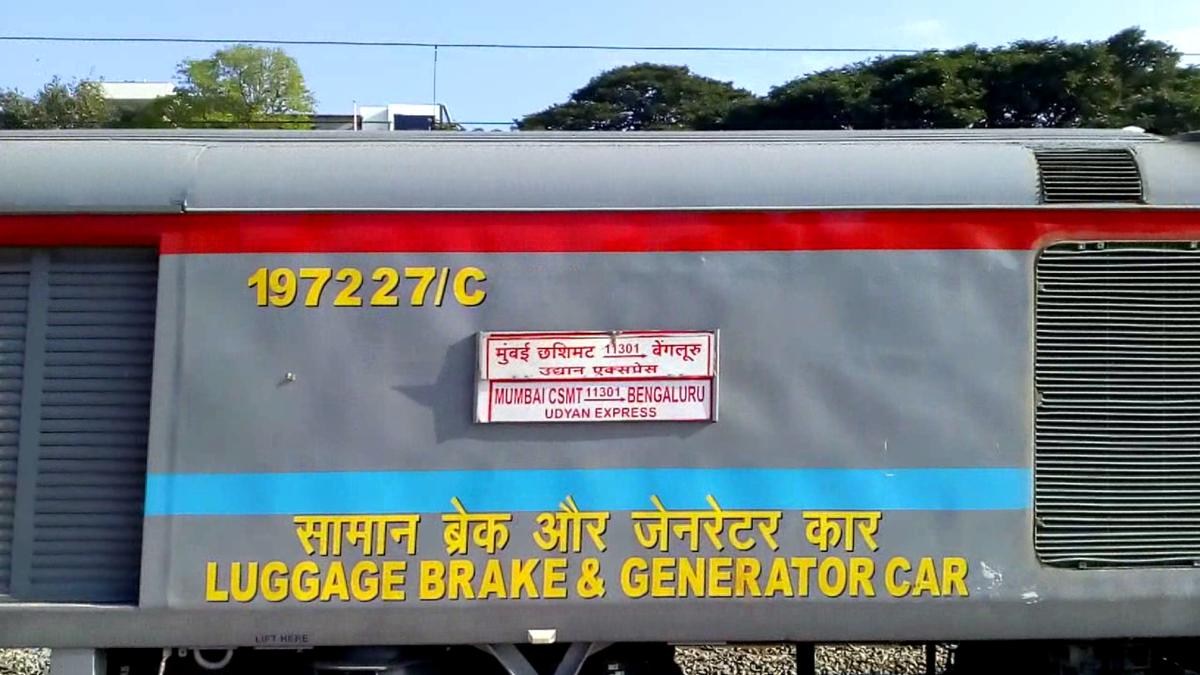
My biggest memories, however, are of the Udyan Express which is superfast train running between Mumbai’s CSMT and Bangalore’s City stations. The name is because Bangalore is called a Garden City and is famous for all the green spaces in the city, Udyan meaning ‘garden’ in pretty much all Indian languages. The train is probably 30 odd years old and I remember travelling from the time it started. Before this train started, there was no end-to-end service between Mumbai and Bangalore and you had to take trains on the Mumbai-Chennai route and get down in a station called Guntakal and then transfer to another train which took you all the way to Bangalore. I think this route between Guntakal and Bangalore used to be meter gauge while the Mumbai-Chennai route used to be broad gauge.
Once, when we were young adults, my sister and I travelled alone to Bangalore. We took what was a fairly new train then whose name escapes me now. That train used the Konkan Railway route and took a coastal route to get to Bangalore. I have searched quite a bit for the name of this train, but maybe this train has been either discontinued or merged with another train. I remember it being a very scenic route with lots of greenery and we passed many smaller towns and cities, unlike the Udyan Express which used to pass through mostly farmland and barren parts of Maharahtra, Andhra Pradesh and Karnataka. If anyone knows what is the name of this train, please put it in the comments below, I would love to know.
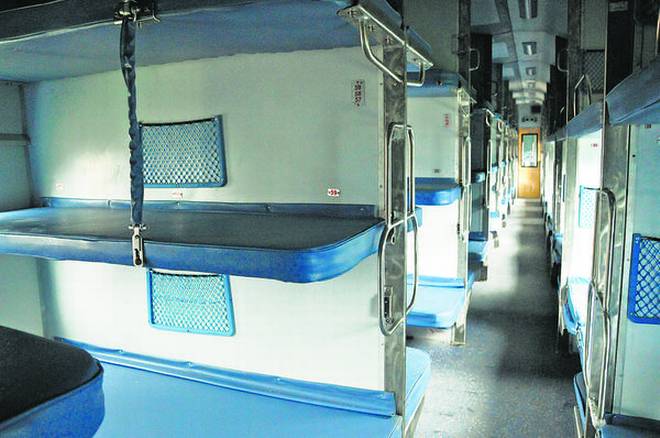
I loved travelling in the second class sleeper compartment where the windows would be bitterly fought with my sister. Both would want the window seat and if we were lucky to travel nice travelling companions, we would both get a window seat, otherwise, it would be up to my mother to play referee. The second class sleeper has six seats with three across each side and then across the aisle, two more seats. Most years, we would go ahead of my father who would join us later during the holidays. Also the sleeper class berths meant that the middle berth pulled out from the back rest of the lower berth and this also used to be a point of contention between us. After a few years, I started disliking the middle berth and used to want to sleep in the lower berth and my mum used to take the middle berth with my sister ensconcing herself in the top berth where she could sleep to her heart’s content.
I can’t sleep while travelling, so I was my family’s guard at night. Everytime the train stopped, my sleep would break and I would wake up. Because there was no airconditioning in the sleeper class, we would sleep with the windows open and a steel slatted cover over it. This, because there used to be heavy thefts in this class as the door used to not be locked and anyone can enter the compartment anytime of the day or night. The camadarie that you used to find in those days travelling by the sleeper class can’t be found today. We used to make friends during the 24 hours it would take to get to our destination and there are times when those fleeting friendships used to be continued. This is a time without any smart devices, not even mobile phones, remember and the only way to pass the time during the trip was to talk to people and share stories about your lives. We also didn’t have a lot of access to books and we would purchase a few magazines to read during the journey. Then you hope that your co-passengers would also have some reading material with them which you would then exchange to read. We would also play a lot of card games as well as games like anthakshari or similar games. And then when your destination arrives, you would smile at your new friends, promise to keep in touch and more often than not, slowly glide out of their lives.
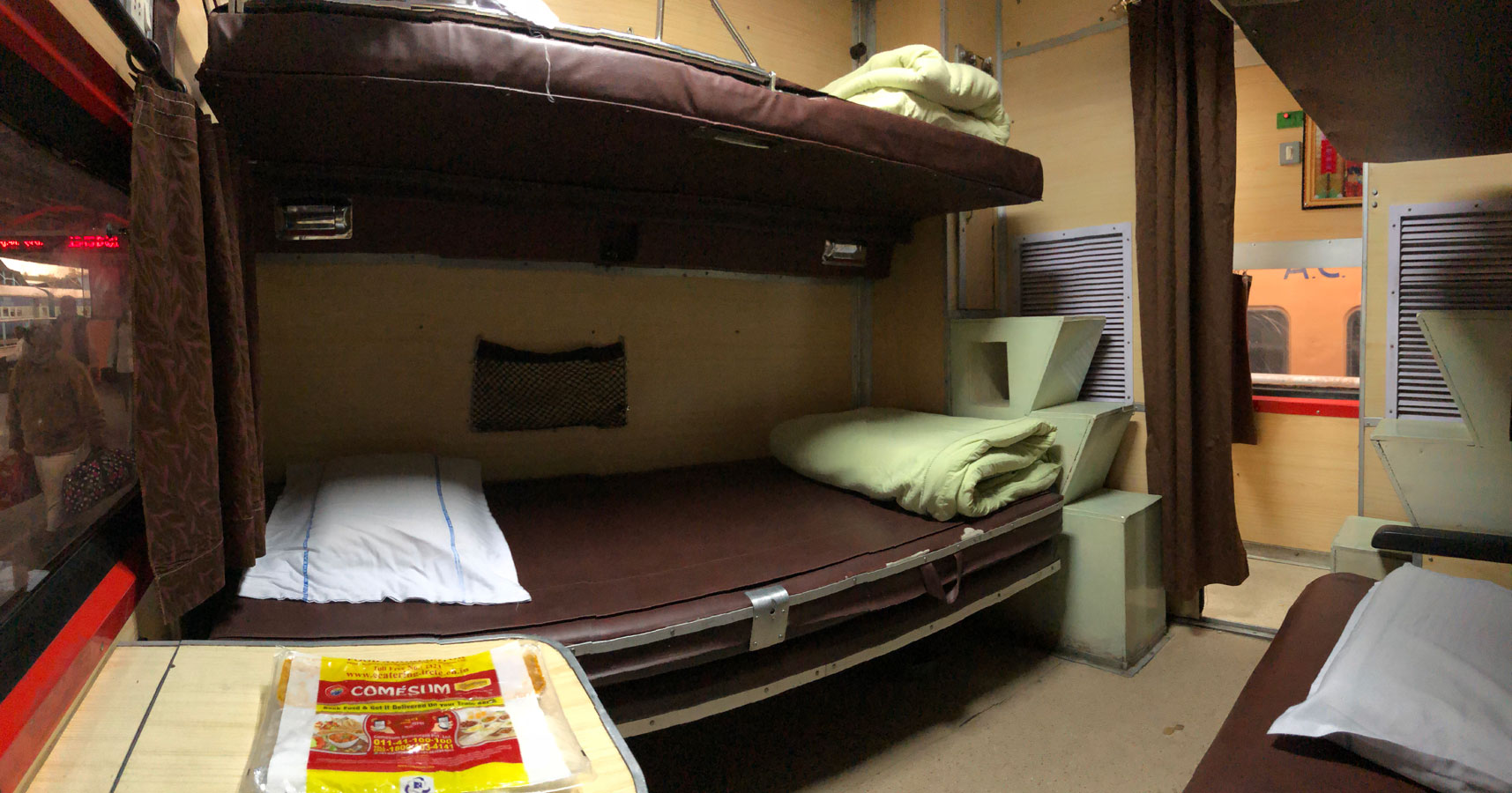
My last train trip in India was this year during my India trip where we did back-to-back two trips, both overnight. The first was from Chennai to Thanjavur and the second from Mayiladuthurai to Bengaluru. Both trips were in AC 2 tier and this trip made me realise that I am growing old, I prefer my luxuries, slight as they are. The children were absolutlely fascinated by these short train trips and have been asking me when we can do this again. One train I absolutely want to travel in and in first class no less, is the Rajdhani Express which connects Mumbai to New Delhi. Rajdhani which means capital was meant to be a series of passenger trains which connect state capitals to India’s capital of New Delhi. This series of trains gets the highest priority in the Indian Railways network and is also considered as prestigious and premium, so when this train travels, it is not allowed to stop at any signals, other lesser important trains get shunted to the nearest station to wait and to make way for the Rajdhani to fly past. We were planning a trip this December, but with COVID-19, this is not possible and given how dire things are, I really don’t know when we can travel on the Rajdhani.
Something I love doing is watching train videos on YouTube. There are many people who patiently stand on the doorstep and share with the world their train journeys and each time I watch these videos, I am reminded of how much I love train travel. I also think if I was still living in India and younger, would I also be like one of these vloggers?
Travel is such a fascinating thing and you learn so much when you are out of your comfort zone. Train travel on the other hand, is a great equaliser, you meet such a diverse group of people in your travels that like it or not, there is some learning every single trip.
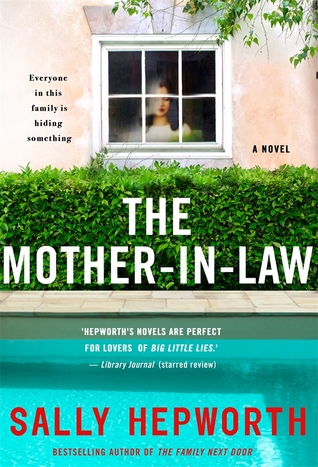
Someone once told me that you have two families in your life – the one you are born into and the one you choose. Yes, you may get to choose your partner, but you don’t choose your mother-in-law. The cackling mercenaries of fate determine it all.
From the moment Lucy met Diana, she was kept at arm’s length. Diana is exquisitely polite, but Lucy knows, even after marrying Oliver, that they’ll never have the closeness she’d been hoping for.
But who could fault Diana? She was a pillar of the community, an advocate for social justice, the matriarch of a loving family. Lucy had wanted so much to please her new mother-in-law.
That was ten years ago. Now, Diana has been found dead, leaving a suicide note. But the autopsy reveals evidence of suffocation. And everyone in the family is hiding something…





 Memories and Such
