An Ode to Mangoes

When it is the month of May, it is mango season in Mumbai. And not just any ordinary mango, it’s the time for the king of mangoes – the Alphonso Mango, lovingly called Hapus in Maharashtra. The months of April to early June, just before the first rains hit the state, the aroma of these mangoes are everywhere in the city, you just can’t escape the fruit.
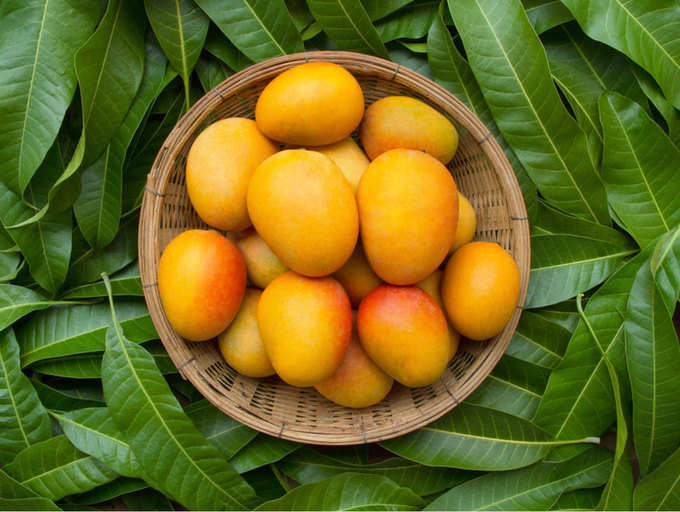
Scientifically known as Mangifera indica, mangoes have been grown in India for thousands of years and produces around 40% of the world’s production of the fruit. Over 1,000 varieties grow in India, each one celebrated and defended in its region, from the bright orange Kesar of Gujarat to the small green Langra of Uttar Pradesh. But the Alphonso mango is special and unlike any found in the country. The fruit is named after the Portuguese general and military expert, Afonso de Albuquerque who helped establish Portuguese colonies in India. Grating on mango trees to produce varieties like the Alphonso was also introduced by the Portuguese. The Alphonso mango is also one of the most expensive varieties of mango, and is grown mainly in western India, particulary in the Ratnagiri district of the Konkan region in Maharashtra. The fruit is highly prized for its aroma and fragrance, taste and the beautiful colour of sunset it takes on when fully ripe. It is heavily traded both domestically as well as internationally and many cartons of the fruit are packed to be sent to the Middle East, Europe, North America and South and Southeast Asia.

Of the thousands of cultivars of mango in India, there are several different varieties of Alphonso. The best and most expensive are grown on the small Natwarlal plantation in Ratnagiri, and are hand-harvested. It is this variety that’s most widely exported. The fruit was shipped to London for the Queen’s coronation in 1953 from Mumbai’s legendary Crawford Market, renowned for its Alphonso stalls in season. A few years back, the famous mangoes from the Konkan region in Maharashtra were given Geographical Indication or GI tags which means this tag specifies the geographical location, which could be a town, city, region or even a country, a product is created. This means that when you buy a mango which is GI tagged, you are sure you are buying an Alphonso mango or Hapus!

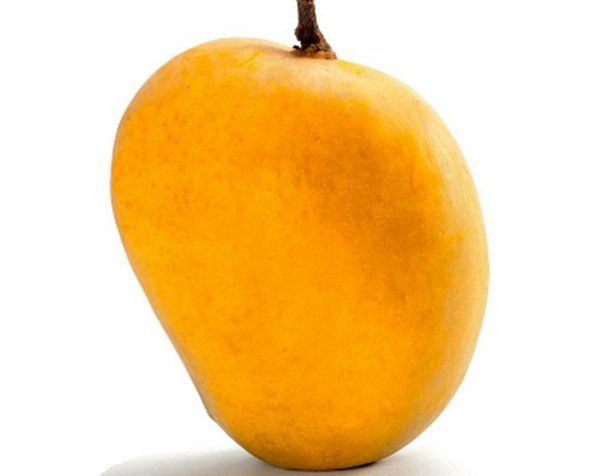
A seasonal fruit, the Alphonso mango is available from around mid-April through the end of June, though once it starts raining, the balance produce starts flooding the market and prices also drop. The fruit is best eaten when the weather is hot and dry, in the peak summer months. The Alphonso has a beautiful mango shape and each fruit a quite large, weighing between 150 to 300 grams per fruit. The skin of a fully ripe Alphonso mango turns a bright golden-yellow with a tinge of red which spreads across the top of the fruit. The flesh of the fruit is a beautiful dark saffron colour and is rich, creamy, smooth and buttery with a delicate non-fibrous and juicy pulp.

Mangoes are a powerhouse of vitamins and minerals containing over 20 different vitamins and minerals. 1 serving of mango which is roughly ¾ of a cup provides you with the following amounts of your daily requirements – 50% of vitamin C, 8% vitamin A, 8% of vitamin B6, 15% of folate, 15% of copper as well as 7% of your daily fibre requirements.

Growing up, at home in Mumbai, everybody with the exception of me was a huge mango fan. While I can eat one fruit per day or so, my parents, grandparents and sister can polish off a few fruits each. I was the exception to the rule pretty much everywhere because most people I knew were mango or rather hapus aficiandos. I preferred the raw mango which is this tart and sometimes sour fruit which is so yummy with a lashing of salt and red chilli powder. During my childhood, we used to get boxes of the fruit and other than eating the fruit itself, my mother would puree the pulp and this puree would be used to flavour milkshakes and also my father and sister would dunk their chapatis and puris in this puree. So during the summer months, each night before bed, my mother would make a few glasses of mango milkshake for those who desired it (not me!).

My paternal grandparents moved to Bangalore when I was quite young and each year, we would travel to Bangalore for our summer holidays. We would mostly travel in the last few days of April or the first few days of May, depending on when my school would officially end. In my school, students had to go back to school to collect their year-end reports and so we would only travel out of Mumbai after that day, which would usually be the day after the results. A week or so before the trip, which would be by train, my mother would get in touch with her regular mango-walla to order a big box of mangoes for my grandmother who loved Hapus and could not readily find it in Bangalore those days. This is more than 30-35 years back, so the Bangalore of those days is very, very different from the Bengaluru of today. The mango-walla uncle would pack the mangoes which would be around four to five dozens in a big wooden box and layer the mangoes in beds of straw. He would have chosen unripe mangoes in varying stages of ripeness so that all 50-60 mangoes ripen at different times and we don’t have a glut of ripe mangoes to finish off at the same time. We would then take this box, along with a mango pickle made of baby unripe mangoes which was my mother’s signature pickle and which my grandfather loved along with our luggage and travel the roughly 1,150 km to Bangalore. In Bangalore, some of the Alphonso mangoes would be distributed among friends and the rest eaten as it is or made into puree, milkshakes or even used in sweets. I remember one year, my sister and I planted an Alphonso mango seed in the hope that it will become a mango tree. But we planted it too close to the boundary wall between our home and that of our neighbour and so the next year when we went looking for the tree we were sure would have come up by then, we were told they had to pluck it out and throw it. I remember both of us being so disappointed at this news.

Another memory I have about mangoes is a trip to Chennai during the summers. We were at an aunt’s house and they had a fully grown mango tree. The tree was full of unripe mangoes and the women in the house had decided they get the mangoes plucked and make mango pickle out of it. But we children plus my uncle had a different idea. One afternoon, while the women were taking a nap and we were playing board games, the uncle managed to pluck quite a few of the mangoes and after sneaking into the kitchen to get plates, a knife, some salt and red chilli powder, we had a raw mango party! Of course the expected outcome happened – all of us, including my uncle got roundly scolded for eating mangoes that was destined for a pickle, but we didn’t regret it one bit.

Mangoes are considered heaty and the rule in my house used to be a cup of milk after every mango eating session. I hate drinking milk, so sometimes, I do wonder if my indifference to mangoes was because of this rule. The next generation, aka GG & BB also love mangoes, BB more than GG I think because his go-to drink at an Indian restaurant is the Mango Lassi. So all said and done, I still love the Alphonso mango and during this season, even in Singapore, I try to purchase a carton of this precious fruit so that the children (and S and me) can take part in a ritual that goes back to my childhood.


In My Hands Today…

Descendant of the Crane – Joan He

This image has an empty alt attribute; its file name is 41219451.jpg

Tyrants cut out hearts. Rulers sacrifice their own.

Princess Hesina of Yan has always been eager to shirk the responsibilities of the crown, but when her beloved father is murdered, she’s thrust into power, suddenly the queen of an unstable kingdom. Determined to find her father’s killer, Hesina does something desperate: she engages the aid of a soothsayer—a treasonous act, punishable by death… because in Yan, magic was outlawed centuries ago.

Using the information illicitly provided by the sooth, and uncertain if she can trust even her family, Hesina turns to Akira—a brilliant investigator who’s also a convicted criminal with secrets of his own. With the future of her kingdom at stake, can Hesina find justice for her father? Or will the cost be too high?Open publish panel

Global Day of Parents

sarvatIrthamayI maataa sarvadevamayaH pitaa
maataraM pitaraM tasmaat sarvayatnena pUjayet

Mother is (the embodiment) of all pilgrimages, father is (the embodiment) of all deities. Hence, mother and father are to be revered with all efforts.

Old Sanskrit Shloka

Parents are the bedrock of society. Without parents to nurture a child, physically, mentally, spiritually, socially and psychologically, we may well have been living in isolation! They say a parent a born along with the child and so the importance of a parent in the child’s life, especially in the early years can’t be emphasised enough.

Being a parent is the most important job in the world. The first 1,000 days of life is a once-in-a-lifetime opportunity to build a baby’s brain and shape a child’s ability to learn and grow. Parents want to give their children the best they can. Yet, many have no choice but to work long hours, often away from home, to support their families. Parents need time to give their child the best start in life. Parenting is probably one of the most fulfilling, if not the most demanding job we will ever have! The responsibility to care for another tiny human being who depends on you and your partner for their very survival is immense, but it is something we humans do so quite instinctively. After all, the urge to procreate is in our DNA, though there are exceptions to the rule.

A parent is a child’s first hero. A girl’s first love is her father and when she looks for partners as she grows up, she will look for a man like her father if she has been brought up in a loving environment and the opposite of her father if her father had been abusive growing up. Likewise, for a boy, his mother is the first woman in his life. He will probably look for a woman like her when he is looking to get into a relationship and will most likely compare women he meets with his mother. Again, a loving mother will inspire him to look for similar qualities in his partner and an abusive and non-maternal mother figure will make him look for someone with the exact opposite qualities.

Parents nurture their children throughout their lives, guiding them, sometimes invisibly. They play multiple roles in their children’s lives – as teachers, as coaches, as psychologists, as friends and as parents.

Because parents such a huge role in everybody’s lives the United Nations decided to observe June 1, that today as the Global Day of Parents. This day was proclaimed in 2012 and honours parents throughout the world. The Global Day provides an opportunity to appreciate all parents in all parts of the world for their selfless commitment to children and their lifelong sacrifice towards nurturing this relationship.

Emphasising the critical role of parents in the rearing of children, the Global Day of Parents recognises also that the family has the primary responsibility for the nurturing and protection of children. For the full and harmonious development of their personality, children should grow up in a family environment and in an atmosphere of happiness, love and understanding.

The central goals of the 2030 Agenda for Sustainable Development adopted by the world leaders in 2015, focus on ending poverty, promoting shared economic prosperity, social development and people’s well-being while protecting the environment. Families remain at the centre of social life ensuring the well-being of their members, educating and socializing children and youth and caring for young and old.

In particular, family-oriented policies can contribute to the achievement of Sustainable Development Goals 1 to 5 relating to doing away with poverty and hunger; ensuring healthy lives and promoting of well-being for all ages; ensuring educational opportunities throughout the lifespan and achieving gender equality.

So why celebrate such a day? Days like this reminds us to respect others. As a child, you are taught to respect others, especially our elders, but I believe that you have to respect everyone, irrespective of the fact that they are older than you. Our parents have been with us through thick and thin and have been there for us in every stage of our life. A parental unit is not just a mother or a father, it is the two individuals who have brought you to life, so a day like this showcases the other parent who may not be taking an active interest in their child’s life, but on days like this, they can spend some time with their child or vice versa and learn from each other. Parenting is like playing a game of tag. It is hard going it alone and so when you are a parental unit, you have to recognise that both partners play an equal part in bringing up their children.

So take some time today to talk to your parentsm, your first teacher and nurturer and tell them how much you love them and appreciate all that they have gone through to bring you up to be the person you are today. And if you are a parent yourself, give yourself a pat on the back for a job well done!

2020 Week 22 Update

Singapore will start easing up on the circuit breaker from Tuesday. This first phase of easing up on restrictions will be proceeded with caution and we have been told that instead of one month as it was initially said, it can even be eased earlier. After that will be the second phase which can last several months, followed by the third phase which will be our new normal which will remain until effective vaccine or treatment is found.

Companies have been told they should avoid having their employees in the office as much as possible and those who will be coming in to work will have to maintain social distancing, they can’t socialise with colleagues in the office and should not have lunch and coffee breaks together and a face mask or face shield should be on the face at all times.

Schools and junior colleges will also reopen on Tuesday and except for the graduating cohort who will go to school daily, the others will have one week of school and one week of home based learning. S still will have to work from home for now, though it may change when the country moves to the next phase. As for the children, they will finish up their term with home-based learning and after we will know if they will go back to school after the term break which should be in mid-June.

Singapore now has around 34,000 positive cases, most of whom are work permit holders who reside in dormitories. Singapore’s mortality rate is 0.067% which makes it one of the few countries with such a low mortality rate.

We are now a week without R, my helper and without sugarcoating things, I can say, it has not been very easy. I became used to not doing housework all the time for a long time now and to suddenly do everything, became a bit hard, especially while balancing work and the home. Of course, S and the children have been a huge help. Getting the children used to housework was one the biggest reasons I gave R my blessings and sent her off with a smile. She is still adjusting to a new place and new people but she should be fine in a few weeks or a month or so.

That’s pretty much my update for the week. Stay home, stay masked and stay safe people!

In My Hands Today…

Salaam Brick Lane: A Year in the New East End – Tarquin Hall

After 10 years living abroad, Tarquin Hall wanted to return to his native London. Lured by his nostalgia for a leafy suburban childhood spent in south-west London, he returned with his Indian-born, American fiancee in tow.

But, priced out of the housing market, they found themselves living not in a townhouse, oozing Victorian charm, but in a squalid attic above a Bangladeshi sweatshop on London’s Brick Lane. A grimy skylight provided the only window on their new world—a filthy, noisy street where drug dealers and prostitutes peddled their wares and tramps urinated on the pavements.

Yet, as Hall got to know Brick Lane, he discovered beneath its unlovely surface an inner world where immigrants and asylum seekers struggle to better themselves and dream of escape. Salaam Brick Lane is a journey of discovery by an outsider in his own native city.